Category: History

13 Things You May Not Know About Bonnie and Clyde

Vintage Everyday presents 13 Things You May Not Know About Bonnie and Clyde. Here are three of my favorites…

3. Bonnie was an honor student and a poet.
During her school days, Bonnie excelled at creative writing and penning verses. While she was imprisoned in 1932 after a failed hardware store burglary, she penned a collection of 10 odes that she entitled “Poetry from Life’s Other Side,” which included “The Story of Suicide Sal,” a poem about an innocent country girl lured by her boyfriend into a life a crime. Two weeks before her death, Bonnie gave a prescient poem to her mother entitled “The Trail’s End” that finished with the verse:

“Some day they’ll go down together;
And they’ll bury them side by side,
To a few it’ll be grief—
To the law a relief—
But it’s death for Bonnie and Clyde.”


1. Bonnie died wearing a wedding ring—but it wasn’t Clyde’s.
Six days before turning 16, Bonnie married high school classmate Roy Thornton. The marriage disintegrated within months, and Bonnie never again saw her husband after he was imprisoned for robbery in 1929. Soon after, Bonnie met Clyde, and although the pair fell in love, she never divorced Thornton. On the day Bonnie and Clyde were killed in 1934, she was still wearing Thornton’s wedding ring and had a tattoo on the inside of her right thigh with two interconnected hearts labeled “Bonnie” and “Roy.”

9. Bonnie and Clyde remained close to their families, even on the run.
In fact, it was their predictable pattern of stopping to visit family that aided the team of Texas Rangers and deputies who ambushed and killed them.

5 Things You Didn’t Know About Josephine Baker

Ethan Trex and Mental_Floss present 5 Things You Didn’t Know About Josephine Baker.  Here are three of my favorites…

1. SHE WAS A SPY.
When World War II rocked her adopted France, Baker didn’t simply move to a more peaceful country. Instead, she stuck around and did her part for the war effort. Since she had initially publicly supported Mussolini’s invasion of Ethiopia, the Axis powers mistakenly thought she was “one of them,” and Baker took full advantage of this misconception.

In fact, her fame made her the perfect spy. When Baker would travel Europe while touring, she obviously had to carry large quantities of sheet music with her. What customs officials never realized, though, was that a lot of this music actually had secret messages written on it in invisible ink. Fawning immigration officials never thought to take too close a look at the diva’s luggage, so she could sneak all sorts of things in and out of countries. On some occasions, Baker would smuggle secret photos of German military installations out of enemy territory by pinning them to her underwear.

This invaluable intelligence work eventually helped Baker rise to the rank of lieutenant in the Free French Air Force, and when the war was over she received both the Croix de Guerre (a first for an American woman) and the Medal of the Resistance in 1946.

2. A DUEL WAS FOUGHT IN HER NAME.
Lots of stars have devoted fans, but how many would be willing to fight a duel for their favorite diva? In 1928, a Hungarian cavalry officer and an Italian count did just that in Budapest. According to a contemporary account from Time, “the ogling and attentions of Hungarian Cavalry Captain Andrew Czlovoydi became too fervently gallant to be stomached by La Baker’s manager, Count Pepito di Albertini.” Rather than just ask Czlovoydi to knock it off, the Count took the reasonable step of challenging the soldier to a sword-fighting duel.

Fittingly, the two duelers met in a cemetery for their showdown while Baker cheered on the Count from a perch atop a tombstone. According to Time, the two men battled with swords for a solid 10 minutes before the Count took a light blow to the shoulder. At that point, Baker intervened and forced the two men to set aside their differences.

3. IN HER FORTIES AND FIFTIES, SHE ADOPTED A DOZEN CHILDREN.
Celebrities adopting children from underprivileged backgrounds may be old news at this point, but what Baker did in the 1950s is still shocking and fascinating. In an effort to combat racism and provide an example for the rest of the world to follow, Baker started adopting orphans from all corners of the world.

Baker started by adopting two Japanese children, and kept going until she had assembled a family of 12 children from a variety of countries and ethnicities. Baker dubbed them “the Rainbow Tribe,” and lived with the children in her chateau in southwestern France.

As part of her efforts, Baker also turned the chateau into a sort of resort/theme park with a multicultural theme, but it didn’t catch on quite as well as Epcot did. By 1968, the operation was hemorrhaging money, and Baker’s creditors had to sell the mansion out from under her.

10 Things You May Not Know About Harry Houdini

10 Things You May Not Know About Richard Nixon

Cristopher Klein and History.com present 10 Things You May Not Know About Richard Nixon.  Here are three of my favorites…

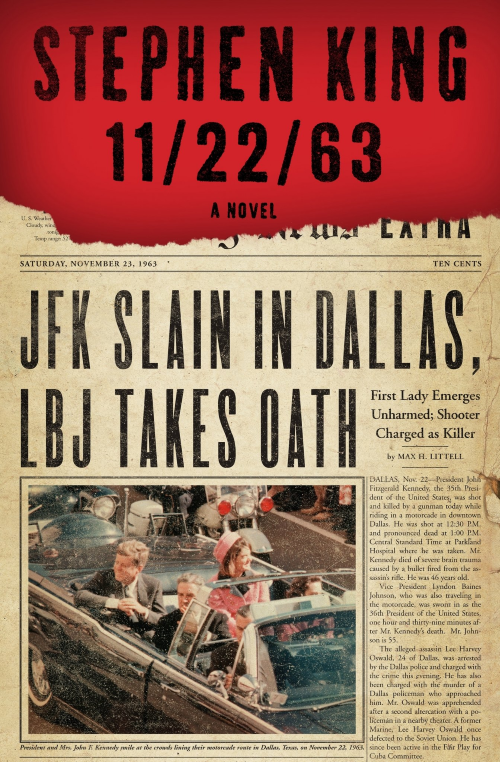
1. Lee Harvey Oswald may have plotted to assassinate Nixon.
In the early morning of November 22, 1963, Richard Nixon rode through Dallas to the airport to fly home after attending a Pepsi-Cola board meeting. Nixon saw the preparations for the motorcade that hours later would carry John F. Kennedy, the man who defeated him for the presidency three years prior, on the streets of the city’s downtown. After Nixon landed in New York, he learned that Kennedy had been gunned down in that motorcade. In a further coincidence, the wife of Lee Harvey Oswald testified to the Warren Commission that in April 1963 the alleged assassin read a local newspaper report, tucked a pistol in his belt, and told her, “Nixon is coming. I want to go and have a look.” After locking him in a bathroom, Oswald’s wife convinced him to turn over his gun. The account was puzzling, since Nixon was not in Dallas in April 1963 and no newspaper mentioned any visit.

3. Community theater brought Richard and Pat Nixon together.
Nixon first encountered his future first lady as a leading lady in 1938 when both auditioned for the Whittier Community Players production of “The Dark Tower.” The amateur theater production led to a romance between Nixon and Thelma Catherine Ryan, nicknamed “Pat” by her father because she was born on the eve of St. Patrick’s Day. Foreshadowing their later lives, the couple wed in the presidential suite of the Mission Inn in Riverside, California, on June 21, 1940.  [Richard Nixon as an actor?  Or interested in acting?  I would have never guessed. – Craig]

6. Nixon was an avid bowler.
One of Nixon’s favorite pastimes in the White House was bowling. He’d even bowl a few frames dressed in his suit. In addition to using the alley in the adjacent Old Executive Office Building, Nixon had another one-lane alley built in the basement beneath the North Portico entrance to the White House.

11 Strange Habits of Geniuses

Mental_Floss presents 11 Strange Habits of Geniuses.  Here are three of my favorites…

7. EDGAR ALLAN POE WROTE ON SCROLLS.
Edgar Allan Poe often wrote on thin strips of paper, which he glued together and rolled into scrolls for easier storage. He felt the medium better contributed to a work’s flow than a regular old manuscript (and, presumably, looked spookier).

8. DA VINCI AND TESLA SHUNNED EIGHT-HOUR SLEEP SCHEDULES.
Leonardo da Vinci and Nikola Tesla adhered to alternative sleep schedules. Leonardo was said to have followed the polyphasic cycle, which means he took multiple short naps every 24 hours. Meanwhile, Tesla only rested two hours a day.

10. BEN FRANKLIN TOOK “AIR BATHS.”
Before he began the day’s work, Benjamin Franklin would spend up to an hour taking naked “air baths” at his open window.

18 Uncovered Facts About “JFK”

Roger Cormier and Mental_Floss present 18 Uncovered Facts About JFK.  Here are three of my favorites…

4. COSTNER MET GARRISON’S REAL ENEMIES.
The actor met both Garrison’s fans and his critics. “I wanted Costner to get both sides, to witness the hatred and extremism that Jim engenders and as an actor to look into the eyes of his enemies and know what he was up against back then,” explained Stone. “These were tough people and they’d come in a parade in front of Costner with their New Orleans accent saying that Jim’s a snake—that he liked boys and was angry that Shaw stole his lover and a lot worse.”

11. COSTNER INSISTED THAT JOHN CANDY NOT BE CUT.
John Candy was “devastated” when he heard his role as lawyer Dean Andrews was being cut from JFK, so Costner intervened. Stone wrote a letter to Candy apologizing for considering taking his nervous, sweaty character out of the movie.

10. WAYNE KNIGHT AND STONE CLASHED OVER HIS ACCENT.
Wayne Knight (Seinfeld‘s Newman) used an accent he heard growing up in northwest Georgia for his audition as Numa Bertel, which Stone loved. But Knight discovered upon meeting the real, New Orleans-born Bertel that he didn’t sound like that at all. Knight insisted on using Bertel’s real accent in the film, though it took a while to convince Stone. “He’s rough trade, that man,” Knight told The A.V. Club of Stone.

The Day When Three NASA Astronauts Staged a Strike in Space

The astronauts above are Jerry Carr, Ed Gibson and William Pogue.  In 1973, they manned the Skylab 4 mission.  Scheduled for an 84 day mission, the astronauts were assigned 16 hour work days every single day.

Other astronauts on the ground team, including the commanders of the previous two Skylab missions, advised NASA that the plans were unreasonable. None of the three astronauts on the Skylab 4 mission had been in space before, but NASA hadn’t factored in any time for them to become acclimated to conditions aloft. They were plainly overscheduled.

Things went sideways from the start.  William Pogue became debilitatingly sick with nausea acclimatizing to space.  The team decided not to inform Mission Control of Pogue’s illness only to find out that ground control was eavesdropping on all that went on.

After the space crew received a scolding for withholding information things went from bad to worse.  The crew fell behind on the work schedule and the 16 hour days were beginning to wear them down physically and mentally.  They asked NASA for some time off to recharge and for more workable schedule.  Skylab Commander Jerry Carr argued to NASA:

“We would never work 16 hours a day for 84 straight days on the ground, and we should not be expected to do it here in space.”

NASA wouldn’t budge so the Skylab Astronauts simply turned off all communications with ground control and took a full day to relax and recharge.

Needless to say, this did not sit well with Mission Control, but what could they do?

Nothing.

The following day the Skylab 4 astronauts contacted NASA, who at that point were much more agreeable to a modified schedule.

You can read the full story at The Los Angeles Times in Michael Hiltzik’s The Day When Three NASA Astronauts Staged a Strike in Space.

“In Cold Blood” (1967) written & directed by Richard Brooks, starring Robert Blake, Scott Wilson and John Forsythe / Z-View

In Cold Blood (1967)

Director: Richard Brooks

Screenplay: Richard Brooks (based on Truman Capote’s book of the same name)

Stars: Robert Blake, Scott Wilson and John Forsythe

The Pitch: “Let’s make a movie based on the best-selling book In Cold Blood!”

The Tagline: “Written for the screen and directed by Richard Brooks.”

The Overview:  Beware of Spoilers…

Dick Hickcock and Perry Smith plan to steal $10,000 cash from a rich farmer’s safe. They’ll then high-tail it to Mexico and live out their days safe from extradition.

The only thing Hickcock and Smith find at the Cutter house are Mr. Cutter, Mrs. Cutter and their two teenage children.  Hickcock and Smith separate and tie up the family members.  There is no safe and just a little over forty dollars in cash in the house.

Hickcock and Smith brutally kill the Cutter family and then head back to Kansas City.

The murder of the Cutter family shocks the nation.

This is the story of the murders and how the authorities were able to catch and punish the killers.

Thoughts…

Wilson (probably best known to folks as Hershel from The Walking Dead) and Blake (probably best known as the crazy old celebrity acquitted of killing his second wife in 2005) are excellent as the leads.  Robert Brooks deserves kudos for his screenplay and direction.

Watch for cameos by: Will Geer [Grandpa from The Waltons] and music by Quincy Jones!

Award Nominations:

Academy Awards –

  • Best Director
  • Best Cinematography
  • Best Original Music Score
  • Best Adapted Screenplay

The family photos seen in the rooms of the Cutter house are photos of the real Clutter family members.

The two pairs of eyes shown on the movie poster are those of the real killers, not the actors playing them.

Director Richard Brooks chose to shoot the film in black and white to give it more of a documentary feel.

Rating:

Jack the Ripper Identified as Poet Francis Thompson

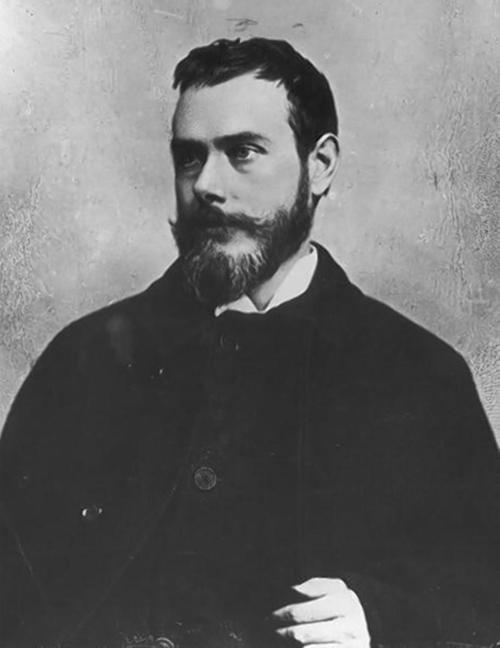
The famous poet Francis Thompson was the even more infamous Jack the Ripper.  Twenty years of research has led Richard Patterson to this conclusion.  Patterson sites some of the evidence that identifies Thompson as the Ripper:

Thompson…

… had surgical experience and hinted at his double life in some of his poems…

…kept a dissecting knife under his coat…

…was taught a rare surgical procedure that was found in the mutilations of more than one of the Ripper victims…

For the full story check out The New York Daily News: Jack the Ripper’s Real Identity.

10 Things You May Not Know About Teddy Roosevelt

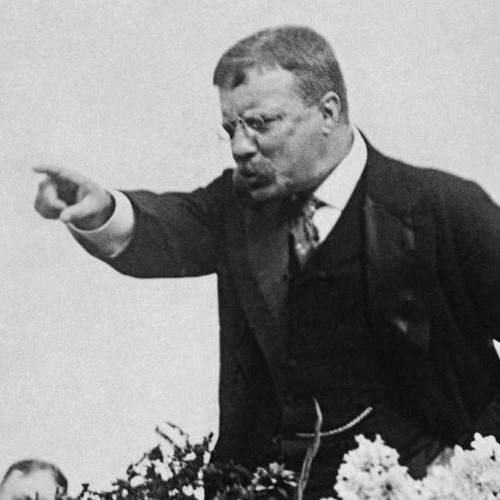
Christopher Klein and History.com present 10 Things You May Not Know About Teddy Roosevelt.  Here are three of my favorites…

His mother and his first wife died on the same day.

On Valentine’s Day in 1884, Roosevelt’s mother passed away from typhoid fever. One floor above in the same house, his first wife, Alice, died less than 12 hours later from Bright’s disease and complications from giving birth to the couple’s first child just two days before. “The light has gone out of my life,” Roosevelt wrote in his diary that night.

He won the Nobel Peace Prize.

The man famed for his exploits at San Juan Hill during the Spanish-American War and “Big Stick” diplomacy captured the 1906 Nobel Peace Prize for his role in mediating the Treaty of Portsmouth, which ended the Russo-Japanese War. Roosevelt was the first American to capture the award, and he used the prize money to fund a trust to promote industrial peace.

A boxing accident left him virtually blind in one eye.

Roosevelt boxed for Harvard University’s intramural lightweight championship and continued to spar recreationally during his political career. During his days in the White House, he regularly put up his dukes against former professional boxers and other sparring partners until a punch from a young artillery officer smashed a blood vessel and left him nearly blind in his left eye.

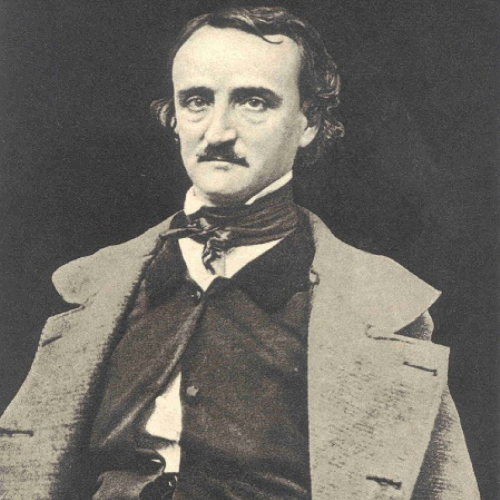
9 Mournful Facts About Edgar Allan Poe’s “The Raven”

Joy Lanzendorfer and Mental_Floss present 9 Mournful Facts About Edgar Allan Poe’s The Raven.  Here are three of my favorites…

1. AS POE WAS WRITING THE POEM, HIS WIFE WAS DEATHLY ILL. 
When Poe was writing “The Raven,” his wife, Virginia, was suffering from tuberculosis. It was a weird marriage—Virginia was Poe’s first cousin and only 13 years old when they married—but there’s no doubt that Poe loved her deeply. Having lost his mother, brother, and foster mother to tuberculosis, he knew the toll the disease would take. “The Raven” is a poem written by a man who’d lost many loved ones, and was soon expecting to lose one more.

6. “THE RAVEN” WAS AN IMMEDIATE HIT.
After Graham’s Magazine rejected the poem, Poe published it in The American Review under the pseudonym “Quarles.” In January 1845, it came out in The New York Mirror under Poe’s real name. Around the country, it was reprinted, reviewed, and otherwise immortalized. It soon became so ubiquitous, it was used in advertising.

And then there were the parodies. Within a month after “The Raven” came out, there was a parody poem, “The Owl,” written by “Sarles.” Others soon followed, including “The Whippoorwill,” “The Turkey,” “The Gazelle,” and “The Parrot.” You can read many of themhere. Abraham Lincoln found one parody, “The Polecat,” so hilarious that he decided to look up “The Raven.” He ended up memorizing the poem.
7. “THE RAVEN” MADE POE INTO A CELEBRITY …
Poe was soon so recognizable that children followed him in the street, flapping their arms and cawing. Then he’d turn around and say, “nevermore!” and they would run away, shrieking. Trying to capitalize off this fame, he gave lectures that included dramatic readings of the poem. They were apparently something to see. His lecture was “a rhapsody of the most intense brilliancy … He kept us entranced for two hours and a half,” said one attendee. Yet another said that Poe would turn down the lamps and recite “those wonderful lines in the most melodious of voice.” Another said, “To hear him repeat ‘The Raven,’ which he does very quietly, is an event in one’s life.”