Category: Celebs

10 Things You May Not Know About John Dillinger
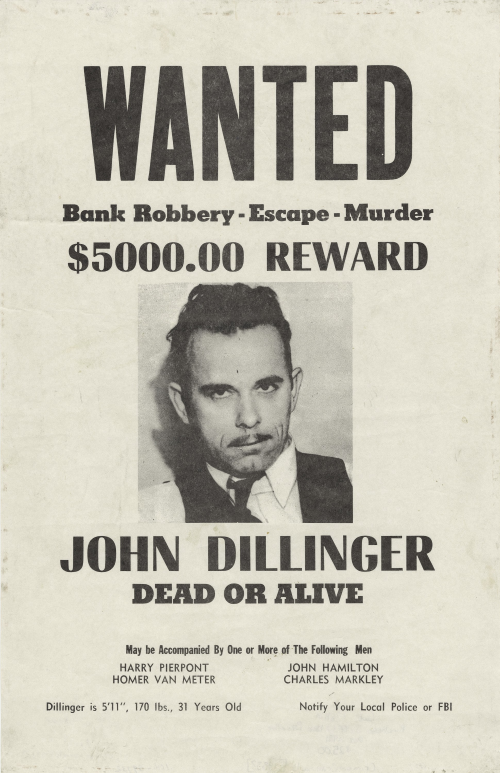
Evan Andrews and History.com present 10 Things You May Not Know About John Dillinger.    Here are three of the most interesting things and my thoughts on each…

Dillinger helped bust his fellow gang members of out of jail.
Dillinger committed a string of high profile heists during the summer of 1933, but he was desperate to reunite with some of his old prison buddies to form an ace bank robbing gang. That September, he began plotting to break his would-be accomplices out of the Indiana State Prison at Michigan City. Dillinger conspired to have three .38 pistols hidden in a crate of thread bound for the jail’s shirt making factory, allowing 10 convicts—including experienced stickup men “Handsome” Harry Pierpont, Charles Makley and John Hamilton—to get the drop on their guards and escape. The timing couldn’t have been better. Dillinger had been arrested at a girlfriend’s house only a few days before, and was languishing in jail in Lima, Ohio. On October 12, the newly liberated Pierpont and two other men waltzed in the front door and busted him out, gunning down the county sheriff in the process.
Craig: The fact that Dillinger was able to bust his crime partners out of prison and they in turn able to free him from a jail started the legacy of John Dillinger.

He robbed police stations.
While most criminals stayed as far away from lawmen as possible, Dillinger was willing to march right into their headquarters with gun in hand. Shortly after being sprung from jail in October 1933, Dillinger and his band carried out a pair of audacious heists on the police stations at Auburn and Peru, Indiana. As bewildered deputies looked on, the gangsters emptied their gun cabinets of Thompson submachine guns, shotguns, rifles, tear gas guns, bullet proof vests and more than a dozen pistols. The crooks immediately put the arsenal to use committing a wave of bank heists that left two police officers dead.

Craig: Dillinger did have guts and a tendency for flash.  How many other criminals have you heard of who would dare rob a police station?

He escaped from jail using a wooden gun.
Dillinger was arrested in Tucson, Arizona in January 1934, after locals recognized a few of his heavily wanted accomplices. Following a flurry of media coverage, he was extradited to Indiana and confined to the jail in Crown Point to await trial. Authorities boasted that the jail was escape proof, but Dillinger would only remain a resident for a little over a month. On March 3, 1934, he forced his way out of the main cellblock by brandishing a phony gun. Dillinger claimed he had fashioned it from a block of wood, a razor handle and a coat of black shoe polish, but reports would later suggest it was smuggled into the prison by one of his attorneys. In any case, Dillinger used the wooden pistol to round up several guards and get his hands on a Thompson submachine gun. Once armed with real firepower, he made his way to the prison garage, stole the sheriff’s personal police car and motored to Chicago. Amazingly, Dillinger was back in action only three days later, teaming with gangster Baby Face Nelson and others to knock over a bank in Sioux Falls, South Dakota.

Craig: One of the things Dillinger is most famous for is his breakout from the “escape proof” jail using a fake wooden gun to round up several guards and get his hands on real fire-power.  Dillinger’s escapes and escapades made him a celebrity, but folks lose sight of the good people who ended up dead because of Dillinger before he met the same fate.
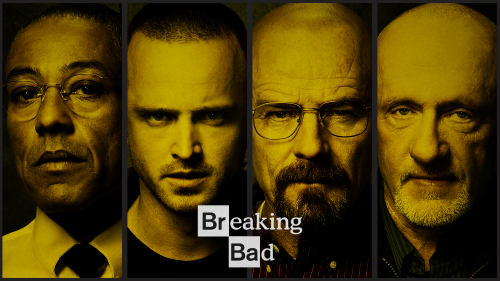
10 Things We Learned from the ‘Breaking Bad’ 10 Year Reunion [Comic-Con 2018]

Chris Evangelista and /Film present 10 Things We Learned from the ‘Breaking Bad’ 10 Year Reunion [Comic-Con 2018].  Be advised that major spoilers may be lurking if you proceed further.  Here are three of my favorite things learned and some of my thoughts about each…

2. Darkness Was Important
Breaking Bad was an extremely dark show, and the darkness was essential, as far as Vince Gilligan is concerned. “If the show is going to be about producing and selling meth, you want to take it seriously,” the creator said. “But you don’t have to make it some after school special – you just have to show the reality of why that’s a bad decision.” Gilligan also added that any time they needed to show a violent moment on Breaking Bad – like the episode “Krazy-8”, where Cranston’s Walter White has to strangle a man to death with a bike lock – it was important to never treat the violence as “entertainment”, but to rather highlight how unpleasant it was. “There has to be consequences,” Gilligan said. “If you don’t do that, you’re not doing the show justice.”
Craig’s thoughts:  Gilligan is so right.  Actions have consequences and bad actions can, or at least should weigh heavily on a character unless he/she is a sociopath.  The added layer brought realism and importance to those “dark” decisions.

4. Aaron Paul Misses Jesse
This may not seem like a huge revelation. But during the Hall H panel, actor Aaron Paul commented that he really “missed” playing tragic drug dealer Jesse Pinkman. What made this moment so memorable was the wealth of emotion in Paul’s voice – he sounded as if he was on the verge of tears as he uttered these words. It got to me.
Craig’s thoughts:  How can you not love how attached and appreciative some actors get to the characters that made them?

7. Bryan Cranston Would Frequently Trick Aaron Paul Into Thinking Jesse Was Going To Die
While Jesse Pinkman lived beyond the first season, and ended up surviving the series as a whole, Bryan Cranston would constantly prank Aaron Paul into thinking his character was going to die. As Paul and Cranston tell it, Cranston would come up to Paul and ask: “Have you read the latest script?” When Paul would say no, Cranston would give Paul a big hug and say, “I’m so sorry,” thus making Paul think his character was about to get bumped off. This apparently happened several times, and Paul apparently fell for it almost every time.
Craig’s thoughts: This is probably not a new story for most fans of Breaking Bad, but I think it is so funny that Cranston would mess with Paul like that… and of course Paul would fall for it!

The 10 Wildest Movie Plot Twists

Paul Shrodt and Mental Floss present The 10 Wildest Movie Plot Twists.  Be advised that major spoilers wait for those who venture further.  Using Shrodt’s list, here are three of my favorites and some of my thoughts to boot.

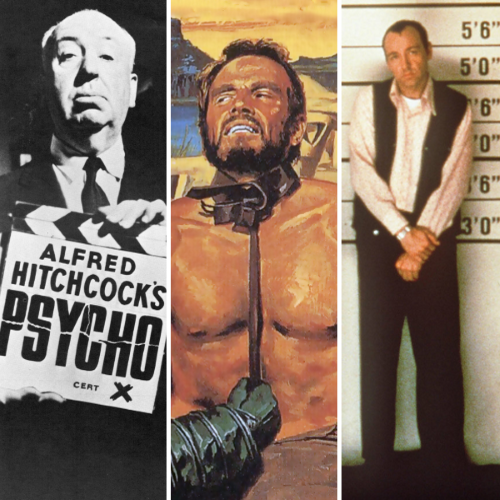
1. PSYCHO (1960)
Alfred Hitchcock often constructed his movies like neat games that manipulated the audience. The Master of Suspense delved headfirst into horror with Psycho, which follows a secretary (Janet Leigh) who sneaks off with $40,000 and hides in a motel. The ensuing jolt depends on Leigh’s fame at the time: No one expected the ostensible star and protagonist to die in a gory (for the time) shower butchering only a third of the way into the running time. Hitchcock outdid that feat with the last-act revelation that Anthony Perkins’s supremely creepy Norman Bates is embodying his dead mother.
Craig’s thoughts: Psycho makes the “twist” list for a couple of reasons.  1: It starts off with the feel of a crime movie and twists into a horror film.  Bravo!  2.  The twist ending is a classic and truly shocked audiences… still does.

2. PLANET OF THE APES (1968)

No, not the botched Tim Burton remake that tweaked the original movie’s famous reveal in a way that left everyone scratching their heads. The Charlton Heston-starring sci-fi gem continues to stupefy anyone who comes into its orbit. Heston, of course, plays an astronaut who travels to a strange land where advanced apes lord over human slaves. It becomes clear once he finds the decrepit remains of the Statue of Liberty that he’s in fact on a future Earth. The anti-violence message, especially during the political tumult of 1968, shook people up as much as the time warp.
Craig’s Thoughts: I saw the original Planet of the Apes during it’s initial run.  I was 9 years old and had no idea of the twist ending.  I. Was. Shocked.  The movie remains one of my favorites.

5. THE USUAL SUSPECTS (1995)
The Usual Suspects has left everyone who watches it breathless by the time they get to the fakeout conclusion. Roger “Verbal” Kint (Kevin Spacey), a criminal with cerebral palsy, regales an interrogator in the stories of his exploits with a band of fellow crooks, seen in flashback. Hovering over this is the mysterious villainous figure Keyser Söze. It’s not until Verbal leaves and jumps into a car that customs agent David Kujan realizes that the man fabricated details, tricking the law and the viewer into his fake reality, and is in fact the fabled Söze.
Craig’s Thoughts: The Usual Suspects is a modern classic.  What a great mystery told to us with all the clues right there.  Then when it all comes together in the end, we’re as shocked as David Kujan.

Additional thoughts:

The Sixth Sense is a great choice, but I picked the three above because they surprised me.  I knew the Sixth Sense had a twist at the end and actually figured it out early on.  It was cool to see how M. Night put it all together though.

I also applaud the twist in Primal Fear.  That one caught me off guard.  Kudos to Ed Norton’s acting.  Fight Club and The Others had interesting twists but didn’t shock me as much as the three I chose did.

Although it didn’t make the list, The Perfect Getaway is an under-rated film with a great twist ending.  Written and directed by David (Pitch Black) Twohy it stars  Milla Jovovich, Steve Zahn, Timothy Olyphant and Chris Hemsworth.

26 Things We Learned from Tom Cruise and JJ Abrams’ “Mission: Impossible III” Commentary

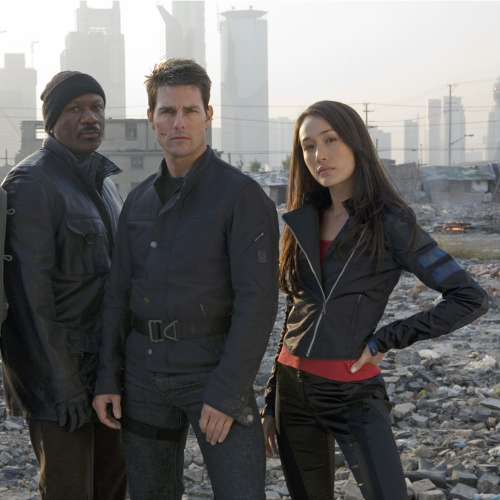
Rob Hunter and Film School Rejects present 26 Things We Learned from Tom Cruise and JJ Abrams’ Mission: Impossible III Commentary.  Here are three of my favorites…

5. That’s Abrams’ voice on the phone calling Hunt at the party. His hands also cameo as the coroner removing the explosive charge from Lindsey Farris’ (Keri Russell) dead head.

14. They couldn’t control the area for the scenes shot around the actual Vatican, and crowds gathered which caused interruptions. “So what we did is about a block and a half away from this location we set up a phony shoot, and we had three girls in bikinis and three old women dressed as nuns, and we had a camera and we had a tent. We pretended to be shooting something.”

20. “Listen carefully to the flute,” says Abrams during the scene where Musgrave mouths his support to a secured Hunt. “It’s the Mission: Impossible theme.”

10 Facts About Steven Spielberg’s “Duel”

Sean Hutchinson and Mental Floss present 10 Facts About Steven Spielberg’s Duel.  Here are three of my favorites…

1. THE MOVIE WAS INSPIRED BY A REAL-LIFE INCIDENT.
Author and screenwriter Richard Matheson based his original novella, which first appeared in the April 1971 issue of Playboy, on an actual road rage incident. Matheson had played a round of golf on November 22, 1963, the same day President John F. Kennedy was assassinated. On his car ride home, and in a daze after receiving the terrible news, he was ruthlessly tailgated by a truck driver.

Matheson initially pitched the idea to TV producers but, after it was rejected numerous times, he decided to put his real-life incident into prose form. In order to gather details of the open road, Matheson set out from his home in Ventura, California with a voice recorder in hand and simply described what he saw. Those descriptions of the desolate landscape ended up in the novella.

3. DENNIS WEAVER’S WORK WITH ORSON WELLES GOT HIM THE LEAD IN DUEL.

For the lowly protagonist, David Mann, Spielberg hand-picked character actor Dennis Weaver because he loved his performance as the jittery and feeble hotel night manager in Orson Welles’s 1958 film Touch of Evil.

Weaver drove more than 2000 miles while shooting his scenes, and did many of the stunts himself, including the dangerous phone booth scene at the “Snakerama” gas station in a single take.

Of working with the rookie director, the veteran Weaver later said, “I gave him the benefit of the doubt. I said, ‘There’s no reason for me to judge him because of his age. Let’s see what he does.’ And he did extremely well … I really think it’s one of the most creative jobs he’s ever done.”

10. SPIELBERG HAS REVISITED DUEL MORE THAN ONCE—AND PEOPLE HAVE STOLEN FROM HIM, TOO.
Duel was something of lucky charm once Spielberg’s career began to take off, and he’d continually reference parts of the movie in subsequent films.

The Snakerama gas station seen in the film also appears in Spielberg’s 1979 World War II comedy, 1941, with actress Lucille Benson again appearing as the proprietor. The two elderly people Weaver tries to flag down in a car also appear as helpless motorists in Close Encounters of the Third Kind.

But it wasn’t all good luck. Spielberg was not happy when stock footage of both vehicles was later used in an episode of the television series The Incredible Hulk, titled “Never Give a Trucker an Even Break.” The recycled footage was completely legal since the show was also produced by Universal

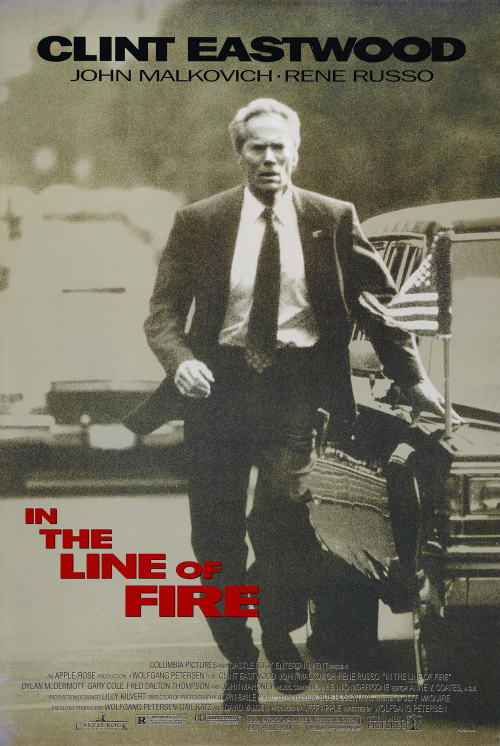
11 Surprising Facts About “In the Line of Fire”

Jennifer M. Woods and Mental Floss present 11 Surprising Facts About In the Line of Fire.  Here are three of my favorites…

3. AT ONE POINT, ROBERT REDFORD WAS ATTACHED TO STAR.
Though Clint Eastwood will forever be associated with the role of ultra-dedicated Secret Service agent Frank Horrigan, he was hardly the first choice for the role. As the script made its way around Hollywood over the years, a number of other actors were either attached to or offered the project, including Robert Redford. Dustin Hoffman, Sean Connery, James Caan, Tommy Lee Jones, and Val Kilmer were among the other names wanted for the role of Horrigan.

6. FRANK HORRIGAN WAS INSPIRED BY ONE OF JFK’S SECRET SERVICE AGENTS.
Though the movie is a work of fiction, main character Frank Horrigan was partly inspired by Clint Hill, one of John F. Kennedy’s Secret Service agents who was on duty the day the 35th president was assassinated in Dallas. In 1975, Hill sat down for an emotional interview with Mike Wallace on 60 Minutes, where he broke down and admitted that he felt responsible for what had happened that terrible day.

“I still feel today a sense of failure and responsibility because that was our job: to keep the president safe, to protect him at all costs,” Hill said. “And on that particular day, we were unable to do that.” Much of Horrigan’s desire to right that wrong came from Hill’s interview.

8. WOLFGANG PETERSEN WAS A LITTLE INTIMIDATED BY CLINT EASTWOOD.
Though he was already a highly acclaimed director with two Oscar nominations on his resume (for writing and directing 1981’s Das Boot), Petersen admitted that the idea of directing a Hollywood icon like Eastwood was a slightly terrifying prospect.

“I must admit, I was initially a bit intimidated at the prospect of directing Clint, but any fears I had disappeared after our first meeting, and once we started shooting he never challenged my direction,” Petersen told the Los Angeles Times. “At the beginning he told me, ‘I won’t interfere, but if you want my advice I’ll be there for you—otherwise I’ll leave you alone.’ I took up his offer and consulted him a lot.”

Jon Pinto Casts Paul Newman as Aquaman!

Dream casting can be a fun game when played with friends.  Can you imagine Bruce Lee in The Matrix?   How about Alfred Hitchcock’s Halloween starring Kim Novak and Robert Mitchum?

Jon Pinto and some of his friends were riffing on Aquaman and decided that Paul Newman would be the ideal lead for a movie made back in the day.  Of course Sidney Poitier and Ann Margaret would co-star!  You can see an ocean-sized version of Pinto’s poster by clicking over.

We need more of these, Jon!

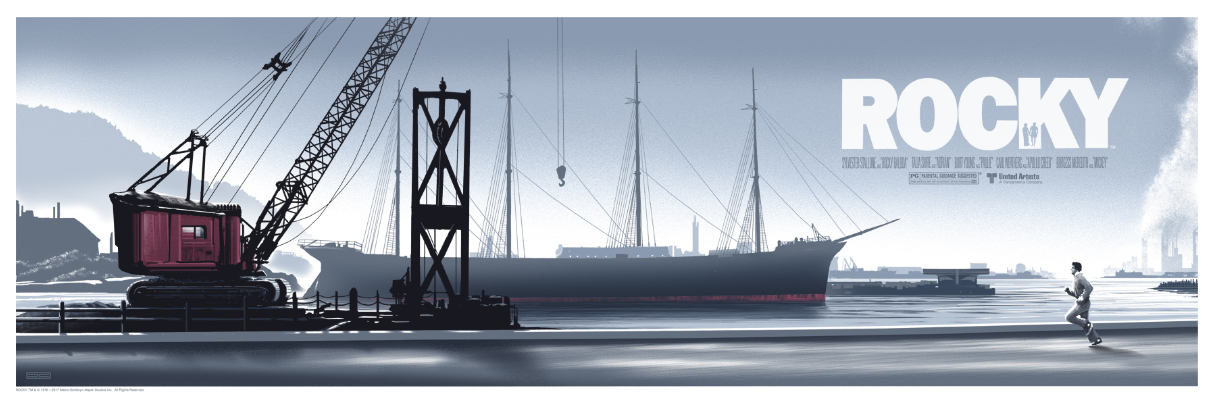
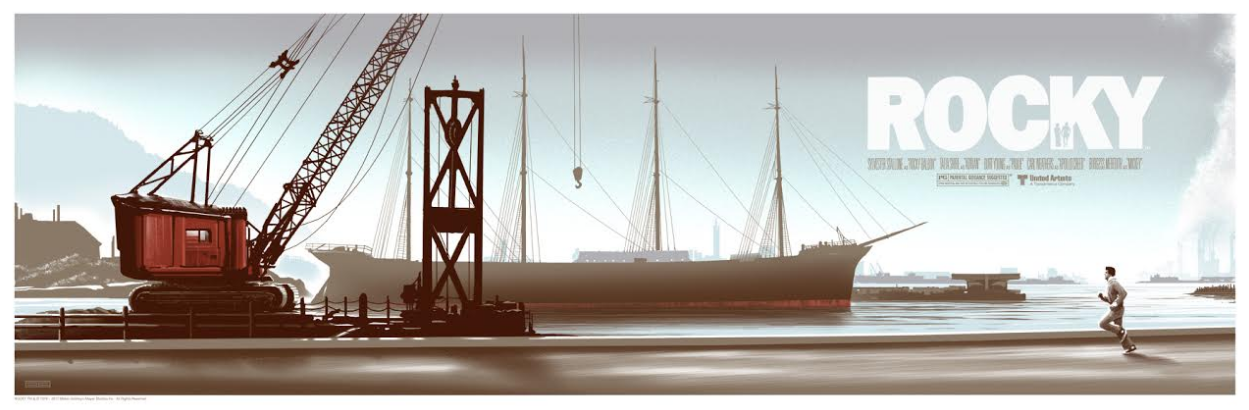
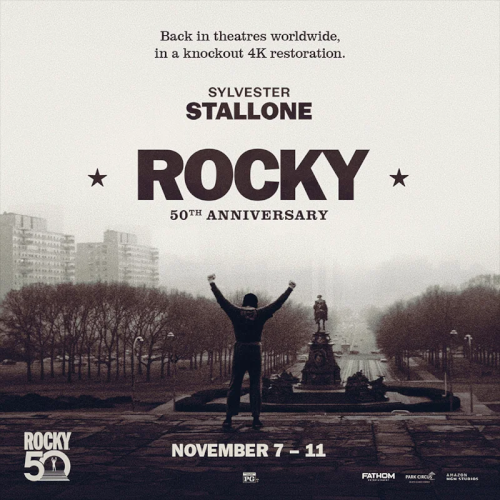
“Rocky” by JC Richard from Grey Matter Art Ready for Framing!

A couple of weeks ago I posted that Grey Matter Art, under license from MGM, was set to release a new officially licensed, limited edition screen print featuring “Rocky” by artist, JC Richard.  As you can see I can’t wait to get mine framed and up!

If you’re interested in getting a print here are the details:

“Rocky” by JC Richard
12″ x 36″ hand-numbered screen print
Regular Edition: 150/40.00
Variant Edition: 75/50.00
Printed by: D&L Screenprinting

This poster is released through www.greymatterart.com

Follow Grey Matter Art on Twitter, Facebook, and Instagram, and be sure to sign up for the GMA Newsletter for all future news & information.


10 Slap-Happy Facts About The Three Stooges

Jake Rossen and Mental Floss present 10 Slap-Happy Facts About The Three Stooges.  Here are three of my favorites…

3. HITLER WANTED THEM DEAD.

Having established their comic personas on film, the Stooges proceeded to make some accidental history. Their 1940 short, You Nazty Spy!, was the first American production to openly make a mockery of Adolf Hitler’s regime. (Charlie Chaplin’s The Great Dictator opened nine months later.) The short was perceived as a great insult by the Führer, who listed the Stooges as favored casualties on his own personal death list. (It’s not known whether he named each one individually.)

7. A REPLACEMENT STOOGE HAD A NO-VIOLENCE CONTRACT CLAUSE.
Sorting out the musical chairs of Stooges enrollment can be difficult: While Moe and Larry were largely engrained, the trio was originally rounded out with Shemp before he departed for a solo career: Curly was his replacement. Following Curly’s departure due to illness, Shemp stepped back in, but he died in 1955. After briefly considering a run as the Two Stooges, Moe and Larry recruited Joe Besser, a comic actor who already had a deal with Columbia, in 1956. But Besser wasn’t quite as game for the physical comedy as his predecessors. He insisted his contract contain language prohibiting him from being abused to excess, including anything pastry-related. “I never was the type of comic to be hit by a pie,” he said, a mentality that calls into question the decision to become part of The Three Stooges. Following Besser’s departure in 1959, the group roped in Joe DeRita for live shows and several feature films, including 1961’s Snow White and the Three Stooges.

10. THERE’S A STOOGES MUSEUM IN PENNSYLVANIA.

The Stooges’ vital contributions to pop culture have always deserved some archival recognition. They got it in 2004, when The Stoogeumopened its doors in Ambler, Pennsylvania, about 25 miles outside of Philadelphia. The museum’s founder is Gary Lassin, who married Larry Fine’s great niece in 1981. A Stooges fan, Lassin acquired over 100,000 items related to their careers and displays roughly 3500 pieces at a time. There’s a Hall of Shemp, a game area (with Whack-a-Moe), as well as countless artifacts.

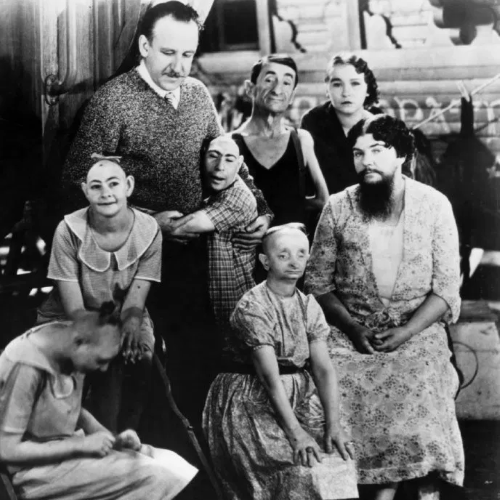
11 Astonishing Facts About “Freaks”

Matthew Jackson at Mental Floss posted 11 Astonishing Facts About Freaks.  Here are three of the most interesting…

2. MGM WANTED IT TO RIVAL DRACULA AS A HORROR FILM.

Though there were certainly monstrous characters populating various silent films (particularly those portrayed by Chaney in The Phantom of the Opera and London After Midnight), the horror film as a genre didn’t really take off until the era of talkies began. Shortly after Chaney’s death due to complications from lung cancer, Browning was off at Universal Pictures, helping to lead the horror wave with his now-classic adaptation of Dracula. When Browning returned to MGM in the wake of Dracula’s success, head of production Irving Thalberg wanted to capitalize on the horror boom. The hope was that, with the director of Dracula back at the studio, MGM could best Universal with something even more horrifying, and so Browning was finally given the go-ahead to make Freaks, which had remained a pet project of his for years.

According to Skal, it became a classic lesson for Thalberg in being careful what you wish for: The story goes that after he was presented with the screenplay for the film, Thalberg reportedly hung his head and said, “Well, I asked for something horrible, and I guess I got it.”

10. IT DERAILED BROWNING’S CAREER.

Before Freaks, Browning was one of the most successful directors in Hollywood, and his success had earned him enough clout to get the ambitious and gutsy film made after Dracula hit big at Universal. After Freaks, he never quite recovered. According to Skal, this was not just due to that film’s failure, but due to Browning’s continued discomfort with the change in the filmmaking process that came from the rise of talkies. That discomfort, coupled with an increasing inability to get more personal projects approved by the studios in the wake of Freaks, led to his decline in the 1930s.

Browning directed just four more films (two of them uncredited), with his final directing credit coming on the MGM mystery Miracles for Sale in 1939. He retired with enough savings from his directorial successes to live comfortably in a pair of homes in Beverly Hills and Malibu, and died in 1962.

11. IT FOUND A NEW AUDIENCE IN THE 1960S.

After its critical and commercial failure in the United States, Freaks faded into the background as a kind of Hollywood curiosity, and was banned in several countries (including the United Kingdom) for decades. The film was licensed by distributor Dwain Esper in the late 1940s, and played on the grindhouse circuit at various independent theaters, but it wasn’t until the 1962 Cannes Film Festival that the film’s revival really began. After screening there, it was heralded as a kind of forgotten classic. Noted film collector and archivist Raymond Rohauer picked up the baton from there, landing the rights to Freaks and showing it as a cult film. It gained prominence on the midnight movie circuit, and found particular success with members of the 1960s counterculture movement, who saw kindred spirits in its cast.


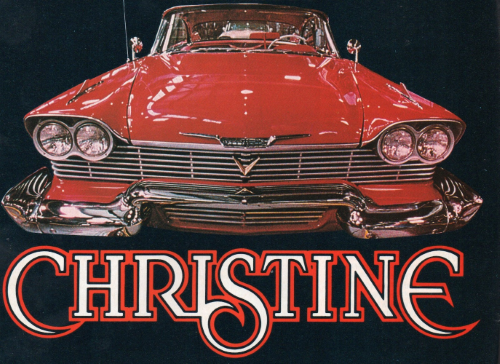
15 Facts About John Carpenter’s “Christine”

Sean Hutchinson at Mental Floss posted 15 Facts About John Carpenter’s Christine.  Here are three of my favorites…

2. JOHN CARPENTER SIGNED ON SIMPLY BECAUSE HE WANTED A JOB.
Kobritz approached John Carpenter after the critical and financial failure of his 1982 adaptation of The Thing, which is now widely regarded as one of the filmmaker’s best.

The pair previously worked together on Carpenter’s 1978 TV movie Someone’s Watching Me! and Carpenter agreed to take on the project because he wanted to jump immediately into another movie after his first high-profile box office flop.

8. KEVIN BACON WAS ORIGINALLY CAST AS ARNIE.

Carpenter held auditions in California and New York, looking for the right fresh faces for the teen characters in the film, and he found the perfect newcomer for Arnie: Kevin Bacon.

The now-famous actor’s only other significant work at the time was bit parts in Animal House and Friday the 13th, and Kobritz and Carpenter thought Arnie’s transformation from dweeby hero to suave villain was a perfect fit for Bacon. But after being cast, Bacon dropped out when he was offered a starring role in Footloose.

Carpenter went back the the drawing board to cast Arnie, and eventually found actor Keith Gordon in a play in New York City. Carpenter initially took to Gordon as Arnie because of the actor’s previous appearance in Brian De Palma’s thriller Dressed to Kill.

7. CARPENTER DIDN’T WANT TO CAST MOVIE STARS.

Columbia execs wanted a star-studded cast to round out their King adaptation, and suggested that Brooke Shields—coming off the hit film The Blue Lagoon—be cast as Leigh, and Scott Baio be cast as Arnie. But Carpenter didn’t want recognizable faces in the movie as a way to stress that the titular car was the real star of the movie.