Category: Celebs

Dave Wachter and the Rhinestone Cowboy

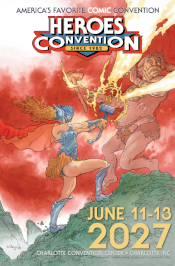
Dave Wachter is back and he brought his take on Sly from the Rhinestone. I met Dave several years ago and became an instant fan. I wasn’t the only one to discover Dave’s fantastic sketches! How can you not like a great guy who is a terrific artist?

It has become a HeroesCon tradition that I get  Dave to draw his take on Sly.  Somehow this one was never posted until now.

You can see more of Dave’s art at his site. – Craig

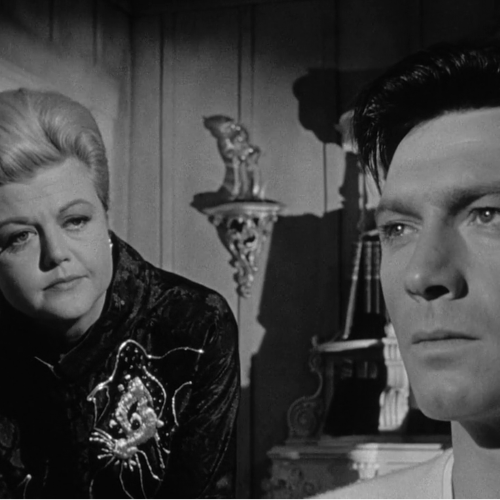
13 Conspiratorial Facts About “The Manchurian Candidate”

Eric D. Snider and Mental_Floss present 13 Conspiratorial Facts About The Manchurian Candidate.  Here are three of my favorites…

1. JOHN F. KENNEDY HELPED IT GET MADE.
Frank Sinatra had a deal with United Artists and wanted the studio to make an adaptation of Richard Condon’s 1959 novel. But the execs at UA thought the subject matter was too politically controversial and wanted nothing to do with it. Lucky for Sinatra, he had friends in high places, including President John F. Kennedy. Frank visited JFK, who’d been a fan of the novel, and the president made a personal appeal to UA head Arthur Krim, who was especially apt to listen because he was also the Democratic Party’s finance chairman. Condon later told a Sinatra biographer, “That’s the only way the film ever got made. It took Frank going directly to Jack Kennedy.”

4. THE BLURRY SHOTS WEREN’T AN ARTISTIC CHOICE.
Near the end of the film, when Marco visits Raymond’s hotel room and interrogates him, trying to undo the effects of the brainwashing, some shots of Sinatra are out of focus. Director John Frankenheimer said he got a lot of praise from critics for this “artistic choice”—showing Marco the way the addled Raymond sees him—but, in fact, it was the assistant cameraman’s mistake. Frankenheimer was horrified when he saw the footage and called Sinatra back in to reshoot those scenes, but Sinatra couldn’t deliver a performance better than that first, blurry one.

5. SINATRA WANTED LUCILLE BALL TO PLAY THE CONNIVING MOTHER.
Frankenheimer, who’d worked with Angela Lansbury just a few months earlier on All Fall Down, always wanted her for the part of Mrs. Eleanor Shaw Iselin. But Sinatra had an interesting suggestion, too: Lucille Ball. Putting TV’s queen of slapstick in such a malevolent role would have been perversely amusing, but, alas, it was not to be.

You Betcha: 14 Polite Facts About TV’s Fargo

Jake Rosen and Mental_Floss present You Betcha: 14 Polite Facts About TV’s Fargo.  Here are three of my favorites…

2. THERE’S A REASON THEY DIDN’T USE MARGE.
One reason Littlefield was more supportive of this spin-off was because creator Noah Hawley had no desire to revisit McDormand’s Marge Gunderson character, the heavily-pregnant sheriff of Brainerd, Minnesota. In 2014, Hawley told IndieWire that he opted for an anthology format with a different narrative every season to avoid the show becoming about the “grim” day-to-day adventures of Marge.

4. THE SERIES IS ALL TAKEN FROM A (FAKE) TRUE CRIME BOOK.
Hawley has been quoted as saying he thinks of the Fargo-verse as being influenced by a big book of Midwestern crime tales, with each season being a different chapter. He cemented that idea in the ninth episode of the second season, opening with a close-up of a book titled The History of True Crime in the Midwest.

5. … WHICH MIGHT EXPLAIN THAT UFO.
Saving Patrick Wilson’s Lou Solverson character during the “Massacre at Sioux Falls” referenced in the first season was the appearance of what appeared to be a UFO hovering over a motel parking lot. Even by Fargo’s standards, it was a strange occurrence. According to Hawley, who was pressed for some kind of explanation during a June 2016 book signing, the scene stemmed from the idea that the show is taking cues from “true crime” books and all of the unbelievable details they often contain.

Speaking of a similar scene that felt disconnected from the narrative of the original film, Hawley said that he asked himself, “‘Why is this in the movie?’ It has nothing to do with the movie—except the movie says, ‘This is a true story.’ They put it in there because it ‘happened.’ Otherwise you wouldn’t put it in there. The world of Fargo needs those elements; those random, odd, truth-is-stranger-than-fiction elements.”

12 Thrilling Facts About “Rear Window”

Kristin Hunt and Mental_Floss present 12 Thrilling Fact About Rear Window.  Here are three of my favorites…

3. GRACE KELLY TURNED DOWN THE LEAD IN ON THE WATERFRONT TO STAR IN REAR WINDOW.
In the fall of 1953, Grace Kelly was offered the female lead in two films: one was Rear Window, the other was Elia Kazan’s On the Waterfront. Although she was dying to work with Hitchcock again, On the Waterfront would’ve allowed Kelly to stay in New York, which she preferred to Los Angeles. Still, she ultimately chose to play socialite Lisa Fremont over blue-collar Edie Doyle. Instead, the part went to Eva Marie Saint, who would become a Hitchcock blonde herself with North by Northwest.

4. HITCHCOCK MODELED THE VILLAIN ON A PRODUCER HE HATED.
Hitchcock had a long-standing grudge with his former producer, David O. Selznick. The director believed Selznick had meddled too much with his movies, so much so that Hitchcock effectively disowned his first film with the producer, Rebecca. His ties to Selznick ended with the 1947 movie The Paradine Case, though, so Hitch decided to enact a sly bit of revenge onscreen. It involved Raymond Burr, the actor playing Rear Window villain Lars Thorwald. Hitchcock gave Burr glasses just like Selznick’s and curly gray hair to match. He also instructed Burr to adopt many of the producer’s mannerisms, such as the way he cradled a telephone in his neck. When all was said and done, Burr’s murderous character looked a lot like Selznick, no doubt to the producer’s supreme annoyance.

11. HITCHCOCK DELIBERATELY MISDIRECTED HIS ACTORS FOR LAUGHS.
Each neighbor has a hook: Miss Torso is a dancer, Miss Lonelyhearts is severely single, the Songwriter is, well, a songwriter. Then there’s that random couple sleeping on the fire escape. Actors Sara Berner and Frank Cady played the unnamed pair, who spend most of the movie fidgeting on a mattress outdoors without incident. Until it rains. For this scene, Hitchcock intentionally messed with his actors. He told Berner to pull the mattress one way and Cady to pull it the other. Neither one knew the other had received conflicting directions. So when Hitchcock called “action,” the pair struggled with the mattress until Cady accidentally flew into the window. Hitchcock thought it was so funny, he kept it in the movie.

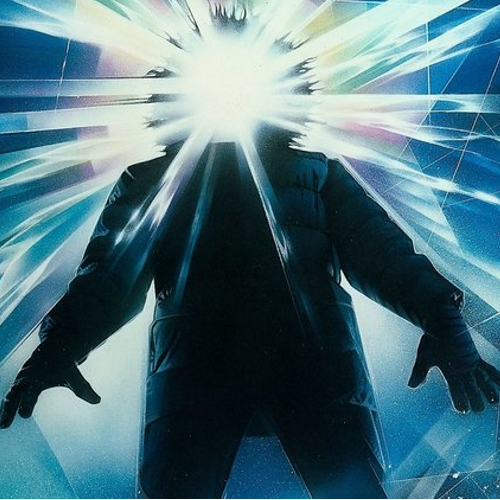
How to Tell Who is the Monster in John Carpenter’s “The Thing”

John Carpenter’s The Thing has an ambiguous ending that fans have argued about since the release of the film.  Seems the arguing can stop now thanks to the information provided by Dean Cundey, the cinematographer on The Thing.

Check out the ending and see if you can spot who (is either) is The Thing.  If you can’t and you want to know the secret, then click over to Fascinating Secret About the Monster in John Carpenter’s The Thing Revealed at GeekTyrant.

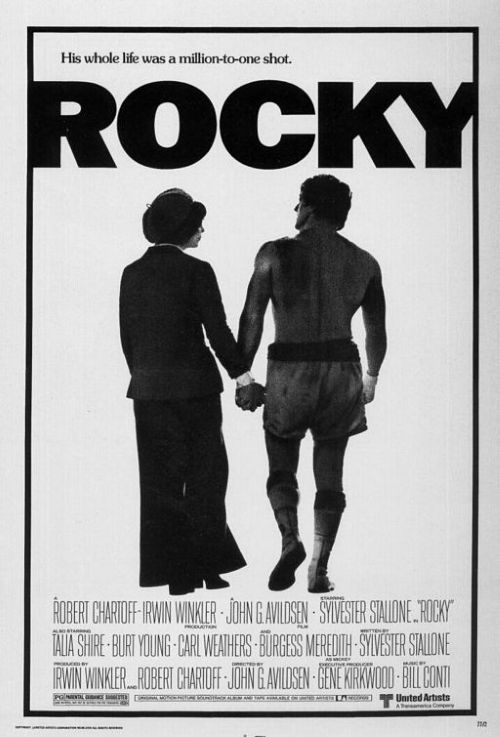
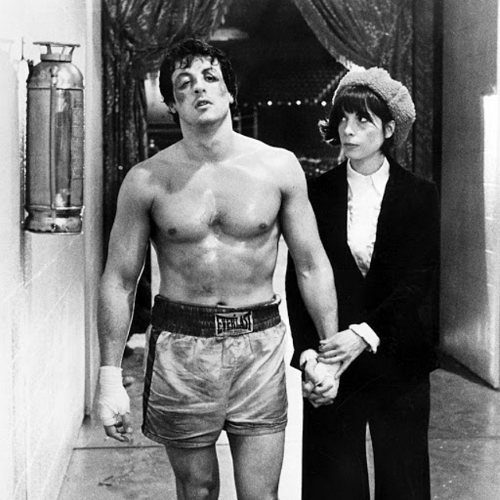
Rocky (1976) / Z-View

Rocky (1976)

Director: John G. Avildsen

Screenplay: Sylvester Stallone

Stars: Sylvester Stallone, Talia Shire, Burt Young, Carl Weathers, Burgess Meredith, Tony Burton, Joe Spinell, Thayer David, Frank Stallone and Stan Shaw.

The Pitch: “Hey, the screenwriter wouldn’t sell without starring in it, but for a million bucks we should be able to make a small profit.”

Tagline:  “His whole life was a million to one shot.”

The Overview:  Beware of Spoilers…

Rocky Balboa [Stallone] is a collector for a neighborhood loan shark [Spinell] and a small-time boxer.  Rocky has a thing for Adrian [Shire], the sister of his best friend Paulie [Young] but she’s so shy, he’s getting nowhere fast.

When the Heavyweight Champion of the World, Apollo Creed [Weathers] learns that his scheduled opponent won’t be able to fight him in Philadelphia and no other top contenders are ready to take the fight on short notice, Creed comes up with a gimmick.  He’ll give a local fighter a shot at the title.  Because Creed likes Balboa’s Italian Stallion moniker, he decides to give Rocky the title shot.

Rocky reluctantly takes the fight — no one has ever gone the distance with Creed — and feels even if loses but is standing at the end, then he’ll have proved he isn’t just another bum from the neighborhood.

On the surface Rocky is a boxing movie but at the heart is a love story, a tale of relationships and a man’s desire to prove his worth.

Rocky premiered at the perfect time for me.  I was 17 years old and had followed Stallone’s career since Lords of Flatbush.  To see Sly getting his shot (after turning down a huge payday for the screenplay and not starring in the film), and to see the film be the perfect combination of cast, director, editing and score resonated with me.  Rocky became my all-time favorite movie on the first viewing and has remained so.

Often when reviewing or rating Stallone films I have to qualify my rating because of Stallone being my favorite actor.  I don’t have to do that with Rocky.  Rocky is that great of a movie winning the Academy Award for  Best Picture of the Year as well as many other awards and nominations.
Rating:

10 Amazing Facts You Probably Didn’t Know About Wolverine

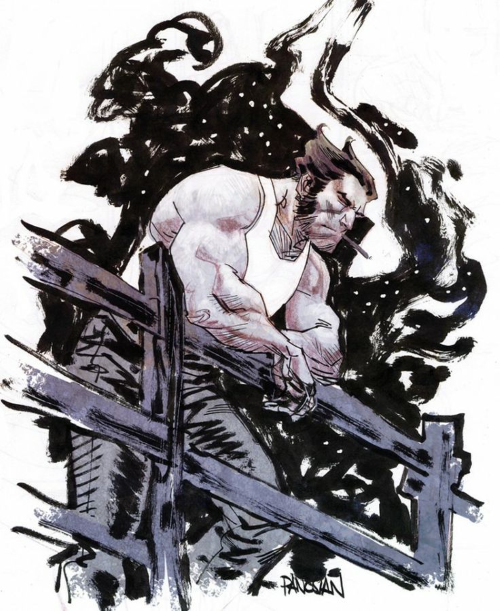
Wolverine art by Dan Panosian

ComicBookMovie.com presents 10 Amazing Facts You Probably Didn’t Know About Wolverine.  Here are three of my favorites…

10. His Claws Weren’t Originally Part Of Him
Wolverine has a lot of cool powers, including enhanced senses and the ability to heal from pretty much any injury. However, the pièce de résistance is obviously his six deadly claws. Creator Len Wein originally had some very different ideas for those though, and among his earliest ideas was that Logan would be a wolverine who had somehow mutated into a humanoid creature, similar to the Teenage Mutant Ninja Turtles.

As if that wasn’t already weird enough, the now iconic claws would have been revealed as gloves with the claws attached to them, robbing Wolverine of arguably his most recognisable feature (and that classic “Snikt!” sound). It wasn’t until years later that we would learn those those claws were actually part of his skeleton before being coated in Adamantium.

7. Hugh Jackman Wasn’t Bryan Singer’s First Choice
After seeing Hugh Jackman play Wolverine almost countless times, it’s now hard to picture anyone else in the role (and with his final appearance as Logan set for next year, replacing him will be a huge challenge for 20th Century Fox). However, while this may now be hard to believe, Jackman wasn’t actually X-Men director Bryan Singer’s first choice to play the character.

It was Russell Crowe who both the filmmaker and the studio really wanted in the role, but he had no interest in joining the comic book adaptation. It was then that Dougray Scott was chosen to play Wolverine, but when scheduling conflicts forced him to drop out just weeks before the cameras started rolling, the unknown Jackman was chosen at the last minute, a decision Singer wasn’t initially that pleased with. Needless to say, it all worked out for the best!

4. Later Versions Were Modeled After Clint Eastwood
As you’ve now no doubt already realised, Wolverine was very much a work in progress when he was first introduced. Having decided against making the hero an angry teenager with clawed gloves, Marvel portrayed Logan as being a little rougher around the edges after he joined the X-Men. However, while his appearance had already been settled on, it’s Chris Claremont and Frank Miller who deserve the lion’s share of credit for the version of Wolverine we all know and love today.

Just like he did with Daredevil, Miller played a huge role in redefining how readers viewed Logan by taking inspiration from Clint Eastwood. That’s something which we’ve also been able to see on the big screen with Hugh Jackman, while Miller can also be credited with dreaming up the iconic line, “I’m the best there is at what I do, but what I do best isn’t very nice.”

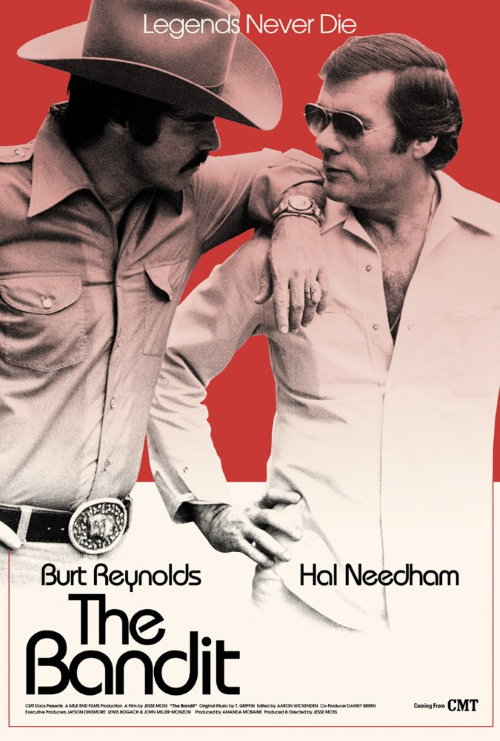
“The Bandit” (2016) / Z-View

The Bandit (2016)

Director: Jesse Moss

Screenplay: N/A

Stars: Mike Henry, Robert L. Levy Robert L. Levy, David Needham, Hal Needham, Burt Reynolds and Paul Williams.

The Pitch: “We could make a documentary about the making of ‘Smokey & the Bandit’… or a documentary about Hal Needham… or we could do both!”

Tagline: “Old Legends Never Die”

The Overview:  Beware of Spoilers…

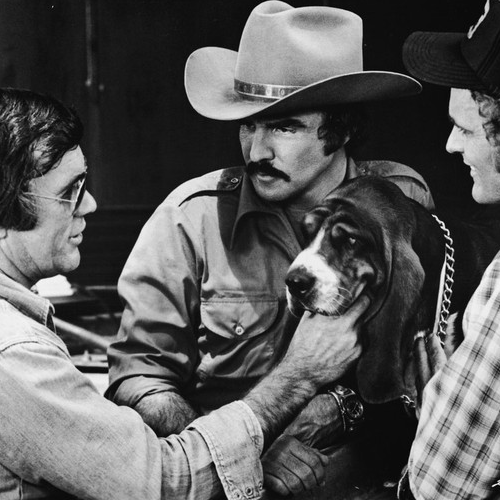
The Bandit is a well done documentary that takes us behind-the-scenes on the making of Smokey and the Bandit with a focus on Hal Needham the stuntman turned director who came up with the idea and got his best buddy, Burt Reynolds to star in the film.

Rating: 4 of 5 stars.
10 Cool Things About “Body Heat”

Roger Cormier and Mental_Floss present 10 Cool Things About Body Heat.  Here are three of my favorites…

2. CHRISTOPHER REEVE TURNED DOWN THE ROLE OF NED.
“I put myself down too much,” Reeve told The Washington Post of the missed opportunity. “I didn’t think I’d be convincing as a seedy lawyer.” Reeve later regretted the decision, but was happy that his friend, William Hurt, was cast in the role instead.

5. IT WAS SHOT IN FLORIDA—AND IT WAS VERY, VERY COLD.
The film was shot during a cold Florida winter. Turner and Hurt had to put ice cubes in their mouths before each take so their breath wouldn’t show. Their sweat was sprayed on. When the two shot their sex scene, the crew was dressed in duffel coats and scarves.

8. IT WAS MICKEY ROURKE’S BIG BREAK.
Mickey Rourke had already appeared in 1941 (1979) and Heaven’s Gate (1980), but told Larry King that his breakthrough came from playing Teddy Lewis in Body Heat. When Rourke got the one-day gig, he was able to quit his job as a bouncer at a transvestite nightclub.

48 Things We Learned from David Fincher’s Zodiac Commentary

Rob Hunter and Film School Rejects present 48 Things We Learned from David Fincher’s Zodiac Commentary.  Here are three of my favorites…

13. Fincher thinks the reason why the Zodiac still haunts people is due as much to his letters as to anything else. The idea of an ongoing correspondence with someone who was in the process of killing fascinates him.

15. All of the blood in the film is digital because it saved the production enormous amounts of time by not having to wait for wardrobe changes and cleaning.

18. Dermot Mulroney is in great shape, but Fincher was having none of it. “I wanted him to have a waistline like mine so we made up a little fat suit for him.”

The Strain Producers Carlton Cruse & Chuck Hogan Talk about Watching the Apocalypse Happen!

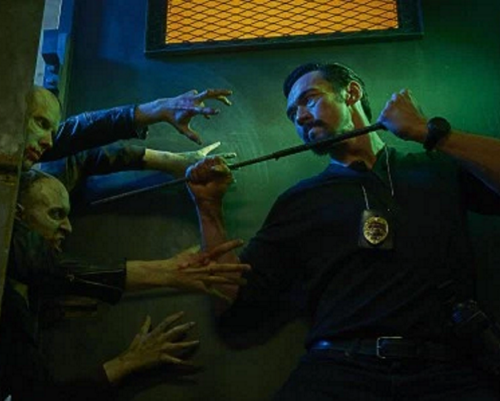
The Strain is one of my favorite shows producing new episodes.  Based on the trilogy of books by Guillermo del Toro and Chuck Hogan, The Strain tells the story of a vampire apocalypse… but these ain’t your pop’s or your little sister’s vampires!  They’re not romantic and they don’t sparkle.

One of the things that I love about apocalyptic stories takes place at their start when no one is sure what is going on or what is the best course of action to take.  You know, when Brad Pitt watches in amazement as normal citizens begin attacking each other, or when Barbara is attacked in the graveyard by the creepy guy in the business suit or when Rick wakes from his coma to discover… well you get what I mean.

That’s one of the reasons I’m such a fan of The Strain.  We’re two seasons in and just 23 days have passed.  The audience knows what’s coming but the characters on the show have only slowly come to realize what’s happening.  The producers were brave (smart) enough to not just jump in to the frenzy.  A slow build-up has been such fun.  I can’t wait for season three to start Sunday night.

/Film has an interview with The Strain Producers Carlton Cruse & Chuck Hogan Talk about Watching the Apocalypse Happen!