Category: Celebs

16 Lively Facts About “Death Wish”

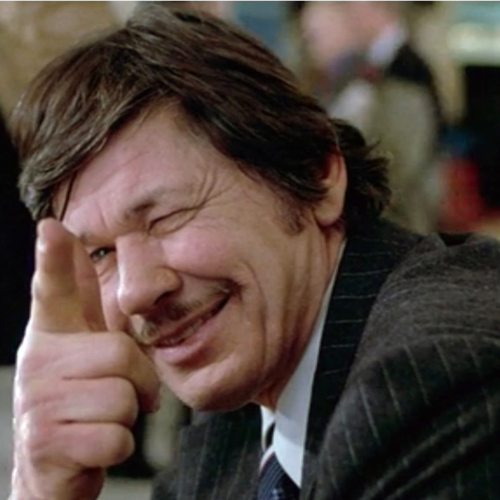
Roger Cormier and Mental_Floss present 16 Lively Facts About Death Wish.  Here are three of my favorites…

4. CHARLES BRONSON AND HIS AGENT DISAGREED ON THE FILM’S MESSAGE.
“It’s the only time Paul Kohner, my agent, ever disagreed with me about a film,” Bronson said in 1974. “Paul felt very strongly that it was a dangerous picture—that it might make people think it’s right to take the law into their own hands. This is what the hero of the picture does when he wants a one-man vigilante squad to kill muggers, after three of them have murdered his wife and raped his daughter. I told Paul I thought the message was the same there that runs through a lot of my pictures: That violence is senseless because it only begets more violence.”

6. DENZEL WASHINGTON MADE HIS ON-SCREEN DEBUT IN THE MOVIE.

Denzel Washington’s acting debut as a thug was, unfortunately, uncredited. He was 19 years old at the time.

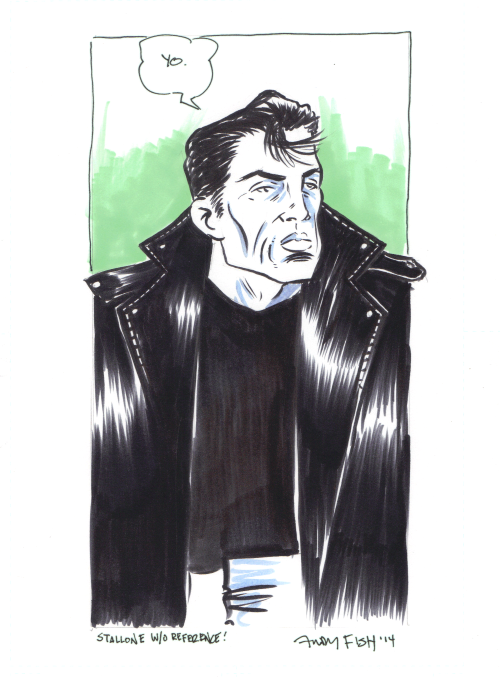
16. SYLVESTER STALLONE WANTED TO REMAKE IT.
Sylvester Stallone was set to direct and star in a Death Wish remake for MGM back in 2008. While that project, uh, died, it was recently reported that Paramount and MGM are teaming up to remake the movie—with Bruce Willis starring.

8 Fascinating Facts About Butch Cassidy

Fiona Young-Brown and Mental_Floss present 8 Fascinating Facts About Butch Cassidy.  Here are three of my favorites…

2. HIS LIFE OF CRIME BEGAN WITH A PAIR OF JEANS.
Cassidy’s first recorded criminal offense occurred around 1880, when he stole a pair of jeans. To his credit, the teen left an IOU. The store’s owner pressed charges, but the soon-to-be outlaw was acquitted. According to Larry Pointer’s In Search of Butch Cassidy, Cassidy “had been raised with the frontier ethic that a man’s word was his bond. The IOU was an inviolate pledge. The merchant’s distrust was an unfamiliar response and, before the matter was settled, the humiliated youth was having mixed emotions over legal process and blind justice.”

5. HE DISLIKED VIOLENCE.
As odd as it sounds to think of an outlaw who disliked getting rough, records and personal recollections from the era all describe Cassidy as a very polite man who avoided violence whenever possible. He may have waved a gun around when robbing trains and banks, but he didn’t use it. Those who knew him said that one of his proudest claims was that he never killed a man.

8. THERE’S NO REAL EVIDENCE THAT HE WAS KILLED IN A SHOOTOUT.
Butch and Sundance were killed in early November of 1908 following a shootout with authorities in Bolivia … or were they? Some historians argue that there is no real evidence that the two men were involved in the payroll robbery that led to the shootout, or that they were even involved in the shootout itself. Several alternative theories have arisen, claiming that the outlaws were not killed that day.

Josie Bassett, an acquaintance of the Wild Bunch, claimed that Cassidy visited her in the 1920s and that he “died in Johnnie, Nevada … He was an old man when he died. He had been living in Oregon, and back east for a long time, where he worked for a railroad.”

By far, the most popular theory is that Butch may never even have gone to Bolivia. Rather, he left Argentina in early 1908, adopted the name William T. Phillips, got married, and passed away (anonymously) in Spokane, Washington in 1937. Butch’s younger sister Lula added credence to this in her 1975 book, Butch Cassidy, My Brother, saying that he visited her and their father at the family home in 1925. A handwriting analyst also claimed that Butch Cassidy, Robert LeRoy Parker, and William T. Phillips were one and the same. But the main proponent of this theory, Larry Pointer, has recently said that he was wrong and Phillips was not actually Cassidy.

In 2009, an unabridged copy of Phillips’ Bandit Invincible, a Cassidy biography, emerged. And following clues, Pointer came to the conclusion that William Phillips was actually another Wild West outlaw named William Wilcox. So for the moment, the mystery lives on.

13 Action-Packed Facts About “Rumble in the Bronx”

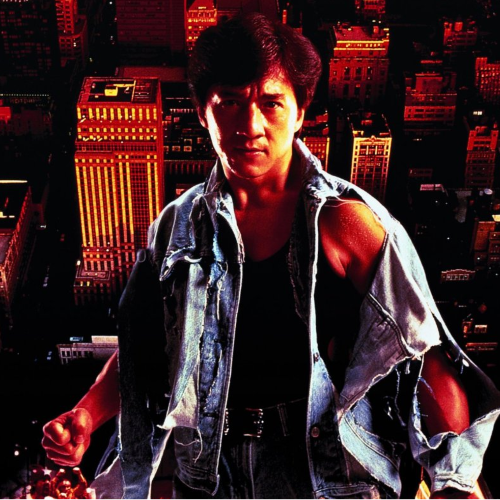
Anna Green and Mental_Floss present 13 Action-Packed Facts About Rumble in the Bronx.  Here are three of my favorites…

2. JACKIE CHAN WANTED IT TO BE HIS BREAKOUT AMERICAN FILM.
Throughout the 1980s and 1990s, success came easily to Chan in Asia, where his movies were consistently box office hits. But America was a completely different story. Rumble in the Bronx marked his fourth attempt to break into Hollywood. Previously he’d starred in Robert Clouse’s Battle Creek Brawl (1980) and appeared in The Cannonball Run (1981) and The Protector (1985). But none of those films made much of an impact for Chan. For Rumble in the Bronx, he decided it was time to take things into his own hands: Instead of looking for the right role in a big-budget Hollywood film, he decided to make a Hong Kong film that could work as a cross-over hit.

8. CHAN DECIDED TO MAKE RUMBLE IN THE BRONX AFTER TURNING DOWN A ROLE IN DEMOLITION MAN.
Before he decided to make Rumble in the Bronx, Chan was hoping to find his breakout role in an American movie. He was friends with Sylvester Stallone, who repeatedly offered him roles in his upcoming films—which Chan, for one reason or another, repeatedly turned down. In I Am Jackie Chan, Chan recalled, “Another film Stallone offered me was Demolition Man, a movie with Sandra Bullock from the movie Speed. He wanted me to play a super villain running loose in the far future, chased by a super cop, played by him. I didn’t feel right about that role either. It ended up going to Wesley Snipes—so the two people I’d wanted to work with, and couldn’t, ended up working with each other.”

11. ROGER EBERT COMPARED CHAN TO FRED ASTAIRE.
“Any attempt to defend this movie on rational grounds is futile,” Roger Ebert wrote in his review of the film. “Don’t tell me about the plot and the dialogue. Don’t dwell on the acting. The whole point is Jackie Chan—and, like Astaire and Rogers, he does what he does better than anybody.”

10 Electrifying Facts About Nikola Tesla

Jane Rose and Mental_Floss present 10 Electrifying Facts About Nikola Tesla.  Here are three of my favorites…

2. HE PIONEERED MANY SIGNIFICANT MODERN INVENTIONS BEYOND ALTERNATING CURRENT.
For many, Tesla is associated with the “War of the Currents”—waged with onetime employer and later rival Thomas Edison—over the form of electricity that would become standard. Edison championed direct current, or DC, while Tesla and ally George Westinghouse fought for alternating current, or AC. AC, of course, eventually won out over DC, despite Edison’s attempts to malign Tesla’s invention by pushing the electric chair as a method of execution to show how dangerous AC was. However, Tesla also conducted pioneering work in electric light, electric motors, radio, x-ray, remote control, radar, wireless communications, and robotics, and created his famous transformer, the Tesla coil. Tesla was in many cases not properly recognized for his contributions, with other inventors receiving credit for improving on what he began. He obtained around 300 patents in his lifetime.

3. HE HAD EXTREMELY REGULAR, EVEN OBSESSIVE-COMPULSIVE, HABITS, AND WAS A GERMAPHOBE.
Throughout his life, Tesla displayed a formidable work ethic, keeping a regimented schedule. Some claim he slept only two hours a night. He often took his dinner at the same table at Delmonico’s in New York, and later at the Waldorf-Astoria hotel. He had an all-consuming fear of germs and required a stack of 18 napkins. He was obsessed with the number three, and was prone to carrying out compulsive rituals related to three. When he was young, he would develop a fit at the sight of pearls, and couldn’t bear to touch hair.

8. HE WANTED TO ILLUMINATE THE ENTIRE EARTH, LITERALLY.
Tesla believed that his work had the potential to light the earth’s atmosphere, banishing darkness and bringing in a new era of light. He theorized that gases in Earth’s upper atmosphere were capable of carrying high-frequency electrical currents, and successful transmission of such currents there could create a “terrestrial night light” that would make shipping lanes and airports safer and illuminate whole cities. But like most of Tesla’s loftier aims, this goal was never realized, and its possibility remains unproven.

27 Things We Learned from Roger Donaldson’s “No Way Out” Commentary

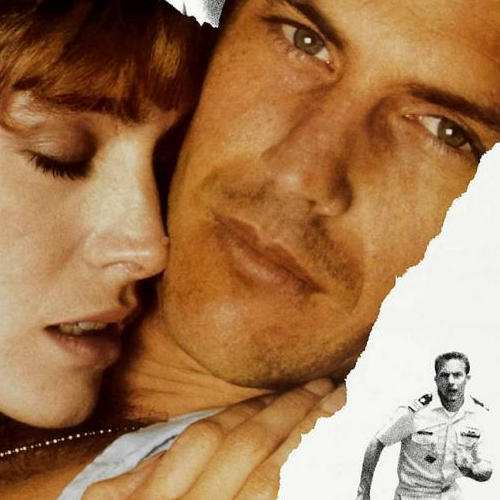
Rob Hunter and Film School Rejects present 27 Things We Learned from Roger Donaldson’s No Way Out Commentary.  Here are three of my favorites…

25. The ending of the film was apparently “controversial” at the time as audiences are on the side of Costner’s character throughout only to be stung by the final revelation. He was happy that people kept the secret and wonders if that aided the word of mouth and the film’s success. Can you imagine this movie opening in today’s internet culture?

21. The shot of Susan falling to her death was filmed with her standing upright on a dolly being pushed towards a wall that had been made up like the floor complete with a glass table.

4. The film is based on Kenneth Fearing’s novel, The Big Clock, but Donaldson thought it was an original script all the way through production. “I was at a party and ran into Mel Gibson, and he said ‘Oh I heard you made the remake of The Big Clock.’”
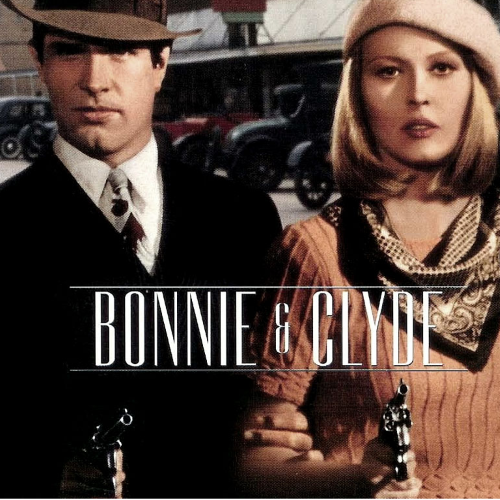
13 Infamous Facts About “Bonnie and Clyde” the Movie
Eric D. Snider and Mental_Floss present 13 Infamous Facts About Bonnie and Clyde.  Here are three of my favorites…

2. FAYE DUNAWAY’S STAR-MAKING PERFORMANCE ALMOST DIDN’T HAPPEN.
Warren Beatty, doing double duty as star and producer, and director Arthur Penn considered many other actresses first, including Tuesday Weld, Jane Fonda, Natalie Wood, Sharon Tate, Leslie Caron, and Ann-Margret. (Back when he was only producing it and not starring in it, Beatty had also considered his sister, Shirley MacLaine, for the role.) Beatty said they were turned down “by about 10 women,” though he would later say Weld was the only one they made a firm offer to. When Beatty met Dunaway, he didn’t think she was right for the part, but he told her to meet with Penn, who he thought would think she was perfect. Beatty was right.

7. THE STUDIO’S LACK OF FAITH MADE WARREN BEATTY VERY, VERY RICH.
Thinking the film wouldn’t make any money, Warner Bros. offered Beatty a ridiculous deal: a $200,000 salary, plus 40 percent of the gross. Yes, 40 percent. Of the gross, not the net. The film made more than $50 million.

5. WHATEVER YOU THINK THE FILM “REALLY” MEANS, YOU’RE PROBABLY WRONG.
Some viewers interpreted Bonnie and Clyde as a commentary on other issues, but Newman and Benton said they didn’t intend it that way. As they wrote in an introduction to a published version of their screenplay, “[People] have told us that Bonnie and Clyde was REALLY about Vietnam, REALLY about police brutality, REALLY about Lee Harvey Oswald, REALLY about Watts. After a while, we took to shrugging and saying, ‘If you think so.'”

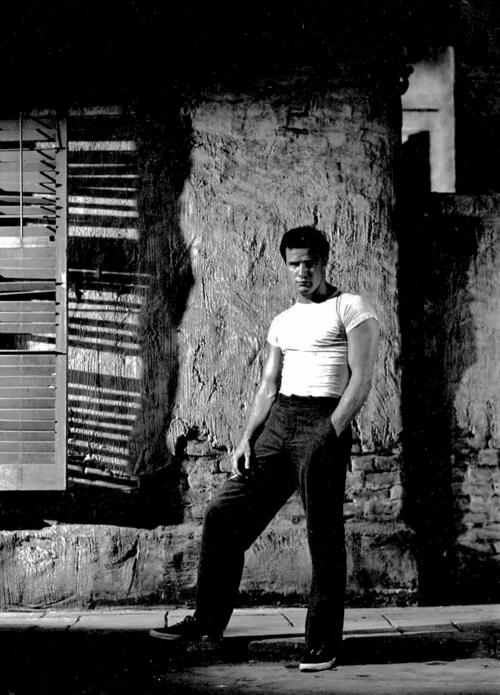
16 Fascinating Facts About Marlon Brando

Roger Cormier and Mental_Floss present 16 Fascinating Facts About Marlon Brando.  Here are three of my favorites…

5. HE BROKE HIS NOSE DURING A PERFORMANCE OF STREETCAR WHEN HE WAS BOXING WITH SOMEONE BACKSTAGE.
To alleviate the boredom of playing Kowalski on stage for, at that time, over one year, Brando started to fight with one of the stagehands, who was an amateur boxer. The stagehand took it easy on Brando until the actor insisted he fight for real. The stagehand then popped him in the nose, and blackened his eyes. Having just been punched in the face, and with his nose bleeding, Brando stepped back on to the stage. His co-star, Jessica Tandy, hid her surprise at his appearance by ad-libbing the line “You bloody fool” and playing it off as if Stanley had just been in a street fight.

After the performance, Brando walked to the nearest hospital to get himself fixed up. Irene Selznick, the show’s producer, told Brando to get his nose reset. She was glad he did not to listen to her. “I honestly think that broken nose made his fortune,” she said. “It gave him sex appeal. He was too beautiful before.”


7. BRANDO INITIALLY TURNED DOWN ON THE WATERFRONT, AND DIDN’T CARE FOR HIS PERFORMANCE IN IT.
After Brando returned the unread script—twice—Frank Sinatra was cast as Terry Malloy. While costumes were being fitted for the crooner to star, Brando changed his mind after producer Sam Spiegel convinced the actor to put his politics aside and re-team with his A Streetcar Named Desire director Elia Kazan, who had testified as a witness before the House Committee on Un-American Activities in 1952.

When Brando first saw the movie, he was “so depressed” by his performance that he left the screening room without saying a word. Brando won his first (of two) Best Actor Oscars for the role.


9. BRANDO AND SINATRA FEUDED DURING GUYS AND DOLLS.
Still upset over having the role of Terry Malloy taken away from him, Sinatra held a grudge, and repeatedly referred to Brando as “Mumbles.” Sinatra also declared that he didn’t go for Brando and “that Method crap.”

The two ended up starring in Guys and Dolls (1955) together, with Sinatra as Nathan Detroit and Brando as Sky Masterson. To get back at Sinatra for his adamant dislike of rehearsing, Brando purposely screwed up at the end of scenes to necessitate a retake. In one scene, Brando reportedly messed up nine times in a row because Sinatra had to eat a piece of cheesecake every time. After the ninth mistake, Sinatra threw his plate to the ground, jammed his fork on the table, and screamed at the director, “These ****** New York actors! How much cheesecake do you think I can eat?”

10 Facts About Tarzan That Will Surprise You

Mathew Baugh and Listverse present 10 Facts About Tarzan That Will Surprise You.  Here are three of my favorites…

Tarzan Was Not Raised By Gorillas
Everybody knows Tarzan was raised by gorillas. It’s part of the established Tarzan lore . . . right? Well, this is a common misconception. In fact, it’s so common that a number of movies have gotten it wrong.

Tarzan was actually raised by a species of ape unknown to science. These creatures resemble gorillas in size and strength, but they differ in other ways. These great apes often walk upright, hunt animals, eat meat, and have a spoken language. They call themselves the “mangani,” and Burroughs describes them as “huge,” “fierce,” and “terrible.” He adds that they’re “a species closely allied to the gorilla, yet more intelligent.” Thanks to their smarts and strength, the mangani are “the most fearsome of these awe-inspiring progenitors of man.”

Edgar Rice Burroughs Killed Jane
The first actress to play Jane Porter was Enid Markey in Tarzan of the Apes. Unfortunately, Ms. Markey was a brunette, which went against Burroughs’s image of Jane. In the novels, Jane is actually a blonde. (She isn’t British, either. She’s actually from Maryland.) It didn’t help that Burroughs hated Markey’s performance. In fact, he supposedly hated it so much that he killed off Jane in his next story.

In the first chapter of Tarzan the Untamed, Tarzan is away from home when World War I breaks out. When he returns, he finds that German soldiers have looted and burned his home, killing many of his servants and friends in the process. And shockingly, they’ve murdered Jane.

Tarzan Auditioned For A Tarzan Movie
Edgar Rice Burroughs had a love/hate relationship with Hollywood. He loved the exposure and extra income, but he hated the way movies changed his character. He particularly disliked Elmo Lincoln, the first movie Tarzan, who was afraid of heights. Lincoln was also a beefy man with a 132-centimeter(52 in) chest in contrast to the lean, athletic Tarzan of the books.

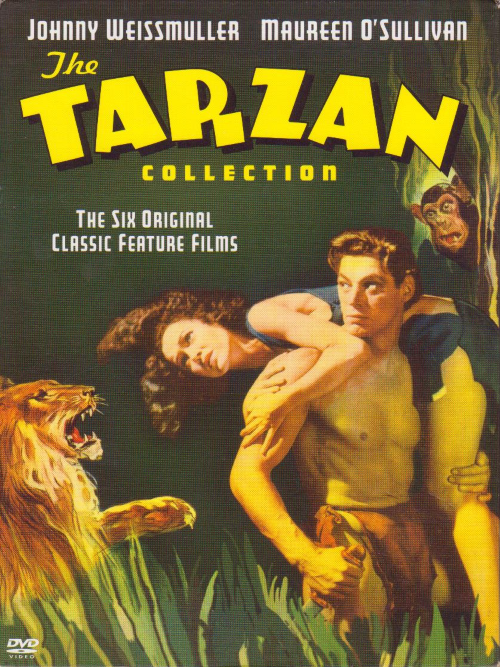
Nor was Burroughs happy with Johnny Weissmuller (pictured above), the most famous movie Tarzan. He wanted Tarzan to be articulate, but Weissmuller’s version could barely speak English.

The author took out his frustration in Tarzan and the Lion Man. In this novel, our hero rescues a movie crew filming in the African jungle. Along the way, Burroughs mocks the actors, directors, and moviemaking in general. But the coup de grace comes in the last chapter. After his adventure, Tarzan visits Hollywood, and he’s taken to meet a casting director:

The casting director sized Clayton up. ‘You look all right to me; I’ll take you up to Mr. Goldeen; he’s production manager. Had any experience?’

‘As Tarzan?’

The casting director laughed. ‘I mean in pictures.’

‘No.’

‘Well, you might be all right at that. You don’t have to be a Barrymore to play Tarzan. Come on, we’ll go up to Mr. Goldeen’s office.’

They had to wait a few minutes in the outer office, and then a secretary ushered them in.

‘Hello, Ben!’ the casting director greeted Goldeen. ‘I think I’ve got just the man for you. This is Mr. Clayton, Mr. Goldeen.’

‘For what?’

‘For Tarzan.’

‘Oh, m-m-m.’

Goldeen’s eyes surveyed Clayton critically for an instant; then the production manager made a gesture with his palm as though waving them away. He shook his head. ‘Not the type,’ he snapped. ‘Not the type, at all.’

10 Hush-Hush Facts About “L.A. Confidential”

Mathew Jackson and Mental Floss present 10 Hush-Hush Facts About L.A. Confidential.  Here are three of my favorites…

1. THE SCRIPTING PROCESS WAS TOUGH.
Writer-director Curtis Hanson had been a longtime James Ellroy fan when he finally read L.A. Confidential, and the characters in that particular Ellroy novel really spoke to him, so he began working on a script. Meanwhile, Brian Helgeland—originally contracted to write an unproduced Viking film for Warner Bros.—was also a huge Ellroy fan, and lobbied hard for the studio to give him the scripting job. When he learned that Hanson already had it, the two met, and bonded over their mutual admiration of Ellroy’s prose. Their passion for the material was clear, but it took two years to get the script done, with a number of obstacles.

“He would turn down other jobs; I would be doing drafts for free,” Helgeland said. “Whenever there was a day when I didn’t want to get up anymore, Curtis tipped the bed and rolled me out on the floor.”


3. JAMES ELLROY DIDN’T THINK THE BOOK COULD BE ADAPTED.
Though Wolper was intrigued by the idea of telling the story onscreen, Ellroy and his agent laughed at the thought. The author felt his massive book would never fit on any screen.

“It was big, it was bad, it was bereft of sympathetic characters,” Ellroy said. “It was unconstrainable, uncontainable, and unadaptable.”


10. ELLROY APPROVED OF THE MOVIE.
To adapt L.A. Confidential for the screen, Hanson and Helgeland condensed Ellroy’s original novel, boiling the story down to a three-person narrative and ditching other subplots so they could get to the heart of the three cops at the center of the movie. Ellroy, in the end, was pleased with their choices.


“They preserved the basic integrity of the book and its main theme, which is that everything in Los Angeles during this era of boosterism and yahooism was two-sided and two-faced and put out for cosmetic purposes,” Ellroy said. “The script is very much about the [characters’] evolution as men and their lives of duress. Brian and Curtis took a work of fiction that had eight plotlines, reduced those to three, and retained the dramatic force of three men working out their destiny. I’ve long held that hard-boiled crime fiction is the history of bad white men doing bad things in the name of authority. They stated that case plain.”

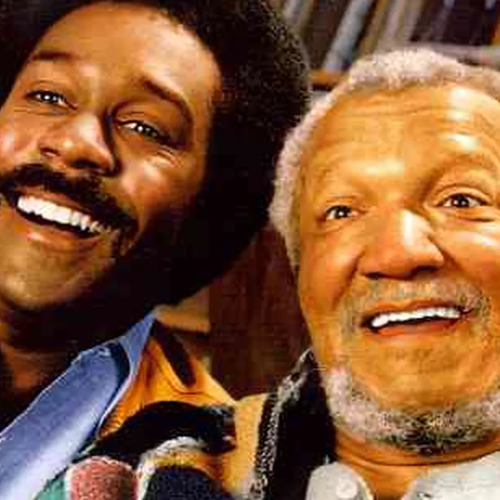
15 Big Facts About “Sanford and Son”

Roger Cormier and Mental Floss present 15 Big Facts About Sanford and Son.  Here are three of my favorites…

5. FOXX WORE MAKEUP TO LOOK OLDER.
Foxx, who was nicknamed “Chicago Red” because of his hair color, was only 49 years old when the series began; Fred Sanford was 65. He complained that a lot of people assumed he was Fred’s age.

8. FOXX BASED THE HEART ATTACKS ON HIS MOTHER.
“Fred Sanford is Mary Sanford, who is my mother, but you can reverse personalities into male or female,” Foxx told Sammy Davis Jr. on Sammy and Company. “My mother would do the same thing … she would have heart attacks when I was a kid, I remember. When she wanted something done she could hardly breathe—she had emphysema, she had cancer, she had lumbago, she had whooping cough.”

9. LAWANDA PAGE WOULD HAVE BEEN FIRED IF IT WASN’T FOR FOXX.
LaWanda Page was the only actress Foxx wanted to play Fred’s sister-in-law, Esther. Page was too nervous to give an audition producers liked, but Foxx insisted. “They were going to let me go,” Page told Jet magazine in 1977, “but Redd said, ‘No, you ain’t gonna let her go. That’s LaWanda and I know she can do it! Just give me some time with her.'”

24 Things We Learned from Ben Affleck’s “Gone, Baby, Gone” Commentary

Rob Hunter and Film School Rejects present 24 Things We Learned from Ben Affleck’s Gone, Baby, Gone Commentary.   Here are three of my favorites…

7. Affleck worried about a shot of Jerry Springer on Helene McCready’s (Amy Ryan) TV thinking it might be too cliched, but “literally one in every two houses that I went into had Springer on while we were scouting in the afternoon.”

8. The extra with the hole in his throat was in the bar when they arrived for shooting so Affleck just asked him to stay. The man moving quickly behind him is actually Affleck who was passing by unaware they were grabbng the shot. Stockard wonders if this is Affleck’s stab at a Hitchcock cameo, but the director denies it.

3. One of the changes they made from the novel was adjusting the private eyes’ ages from being in their 40s to being in their 30s, “but that presented its own challenges,” says Stockard.