Rambo by Jarrod Alberich
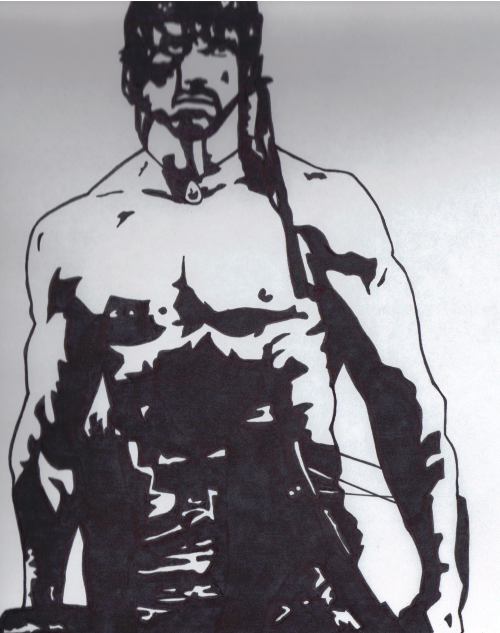
Jarrod Alberich aka The Yard Sale Artist created the Rambo piece above. Jarrod calls himself The Yard Sale Artist because he uses only materials that he finds at yard sales, thrift stores, dumpsters and so on.
Previews and Reviews that are Z's Views
Jarrod Alberich aka The Yard Sale Artist created the Rambo piece above. Jarrod calls himself The Yard Sale Artist because he uses only materials that he finds at yard sales, thrift stores, dumpsters and so on.
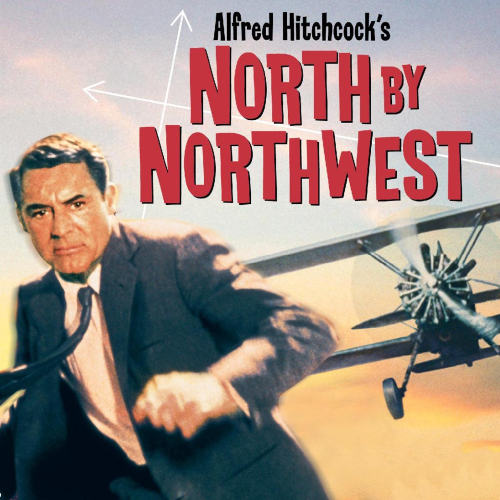
Eric D. Snider and Mental Floss present 13 Monumental Facts About North by Northwest. Here are three of my favorites…
3. JAMES STEWART WANTED TO PLAY THE LEAD.
Stewart had been in four Hitchcock movies at this point, and he wanted North by Northwest to be the fifth. But while Hitch loved him, he didn’t think he was right for the glibly debonair Roger Thornhill. He wanted Cary Grant for the part. Not wanting to hurt Stewart’s feelings, Hitchcock waited until Stewart was committed to another film (Bell, Book and Candle) before casting the role.
4. CARY GRANT HAD NO IDEA WHAT WAS GOING ON.
The star found the screenplay baffling, and midway through filming told Hitchcock, “It’s a terrible script. We’ve already done a third of the picture and I still can’t make head or tail of it!” Hitchcock knew this confusion would only help the film—after all, Grant’s character had no idea what was going on, either. Grant thought the film would be a flop right up until its premiere, where it was rapturously received.
5. PART OF IT WAS SHOT SECRETLY.
You wouldn’t expect Hitchcock to have to sneak around, but even the Master of Suspense was no match for the United Nations, which did not allow filming at its New York headquarters, not even in the plaza outside. So to get the shot where Grant walks into the building, Hitchcock hid a camera in a nondescript truck and filmed in secret from across the street.
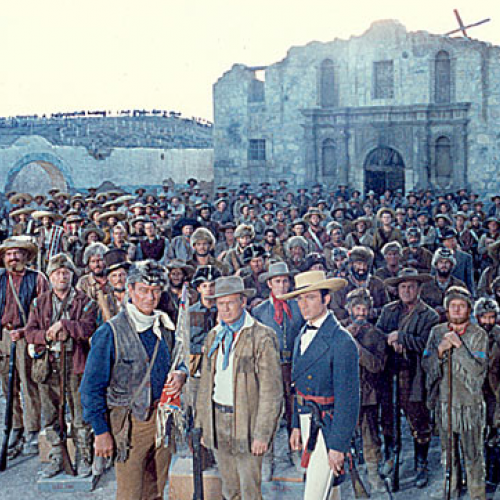
For decades John Wayne was one of the biggest box office stars in the world. Wayne’s dream project was to direct the story of The Alamo. Although film fans know that Wayne did get the film made, most don’t know what a struggle it was.
Wayne had hoped to just direct The Alamo, but financing was impossible unless he not only starred in it, but signed a three picture deal with the studio. Casting was also a nightmare. Wayne was hoping to get Clark Gable or Frank Sinatra for one role and that didn’t work out. Burt Lancaster was Wayne’s first choice for another role but he ended up with Richard Widmark. To make matters worse Wayne and Widmark developed an instant dislike to each other.
During filming there were natural disasters, the murder of a co-star and more. Even after filing wrapped there were troubles.
Nolan Moore documents Wayne’s struggles to get The Alamo made in 10 Amazing Stories About John Wayne’s Epic Failure. It is well worth the read.
Source: Listverse.
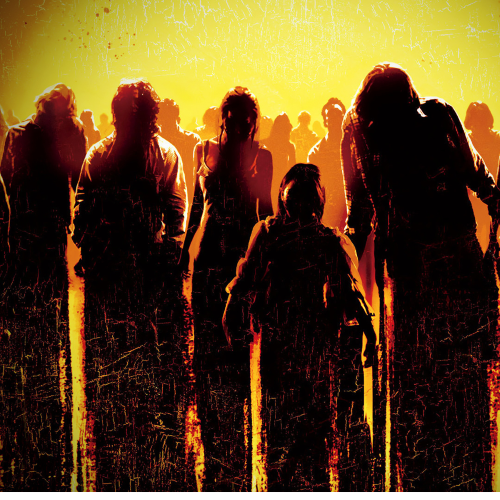
Rob Hunter and Film School Rejects present 32 Things We Learned from Zack Snyder’s Dawn of the Dead Commentary. Here are three of my favorites…
13. Snyder cameos during the opening credits montage as a soldier with a machine gun on the lawn of the U.S. Capitol.
19. The original’s Tom Savini, Ken Foree, and Scott H. Reiniger all cameo here as a sheriff, a preacher, and a general, respectively.
29. Someone after a test screening questioned Snyder as to why/how the zombies pause at the bottom of the stairs at 1:32:25, and it put him on the spot when they asked if the zombies could even do that. He replied, “in real life, no, but in film where you dramatize…”

Alvin Ward and Mental_Floss present 116 Amazing Facts for People Who Like Amazing Facts. Here are three of my favorites…
50. Roger Ebert and Oprah Winfrey went on a couple dates in the mid-1980s. It was Roger who convinced her to syndicate her talk show.
62. Dolly Parton once entered a Dolly Parton look-a-like contest—and lost.
74. Herbert Hoover was Stanford’s football team manager. At the first Stanford-Cal game in 1892, he forgot to bring the ball.
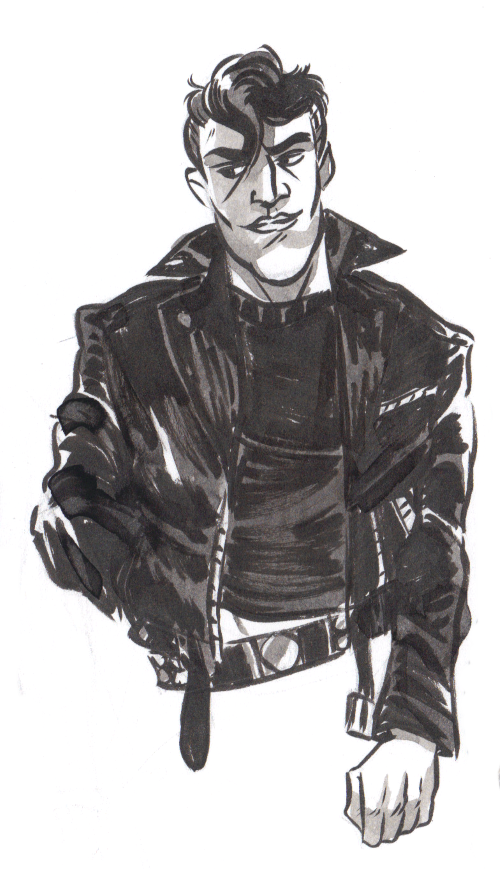
June Vigants created the Sly as Stanley Rosiello from Lords of Flatbush piece above. June was doing sketch commissions through the mail and although I’d never met her, I liked June’s art and decided to commission a few pieces. I wasn’t disappointed.
You can see more of June’s art here.

Sean Hutchinson, Michael Arbeiter and Mental Floss present 15 Fun Facts About the Indiana Jones Movies. Here are three of my favorites…
1. ONE DOG INSPIRED BOTH INDIANA JONES AND CHEWBACCA.
While developing the film with Spielberg and screenwriter Lawrence Kasdan, Lucas named the main character “Indiana Smith.” But Spielberg protested that it was too similar to the 1966 Steve McQueen western Nevada Smith and requested a change. The three agreed that the last name should be as universal and nondescript as “Smith,” so Lucas threw out “Jones” as a possibility. Indiana came from Lucas’ dog, an Alaskan malamute named Indiana. The big, hairy pup was also the inspiration for Chewbacca from Star Wars.
14. SEAN CONNERY SAID NO TO A CAMEO IN THE CRYSTAL SKULL.
As tempting as it may have been for Sean Connery to re-team with Ford on The Crystal Skull, the happily retired former James Bond turned down the part.
15. THE CRYSTAL SKULL INSPIRED AN ALTERNATIVE PHRASE TO “JUMP THE SHARK.”
Ever since Henry Winkler attempted to sail over a shark in a late-season episode of Happy Days, the phrase “jump the shark” has been used to describe the point where a television series goes off the rails in its ridiculousness. The Crystal Skull spawned an alternative phrasefor that, known as “nuking the fridge.” And Spielberg seemed surprisingly pleased about it.“What people really jumped at was Indy climbing into a refrigerator and getting blown into the sky by an atom-bomb blast,” Spielberg told CNN. “Blame me. Don’t blame George. That was my silly idea. People stopped saying ‘jump the shark.’ They now say, ‘nuked the fridge.’ I’m proud of that. I’m glad I was able to bring that into popular culture.”

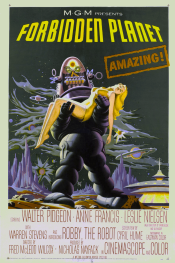
Bryan Reesman and Mental Floss present 15 Out-of-This-World Facts About Forbidden Planet. Here are three of my favorites…
7. ROBBY RACKED UP A LOT OF OTHER CREDITS.
Forbidden Planet made its lovable bucket of bolts a star, and throughout his career Robby racked up more than two dozen film and TV credits, including The Invisible Boy, The Thin Man(TV series), Lost In Space, The Twilight Zone, Wonder Woman, Morkand Mindy, and Gremlins.He has also done TV spots for Charmin, AT&T, and General Electric (that last one in 2012).
15. THE FILMMAKERS WERE RECYCLERS.
Forbidden Planet was shot on same stage as The Wizard of Oz, with bits of Munchkinland used for Altaira’s garden. In an interesting twist, some of Forbidden Planet‘s costumes (including the crewmen uniforms and Altaira’s clothing) were re-used in Queen of Outer Space, a 1958 sci-fi movie starring Zsa Zsa Gabor in which a space crew that has crash landed on Venus attempts to overthrow its female dictator, who has banished men from the planet.
5. ROBERT KINOSHITA DESIGNED ANOTHER ICONIC ROBOT.
That electronic entity being, of course, The Robot from the ’60s sci-fi series Lost In Space. While their design was somewhat different, the two cybernetic companions shared a similar “talk box,” a display that lit up in tandem with the rhythm of their speech. Robby actually guest starred on three episodes of Lost In Space.
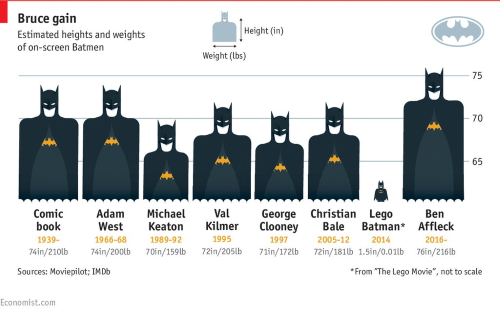
So how big is Batman, really? That, of course, depends on which Batman you’re talking about.
The comic book Batman was supposed to be about 6’2″ and 210 pounds. Adam West came closest to that version at 6’2″ and 200 pounds. All of the other actors who played the Dark Knight, except for Ben Affleck, were smaller.
So does size matter? Who made the best Batman?
You can check out a larger version of the chart here.
Source: Bleeding Cool.
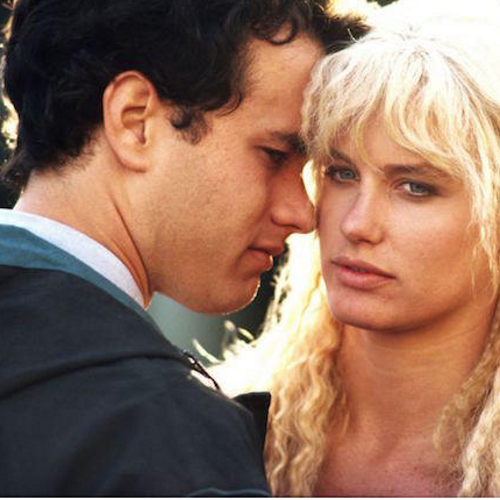
Roger Cormier and Mental Floss present 15 Surprising Facts About Splash. Here are three of my favorites…
2. RON HOWARD TURNED DOWN BIG DIRECTORIAL ASSIGNMENTS TO DO IT.
Ron Howard said no to directing Mr. Mom (1983) and Footloose (1984) to stay attached to Splash.
4. JOHN TRAVOLTA, CHEVY CHASE, BILL MURRAY, AND DUDLEY MOORE TURNED DOWN PLAYING ALLEN.
It was Louisa Velis, Howard’s longtime assistant, who suggested that Howard let Hanks audition. Steve Guttenberg also auditioned. He found out he didn’t get the part at the same time he heard he was getting screen tested for Police Academy (1984). Michael Keaton remembered being offered the role of Allen’s brother, Freddie—a part that eventually went to John Candy .
5. DIANE LANE TURNED DOWN PLAYING MADISON.
She said no to appear in Streets of Fire (1984) and The Cotton Club (1984).
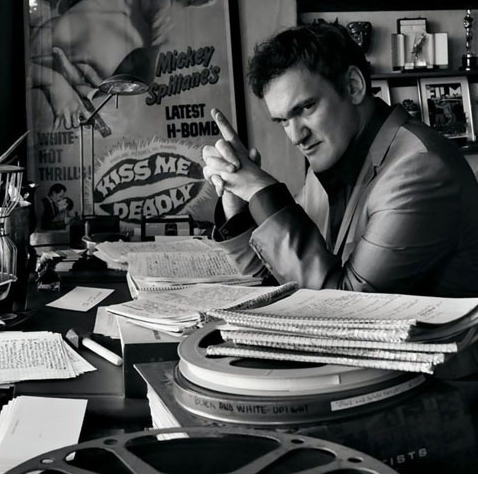
James Paszko and Film Slate present 5 Screenwriting Lessons from Quentin Tarantino.
Source: Jeff Wamester.
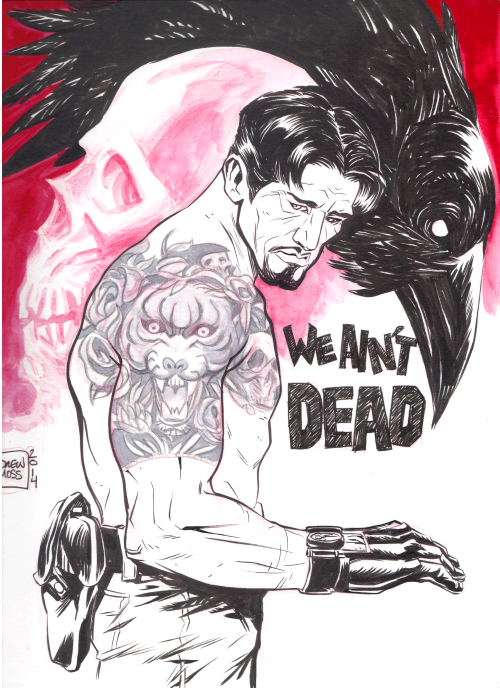
Here is the finished piece of Sly as Barney Ross that Drew Moss did for me for pickup at HeroesCon. As always, Drew gives you more than you’d expect!
If you’d like to see more of Drew’s art, you can here. – Craig

Vintage Everyday presents 13 Things You May Not Know About Bonnie and Clyde. Here are three of my favorites…
3. Bonnie was an honor student and a poet.
During her school days, Bonnie excelled at creative writing and penning verses. While she was imprisoned in 1932 after a failed hardware store burglary, she penned a collection of 10 odes that she entitled “Poetry from Life’s Other Side,” which included “The Story of Suicide Sal,” a poem about an innocent country girl lured by her boyfriend into a life a crime. Two weeks before her death, Bonnie gave a prescient poem to her mother entitled “The Trail’s End” that finished with the verse:“Some day they’ll go down together;
And they’ll bury them side by side,
To a few it’ll be grief—
To the law a relief—
But it’s death for Bonnie and Clyde.”
1. Bonnie died wearing a wedding ring—but it wasn’t Clyde’s.
Six days before turning 16, Bonnie married high school classmate Roy Thornton. The marriage disintegrated within months, and Bonnie never again saw her husband after he was imprisoned for robbery in 1929. Soon after, Bonnie met Clyde, and although the pair fell in love, she never divorced Thornton. On the day Bonnie and Clyde were killed in 1934, she was still wearing Thornton’s wedding ring and had a tattoo on the inside of her right thigh with two interconnected hearts labeled “Bonnie” and “Roy.”
9. Bonnie and Clyde remained close to their families, even on the run.
In fact, it was their predictable pattern of stopping to visit family that aided the team of Texas Rangers and deputies who ambushed and killed them.

Garin Pirnia and Mental Floss present 15 Thrilling Facts About Basic Instinct. Here are three of my favorites…
1. THE SCRIPT SOLD FOR A RECORD $3 MILLION.
Back in the day, spec scripts could sell for millions of dollars. Joe Eszterhas joined that club when he sold Basic Instinct—a script that took him just 13 days to write—for $3 million in 1990. Eszterhas told The A.V. Club that the media liked to focus on a writer’s failures, which occurred when Eszterhas’ Showgirls tanked at the box office. “CBS Evening News came with a helicopter crew and found me on a beach in Florida and interviewed me about the money I got for Basic Instinct,” Eszterhas said. “The other thing that I don’t think was quite fair was that after that whole period, where scripts—mine and Shane Black’s and half a dozen other writers’ scripts—went for a lot of money, the media zeroed in on the box office for some of those scripts, and they always zeroed in on the failures … When Basic Instinct went on to earn $400 million worldwide, there were no stories that said, ‘[Executive producer] Mario Kassar paid three million bucks for this.’”
2. CATHERINE AND NICK WERE BASED ON REAL PEOPLE.
Before he became a multimillionaire screenwriter, Eszterhas was a police reporter for Cleveland’s The Plain Dealer. “I met a cop who just liked the action too much,” Eszterhas told Nerve. “He was always in the middle of shootings. He was a great cop on one level, but on another, you suspected he liked it too much. That’s what Nick Curran does in Basic Instinct. As Catherine says in the movie, he got too close to the flame. He loved the flame.”Tramell also comes from a person Eszterhas knew in Ohio, this time a go-go dancer in Dayton. One night he picked the stranger up and they went back to his hotel room to have some fun. “She reached into her purse, and she pulled out a .22 and pointed it at me,” he told Nerve. “She said, ‘Give me one reason why I shouldn’t pull this trigger.’ I said, ‘I didn’t do anything to hurt you. You wanted to come here, and as far as I know, you enjoyed what we just did.’ And she said, ‘But this is all guys have ever wanted to do with me, and I’m tired of it.’ We had a lengthy discussion before she put that gun down. Those two random characters are where those parts of Basic Instinct come from.”
3. MICHAEL DOUGLAS AND PAUL VERHOEVEN APPROACHED THE MOVIE AS IF IT WERE A DETECTIVE NOVEL.
Verhoeven wanted to make a modern version of a Hitchcock thriller—except with a lot more sex. “In traditional films, the killer lurks in a house and the victim walks into the kitchen, turns on the radio, makes coffee, opens a book, gets comfortable—and then the killer strikes,” he told The New York Times. “In this film, the killer hides—but on the bed. The situation is the same, but the two people are facing each other in bed, not the kitchen.”Douglas agreed with the film noir aspect of the movie. “Fatal Attraction was a picture close to home for a lot of people because you could identify with those characters,” he also told theTimes. “It was a reality tale, while Basic Instinct is like a detective novel that people like to read in the privacy of their homes. It’s almost Gothic. It’s certainly more dramatic. And the real question here is: Is anybody really worthy of redemption?”
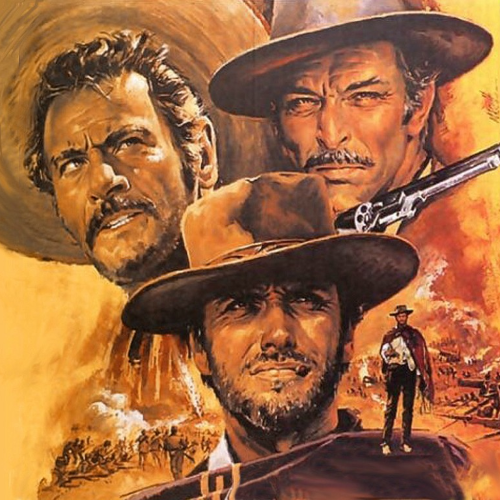
Matthew Jackson and Mental Floss present 12 Great Facts About The Good, the Bad and the Ugly. Here are three of my favorites…
9. IT’S TECHNICALLY A PREQUEL.
Careful viewers of the “Dollars Trilogy” will note that, though it’s the final film, The Good, The Bad and The Ugly actually takes place prior to the other two films. Among the clues: Eastwood acquires his iconic poncho, worn in both A Fistful of Dollars and For a Few Dollars More, in the final minutes.
11. EASTWOOD TURNED DOWN A FOURTH FILM.
By the end of The Good, The Bad and The Ugly, Eastwood was done working with Leone—a famous perfectionist—and had resolved that he would form his own company and start making his own movies. Leone, on the other hand, wasn’t necessarily done with Eastwood. He even flew to Los Angeles to pitch him the role of “Harmonica” (ultimately played by Charles Bronson) in Once Upon a Time in the West. Eastwood wasn’t interested.
12. JOHN WAYNE WAS NOT A FAN OF EASTWOOD.
Before Leone’s Westerns hit America, heroic gunfighters were almost always portrayed as men who waited for the villain to draw their guns first, the idea being that these were men who wouldn’t kill unless they had to. Among these heroes was John Wayne, whose career was winding down just as Eastwood’s was heating up. According to Eastwood, director Don Siegel (who made several films with Eastwood, including Dirty Harry) once tried to get Wayne to be more like the “Dollars Trilogy” star during the filming of Wayne’s final film, The Shootist. Wayne, it turns out, was not a fan of Eastwood’s more ruthless Western style.