Category: Celebs

Z-View Twilight Zone: “Walking Distance” [Season 1, Episode 5]

Twilight Zone: “Walking Distance” [Season 1, Episode 5]
Original Air Date: October 30, 1959

Director: Robert Stevens

Writer: Rod Serling

Starring: Gig Young

The Overview:  Beware of Spoilers…

Martin Sloan [Young] is a 36 year old New York business executive.  Everything for him is rush, rush, rush.  While on a drive back to the city Sloan finds himself at a gas station one and a half miles from the little town he grew up in.  He decides to take a walk to the town while the gas attendant services his car.

Once in the town Sloan finds nothing has changed.  The prices are the same… the people are the same.  Somehow he has gone back in time.  He goes to his home and his parents seeing a grown man claiming to be their son and send him away.  Sloan decides to find himself as a boy to give himself advice.

You know that old saying, “You can’t go home again” — Sloan finds out it is true.

Final Thoughts:  This episode doesn’t work for me.  When Sloan meets his parents his efforts to convince them of who he is are weak.  When his father does learn that somehow his son has come back to the past, dad basically tells his son to leave and go back to the future [not the movie, but the time he came from].  Sloan getting a limp because of something he caused to happen in the past is a nice touch.  Ron Howard has a brief cameo in one of his first acting roles.

Rating:

17 Truthful Facts About “A Few Good Men”

Roger Cormier and Mental_Floss present 17 Truthful Facts About A Few Good Men.  Here are three of my favorites

2. LINDA HAMILTON AND JODIE FOSTER AUDITIONED FOR THE ROLE OF LT. COMMANDER GALLOWAY.
A then-eight-months-pregnant Demi Moore ended up getting the part, and was paid $2 million for the role.

3. JASON ALEXANDER WAS SET TO PLAY LT. SAM WEINBERG.
But when Seinfeld was renewed by NBC for a second season, he was no longer available. Reiner then gave Kevin Pollak the part after he read with Cruise.

8. JACK NICHOLSON WAS PAID $5 MILLION FOR 10 DAYS OF WORK.
Nicholson, as Colonel Nathan R. Jessup, was in just three scenes in the entire movie. Technically he worked an extra morning for free when Reiner and crew didn’t get all of his footage shot in time.

Z-View Twilight Zone: “Mr. Denton on Doomsday” [Season 1, Episode 3]

Twilight Zone: “Mr. Denton on Doomsday” [Season 1, Episode 3]
Original Air Date: October 16, 1959

Director: Allen Reisner

Writer: Rod Serling

Starring: Dan Duryea, Martin Landau and Doug McClure.

The Overview:  Beware of Spoilers…

Al Denton [Duryea] used to be good with a gun.  Now he is the town drunk.  Dan Hotaling [Landau] is the town bully who takes great pleasure in humiliating Denton.  Hotaling pushes Denton around, makes him sing and beg for drinks even to the point of breaking a bottle of booze and throwing it in the street just to watch Denton scramble for it.

The townspeople nervously laugh at Hotaling’s antics and while some don’t like it, none will take a stand.  As Denton chugs from the broken bottle of booze, a new comer to the town named Henry J. Fate observes from a distance.  Suddenly a gun appears and Denton picks it up.

Hotaling sees Denton with the handgun and challenges him to a gunfight.  Denton wants no part of it but Hotaling won’t let him walk away.  Denton is a dead man unless [Henry J.] Fate steps in…

Final Thoughts: This episode had so much potential but ends up feeling disjointed to me.  Since I am picking nits: I don’t think the title of the episode fits.  Landeau comes off as a cartoon bully from the way he is dressed to his actions.  Naming the newcomer Henry J. Fate seems a bit heavy-handed.  Denton, the town drunk gives up booze with no effort — thanks to Fate?  Abruptly, Landeau is out and McClure is in.  When Duryea and McClure realize that they’ve both just drank the potion is a nice touch.

Overall not a bad episode, but could have been better.

Rating:

“In Cold Blood” (1967) written & directed by Richard Brooks, starring Robert Blake, Scott Wilson and John Forsythe / Z-View

In Cold Blood (1967)

Director: Richard Brooks

Screenplay: Richard Brooks (based on Truman Capote’s book of the same name)

Stars: Robert Blake, Scott Wilson and John Forsythe

The Pitch: “Let’s make a movie based on the best-selling book In Cold Blood!”

The Tagline: “Written for the screen and directed by Richard Brooks.”


The Overview:  Beware of Spoilers…

Dick Hickcock [Scott Wilsion] and Perry Smith [Robert Blake Perry] have a plan to steal $10,000 cash from a rich farmer’s safe and then high-tail it to Mexico where they will live out their days safe from extradition.  The two ex-cons violate their parole and drive through the night to Holcomb, Kansas where according to one of Hickcock’s past cellmates, a fortune sits in the Cutter safe.

 The only thing Hickcock and Smith find at the Cutter house are Mr. Cutter, Mrs. Cutter and their two teenage children.  Hickcock and Smith place the family members in separate rooms, tie them up and search for the safe.  There is no safe, no fortune and just a little over forty dollars in cash in the house. Hickcock and Smith brutally kill the Cutter family and then head back towards Kansas City.

The discovery that the Cutter family was brutally murdered makes national news and as the investigation grows, Hickcock and Smith decide to head to Mexico.  They pass bad checks, pawn the items they buy and use the money to get across the border.  It isn’t long before they’re low on cash and decide to go to Vegas to raise more. In Vegas  Hickcock and Smith are picked up on a parole violation.

The cops interrogate them separately.  Neither admits to knowing anything about the Cutter family murders.  As the evidence begins to pile up, Hickcock suddenly tries to pin the murders on SmithSmith then turns on Hickcock and the case is made.  A trial, a death sentence and the gallows are all that Hickcock and Smith have left to look forward to.  Sadly, one is left with the feeling that either man alone would not have committed the murders.

Wilson (probably best known to folks as Hershel from The Walking Dead) and Blake (probably best known as the crazy old celebrity acquitted of killing his second wife in 2005) are excellent as the leads.  Robert Brooks deserves kudos for his screenplay and direction.

Watch for cameos by: Will Geer [Grandpa from The Waltons] and music by Quincy Jones!

Award Nominations:

Academy Awards –

  • Best Director
  • Best Cinematography
  • Best Original Music Score
  • Best Adapted Screenplay

Rating:

Z-View: “Anatomy of a Murder”

Anatomy of a Murder (1959)

Director: Otto Preminger

Screenplay: Wendell Mayes, John D. Voelker (based on his novel written as Robert Traver)

Stars: James Stewart, Lee Remick, Ben Gazarra, Arthur O’Connell and George C. Scott

The Pitch: “Let’s make a movie based on the best-selling novel Anatomy of a Murder!”

The Tagline: “Last year’s No.1 best-seller … This year’s No.1 motion picture.”


The Overview:  Beware of Spoilers…

Stewart plays small town attorney Paul Biegler who’d rather be fishing than practicing law.  Biegler’s mentor is Parnell McCarthy (Arthur O’Connell) who’d rather be boozing it up than just about anything.  When Biegler is offered the chance to defend Fredrick Manion (Ben Gazara), against a murder charge, he sees it as a way to get McCarthy off the booze.  Manion is a soldier accused of murdering the man who raped his wife (Lee Remick).

We spend the first part of the movie learning about the case.

Biegler meets Manion, a quick-tempered, hard-to-like soldier who admits to killing the man who raped his wife about an hour after finding out about it.  This wasn’t a heat of the moment murder.  After meeting Manion’s wife who is sporting a beat-up face and a casual attitude, Biegler finds himself in a case where nothing is clear cut.

Manion is a jealous, thuggish man who likes his wife to dress provocatively and then gets jealous when men give her attention.  Laura Manion likes men, booze and fun.  Being married doesn’t stop her from having a good time where she can find it.  She married Manion three days after divorcing her first husband and admits that Manion was the reason for the divorce.

Was Laura raped?  She was beat-up, but did that happen during the rape or when he husband found out she had been with another man.  The clinical evidence is inconclusive.  Something happened but under what circumstances?

The second part of the movie takes us into the courtroom for one of the best courtroom dramas ever filmed.

The acting across the board is excellent.  Stewart (Best Actor), O’Connell (Best Supporting Actor) and Scott (Best Supporting Actor) were all nominated for Academy Awards.  I’m surprised Lee Remick wasn’t as well, because she is that good.  The film went on to be nominated for seven Oscars as well as other honors.

To the movie’s credit, the jury comes back with a verdict, but knowing the evidence of the case and the things that we see that the jury doesn’t, the audience may come away with a different verdict.  At the very least, there is room for discussion.

The last scene is a treat and adds another layer to the puzzle.

Watch for cameos by: Howard McNear [Floyd the Barber from The Andy Griffith Show] and Duke Ellington!

Awards Won:

New York Film Critics Circle Awards –

  • Best Actor, James Stewart
  • Best Screenplay, Wendell Mayes; 1959.

Venice International Film Festival –  

  • Volpi Cup
  • Best Actor, James Stewart; 1959.

Grammy Awards –

  • Best Performance by a Dance Band
  • Best Musical Composition First Recorded and Released in 1959
  • Best Sound Track Album.

Producers Guild of America Awards –  

  • Top Drama
  • Top Male Dramatic Performance, James Stewart
  • Top Male Supporting Performance, Arthur O’Connell; 1960.


Award Nominations:

Academy Awards –

  • Best Actor in a Leading Role: James Stewart
  • Best Actor in a Supporting Role: Arthur O’Connell
  • Best Actor in a Supporting Role: George C. Scott
  • Best Cinematography, Black-and-White: Sam Leavitt
  • Best Film Editing: Louis R. Loeffler
  • Best Picture: Otto Preminger
  • Best Writing, Screenplay Based on Material from Another Medium: Wendell Mayes; 1960

British Academy Film Awards –

  • Best Film from any Source Otto Preminger, USA
  • Best Foreign Actor James Stewart, USA
  • Most Promising Newcomer Joseph N. Welch, USA; 1960.

Directors Guild of America Awards –

  • DGA Award Outstanding Directorial Achievement in Feature Film, Otto Preminger; 1960.

Golden Globe Awards –

  • Best Motion Picture – Drama
  • Best Performance By An Actress In A Motion Picture – Drama: Lee Remick
  • Best Director – Motion Picture: Otto Preminger
  • Best Performance By An Actor In A Supporting Role In A Motion Picture: Joseph N. Welch; 1960.

Rating:

10 Wild Facts About “Butch Cassidy and The Sundance Kid”

Eric D. Snider and Mental_Floss present 10 Wild Facts About Butch Cassidy and The Sundance Kid.  Here are three of my favorites

2. PAUL NEWMAN WAS IN FROM THE BEGINNING, BUT FINDING HIS CO-STAR TOOK SOME WORK.

When he wrote it, Goldman had in mind Newman—then perhaps the biggest movie star in the world—and Jack Lemmon, who’d done a 1958 Western called Cowboy and seemed like a good fit. Lemmon turned out not to be interested, and numerous other candidates were approached, including Steve McQueen (see below), Warren Beatty, and Marlon Brando. Newman’s wife, Joanne Woodward, suggested Robert Redford, a stage actor who’d been in a few films but was considered something of a lightweight. Woodward, Newman, and director George Roy Hill all pestered the reluctant 20th Century Fox bosses until they conceded to casting Redford.

4. STEVE MCQUEEN DROPPED OUT OVER BILLING.

If Newman was the biggest movie star in the world at the time, Steve McQueen was right up there with him. The idea of casting not one but two mega-stars as Butch and Sundance made perfect sense, but there was a problem: whose name would go first in the credits? Fox president Darryl F. Zanuck later said that he proposed an unusual arrangement where half the prints of the film would list Newman first, the other half McQueen, but McQueen (or his representatives) wouldn’t accept anything other than top billing across the board. And that was that.
5. IT WAS “THE SUNDANCE KID AND BUTCH CASSIDY” UNTIL THE CASTING WAS SETTLED.

Once they’d settled on Redford as Newman’s costar, a new (minor) issue arose. Newman thought he was playing Sundance in what had heretofore been known as The Sundance Kid and Butch Cassidy. It turned out Hill, the director, actually wanted him to play Butch, and Redford to play Sundance. No problem; Newman was fine with the switch. But now they had a situation where the character being played by the less-famous actor came first in the title. The obvious Hollywood solution: reverse the title. “The Sundance Kid and Butch Cassidy” sounds weird to us now (as does the notion of Redford being significantly less famous than Newman), but there you go.

RIP – Meadow George Lemon III aka “Meadowlark” Lemon

Meadow George Lemon III better known as “Meadowlark” Lemon of Harlem Globetrotters fame passed away today at the age of 83.

Meadowlark played “before Kings, Queens, Presidents, Popes,” and millions of fans in over 100 countries of the world during his career with the Globetrotters which ran from 1954 – 1979 and over 16,000 games.  Dubbed the “Clown Prince of Basketball” Lemon became the face of the Globetrotters and one of the most recognized athletes in the world.

Lemon’s popularity led to commercials, tv and movie roles and two Harlem Globetrotter animated series.  In 1993, fourteen years after retiring, Lemon returned to the Globetrotters for a 50 game come-back tour.  In 2003, Lemon was inducted into the Naismith Memorial Basketball Hall of Fame which was just one of the many honor and awards Lemon earned throughout his life.

Lemon was a born-again Christian and in 1986 became an ordained minister.

Our thoughts and prayers go out to Meadow George Lemon III’s family, friends and fans.

14 Fun Facts About “‘O Brother, Where Art Thou?”

Roger Cormier and Mental_Floss present 14 Fun Facts About ‘O Brother, Where Art Thou?  Here are three of my favorites

1. IT WAS ORIGINALLY INSPIRED BY THE WIZARD OF OZ.

Joel Coen revealed as much at the 15th anniversary reunion. “It started as a ‘three saps on the run’ kind of movie, and then at a certain point we looked at each other and said, ‘You know, they’re trying to get home—let’s just say this is The Odyssey. We were thinking of it more asThe Wizard of Oz. We wanted the tag on the movie to be: ‘There’s No Place Like Home.’”

3. THE TITLE IS FROM A PRESTON STURGES CLASSIC.

Sullivan’s Travels (1941) was a Hollywood satire about a comedy director who wanted to make a serious, epic drama, travels the country to research it, and discovers the world is better off laughing. The movie the character wanted to make was titled O Brother, Where Art Thou?.

8. THE MUSIC BECAME AN UNEXPECTEDLY HUGE HIT.

For the movie’s music—and even before they’d finished the script—the Coens turned to musician/producer T Bone Burnett, whom they had worked with on The Big Lebowski  in 1998. Along with singer-songwriter Gillian Welch, Burnett found the songs for the movie. Its soundtrack—which combined original and traditional bluegrass, country, gospel, blues, and folk music—was the first movie soundtrack to win the Grammy for Album of the Year since 1994. More than eight million copies of the album were sold.

14 Empowering Facts About “9 to 5”

Jennifer M. Wood and Mental_Floss present 14 Empowering Facts About 9 to 5.  Here are three of my favorites

2. IT WAS ORIGINALLY INTENDED TO BE A DRAMA.

Though it’s ranked number 74 on the American Film Institute’s list of the 100 Funniest American Movies of All Time, 9 to 5 didn’t start out as a comedy. “At first we were going to make a drama,” Fonda explained. “But any way we did it, it seemed too preachy, too much of a feminist line. I’d wanted to work with Lily [Tomlin] for some time, and it suddenly occurred to [producer] Bruce [Gilbert] and me that we should make it a comedy. It remains a ‘labor film,’ but I hope of a new kind, different from The Grapes of Wrath or Salt of the Earth. We took out a lot of stuff that was filmed, even stuff the director, Colin Higgins, thought worked but which I asked to have taken out. I’m just super-sensitive to anything that smacks of the soapbox or lecturing the audience.”

3. IT WAS A BLACK COMEDY BEFORE IT WAS A BROAD COMEDY.

“I had written a very dark comedy in which the secretaries actually tried to kill the boss, although they tried to kill him in sort of funny ways,” screenwriter Patricia Resnick told Rolling Stone. “Originally, Jane had been concerned that would be too dark. I screened an old Charlie Chaplin film called Monsieur Verdoux for her. In it, Chaplin’s wife is blind and he has a child. He’s kind of a Blackbeard, he romances a series of woman through the course of the movie and murders them in order to get money and support his family. It is a comedy, but at the end they hang him. I turned to Jane at the end of the movie and tears were rolling down her cheeks—but she was concerned the women wouldn’t be sympathetic enough. I said, ‘He really killed all these women and you’re crying. I just want them to try! They won’t be successful.’ And she said OK. But then when Colin came in, he was very influenced by Warner Bros. cartoons and things like that, and so their attempts to kill him became the fantasy scenes, and he made it a much broader comedy.”

8. PARTON WOULD ONLY STAR IN THE FILM IF SHE COULD WRITE THE THEME SONG.

Parton may have been a Hollywood newcomer, but she was savvy. She agreed to take the part in 9 to 5, but only if she could write the theme song as well. Fonda agreed, and Parton wrote the song while the movie was filming. In 1981, she earned an Oscar nomination for Best Original Song for “9 to 5.”

13 Spirited Facts About “How the Grinch Stole Christmas”

Andrew N. Wong and Mental_Floss present 13 Spirited Facts About How the Grinch Stole Christmas.  Here are three of my favorites

4. ITS BUDGET WAS MASSIVE.

Coming in at over $300,000, or $2.2 million in today’s dollars, the special’s budget was unheard of at the time for a 26-minute cartoon adaptation. For comparison’s sake, A Charlie Brown Christmas’s budget was reported as $96,000, or roughly $722,000 today (and this was after production had gone $20,000 over the original budget).

8. CHUCK JONES HAD TO FIND WAYS TO FILL OUT THE 26-MINUTE TIME SLOT.

Because reading the book out loud only takes about 12 minutes, Jones was faced with the challenge of extending the story. For this, he turned to Max the dog. “That whole center section where Max is tied up to the sleigh, and goes down through the mountainside, and has all those problems getting down there, was good comic business as it turns out,” Jones explained in TNT’s How the Grinch Stole Christmas special, which is a special feature on the movie’s DVD. “But it was all added; it was not part of the book.” Jones would go on to name Max as his favorite character from the special, as he felt that he directly represented the audience.

7. THURL RAVENSCROFT DIDN’T RECEIVE CREDIT FOR HIS SINGING OF  “YOU’RE A MEAN ONE, MR. GRINCH.”

The famous voice actor and singer, best known for providing the voice of Kellogg’s Tony the Tiger, wasn’t recognized for his work in How the Grinch Stole Christmas. Because of this, most viewers wrongly assumed that the narrator of the special, Boris Karloff, also sang the piece in question. Upset by this oversight, Geisel personally apologized to Ravenscroft and vowed to make amends. Geisel went on to pen a letter, urging all the major columnists that he knew to help him rectify the mistake by issuing a notice of correction in their publications.

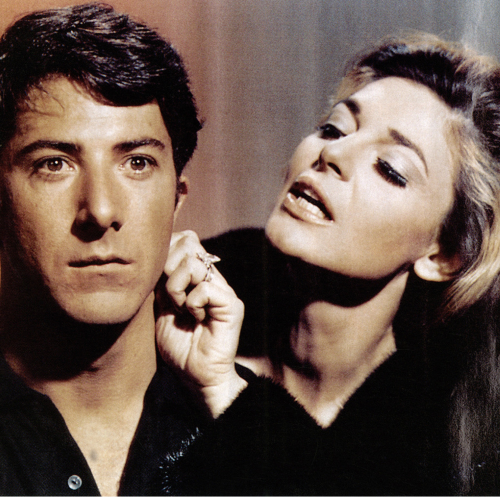
12 Seductive Facts About “The Graduate”

Eric D. Snider and Mental_Floss present 12 Seductive Facts About The Graduate. Here are three of my favorites

7. NOBODY, INCLUDING DUSTIN HOFFMAN, THOUGHT DUSTIN HOFFMAN SHOULD STAR IN IT.

The obvious choice for the role of Benjamin Braddock—a privileged Beverly Hills kid with wealthy parents—was someone tan, handsome, white, Anglo-Saxon, and Protestant. Robert Redford was everyone’s first choice, but Nichols vetoed him on the grounds that the audience wouldn’t believe him as a character who has been rejected by women. Nichols auditioned hundreds of actors for the part. After seeing Hoffman’s audition, Nichols realized the key to the character should be that he’s out of place. He’s surrounded by tall, beautiful blond people, but he’s none of those things. Hoffman thought his audition had been terrible, but Nichols hired him, against the advice of the producers and financiers.

11. IT COULD HAVE STARRED THE BOY WONDER!

Burt Ward, then becoming very famous as the Caped Crusader’s sidekick in TV’s Batman, was offered the lead role by producer Turman. But Ward’s bosses nixed it. Ward said, “Because Batman was so enormous and successful … they didn’t want to dilute anything to do with the character by having me play a different role. The studio wouldn’t let me do it.”

12. IT COULD HAVE STARRED ABOUT A MILLION OTHER PEOPLE, TOO.

Besides Redford and Ward, many other actors were considered for Benjamin, including Charles Grodin, who came very close to being cast before dropping out over money and scheduling. Elaine, eventually played by Katharine Ross, was supposed to be Candice Bergen, with Natalie Wood, Ann-Margret, and Jane Fonda on the wish list, too. Nichols’ top choice for Benjamin’s father (William Daniels) was Ronald Reagan, who was just then going into politics. Doris Day turned down Mrs. Robinson because the book was too dirty (according to one telling, her husband-slash-manager didn’t even show it to her). And when Nicholsvisited Ava Gardner, who’d expressed interest in playing Mrs. Robinson, she acted like a nutty movie star. She declared, unasked, that she wouldn’t take off her clothes, and said she’d been trying all day to place a phone call to Ernest Hemingway, who really was a friend of hers but who’d been dead for five years.