The “Standoff” Trailer is Here!
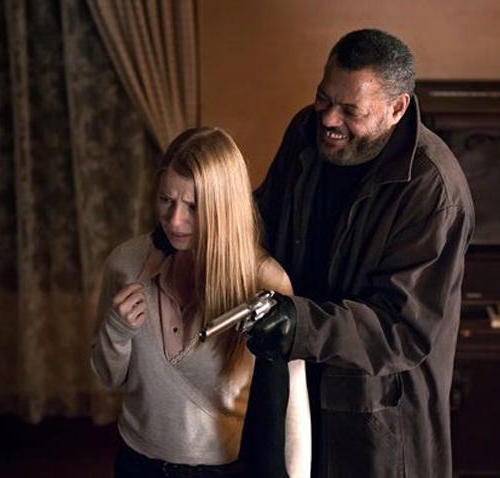
Today we have the Standoff trailer starring Laurence Fishburne and Thomas Jane.
Previews and Reviews that are Z's Views
Today we have the Standoff trailer starring Laurence Fishburne and Thomas Jane.
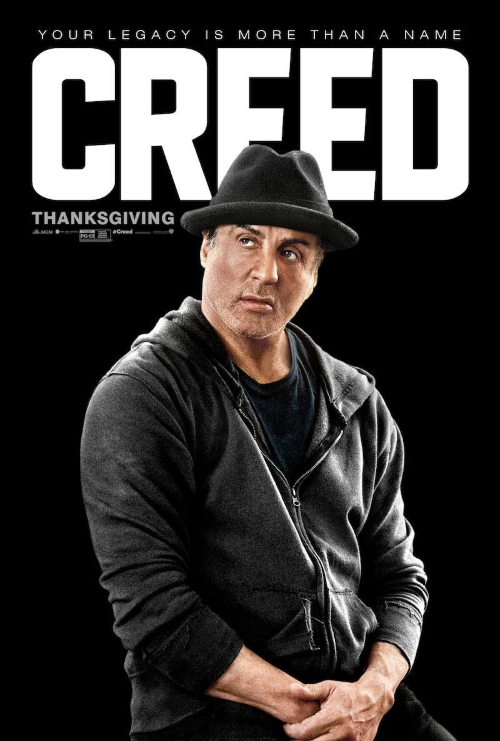
You just knew I’d have to post this Creed character poster of Rocky here. You can check out a heavyweight championship size at IMPAwards.
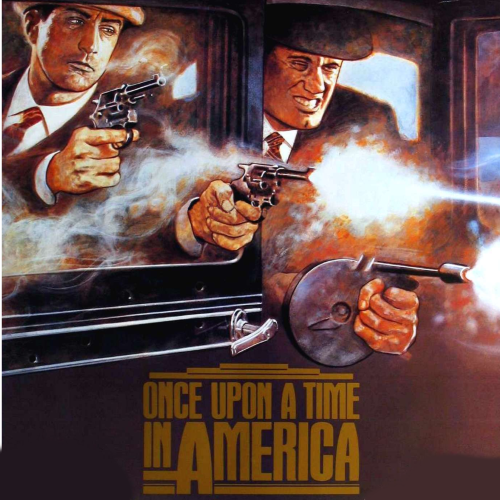
Eric D. Snider and Mental_Floss present 13 Epic Facts About Once Upon a Time in America. Here are three of my favorites…
1. SERGIO LEONE TURNED DOWN THE GODFATHER TO MAKE IT.
By his own account, Once Upon a Time in America was Leone’s pet project, the one he devoted most of his adult life to making. He became interested in the story while he was making 1968’s Once Upon a Time in the West , and was so fixated on it that when Paramount approached him a few years later to make The Godfather, he politely declined. If he’d known it would take another 12 years to get Once Upon a Time in America produced anyway, maybe he would have accepted. But then where would Francis Ford Coppola be?8. NOBODY HAS EVER SEEN LEONE’S COMPLETE VERSION.
After the nine-month shoot, Leone had eight to 10 hours’ worth of material. He trimmed it down to six hours, hoping to release it in two three-hour parts, but the producers were having none of that. So he reduced it to 269 minutes—four and a half hours—but it still wasn’t enough. He chopped out another 40 minutes, and this 229-minute version is what premiered at the 1984 Cannes Film Festival and subsequently played in European theaters.American distributors butchered the film even more, cutting out another 90 minutes and rearranging the scenes into chronological order (no more flashbacks), which rendered the movie incomprehensible. The American version flopped, of course, and Leone was devastated. A Martin Scorsese-led effort to restore Leone’s original version resulted in a 251-minute cut playing at Cannes in 2012, but some 18 minutes were still missing due to legal issues over who owned the missing scenes. The 251-minute version is now available on Blu-ray and DVD. Someday, perhaps the complete version will be restored.
12. LEONE WAS A PERFECTIONIST.
Leone and De Niro had their different approaches, but one thing they had in common was perfectionism. According to one of the screenwriters, Leone did 35 takes of a large (and expensive) crowd scene, only to insist on one more because he noticed a kid in the crowd looking directly at the camera.

Today we have a trick and some treats thanks to Andrew LaShane and Mental_Floss who present 9 Celebrities Reading Edgar Allan Poe’s The Raven.
The celebrities are Christopher Walken, James Earl Jones, Sir Christopher Lee, Vincent Price, Stan Lee, John Astin, Basil Rathbone, William Shatner and Tay Zonday.
What, what’s the trick you ask? Well, the art above shows Sylvester Stallone as Poe, but Sly isn’t one of the celebs reading The Raven. [No wisecracks about that’s a treat, please.]
The treat then? Vincent Price’s reading embedded below!

Roger Cormier and Mental_Floss present 16 Fun Facts About Look Who’s Talking. Here are three of my favorites…
3. THREE STUDIOS PASSED ON THE FILM.
Warner Bros., Disney, and Orion Pictures all passed on the idea before Tri-Star took a shot.11. AUDIENCES IN DIFFERENT COUNTRIES HEAR DIFFERENT BABY VOICES.
Foreign countries had their own celebrities voicing baby Mikey. It was Travolta’s idea.15. IT INSPIRED THE TV SHOW BABY TALK AND THE E*TRADE BABY.
ABC’s Baby Talk, featuring Tony Danza as the voice of the little one, wasn’t as successful as the movie; star Scott Baio called it a “nightmare.” The E*Trade baby endorsed the financial company from 2008 to 2014.

Eric D. Snider and Mental_Floss present 10 Deliberate Facts About 12 Angry Men. Here are three of my favorites…
2. IT’S THE ONLY FILM HENRY FONDA EVER PRODUCED.
The actor saw the TV production and felt strongly that it would make a great movie. Unable to find any producers willing to take a risk on it (a serious, single-room drama in a time when colorful widescreen epics were in fashion), Fonda teamed up with the writer, Reginald Rose,to produce it themselves. Fonda wound up hating the experience—not the acting side, which he loved (and he was always very proud of the film), but the business side. He hated having to worry about financial and logistical details, and couldn’t stand watching himself in the daily rushes (which producers, but not necessarily actors, are expected to do).5. IT USES CAMERA TRICKS TO INCREASE THE TENSION.
The problem with making a film set entirely in one room is that it’s bound to get boring, visually speaking (unless it’s a very interesting room, which a jury room is not). Lumet also realized he couldn’t have his characters moving around very much, meaning most of the “action” would involve sitting around a table. So he had the camera move a lot instead. He and his cinematographer, Boris Kaufman (who won an Oscar in 1955 for On the Waterfront), also devised some photographic methods of amplifying the movie’s tone. Lumet wrote: “I shot the first third of the movie above eye level, shot the second third at eye level, and the last third from below eye level. In that way, toward the end, the ceiling began to appear. Not only were the walls closing in, the ceiling was as well. The sense of increasing claustrophobia did a lot to raise the tension of the last part of the movie.”8. LUMET WAS ONLY THE THIRD PERSON TO GET A BEST DIRECTOR NOMINATION FOR HIS DEBUT FILM.
Orson Welles had been nominated for Citizen Kane, and Delbert Mann had actually won forMarty. About 20 directors have since been Oscar-nominated for their debuts. (Six have won.)

Bruce Lee: The Dragon Rises is a new comic book series set to drop in 2016. The series will be co-written by Shannon Lee [Bruce Lee’s daughter] and Jeff Kline, with Brandon McKinney providing the art. Bernard Chang will provide the covers.
Bruce Lee: The Dragon Rises is a co-production of Darby Pop Publishing and Bruce Lee Entertainment.

Eric D. Snider and Mental_Floss present 13 Futuristic Facts About The Fifth Element. Here are three of my favorites…
1. LÉON: THE PROFESSIONAL HELPED IT GET MADE.
Mad Frenchman Luc Besson had five features under his belt when he started working on The Fifth Element in 1992. But his respectable track record wasn’t enough to pull in the kind of financial backing he needed for a futuristic sci-fi adventure. So after some pre-production work (including meeting with designers; see below), he put The Fifth Element aside and—in the course of 11 months—wrote and directed Léon: The Professional, starring Jean Reno, 13-year-old Natalie Portman, and future The Fifth Element villain Gary Oldman. Léon‘s strong showing ($45 million worldwide, on a $16 million budget) gave the people who controlled the purse strings more confidence in Besson’s ability to make The Fifth Element a success, and the project was put back on track.2. BESSON KIND OF WISHES IT HAD TAKEN EVEN LONGER TO GET IT MADE.
He explained to The Playlist: “I was a little bit frustrated because I made the film right before all the new effects arrived. So when I did the film it was all blue screen, six hours, dots on the wall, takes forever to do one shot. Now, basically, you put the camera on your shoulder and then you run and then you add a couple of dinosaurs and spaceships.” He said he’d love the chance to make another futuristic sci-fi film—maybe even a sequel to The Fifth Element—now that technology has made it easier.4. IT BORROWED SOME IDEAS FROM PLATO.
Maybe you knew this, but Luc Besson didn’t. He conceived The Fifth Element as a teenager in the 1970s, taking the four classical elements (earth, water, wind, and fire) and combining them to make a fifth (life). Turns out that a lot of ancient people had already come up with the same basic concept, including the Greek philosopher. Besson said, “When my father came across Plato’s writings on the subject, he came to me with the book and said, ‘Do you know that your movie is a remake?’ I read it, and was amazed to see the similarities between what Plato had written and what I had put into the script”

Jake Rosen and Mental_Floss present 14 Dark Shadows Facts with Bite. Here are three of my favorites…
1. BARNABAS COLLINS WAS AN AFTERTHOUGHT.
Creator Dan Curtis—who would later conceive of The X-Files predecessor Kolchak: The Night Stalker and the classic TV movie Trilogy of Terror—originally had in mind a dramatic series about the strange residents of Collinsport, Maine, as viewed from the perspective of newly-arrived governess Victoria Winters. Though mystical elements—like ghosts—were present, they were subtle and slow to materialize. When the show premiered June 27, 1966, viewers found its characters as impenetrable as Winters did; Variety called it a “yawn.”Hoping to improve ratings with a classic horror movie trope—a vampire—Curtis introduced Collins, a brooding bloodsucker tortured by his condition. Originally intended to be a fleeting character who would be staked in the heart after a three-week run, he became so popular with viewers (ratings saw a 62 percent increase) that the show was saved from the guillotine.
6. BARNABAS DIDN’T TALK MUCH WHILE FANGED.
Dampened vocally by the fangs he had to wear, Frid also told the Gazette of some production trickery: Collins was rarely filmed talking in them. “My words come out slushy when I wear them, so they have to cut away from me when I talk,” he said. Frid would spit out the fangs, deliver the dialogue, then stuff them back in when the camera returned to him.10. IT’S THE ONLY SOAP TO SPAWN THREE FEATURE FILMS.
It’s a testament to Dark Shadows‘ rabid following that the series birthed two feature films with the original cast—virtually unheard of for a soap opera of any era. Curtis directed 1970’sHouse of Dark Shadows, which covered much of the same ground as the series but morphedCollins into more of an antagonist. While a feature budget meant actors actually had the privilege of doing more than one take, reviews were mixed.After the series ended in 1971, Curtis wanted to continue the story with another film. Night of Dark Shadows was released that same year, but Frid declined to participate. Curtis opted for more of a haunted house theme instead, with the show’s cast popping up in different roles. It’s been alleged MGM cut 30 minutes from the finished film, obliterating some plot and character details. In its released form, reviewers found it “dull,” “monotonous,” and “a bore.” (Tim Burton’s 2012 feature, starring Johnny Depp as Collins, didn’t fare much better.)

Check out the video below and you’ll hear Elvis Presley with the Royal Philharmonic Orchestra performing And the Grass Won’t Pay No Mind.
From Entertainment Weekly…
On October 30th, Legacy Recordings will release If I Can Dream: Elvis Presley With The Royal Philharmonic Orchestra, which revisits Presley’s catalog by pairing 14 of his classics with new, orchestral arrangements…
If I Can Dream: Elvis Presley With The Royal Philharmonic Orchestra:
1. Burning Love
2. It’s Now Or Never
3. Love Me Tender
4. Fever (feat. Michael Bublé)
5. Bridge Over Troubled Water
6. And The Grass Won’t Pay No Mind
7. You’ve Lost That Loving Feeling
8. There’s Always Me
9. Can’t Help Falling In Love
10. In The Ghetto
11. How Great Thou Art
12. Steamroller Blues
13. An American Trilogy
14. If I Can Dream
Thanks to Entertainment Weekly we can get a listen to And the Grass Won’t Pay No Mind now.

Jake Rosen and Mental_Floss present 12 Spine-Tingling Facts About Tales From the Crypt. Here are three of my favorites…
1. LETHAL WEAPON IS PARTLY RESPONSIBLE FOR THE SHOW.
Producer Joel Silver was on the set of 1987’s Lethal Weapon when he and director Richard Donner began talking about Silver’s failed attempts to adapt Tales from the Crypt as a feature film: the disappointing reception to 1983’s Twilight Zone: The Movie and 1982’s Creepshowhad lessened enthusiasm for horror anthologies. Unmoved by those failures, Donner said he’d be interested in joining the project. When the series idea was brought to HBO, they were intrigued that so many feature film talents were backing the idea. When Zemeckis—who was working with Silver on 1988’s Who Framed Roger Rabbit?—got involved, the network agreed to move forward with the show.4. IT BROUGHT HUMPHREY BOGART BACK FROM THE DEAD.
Zemeckis’s involvement often meant that Tales from the Crypt would take any opportunity to explore new techniques for visual effects. In the episode “You, Murderer,” a career criminalmurdered by his wife and best friend posthumously narrates the events leading up to his demise. When the character looks in the mirror—the show takes place from his POV—viewers see the resurrected features of Humphrey Bogart. Zemeckis used footage from Casablanca,The Maltese Falcon, and other Bogart films to capture footage and digitally insert it into the frame. During wraparounds, the Crypt Keeper also converses with a seemingly above-ground Alfred Hitchcock.6. TWO VERSIONS OF EACH EPISODE WERE SHOT.
For Zemeckis, Donner, and the rest of the show’s high-profile producers, the financial payoff was always thought to be a move to syndication. Because HBO was more permissive in terms of content, they needed to prepare for an eventual screening on broadcast TV stations. WhenTales from the Crypt was bought by Fox for a late-night Saturday slot in 1994, the episodes were re-edited to include alternate takes that eliminated most of the original episodes’ gore and nudity. The show also had actors loop non-profane dialogue during shooting. While HBO normally values exclusivity, it didn’t mind the deal: uncut episodes were still an attraction and, as one executive pointed out, “The show is called HBO’s Tales From the Crypt.” Free advertising never hurt.

Walking Dead fans, Charlie Adlard fans and art fans will want to check out this interview with Charlie Adlard the artist on The Walking Dead comic series. [Don’t you love how that all ties together?]
Source: Hero Collector.

In a tribute to the 25 years of the Internet Movie Database’s existence /Film posted The Top Rated Movies of the Last 25 Years on the IMD.
Of the 25 films they selected, I’ve seen twenty. Here they are with my thoughts on each…
2012: Django Unchained: Good film but over-rated.
2010: Inception: See Django Unchained.
2009: Inglourious Basterds: Very violent and a bit long but wow, what a cool film.
2008: The Dark Knight: The best Batman film ever and one of the best superhero films as well.
2006: The Departed: Excellent crime movie and works for multiple viewings.
2005: Batman Begins: Average film that doesn’t hold up on closer look.
2003: The Lord of the Rings: The Return of the King: Well done. Truth be told though all of the LotRs movies run together to me.
2002: The Lord of the Rings: The Two Towers: See above.
2001: The Lord of the Rings: The Fellowship of the Ring: See above.
2000: Memento: Inventive story-telling. I want to watch this again soon.
1999: Fight Club: I enjoyed this and look forward to watching it again someday.
1998: Saving Private Ryan: Another classic. Endlessly rewatchable.
1996: Fargo: The Cohen Brothers hit another homer.
1995: Se7en: Love this film and what an ending!
1994: The Shawshank Redemption: Always felt this was over-rated.
1993: Schindler’s List: Spielberg’s masterpiece.
1992: Reservoir Dogs: Tarantino’s best work.
1991: The Silence of the Lambs: A classic. Anthony Hopkins was only on screen for a small amount of time, but he’s what comes to mind when you think of Silence of the Lambs which is even more impressive when you think about how good Jodie Foster and the rest of the cast were.
1990: Goodfellas: I’ve grown to love this movie more with each reviewing.

Those are Francis Ford Coppola’s notes from a page of Mario Puzo’s novel The Godfather. If you’re a fan of The Godfather movies and love behind-the-scenes materials, then you’ll absolutely love Cinephilia and Beyond’s ‘THE GODFATHER’: A HISTORICAL CURIOSITY THAT PROVED INSTRUMENTAL FOR OUR FILMMAKING EDUCATION AND APPRECIATION.
If you click over, plan to stay a while because there are a treasure trove of Godfather items waiting.

Matthew Jackson and Mental_Floss present 13 Fascinating Facts About Miller’s Crossing. Here are three of my favorites…
2. THE COEN BROTHERS TURNED DOWN BATMAN TO MAKE MILLER’S CROSSING.
After Raising Arizona’s success established them as more than one-hit indie film wonders, the Coens had some options with regard to what project they could tackle next. Reportedly, their success meant that they were among the filmmakers being considered to make Batman for Warner Bros. Of course, the Coens ultimately decided to go the less commercial route, and Tim Burton ended up telling the story of The Dark Knight on the big screen.8. GABRIEL BYRNE HAD TO CONVINCE THE COENS TO LET HIM KEEP HIS IRISH ACCENT.
Though he was an Irish native playing a lieutenant to an Irish mobster, the Coens did not originally want Gabriel Byrne to use his own accent in the film. Byrne argued that his dialoguewas structured in such a way that it was a good fit for his accent, and after he tried it, the Coens agreed. Ultimately, both Byrne and Finney used Irish accents in the film.11. JON POLITO HAD TO CONVINCE THE COENS TO CAST HIM IN A DIFFERENT ROLE.
When Polito read the Miller’s Crossing script, he loved it and immediately wanted to audition for the role of Johnny Caspar. The Coens had different ideas, and were considering the 39-year-old actor for the role of Caspar’s enforcer, Eddie Dane, instead. The role of Caspar was originally supposed to go to an actor in his mid-50s, but Polito was adamant.“Anyway, I said I won’t read for anything but Johnny Caspar,” Polito told The A.V. Club. “’And tell them that they’re gonna have to come back to me cause I’m gonna play Johnny.’”
The Coens ultimately gave in, and Polito was cast. They must have liked what they saw, too, because they ended up casting him in four more films after that.