Category: Celebs

15 Things You May Not Know (Have Forgotten) About Momento

Michael Arbeiter and Mental_Floss present 15 Things You May Not Know About Momento.  (And wouldn’t 15 Things You May Have Forgotten About Momento been a cooler title?)  Here are three of my favorites…

1. THE NOLAN BROTHERS CAME UP WITH THE IDEA WHILE ON A ROAD TRIP.
In the summer of 1996, a 26-year-old Christopher Nolan set off from his Chicago home on a 2,000-mile drive toward his new life in Los Angeles with his 20-year-old brother Jonathan along for the ride. In lieu of the license plate game, the Nolan boys passed the time by chatting about potential creative projects, notably Jonathan’s idea for a film about a man with anterograde amnesia.

3. CHRISTOPHER NOLAN ORIGINALLY WANTED A BIGGER STAR FOR THE MAIN ROLE.
Before deciding that the relatively unknown Guy Pearce would be more effective (not to mention affordable) in the role of the amnesia-stricken Leonard, Nolan considered some big-name actors like Brad Pitt, Charlie Sheen, and Thomas Jane for the part. Aaron Eckhart, a rising star who would later appear in 2008’s The Dark Knight for Nolan, was also in contention for the part.

11. NOLAN WANTED TO MAKE A NONLINEAR FILM BECAUSE OF A SOCIOLOGICAL THEORY ABOUT PIZZA DELIVERY.
The complicated chronology of Memento was more than just a stylistic preference to Nolan—it was a cultural necessity in a pre-DVR world. With more and more people watching movies on television leading up to Memento’s release, the director felt films were increasingly sacrificing narrative quality in favor of accessibility to viewers opting to leave the room.

“I think that film narrative has been held back by television,” Nolan told the Los Angeles Times. “It comes down to what I call the pizza delivery scenario: If a pizza arrives while you’re watching TV, you have to answer the door, deal with the man, and then be able to get straight back into the story, having missed three or four minutes. With Memento, on the other hand, if you come in three minutes late you miss the whole movie.”
18 Fun Facts About “The Blues Brothers”

Roger Cormier and Mental_Floss present 18 Fun Facts About The Blues Brothers. Here are three of my favorites…

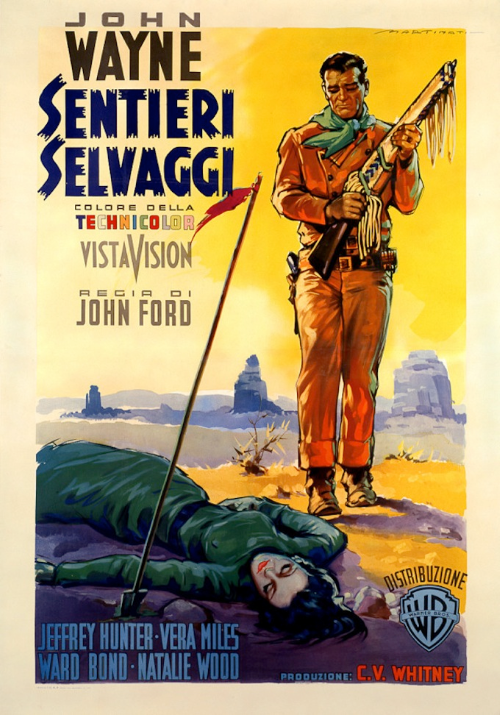
6. ONE OF THE STUNT DRIVERS WAS JOHN WAYNE’S SON.
The Duke’s youngest son, Ethan Wayne, began acting in 1970. But he supplemented his work in front of the camera with a handful of stunting stints.

10. THE STUDIO WANTED THE BAND WHO SANG “CAR WASH” INSTEAD OF ARETHA FRANKLIN.
Universal Pictures wanted new acts like Rose Royce, the band behind hits like “Car Wash” and “I Wanna Get Next to You.” But Aykroyd and company said no. Universal later generated a PR effort to get Franklin an Oscar nomination for her performance. The movie helped revitalize her career.

12. PAUL REUBENS HAS A SMALL BUT VISIBLE ROLE.
The actor best known as Pee-wee Herman played a waiter at Chez Paul, before the band is fully back together.

She Carried His Heart in a Silken Shroud!


Two famous sayings come to mind for this morning’s post…

A reporter once asked Stephen King why he writes such scary stories.  King answered, “It is because I have the heart of a small boy… and I keep it in a jar on my desk.”

The second quote is when a person in love tells his/her lover: “I give you my heart.”

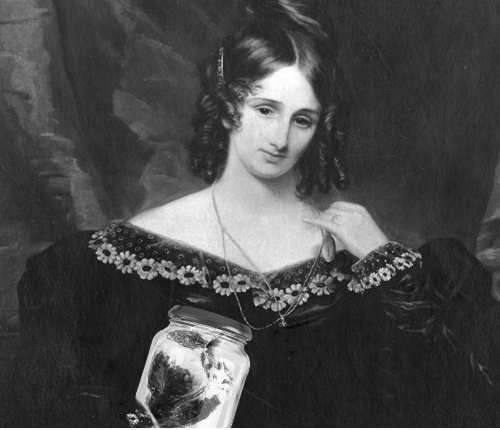
It seems that Frankenstein author Mary Shelley took the second quote literally.  After her husband died Shelley

…kept the heart in a silken shroud, and is said to have carried it with her nearly everywhere for years. In 1852, a year after she died, Percy’s heart was found in her desk. It was wrapped in the pages of one of his last poems, Adonais

Source: Mental_Floss.

Halt Citizen! 15 Facts About “Robocop”

Jake Rossen and Mental_Floss present Halt Citizen! 15 Facts About Robocop. Here are three of my favorites…

7. Weller Refused to Answer to His Real Name.
According to co-star Miguel Ferrer, Weller instructed the producers to issue a memo to the cast and crew advising that no one should refer to him by his real name: he preferred to be called by his character’s name, Murphy, or “Robo.” Ferrer went on to say that, having known Weller for years prior to the film, he enjoyed greeting him with “Hey, Pete.” Weller ignored him.

3. Stan Lee Turned It Down.
In 1984, Neumeier decided to see if he could spin the RoboCop script into a comic book to use as a launching pad for a feature. He ran the idea by Stan Lee; before Lee could commit one way or the other, he and Neumeier attended an early screening of The Terminator, which also had a humanoid as the main character. An impressed Lee told the writer, “Boy, you’re never going to top that!” and passed.

11. Some of the Actors Got Unsolicited Stunt Pay.
Kurtwood Smith and Ray Wise had been standing in such close proximity to a building explosion that the production—without any sense of humor—paid both men for “stunt work,” which amounted to roughly $400 apiece for the scene. But the actors didn’t feel their pay justified the risk to their life: neither was aware the explosion would be that big, and Smith’s coat ended up catching on fire.

15 Fateful Facts About “Gilligan’s Island”

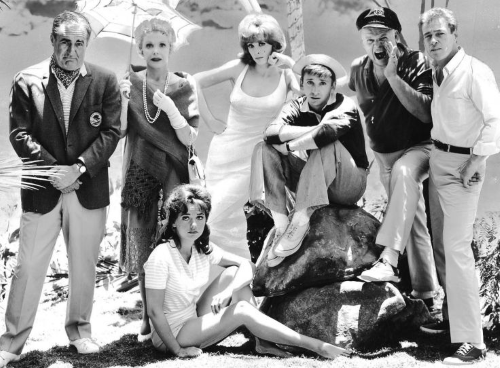
Kara Kovalchik and Mental_Floss present 15 Fateful Facts About Gilligan’s Island.   Here are three of my favorites (and this was one of the hardest to get down to top three )…

5. THE ASSASSINATION OF JFK DELAYED PRODUCTION ON THE SERIES.

The pilot for the series was filmed over several days in November of 1963 on the island of Kauai in Hawaii. The last day of shooting was scheduled for November 23, 1963 in Honolulu Harbor for the scenes showing the S.S. Minnow embarking on its fateful three-hour tour. Late in the morning on November 22, a crew member ran to the set and announced that he’d just heard on the radio that President John F. Kennedy had been shot. As Lyndon Johnson was sworn in as President, it was announced that all military installations (including Honolulu Harbor) would be closed for the next two days as a period of mourning. Filming was delayed by several days as a result, and in the opening credits—as the Minnow cruises the harbor—the American flag can be seen flying at half-mast in the background.

2. GILLIGAN’S FIRST NAME IS WILLY.
After getting a green light from CBS for the pilot, Schwartz went about assembling his cast. He chose the name of the bumbling first mate—Gilligan—from the Los Angeles telephone directory. Gilligan’s first name was never mentioned during the series, but according to Schwartz’s original notes, it was intended to be “Willy.” Yet Bob Denver always insisted that “Gilligan” was the character’s first name. “Almost every time I see Bob Denver we still argue,” Schwartz once admitted. “He thinks Gilligan is his first name, and I think it’s his last name. Because in the original presentation, it’s Willy Gilligan. But he doesn’t believe it, and he doesn’t want to discuss it. He insists the name is Gilligan.”

7. DAWN WELLS STILL GETS PAID FOR GILLIGAN’S ISLAND.
All of the actors signed contracts that guaranteed them a certain amount of money per original episode plus a residual payment for the first five repeats of each episode. This was a pretty standard contract in 1965, when as a rule most TV shows were only rerun during the summer months as a placeholder between seasons.

Even though the word “syndication” wasn’t yet a standard term in the TV production glossary, Dawn Wells’ then-husband, talent agent Larry Rosen, advised her to ask for an amendment to that residual clause in her contract, and the producers granted it, never thinking the series would be on the air nearly 50 years later. As a result, the estate of the late Sherwood Schwartz (who reportedly pocketed around $90 million during his lifetime from his little microcosm-on-an-island show) and Dawn Wells are the only two folks connected to the show who still receive money from it.

30 Things We Learned from Tarsem Singh’s “The Cell” Commentary

Rob Hunter and Film School Rejects present 30 Things We Learned from Tarsem Singh’s The Cell  Commentary. 

I’ve always thought The Cell was an under-rated film.  Here’s three of my three favorite things learned…

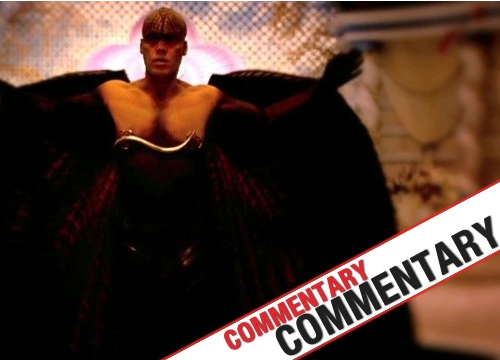
5. Tarsem recalls when Vincent D’Onofrio arrived for lighting tests, “and he came in and he just got into character and he came out with that look, and mmm, just how he moved, how he breathed, his base, just so so perfect throughout.”

13. He recalls a problem with actress Tara Subkoff that bled into her appearance in the film. She was asked if she could swim, and after stumbling briefly she said yes adding “I’m a lifeguard.” Tarsem had already lost the actress he had wanted for the role, and they were nearing the shooting date, so he hired her. “You can lie to a certain extent when somebody says ‘are you a horse rider’ and say yes and then go learn it, but you don’t say you’re a jockey!” He says it ended up being a disaster because he ended up having to do long shots. “I feel no sympathy for the girl when she gets saved in the end, and you can tell because of how I covered her. I just could not get near her.” She couldn’t go in the water without holding her nose, and it resulted in time lost and mounting frustrations. By contrast, the girl playing the bleached corpse, Catherine Sutherland, was great, and he wishes he had switched the two.

15. Peter Sarsgaard makes an uncredited appearance in the film, and Tarsem says he wishes he had more for him to do. “That guy is a great actor.”


10 Things You May Not Know About P.T. Barnum

Evan Andrews and History.com present 10 Things You May Not Know About P.T. Barnum.   Here are three of my favorites…

1. Barnum was an entrepreneur from an early age.
Barnum’s knack for moneymaking first manifested during his youth in Bethel, Connecticut. The future showman sold snacks and homemade cherry rum during local gatherings, and by age 12, he had made enough money to purchase his own livestock. By 21, his holdings also included a general store, a small lottery and even his own newspaper called the “Herald of Freedom.”

2. He first rose to prominence by engineering a famous hoax.
In 1835, Barnum launched his career in entertainment by purchasing Joice Heth, a blind slave touted as being the 161-year-old former nurse of George Washington. After billing Heth as “the most astonishing and interesting curiosity in the world,” Barnum put her on display in New York and took her on a small tour of New England. Visitors lined up to gawk at her withered body and hear her tales of “dear little George,” and Barnum helped fuel popular interest by spreading a rumor that she was actually an automaton controlled by a ventriloquist. The truth about Heth didn’t emerge until after her death in February 1836. During a public autopsy—staged by Barnum at the price of 50 cents for admission—it was revealed that she was most likely no older than 80.

3. Barnum didn’t go into the circus business until relatively late in life.
Barnum is best known for his traveling three-ring circuses, but he didn’t make his first forays under the big top until he was 60 years old. Before then, he was better known as the owner of the Manhattan-based American Museum, a sprawling collection of historical artifacts, aquariums, animal menageries, zoological curiosities and freak shows. Some of the museum’s most notable exhibits included General Tom Thumb, a child dwarf who Barnum famously brought to audience with Queen Victoria of Britain; and the “Fejee Mermaid,” which was actually the upper half of a monkey sewn to the bottom of a fish. Barnum only launched his traveling circus after his museum was twice destroyed by fire. He later teamed with his famed partner James Bailey in 1881, and the two went on to make a fortune running their “Greatest Show on Earth.”

15 Peachy Facts About “Face Off”

Eric D. Snider and Mental_Floss present 15 Peachy Facts About Face Off Here are three of my favorites…

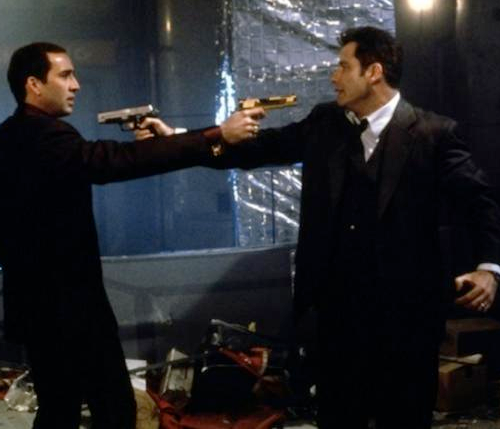
2. IT WAS WRITTEN WITH STALLONE AND SCHWARZENEGGER IN MIND.
Separately, they were among the top action stars of the day (the day being the early ’90s), so teaming them up was an irresistible idea. Moreover, they were both really famous, and as Colleary once said, “The movie doesn’t work unless the actors have a well-established persona” so audiences can appreciate them impersonating each other. (Editorial note: there’s no way Schwarzenegger and Stallone could have imitated one another’s mannerisms as well as Cage and Travolta do.) The two didn’t make Face/Off, but they did eventually make Escape Plan, in which they escape from a futuristic, off-the-grid, middle-of-the-ocean prison very much like the one in Face/Off.

12. THE JOKE ABOUT TRAVOLTA’S “RIDICULOUS CHIN” WAS TRAVOLTA’S OWN IDEA.
He said, “Nic [Cage]’s character is such an egomaniac. He loves himself—the way he talks, acts, walks, everything about himself. So, we just figured that it follows that he would hate being in my body, having my face. So I added a lot of lines where he makes fun of the way I look—like ‘this ridiculous chin,’ things like that.”

6. THE EPILOGUE, WHERE THE ARCHERS ADOPT CASTOR TROY’S ORPHANED SON, ALMOST DIDN’T HAPPEN.
It was part of the writers’ original story and survived all of their many rewrites, but Paramount didn’t think audiences would like an ending where the hero adopts his enemy’s son. Woo’s alternate idea was for the film to end with some ambiguity about whether or not Eve Archer had her real husband back. When a test audience found that unsatisfying—and, moreover, wanted to know what happened to Castor Troy’s kid—the studio ponied up the money to get the necessary cast members back to film the original ending. According to Werb, “The next time we tested, the numbers went through the roof. There was spontaneous and thunderous applause at the end.”

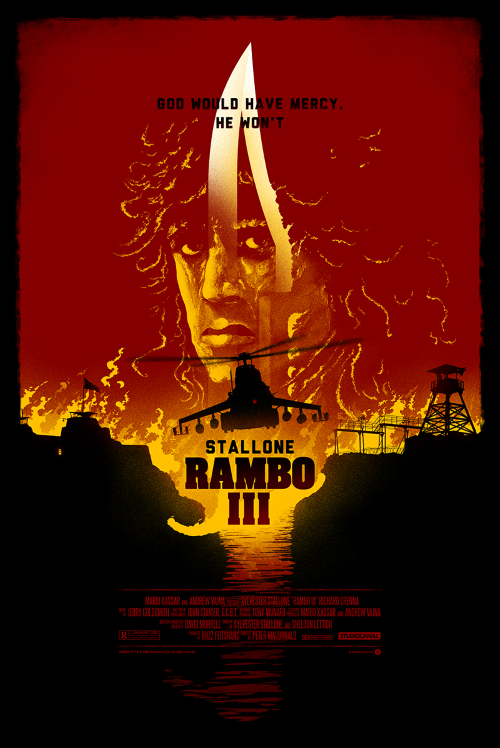
“Rambo III” by Marko Manev

Grey Matter Art under license from StudioCanal, is pleased to announce the final poster in our officially licensed Rambo series. A limited edition screen print for the iconic 80’s action film, “Rambo III”, by artist Marko Manev. Below are details for the release:

Artist: Marko Manev
Size: 24X36
Regular Edition: 100/$50.00

Regular Edition Set of all 3 Rambos: $120
Printed by: D&L Screen Printing
This poster was released on Thursday, July 9th.Follow Grey Matter Arts on Twitter to get a jump on future drops. Also, follow Grey Matter Arts on Facebook and Instagram, and sign up for their website newsletter for all future news & information.

RAMBO III ™ & © 1988 Studiocanal S.A
RAMBO ® is a Registered Trademark owned by Studiocanal S.A.

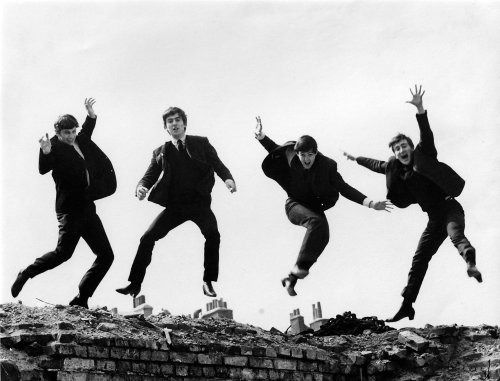
10 Facts You (Probably) Didn’t Know About The Beatles

and Neatorama present 10 Facts You (Probably) Didn’t Know About The Beatles. Here are three of my favorites…

2) Most “takes” on a Beatles song.
The Beatles were known as perfectionists in the studio, often recording dozens of takes on a specific song. The Beatle song with the most attempted takes was actually never released by the Beatles.

“Not Guilty,” a George Harrison song, took 102 takes, before it was ultimately rejected for the Beatles 1968 album The Beatles.

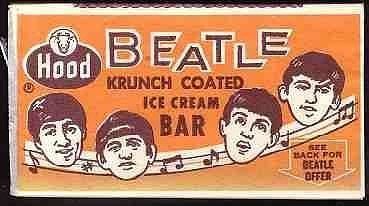
5) Strange Beatles products sold.

After the Beatles landed in America in 1964, Beatle products (both licensed and unlicensed) flooded the markets. Beatle t-shirts, wigs, books, hats, guitars, wallpaper, notebooks, board games, were just a few of the successful Beatle-related products sold on the market. In one city, Beatle bedsheets were sold from slicing up the sheets the boys had slept on. Beatle pillowcases were sold in the same manner. Beatle razor stubble and Beatle bathwater were attempted too.

One enterprising salesman in New York supposedly made a profit selling bottles of “Beatle Breath.”

10) John and Paul once composed the score for a ballet.
In 1963, John Lennon and Paul McCartney actually composed the score for a ballet- for the first and only time in their careers. The ballet was called Mods and Rockers.

It opened on December 18, 1963 and ran through January 11, 1964 at the Prince Charles Theater in London. Even by this early point in their careers, the Sunday Times declared John and Paul “the greatest composers since Beethoven.”