Category: Celebs

15 Things You Might Not Know About “Indiana Jones and the Last Crusade”

Michael Arbeiter and Mental_Floss present 15 Things You Might Not Know About Indiana Jones and the Last Crusade Here are three of my favorites…

1. SPIELBERG MADE LAST CRUSADE TO APOLOGIZE FOR TEMPLE OF DOOM.

After the masterpiece of spirited adventure that was Raiders of the Lost Ark, some critics and audience members felt betrayed by the grim and gruesome sequel, Indiana Jones and the Temple of Doom. Director Steven Spielberg was hardly a defender of the movie—in 1989 he admitted, “I wasn’t happy with the second film at all. It was too dark, too subterranean, and much too horrific. I thought it out-poltered Poltergeist. There’s not an ounce of my own personal feeling in Temple of Doom.

Spielberg’s involvement in a third Indiana Jones film sprang from his desire to apologize to viewers for the series’ disappointing second outing, and to revive the earnest spirit of the original. He rehired supporting stars Denholm Elliott and John Rhys-Davies to double down on the Raiders ambiance.

7. A RENOWNED PLAYWRIGHT SECRETLY PENNED THE INDY/HENRY MATERIAL.

Since the relationship between Indy and his estranged father, played by Sean Connery, provided the emotional meat of the story, Spielberg and Lucas hired a ghostwriter to bolster the gravity of the characters’ interactions. Celebrated playwright Tom Stoppard contributed the bulk of the Jones boys’ material but didn’t receive a writing credit.

6. SPIELBERG WAS AFRAID THE MOVIE WOULD REMIND PEOPLE OF MONTY PYTHON.

Last Crusade’s eventual screenwriter Jeffrey Boam held onto the Holy Grail element despite Spielberg’s uncertainty about how it might be received. His apprehensions came from the association of the sacred cup with the 1975 comedy film Monty Python and the Holy Grail. “Of course, I was worried that people would hear ‘Holy Grail,’ and they would immediately think about a white rabbit attacking Monty Python,” Spielberg told Entertainment Weekly. “My first reaction was to say, ‘Everybody run away! Run away!’”
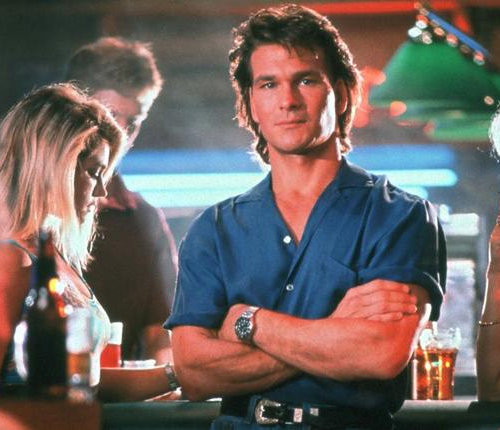
15 Painless Facts About “Road House”
Roger Cormier and Mental_Floss present 15 Painless Facts About Road House. Here are three of my favorites…

12. SAM ELLIOTT SAID HE GETS RECOGNIZED MOST FROM ROAD HOUSE.

Though he has nearly 90 credits to his name, in 2007 Elliott told Collider that he’s most recognized from Road House. Earlier this year, he admitted to Vulture that he “wasn’t so good” in the film. Joel Silver cast him due to his “baggage.”

8. THE DIRECTOR TRIED TO MAKE THE FIGHTS A LITTLE FUNNY.

The movie’s humor is somewhat intentional; director Rowdy Herrington said he wanted to make the fights “like a Keystone Cops melee.”

15. THERE WAS A DIRECT-TO-DVD SEQUEL.

2006’s Road House 2: Last Call killed off Dalton, who was finally stopped by a bullet to the head. It starred Johnathon Schaech as Dalton’s son, D.E.A. agent Shane Tanner, who runs his uncle Nate’s bar the Black Pelican while trying to solve his father’s murder. In 2013, it was reported that a remake of Road House was in the works, directed by original Fast and the Furious director Rob Cohen.

[Did anyone know about the Road House 2: Last Call movie?  Kill off Dalton? Really? – Craig]

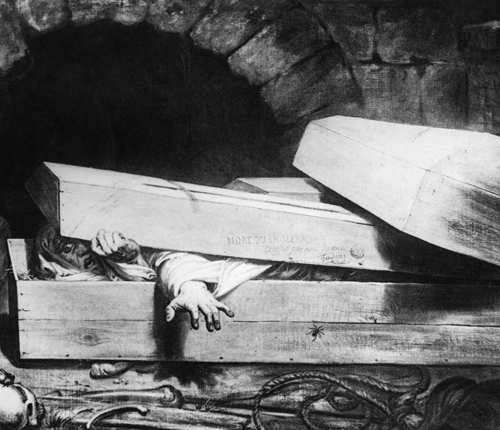
10 Famous People Who Were Afraid They’d Be Buried Alive

It’s hard to imagine many things worse than being buried alive.  Thankfully with modern technology the odds of waking up in a coffin six feet under is unlikely.

That wasn’t always the case.

Many famous people [including George Washington, Hans Christain Anderson, Frederick Chopin and others] took great lengths to avoid being buried alive as Bess Lovejoy points out in 10 Famous People Who Were Afraid They’d Be Buried Alive.

Source: Mental Floss.

10 Things You Might Not Know About Mr. T

Garin Pirnia and Mental_Floss present 10 Things You Might Not Know About Mr. T.   Here are three of my favorites…

1. HIS ICONIC “I PITY THE FOOL” LINE CAME FROM ROCKY III.

In his first starring role, in 1982, Mr. T plays Rocky Balboa’s competitor Clubber Lang in the Sylvester Stallone written and directed Rocky III. During a part in the movie when Lang’s being interviewed about his upcoming boxing match, he’s asked if he hates Rocky: “No, I don’t hate Balboa, but I pity the fool. And I would destroy any man who tries to take what I got.” His prediction for the fight? “Pain!” Unfortunately, Rocky beats the crap out of Lang, so who’s the fool now? Nevertheless, the catchphrase stuck and launched more than 30 years of double entendres and jokes, including Mr. T starring in a reality show called I Pity the Fool, where he was a motivational speaker.

3. HE BEAT HIS TOUGHEST ENEMY: CANCER.

In 1995, after finding a small malignant tumor on his ear, Mr. T was diagnosed with T-cell lymphoma. “Can you imagine that? Cancer with my name on it—personalized cancer,” he recalled to Coping with Cancer magazine. At first he was lucky: after five treatments of radiation spanning four weeks, the cancer dissolved. But 11 months later the cancer returned, which resulted in him undergoing six weeks of high-dose chemotherapy. “My fame couldn’t save me!” he said. “My gold, my money couldn’t stop cancer from appearing on my body. If they can’t save me, then I don’t need them.” He then gave some advice: “I pity the fool who just gives up. We all gonna die eventually from something or other, but don’t be a wimp. Put up a good fight.” Mr. T’s now cancer free.

9. HE’S IN DEMAND TO STAR IN THE EXPENDABLES 4.

One person who’s been absent from The Expendables franchise is Mr. T, and some people think it’s an outrage. A Facebook page called “1,000,000 Strong for Mr. T in The Expendables 4” serves as a petition to Hollywood to cast Mr. T in the next Expendables project. The page was formed a few years ago during the casting of The Expendables 3, but Mr. T was overlooked. “Did you sleep on your Bruce Willis sheets when you were a kid? Did you eat Sylvester Stallone cereal? Did you play with an Arnold Schwarzenegger action figure or was it of a character he played? Mr. T had his own cartoon. Mr. T should be cast in the next Expendables movie,” reads the page’s mission. Earlier this year Fox announced that they are developing an Expendables TV series, so maybe there’s a chance for Mr. T yet.

16 Things You May Not Know About Rambo

Sean Hutchinson and Mental_Floss present 16 Things You May Not Know About Rambo.   Here are three of my favorites…

5. KIRK DOUGLAS WAS SUPPOSED TO PLAY COLONEL TRAUTMAN.

The veteran movie star actually made it to set and appeared in early advertisements for First Blood, but left the production when he demanded the right to rewrite the script. Douglas favored the ending of the book, and felt that Rambo should die in the end. The actor gave the filmmakers an ultimatum: if the production didn’t let him do what he wanted with the script he’d quit. Kotcheff and Stallone wanted to leave the door open for the possibility for Rambo to live or die at the end of the movie, so they let Douglas quit.

Actor Richard Crenna was then cast with a single day’s notice to fill Douglas’ shoes as Rambo’s mentor and father figure, Colonel Trautman. Crenna would reprise his role in two more Rambo movies before he passed away in 2003. He is the only actor besides Stallone to appear in multiple Rambo movies.

The unused alternate ending of First Blood, in which Trautman shoots and kills Rambo, can be seen briefly in the dream sequence in the fourth film, Rambo.

7. FOR RAMBO: FIRST BLOOD PART II, JAMES CAMERON WROTE THE ACTION AND STALLONE WROTE THE POLITICS.

Initial drafts of the screenplay for the sequel to First Blood were written by James Cameron, who at the time was still looking for his big break. Cameron’s script, which was titled First Blood II: The Mission and was written simultaneously with the scripts for The Terminator and Aliens (two movies which ultimately gave him that big break), differed substantially from what ended up on screen.

According to Cameron: “I was trying to create a semi-realistic, haunted character, the quintessential Vietnam returnee, not a political statement.Cameron’s draft picked up with Colonel Trautman finding Rambo in a psychiatric ward (a concept Cameron would recycle for his Sarah Connor character in Terminator 2), and also featured a sidekick role named Lieutenant Brewer that producers hoped would be filled by John Travolta, who Stallone had recently directed in the 1983 Saturday Night Fever sequel, Staying Alive (yes, you read that correctly, Sly directed the sequel to Saturday Night Fever). Eventually Stallone took over scriptwriting duties, and excised the first half of Cameron’s screenplay to add the film’s prominent POW/MIA message and the love story beats with the character Co-Bao.

Rambo: First Blood Part II is the only Rambo movie to be nominated for an Oscar. It received a nod for Best Sound Effects Editing in 1986 but lost to Back to the Future.

10. TO BECOME RAMBO, STALLONE HAD A RIDICULOUS WORKOUT SCHEDULE.

First Blood required Stallone to be ripped (he shot Rocky III shortly before starring in the first Rambo movie, which helped), but for the second outing he really needed to pump some iron. The actor trained for eight months prior to the film’s start date in late 1984, but he maintained a strict regimen during shooting as well.

He would begin with a two- to three-hour morning workout, then he’d move on to the 10- to 12-hour shooting day on the movie. After that, instead of going home like the rest of the cast and crew, he’d cap off the day with another two- to three-hour workout. After six hours of sleep or so he’d be up and ready to do it all again. Maintaining that physique definitely helped Stallone for his next movie as well: he began shooting Rocky IV immediately after First Blood Part II.

17 Action-Packed Facts About “Crimson Tide”


Roger Cormier 
and Mental_Floss present 17 Action-Packed Facts About Crimson Tide Here are three are my favorites…

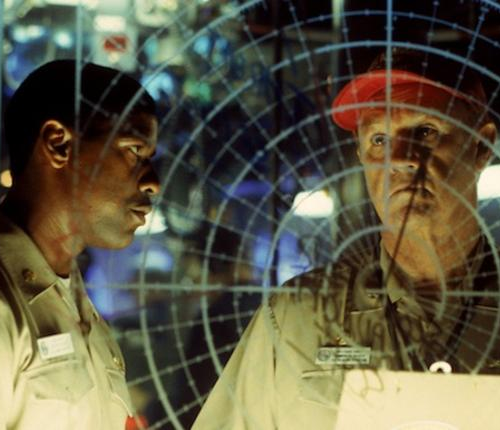
2. QUENTIN TARANTINO WAS AN UNCREDITED WRITER.

Though Michael Schiffer earned the film’s sole screenplay credit (based on a story by Schiffer and Richard P. Henrick), Tarantino contributed some words to the script as well. He wrote the scene in which members of the crew talked about their favorite submarine movies. Tarantino and Tony Scott had worked together two years earlier, when Scott directed Tarantino’s script for True Romance.

3. DENZEL WASHINGTON CONFRONTED TARANTINO ON THE SET.

Washington was very open with his anger about Tarantino’s use of racial slurs. The Pulp Fiction writer-director’s request that they have their argument privately was reportedly denied by Denzel. In a 2012 interview with GQ, Washington said that he has since apologized to Tarantino, and pointed out that his own daughter had just acted in Tarantino’s Django Unchained.

14. HACKMAN ACCIDENTALLY PUNCHED WASHINGTON.

Though Hackman insisted to Larry King that it was an accident, he said it made things tense.

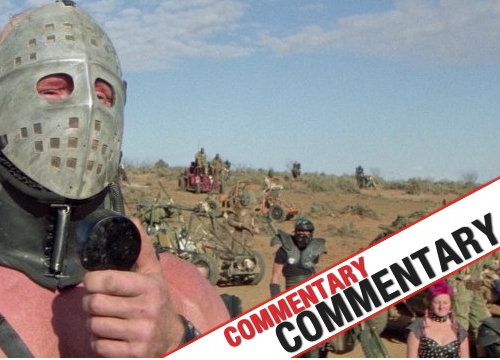
27 Things We Learned from George Miller’s “The Road Warrior” Commentary

Rob Hunter and Film School Rejects present 27 Things We Learned from George Miller’s The Road Warrior Commentary. Here are three are my favorites…

3. For as much as the film is known for its vehicular action, Semler says they simulated a lot of travel too. “If you can see the road moving behind, we’re moving. If you don’t see anything moving behind, we’re not moving.”

16. Miller loves the bit with the mechanic (Steve J. Spears) in the swing evaluating the truck the engine and the blond guy repeating it much louder. It wasn’t planned, and the pair just started doing it on their own. “This is nice,” says Semler. Miller agrees saying it’s one of the lighter moments in the movie. On that same topic the duo count how many times Max smiles throughout the film, and they get as high as three.

22. The compound explosion was so big that they had to notify airlines in advance in case of any jets passing overhead.

15 Epic Facts About “Gladiator”

Roger Cormier and Mental_Floss present 15 Epic Facts About Gladiator. Here are three are my favorites…

1. STEVEN SPIELBERG GREENLIT THE MOVIE AFTER ASKING THREE QUESTIONS.

Screenwriter David Franzoni received a three-picture deal with Dreamworks SKG after writing the script for Amistad. During a “surprisingly brief” pitch meeting with Spielberg for what would become Gladiator, Franzoni told the Writers Guild of America that the director “really had three basic questions. My gladiator movie, it was about ancient Roman gladiators—not American, Japanese, whatever else? Yes, I said. Taking place in the ancient Coliseum? Yes. Fighting with swords and animals to the death and such? Yes. Great, let’s make the movie.”

10. CROWE WASN’T THRILLED WITH THE SCRIPT (OR LACK THEREOF).

While appearing on Inside the Actors Studio, Crowe said that only 32 pages of the script were completed when shooting commenced. Co-writer William Nicholson recounted how Crowe once told him, “Your lines are garbage but I’m the greatest actor in the world, and I can make even garbage sound good.” Initially, Crowe didn’t care for the now-famous line “And I will have my vengeance, in this life or the next,” but repeatedly failed to ad-lib anything better.

13. JOHNNY CASH WAS A FAN OF THE FILM.

Before he was hired to play the legendary singer in Walk the LinePhoenix recalled to The Guardian how he once met Johnny Cash by pure coincidence, and how he “started quoting to me the most sadistic dialogue from Gladiator with obvious relish.”

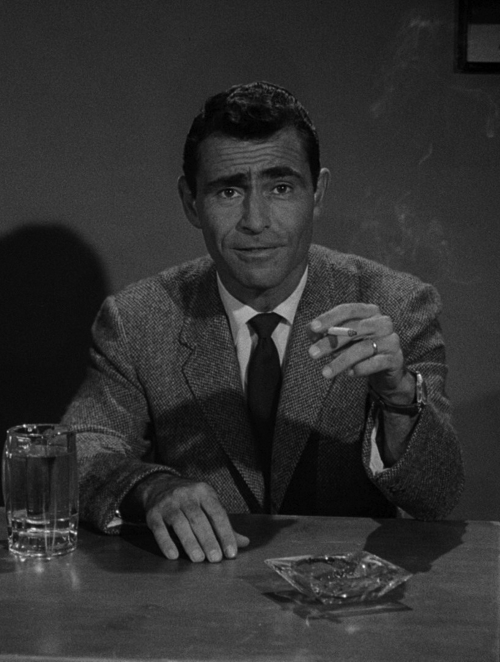
Eight Bizarre Facts About Rod Serling and “The Twilight Zone”

Jake Rosen and Mental_Floss present Eight Bizarre Facts About Rod Serling and The Twilight Zone. Here are three are my favorites…

2. The Episode That Won an Oscar
When Serling’s budget for the series tightened in the fifth and final season, he decided on an unusual cost-cutting measure: the writer paid $10,000 (by some accounts, $25,000) for the rights to broadcast An Occurrence at Owl Creek Bridge, a French short based on the Ambrose Bierce story about a Confederate sympathizer who escapes the hangman’s noose at the end of the Civil War. No dubbing was needed: the short was virtually silent, and its haunting cinematography was a perfect fit for the show. The year prior, it had won an Oscar for Best Short Subject. Bierce’s story was also adapted into an episode of the other popular anthology of the day, Alfred Hitchcock Presents, marking the only time the two series used the same source material.

4. Six Dimensions
When Serling recorded his famous opening narration for the pilot episode in 1959, he began by intoning that there was “a sixth dimension” to explore. A CBS executive heard it and asked the writer why he had skipped a fifth dimension—weren’t there only four? Serling, puzzled, hadn’t really considered it. “Oh,” he said. “Aren’t there five?” The narration was re-recorded before any angry letters from physicists poured in.

8. God Complex
Though he spoke fondly of Serling through his entire career, Zone teleplay writer Richard Matheson (“Steel,” “The Invaders”) found one mandate puzzling: According to Matheson, only Serling could use the word “God” in his teleplays. It was off-limits to the rest of the writing team. “I used to get ticked off at Rod because he could put ‘God’ in all his scripts,” Matheson said. “If I did it, they’d cross it out.” Matheson never asked, and was never told, the reason behind the rule. Chalk it up to a mystery worthy of The Twilight Zone.

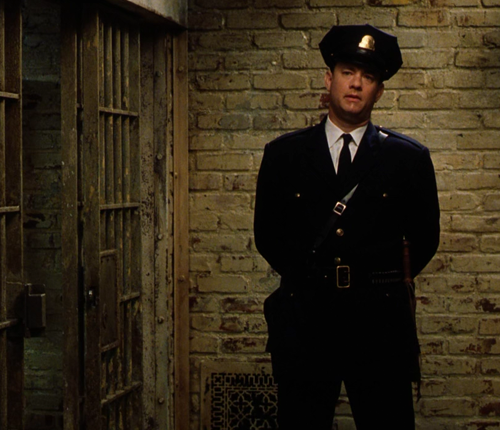
15 Things You Might Not Know About “The Green Mile”

Michael Arbeiter and Mental_Floss present 15 Things You Might Not Know About The Green Mile.   Here are three are my favorites…

2. BRUCE WILLIS HELPED CAST A STARRING ROLE.
The character John Coffey’s unique blend of imposing stature and gentle demeanor made casting the part a tricky task. Luckily, Bruce Willis had the right man for the job. Upon hearing of the casting search for the character, Willis was sure his friend and Armageddon costar Michael Clarke Duncan was a perfect fit for the role. Willis used his A-list pull to contact Darabont and suggest his greenhorn friend for the film.

7. DUNCAN WASN’T ACTUALLY THAT TALL.   At 6 feet 5 inches tall, Duncan was a large man by anyone’s measure. However, he was practically average height on the set of The Green Mile, alongside costars David Morse (6 feet 4 inches) and James Cromwell (6 feet 6 inches). Blocking tactics gave Duncan the appearance of towering over his costars.

13. THE GREEN MILE WAS THE HIGHEST GROSSING STEPHEN KING MOVIE.

While The Shining claims the longstanding cult esteem and The Shawshank Redemption might top the lot in basic cable omnipresence, the somewhat less heralded The Green Mile that managed to hit an impressive $136.8 million in domestic ticket sales and $286.8 million worldwide.

15 Things You Probably Didn’t Know About “American History X”

Sean Hutchinson and Mental_Floss present 15 Things You Probably Didn’t Know About American History X.   Here are three are my favorites…

2. TONY KAYE [Director] TRIED TO DISOWN THE FILM.

Kaye was unsatisfied with the final cut of the movie, so he tried to use Alan Smithee—the official pseudonym (coined in 1969 and discontinued in 2000) for directors looking to disown their projects—in the credits. The Directors Guild of America blocked the effort, however, because DGA guidelines stipulated that directors could only use the Smithee pseudonym if they agreed not to publicly disparage the film, something the overly vocal Kaye had already done.

5. EDWARD NORTON WAS ALLEGEDLY CAST WITHOUT KAYE’S APPROVAL.

Norton stepped in when Phoenix passed on the project—reportedly against Tony Kaye’s wishes. Kaye wanted to find another actor, but let Norton keep the part because Kaye simply couldn’t find anyone better prior to the start of shooting.

9. NORTON TURNED DOWN A ROLE IN SAVING PRIVATE RYAN FOR AMERICAN HISTORY X.

He would have played Private Ryan (Matt Damon got the part instead).