6. JOHN LANDIS’S FAVORITE MOMENT WHILE SHOOTING WAS AN ARGUMENT WITH CHEVY CHASE. Landis told Movies.com, “Probably the funniest moment for me when shooting was when I had the Three Amigos on horseback in the desert and I was shooting while they were wearing those ridiculous outfits and after having been shooting for three weeks, Chevy objected to a line of dialogue and he said, ‘I don’t think I should say this.’ And, remember, Chevy plays a character named Dusty Bottoms. So I said, ‘Well, why not?’ He said, ‘Because my character would have to be a moron to say this.’ All I could think was, What movie has Chevy been making? So I said, ‘OK, I’ll give it to Marty because it’s a laugh.’ Then Chevy said, ‘I’ll say it!’ It’s one of my favorite moments with an actor.”
7. SEVERAL FILMS THAT CAME OUT AFTER ¡THREE AMIGOS! SHARED ITS PREMISE. Like ¡Three Amigos!, films like Galaxy Quest (1999) and Tropic Thunder (2008) have featured movie stars accidentally ending up in real danger. Vulture outlined the many similaritiesbetween Tropic Thunder and ¡Three Amigos!, which include everything from similar catchphrases and movie star cameos (Tom Cruise plays Jewish film producer Les Grossman in Tropic Thunder while Joe Mantegna plays Jewish film producer Harry Flugleman in ¡Three Amigos!) to characters eating bats when they’re short on food. Galaxy Quest meanwhile featured a group of washed up sci-fi stars who end up cavorting with real aliens.
Referring to the spate of movies that borrow from the ¡Three Amigos! premise, John Landis said, “They completely ripped it off! The first Pixar movie about the ants, A Bug’s Life, took the same plot. It’s amazing how often the plot has been used. If Galaxy Quest weren’t so funny, it would probably bother me more.”
13. STEVEN SPIELBERG ALMOST DIRECTED THE FILM. Spielberg considered making the film in the early 1980s with Martin, Robin Williams, and Bill Murray as the leads. Ultimately, he decided to make E.T. the Extra-Terrestrial (1982) instead.
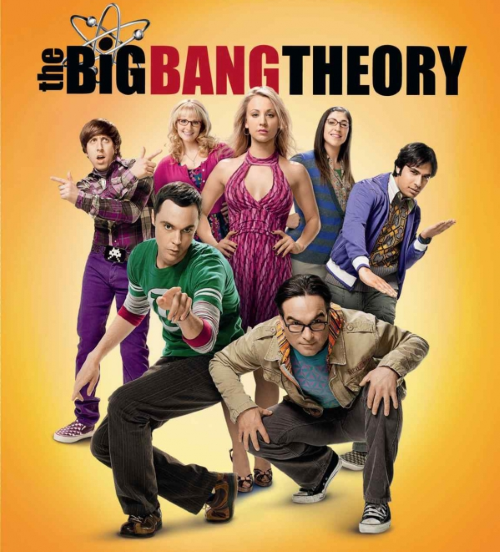
2. IT TOOK TWO PILOTS FOR THE SHOW TO GET PICKED UP TO SERIES.
The show filmed two different pilots, because CBS didn’t like the first one but felt the show had potential. The first pilot began with a different theme song and featured Sheldon, Leonard, and two female characters, including a different actress playing what would become the Penny role. Chuck Lorre thought the initial pilot “sucked” but is open to having the unaired pilot included as part of a DVD.
5. SHELDON PROBABLY DOESN’T HAVE ASPERGER’S. Because of Sheldon’s anti-social nature, viewers have often assumed that Sheldon has Asperger’s syndrome. But Prady has stated that “We write the character as the character. A lot of people see various things in him and make the connections. Our feeling is that Sheldon’s mother never got a diagnosis, so we don’t have one.”
Parsons himself isn’t totally sure, though. “Asperger’s came up as a question within the first few episodes. I got asked about it by a reporter, and I had heard of it, but I didn’t know what it was, specifically,” he told Adweek in 2014. “So I asked the writers—I said, ‘They’re asking me if Sheldon has Asperger’s’ and they were like, ‘No.’ And I said, ‘OK.’ And I went back and I said, ‘No.’ And then I read some about it and I went, OK, well, if the writers say he doesn’t, then he doesn’t, but he certainly shares some qualities with those who do. I like the way it’s handled … This is who this person is; he’s just another human.”
10. WIL WHEATON GOT THE “EVIL WIL WHEATON” GIG THROUGH TWITTER.
Wheaton, who plays a “delightfully evil version” of himself on the show, tweeted about The Big Bang Theory. Wheaton told Larry King, “I was talking on Twitter about how much I loved the show and how I thought it was really funny.” One of the show’s executive producers, Steven Molaro, saw the tweet and told Wheaton to let him know if he wanted to come to a taping. A few days later Wheaton received an email from Bill Prady’s assistant about appearing on the show. “I just thought the email was a joke from one of my friends, so I just ignored it,” Wheaton said.
When Wheaton realized that the email was legit he phoned up Prady, who explained they wanted a nemesis for Sheldon. “It’s always more fun to be the villain,” Wheaton said. Even though the character has evolved into Sheldon’s ally, Wheaton said, “I still call him Evil Wil Wheaton.”
The poster above for Vin Diesel’s The Last Witch Hunteris the best thing I’ve seen promoting the movie. I like the poster. I still have big doubts about the movie though.
6. COPPOLA LITERALLY PUT EVERYTHING HE HAD INTO THE MOVIE.
The director invested $30 million of his own money into the project to get the budget to the amount required to execute his vision. That total included the valuations of his house and his winery, which he signed over to Chase Bank as collateral on the amount. The interest rate for the amount began at seven percent, but when production ended it was up to 29 percent. If the movie tanked, Coppola faced financial ruin, which understandably made the filming process fairly stressful. Coppola suffered an epileptic seizure while shooting, had a nervous breakdown, and allegedly threatened to commit suicide at least three times.
8. HARRISON FORD APPEARS IN A (TECHNICALLY) PRE-STAR WARS ROLE. Coppola hired a young actor named Harrison Ford to appear as Colonel Lucas (a nod to George), one of the military officers who gives Willard his orders to assassinate Kurtz. Ford had previously appeared in Lucas’ American Graffiti and Coppola’s The Conversation, but was still relatively unknown when the filming of Apocalypse Now began in 1976. He would later become a megastar after appearing as Han Solo in Star Wars when it was released in 1977.Apocalypse Now, which was shot before Star Wars, was released afterwards. Ford was apparently so nervous when shooting his scenes that Coppola added a story beat for his character to drop his dossier about Kurtz as a way to incorporate the then young actor’s anxiety into the scene.
5. HARVEY KEITEL WAS FIRST HIRED TO PLAY WILLARD.
Coppola held exhaustive audition sessions for his primary cast, but the part of Willard proved to be a problematic one for Coppola. He first offered the part to actor Steve McQueen, who turned down the role because he didn’t want to shoot in the jungle on location. Al Pacino, James Caan, and Jack Nicholson all turned down successive offers from Coppola until he gave the role to Harvey Keitel. Coppola fired Keitel six weeks into production because he thought the actor’s performance wasn’t as introspective as he needed for the character. So he called Martin Sheen, who had previously auditioned for the role of Michael Corleone in The Godfather and passed on Apocalypse Now because he was shooting The Cassandra Crossing in Rome.
1. PSYCHO (1960)
After Marion Crane (Janet Leigh) checks into the Bates Motel, she overhears the motel’s owner, Norman Bates (Anthony Perkins), get into an argument with his mother, who is emotionally abusive toward him. Nevertheless, Norman defends her when Marion suggests that their relationship might be toxic. Norman explains that his mother is “as harmless as one of those stuffed birds.” The line foreshadows the film’s twist when it is revealed that Norman killed and taxidermied his mother.
4. TOTAL RECALL (1990) Paul Verhoeven’s 1990 science fiction film Total Recall is full of clever clues that keep audiences guessing as to whether Doug Quaid’s (Arnold Schwarzenegger) adventure as a secret agent on Mars was real or merely a memory implanted into his brain. One of the biggest hints comes at the beginning of the film, when Quaid visits Rekall and one of the engineers tells him that he will experience “blue skies on Mars.” At the end of Total Recall, the Red Planet is terraformed and there is now a blue sky on Mars.
5. RESERVOIR DOGS (1992) Quentin Tarantino’s Reservoir Dogs follows a small group of criminals brought together to pull off a diamond heist. But when the police show up in the midst of the job, it’s clear that one of the men is an informant. The criminals are unknown to each other and are only referred to by colorful aliases (i.e. Mr. White). However, if you pay close attention to the opening scene, you can figure out that Mr. Orange (Tim Roth) is the police informant who set up the rest of the gang.
During the breakfast scene, when Joe (Lawrence Tierney) leaves the table to pay the bill, everyone contributes a dollar for the waitress’ tip—everyone except for Mr. Pink (Steve Buscemi), who refuses to tip based on principle. When Joe comes back to the table, he notices that the tip is short and asks who didn’t contribute. Without hesitation, Mr. Orange rats out Mr. Pink.
Additionally, when Nice Guy Eddie (Chris Penn) rushes to the hideout after the heist-gone-wrong, there’s an orange balloon following his car, which is a nod to the fact that Mr. Orange is after him.
3. Clint Eastwood, Harrison Ford, Paul Newman, and even Robert Redford were considered for the part of Red, who is a middle-aged Irishman in the original story… Darabont had Freeman in mind all along because of his presence, demeanor, and, of course, that voice.
16. When the cut-out hiding space for his digging tool was discovered in Andy’s Bible, it’s clear the book is open to Exodus.
Columbia Pictures
The word literally means “to escape or depart.”
5. The mugshot of Red attached to his parole papers looks just like a young Morgan Freeman for a reason: it’s Freeman’s son, Alfonso in the photos.
Columbia Pictures
Alfonso Freeman also appears in the film as a convict yelling, “Free fish! Free fish today!”
Sly Stallone will appear in Robert Rodriguez’s The Director’s Chair premiering on November 15th on the El Rey Network.Check your local listing for the channel and time!
2. IT’S BASED ON A REAL-LIFE GANGSTER.
Jack Nicholson’s character is based on infamous Boston mob boss Whitey Bulger. Before he was captured in 2011, he was second only to Osama bin Laden on the FBI’s Most Wanted List and had a reward of $1 million for his capture.
6. MARK WAHLBERG WASN’T THE FIRST CHOICE TO PLAY DIGNAM.
Ray Liotta (who was also in Scorsese’s Goodfellas) and Denis Leary were initially considered for the role, which eventually went to Wahlberg. Wahlberg was nominated for a Best Supporting Actor Oscar for his performance.
8. THE FILM TAKES A WHILE TO GET GOING.
The title card doesn’t appear until 18 minutes after the movie starts.
Hell’s Clubis the coolest thing on the net right now. The editing choices on this video are amazing. The idea is not unique, but the execution is flawless. Join me as we travel to…
… a place where all fictional characters meet. . Outside of time, Outside of all logic, This place is known as HELL’S CLUB, But this club is not safe…
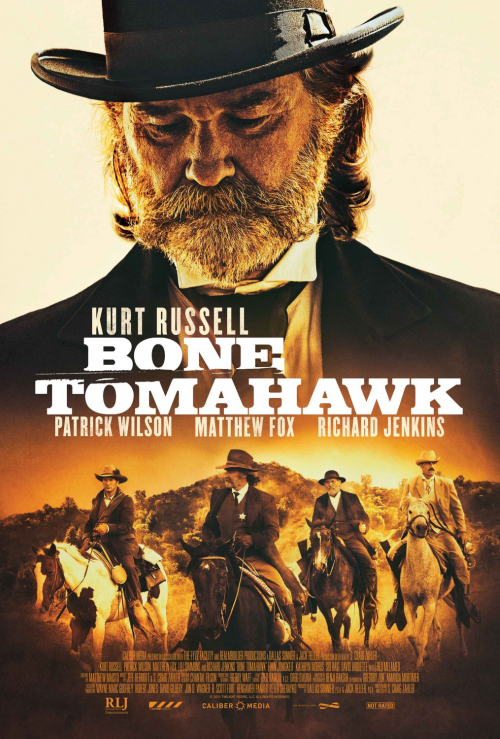
I’ve been looking forward to Bone Tomahawk since I first heard the plot:
Bone Tomahawk is a western/horror film set in the small frontier town of Bright Hope. Kurt Russell plays the sheriff who leads a small group hoping to rescue settlers kidnapped by cave-dwelling cannibals.
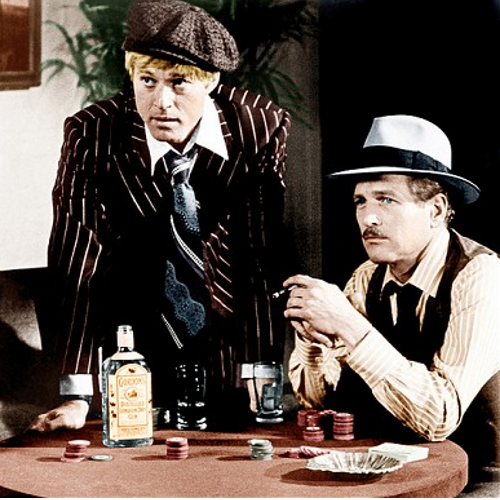
2. REUNITING BUTCH AND SUNDANCE WASN’T THE NO-BRAINER YOU’D EXPECT. Separately, Robert Redford and Paul Newman were two of the biggest movie stars in the world in the early 1970s. As a duo, they were perhaps even more popular, with mega-hit Butch Cassidy and the Sundance Kid (1969) fresh in people’s memories. When the director of that film, George Roy Hill, signed on for The Sting, Redford soon followed. Then came Newman, as described above. But while a Butch and Sundance reunion sounded tempting (and lucrative), the studio had a concern: In the movie, the two con men’s partnership hinges on the possibility that one (or both) will try to double-cross the other. With Redford and Newman so famously chummy, Universal was concerned that audiences wouldn’t believe such a betrayal was possible, and the film would thus lose some of its suspense. Hill assuaged their fears.
6. ROBERT SHAW’S LIMP WAS REAL.
Shaw, who played crime boss Doyle Lonnegan in the film, hurt his leg playing racquetball two days before shooting began. Director Hill decided to work with it and had Shaw turn his injury into a character trait.
8. THE DIRECTOR ISN’T AS FAMOUS AS YOU’D THINK, CONSIDERING HE MADE TWO OF THE HIGHEST-GROSSING FILMS OF ALL TIME.
George Roy Hill’s Butch Cassidy and the Sundance Kid made $102 million in 1969, or about $575 million at today’s ticket prices. When Hill reunited with his Butch and Sundance for The Sting, the result took in $156 million ($723 million adjusted for inflation). The Sting was the fourth highest-grossing film in history at the time, behind The Exorcist (which was released the same week), Gone with the Wind, and The Sound of Music, and ahead of The Godfather.Butch Cassidy and the Sundance Kid was number eight, making Hill the only director to have two movies in the top 10. But Hill was reclusive compared to most Hollywood directors, disliking publicity tours and talk show interviews. As a result, despite his successes (he also made Slap Shot and The World According to Garp), he never quite became a household name.
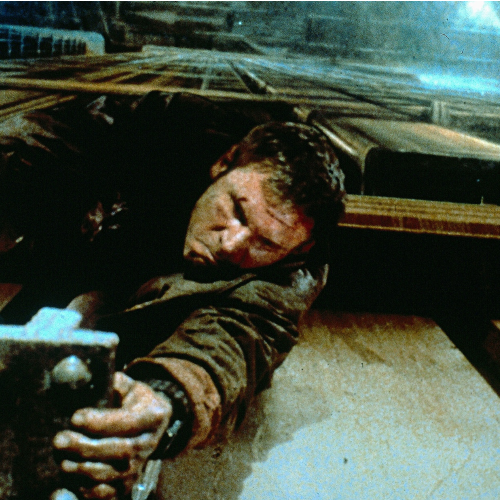
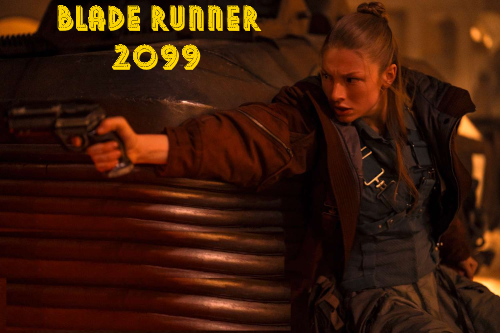
3. DUSTIN HOFFMAN ALMOST PLAYED DECKARD.
At various times during development, Blade Runner’s original screenwriter, Hampton Fancher, pictured Robert Mitchum, Christopher Walken, and Tommy Lee Jones as Rick Deckard. Ridley Scott wanted to go in a completely different direction by casting Dustin Hoffman, whom he later acknowledged didn’t really fit the type. “I figured, unlikely though he may be in terms of his physical size as a sci-fi hero, as an actor Hoffman could do anything,” explained Scott. “Therefore, it really didn’t matter.”
Hoffman, Scott, Fancher, producer Michael Deeley, and production executive Katherine Haber worked on the film for months, workshopping Deckard’s character and shifting the script in a more “socially conscious” (Scott’s words) direction until Hoffman abruptly dropped out in October of 1980. “Frankly,” Scott later said, “I think it might have been something as simple as money.”
8. PHILIP K. DICK REFUSED TO DO A NOVELIZATION.
Dick was approached about penning a Blade Runner novelization, for which he would get a cut of the film’s merchandising rights. “But they required a suppression of the original novel,” Dick explained, “in favor of the commercialized novelization based on the screenplay,” so he refused. “Blade Runner’s people were putting tremendous pressure on us to do the novelization—or to allow someone else to come in and do it, like Alan Dean Foster. But we felt that the original was a good novel. And also, I did not want to write what I call the ‘El Cheapo’ novelization.” At one point, Blade Runner’s team threatened to refuse Dick and his publishers access to the film’s logo or stills (essentially, subsequent printings would not be able to cite the book as the inspiration for Blade Runner), but they eventually backed down.
10. IT’S CURSED.
It might not be quite as hardcore-cursed as Poltergeist or The Omen, but Blade Runner has a curse of its own … on the businesses whose logos appear in the film. Atari, Pan Am, RCA, Cuisinart, and Bell Phones all suffered severe business problems in the years shortly afterBlade Runner’s release, as did Coca-Cola, whose 1985 “New Coke” experiment was less than successful. Members of the Blade Runner production team refer to this as the “product-placement Blade Runner curse.”