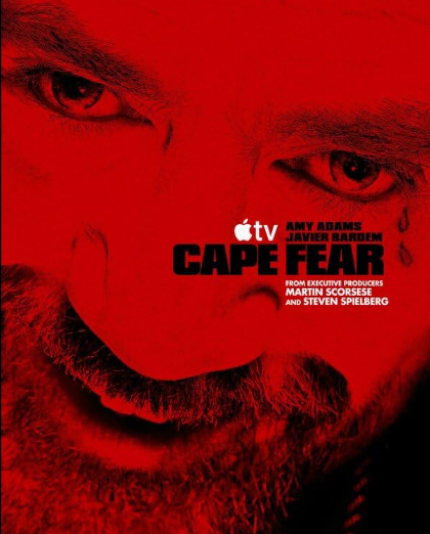
“Better Call Saul” Season 4 Poster and Trailer are Here!
Here’s the Better Call Saul season 4 trailer. Boy, it seems like it’s been forever since season 3 ended. Looking forward to more Saul and company.
Previews and Reviews that are Z's Views
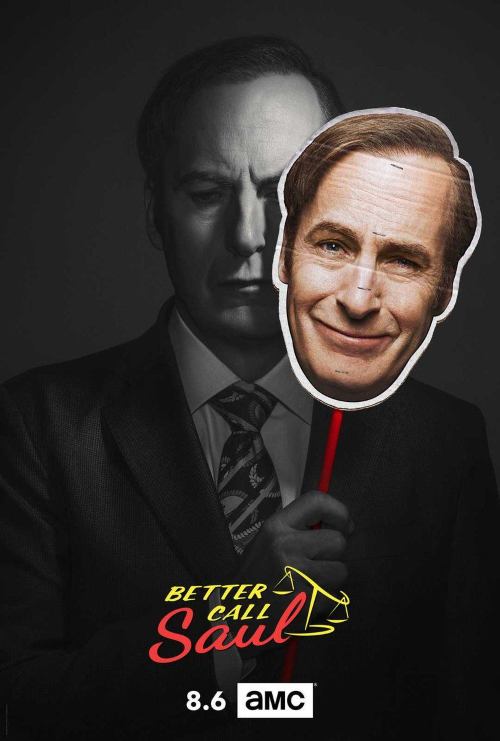
Here’s the Better Call Saul season 4 trailer. Boy, it seems like it’s been forever since season 3 ended. Looking forward to more Saul and company.

Gaby Triana conducted a very fun and informative interview with Jonathan Maberry that is more than worth a read.

Jake Rossen and Mental Floss present 10 Slap-Happy Facts About The Three Stooges. Here are three of my favorites…
3. HITLER WANTED THEM DEAD.
Having established their comic personas on film, the Stooges proceeded to make some accidental history. Their 1940 short, You Nazty Spy!, was the first American production to openly make a mockery of Adolf Hitler’s regime. (Charlie Chaplin’s The Great Dictator opened nine months later.) The short was perceived as a great insult by the Führer, who listed the Stooges as favored casualties on his own personal death list. (It’s not known whether he named each one individually.)
7. A REPLACEMENT STOOGE HAD A NO-VIOLENCE CONTRACT CLAUSE.
Sorting out the musical chairs of Stooges enrollment can be difficult: While Moe and Larry were largely engrained, the trio was originally rounded out with Shemp before he departed for a solo career: Curly was his replacement. Following Curly’s departure due to illness, Shemp stepped back in, but he died in 1955. After briefly considering a run as the Two Stooges, Moe and Larry recruited Joe Besser, a comic actor who already had a deal with Columbia, in 1956. But Besser wasn’t quite as game for the physical comedy as his predecessors. He insisted his contract contain language prohibiting him from being abused to excess, including anything pastry-related. “I never was the type of comic to be hit by a pie,” he said, a mentality that calls into question the decision to become part of The Three Stooges. Following Besser’s departure in 1959, the group roped in Joe DeRita for live shows and several feature films, including 1961’s Snow White and the Three Stooges.
10. THERE’S A STOOGES MUSEUM IN PENNSYLVANIA.
The Stooges’ vital contributions to pop culture have always deserved some archival recognition. They got it in 2004, when The Stoogeumopened its doors in Ambler, Pennsylvania, about 25 miles outside of Philadelphia. The museum’s founder is Gary Lassin, who married Larry Fine’s great niece in 1981. A Stooges fan, Lassin acquired over 100,000 items related to their careers and displays roughly 3500 pieces at a time. There’s a Hall of Shemp, a game area (with Whack-a-Moe), as well as countless artifacts.
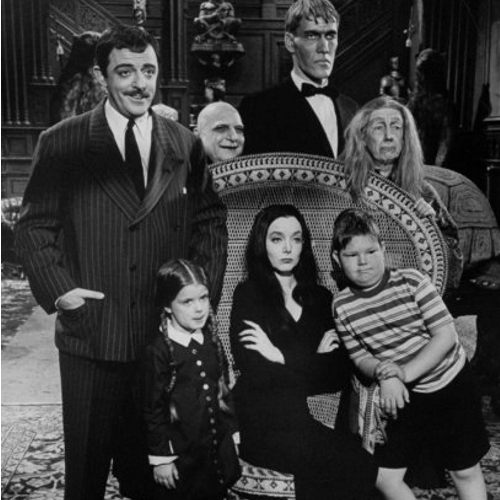
MeTV presents 13 Altogether Ooky Facts about The Addams Family. Here are three of my favorites…
1. Until the TV show, the characters did not have names.
Charles Addams, pictured here in his home office, did not name the creepy, charming characters in his one-panel cartoons. When the show was green-lit, Addams and producers came up with names for the clan. Did you know Wednesday’s middle name is Friday?
4. Ted Cassidy played two roles.
While best known for playing Lurch, Ted Cassidy also lent a hand — literally — by also playing Thing.
7. The Addams were the first TV family to have a home computer.
A couple years later, Bruce Wayne would utilize his Batcomputer in the Batcave, but the first family “P.C.” seen on TV was the UNIVAC on The Addams Family.
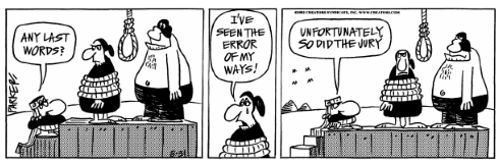
Jake Rossen and Mental Floss present 8 Things You Might Not Know About The Wizard of Id. Here are three of my favorites…
1. THE IDEA FOR THE STRIP CAME FROM A DECK OF PLAYING CARDS.
Johnny Hart was already a successful syndicated cartoonist (the Stone Age comedy B.C.) before he and former Disney animator Brant Parker decided to collaborate on a different project. Hart was flipping through a deck of playing cards in 1964 when he came across a peculiar illustration used for the king. Drawing on it to create his own diminutive despot, Hart wrote most of the jokes for Id while Parker illustrated it.
5. JIM HENSON WAS GOING TO PUT IT ON TELEVISION.
An avowed fan of comic strips and of The Wizard of Id in particular, Muppets creator Jim Henson met with Hart in 1968 to discuss a possible collaboration. Henson wanted to create an Id television show that would use puppets against an animated backdrop. Hart agreed, and in 1969, Henson was able to shoot test footage featuring himself as the voice of the Wizard. But executives at Publishers-Hall, which had taken over syndication of the strip, were having trouble enticing networks into producing a series. By the time ABC showed interest, Henson had moved on to Sesame Street and other projects. Wizard of Id got translated into animation in 1970 as part of a Chuck Jones variety series titled Curiosity Shop.
8. BLONDIE AND BEETLE BAILEY CELEBRATED THE STRIP’S 50TH ANNIVERSARY.
When The Wizard of Id passed the half-century milestone in 2014, the entire comics page came out to celebrate. Hi and Lois featured a portrait of the Wizard in a panel, while Blondie and Family Circus made subtle references to the anniversary. (As modern-day strips, it would be difficult to regard a medieval strip with more overt acknowledgment.) In Beetle Bailey, the perennial screw-up shared a cell with the eternally suffering Spookingdorf.
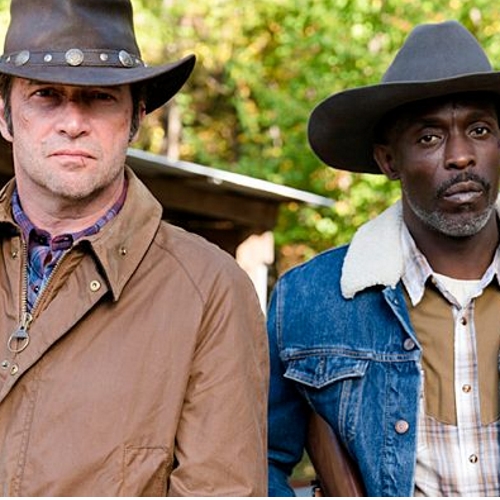
Hap & Leonard, the terrific show based on Joe Lansdale’s novel series, was recently cancelled. This was surprising because the show was well-received by critics and fans over the course of three seasons. I am hopeful it will be picked up by a smart network.

Recently Christopher McQuarrie sent out the following in a Tweet…
After 25 years of making them, I’ve learned to measure movies not in terms of quality, but of resonance. Some resonate with me. Others don’t. Some resonate with the masses, others don’t. I wasted years of creative energy arguing quality. I was wrong even when I was right.
That quote really, pardon the expression, resonated with me. So many times when I was reviewing a movie (book, tv show, etc.) and tried to grade it, the end result felt wrong. There are movies (books, tv shows, etc.) I absolutely love that fall short of being classics, but I don’t love them any less. At the other end of the spectrum there are movies (books, oh, you get what I mean) that are considered classics that I can’t stand.
Arguing the point with someone who felt differently was, ah, pointless. So I’ve decided to change up my ratings. The grades are gone. Now we have a simple number system that indicates how the movie resonated with me.
Your mileage may be different. And the cool thing is we’d both be right.
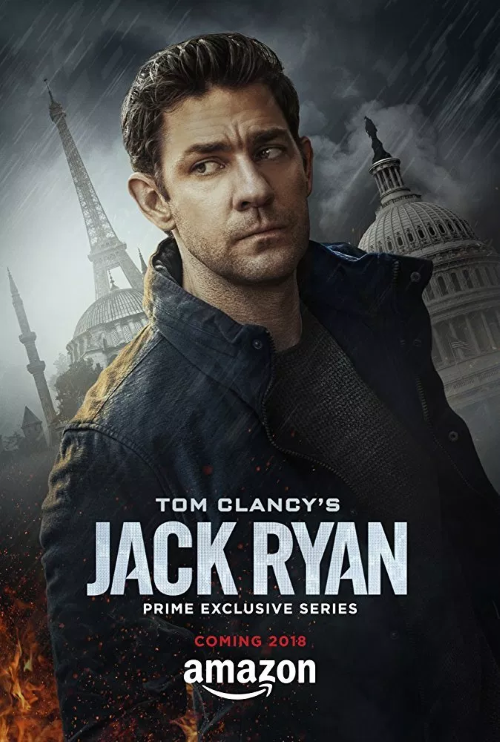
The new Jack Ryan Trailer is Here!
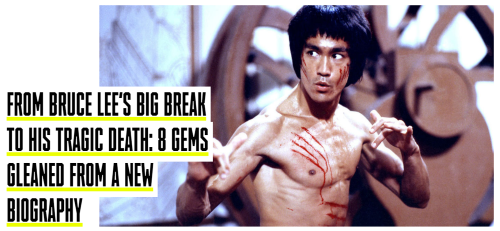
In 2018, Jacob Oiler and SYFYWire presented From Bruce Lee’s Big Break to His Tragic Death: 8 Gems Gleaned from a New Biography. Although the article is no longer available, here are three of my favorites from it…
Lee likely died from heat stroke.
While there were many, many versions of Lee’s controversial death (in the bed of his mistress, Betty Ting Pei, no less), the typical assumption that an allergic reaction to a painkiller was the cause of his “death by misadventure” ignores the recent strides medicine has made in diagnosing heat stroke. A month before his death, Lee collapsed under similar circumstances, feeling dizzy and having seizures under hot and sweaty conditions. These symptoms, along with highly elevated body temperature (which past diagnosis had erroneously categorized as feverishness) and the fact that Lee had sweat glands surgically removed from his armpits weeks before his first collapse, point to one of the leading causes of death for young athletic men. That Lee was known to overwork, lose weight, and lose sleep when making films only bolsters the case that his death on July 20, 1973 (the hottest day during that Hong Kong summer), was likely caused by heat stroke.
Roman Polanski once suspected Lee of killing Sharon Tate.
Lee was a fight choreographer for some of Hollywood’s biggest names in the ‘70s and a regular in their party scene. He hobnobbed with Steve McQueen, Roman Polanski, Sharon Tate, and James Coburn. So when Charles Manson’s followers horrifically killed Tate, Sebring, and three others at a house Polanski was renting, the tragedy struck especially close to home for Lee. Tate and Polanski were clients, while Sebring was one of Lee’s closest friends in town. But when Lee mentioned to Polanski that he lost his glasses — the director knew that an unidentified pair of horn-rims were found at the house — Polanski grew suspicious and took the actor to buy a new pair. But when Lee’s prescription didn’t match that of the evidence at the scene, Polanski thankfully relented.
Batman and a hairdresser were responsible for Lee’s early Hollywood career.
Jay Sebring, Hollywood hairdresser and karate enthusiast, had seen Lee perform a controversial demonstration and speech at the 1964 Long Beach International Karate Championship. He also cut the hair of William Dozier, a TV producer looking to cast Charlie Chan’s son for a prospective James Bond-esque show titled Number One Son. Dozier loved Lee for the role and was producing the longshot Batman show at the time. The success of the campy superhero adaptation would determine whether the studio accepted his next project… and Lee. Batman was a hit and, though Number One Son was nixed, the success of Adam West’s detective meant that superheroes were hot — and The Green Hornet wasn’t far behind. That meant Lee could be Kato, who crossed over onto Batman for a few episodes. Lee and Burt Ward (Robin) even lived in the same apartment complex.
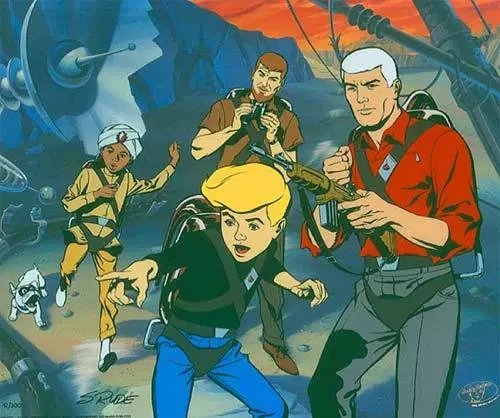
The original Jonny Quest ran on ABC during the prime time 1964 – 1965 season. Most series, especially a cartoon series, that ran for such a short time would hardly be remembered. Yet Jonny Quest came back in two television series, two television movies, at least one comic book series and three computer games.
When it premiered, I was the perfect age for Jonny Quest. Check out the video below and you’ll see why Jonny Quest made such an impact.

Heroes & Icons present 10 Huge Action Hollywood Action Heroes in Tiny Early Television Roles. Here are three of my favorites…
SYLVESTER STALLONE ON ‘POLICE STORY’
Rocky and the Rifleman, together? Now that’s mucho macho. In “The Cutting Edge,” Chuck Connors plays veteran cop Sgt. Ed Peebles. Naturally, he is teamed with a young partner, Elmore Caddo, played by Sly Stallone in his first television role. Airing a year before Rocky hit screens, the episode included a prescient line of dialogue. “They actually call me ‘Rocky,'” his character says. “I prefer that.”
BRUCE WILLIS ON ‘MIAMI VICE’
Moonlighting made Willis an immediate star in 1985. His resume was light leading up to that breakout role. A year earlier, he earned his first television credit in a very early episode of Miami Vice, “No Exit.” With pleated pants, puffy blouses and wavy hair, he oozed ’80s style — and made a pretty sleazy arms dealer.
ARNOLD SCHWARZENEGGER ON ‘STREETS OF SAN FRANCISCO’
The cult film Hercules in New York introduced the Austrian strongman to American audiences in 1970, but Arnie mostly kept to flexing competitions the rest of the decade. In 1977, he bulged his way onto the boob tube making his TV debut on an episode of The Streets of San Francisco dubbed “Dead Lift.” It was not much of a stretch (though it was a significant flex) as he played a champion bodybuilder named Josef Schmidt.

Clint Walker fans will want to check out his extended Television Academy interview where Walker talks about…
…the many odd jobs he held before embarking on a film and television career. He tells how he ventured out to Hollywood and landed a role in Cecil B. DeMille’s “The Ten Commandments,” and how the role led to other film projects and eventually a contract with Warner Brothers. Walker then details the series for which he’s best know, Cheyenne, in which he played the title character, “Cheyenne Bodie.” He describes auditioning for the role, how he kept in shape, and the many stunts he performed on the program. He outlines the show’s production schedule, speaks about his co-stars and famous guest-stars, and explains the importance of Cheyenne as television’s first hour-long Western. He explains why he believes Westerns were so popular in the 1950s and why their popularity waned. Walker then talks of his famous contract dispute with Jack Warner, chronicles how Ty Hardin came to play the lead in Cheyenne, and gives his reasons for returning and then ultimately leaving the program. He talks about other film and television appearances, including those in “The Night of the Grizzly,” the made-for-television movie Yuma, and the series Kodiak. Stephen J. Abramson conducted the interview on September 21, 2012 in Beverly Hills, CA.
The video is broken into chapters for easy listening.

The fine folks at Heroes & Icons present The Overlooked Second Roles of TVs Greatest Western Stars. Here are three of my favorites and my thoughts…
JAMES ARNESS IN ‘HOW THE WEST WAS WON’
Twenty years is a long time to play a character. And that was just the beginning. Arness kept pinning on his Marshal badge in Gunsmoke TV movies up until the mid-1990s. Audiences could not get enough of Matt Dillon for four decades. In the middle there, from 1977–79, Arness headlined How the West Was Won, a loose adaptation of the 1962 film that began as a miniseries. The veteran cowboy actor played Zebulon “Zeb” Macahan, a rugged pioneer, tracker and Army scout who moves his family from Virginia to the frontier. Bruce Boxleitner and Eva Marie Saint rounded out the stellar cast.
I was a huge fan of How the West Was Won and Zeb Machan was my favorite character. He was a no-nonsense frontiersman who seemed so different from the heroes on tv at that time. I’d like to see the series again to check out if it holds up to my memory of how good it was.
CHUCK CONNORS IN ‘BRANDED’
Former three-sport professional athlete Chuck Connors cut an impressive figure as a TV cowboy. His imposing presence also made him suitable as an indomitable villain, as he so often portrayed later in his career. However, two years after The Rifleman star hung up his Winchester, he slid into a new uniform, portraying unjustly disgraced cavalry captain Jason McCord on Branded. McCord was a vagabond, wandering the country like the Fugitive or Incredible Hulk, seeking to prove himself. Connor’s broad shoulders wore the massive chip in it well. Alas, kicking off in 1965, the series lasted a mere two seasons. Perhaps it was doomed to be an outlier, as the show was a rare scripted drama from Goodson-Todman Productions, a studio best known for churning out hit game shows like The Price Is Right, Family Feud, Match Game and Password.
I was a huge fan of Branded. It hit at a great time for me as I was really into the whole Custer legend. The thought that a man survived the battle and was unjustly branded a coward made for good drama.
JAMES GARNER IN ‘NICHOLS’
Nichols was a reunion between James Garner and Warner Bros., his first work for the studio since his iconic role as Maverick. The two lead characters had much in common, from their black hats to their sharp wit to their similar adventures. However, Nichols took some unexpected turns. For starters, our hero rode a motorcycle, not a horse. Then, after shaky ratings, producers killed off Nichols — only to replace him with his twin brother, Nichols. This new Nichols had a mustache. The great Margot Kidder co-starred as the love interest, yet somehow audiences just did not click.
Nicols was a different spin on the western. It was set at the turn-of-the-century and the hero drove a motorcycle! I loved it… but you know the series is in trouble when they kill off the star’s character… even if he returns as his twin brother.
Around this same time there was another series set in the turn-of-the-century west called The Bearcats that I liked. It didn’t last long either.

Nishant S. Yagnick, Manjul Tripathi and Sandeep Mohindra are three neurosurgeons (and big-time Michael Jackson fans) who’ve published an article explaining how the King of Pop was able to make his gravity-defying lean while keeping his spine straight, not just in his Smooth Criminal video, but also in live performances.
While the secret has been known for quite a while, the illustrations used by Yagnick, Tripathi and Mohindra make it clear that the shoes aren’t the only thing required to make the illusion work. You must also have an extremely solid core. They explain…
“Several MJ fans, including the authors, have tried to copy this move and failed, often injuring themselves in their endeavors. Trained dancers can lean forward a maximum of 25 to 30 degrees, but even then, it can put serious strain on the Achilles tendon.”
Jackson and some of his dancers were able to hit 45 degree angles with their lean!
If you check out Michael Jackson’s Gravity-Defying Lean Continues To Fascinate by Lars Gotrich at The Record you’ll get more details plus the extended version of Smooth Criminal as well as a link to Michael Jackson’s patent for the Method and Means for Creating Anti-Gravity Illusion!
A special tip of MJ’s fedora to Nishant S. Yagnick, Manjul Tripathi and Sandeep Mohindra for writing an academic paper for neurosurgery that is fun!

The Staircase Poster and Trailer are Here!