Mayans M.C. – First Look and It’s a Good One!
It’s not just a club. It’s a family. Get a FIRST LOOK at Mayans M.C., FX’s new series from the creator of Sons of Anarchy. #MayansFX pic.twitter.com/1AWzTDtIc6
— Mayans MC (@MayansFX) August 27, 2018
Previews and Reviews that are Z's Views
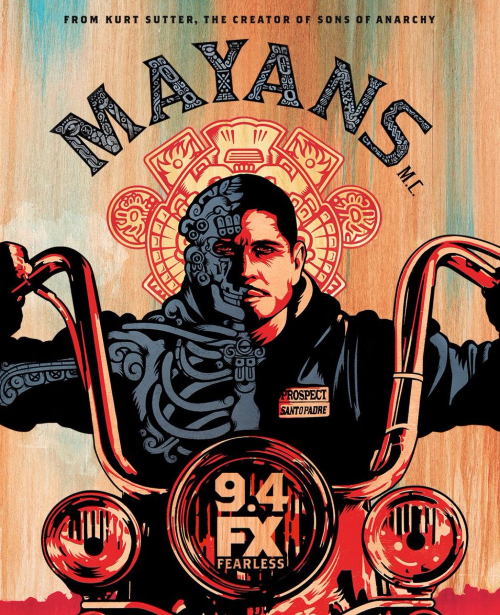
It’s not just a club. It’s a family. Get a FIRST LOOK at Mayans M.C., FX’s new series from the creator of Sons of Anarchy. #MayansFX pic.twitter.com/1AWzTDtIc6
— Mayans MC (@MayansFX) August 27, 2018
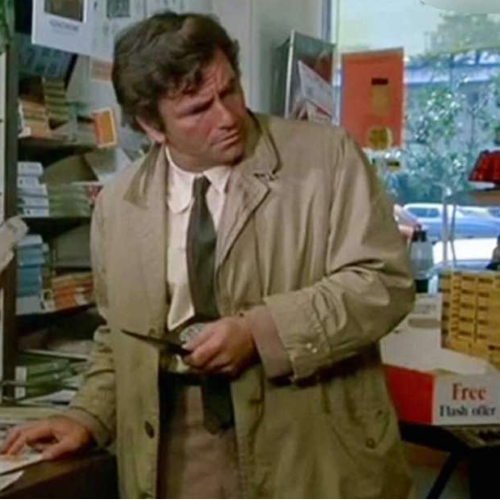
Kara Kovalchik and Mental Floss present 10 Things You Might Not Know About Columbo. Here are three of my favorites…
9. THE SERIES DIDN’T FOLLOW A STANDARD MYSTERY FORMAT.
The premise of Columbo was the “inverted mystery,” or a “HowCatchEm” instead of a “WhoDunIt.” Every episode began with the actual crime being played out in full view of the audience, meaning viewers already knew “WhodunIt.” What they wanted to know is how Lt. Columbo would slowly zero in on the perpetrator. This sort of story was particularly challenging for the series’s writers, and they sometimes found inspiration in the most unlikely places. Like the Yellow Pages, for example. One of Peter Falk’s personal favorite episodes, “Now You See Him,” had its genesis when the writers were flipping through the telephone book looking for a possible profession for a Columbo murderer (keep in mind that all of Columbo’s victims and perps were of the Beverly Hills elite variety, not your typical Starsky and Hutch-type thug).A page listing professional magicians caught their eye, and that led to a classic episode featuring the ever-suave Jack Cassidy playing the role of the former SS Nazi officer who worked as a nightclub magician. When the Jewish nightclub owner recognized him and threatened to expose him, well, you can guess what happened. But the challenge is to guess how Lt. Columbo ultimately caught him.
7. STEVEN SPIELBERG GOT AN EARLY BREAK ON COLUMBO.
“Murder by the Book” was the second Columbo episode filmed, but it was the first one to air after the show was picked up as a series. Filming was delayed for a month, though, when Falk refused to sign off on this “kid”—a 25-year-old named Steven Spielberg—to direct the episode. Finally he watched a few of Spielberg’s previous credits (all of them TV episodes) and was impressed by his work on the short-lived NBC series called The Psychiatrist. Once filming was underway, Falk was impressed by many of the techniques employed by the young director, such as filming a street scene with a long lens from a building across the road. “That wasn’t common 20 years ago,” Falk said. He went on to tell producers Link and Levinson that “this guy is too good for Columbo.”
6. THE CHARACTER’S TRADEMARK RAINCOAT CAME FROM FALK’S CLOSET.
The initial wardrobe proposed for Columbo struck Peter Falk as completely wrong for the character. To get closer to what he wanted for Columbo, the actor went into his closet and found a beat-up coat he had bought years earlier when caught in a rainstorm on 57th Street. And he ordered one of the blue suits chosen for him to be dyed brown. The drab outfit would become one of the trademarks of the character for decades.
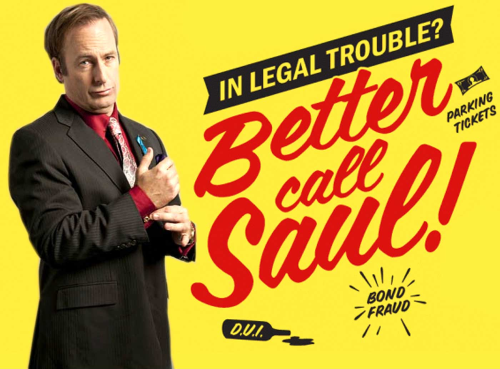
Scott Beggs and Mental Floss present 10 Fun Facts About Better Call Saul. Here are three of my favorites…
3. THE TITLES HAVE HIDDEN MEANINGS.
You can take nothing for granted in the Better Call Saul universe, including the episode titles. In the first season, every episode (from “Uno” to “Marco”) ended in the letter O, except “Alpine Shepherd Boy,” which was supposed to be called “Jell-O” before the producers waved it off to avoid being sued by the gelatin makers. Even crazier, the first letters of season two’s episodes (S-C-A-G-R-B-I-F-N-K) unscramble to spell “Fring’s Back”—a clear message for Breaking Bad fans.
6. CHUCK WASN’T INTENDED TO BE A BAD GUY.
Everyone who watches the show hates Chuck McGill, Jimmy’s brother played by Michael McKean, but it wasn’t until writing the seventh episode that Gilligan and the writers realized Chuck was a villain. “Believe it or not, the idea of Chuck being the ‘bad guy’ was a late addition to Season 1,” Gilligan explained during a 2015 Reddit AMA. “This points out one of the things I love most about writing for TV. There are enough episodes and enough lead time (if you’re lucky) for writers to change the direction of a story midstream.”
8. YOU SHOULD PAY ATTENTION TO WHAT COLOR PEOPLE ARE WEARING.
Gilligan’s fanatical dedication to detail includes the colors that get associated with each character. It was a major element in Breaking Bad. It’s also a big part of Better Call Saul in the form of the “Fire and Ice Theory,” partially confirmed by writer Peter Gould, who confessed that hotter colors like red were associated with criminals. That tacitly means cooler colors are meant for the innocent, so it’s curious that Jimmy’s car is yellow with one red door …

The final season for The Last Ship premieres on September 9th. Below you can see the trailer, if you’re so inclined. I’m going to miss that show.
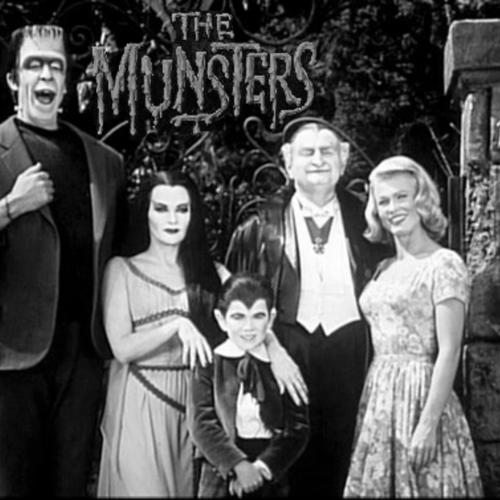
Me-TV presents 10 Colorful Facts About The Munsters. Here are three of my favorites…
1. The idea dates back to 1943.
The idea for a family of comedic Universal monsters dates back to the heyday of Universal monster pictures. In the early 1940s, the studio was still flying high off its monster franchises. It had recently launched The Wolf Man and The Phantom of the Opera. Lon Cheney Jr. was shambling along in The Ghost of Frankenstein. In 1943, Bob Clampett, an animator who worked on Looney Tunes cartoons, pitched the idea of a funny Monster family to Universal. After a couple years developing the concept, nothing came of it for two decades. Even in the 1960s, as interest picked back up, some at the studio believed it should be a cartoon.
8. The original Marilyn quit acting after 13 episodes — and a third Marilyn was used in the movie.
No Munster family member changed like Marilyn, Lily’s niece. Initially, Beverley Owen (pictured here) filled the role. Midway through season one, Owen quit the business entirely, to get married and focus on her family. She would later earn a masters degree in Early American History. Pat Priest popularized the role of Marilyn thereafter on the show. However, Universal recast the character for Munster, Go Home! The studio inserted Debbie Watson — 12 years younger — into the role, in hope of building the contracted starlet’s career.
9. The Drag-U-La was made with an illegally purchased coffin.
Reportedly, according to legend, a real coffin was used to make the awesome DRAG-U-LA hot rod seen in Munster, Go Home! The only catch that it was supposedly illegal to purchase a coffin without a death certificate in the state of California at the time. Richard “Korky” Korkes, the man who built the dragster, claimed he passed money under the table to a funeral home in North Hollywood, who left a coffin for him outside the back door.
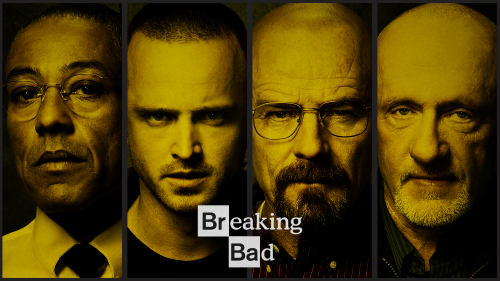
Chris Evangelista and /Film present 10 Things We Learned from the ‘Breaking Bad’ 10 Year Reunion [Comic-Con 2018]. Be advised that major spoilers may be lurking if you proceed further. Here are three of my favorite things learned and some of my thoughts about each…
2. Darkness Was Important
Breaking Bad was an extremely dark show, and the darkness was essential, as far as Vince Gilligan is concerned. “If the show is going to be about producing and selling meth, you want to take it seriously,” the creator said. “But you don’t have to make it some after school special – you just have to show the reality of why that’s a bad decision.” Gilligan also added that any time they needed to show a violent moment on Breaking Bad – like the episode “Krazy-8”, where Cranston’s Walter White has to strangle a man to death with a bike lock – it was important to never treat the violence as “entertainment”, but to rather highlight how unpleasant it was. “There has to be consequences,” Gilligan said. “If you don’t do that, you’re not doing the show justice.”
Craig’s thoughts: Gilligan is so right. Actions have consequences and bad actions can, or at least should weigh heavily on a character unless he/she is a sociopath. The added layer brought realism and importance to those “dark” decisions.
4. Aaron Paul Misses Jesse
This may not seem like a huge revelation. But during the Hall H panel, actor Aaron Paul commented that he really “missed” playing tragic drug dealer Jesse Pinkman. What made this moment so memorable was the wealth of emotion in Paul’s voice – he sounded as if he was on the verge of tears as he uttered these words. It got to me.
Craig’s thoughts: How can you not love how attached and appreciative some actors get to the characters that made them?
7. Bryan Cranston Would Frequently Trick Aaron Paul Into Thinking Jesse Was Going To Die
While Jesse Pinkman lived beyond the first season, and ended up surviving the series as a whole, Bryan Cranston would constantly prank Aaron Paul into thinking his character was going to die. As Paul and Cranston tell it, Cranston would come up to Paul and ask: “Have you read the latest script?” When Paul would say no, Cranston would give Paul a big hug and say, “I’m so sorry,” thus making Paul think his character was about to get bumped off. This apparently happened several times, and Paul apparently fell for it almost every time.
Craig’s thoughts: This is probably not a new story for most fans of Breaking Bad, but I think it is so funny that Cranston would mess with Paul like that… and of course Paul would fall for it!
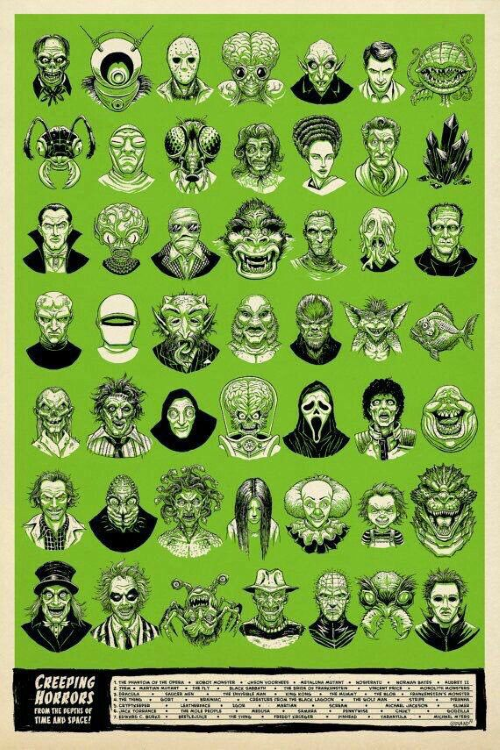
Horror fans have got to love this poster! Is there any monster you’d have added? If so, which monster would you delete?
Anyone know the name of the artist? I’d like to credit him/her.
Source: Classic Horror Movies.
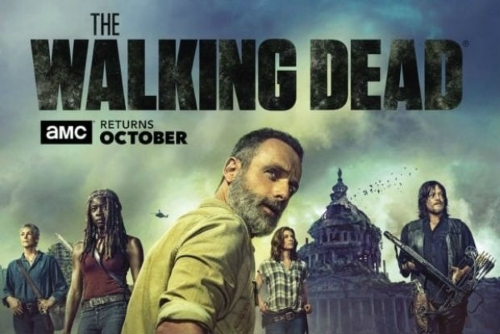
Hot on the heels of the Fear the Walking Dead Comic-Con trailer, we have the The Walking Dead Comic-Con season 9 trailer. I’m happy to say it looks good.
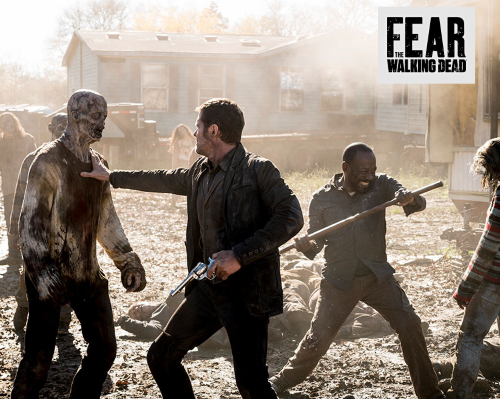
Below is the Fear the Walking Dead Comic-Con trailer. It may be sacrilege to say, but this season I’ve started to enjoy Fear the Walking Dead more than The Walking Dead.
Since we’re looking at trailers, here’s a new one for Mayans MC!
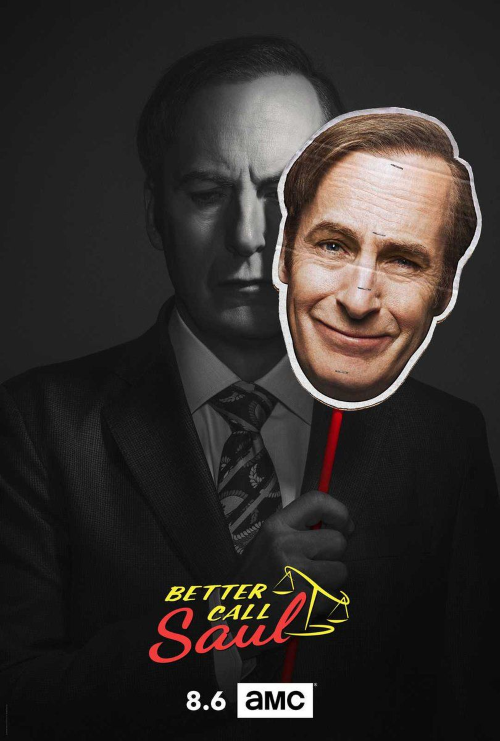
Here’s the Better Call Saul season 4 trailer. Boy, it seems like it’s been forever since season 3 ended. Looking forward to more Saul and company.

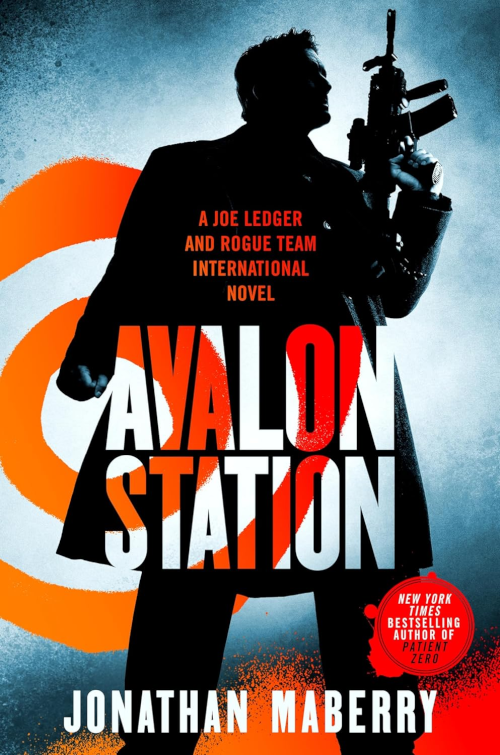
Gaby Triana conducted a very fun and informative interview with Jonathan Maberry that is more than worth a read.

Jake Rossen and Mental Floss present 10 Slap-Happy Facts About The Three Stooges. Here are three of my favorites…
3. HITLER WANTED THEM DEAD.
Having established their comic personas on film, the Stooges proceeded to make some accidental history. Their 1940 short, You Nazty Spy!, was the first American production to openly make a mockery of Adolf Hitler’s regime. (Charlie Chaplin’s The Great Dictator opened nine months later.) The short was perceived as a great insult by the Führer, who listed the Stooges as favored casualties on his own personal death list. (It’s not known whether he named each one individually.)
7. A REPLACEMENT STOOGE HAD A NO-VIOLENCE CONTRACT CLAUSE.
Sorting out the musical chairs of Stooges enrollment can be difficult: While Moe and Larry were largely engrained, the trio was originally rounded out with Shemp before he departed for a solo career: Curly was his replacement. Following Curly’s departure due to illness, Shemp stepped back in, but he died in 1955. After briefly considering a run as the Two Stooges, Moe and Larry recruited Joe Besser, a comic actor who already had a deal with Columbia, in 1956. But Besser wasn’t quite as game for the physical comedy as his predecessors. He insisted his contract contain language prohibiting him from being abused to excess, including anything pastry-related. “I never was the type of comic to be hit by a pie,” he said, a mentality that calls into question the decision to become part of The Three Stooges. Following Besser’s departure in 1959, the group roped in Joe DeRita for live shows and several feature films, including 1961’s Snow White and the Three Stooges.
10. THERE’S A STOOGES MUSEUM IN PENNSYLVANIA.
The Stooges’ vital contributions to pop culture have always deserved some archival recognition. They got it in 2004, when The Stoogeumopened its doors in Ambler, Pennsylvania, about 25 miles outside of Philadelphia. The museum’s founder is Gary Lassin, who married Larry Fine’s great niece in 1981. A Stooges fan, Lassin acquired over 100,000 items related to their careers and displays roughly 3500 pieces at a time. There’s a Hall of Shemp, a game area (with Whack-a-Moe), as well as countless artifacts.
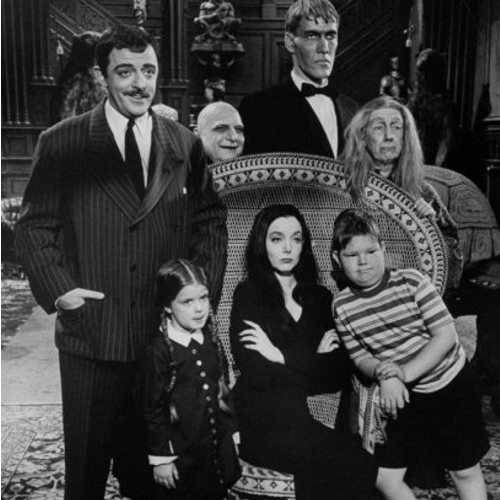
MeTV presents 13 Altogether Ooky Facts about The Addams Family. Here are three of my favorites…
1. Until the TV show, the characters did not have names.
Charles Addams, pictured here in his home office, did not name the creepy, charming characters in his one-panel cartoons. When the show was green-lit, Addams and producers came up with names for the clan. Did you know Wednesday’s middle name is Friday?
4. Ted Cassidy played two roles.
While best known for playing Lurch, Ted Cassidy also lent a hand — literally — by also playing Thing.
7. The Addams were the first TV family to have a home computer.
A couple years later, Bruce Wayne would utilize his Batcomputer in the Batcave, but the first family “P.C.” seen on TV was the UNIVAC on The Addams Family.
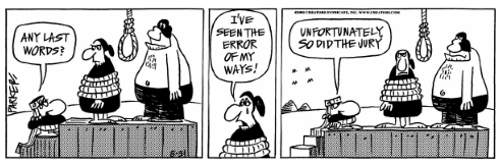
Jake Rossen and Mental Floss present 8 Things You Might Not Know About The Wizard of Id. Here are three of my favorites…
1. THE IDEA FOR THE STRIP CAME FROM A DECK OF PLAYING CARDS.
Johnny Hart was already a successful syndicated cartoonist (the Stone Age comedy B.C.) before he and former Disney animator Brant Parker decided to collaborate on a different project. Hart was flipping through a deck of playing cards in 1964 when he came across a peculiar illustration used for the king. Drawing on it to create his own diminutive despot, Hart wrote most of the jokes for Id while Parker illustrated it.
5. JIM HENSON WAS GOING TO PUT IT ON TELEVISION.
An avowed fan of comic strips and of The Wizard of Id in particular, Muppets creator Jim Henson met with Hart in 1968 to discuss a possible collaboration. Henson wanted to create an Id television show that would use puppets against an animated backdrop. Hart agreed, and in 1969, Henson was able to shoot test footage featuring himself as the voice of the Wizard. But executives at Publishers-Hall, which had taken over syndication of the strip, were having trouble enticing networks into producing a series. By the time ABC showed interest, Henson had moved on to Sesame Street and other projects. Wizard of Id got translated into animation in 1970 as part of a Chuck Jones variety series titled Curiosity Shop.
8. BLONDIE AND BEETLE BAILEY CELEBRATED THE STRIP’S 50TH ANNIVERSARY.
When The Wizard of Id passed the half-century milestone in 2014, the entire comics page came out to celebrate. Hi and Lois featured a portrait of the Wizard in a panel, while Blondie and Family Circus made subtle references to the anniversary. (As modern-day strips, it would be difficult to regard a medieval strip with more overt acknowledgment.) In Beetle Bailey, the perennial screw-up shared a cell with the eternally suffering Spookingdorf.