“Into the Badlands” Free Web Comic!

Did you know that AMC’s Into the Badlands [which is one of my favorite shows now] has a free on-line comic that provides background stories on the Into the Badlands characters and universe?
Previews and Reviews that are Z's Views
Did you know that AMC’s Into the Badlands [which is one of my favorite shows now] has a free on-line comic that provides background stories on the Into the Badlands characters and universe?
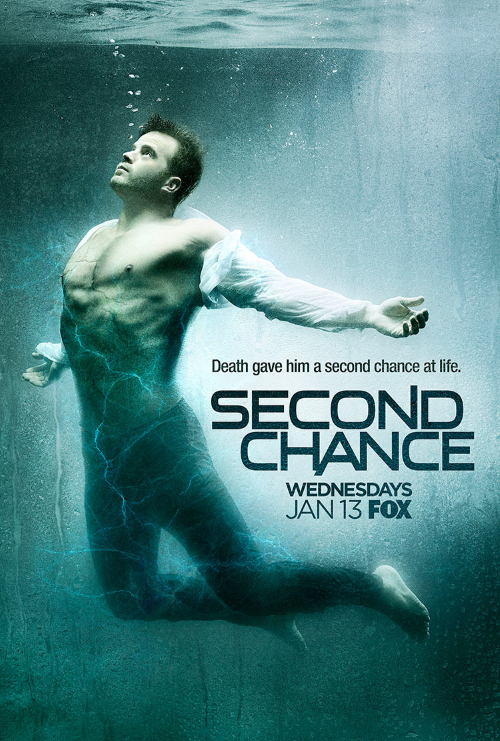
Second Chance which premieres January 13th on FOX looks interesting enough that I’ll tune in. I just wonder if it will be able to hold an audience if it becomes a lesser version of The Six Million Dollar Man.

Kara Kovalchik and Mental_Floss present 16 Cutting-Edge Facts About All in the Family. Here are three of my favorites…
2. ARCHIE BUNKER WAS ORIGINALLY ARCHIE JUSTICE.
Lear thought that the BBC show’s set-up—a middle-aged, blue collar conservative man who never hesitated to express his racist viewpoints, his doting wife, and his liberal daughter and son-in-law—could be mined for humor for American audiences. Justice for All, as the show was called in his original pilot script, starred Carroll O’Connor as Archie Justice and Jean Stapleton as his wife, Edith. Kelly Jean Peters and Tim McIntire rounded out the cast as Gloria and Richard (Meathead’s original name). ABC passed on the show, however; their main complaint being Archie and Edith’s lack of chemistry with the younger actors. Lear recast the roles with Candy Azzara and Chip Oliver, changed the name of the show to Those Were the Days and shot a new pilot, but ABC was still uninterested.5. MICKEY ROONEY TURNED DOWN THE ROLE OF ARCHIE.
When Norman Lear pitched the series to Rooney, he only got as far as describing Archie as “a bigot who uses words like ‘spade’” before Mickey interrupted him. “Norm,” said the actor with a penchant for shortening names, “they’re going to kill you, shoot you dead in the streets.” Carroll O’Connor read for the role after Rooney’s refusal and had landed the part by the time he got to page three of the pilot script. But even he was dubious about the show and told Lear that CBS would cancel it after six weeks tops.15. SAMMY DAVIS JR. CAUSED THE LONGEST LAUGH RECORDED ON THE SERIES.
O’Connor and Sammy Davis Jr. were good friends in real life, and All in the Family was Davis’ favorite TV show. So at his request, a guest spot was arranged for him in season two’s “Sammy’s Visit.” The kiss at the end was O’Connor’s idea, and the audience reaction was the loudest and longest laugh in the history of the series.

Kara Kovalchik and Mental_Floss present 20 Fun Facts About I Love Lucy. Here are three of my favorites…
1. CBS DIDN’T THINK AMERICANS WOULD BUY THAT LUCY WAS MARRIED TO A “FOREIGN” MAN.
When CBS approached Lucille Ball with the offer of turning her popular radio show My Favorite Husband into a television show, she was agreeable with one condition: that her real-life husband, Desi Arnaz, would be cast in the role of her spouse (played on the radio by Richard Denning). The network balked—there was no way that American viewers would accept average housewife Liz Cooper (her character’s name on the radio series) being married to a “foreign” man with an indecipherable accent. Never mind the fact that Lucy and Desi had been married more than a decade; such a “mixed” marriage was unbelievable.3. THE SHOW BROKE GROUND IN SEVERAL WAYS, SIMPLY BECAUSE THE ARNAZES WOULDN’T MOVE TO NEW YORK.
Lucille and Desi wanted to work in Los Angeles, near their home and their new baby daughter Lucie. But in 1951 the majority of television shows were broadcast from New York, and that’s where sponsor Philip Morris wanted their show to originate as well. In those days the U.S. wasn’t wired for television from coast-to-coast; shows broadcast live could only be transmitted so far. As a result, such shows were preserved on kinescopes (a movie camera aimed at a TV monitor that recorded the show in negligible quality) and shipped to distant stations.Philip Morris objected to I Love Lucy being performed in California and the kinescopes sent to New York; their biggest cigarette market was up and down the east coast and they wanted the best TV picture quality for that area. Desi Arnaz suggested that the show be filmed with three cameras, like a stage play, which would provide the same quality picture for every market. But multi-cameras had never been used on a situation comedy before, and there were many obstacles involved, not the least of which was accommodating a live studio audience (Desi knew that Lucille worked best when she got immediate audience feedback).
Desi hired legendary cinematographer Karl Freund to help solve the dilemma, and along with writer-producer Jess Oppenheimer and director Marc Daniels, they built a set, and the necessary filming equipment was strategically placed. CBS balked at the additional expense involved in this undertaking, so Arnaz struck a deal: he and Lucille would take a large cut in their salaries and their company, Desilu Productions, would retain ownership of the films in exchange. The enduring high quality of the 35 millimeter film was part of the reason that I Love Lucy became so popular in rerun syndication, and Desilu’s 100 percent ownership of the series made Lucille and Desi the first millionaire TV stars.
9. DESI ARNAZ HAD LIFTS IN HIS SHOES (AND HIS LOVESEAT).
Arnaz listed his height as 5’11” in most official biographies, but those who worked with him knew that in reality he was 5’9” and wore four-inch lifts in his shoes. Lucille Ball stood 5’7” in her stocking feet, and when she wore heels she seemed to tower over her husband. Desi Arnaz Jr. would later explain to an interviewer that his father “was a Cuban with a Latin male’s pride,” which is why it was important to him to be taller than his wife. A dual-purpose, subtle additional cushion (undetectable by the viewing audience) was added to the Ricardo’s loveseat so that Ricky would be taller than Lucy while seated, and would also give him the extra boost needed to gracefully rise from a sitting position up onto his elevator shoes.
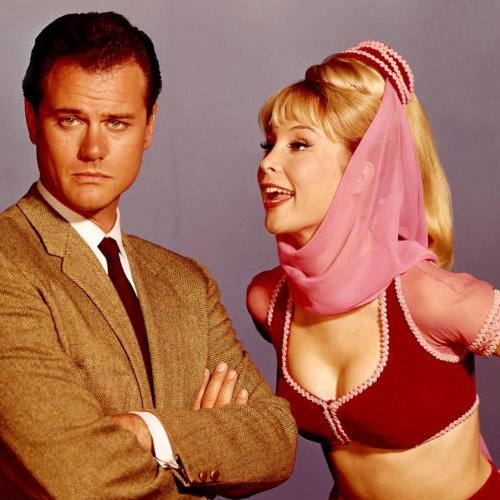
Sarene Leeds and Mental_Floss present 11 Magical Facts About I Dream of Jeannie. Here are three of my favorites…
1. BARBARA EDEN DIDN’T LIKE THAT JEANNIE AND TONY NELSON GOT MARRIED.
The palpable sexual tension between Hagman’s astronaut character and the mischievous genie who lived under the same roof for the first four seasons of the series was what kept the series exciting—the objectification of Eden’s character notwithstanding. Here was a midriff-baring beauty, willing and able to fulfill her master’s every wish and command, and he still managed to keep her out of his bedroom for most of Jeannie’s run. By 1969, the sexual revolution was well under way, and it was time for Tony and Jeannie to get together. Except, as we all know, that kind of creative decision usually sounds the death knell for a TV show, and I Dream of Jeannie was no different. The characters tied the knot during the 1969-1970 season, which ended up being the series’ last.In an interview with the Today show’s Willie Geist earlier this year (video above), Eden made no bones about her feelings regarding the Nelson marriage: “It ruined the show,” she said. “Because [Jeannie] wasn’t human … She thought she was, and [Tony] knew she wasn’t … I think it broke credibility.”
2. THE FAMILIAR-SOUNDING JEANNIE THEME SONG DIDN’T EXIST UNTIL THE SECOND SEASON.
You know the tune: Matthew Broderick did an unforgettable 12-second dance to it in Ferris Bueller’s Day Off. But the bouncy riff that will always be synonymous with I Dream of Jeannie didn’t first appear until the series’ second season, when a new, in-color animated opening sequence was introduced. The first season, which was filmed in black and white, tried a couple of different openers: First there was the expository one that brought the audience up to speed on how Jeannie and Tony met; eventually, the exposition was dropped for this jazzy, albeit abbreviated, animated sequence.8. I DREAM OF JEANNIE HAD A FUN LITTLE CONNECTION WITH FELLOW NBC SITCOM THE MONKEES.
While The Monkees only lasted two seasons, it had a sweet brother-sister-type relationship with I Dream of Jeannie while it was on the air, as they were both on NBC and shared the same music supervisor, Don Kirshner. About midway through the fall 1966, in The Monkees episode “The Spy Who Came in From the Cool,” Davy Jones rubs a small table lamp (see above video, 14:10). In true Jeannie fashion, a beautiful harem-costumed genie (not Barbara Eden) emerges from a puff of smoke and assures her “master” that she will help him. A bemused Jones remarks, “Imagine that—wrong show!”The following year, in the Jeannie episode “Jeannie, the Hip Hippie” (see above), Jeannie puts together a rock band featuring Tommy Boyce and Bobby Hart, who penned some of The Monkees’ most famous songs. At one point, an instrumental version of one of the duo’s biggest hits for the band, “Last Train to Clarksville,” can be heard. Plus, Hart is holding a copy of The Monkees’ first album in one scene.
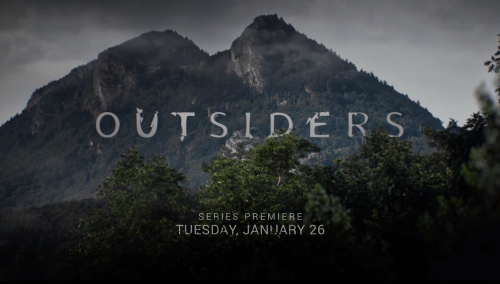
I am really looking forward to Outsiders. I just hope I can find the WGN America channel before January 26th.
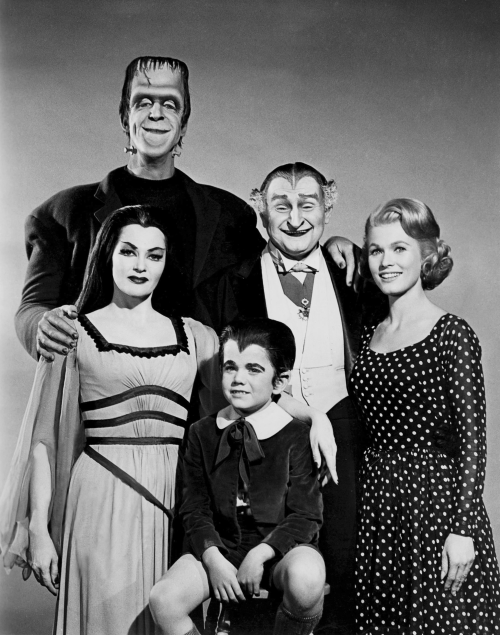
Kara Kovalchik and Mental_Floss present 12 Fiendishly Fun Facts About The Munsters. Here are three of my favorites…
2. THE CHOICE OF MONSTER CHARACTERS WAS STRICTLY INTENTIONAL (AND ROYALTY-FREE).
Universal Studios owned Universal Television, which owned The Munsters. Universal Studios also owned the copyrights to most of the classic monsters, including Dracula, the Wolf Man, and Frankenstein’s monster. The studio had been running their old classic horror films on television since the 1950s and found that there was still an impressive audience for these decades-old monster movies. When Connelly and Mosher pitched their series idea, CBS executives knew that they had one advantage that ABC lacked with The Addams Family: the ability to use the Universal monster characters. The Munsters regularly topped The Addams Family in the ratings, mainly because of the instant identifiability of (and built-in fan base for) Dracula, Frankenstein’s bride, et al.10. HERMAN’S COSTUME WAS A PERSONAL TORTURE CHAMBER FOR FRED GWYNNE.
Even though Gwynne would eventually reminisce that Herman was one of his favorite characters, the time he spent on The Munsters set was often fairly miserable, thanks to the various devices necessary to transform him into the lovable Frankenstein monster. On his feet he wore asphalt paver’s boots with four-inch soles, and his thighs, arms, and torso were covered in 40 pounds of foam rubber padding. He contended with back pain daily caused by the weight of the suit and inflexibility of the shoes. His head was fitted with a foam latex piece to flatten the top of his head and then he had to endure two hours in the makeup chair. He perspired freely under the heavy costume and hot studio lights and lost 10 pounds in one month despite consuming gallons of lemonade between takes. The producers eventually rented a compressed air tank and would poke the nozzle inside Gwynne’s collar to blow cool air on him.11. THE COSTUME HAD ONE BENEFIT: IT EXCUSED GWYNNE FROM PERSONAL APPEARANCES.
As The Munsters gained popularity, its stars received more and more requests to appear at various functions. The producers, of course, sent the actors out as often as possible since such appearances not only promoted the show, they also propelled the sales of the variousMunsters merchandise that saturated the market at the time. Only Fred Gwynne was able to relax on his days off (for the most part), since the time and expense required to get him into character outweighed the publicity value of cutting ribbons at supermarket openings. One of the rare times he played Herman in public was alongside Al Lewis in the 1964 Macy’s Thanksgiving Day Parade. Gwynne confessed to TV Guide that he’d been taking slugs from a bottle of whiskey the entire time, because he “had to get bombed so I could say ‘hello’ to the little kiddies for 40 blocks.”
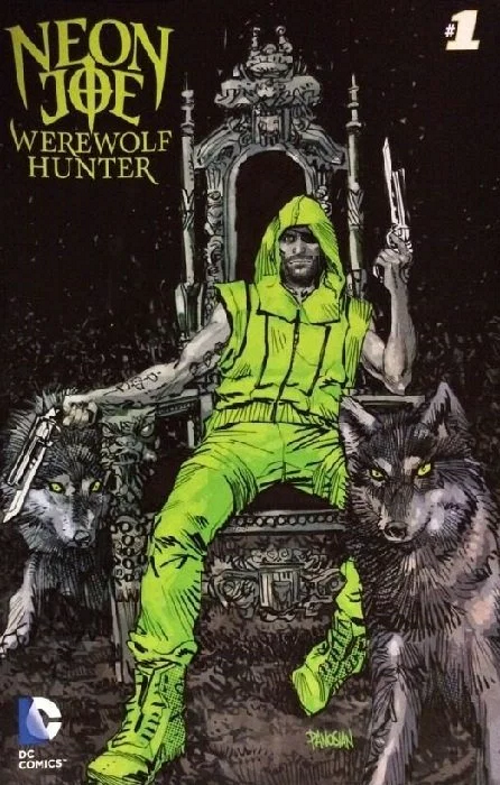
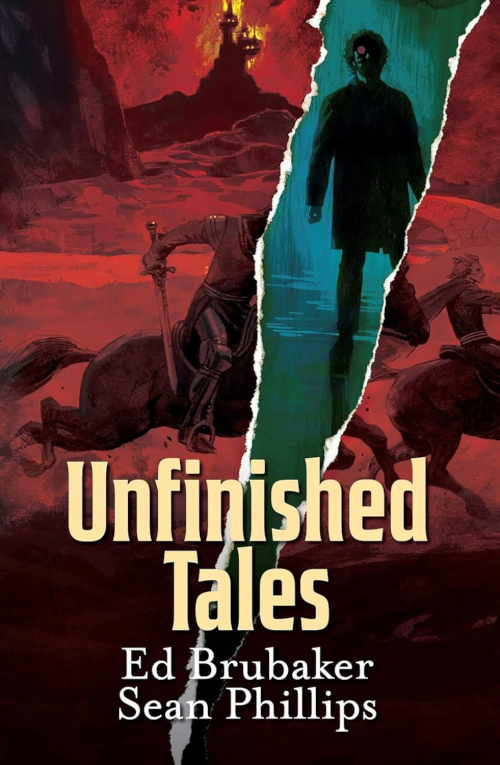
“Y’all know me. Bet you know how I earn a livin’.”
“No, we don’t.”
“I was under the assumption you’d been briefed about who I am. My name n’ Neon Joe – Werewolf Hunter.”
The Dan Panosian cover caused me to click over. The trailer piqued my interest so I thought I’d share it with you.
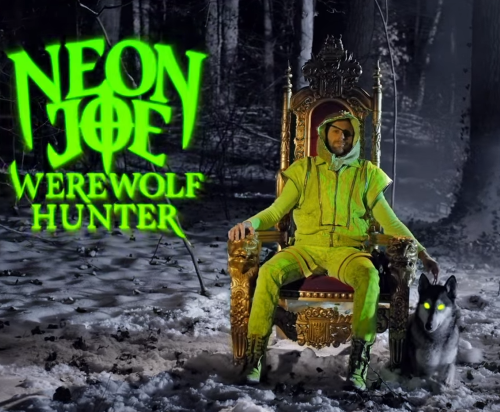
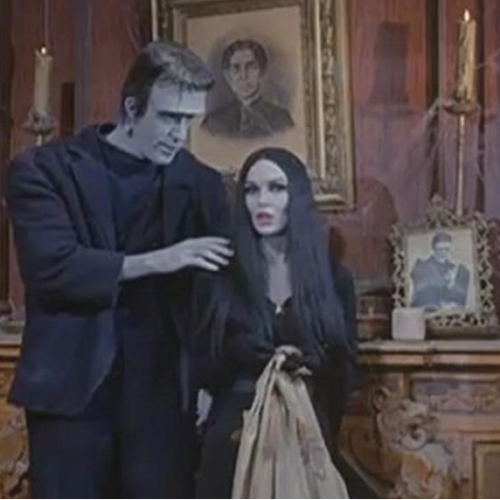
Have you ever seen the un-aired intro to The Munsters with the original cast members… and some of the originals did not make it to the series.
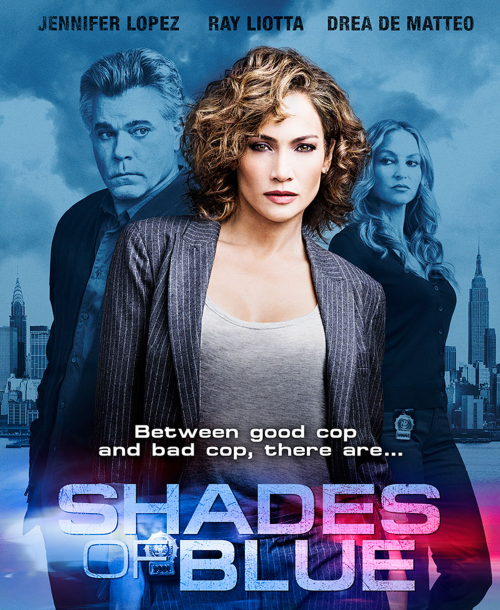
The trailer to Shades of Blue looks like we’re in for a good series. I’m in.

Hollywood.com presents 20 Surprising Facts About Dwayne The Rock Johnson. Here are three of my favorites…
He wasn’t always known as “The Rock” in the ring.
Successful wrestling gimmicks rarely happen right out of the gate. Even The Rock wasn’t exempt from that rule of thumb. He started his pro wrestling career as “Flex Kavana,” followed by “Rocky Maivia” (a blend of his father and grandfather’s ring names) before landing on the name that would help make him a superstar. I think we can all agree that it’s hard to imagine his persona as anything other than “The Rock” in the ring.His Scorpion King paycheck was a record-breaker
Back in 2002, The Rock made his leading-role debut in The Scorpion King, and he was paid $5.5 million to do it. For a first-time above-the-title name, that sum was the most ever paid – a testament to The Rock’s fame before he started starring in filmsHe Doesn’t Want to be Called The Rock
In a 2006 interview with Entertainment Magazine, Dwayne Johnson says “I no longer am a wrestler, I am now pursuing a future as an actor and someday as a director. I am not the Rock. I am Dwayne Johnson.” It sounds like people are a little slow to come around to that fact, but it seems to be happening, slowly but surely.

Jake Rosen and Mental_Floss present Aaugh! 10 Facts About It’s the Great Pumpkin, Charlie Brown! Here are three of my favorites…
1. THE FUTURE OF ANIMATED PEANUTS SPECIALS DEPENDED ON IT.
Mendelson and animator Bill Melendez had very high aspirations for A Charlie Brown Christmas. When they screened it prior to its premiere, however, they felt it didn’t live up to its potential—and CBS agreed. The network said it was the last Peanuts special they would buy. But after it delivered huge ratings, CBS changed their mind and asked for more. When the two delivered another hit—the baseball-themed Charlie Brown All-Stars—they thought they had earned the network’s confidence.Instead, CBS told them they needed a special that could run every year, like A Charlie Brown Christmas. If Mendelson couldn’t provide it, they told him they might not pick up an option for a fourth show. Despite Schulz and his collaborators being annoyed by the network’s abrasive attitude, they hammered out a story with a seasonal clothesline that could be rerun in perpetuity.
3. IT WAS THE FIRST TIME LUCY SNATCHED THE FOOTBALL FROM CHARLIE BROWN.
In animated form, anyway. When Schulz, Mendelson, and Melendez were brainstorming scene ideas for the special, talk turned to the fact that Lucy’s habit of pulling the football away from Charlie Brown had never been seen in animation. They also decided it would be a good time to introduce Snoopy’s World War I Flying Ace. The joke had appeared in the strip, but Mendelson thought it would work even better in motion. He was right: the sequence with Snoopy in a doghouse dogfight is one of the most memorable in the Peanuts animated canon.8. THE ORIGINAL AIRINGS WERE SLIGHTLY DIFFERENT.
Production costs for the early Charlie Brown specials were subsidized by television sponsors Coca-Cola and Dolly Madison snack cakes: the brands appear at the beginning and end of the broadcast. The Coke “bug” appeared for several years before getting phased ou

Jake Rosen and Mental_Floss present 14 Dark Shadows Facts with Bite. Here are three of my favorites…
1. BARNABAS COLLINS WAS AN AFTERTHOUGHT.
Creator Dan Curtis—who would later conceive of The X-Files predecessor Kolchak: The Night Stalker and the classic TV movie Trilogy of Terror—originally had in mind a dramatic series about the strange residents of Collinsport, Maine, as viewed from the perspective of newly-arrived governess Victoria Winters. Though mystical elements—like ghosts—were present, they were subtle and slow to materialize. When the show premiered June 27, 1966, viewers found its characters as impenetrable as Winters did; Variety called it a “yawn.”Hoping to improve ratings with a classic horror movie trope—a vampire—Curtis introduced Collins, a brooding bloodsucker tortured by his condition. Originally intended to be a fleeting character who would be staked in the heart after a three-week run, he became so popular with viewers (ratings saw a 62 percent increase) that the show was saved from the guillotine.
6. BARNABAS DIDN’T TALK MUCH WHILE FANGED.
Dampened vocally by the fangs he had to wear, Frid also told the Gazette of some production trickery: Collins was rarely filmed talking in them. “My words come out slushy when I wear them, so they have to cut away from me when I talk,” he said. Frid would spit out the fangs, deliver the dialogue, then stuff them back in when the camera returned to him.10. IT’S THE ONLY SOAP TO SPAWN THREE FEATURE FILMS.
It’s a testament to Dark Shadows‘ rabid following that the series birthed two feature films with the original cast—virtually unheard of for a soap opera of any era. Curtis directed 1970’sHouse of Dark Shadows, which covered much of the same ground as the series but morphedCollins into more of an antagonist. While a feature budget meant actors actually had the privilege of doing more than one take, reviews were mixed.After the series ended in 1971, Curtis wanted to continue the story with another film. Night of Dark Shadows was released that same year, but Frid declined to participate. Curtis opted for more of a haunted house theme instead, with the show’s cast popping up in different roles. It’s been alleged MGM cut 30 minutes from the finished film, obliterating some plot and character details. In its released form, reviewers found it “dull,” “monotonous,” and “a bore.” (Tim Burton’s 2012 feature, starring Johnny Depp as Collins, didn’t fare much better.)

Jake Rosen and Mental_Floss present 12 Spine-Tingling Facts About Tales From the Crypt. Here are three of my favorites…
1. LETHAL WEAPON IS PARTLY RESPONSIBLE FOR THE SHOW.
Producer Joel Silver was on the set of 1987’s Lethal Weapon when he and director Richard Donner began talking about Silver’s failed attempts to adapt Tales from the Crypt as a feature film: the disappointing reception to 1983’s Twilight Zone: The Movie and 1982’s Creepshowhad lessened enthusiasm for horror anthologies. Unmoved by those failures, Donner said he’d be interested in joining the project. When the series idea was brought to HBO, they were intrigued that so many feature film talents were backing the idea. When Zemeckis—who was working with Silver on 1988’s Who Framed Roger Rabbit?—got involved, the network agreed to move forward with the show.4. IT BROUGHT HUMPHREY BOGART BACK FROM THE DEAD.
Zemeckis’s involvement often meant that Tales from the Crypt would take any opportunity to explore new techniques for visual effects. In the episode “You, Murderer,” a career criminalmurdered by his wife and best friend posthumously narrates the events leading up to his demise. When the character looks in the mirror—the show takes place from his POV—viewers see the resurrected features of Humphrey Bogart. Zemeckis used footage from Casablanca,The Maltese Falcon, and other Bogart films to capture footage and digitally insert it into the frame. During wraparounds, the Crypt Keeper also converses with a seemingly above-ground Alfred Hitchcock.6. TWO VERSIONS OF EACH EPISODE WERE SHOT.
For Zemeckis, Donner, and the rest of the show’s high-profile producers, the financial payoff was always thought to be a move to syndication. Because HBO was more permissive in terms of content, they needed to prepare for an eventual screening on broadcast TV stations. WhenTales from the Crypt was bought by Fox for a late-night Saturday slot in 1994, the episodes were re-edited to include alternate takes that eliminated most of the original episodes’ gore and nudity. The show also had actors loop non-profane dialogue during shooting. While HBO normally values exclusivity, it didn’t mind the deal: uncut episodes were still an attraction and, as one executive pointed out, “The show is called HBO’s Tales From the Crypt.” Free advertising never hurt.

Walking Dead fans, Charlie Adlard fans and art fans will want to check out this interview with Charlie Adlard the artist on The Walking Dead comic series. [Don’t you love how that all ties together?]
Source: Hero Collector.