Category: TV

13 Spirited Facts About “How the Grinch Stole Christmas”

Andrew N. Wong and Mental_Floss present 13 Spirited Facts About How the Grinch Stole Christmas.  Here are three of my favorites…

4. ITS BUDGET WAS MASSIVE.

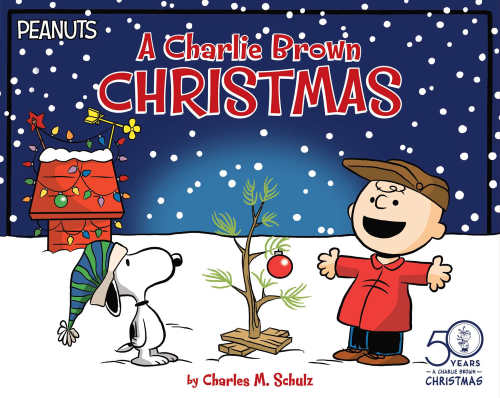
Coming in at over $300,000, or $2.2 million in today’s dollars, the special’s budget was unheard of at the time for a 26-minute cartoon adaptation. For comparison’s sake, A Charlie Brown Christmas’s budget was reported as $96,000, or roughly $722,000 today (and this was after production had gone $20,000 over the original budget).

8. CHUCK JONES HAD TO FIND WAYS TO FILL OUT THE 26-MINUTE TIME SLOT.

Because reading the book out loud only takes about 12 minutes, Jones was faced with the challenge of extending the story. For this, he turned to Max the dog. “That whole center section where Max is tied up to the sleigh, and goes down through the mountainside, and has all those problems getting down there, was good comic business as it turns out,” Jones explained in TNT’s How the Grinch Stole Christmas special, which is a special feature on the movie’s DVD. “But it was all added; it was not part of the book.” Jones would go on to name Max as his favorite character from the special, as he felt that he directly represented the audience.

7. THURL RAVENSCROFT DIDN’T RECEIVE CREDIT FOR HIS SINGING OF  “YOU’RE A MEAN ONE, MR. GRINCH.”

The famous voice actor and singer, best known for providing the voice of Kellogg’s Tony the Tiger, wasn’t recognized for his work in How the Grinch Stole Christmas. Because of this, most viewers wrongly assumed that the narrator of the special, Boris Karloff, also sang the piece in question. Upset by this oversight, Geisel personally apologized to Ravenscroft and vowed to make amends. Geisel went on to pen a letter, urging all the major columnists that he knew to help him rectify the mistake by issuing a notice of correction in their publications.

8 Jolly Facts About “Frosty the Snowman”

Kara Kovalchik and Mental_Floss present 8 Jolly Facts About Frosty the Snowman.  Here are three of my favorites…

4. THE NARRATOR WAS UNIVERSALLY REGARDED AS A NICE GUY.

Jimmy Durante was a jazz pianist, singer, and comedian whose career spanned a little over 50 years. In the 1950s, he was a regular not only at Las Vegas’ Desert Inn, but also at the Guardian Angel Cathedral, where he stood outside and greeted fellow parishioners with the priest after Sunday mass each week. Durante loved children, and is famous for turning down a performance fee at the Eagles International Convention in 1961. When asked by the organizers “What can we do, then?” Durante replied in his trademark Brooklynese: “Help da kids.”

5. LEGENDARY VOICE ACTORS JUNE FORAY AND PAUL FREES WERE REPLACED AFTER THE ORIGINAL AIRING.

The original film featured June Foray performing the voices of both the schoolteacher and young Karen, who accompanied Frosty to the North Pole. Paul Frees was the Traffic Cop and Santa Claus, and the two combined to voice the remaining schoolchildren. For reasons unknown (even to Foray herself), nearly all the children’s voices—including Karen’s—were redubbed by unidentified child actors for the 1970 airing. All subsequent TV appearances and video releases contain this new soundtrack. The original is only available on the 1970 soundtrack LP and a 2002 CD release by Rhino.

8. FROSTY HAS MAGIC FINGERS AS WELL AS A MAGIC HAT!

Watch carefully when Frosty attempts to count to 10: He has five fingers on one hand for a brief moment, then when he clasps his hand and flexes his digits, he’s down to four fingers. Maybe that falls under the category of “animation blooper” rather than “magic.”

11 Deluxe Facts About “The Jeffersons”

Kara Kovalchik and Mental_Floss present 11 Deluxe Facts About The Jeffersons.  Here are three of my favorites…

2. THE FIRST GEORGE JEFFERSON WE MET TURNED OUT TO BE A FAKE.
Producer Norman Lear had pegged Sherman Hemsley from the very beginning to play George Jefferson. However, at the time All in the Family hit the airwaves, Hemsley was co-starring in Purlie on Broadway and was reluctant to break his contract. So Lear improvised and hired Mel Stewart as a sort of placeholder.

Stewart posed as George when he joined Louise for dinner at the Bunker home; it was later revealed that he was actually Henry Jefferson, George’s brother. Henry Jefferson appeared in a few more All in the Family episodes before Hemsley was able to assume his role as the Jefferson family patriarch.

4. SANFORD WAS NONPLUSSED WHEN SHE FIRST MET THE ACTOR HIRED TO PLAY HER HUSBAND.
Isabel Sanford recalled during an interview with the Archive of American Television that she first met Sherman Hemsley when she reported to the studio for work one day. An assistant caught her attention and told her that this “young man” (Sanford is 21 years older than Hemsley) had an appointment to see director John Rich, and could she please take him upstairs with her and point him in the direction of Rich’s office? Sanford agreed and when she located Rich she was taken aback when he announced, “Isabel! This is your husband!”

Sanford eyed the “little man that she could squash like a bug” and wondered why the director thought anyone in the world would ever believe that the two characters would be a married couple. Of course, she was cheerfully proven wrong, because years after the show ended, she and Hemsley were often hired as a couple to appear in commercials and other TV shows.

8. MARLA GIBBS DIDN’T QUIT HER DAY JOB … FOR TWO YEARS.
Marla Gibbs had been working as a reservation agent at United Airlines for 11 years (and acting in plays during her spare time) when she landed the role of Florence on The Jeffersons. The character wasn’t intended to be a recurring one, but Gibbs got such a positive audience response that she was called back again a few episodes later. She was eventually offered a contract, but it was for just seven episodes (at the time the Florence character had to alternate stage time with Zara “Mother Jefferson” Cully). Two years later Gibbs was still making the daily commute from the Sunset Boulevard studio after filming had wrapped on The Jeffersons to the Sixth Street United Airlines reservation office in downtown L.A. The producers were surprised when they found out; worried that she was stretching herself too thin, they suggested that she take a leave of absence from the airline. “Not unless you plan to pay me for it,” was her response. She was offered a full contract shortly afterward and said farewell to United.

14 Blockheaded Facts About “A Charlie Brown Christmas”

Jake Rosen and Mental_Floss present 14 Blockheaded Facts About A Charlie Brown Christmas.  Here are three of my favorites…

5. SNOOPY’S VOICE IS JUST SPED-UP NONSENSE.
The early Peanuts specials made use of both untrained kids and professional actors: Peter Robbins (Charlie Brown) and Christopher Shea (Linus) were working child performers, while the rest of the cast consisted of “regular” kids coached by Melendez in the studio. When Schulz told Melendez that Snoopy couldn’t have any lines in the show—he’s a dog, and Schulz’s dogs didn’t talk—the animator decided to bark and chuff into a microphone himself, then speed up the recording to give it a more emotive quality.

7. CHARLIE BROWN’S HEAD WAS A NIGHTMARE TO ANIMATE.
Because Melendez was unwilling to stray from Schulz’s distinctive character designs—which were never intended to be animated—he found himself in a contentious battle with Charlie Brown’s noggin. Its round shape made it difficult to depict Charlie turning around; as with most of the characters, his arms were too tiny to scratch his head. Snoopy, in contrast, was free of a ball-shaped cranium and became the show’s easiest figure to animate.

10. CBS HATED IT, TOO.
After toiling on the special for six months, Melendez and Mendelson screened it for CBS executives just three weeks before it was set to air. The mood in the room was less than enthusiastic: the network found it slow and lacking in energy, telling Melendez they weren’t interested in any more specials. To add insult, someone had misspelled Schulz in the credits, adding a “T” to his last name. (Schulz himself thought the whole project was a “disaster” due to the crude animation.)

19 Things You Never Knew About “Breaking Bad”

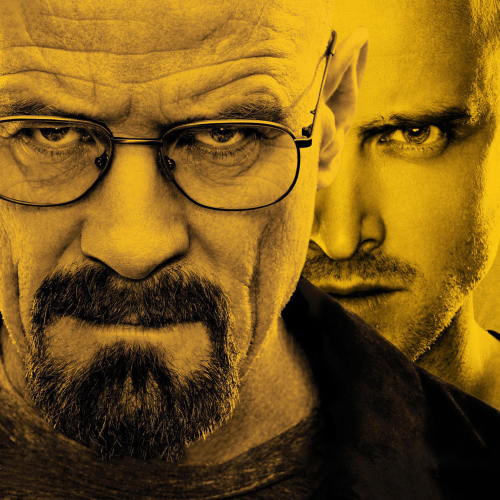
Hollywood.com presents 19 Things You Never Knew About Breaking Bad.  Here are three of my favorites…

5.      The GPS coordinates that repeatedly appear throughout the show, N34 59 20 W106 36 52, actually corresponds to the location of the studio where the show filmed.

6.      Showtime, HBO, and TNT all initially passed on Breaking Bad.  FX began production on it, but eventually passed in favor of Courteney Cox’s Dirt in an attempt to increase female viewership. HBO wasn’t interested and TNT liked it but couldn’t have a meth kingpin as a main character.

14.   The title of the final episode, “Felina,” is an anagram for “finale.”   The letters can also spell out the atomic numbers for various elements: Fe Li Na, or blood, meth, and tears.

20 of the Most Surprising Numbers About “Seinfeld”

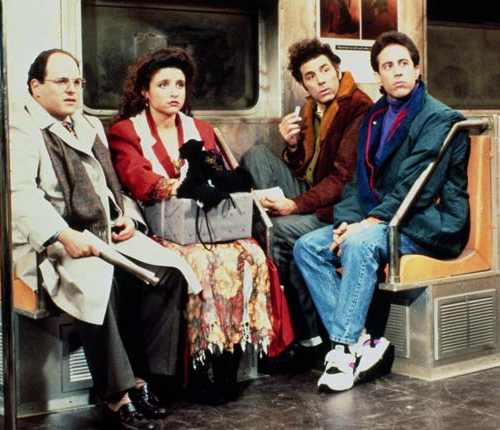
Worthy presents 20 of the Most Surprising Numbers About Seinfeld.  Here are three of my favorites…

1. $40,000,

2. $1 million

3. $110 million

During the 1991 to 1992 season, Jerry Seinfeld was paid $40,000 per episode. During the show’s final season, 1997 to 1998, he was paid $1 million per episode. He was offered $110 million to do a tenth season, but he turned down NBC’s offer to continue. He decided that nine seasons completed the show, and that is another story about numbers that was revealed when Vanity Fair did a cover story of him in 1998 when the series finally ended. He was quoted as saying “Nine is cool.” He had discovered that the number nine means completion in numerology. Learning that the Beatles stayed together nine years and then broke up was also an inspiration to Seinfeld. It turns out that nine is also a highly significant number in his life:

• He was born in 1954 (5 plus 4 = 9).

• He graduated high school in 1972 (7 plus 2 = 9).

• His first Tonight Show appearance was in 1981 (8 plus 1 =9).

• His sitcom Seinfeld first aired in 1989 (1 plus 9 plus 8 plus 9 = 27; 2 plus 7 = 9).

• The show was shown at 9 P.M.

• The show ended in 1998, which also equals 27 and, of course 2 plus 7 =9.

Seinfeld also said that when he thought about the end of the show, he felt that nine was his number.

Z-View: “The Wiz Live”

The Wiz Live  [2015]
Director: Kenny Leon
Based on the play The Wiz by William F. Brown
Starring: Shanice Williams, Elijah Kelley, Ne-Yo and David Allan Grier.

The Pitch: We need a new musical to do live on tv…. Hey, let’s do The Wiz!

The Tagline: “Ease on down the road to Oz!”

The Overview:  Beware of Spoilers…

Everyone knows the story of The Wizard of Oz.  This is an adaptation of that story.  Actually, this version is an adaptation of an adaptation of The Wizard of  Oz.

The Wiz first appeared as a Broadway play in 1975.  Then in 1978, The Wiz turned up in theaters as a movie starring Diana Ross and Michael Jackson directed by Sidney Lumet.

This version was broadcast live with Shanice Williams as Dorothy, Elijah Kelley as the Scarecrow, Ne-Yo as the Tin Man and David Allan Grier as the Cowardly Lion.  Queen Latifah plays the Wizard and there are appearances by Common, Mary J. Blige and Stephanie Mills.

I enjoyed The Wiz.  The cast was excellent and special mention to David Allan Grier as the Cowardly Lion and Elijah Kelley as the Tin Man for their performances.  Stand out scenes include Dorothy meeting the Scarecrow [loved the crows], when our group on the way to Oz come across the poppies, and the Lion singing “I’m a Mean ole Lion.”

If I were to pick nits:  I wish the show had been presented before a live audience.  I think it would have enhanced the viewing experience.  I was a bit let down by the tornado sequence, the creatures sent by the Wicked Witch to collect Dorothy and some of story shortcuts.

Overall, I really enjoyed The Wiz Live.  It was a fine way to spend a couple of hours in Oz.

Rating: 4 of 5 stars.

Robert Rodriguez Talks Up Sly Stallone in “The Director’s Chair”

Robert Rodriguez is a true Sylvester Stallone fan.  Recently Sly sat down with Rodriguez for an episode of The Director’s Chair and…

Rodriguez was so impressed with Stallone’s insight and honestly that he wanted to make the episode available for free to everyone. You can watch it on the …

Capone from Ain’t It Cool News had a chance to interview Rodriguez about Sly’s appearance on The Director’s Chair and their interview should be required reading for anyone who checks in here.

11 Far Out Facts About “Lost in Space”

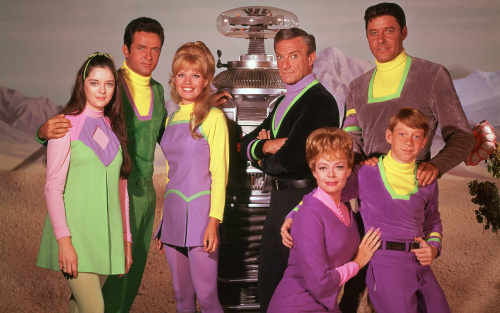
Bryan Reesman and Mental_Floss present 11 Far Out Facts About Lost in Space.  Here are three of my favorites…

1. THE ORIGINAL UNAIRED PILOT SET A DARKER TONE. IT ALSO COST $600,000.
The original pilot “No Place To Hide”—which cost $600,000, or $4.5 million in today’s dollars—was a more straight up sci-fi tale that did not include either Dr. Smith or the Robot in the cast. The Space Family Robinson saga—inspired by a comic book with that title from Gold Key Comics that began in 1962—started with their 1997 mission going awry thanks to a meteor shower, and the Jupiter 2 crash landing on a seemingly barren planet with harsh weather conditions and inhabited by dangerous cyclops giants. It was pretty impressive for the day and hinted at a more intense show than the one that ultimately aired. We still love the series, but this episode—unseen until early last decade—promised many more dramatic possibilities.

2. THE JUPITER 2 COST MORE THAN THE ENTERPRISE.
The cost of the Robinson family’s Jupiter 2 spacecraft was $350,000 ($2.6 million today), more than the Enterprise on Star Trek, which began airing when Lost In Space started its second season. Of course, a major difference is that the Jupiter 2 was a smaller ship, so we saw every chamber in it, whereas the Enterprise was a larger wessel (as Pavel Chekov would say) with many unseen nooks and crannies. It was all about scale.

7. GUY WILLIAMS RETIRED FROM ACTING AFTER LOST IN SPACE.
The man who was famed for playing Zorro on TV between 1957 and 1961 and Dr. John Robinson from 1965 to 1968 decided to retire from the spotlight at the young age of 44 following the cancellation of Lost In Space. He later moved to Argentina, where he was reportedly beloved and where he lived until his death in 1989.

16 Cutting-Edge Facts About “All in the Family”

Kara Kovalchik and Mental_Floss present 16 Cutting-Edge Facts About All in the Family.  Here are three of my favorites…

2. ARCHIE BUNKER WAS ORIGINALLY ARCHIE JUSTICE.
Lear thought that the BBC show’s set-up—a middle-aged, blue collar conservative man who never hesitated to express his racist viewpoints, his doting wife, and his liberal daughter and son-in-law—could be mined for humor for American audiences. Justice for All, as the show was called in his original pilot script, starred Carroll O’Connor as Archie Justice and Jean Stapleton as his wife, Edith. Kelly Jean Peters and Tim McIntire rounded out the cast as Gloria and Richard (Meathead’s original name). ABC passed on the show, however; their main complaint being Archie and Edith’s lack of chemistry with the younger actors. Lear recast the roles with Candy Azzara and Chip Oliver, changed the name of the show to Those Were the Days and shot a new pilot, but ABC was still uninterested.

5. MICKEY ROONEY TURNED DOWN THE ROLE OF ARCHIE.
When Norman Lear pitched the series to Rooney, he only got as far as describing Archie as “a bigot who uses words like ‘spade’” before Mickey interrupted him. “Norm,” said the actor with a penchant for shortening names, “they’re going to kill you, shoot you dead in the streets.” Carroll O’Connor read for the role after Rooney’s refusal and had landed the part by the time he got to page three of the pilot script. But even he was dubious about the show and told Lear that CBS would cancel it after six weeks tops.

15. SAMMY DAVIS JR. CAUSED THE LONGEST LAUGH RECORDED ON THE SERIES.
O’Connor and Sammy Davis Jr. were good friends in real life, and All in the Family was Davis’ favorite TV show. So at his request, a guest spot was arranged for him in season two’s “Sammy’s Visit.” The kiss at the end was O’Connor’s idea, and the audience reaction was the loudest and longest laugh in the history of the series.

20 Fun Facts About “I Love Lucy”

Kara Kovalchik and Mental_Floss present 20 Fun Facts About I Love Lucy.  Here are three of my favorites…

1. CBS DIDN’T THINK AMERICANS WOULD BUY THAT LUCY WAS MARRIED TO A “FOREIGN” MAN.
When CBS approached Lucille Ball with the offer of turning her popular radio show My Favorite Husband into a television show, she was agreeable with one condition: that her real-life husband, Desi Arnaz, would be cast in the role of her spouse (played on the radio by Richard Denning). The network balked—there was no way that American viewers would accept average housewife Liz Cooper (her character’s name on the radio series) being married to a “foreign” man with an indecipherable accent. Never mind the fact that Lucy and Desi had been married more than a decade; such a “mixed” marriage was unbelievable.

3. THE SHOW BROKE GROUND IN SEVERAL WAYS, SIMPLY BECAUSE THE ARNAZES WOULDN’T MOVE TO NEW YORK.
Lucille and Desi wanted to work in Los Angeles, near their home and their new baby daughter Lucie. But in 1951 the majority of television shows were broadcast from New York, and that’s where sponsor Philip Morris wanted their show to originate as well. In those days the U.S. wasn’t wired for television from coast-to-coast; shows broadcast live could only be transmitted so far. As a result, such shows were preserved on kinescopes (a movie camera aimed at a TV monitor that recorded the show in negligible quality) and shipped to distant stations.
Philip Morris objected to I Love Lucy being performed in California and the kinescopes sent to New York; their biggest cigarette market was up and down the east coast and they wanted the best TV picture quality for that area. Desi Arnaz suggested that the show be filmed with three cameras, like a stage play, which would provide the same quality picture for every market. But multi-cameras had never been used on a situation comedy before, and there were many obstacles involved, not the least of which was accommodating a live studio audience (Desi knew that Lucille worked best when she got immediate audience feedback).

Desi hired legendary cinematographer Karl Freund to help solve the dilemma, and along with writer-producer Jess Oppenheimer and director Marc Daniels, they built a set, and the necessary filming equipment was strategically placed. CBS balked at the additional expense involved in this undertaking, so Arnaz struck a deal: he and Lucille would take a large cut in their salaries and their company, Desilu Productions, would retain ownership of the films in exchange. The enduring high quality of the 35 millimeter film was part of the reason that I Love Lucy became so popular in rerun syndication, and Desilu’s 100 percent ownership of the series made Lucille and Desi the first millionaire TV stars.
9. DESI ARNAZ HAD LIFTS IN HIS SHOES (AND HIS LOVESEAT).
Arnaz listed his height as 5’11” in most official biographies, but those who worked with him knew that in reality he was 5’9” and wore four-inch lifts in his shoes. Lucille Ball stood 5’7” in her stocking feet, and when she wore heels she seemed to tower over her husband. Desi Arnaz Jr. would later explain to an interviewer that his father “was a Cuban with a Latin male’s pride,” which is why it was important to him to be taller than his wife. A dual-purpose, subtle additional cushion (undetectable by the viewing audience) was added to the Ricardo’s loveseat so that Ricky would be taller than Lucy while seated, and would also give him the extra boost needed to gracefully rise from a sitting position up onto his elevator shoes.

11 Magical Facts About “I Dream of Jeannie”

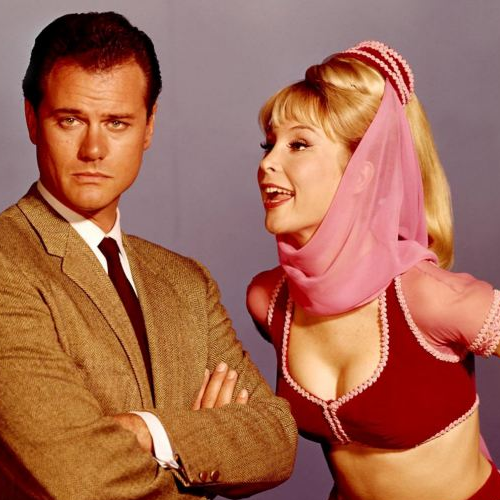
Sarene Leeds and Mental_Floss present 11 Magical Facts About I Dream of Jeannie.  Here are three of my favorites…

1. BARBARA EDEN DIDN’T LIKE THAT JEANNIE AND TONY NELSON GOT MARRIED.
The palpable sexual tension between Hagman’s astronaut character and the mischievous genie who lived under the same roof for the first four seasons of the series was what kept the series exciting—the objectification of Eden’s character notwithstanding. Here was a midriff-baring beauty, willing and able to fulfill her master’s every wish and command, and he still managed to keep her out of his bedroom for most of Jeannie’s run. By 1969, the sexual revolution was well under way, and it was time for Tony and Jeannie to get together. Except, as we all know, that kind of creative decision usually sounds the death knell for a TV show, and I Dream of Jeannie was no different. The characters tied the knot during the 1969-1970 season, which ended up being the series’ last.

In an interview with the Today show’s Willie Geist earlier this year (video above), Eden made no bones about her feelings regarding the Nelson marriage: “It ruined the show,” she said. “Because [Jeannie] wasn’t human … She thought she was, and [Tony] knew she wasn’t … I think it broke credibility.”

2. THE FAMILIAR-SOUNDING JEANNIE THEME SONG DIDN’T EXIST UNTIL THE SECOND SEASON.
You know the tune: Matthew Broderick did an unforgettable 12-second dance to it in Ferris Bueller’s Day Off. But the bouncy riff that will always be synonymous with I Dream of Jeannie didn’t first appear until the series’ second season, when a new, in-color animated opening sequence was introduced. The first season, which was filmed in black and white, tried a couple of different openers: First there was the expository one that brought the audience up to speed on how Jeannie and Tony met; eventually, the exposition was dropped for this jazzy, albeit abbreviated, animated sequence.

8. I DREAM OF JEANNIE HAD A FUN LITTLE CONNECTION WITH FELLOW NBC SITCOM THE MONKEES.
While The Monkees only lasted two seasons, it had a sweet brother-sister-type relationship with I Dream of Jeannie while it was on the air, as they were both on NBC and shared the same music supervisor, Don Kirshner. About midway through the fall 1966, in The Monkees episode “The Spy Who Came in From the Cool,” Davy Jones rubs a small table lamp (see above video, 14:10). In true Jeannie fashion, a beautiful harem-costumed genie (not Barbara Eden) emerges from a puff of smoke and assures her “master” that she will help him. A bemused Jones remarks, “Imagine that—wrong show!”

The following year, in the Jeannie episode “Jeannie, the Hip Hippie” (see above), Jeannie puts together a rock band featuring Tommy Boyce and Bobby Hart, who penned some of The Monkees’ most famous songs. At one point, an instrumental version of one of the duo’s biggest hits for the band, “Last Train to Clarksville,” can be heard. Plus, Hart is holding a copy of The Monkees’ first album in one scene.