Category: Crime

The 10 Wildest Movie Plot Twists
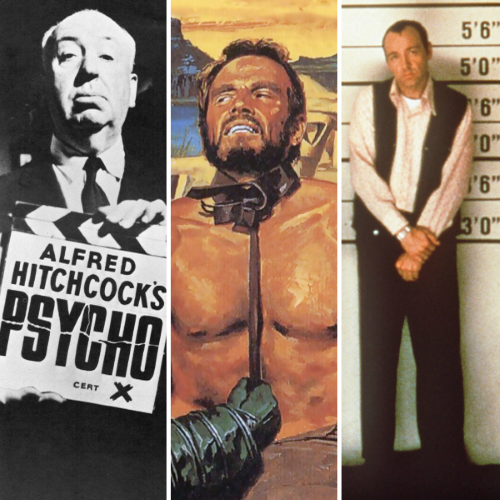
Paul Shrodt and Mental Floss present The 10 Wildest Movie Plot Twists.  Be advised that major spoilers wait for those who venture further.  Using Shrodt’s list, here are three of my favorites and some of my thoughts to boot.

1. PSYCHO (1960)
Alfred Hitchcock often constructed his movies like neat games that manipulated the audience. The Master of Suspense delved headfirst into horror with Psycho, which follows a secretary (Janet Leigh) who sneaks off with $40,000 and hides in a motel. The ensuing jolt depends on Leigh’s fame at the time: No one expected the ostensible star and protagonist to die in a gory (for the time) shower butchering only a third of the way into the running time. Hitchcock outdid that feat with the last-act revelation that Anthony Perkins’s supremely creepy Norman Bates is embodying his dead mother.
Craig’s thoughts: Psycho makes the “twist” list for a couple of reasons.  1: It starts off with the feel of a crime movie and twists into a horror film.  Bravo!  2.  The twist ending is a classic and truly shocked audiences… still does.

2. PLANET OF THE APES (1968)

No, not the botched Tim Burton remake that tweaked the original movie’s famous reveal in a way that left everyone scratching their heads. The Charlton Heston-starring sci-fi gem continues to stupefy anyone who comes into its orbit. Heston, of course, plays an astronaut who travels to a strange land where advanced apes lord over human slaves. It becomes clear once he finds the decrepit remains of the Statue of Liberty that he’s in fact on a future Earth. The anti-violence message, especially during the political tumult of 1968, shook people up as much as the time warp.
Craig’s Thoughts: I saw the original Planet of the Apes during it’s initial run.  I was 9 years old and had no idea of the twist ending.  I. Was. Shocked.  The movie remains one of my favorites.

5. THE USUAL SUSPECTS (1995)
The Usual Suspects has left everyone who watches it breathless by the time they get to the fakeout conclusion. Roger “Verbal” Kint (Kevin Spacey), a criminal with cerebral palsy, regales an interrogator in the stories of his exploits with a band of fellow crooks, seen in flashback. Hovering over this is the mysterious villainous figure Keyser Söze. It’s not until Verbal leaves and jumps into a car that customs agent David Kujan realizes that the man fabricated details, tricking the law and the viewer into his fake reality, and is in fact the fabled Söze.
Craig’s Thoughts: The Usual Suspects is a modern classic.  What a great mystery told to us with all the clues right there.  Then when it all comes together in the end, we’re as shocked as David Kujan.

Additional thoughts:

The Sixth Sense is a great choice, but I picked the three above because they surprised me.  I knew the Sixth Sense had a twist at the end and actually figured it out early on.  It was cool to see how M. Night put it all together though.

I also applaud the twist in Primal Fear.  That one caught me off guard.  Kudos to Ed Norton’s acting.  Fight Club and The Others had interesting twists but didn’t shock me as much as the three I chose did.

Although it didn’t make the list, The Perfect Getaway is an under-rated film with a great twist ending.  Written and directed by David (Pitch Black) Twohy it stars  Milla Jovovich, Steve Zahn, Timothy Olyphant and Chris Hemsworth.
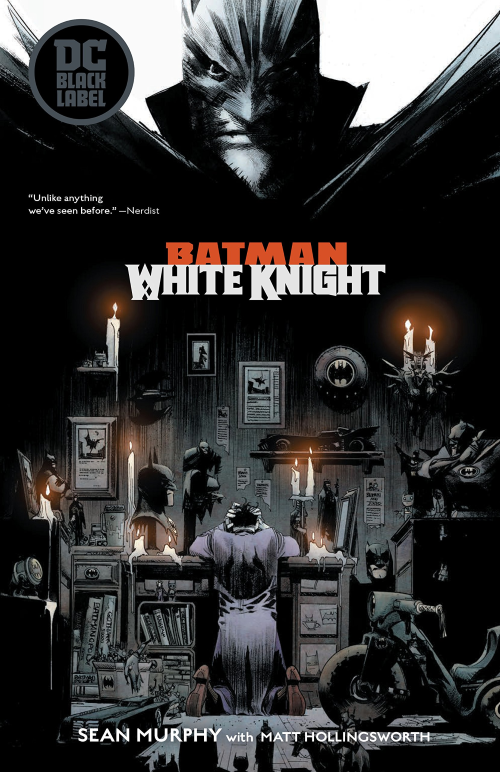
Batman: White Knight by Sean Murphy

Batman: White Knight, written and illustrated by Sean Murphy is set to be the first graphic novel published by DC under their new Black Label banner.
After years of epic battles, the Dark Knight finally finds a way to cure the twisted mind of his archenemy. The Clown Prince of Crime has now changed his ways, fighting for good in Gotham City, and it may just cause Batman to go over the edge of his own sanity.

Writer/artist Sean Murphy takes the helm of this Batman/Joker story like no one else could, delivering an alternative examination of the relationship between the greatest rivals in the DC Universe, exploring the darkest corners of justice and madness. This new graphic novel is the latest in great stand-alone stories from DC Comics. Collects issues #1-8.

This won’t be your father’s Batman.

9 Things You May Not Know About Billy the Kid

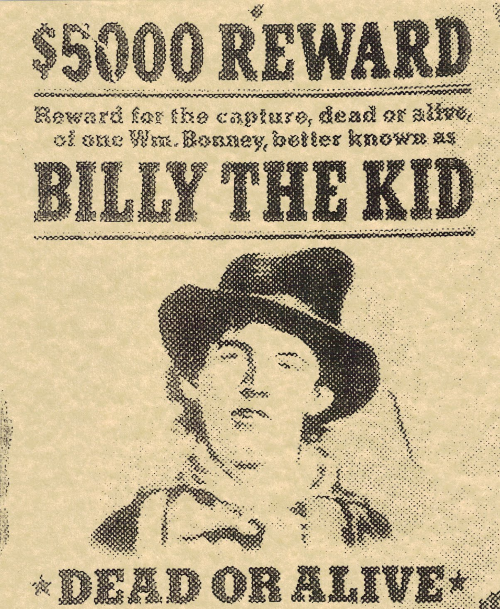
Evan Andrews and History.com present 9 Things You May Not Know About Billy the Kid.  Here are three of my favorites…

The Kid’s first arrest came for stealing clothes from a laundry.
Henry McCarty’s first run-in with the law came in 1875, when he assisted a local street tough known as “Sombrero Jack” in stealing clothing from a Chinese laundry. Henry hid the loot in his boarding house, but was arrested after his landlord turned him in to the sheriff. The crime only carried a minor sentence, but rather than face punishment, the wiry youth escaped the jailhouse by shimmying up a chimney. McCarty then fled town and embarked on a career as a roving ranch hand, gambler and gang member. He became handy with a Winchester rifle and a Colt revolver, and in August 1877 he killed his first man during a dispute in an Arizona saloon. That same year, he adopted the alias “William H. Bonney” and became known as “Billy the Kid” or simply “The Kid.”

He played a prominent role in a frontier feud.
Billy the Kid first earned his reputation as a gunslinger in 1878, when he participated in a bloody frontier war in Lincoln County, New Mexico. The conflict centered on a business rivalry between British-born rancher John Tunstall and a pair of Irish tycoons named James Dolan and Lawrence Murphy. Dolan and Murphy’s outfit—known as “The House”—had long held a monopoly over the dry goods and cattle trades in Lincoln County. When they tried to intimidate Tunstall’s upstart operation, the Englishman enlisted the Kid and several other gunmen to protect his property. The tensions finally boiled over in February 1878, when Tunstall was murdered by a posse organized by Sheriff William Brady, a supporter of The House.

Following Tunstall’s death, the Kid and several other former employees organized themselves into a vigilante group called “The Regulators” and swore revenge. In what became known as the “Lincoln County War,” the Regulators assassinated Sheriff Brady and spent the next several months shooting it out with The House’s forces. In July 1878, the feud reached its climax with a deadly, five-day firefight in the town of Lincoln, after which the Regulators disbanded and the two sides sealed a flimsy peace agreement. The Kid left the war with a reputation as one of the West’s most skilled gunmen, but he remained wanted for the murder of Sheriff Brady. He would spend the rest of his life on the run from the authorities.

The Kid made a famous jailbreak.
In late 1880, Lincoln County Sheriff Pat Garrett tracked the Kid to a cabin in Stinking Springs, New Mexico, and forced his surrender. The outlaw was found guilty of the murder of Sheriff William Brady and confined to the Lincoln courthouse. He was scheduled for a date with the hangman, but on the evening of April 28, 1881, he engineered the most daring getaway of his criminal career. During a trip to the outhouse, the Kid slipped out of his handcuffs, ambushed a guard and shot the man to death with his own pistol. He then armed himself with a double-barreled shotgun and gunned down a second guard who was crossing the street. Once in control of the courthouse, the Kid collected a small arsenal of weapons, cut his leg shackles with a pickaxe and fled town on a stolen horse. News of the brazen escape was soon reprinted in newspapers across the country, making the Kid the most wanted man in the West.

11 Surprising Facts About “In the Line of Fire”

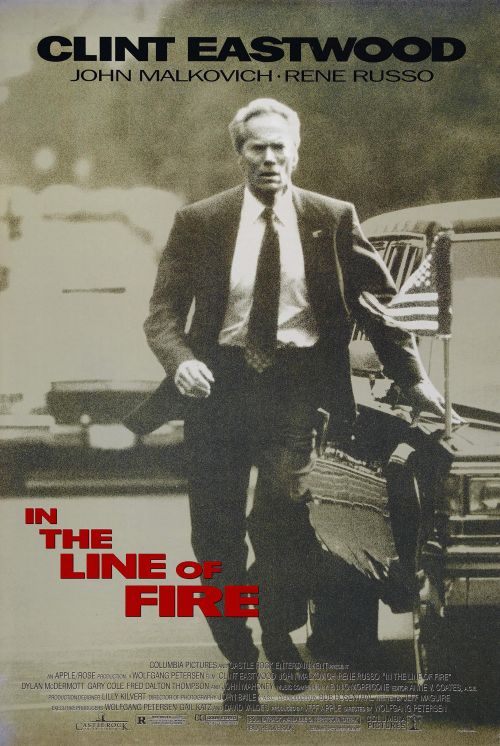
Jennifer M. Woods and Mental Floss present 11 Surprising Facts About In the Line of Fire.  Here are three of my favorites…

3. AT ONE POINT, ROBERT REDFORD WAS ATTACHED TO STAR.
Though Clint Eastwood will forever be associated with the role of ultra-dedicated Secret Service agent Frank Horrigan, he was hardly the first choice for the role. As the script made its way around Hollywood over the years, a number of other actors were either attached to or offered the project, including Robert Redford. Dustin Hoffman, Sean Connery, James Caan, Tommy Lee Jones, and Val Kilmer were among the other names wanted for the role of Horrigan.

6. FRANK HORRIGAN WAS INSPIRED BY ONE OF JFK’S SECRET SERVICE AGENTS.
Though the movie is a work of fiction, main character Frank Horrigan was partly inspired by Clint Hill, one of John F. Kennedy’s Secret Service agents who was on duty the day the 35th president was assassinated in Dallas. In 1975, Hill sat down for an emotional interview with Mike Wallace on 60 Minutes, where he broke down and admitted that he felt responsible for what had happened that terrible day.

“I still feel today a sense of failure and responsibility because that was our job: to keep the president safe, to protect him at all costs,” Hill said. “And on that particular day, we were unable to do that.” Much of Horrigan’s desire to right that wrong came from Hill’s interview.

8. WOLFGANG PETERSEN WAS A LITTLE INTIMIDATED BY CLINT EASTWOOD.
Though he was already a highly acclaimed director with two Oscar nominations on his resume (for writing and directing 1981’s Das Boot), Petersen admitted that the idea of directing a Hollywood icon like Eastwood was a slightly terrifying prospect.

“I must admit, I was initially a bit intimidated at the prospect of directing Clint, but any fears I had disappeared after our first meeting, and once we started shooting he never challenged my direction,” Petersen told the Los Angeles Times. “At the beginning he told me, ‘I won’t interfere, but if you want my advice I’ll be there for you—otherwise I’ll leave you alone.’ I took up his offer and consulted him a lot.”

Lavender Jack by Dan Schkade

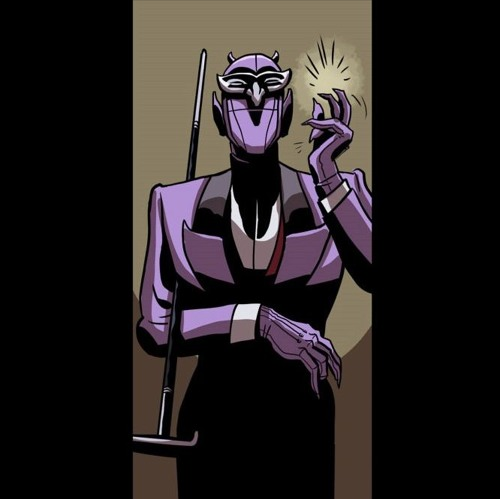
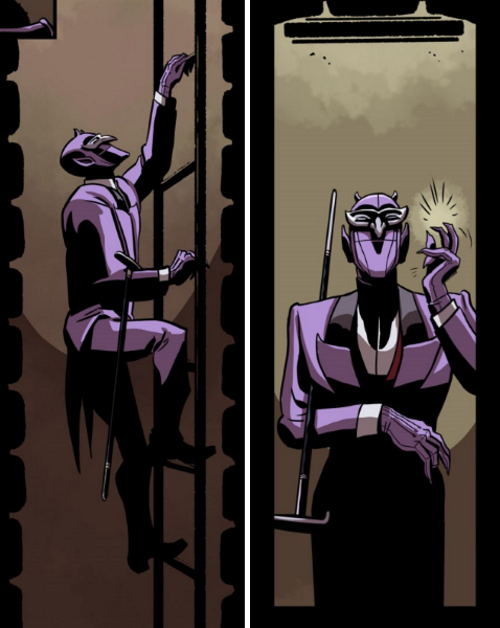
Lavender Jack is a new free weekly comic by Dan Schkade that reminds me of the comics I used to read as a kid.  And that’s a good thing.

When a masked man begins terrorizing the wealthy upper class, exposing their dirty secrets, the Mayor calls in a veteran detective. What begins as a game of cat and mouse leads to a rabbit hole of mysterious organizations, betrayal, & lost love.

Schkade’s writing and art are perfect for Lavender Jack and they should be since he created the character.  Jenn Manley Lee’s colors enhance the strip.  I’m usually not a fan of web comics but I plan to be a regular reader.  You might as well if you give it a shot!

Brooklyn Blood by Paul Levitz and Tim Hamilton

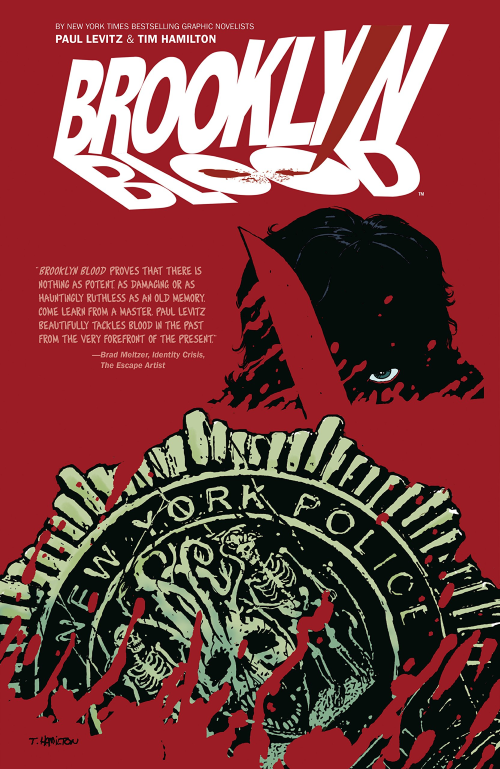
Brooklyn Blood by Paul Levitz and Tim Hamilton looks to be the kind of story fans of crime fiction and horror stories will love.

In Brooklyn, a serial killer is on the loose–and when strange clues lead down a paranormal path, a detective confronts his inner demons to solve the case.

After returning from a tour in Afghanistan, detective Billy O’Connor returns home to a Brooklyn he doesn’t recognize. As he tries to return to his normal routines, his PTSD is easily triggered and he suffers severe hallucinations. Once he begins to work a gruesome homicide case, however, O’Connor has difficulty sorting out what’s real–and after he uncovers some strange clues, he’ll have to face the unthinkable to bring the killer to justice.

From New York Times Bestselling authors Paul Levitz (75 Years of DC Comics: The Art of Modern Myth-Making) and Tim Hamilton (Ray Bradbury’s Farenheit 451: The Authorized Adaptation), this volume collects all sixteen chapters originally serialized in Dark Horse Presents Volume 3 #17-#22 and #24-#33!

31 Things We Learned from Tony Scott’s “Revenge” Commentary

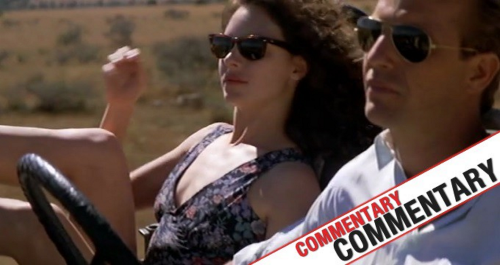
Yesterday we looked at the films of Tony Scott.  That brought to mind one of my favorite Tony Scott movies, Revenge.   Today we take a look at Rob Hunter and Film School Rejects’ 31 Things We Learned from Tony Scott’s Revenge Commentary.  Here are three of my favorites and my thoughts…

1. John Huston apparently worked for ten years attempting to bring this adaptation to the screen, and when that was no longer a possibility Scott, who had kept a close eye on the project, came aboard. Huston’s big roadblock was his producer, Ray Stark, who felt squeamish as to the story’s harsher elements. Scott says the theatrical cut of this film is Stark’s while this director’s cut is his preferred version. “He should never have made Revenge,” says Scott, “because it was something that was very contrary to his taste.”
Craig’s Thoughts:  I could definitely have seen Revenge as a John Huston film.  Revenge feels like a modern throw-back to The Postman Always Rings Twice or Double Indemnity.  And did you notice Scott said the director’s version is his preferred version of Revenge?  I didn’t even know there was a director’s version.  There is and I’m ordering a copy today.

19. Rocky the dog’s death scene strikes me as something that probably wouldn’t fly these days. They attached “an explosive pack” aka a squib to the dog’s chest and a snatch wire to his back, and when the dog barked Scott instructed the effects guys to trigger the exploding pack and yank the cable so the dog would fly into the wall. Scott tried to get a second take, but Rocky refused to bark again. “But he’s still around, he’s sixteen,” he promises. He also notes that test audiences gave them grief for what they did to the dog without mentioning that Costner gets beat to near death and Stowe has her face slashed in the same scene.
Craig’s Thoughts:  Yeah, the dog death scene would never fly today.  I’m surprised it did then, but that’s what makes this film seem realistic.  What Costner goes through to rescue Stowe and what she endures until rescued… whew!

30. The final face-off between Cochran and Tibey was shot in Mexico, but Stark and the studio requested Scott shoot additional footage with more dialogue to help explain both men’s motivations. Scott hated it and cut all of the new footage from the film.
Craig’s Thoughts:  I am so stoked to see this film again, especially since it will be the director’s cut a version totally new to me.

Revenge Unrated Director’s Edition Blu-Ray