Category: Crime
14 Epic Facts About “Gangs of New York”

Eric D. Snider and Mental_Floss present 14 Epic Facts About Gangs of New York.  Here are three of my favorites…

1. IT WAS 32 YEARS IN THE MAKING.
Martin Scorsese read Herbert Asbury’s 1928 nonfiction book The Gangs of New York: An Informal History of the Underworld in 1970 and immediately thought it would make a good movie. He didn’t have any money or clout yet though, so he had to wait. He bought the movie rights to the book in 1979, and even got a screenplay written around that time, then spent the next 20 years trying to get the project off the ground before finding a willing financial partner in Harvey Weinstein at Miramax Films.

7. SEVERAL CHARACTERS WERE BASED ON REAL PEOPLE.
Bill the Butcher was real, though Scorsese changed his surname from Poole to Cutting for the movie to reflect a creative liberty he’d taken, i.e., having the character live to see the Civil War (he was actually murdered in 1855). William “Boss” Tweed (Jim Broadbent) was a real politician who controlled the Tammany Hall political machine, as you may recall from your high school U.S. history class. So were the Schermerhorns, the rich people seen taking a tour of the misery and vice of Five Points. (Interesting footnote: Scorsese’s fifth wife, whom he married in 1999, is one Helen Schermerhorn Morris, a descendant of early New York elites.) Perhaps most surprisingly, Hell-Cat Maggie (Cara Seymour)—the vicious female fighter who bites off victims’ ears—was fact-based, being a composite of the real Hell-Cat Maggie (her real name is unknown) and a few other historical lady criminals.

13. THERE WERE LONGER CUTS OF THE MOVIE, BUT YOU WON’T SEE THEM.
The first cut, the throw-in-everything-and-see-what-works version, was three hours and 38 minutes, almost an hour longer than the final cut. Scorsese and his longtime editor, Thelma Schoonmaker, tinkered with it relentlessly, ultimately producing 18 different versions that were screened for various audiences. Weinstein, rightfully nicknamed Harvey Scissorhands for his ruthless trimming of the movies he releases, no doubt urged Scorsese toward a shorter runtime, but Scorsese said he’s happy with the one everybody saw, which is two hours and 47 minutes.

“There’s not one version that I would say, ‘That’s my original version,’” Scorsese said on the DVD commentary. They were more like drafts: “This was all a series of changes and rewrites and restructuring, until finally it comes down to the movie you see in the theater.”

S. Craig Zahler’s “Brawl in Cell Block 99”

 S. Craig Zahler [writer/director of the under-rated Bone Tomahawk] will start production this summer on Brawl in Cell Block 99 with Vince Vaughn in the lead.  If the title alone isn’t enough to get you in line for a ticket, maybe this will…

Vaughn will play a former boxer named Bradley who loses his job as an auto mechanic and goes to work as a drug courier for an old friend. This vocation improves his situation until the terrible day that he finds himself in a gunfight between a group of police officers and his own ruthless allies. When the smoke clears, Bradley is badly hurt and thrown in prison, where his enemies force him to commit acts of violence that turn the place into a savage battleground.

Can I get my ticket now?

Source: Entertainment Weekly.

Sylvester Stallone set to Star in “Omerta”

The news broke earlier this week that Sly Stallone is set to star as mob boss Raymonde Aprile in an television adaptation of Mario Puzo’s best seller Omerta.  Antoine [Training Day] Fuqua is set to direct.

Stallone and Fuqua along with Harvey and Bob Weinstein and David Glasser will serve as Executive Producers on the series which is being fast-tracked for production.

I think that is an excellent move by Sly.  With the right team (and they are off to a great start with Stallone and Fuqua at the helm) this series could be right up there with Justified and The Shield.  I can not wait for this!

Source: Deadline.com

16 Lively Facts About “Death Wish”

Roger Cormier and Mental_Floss present 16 Lively Facts About Death Wish.  Here are three of my favorites…

4. CHARLES BRONSON AND HIS AGENT DISAGREED ON THE FILM’S MESSAGE.
“It’s the only time Paul Kohner, my agent, ever disagreed with me about a film,” Bronson said in 1974. “Paul felt very strongly that it was a dangerous picture—that it might make people think it’s right to take the law into their own hands. This is what the hero of the picture does when he wants a one-man vigilante squad to kill muggers, after three of them have murdered his wife and raped his daughter. I told Paul I thought the message was the same there that runs through a lot of my pictures: That violence is senseless because it only begets more violence.”

6. DENZEL WASHINGTON MADE HIS ON-SCREEN DEBUT IN THE MOVIE.

Denzel Washington’s acting debut as a thug was, unfortunately, uncredited. He was 19 years old at the time.

16. SYLVESTER STALLONE WANTED TO REMAKE IT.
Sylvester Stallone was set to direct and star in a Death Wish remake for MGM back in 2008. While that project, uh, died, it was recently reported that Paramount and MGM are teaming up to remake the movie—with Bruce Willis starring.

8 Fascinating Facts About Butch Cassidy

Fiona Young-Brown and Mental_Floss present 8 Fascinating Facts About Butch Cassidy.  Here are three of my favorites…

2. HIS LIFE OF CRIME BEGAN WITH A PAIR OF JEANS.
Cassidy’s first recorded criminal offense occurred around 1880, when he stole a pair of jeans. To his credit, the teen left an IOU. The store’s owner pressed charges, but the soon-to-be outlaw was acquitted. According to Larry Pointer’s In Search of Butch Cassidy, Cassidy “had been raised with the frontier ethic that a man’s word was his bond. The IOU was an inviolate pledge. The merchant’s distrust was an unfamiliar response and, before the matter was settled, the humiliated youth was having mixed emotions over legal process and blind justice.”

5. HE DISLIKED VIOLENCE.
As odd as it sounds to think of an outlaw who disliked getting rough, records and personal recollections from the era all describe Cassidy as a very polite man who avoided violence whenever possible. He may have waved a gun around when robbing trains and banks, but he didn’t use it. Those who knew him said that one of his proudest claims was that he never killed a man.

8. THERE’S NO REAL EVIDENCE THAT HE WAS KILLED IN A SHOOTOUT.
Butch and Sundance were killed in early November of 1908 following a shootout with authorities in Bolivia … or were they? Some historians argue that there is no real evidence that the two men were involved in the payroll robbery that led to the shootout, or that they were even involved in the shootout itself. Several alternative theories have arisen, claiming that the outlaws were not killed that day.

Josie Bassett, an acquaintance of the Wild Bunch, claimed that Cassidy visited her in the 1920s and that he “died in Johnnie, Nevada … He was an old man when he died. He had been living in Oregon, and back east for a long time, where he worked for a railroad.”

By far, the most popular theory is that Butch may never even have gone to Bolivia. Rather, he left Argentina in early 1908, adopted the name William T. Phillips, got married, and passed away (anonymously) in Spokane, Washington in 1937. Butch’s younger sister Lula added credence to this in her 1975 book, Butch Cassidy, My Brother, saying that he visited her and their father at the family home in 1925. A handwriting analyst also claimed that Butch Cassidy, Robert LeRoy Parker, and William T. Phillips were one and the same. But the main proponent of this theory, Larry Pointer, has recently said that he was wrong and Phillips was not actually Cassidy.

In 2009, an unabridged copy of Phillips’ Bandit Invincible, a Cassidy biography, emerged. And following clues, Pointer came to the conclusion that William Phillips was actually another Wild West outlaw named William Wilcox. So for the moment, the mystery lives on.

27 Things We Learned from Roger Donaldson’s “No Way Out” Commentary

Rob Hunter and Film School Rejects present 27 Things We Learned from Roger Donaldson’s No Way Out Commentary.  Here are three of my favorites…

25. The ending of the film was apparently “controversial” at the time as audiences are on the side of Costner’s character throughout only to be stung by the final revelation. He was happy that people kept the secret and wonders if that aided the word of mouth and the film’s success. Can you imagine this movie opening in today’s internet culture?

21. The shot of Susan falling to her death was filmed with her standing upright on a dolly being pushed towards a wall that had been made up like the floor complete with a glass table.

4. The film is based on Kenneth Fearing’s novel, The Big Clock, but Donaldson thought it was an original script all the way through production. “I was at a party and ran into Mel Gibson, and he said ‘Oh I heard you made the remake of The Big Clock.’”

13 Infamous Facts About “Bonnie and Clyde” the Movie

Eric D. Snider and Mental_Floss present 13 Infamous Facts About Bonnie and Clyde.  Here are three of my favorites…

2. FAYE DUNAWAY’S STAR-MAKING PERFORMANCE ALMOST DIDN’T HAPPEN.
Warren Beatty, doing double duty as star and producer, and director Arthur Penn considered many other actresses first, including Tuesday Weld, Jane Fonda, Natalie Wood, Sharon Tate, Leslie Caron, and Ann-Margret. (Back when he was only producing it and not starring in it, Beatty had also considered his sister, Shirley MacLaine, for the role.) Beatty said they were turned down “by about 10 women,” though he would later say Weld was the only one they made a firm offer to. When Beatty met Dunaway, he didn’t think she was right for the part, but he told her to meet with Penn, who he thought would think she was perfect. Beatty was right.

7. THE STUDIO’S LACK OF FAITH MADE WARREN BEATTY VERY, VERY RICH.
Thinking the film wouldn’t make any money, Warner Bros. offered Beatty a ridiculous deal: a $200,000 salary, plus 40 percent of the gross. Yes, 40 percent. Of the gross, not the net. The film made more than $50 million.

5. WHATEVER YOU THINK THE FILM “REALLY” MEANS, YOU’RE PROBABLY WRONG.
Some viewers interpreted Bonnie and Clyde as a commentary on other issues, but Newman and Benton said they didn’t intend it that way. As they wrote in an introduction to a published version of their screenplay, “[People] have told us that Bonnie and Clyde was REALLY about Vietnam, REALLY about police brutality, REALLY about Lee Harvey Oswald, REALLY about Watts. After a while, we took to shrugging and saying, ‘If you think so.'”

10 Hush-Hush Facts About “L.A. Confidential”

Mathew Jackson and Mental Floss present 10 Hush-Hush Facts About L.A. Confidential.  Here are three of my favorites…

1. THE SCRIPTING PROCESS WAS TOUGH.
Writer-director Curtis Hanson had been a longtime James Ellroy fan when he finally read L.A. Confidential, and the characters in that particular Ellroy novel really spoke to him, so he began working on a script. Meanwhile, Brian Helgeland—originally contracted to write an unproduced Viking film for Warner Bros.—was also a huge Ellroy fan, and lobbied hard for the studio to give him the scripting job. When he learned that Hanson already had it, the two met, and bonded over their mutual admiration of Ellroy’s prose. Their passion for the material was clear, but it took two years to get the script done, with a number of obstacles.

“He would turn down other jobs; I would be doing drafts for free,” Helgeland said. “Whenever there was a day when I didn’t want to get up anymore, Curtis tipped the bed and rolled me out on the floor.”


3. JAMES ELLROY DIDN’T THINK THE BOOK COULD BE ADAPTED.
Though Wolper was intrigued by the idea of telling the story onscreen, Ellroy and his agent laughed at the thought. The author felt his massive book would never fit on any screen.

“It was big, it was bad, it was bereft of sympathetic characters,” Ellroy said. “It was unconstrainable, uncontainable, and unadaptable.”


10. ELLROY APPROVED OF THE MOVIE.
To adapt L.A. Confidential for the screen, Hanson and Helgeland condensed Ellroy’s original novel, boiling the story down to a three-person narrative and ditching other subplots so they could get to the heart of the three cops at the center of the movie. Ellroy, in the end, was pleased with their choices.


“They preserved the basic integrity of the book and its main theme, which is that everything in Los Angeles during this era of boosterism and yahooism was two-sided and two-faced and put out for cosmetic purposes,” Ellroy said. “The script is very much about the [characters’] evolution as men and their lives of duress. Brian and Curtis took a work of fiction that had eight plotlines, reduced those to three, and retained the dramatic force of three men working out their destiny. I’ve long held that hard-boiled crime fiction is the history of bad white men doing bad things in the name of authority. They stated that case plain.”

Howard Chaykin’s The Divided States of Hysteria is Coming This Fall!

Howard Chaykin has a new –

I’m in.

But you don’t know what the comic is about.  You don’t even know what it’s called.

I’m in.

Listen –

Ok, tell me.

THE DIVIDED STATES OF HYSTERIA is set in the aftermath of a dirty bomb that wipes New York City off the map, as what will come to be known as the Second American Civil War shatters the domestic landscape in isolated pustules of violence…and a team of five private contractors is charged with stemming this tide of rage and bringing the bombers to justice.

Guess what?

What?

I’m in.

Source: Bleeding Cool.

Kill or be Killed by Brubaker, Phillips & Breitweiser is Coming This Summer!

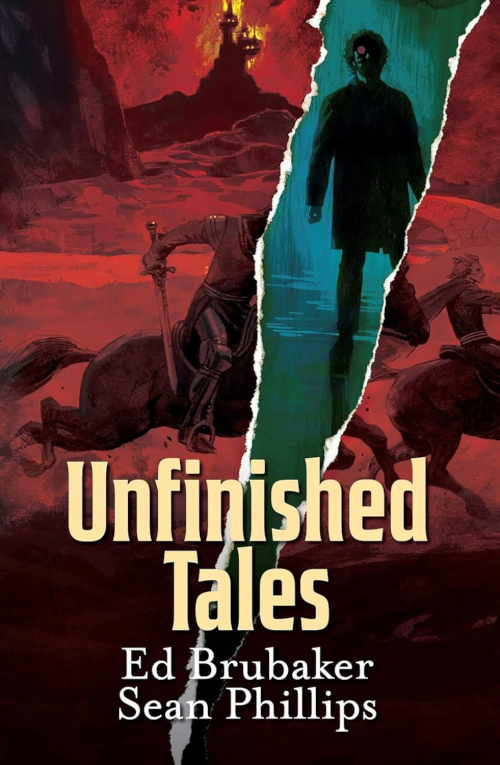
Ed Brubaker, Sean Phillips and Elizabeth Breitweiser have a new crime comic series coming out this summer called Kill or be Killed

KILL OR BE KILLED is the story of a troubled young man who is compelled to kill bad people, and how he struggles to keep his secret, as it slowly begins to ruin his life and the lives of his friends and loved ones.

Deal me in.

Source: Bleeding Cool.

Kaare Andrews Talks Up Renalto Jones!

Kaare Andrews is a movie and television director, a writer and artist.  Talk about a renaissance man!  Andrews has a new six issue comic series, Renalto Jones, coming out this summer.  Here’s how Kaare describes the series…

KA: Here’s the big conceit of the series: As you said, it’s about a man who hides amongst the super-rich and makes them pay for their super-rich crimes. But he doesn’t just hide in that world, he lives in it. So I can have a great time drawing gold plated Lamborghinis and huge estates, while still being able to get some payback. The book isn’t saying that all rich people are evil (remember, this is fiction), it’s saying that there is a certain kind of evil that’s untouchable because it hides behind wealth. To get at them, it’s going to take one of their own.


What’s interesting for me on a character level is that Renato isn’t really who he appears to be. ‘Renato’ is Italian for ‘Rebirth’ and that plays a big part of his character. Who is he? Why is he doing this? It’s not about revenge, but restitution. That’s important to Renato. He’s not getting even with the super-rich, he’s making them pay.

Check out Rich Johnston’s Why Kaare Andrews Is Focusing 100% On The One % at Bleeding Cool for the full story.

24 Things We Learned from Ben Affleck’s “Gone, Baby, Gone” Commentary

Rob Hunter and Film School Rejects present 24 Things We Learned from Ben Affleck’s Gone, Baby, Gone Commentary.   Here are three of my favorites…

7. Affleck worried about a shot of Jerry Springer on Helene McCready’s (Amy Ryan) TV thinking it might be too cliched, but “literally one in every two houses that I went into had Springer on while we were scouting in the afternoon.”

8. The extra with the hole in his throat was in the bar when they arrived for shooting so Affleck just asked him to stay. The man moving quickly behind him is actually Affleck who was passing by unaware they were grabbng the shot. Stockard wonders if this is Affleck’s stab at a Hitchcock cameo, but the director denies it.

3. One of the changes they made from the novel was adjusting the private eyes’ ages from being in their 40s to being in their 30s, “but that presented its own challenges,” says Stockard.

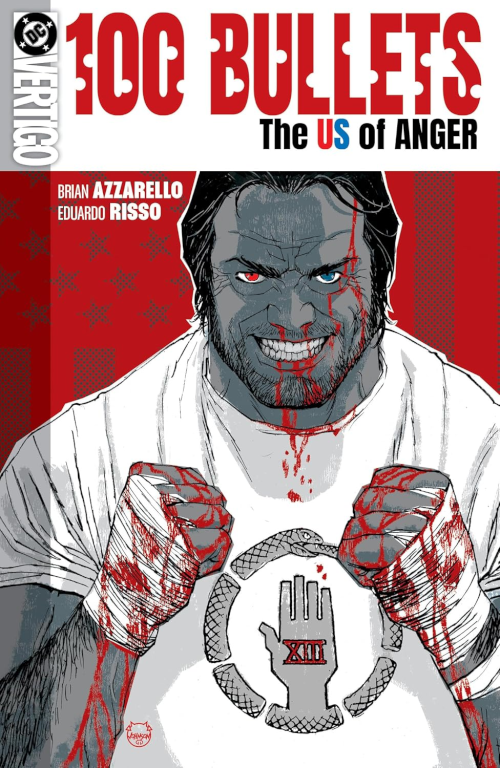
Moonshine by Azzarello & Risso Coming This Fall!

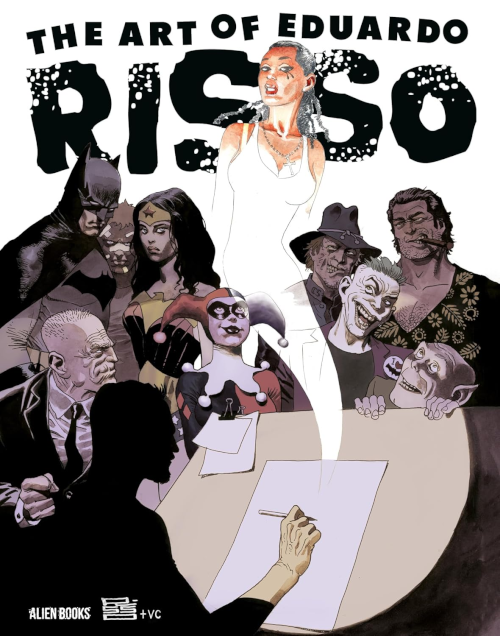
Just the names Azzarello and Risso are enough for a comic to make my monthly pull list. Probably yours too, right?  Add to the fact that Moonshine is a period crime tale with werewolves and I think that we won’t be the only ones.

MOONSHINE is set during the Prohibition Era, deep in the backwoods of Appalachia and tells the story of Lou Pirlo, a city-slick “torpedo” sent from New York City to negotiate a deal with the best moonshiner in West Virginia, one Hiram Holt. Lou figures it for milk run—how hard could it be to set-up moonshine shipments from a few ass-backward hillbillies? What Lou doesn’t figure on is that Holt is just as cunning as ruthless as any NYC crime boss and Lou is in way over his pin-striped head. Because not only will Holt do anything to protect his illicit booze operation, he’ll stop at nothing to protect a much darker family secret…a bloody, supernatural secret that must never see the light of day… or better still, the light of the full moon.

Source: Bleeding Cool.