Category: Crime

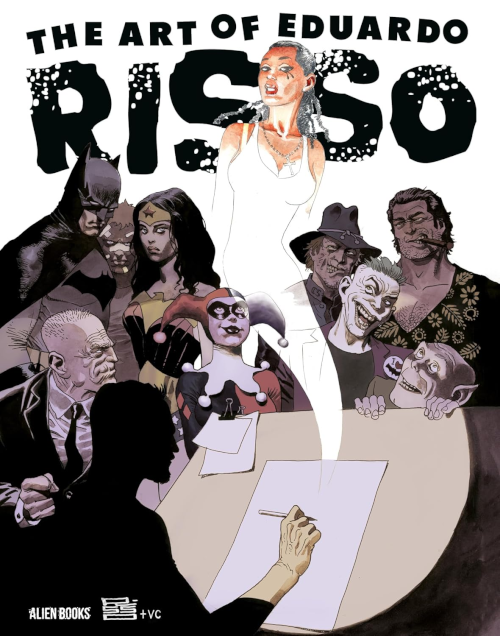
Moonshine by Azzarello & Risso Coming This Fall!

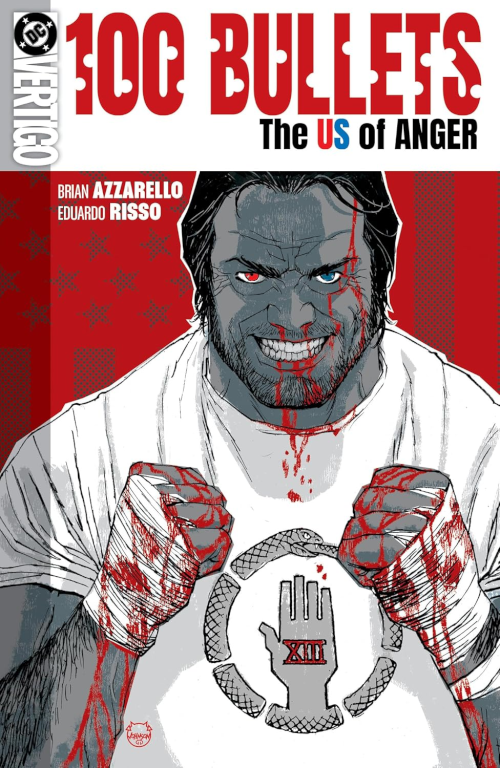
Just the names Azzarello and Risso are enough for a comic to make my monthly pull list. Probably yours too, right?  Add to the fact that Moonshine is a period crime tale with werewolves and I think that we won’t be the only ones.

MOONSHINE is set during the Prohibition Era, deep in the backwoods of Appalachia and tells the story of Lou Pirlo, a city-slick “torpedo” sent from New York City to negotiate a deal with the best moonshiner in West Virginia, one Hiram Holt. Lou figures it for milk run—how hard could it be to set-up moonshine shipments from a few ass-backward hillbillies? What Lou doesn’t figure on is that Holt is just as cunning as ruthless as any NYC crime boss and Lou is in way over his pin-striped head. Because not only will Holt do anything to protect his illicit booze operation, he’ll stop at nothing to protect a much darker family secret…a bloody, supernatural secret that must never see the light of day… or better still, the light of the full moon.

Source: Bleeding Cool.

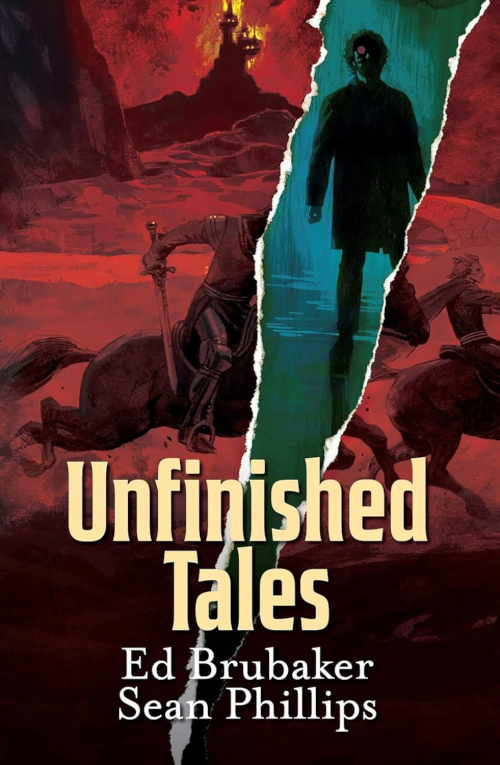
Ed Brubaker & Sean Phillips – A Retrospective!

Long time readers know that I am a huge fan of Ed Brubaker and Sean Phillips comic stories.  Perhaps David Harper summarizes my feelings best when he describes his admiration for Brubaker and Phillips by saying they are…

the finest and most consistent creative partnership in modern comics. When you hear Brubaker and Phillips are working on something, the question isn’t “will I buy it?”, it’s “when can I buy it?” They’re the type of team where your pull list simply has a “Brubaker/Phillips all” item on it. That’s rarefied air, at least for me.

Harper goes on to create an excellent overview of Brubaker and Phillips work in This Noir Life: A Retrospective of the Brubaker/Phillips Partnership at sktched.com.

13 Things You May Not Know About Bonnie and Clyde

Vintage Everyday presents 13 Things You May Not Know About Bonnie and Clyde. Here are three of my favorites…

3. Bonnie was an honor student and a poet.
During her school days, Bonnie excelled at creative writing and penning verses. While she was imprisoned in 1932 after a failed hardware store burglary, she penned a collection of 10 odes that she entitled “Poetry from Life’s Other Side,” which included “The Story of Suicide Sal,” a poem about an innocent country girl lured by her boyfriend into a life a crime. Two weeks before her death, Bonnie gave a prescient poem to her mother entitled “The Trail’s End” that finished with the verse:

“Some day they’ll go down together;
And they’ll bury them side by side,
To a few it’ll be grief—
To the law a relief—
But it’s death for Bonnie and Clyde.”


1. Bonnie died wearing a wedding ring—but it wasn’t Clyde’s.
Six days before turning 16, Bonnie married high school classmate Roy Thornton. The marriage disintegrated within months, and Bonnie never again saw her husband after he was imprisoned for robbery in 1929. Soon after, Bonnie met Clyde, and although the pair fell in love, she never divorced Thornton. On the day Bonnie and Clyde were killed in 1934, she was still wearing Thornton’s wedding ring and had a tattoo on the inside of her right thigh with two interconnected hearts labeled “Bonnie” and “Roy.”

9. Bonnie and Clyde remained close to their families, even on the run.
In fact, it was their predictable pattern of stopping to visit family that aided the team of Texas Rangers and deputies who ambushed and killed them.

17 Bloody Facts About “Friday the 13th”

Matthew Jackson and Mental Floss present 17 Bloody Facts About Friday the 13th. Here are three of my favorites…

1. THE ORIGINAL INSPIRATION WAS HALLOWEEN.
In 1978, producer and director Sean Cunningham was looking for a model on which to build a commercially successful film, and he found one in John Carpenter’s horror classic Halloween. The two films ultimately don’t share much other than very broad slasher tropes, but Cunningham says he “was very influenced by the structure of Carpenter’s film.”

7. SHELLEY WINTERS WAS THE FIRST CHOICE FOR MRS. VOORHEES.
For the now-iconic role of Mrs. Pamela Voorhees, Cunningham and company went in search of an actress with a recognizable name whose career was nevertheless on the decline, so she could be paid relatively little and the budget could stay low. Cunningham eventually made a list of actresses he was considering, and two-time Oscar winner Shelley Winters was his top priority. Winters wasn’t interested, and while fellow candidate and Oscar-winner Estelle Parsons actually negotiated to be in the film, she ultimately backed out. Cunningham also considered actresses Louise Lasser and Dorothy Malone right up until filming began, but ultimately the production wound up with Betsy Palmer in the role.

15. THE FINAL SCARE WAS SUPPOSEDLY NOT IN THE ORIGINAL SCRIPT.
The story of who invented the final scare in the film, in which a deformed Jason bursts out of the lake and grabs Alice (Adrienne King) from her canoe, is disputed. Victor Miller, Tom Savini, and uncredited screenwriter Ron Kurz all claim credit for it, Kurz because he claims to be the one who made Jason into a “creature,” and Savini because he claims the moment was inspired by a similar final scare in Carrie. Whatever the case, it left a lasting impression.

15 Thrilling Facts About “Basic Instinct”

Garin Pirnia and Mental Floss present 15 Thrilling Facts About Basic Instinct. Here are three of my favorites…

1. THE SCRIPT SOLD FOR A RECORD $3 MILLION.
Back in the day, spec scripts could sell for millions of dollars. Joe Eszterhas joined that club when he sold Basic Instinct—a script that took him just 13 days to write—for $3 million in 1990. Eszterhas told The A.V. Club that the media liked to focus on a writer’s failures, which occurred when Eszterhas’ Showgirls tanked at the box office. “CBS Evening News came with a helicopter crew and found me on a beach in Florida and interviewed me about the money I got for Basic Instinct,” Eszterhas said. “The other thing that I don’t think was quite fair was that after that whole period, where scripts—mine and Shane Black’s and half a dozen other writers’ scripts—went for a lot of money, the media zeroed in on the box office for some of those scripts, and they always zeroed in on the failures … When Basic Instinct went on to earn $400 million worldwide, there were no stories that said, ‘[Executive producer] Mario Kassar paid three million bucks for this.’”

2. CATHERINE AND NICK WERE BASED ON REAL PEOPLE.
Before he became a multimillionaire screenwriter, Eszterhas was a police reporter for Cleveland’s The Plain Dealer. “I met a cop who just liked the action too much,” Eszterhas told Nerve. “He was always in the middle of shootings. He was a great cop on one level, but on another, you suspected he liked it too much. That’s what Nick Curran does in Basic Instinct. As Catherine says in the movie, he got too close to the flame. He loved the flame.”

Tramell also comes from a person Eszterhas knew in Ohio, this time a go-go dancer in Dayton. One night he picked the stranger up and they went back to his hotel room to have some fun. “She reached into her purse, and she pulled out a .22 and pointed it at me,” he told Nerve. “She said, ‘Give me one reason why I shouldn’t pull this trigger.’ I said, ‘I didn’t do anything to hurt you. You wanted to come here, and as far as I know, you enjoyed what we just did.’ And she said, ‘But this is all guys have ever wanted to do with me, and I’m tired of it.’ We had a lengthy discussion before she put that gun down. Those two random characters are where those parts of Basic Instinct come from.”

3. MICHAEL DOUGLAS AND PAUL VERHOEVEN APPROACHED THE MOVIE AS IF IT WERE A DETECTIVE NOVEL.
Verhoeven wanted to make a modern version of a Hitchcock thriller—except with a lot more sex. “In traditional films, the killer lurks in a house and the victim walks into the kitchen, turns on the radio, makes coffee, opens a book, gets comfortable—and then the killer strikes,” he told The New York Times. “In this film, the killer hides—but on the bed. The situation is the same, but the two people are facing each other in bed, not the kitchen.”

Douglas agreed with the film noir aspect of the movie. “Fatal Attraction was a picture close to home for a lot of people because you could identify with those characters,” he also told theTimes. “It was a reality tale, while Basic Instinct is like a detective novel that people like to read in the privacy of their homes. It’s almost Gothic. It’s certainly more dramatic. And the real question here is: Is anybody really worthy of redemption?”

10 Hardcore Facts About “New Jack City”

Andrew LaSane and Mental Floss present 10 Hardcore Facts About New Jack City. Here are three of my favorites…

1. IT WAS MARIO VAN PEEBLES’S DIRECTORIAL DEBUT. 
Mario Van Peebles—an actor and the son of filmmaker Melvin Van Peebles—has admitted that making his debut as a feature director with New Jack City was tough. He had directed episodes of shows like 21 Jump Street and Wiseguy, but the film was a different beast, especially in terms of the tone. “It’s tricky,” he told The Morning Call. “New Jack is a dangerous movie to make, I didn’t want to do a direct glorification of the Tone-Loc lifestyle. I had to be careful about that. I thought about the old Scarface movie, which was probably meant as a deterrent to crime because it depicts all the violence of that kind of lifestyle. But for kids who don’t have any way out, ‘Live Fast and Die Young’ is like a motto. For people with no opportunities, gangsters become role models.”

5. ICE T WAS LUKEWARM ON THE IDEA OF PLAYING AN UNDERCOVER NEW YORK CITY COP.
After he was given the script and realized that his character, Scotty Appleton, was a cop, Ice T was hesitant. His lifestyle and his music represented the exact opposite of what he would have to play on screen. “I started to survey all the people around me, people whose opinions I trusted the most,” Ice T wrote in Ice.  “‘Yo, I got offered this movie role,’ I said over and over. ‘But here’s the thing: they want me to be the man. I thought my old crime partners might start laughing. Or snap my head off. But they all had the same response. They got these puppy faces, turned real quiet for for a moment, then asked me, ‘Word? Ice, could I be in the movie?'”

6. MARTIN LAWRENCE WAS THE ORIGINAL POOKIE.
Chris Rock’s portrayal of the drug addict Pookie earned him praise from Roger Ebert and other reviewers, but he was not the first choice for the role. In a recent interview about the legacy of New Jack City, screenwriter Barry Michael Cooper revealed that comedian Martin Lawrence had the better audition and had secured the part. “He’ll admit it himself, his audition wasn’t great, at all,” Cooper said of Chris Rock. “Martin Lawrence, he came in and killed that audition. The person taping had to shut the camera off; everybody was on the floor [laughing].”

But shortly before production began, Lawrence’s mentor and fellow comedian Robin Harris passed away. “He didn’t take it well,” Cooper said. “He stepped out of the movie, and that’s when they gave the role to Chris Rock.” Lawrence later referenced the film in an episode of his sitcom, Martin, dressing like and quoting Snipes’ Nino Brown character while dragging around a stuffed dog.

10 Timely Facts About “48 Hrs.”

Andrew LaSane and Mental Floss present 10 Timely Facts About 48 Hrs.  Here are three of my favorites…

3. NICK NOLTE AND EDDIE MURPHY WERE NOT THE STUDIO’S FIRST CHOICES.
According to The Telegraph, several actors turned down the roles of Detective Jack Cates and Reggie Hammond before Nick Nolte and Eddie Murphy signed on. Mickey Rourke, Clint Eastwood, and Jeff Bridges were reportedly offered the detective role, while Gregory Hines, Richard Pryor, Howard E. Rollins Jr., and Denzel Washington all ultimately passed on playing the convict.

5. MURPHY’S PERFORMANCE WAS INSPIRED BY BRUCE LEE.
Having never been in a serious role, Eddie Murphy did not know how to be angry on camera, so he mimicked actor and martial artist Bruce Lee. “There’s a scene in 48 Hrs. where I’m coming down the alley and there’s all this neon and I’m supposed to be intense, but I had no reference,” Murphy told Byron Allen in an interview for the 25th anniversary edition DVD ofEddie Murphy: Delirious. “So I was doing my Bruce Lee impression, and I still do it until this day. When I’m mad on screen if I pull my gun out, it may not look like Bruce Lee because I look nothing like him, but on the inside, my face, all the sh*t I’m doing with my eyes … it’s all my Bruce Lee impression.”

9. 48 HRS. LED TO ANOTHER SNL MILESTONE FOR MURPHY.
Having already been the youngest cast member years prior, Eddie Murphy was also the first Saturday Night Live cast member in history to host the show while he was still on it, but that was not the plan. On December 11, 1982, Nick Nolte was supposed to host, but he was sick and had to back out at the last second. “When Nick got here, and got off the plane, he vomited on my shirt,” Murphy said in his opening monologue, “and we realized Nick was too sick to do the show. And that’s too bad, because Nick was gonna be in some real great stuff tonight.” He added that because the audience came to see someone from the film, he was going to be the host, and he famously kicked off the episode with the line: “Live, from New York, it’s The Eddie Murphy Show!”

June Vigants and Jimmy Bobo


June Vigants
created the Sly as James Bonomo aka Jimmy Bobo from Bullet to the Head piece above.  June was doing sketch commissions through the mail and although I’d never met her, I liked June’s art and decided to commission a few pieces.  I wasn’t disappointed.  This is the first with more to be posted!

You can see more of June’s art here and here.

Twilight Zone: “The Rip Van Winkle Caper” [Season 2, Episode 24] / Z-View

Twilight Zone: “The Rip Van Winkle Caper” [Season 2, Episode 24]
Original Air Date: April 21, 1961

Director: Justus Addiss

Writer: Rod Serling

Starring:  Simon Oakland, Oscar Beregi Jr., Lew Gallo and John Mitchum.

The Overview: Beware of Spoilers…

Four thieves steal a million dollars in gold.  Their plan is to sleep in suspended animation for 100 years and be rich when they wake up.  Of course they forgot to take into account mechanical malfunction, human greed and that they are in the Twilight Zone.

Rating:

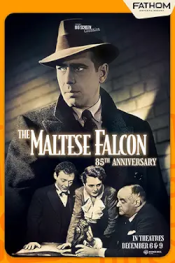
13 Mysterious Facts About “The Maltese Falcon”

Eric D. Snider and Mental_Floss present 13 Mysterious Facts About The Maltese Falcon.  Here are three of my favorites…

2. IT WOULDN’T EXIST IF HIGH SIERRA HADN’T BEEN A HIT.
John Huston, son of popular stage and screen actor Walter Huston, was a successful scriptwriter for Warner Bros. in the late 1930s, earning Oscar nominations for Dr. Ehrlich’s Magic Bullet (1940) and Sergeant York (1941). When he asked the Warners for a shot at directing, they agreed (and even let him choose the project himself), but only if his next script was a hit. That was High Sierra, starring Humphrey Bogart, directed by Raoul Walsh, and released in January 1941. Fortunately for Huston, it was a success, and the Warners kept their word. The Maltese Falcon, also starring Bogart, was shot that summer and released in the fall. It was the first of five movies Huston and Bogart would make together.

4. HUMPHREY BOGART’S ICONIC RAPID-FIRE DELIVERY WAS THE RESULT OF A STUDIO NOTE.
Detective Sam Spade had a lot of speeches, which the Warners felt tended to slow things down. They asked Huston to pick up the pace by having Bogart (and the others) talk faster. Huston, eager to please on his first film, took the note to heart and instructed everyone accordingly. When the film was a hit, the rat-a-tat pace became one of the hallmarks of film noir.

5. IT GOT AWAY WITH USING AN OBJECTIONABLE WORD, PROBABLY BECAUSE THE CENSORS WEREN’T COOL ENOUGH TO KNOW IT.
Sam Spade uses the word “gunsel” three times in reference to Wilmer, the hitman who works for Kasper Gutman, a.k.a. the Fat Man. Hammett used the same word in his novel, but only after his editor objected to the word he used first: “catamite,” which is a young man kept by an older man for sexual purposes. While Hammett’s novel identified Cairo (Peter Lorre’s character) as a homosexual and hinted at it for Wilmer and Gutman, this term was considered too explicit. Hammett replaced it with “gunsel,” which his editor assumed meant “gunslinger” or some such. But it didn’t. Gunsel—from the Yiddish word for “little goose,” and passed along in American hobo culture—was merely a synonym for “catamite,” but was too new to be familiar. Hammett got away with it in the book, and it slipped past the Production Code censors when it popped up in the screenplay. Because of Hammett’s usage, the word came to take on “gunman” as a secondary meaning. But make no mistake, it wasn’t Wilmer’s possession of a firearm that Sam Spade was referring to.

15 Incorruptible Facts About “The Shield”

Roger Cormier and Mental_Floss present 15 Incorruptible Facts About The Shield.  Here are three of my favorites…

1. THE CO-CREATOR OF LOST THOUGHT THE NETWORK WOULD CHANGE THE PILOT.
Damon Lindelof, co-creator of Lost and The Leftovers, remembered reading Shawn Ryan’s pilot script for The Shield and always waiting for Vic Mackey to become an Andy Sipowicz-type, or “a good guy despite his gruff exterior.” Instead, he read the ending where Mackey murdered an Internal Affairs rat in cold blood. “And when I read that, I thought to myself, ‘Shawn Ryan will never get this ending on the air,’” Lindelof recalled to the Chicago Tribune in 2008. (Spoiler alert: Lindelof was wrong.)

4. ERIC STOLTZ WAS OFFERED THE LEAD.
Eric Stoltz was offered the lead role and—and almost took it.

5. FX EXECUTIVES WERE NOT SOLD ON MICHAEL CHIKLIS.
The network knew Chiklis for his even-tempered roles in The Commish (1991-1995) andDaddio (2000). Against his agents’ advice, Chiklis took six months off from acting and lost 57 pounds. For his The Shield audition, he shaved his head. “When I heard his name mentioned, I thought he was wrong for the role,” Kevin Reilly, FX’s then-president of entertainment told The New York Times. “I knew him as a soft, cuddly guy physically and emotionally. He came in with this shaved head and his biceps, and he just chewed through the scene. He blew us away.’

13 Riotous Facts About “V for Vendetta”

Roger Cormier and Mental_Floss present 13 Riotous Facts About V for Vendetta.  Here are three of my favorites…

3. ANDY AND LANA WACHOWSKI WROTE A SCRIPT FOR V FOR VENDETTA BEFORE THEY WORKED ON THE MATRIX TRILOGY.
The Wachowskis acquired the rights to V for Vendetta in the mid-1990s, then promptly wrote their own screenplay. After directing the three Matrix films, the Wachowskis weren’t interested in returning to directing right away, but they did make alterations to their Vendetta script, including moving the story forward in time and making Evey older.

5. ALAN MOORE DECLINED TO WATCH THE FILM, OR BE CREDITED ON IT.
Moore had read the screenplay and considered it “rubbish.” Moore believed DC Comics and the film industry had knowingly stolen from him. Conversely, David Lloyd praised the movie moments after he had seen it for the first time, declaring it a “fantastic representation” of the work they did, according to McTeigue.

4. IT WAS JAMES MCTEIGUE’S DIRECTORIAL DEBUT.
James McTeigue was first assistant director on the Matrix movies, as well as on Star Wars Episode II: Attack of the Clones (2002), and was picked by the Wachowskis to take charge. “A lot of the filmmaking process is about trust, and at the point that those guys said, ‘We want you to direct it,’ they were about trusting me to go off and give it the vision it needed to be directed with, so they kind of left me alone,” said McTeigue. “They were there if I needed them, and sometimes I’d go, ‘Hey, what do you think about this?’ and they’d put their two cents worth in, and I could either take it on board or leave it at the door.”

20 Things We Learned from the “Street Kings” Commentary

Rob Hunter and Film School Rejects present 20 Things We Learned from the Street Kings Commentary.  Here are three of my favorites…

5.  Keanu Reeves did all of his own stunts.

11. He [Director David Ayer] recalls reading the script and being happily surprised by the turn where Ludlow’s vengeance mission against Det. Washington (Terry Crews) is interrupted by the two shooters sent to kill him. “I was caught unawares, and as a writer I’m supposed to catch this stuff ahead of time.”

16. The foot chase was filmed in a gang area, but they never had any problems during the shoot. “We were really open with the community, and we had an open set. We didn’t have security guards telling people to keep away. We let the kids in the neighborhood sort of walk through the set and look at the equipment and let people talk to us, and Keanu’s really open and really gracious and likes to hang out and talk to people. He’s not one of those guys who hides out in his trailer between takes.”