Category: Crime

Twilight Zone: “The Four of Us Are Dying” [Season 1, Episode 13] / Z-View

Twilight Zone: “The Four of Us Are Dying” [Season 1, Episode 13]
Original Air Date: January 1, 1960

Director: John Braham

Writer: Rod Serling based on a short story by George Clayton Johnson

Starring: Harry Townes, Phillip Pine, Ross Martin and Don Gordon with a cameo by Beverly Garland.

The Overview:  Beware of Spoilers…

Arch Hammer [Townes, Pine, Martin and Gordon] has the ability, with intense concentration, to change his appearance to look like anyone.  Hammer arrives in town and begins to impersonate various people in order to con their friends and business partners out of cash.

Hammer’s ability to change his appearance makes it easy to convince others that he is who he looks like.  Women and money are ripe for the taking.  Sadly, as this is the Twilight Zone, Hammer’s ability will bring him even more than he bargained for.

Final Thoughts: When this episode was first being prepared it was thought that one actor would play all four characters that Hammer impersonates.  When it was determined that it would take too much time in make-up, it was decided that a different actor would play each part.

Rating:

18 Uncovered Facts About “JFK”

Roger Cormier and Mental_Floss present 18 Uncovered Facts About JFK.  Here are three of my favorites

4. COSTNER MET GARRISON’S REAL ENEMIES.
The actor met both Garrison’s fans and his critics. “I wanted Costner to get both sides, to witness the hatred and extremism that Jim engenders and as an actor to look into the eyes of his enemies and know what he was up against back then,” explained Stone. “These were tough people and they’d come in a parade in front of Costner with their New Orleans accent saying that Jim’s a snake—that he liked boys and was angry that Shaw stole his lover and a lot worse.”

11. COSTNER INSISTED THAT JOHN CANDY NOT BE CUT.
John Candy was “devastated” when he heard his role as lawyer Dean Andrews was being cut from JFK, so Costner intervened. Stone wrote a letter to Candy apologizing for considering taking his nervous, sweaty character out of the movie.
10. WAYNE KNIGHT AND STONE CLASHED OVER HIS ACCENT.
Wayne Knight (Seinfeld‘s Newman) used an accent he heard growing up in northwest Georgia for his audition as Numa Bertel, which Stone loved. But Knight discovered upon meeting the real, New Orleans-born Bertel that he didn’t sound like that at all. Knight insisted on using Bertel’s real accent in the film, though it took a while to convince Stone. “He’s rough trade, that man,” Knight told The A.V. Club of Stone.
American Monster by Brian Azzarello and Juan Doe

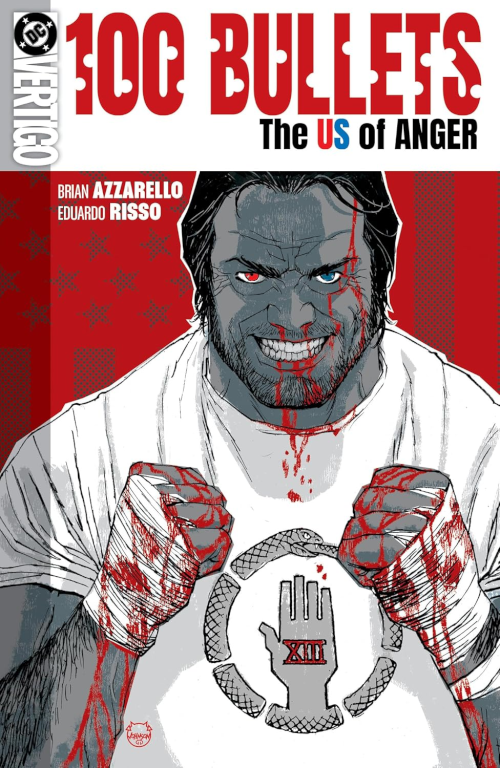
Brian [100 Bullets] Azzarello and Juan Doe have teamed for American Monster, a new comic series coming for AfterShock Comics.  Here is the official description:

AMERICAN MONSTER – War changes people. The person who leaves is never the person who returns. Theo Montclare is such a person. Horribly scarred and disfigured during his tour of duty, Theo returns to the small Northwestern town that was once his home a changed man, transformed emotionally and physically, both in appearance and in perception. But is he a returning hero or a modern day Frankenstein?

If you’d like to know more about American Monster and see some preview art [which looks great] then check out [be advised that this preview contains adult language] BRIAN AZZARELLO & JUAN DOE UNLEASH THEIR “AMERICAN MONSTER” at CBR.com.

“In Cold Blood” (1967) written & directed by Richard Brooks, starring Robert Blake, Scott Wilson and John Forsythe / Z-View

In Cold Blood (1967)

Director: Richard Brooks

Screenplay: Richard Brooks (based on Truman Capote’s book of the same name)

Stars: Robert Blake, Scott Wilson and John Forsythe

The Pitch: “Let’s make a movie based on the best-selling book In Cold Blood!”

The Tagline: “Written for the screen and directed by Richard Brooks.”


The Overview:  Beware of Spoilers…

Dick Hickcock [Scott Wilsion] and Perry Smith [Robert Blake Perry] have a plan to steal $10,000 cash from a rich farmer’s safe and then high-tail it to Mexico where they will live out their days safe from extradition.  The two ex-cons violate their parole and drive through the night to Holcomb, Kansas where according to one of Hickcock’s past cellmates, a fortune sits in the Cutter safe.

 The only thing Hickcock and Smith find at the Cutter house are Mr. Cutter, Mrs. Cutter and their two teenage children.  Hickcock and Smith place the family members in separate rooms, tie them up and search for the safe.  There is no safe, no fortune and just a little over forty dollars in cash in the house. Hickcock and Smith brutally kill the Cutter family and then head back towards Kansas City.

The discovery that the Cutter family was brutally murdered makes national news and as the investigation grows, Hickcock and Smith decide to head to Mexico.  They pass bad checks, pawn the items they buy and use the money to get across the border.  It isn’t long before they’re low on cash and decide to go to Vegas to raise more. In Vegas  Hickcock and Smith are picked up on a parole violation.

The cops interrogate them separately.  Neither admits to knowing anything about the Cutter family murders.  As the evidence begins to pile up, Hickcock suddenly tries to pin the murders on SmithSmith then turns on Hickcock and the case is made.  A trial, a death sentence and the gallows are all that Hickcock and Smith have left to look forward to.  Sadly, one is left with the feeling that either man alone would not have committed the murders.

Wilson (probably best known to folks as Hershel from The Walking Dead) and Blake (probably best known as the crazy old celebrity acquitted of killing his second wife in 2005) are excellent as the leads.  Robert Brooks deserves kudos for his screenplay and direction.

Watch for cameos by: Will Geer [Grandpa from The Waltons] and music by Quincy Jones!

Award Nominations:

Academy Awards –

  • Best Director
  • Best Cinematography
  • Best Original Music Score
  • Best Adapted Screenplay

Rating:

Z-View: “Anatomy of a Murder”

Anatomy of a Murder (1959)

Director: Otto Preminger

Screenplay: Wendell Mayes, John D. Voelker (based on his novel written as Robert Traver)

Stars: James Stewart, Lee Remick, Ben Gazarra, Arthur O’Connell and George C. Scott

The Pitch: “Let’s make a movie based on the best-selling novel Anatomy of a Murder!”

The Tagline: “Last year’s No.1 best-seller … This year’s No.1 motion picture.”


The Overview:  Beware of Spoilers…

Stewart plays small town attorney Paul Biegler who’d rather be fishing than practicing law.  Biegler’s mentor is Parnell McCarthy (Arthur O’Connell) who’d rather be boozing it up than just about anything.  When Biegler is offered the chance to defend Fredrick Manion (Ben Gazara), against a murder charge, he sees it as a way to get McCarthy off the booze.  Manion is a soldier accused of murdering the man who raped his wife (Lee Remick).

We spend the first part of the movie learning about the case.

Biegler meets Manion, a quick-tempered, hard-to-like soldier who admits to killing the man who raped his wife about an hour after finding out about it.  This wasn’t a heat of the moment murder.  After meeting Manion’s wife who is sporting a beat-up face and a casual attitude, Biegler finds himself in a case where nothing is clear cut.

Manion is a jealous, thuggish man who likes his wife to dress provocatively and then gets jealous when men give her attention.  Laura Manion likes men, booze and fun.  Being married doesn’t stop her from having a good time where she can find it.  She married Manion three days after divorcing her first husband and admits that Manion was the reason for the divorce.

Was Laura raped?  She was beat-up, but did that happen during the rape or when he husband found out she had been with another man.  The clinical evidence is inconclusive.  Something happened but under what circumstances?

The second part of the movie takes us into the courtroom for one of the best courtroom dramas ever filmed.

The acting across the board is excellent.  Stewart (Best Actor), O’Connell (Best Supporting Actor) and Scott (Best Supporting Actor) were all nominated for Academy Awards.  I’m surprised Lee Remick wasn’t as well, because she is that good.  The film went on to be nominated for seven Oscars as well as other honors.

To the movie’s credit, the jury comes back with a verdict, but knowing the evidence of the case and the things that we see that the jury doesn’t, the audience may come away with a different verdict.  At the very least, there is room for discussion.

The last scene is a treat and adds another layer to the puzzle.

Watch for cameos by: Howard McNear [Floyd the Barber from The Andy Griffith Show] and Duke Ellington!

Awards Won:

New York Film Critics Circle Awards –

  • Best Actor, James Stewart
  • Best Screenplay, Wendell Mayes; 1959.

Venice International Film Festival –  

  • Volpi Cup
  • Best Actor, James Stewart; 1959.

Grammy Awards –

  • Best Performance by a Dance Band
  • Best Musical Composition First Recorded and Released in 1959
  • Best Sound Track Album.

Producers Guild of America Awards –  

  • Top Drama
  • Top Male Dramatic Performance, James Stewart
  • Top Male Supporting Performance, Arthur O’Connell; 1960.


Award Nominations:

Academy Awards –

  • Best Actor in a Leading Role: James Stewart
  • Best Actor in a Supporting Role: Arthur O’Connell
  • Best Actor in a Supporting Role: George C. Scott
  • Best Cinematography, Black-and-White: Sam Leavitt
  • Best Film Editing: Louis R. Loeffler
  • Best Picture: Otto Preminger
  • Best Writing, Screenplay Based on Material from Another Medium: Wendell Mayes; 1960

British Academy Film Awards –

  • Best Film from any Source Otto Preminger, USA
  • Best Foreign Actor James Stewart, USA
  • Most Promising Newcomer Joseph N. Welch, USA; 1960.

Directors Guild of America Awards –

  • DGA Award Outstanding Directorial Achievement in Feature Film, Otto Preminger; 1960.

Golden Globe Awards –

  • Best Motion Picture – Drama
  • Best Performance By An Actress In A Motion Picture – Drama: Lee Remick
  • Best Director – Motion Picture: Otto Preminger
  • Best Performance By An Actor In A Supporting Role In A Motion Picture: Joseph N. Welch; 1960.

Rating:

21 Things We Learned from the “Reindeer Games” Commentary

Rob Hunter and Film School Rejects present 21 Things We Learned from the Reindeer Games Commentary.  Here are three of my favorites

1.    Test screenings resulted in audience feedback that was “not bad, but not what the producers had expected,” and it led to immediate pressure on Frankenheimer to cut the film. The distributors believed the issue was entirely due to length. “In retrospect, I should not have cut the movie.” He believes the theatrical release lost a lot of its edge.

2.    Re-shoots inspired by audience reactions at test screenings took more time than planned and left them unable to open during the holiday season. Frankenheimer regrets that decision and would have rather skipped the re-shoots so they could have opened in December. “We missed our optimum time to play the movie.”

17.    The scene where Rudy and Ashley fall through the ice was filmed in a field. They dug a hole, filled it with warm water, and added plastic “ice” over it. The underwater scenes were filmed in a tank. Frankenheimer says it’s preferable to the way he did it on 1990’s The Fourth War in which he actually dropped Roy Scheider and Jurgen Prochnow into icy water.

15 Epic Facts About “Heat”

Garin Pernia and Mental_Floss present 15 Epic Facts About Heat.  Here are three of my favorites

10. DESPITE BEING IN THE SAME FILM, PACINO AND JON VOIGHT HAVE NEVER WORKED TOGETHER.
The actors didn’t share any scenes together in Heat, and somehow throughout their veteran careers they haven’t gotten around to appearing on-screen together. When Maxim asked Voight which actor he most wanted to work with, living or dead, he said Pacino. “I really love Al’s work, and himself, and we’re friends … so that would be something that would be fun for me to do. I like the audacity of his work, and the greatness of his work. I’m very aware of it.”

14. VAL KILMER’S IDEA FOR HEAT 2 ENTAILS ROMANCING NATALIE PORTMAN.
During a 2013 appearance on Larry King’s Hulu show, Kilmer—who played Chris Shiherlis in Heat—shared his idea for a potential Heat sequel. “You remember Natalie Portman in it? She’s Pacino’s adopted daughter, so she comes home and says, ‘Daddy, daddy, I want you to meet my fiancé.’ And it’s me. He’s retired and I come to Chicago where he’s retired back to and I’m going to torture him, and then I’m going to kill him.” It’s worth noting that Portman was only 14 years old when Heat came out, and Kilmer was 35.

15. HEAT IS ONE OF BEN AFFLECK’S FAVORITE HEIST FILMS.
For The Town, the 2010 bank robbery heist movie that he co-wrote, directed, and starred in, Ben Affleck found inspiration in Heat. “A movie hasn’t been made since that has a deeper feel of authenticity,” Affleck told The Daily Beast of Heat. “It feels so real that bank robbers then copied Heat. And when I was interviewing people in prison they referenced Heat. And when I was interviewing the FBI, they referenced Heat. So, aside from feeling bummed out that I’d always be in the shadow of Heat, I can certainly tell you, for sure, with great authority, that Heat is the one movie that’s cited as the real thing by people who really do that stuff.”

Z-View: “The First Deadly Sin”

The First Deadly Sin (1980)

Director: Brian G. Hutton

Screenplay: Mann Rubin from the Lawrence Sanders’ novel

Stars: Frank Sinatra; Faye Dunaway; and David Dukes.

The Pitch: “Let’s make a movie based on the best-selling novel by Lawrence Sanders and get Frank Sinatra to star in it!”

The Tagline: “He’s searching for a killer. She’s searching for a miracle …. And time is running out.”

The Overview:  Beware of Spoilers…

Sinatra plays Edward X. Delaney a NY City Detective who is weeks from retirement with two big problems – 1.  His wife has a mysterious disease that is killing her.  2.  The city has a mysterious serial killer that has taken the lyrics to the Beatles’ Maxwell’s Silver Hammer to heart.  Sinatra has to deal with both.

Since the killer is using what turns out to be a mountain climbing hammer claw, Sinatra gets an old museum curator to follow leads.  This frees up Sinatra so he can yell at and rough up his wife’s doctor when he isn’t sitting at her bedside looking somber or reading to her.  Dunaway plays his wife who spends the entire film in a hospital bed.  Had she been in a better movie, I think her will to live could have carried the day.

As Sinatra’s wife gets progressively worse, he discovers who the killer is.  Hoping to catch the killer before he kills again, Sinatra instead spooks the maniac who returns to his high-rise apartment.  Sinatra meets him there and finds the maniac hiding and crying.  They have a conversation and the killer tells Sinatra he’ll escape justice.  The killer turns the tables and goes to the phone to call the police.  Sinatra pulls a Dirty Harry and then goes to the hospital to read to his wife.

At that point I was looking for the claw hammer.

Rating:

19 Things You Never Knew About “Breaking Bad”

Hollywood.com presents 19 Things You Never Knew About Breaking Bad.  Here are three of my favorites

5.      The GPS coordinates that repeatedly appear throughout the show, N34 59 20 W106 36 52, actually corresponds to the location of the studio where the show filmed.

6.      Showtime, HBO, and TNT all initially passed on Breaking Bad.  FX began production on it, but eventually passed in favor of Courteney Cox’s Dirt in an attempt to increase female viewership. HBO wasn’t interested and TNT liked it but couldn’t have a meth kingpin as a main character.

14.   The title of the final episode, “Felina,” is an anagram for “finale.”   The letters can also spell out the atomic numbers for various elements: Fe Li Na, or blood, meth, and tears.

Z-View: “In a Lonely Place”

In a Lonely Place [1950]

Director: Nicholas Ray

Screenplay:  Andrew Solt and Edmund H. North

Starring: Humphrey Bogart and Gloria Grahame

The Pitch: “Let’s get Bogie and Gloria Grahame and make a really noir film.”

The Tagline: “The Bogart Suspense Picture with the Surprise Finish!”


The Overview:  Beware of Spoilers…

Dixon Steele (Bogart) is an ex-military screenwriter who hasn’t had a hit since before the war.  Since his return home, Steele’s quick temper and willingness to fight at even the smallest slight has left him with a bad reputation with the studios and run-ins with the law.  So when Steele gets the chance to write the screenplay adaptation for a popular novel he knows he’s going to have to even if he can’t bring himself to read it.

As fortune would have it, the hatcheck girl at one of Steele’s favorite restaurants has read and loves the book.  Steele invites her to his apartment late one evening after she gets off work with the idea that she can tell him the story.  Steele’s neighbor (Grahame) sees him taking the young lady into his apartment.  Later, as the girl tells Steele the story, he sees Grahame on her balcony.  It’s late and Steele gives the girl money for her time and cab fare home.

The next morning a Detective informs Steele that the girl was murdered and her dead body was found at the side of a deserted road.  Steele’s only alibi is Grahame who is called to the police station.  Although they had never met before, there is an immediate spark between Bogart and Graham.  Although she saw the girl enter with Bogart, Grahame didn’t see the girl leave, but that’s not what she tells the cops.  Instead Grahame offers that she did see the girl leave on her own… which is just the alibi that Bogart needs.

Over the next few weeks, Bogart and Graham fall in love and she begins to question if she alibied a killer.

Final Thoughts: The tagline touts a surprise finish and that is what you get.  This is a dark film and one of Bogart’s best roles.  I’m a fan of Gloria Grahame and this is one of her most famous movies.  Robert Warwick is also excellent in a small supporting role.

Rating:

17 Facts About “Misery”

Roger Cormier and Mental_Floss present 17 Facts About Misery.  Here are three of my favorites

3. BETTE MIDLER TURNED DOWN THE ROLE OF ANNIE WILKES.
Midler thought it was too violent. She later called herself “stupid” for her decision. The Princess Bride, Butch Cassidy and the Sundance Kid, and All the President’s Menscreenwriter William Goldman wrote Misery with then unknown but respected theater actress Kathy Bates in mind.

4. JAMES CAAN WAS FAR FROM THE FIRST CHOICE TO PLAY PAUL SHELDON.
Kevin Kline, Michael Douglas, Harrison Ford, Dustin Hoffman, Robert De Niro, Al Pacino, Richard Dreyfuss, Gene Hackman, and Robert Redford all said no to the role of Paul Sheldon. William Hurt said no twice. Warren Beatty showed a lot of interest and gave Reiner and Goldman ideas for the character before having to turn them down, too, because he had to keep working on Dick Tracy.

14. CAAN AND BATES CLASHED OVER THEIR ACTING METHODS.
Caan believed in as little rehearsal as possible. Bates, with her theater background, was used to practicing a lot. When Bates commented to Reiner that Caan wasn’t attempting to relate or listen to her, Reiner told her to use that frustration toward her character.

“The Big Heat” Needs a Poster with Some

The Big Heat is one of my all-time favorite movies.  It was directed by Fritz Lang.  The screenplay was by Sydney Boehm based on the Saturday Evening Post serial and 1953 novel by William P. McGivern.  The film stars Glenn Ford, Gloria Grahame, Jocelyn Brando (Marlon’s sister) and Lee Marvin.  Carolyn Jones even has a small role.

It’s a great film.  I just wish it had a great poster to match.