Everything You Didn’t Know About “Invasion of the Body Snatchers”!
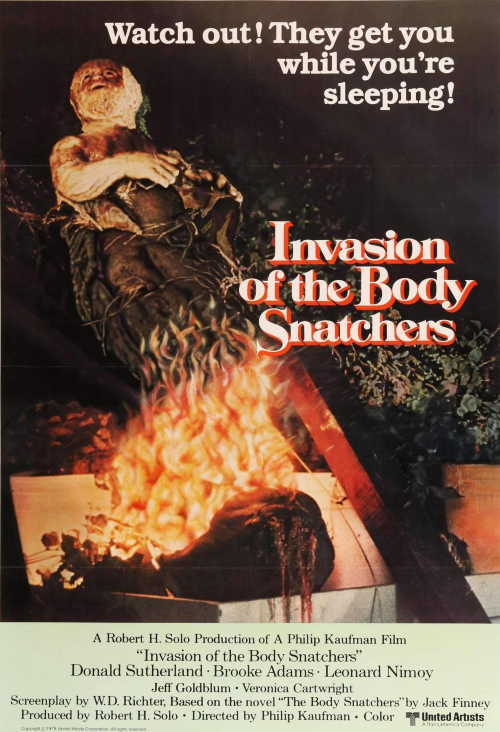
Syfy Wire presents Everything You Didn’t Know About Invasion of the Body Snatchers! I’ve enjoyed all versions a bit, but there’s no beating the original!
Previews and Reviews that are Z's Views
Syfy Wire presents Everything You Didn’t Know About Invasion of the Body Snatchers! I’ve enjoyed all versions a bit, but there’s no beating the original!

Today we have the Colin WIlson cover to the French graphic novel Du Plomb Dans La Tête written by Matz and illustrated by Colin Wilson. If you think the the tough-guy on the cover looks like Sylvester Stallone, you’d be right.
See, Du Plomb Dans La Tête was the basis for Stallone’s film Bullet to the Head.
What’s interesting to note is the character (that Sly ended up playing) from the original graphic novel was drawn to look a bit like Sly as Jack Carter. When Sly took on the role for Bullet to the Head, Walter Hill (the director) opted for a different look and Sly agreed. So in the movie Sly doesn’t look like Jack Carter but on the Du Plomb Dans La Tête cover he does.
And now you have the rest of the story (as Paul Harvey would say).

James Byron Huggins is back!
Long-time readers know Huggins best as the author of Hunter. Huggins wrote Hunter specifically for Sly Stallone (who bought the movie rights) in mind as the book’s hero. Stallone fans continue to hope that Sly will helm a movie version of Hunter under his Balboa Productions banner.
Huggins wasn’t a one-hit wonder. He also wrote The Reckoning, Cain, Leviathon, Rora, and other novels. (And I recommend each of them!) Huggins’ novels are a combination of thriller, action-adventure and horror. His skill at seamlessly combining the genres made Huggins an international best-selling novelist.
Huggins recently sat for a long interview where he discussed meeting Sly, writing Hunter and a whole lot more.

William Goldman, the two-time Oscar winning screenwriter, has died at age 87. Goldman won his Oscars for Best Original Screenplay (Butch Cassidy and the Sundance Kid) and Best Adapted Screenplay (All the President’s Men). Goldman was also the screenwriter for the beloved The Princess Bride (based on his novel), The Marathon Man, Misery and dozens of other movies.
Goldman began his career as a novelist and then moved to writing movies, plays and non-fiction. Goldman won two Edgar Awards, from the Mystery Writers of America, for Best Motion Picture Screenplay (for Harper starring Paul Newman and for Magic which he adapted from his novel). Mr. Goldman also received the Laurel Award for Screenwriting Achievement from the Writers Guild of America.
Our thoughts and prayers go out to Mr. Goldman’s family, friends and fans.
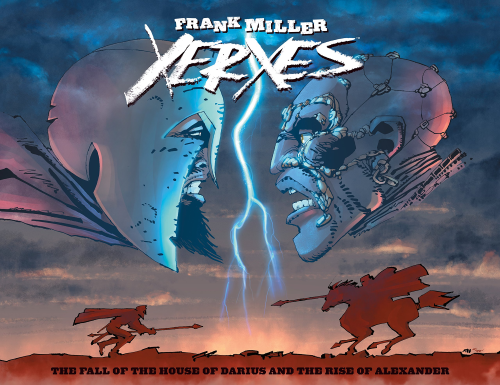
If you enjoyed Frank Miller’s graphic novel or the movie adaptation that followed, you may want to check out Xerxes: The Fall of Darius and the Rise of Alexander. That mouth full of title is Miller’s 300 sequel. Here’s the synopsis:
This historical epic, set in the world of 300, tells of the upsurge and decline of the Persian King’s empire, and the ascent of the Grecian realm through Alexander.
Written and illustrated by comics luminary and legend, Frank Miller (Sin City, The Dark Knight, 300), and colored by Alex Sinclair (Batman: The Dark Knight III: The Master Race), this companion to Miller’s epic masterpiece, 300, brings the historical story of Xerxes to the graphic novel audience with grit and visual style!
The ongoing Greek rebellion against Persian tyranny reaches a turning point after the destruction of the city of Sardis and the later battle of Marathon: on a military campaign to vanquish the city of Athens and silence the Greeks once and for all, Xerxes, Persian Prince, watches as his father, King Darius, falls in battle . . . The mantle of king is passed and while his newly-inherited fleet retreats toward home, Xerxes’ hatred is cemented toward Athens–and his incentive to build the Persian empire is fueled. Xerxes becomes the king of all countries–the king of Persia, ruler of Zion, and Pharoah of Egypt–and his empire is unlike any the world has ever seen, until . . . The mantle is again passed, the god king dies and Darius III continues as the king of all. But then, from the west, a tiger force strikes in Asia Minor and is on a course for collision with Persian forces. This will be the beginning of the end for Persia and the launch of Alexander the Great’s rise to power!
Xerxes: The Fall of Darius and the Rise of Alexander drops on March 5, 2019. But you can click on the link and get your order in now if you so desire.
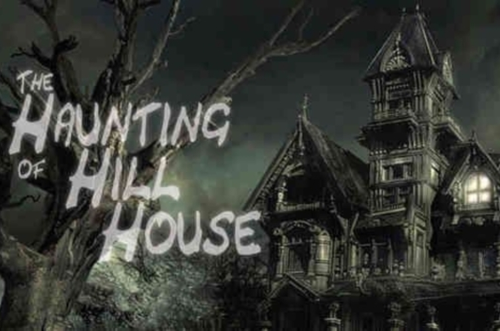
Anna Green and Mental Floss present 11 Chilling Facts About Shirley Jackson’s The Haunting of Hill House. Using just Green’s list, here are three of my favorites …
2. JACKSON HAD A TERRIFYING SLEEPWALKING EXPERIENCE WHILE WRITING THE NOVEL …
Early on in the writing process, Jackson awoke one morning to find something terrifying atop her writing desk: A note, with the words “DEAD DEAD” scrawled upon it, written in her own handwriting. Jackson, who loved ghost stories but did not believe in ghosts, brushed the strange discovery off as sleepwalking. In “Experience and Fiction,” she wrote that she used the strange note to motivate her, explaining, “I decided that I had better write the book awake, which I got to work and did.”
3. … AND MADE AN UNSETTLING DISCOVERY WHILE RESEARCHING HAUNTED HOUSES.
Before she began writing The Haunting of Hill House, Jackson scoured magazines and newspapers for photos of houses that seemed haunted. During her research, she stumbled upon a photo of a house in California that had a particular air of “disease and decay.” She was so struck by it, she asked her mother, who lived in California, if she could find any additional information about the house. Her mother’s response shocked Jackson: Not only was she familiar with the house, but Jackson’s own great-grandfather had built it. After standing empty for many years, the house had been set on fire—possibly by a group of townspeople.
11. THE NOVEL HAS A LOT OF FAMOUS FANS.
Stephen King, Neil Gaiman, Guillermo del Toro, and Carmen Maria Machado are all huge fans. Del Toro included Hill House in a series of six classic horror novels he curated for Penguin, Maria Machado called it “the scariest novel I’ve ever read,” and Neil Gaiman has written that, while plenty of novels have scared him, Hill House “beats them all.” Stephen King, meanwhile, has written that Hill House has one of the best openings he’s ever read, calling it “the sort of quiet epiphany every writer hopes for.”

The new Joe Ledger novel Deep Silence by Jonathan Maberry is set to drop on October 30th. Everything that Maberry writes is golden but his Ledger stories are the best of the best. I make it a point to be ready to read each one once it becomes available. I’m psyched for Deep Silence and here’s why…
Terrorists-for-hire have created a weapon that can induce earthquakes and cause dormant volcanoes to erupt. One terrifying side-effect of the weapon is that prior to the devastation, the vibrations drive ordinary people to suicide and violence. A wave of madness begins sweeping the country beginning with a mass shooting in Congress. Joe Ledger and his team go on a wild hunt to stop the terrorists and uncover the global super-power secretly funding them. At every step the stakes increase as it becomes clear that the end-game of this campaign of terror is igniting the Yellowstone caldera, the super-volcano that could destroy America.
Deep Silence pits Joe Ledger against terrorists with bleeding-edge science weapons, an international conspiracy, ancient technologies from Atlantis and Lemuria, and an escalating threat that could crack open the entire Earth.
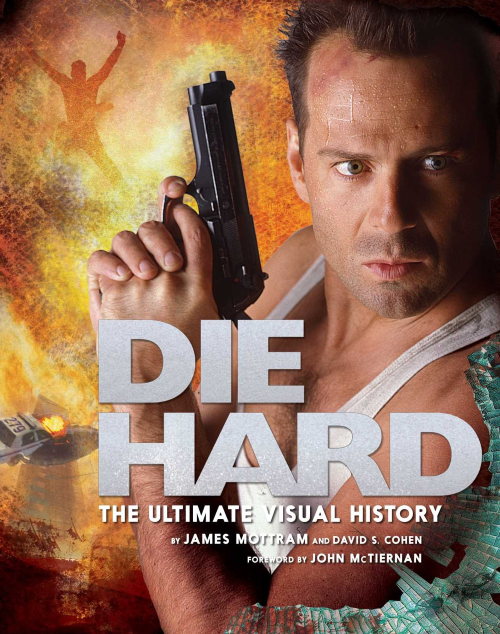
On November 13, 2018, Die Hard: The Ultimate Visual History will be released! Featuring a forward by Die Hard director John McTiernan and written by James Mottram and David S. Cohen, this book will live up to its title…
Yippee-ki-yay . . . Discover the explosive story behind the creation of the Die Hard saga in this visually stunning, behind-the-scenes look at the adventures of detective John McClane.
Thirty years after the release of the groundbreaking action film, Die Hard: The Ultimate Visual History takes an in-depth look at the entire Die Hard saga, from the original movie through to the hit sequels, comics, video games, and other extensions of hero John McClane’s story.
Loosely based on Roderick Thorp’s novel Nothing Lasts Forever, Die Hard, released in 1988, saw Moonlighting star Bruce Willis seamlessly make the transition from TV success to movie stardom in a film so taut, explosive, and full of suspense that it would come to define the action movie genre for decades to come. Directed by John McTiernan (Predator), Die Hard also starred revered British stage actor Alan Rickman who turned lead villain Hans Gruber into a presence so deliciously malevolent, audiences didn’t know whether to love him or hate him.
For the first time, Die Hard: The Ultimate Visual History tells the complete story of the making of Die Hard and its sequels, through exclusive interviews with the cast and crew of each film and a wealth of rare and unseen imagery, including set photography and concept art. Also exploring Die Hard comics, video games, and other merchandise, this book will tell the full story of the saga and its remarkable thirty-year legacy.
Follow this link to Amazon to see pages from the book and perhaps even place an order! Yippee-ki-yay, indeed!

Eric Beetner has a new novel coming out in January and I can’t wait. Beetner writes crime novels and I’ve never been disappointed by any of ’em. All the Way Down sounds like a pulp classic. Here’s the Amazon description:
Dale is a crooked cop. It started slow, but grew like a cancer and now he can’t get out from under the thumb of Tat, a would-be kingpin in every vice he can turn a profit with.
And now Dale’s number is up – the top brass knows. But instead of getting busted, Dale gets an offer. The mayor’s daughter is being held by Tat in his fortress built from an abandoned office tower. They want her back but if they storm the gates, Lauren is as good as dead. So they’re sending Dale on what could very likely be a suicide mission: infiltrate Tat’s fortress and bring her out alive.
If the Mayor even really wants her alive…
Floor by floor Dale and Lauren have to fight off an increasingly difficult and dangerous set of obstacles.
Meanwhile, Dale’s wife has her own troubles and some of the drug kingpin’s goons are only adding to an already rough day.
The clock is ticking down along with the floors of the building and escape is looking less and less likely. But to save her, and to save himself, he must make it all the way down.
If it sounds like something you’d like then you can be dealt in by clicking on this link and ordering from Amazon.
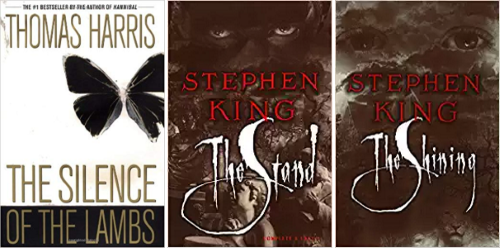
Steve Foxe and the Paste Staff recently posted their choices for The 50 Best Horror Novels of All Time. Here are three of my favorites…
22. The Silence of the Lambs by Thomas Harris (1988)
It’s a little odd getting around The Silence of the Lambs’ third-person present tense: “Starling looks down the corridor,” etc., but once you get used to it, it’s a device that ends up perfectly suiting the novel. The narrator’s impartial voice floats above the proceedings, never siding with one character or settling exclusively onto their perspective—at times, the third-person narration gives us glimpses into the minds of Clarice Starling, Hannibal Lecter and Buffalo Bill. What the novel also does particularly well is make us probe into the motivations and ambition of Starling, going beyond her desire to simply help people and catch a killer. Opposed at nearly every turn by the institutional roadblocks erected in the path of female FBI trainees, the reader can sense the desperation of Starling and her borderline selfish desire to stand out and prove herself to her entirely male superiors. You can also sense this is part of the reason that Lecter takes an interest in her, finding her ambitions an interesting character trait that he can use to wrap Starling around his finger. This is actually one of the cases where it’s helpful to have seen the film in advance, because you can read Lecter’s dialogue and imagine it being delivered by Sir Anthony Hopkins. That’s a damn good combination to make for a compelling reading experience. —Jim Vorel
19. The Stand by Stephen King (1978)
Stephen King’s magnum opus nearly didn’t make this countdown, fitting, as it does, more neatly into post-apocalyptic fiction or fantasy. At over 800 pages (more, if you’re reading the uncut edition), The Stand includes as much horror as any of King’s other novels, spurred by a viral outbreak that kills off 99.4% of the population. World-ending scenarios were on everyone’s minds in the ‘70s and ‘80s, as global tensions escalated and means of mass destruction proliferated. King isn’t content to simply explore a post-pandemic wasteland, though; The Stand is his most epic standoff between good and evil, the latter concept embodied by Randall Flagg, a recurring antagonist of King’s who becomes essential to the sprawling Dark Tower saga. Knowledge of that series isn’t necessary to undertake The Stand—just a month or so of dedicated reading time, and a hearty resistance to nightmares. —Steve Foxe
8. The Shining by Stephen King (1977)
For most modern readers, legendary director Stanley Kubrick’s stay at the Overlook Hotel looms large over Stephen King’s original novel. Nearly all of the moments lodged in the public consciousness—everything you’ve seen parodied on The Simpsons—are only in the film: the elevator of blood, the ghoulish twin girls, the typewriter, “Here’s Johnny!” Pushing past these iconic bits of pop culture reveals one of King’s greatest accomplishments, a hauntingly compelling look at a troubled man’s descent into madness. King’s novel is more sympathetic toward Jack Torrance, a recovering alcoholic writer (sound familiar?) trying to improve his family’s life by taking a job as caretaker of a remote off-season resort with a barely concealed violent history. The house wants Danny, Jack’s gifted young son, and puts the Torrance family through hell to get to him. King infamously hates Kubrick’s adaptation, and while it’s hard to debate the film’s quality or place in the horror movie pantheon, the novel is the more nuanced and, arguably, scarier version of the story, topiary monsters and all. —Steve Foxe

Tony Stella recently posted larger versions of these different covers for David Morrell’s First Blood.
The great thing is no matter what the cover looks like the novel is always great! Highest reccommendation!
Remember last year when George Romero announced his next zombie film, George Romero Presents Road of the Dead? While I was glad Romero was taking part in a new addition to his zombie films, I wasn’t thrilled with the concept which to me sounded like Death Race 2000 meets Dawn of the Dead.
Then in July of last year, Romero gave an interview talking up George Romero Presents Road of the Dead and more. Sadly, three days later he died.
Today at Comic-Con, IDW announced that Jonathan Maberry will write a 3 issue mini-series based on Romero’s Road of the Dead. Maberry is the perfect choice for this project having worked with Romero on Nights of the Living Dead anthology last year. That and the fact that Maberry is a fantastic writer.
In addition to Maberry writing the series, I was pleased to see that my pal, Drew Moss will be providing covers and interior art!
Source: Bleeding Cool.

Here’s the poster and trailer for Patient Zero… not to be confused with Jonathan Maberry’s Patient Zero a highly recommended novel of the same name.
You know I’m a sucker for a well-done zombie film. Patient Zero just might fit the bill.

Max Allan Collins is the subject of a video interview with Mr. Media. It’s worth a listen.

Gaby Triana conducted a very fun and informative interview with Jonathan Maberry that is more than worth a read.