Category: Books

12 Smooth Facts About “The Hustler”
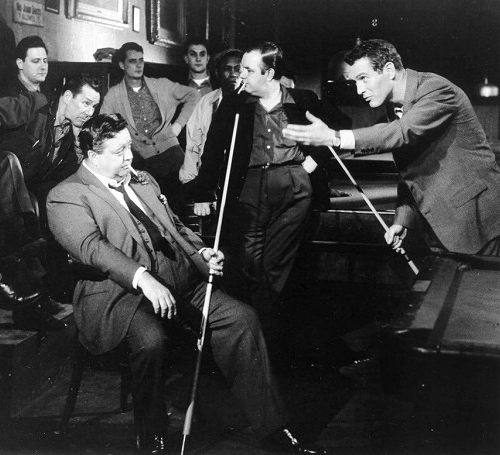
Eric D. Snider and Mental_Floss present 12 Smooth Facts About The Hustler  Here are three of my favorites

2. JACKIE GLEASON DID HIS OWN TRICK SHOTS, THANK YOU VERY MUCH.
The comedian, best known for playing working-class loudmouth Ralph Kramden on The Honeymooners (which he created), had grown up in Brooklyn. Like Rossen, Gleason mixed it up with neighborhood toughs and got to be a pretty good pool hustler. He required no assistance for his trick shots in the film, and Rossen always positioned the camera so we’d be able to see that for ourselves.

4. THERE WAS A REAL MINNESOTA FATS … BUT ONLY BECAUSE A GUY STARTED CALLING HIMSELF THAT AFTER THE MOVIE.
When the movie came out, Rudolf Wanderone was up there with Willie Mosconi as one of America’s best pool players. A hefty gentleman, Wanderone had several nicknames, including Double-Smart, New York Fats, and Chicago Fats. There was no Minnesota Fats; The Hustlernovelist Walter Tevis had made the character up. But in a promotional interview for the movie, Mosconi said Wanderone had been Tevis’s inspiration (which Tevis denied for the rest of his life, adamantly and with great annoyance). Wanderone seized the opportunity, perhaps flattering himself into thinking Tevis really had had him in mind. He embraced the nickname and declared himself the real Minnesota Fats for the rest of his career.

7. THE MOVIE ISN’T VERY LONG, BUT IT WAS WIDER THAN USUAL.
The Hustler was shot in Cinemascope, the widescreen technique that had been in use since 1953. But it was mainly used for lavish epics and colorful musicals, not black-and-white dramas set in dingy pool halls. Yet as film critic Michael Wood pointed out, Rossen used Cinemascope “to create an oppressive, elongated world in which ceilings always seem terribly low; and people terribly separate from each other; in one shot Newman is even separated from his own image in a mirror by the whole width of a very wide screen. It is a world in which the pool table seems the one natural shape, while human beings seem untidy intruders.” Neat, huh?
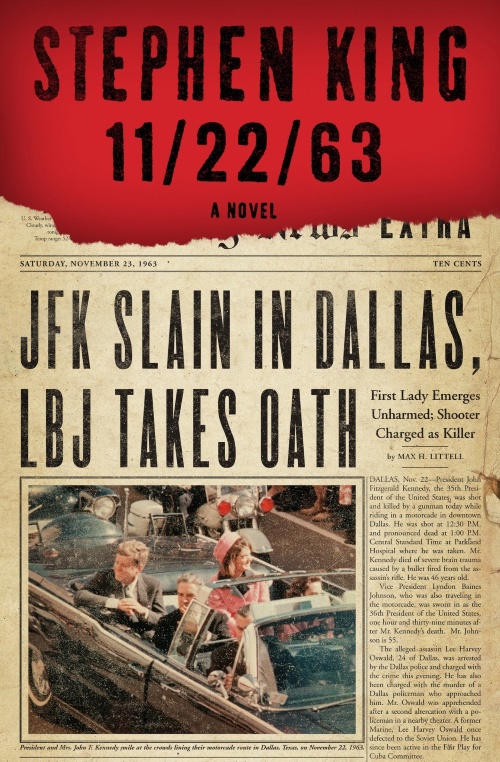
13 Judicious Facts About “To Kill a Mockingbird”

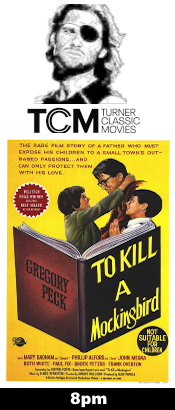
Eric D. Snider and Mental_Floss present 13 Judicious Facts About To Kill a Mockingbird Here are three of my favorites

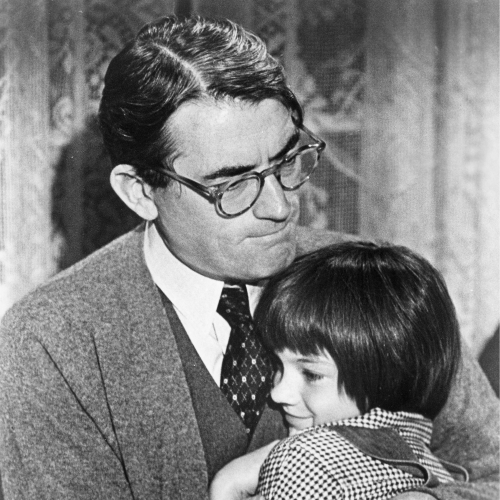
1. ROCK HUDSON ALMOST PLAYED ATTICUS FINCH.
Universal Pictures offered the role to Rock Hudson when the project was first being developed, and the actor was prepared to take it. Things stalled, however, when the film’s producer, Alan J. Pakula, wanted an even bigger star: Gregory Peck. Universal basically said, “Well, sure! If you can get Gregory Peck, we’ll not only agree to it, we’ll finance the movie!” And that’s what happened. Sorry, Rock.

3. GREGORY PECK WANTED TO CHANGE THE TITLE.
He wasn’t the only person who felt the phrase “to kill a mockingbird” didn’t accurately reflect the content of the story. He was the most influential, though, and he pushed for a change before he’d even read the screenplay. Lee’s literary agent, Annie Laurie Williams, was furious at the suggestion, and wrote to the publisher (who naturally wanted the bestselling book’s title to carry over) to assure him that Peck “has been signed to play the part of Atticus, but has no right to say what the title of the picture will be.” Mulligan and Pakula publicly stated that the title would remain intact, and Peck dropped the subject.

8. THERE’S A REASON THE MOVIE FOCUSES MORE ON ATTICUS THAN THE BOOK DOES, AND THAT REASON IS NAMED GREGORY PECK.
After seeing a rough cut of the film early in the summer of 1962, Peck sent a memo to his agent and to Universal execs listing 44 problems he had with it. What it boiled down to was that the children had too much screen time, Atticus not enough. “Atticus has no chance to emerge as courageous or strong,” Peck wrote. He said in a later memo, “In my opinion, the picture will begin to look better as Atticus’ story line emerges, and the children’s scenes are cut down to proportion.” Universal wanted the star to be happy, but Mulligan and Pakula’s contract had stipulated they’d get final cut. Still, they made more changes to appease Peck, deleting some of the children’s scenes in favor of Peck’s. In the end, the trial occupies some 30 percent of the film, despite being only about 15 percent of the book

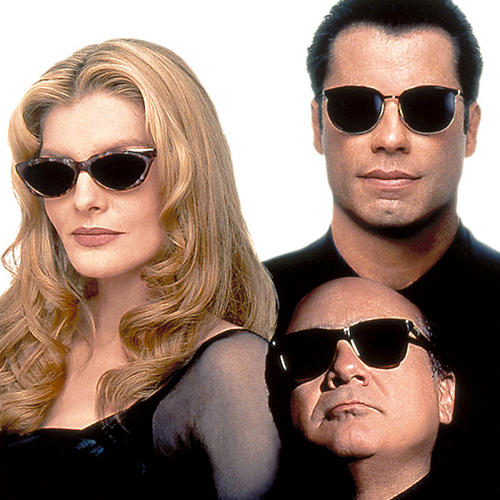
15 Fast-Talking Facts About “Get Shorty”

Roger Cormier and Mental_Floss present 15 Fast-Talking Facts About Get Shorty.  Here are three of my favorites

1. “SHORTY” WAS DUSTIN HOFFMAN.
Danny DeVito’s Martin Weir character was modeled after Dustin Hoffman, who Elmore Leonard dealt with when the actor expressed interest in an adaptation of the author’s LaBrava.Weir’s very specific food order at a restaurant was based on Hoffman ordering off-menu at a lunch meeting with Leonard. Hoffman suspected he was Shorty after the book came out.

3. QUENTIN TARANTINO CONVINCED TRAVOLTA TO PLAY PALMER.
Travolta said no to Sonnenfeld. Twice. His Pulp Fiction director convinced him to change his mind.

15. ELMORE LEONARD LOVED IT.
“Definitely, it’s the best adaptation I’ve had,” Leonard said at the time of its release. At that point, 12 of his books had been adapted into movies. He also said he never realized how funnyGet Shorty was until he saw the film.

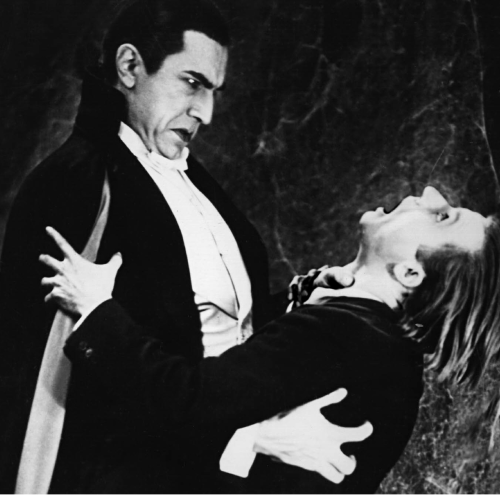
10 Blood-Curdling Facts About Dracula

Joy Lanzendorfer and Mental_Floss present 10 Blood-Curdling Facts About Dracula.  Here are three of my favorites

2. VAMPIRES SHARE A HISTORY WITH FRANKENSTEIN.
In 1816, on a gloomy day in Lake Geneva, Lord Byron proposed a ghost story contest that led to Mary Shelley writing Frankenstein. It was also the birth of The Vampyre by John Polidori, he first-ever vampire story written in English. Polidori was Byron’s personal physician and he may have based his aristocratic bloodsucker on his patient—which would make Lord Byron the basis for the bulk of vampire depictions that followed. (Other accounts say that Polidori stole a fragment of fiction that Byron wrote and used it in his story.) In any case, The Vampyreinfluenced Varney the Vampire, a popular penny dreadful from the 1840s, and Carmilla, a novella about a lesbian vampire from the 1870s, and, of course, Stoker.

3. STOKER STARTED WRITING DRACULA RIGHT AFTER JACK THE RIPPER.
Stoker began Dracula in 1890, two years after Jack the Ripper terrorized London. The lurid atmosphere these crimes produced made their way into Stoker’s novel, which was confirmed in the 1901 preface to the Icelandic edition of Dracula. Stoker’s reference links the two frightening figures in such a way that raises more questions than provides answers, but no doubt confirms the terrifying real-life influence on his fictional world.

9. IT WAS ALMOST CALLED THE UNDEAD.

Amandajm, Wikimedia Commons // Public Domain

The working title of the novel was The Dead Un-Dead, which was later shortened to The Undead. Then, right before it was published, Stoker changed the title once more to Dracula. What’s in a name? Well, it’s tough to say. Upon release, Dracula got good reviews, but it was slow to sell, and by the end of his life, Stoker was so poor that he had to ask for a compassionate grant from the Royal Literary Fund. The Gothic tale didn’t become the legend it is today until film adaptations began popping up during the 20th century.
13 Facts About L. Frank Baum’s Wonderful Wizard of Oz

Joy Lanzendorfer and Mental_Floss present 13 Facts About L. Frank Baum’s Wonderful Wizard of Oz.  Here are three of my favorites

1. BAUM FRAMED THE PENCIL HE USED TO WRITE THE NOVEL.
L. Frank Baum—former chicken rancher, traveling salesman, and theater manager—had already published two successful children’s books when he started The Wonderful Wizard of Oz in 1898. He finished the book in October 1899. He must have been proud of his work, for he framed the pencil stub and hung it on the wall of his study. On the attached paper he scrawled, “With this pencil I wrote the manuscript of The Emerald City.”

2. HE GOT THE NAME “OZ” FROM HIS FILING CABINET.
At first, Baum had trouble coming up with a name for the magical land Dorothy visits. Then one day he found himself looking at the filing cabinet in his study. There were three drawers marked “A to G,” “H to N,” and “O to Z.” And so Oz was born.

9. THE BOOK SOLD OUT IN TWO WEEKS.
Full distribution began in August. According to the publisher, the first printing of 10,000 copies sold out in two weeks, followed by a second printing of 15,000 and a third printing of 10,000. In November, there was a fourth printing of 30,000 and in January, a fifth printing of 25,000. That’s 90,000 books in the first six months. The Wonderful Wizard of Oz remained a bestseller for two years.

11 Books That Scared the Master of Horror, Stephen King

Amy Sachs and Bustle present 11 Books That Scared the Master of Horror, Stephen King.

I haven’t read any of ’em.  There are a few on King’s list I will want to check out.  Truth be told, I’m still working my way through about four book cases full of books to be read… with more than a couple by Stephen King.  (Of course there’s always room for another books to be read book case — just don’t tell my wife.)

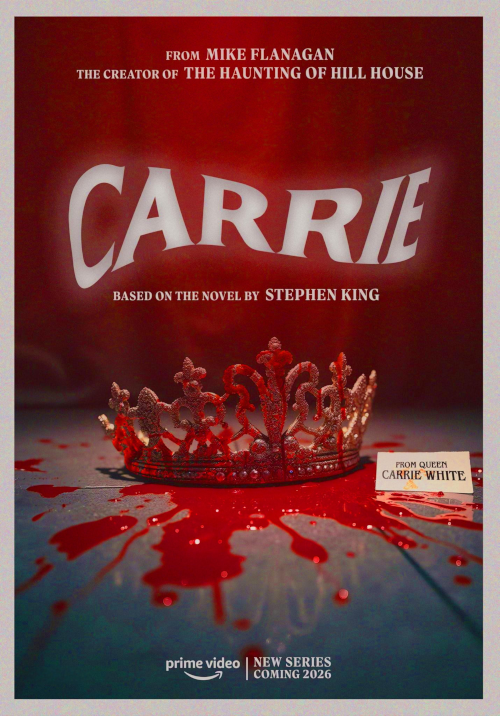
15 Creepy Facts About “Carrie”

Jennifer M. Wood and Mental_Floss present 15 Creepy Facts About Carrie.  Here are three of my favorites… [Beware of Spoilers!]

5. THE STARS OF CARRIE COULD HAVE BEEN THE STARS OF STAR WARS.
Brian De Palma ended up casting for Carrie at the same time his good friend George Lucas was doing the same for a little sci-fi film he was making called Star Wars. So the two made the rather unorthodox decision to hold joint auditions, which ended up becoming a bit confusing. De Palma liked Amy Irving for the lead in Carrie, but she was also considered for Princess Leia in Star Wars. William Katt also auditioned for Star Wars, alongside Kurt Russell.

7. BRIAN DE PALMA DIDN’T SEE SISSY SPACEK AS CARRIE.
Though De Palma was a fan of Spacek’s work, he was convinced that he had already found his Carrie in another actress. His decision to let Spacek audition at all was mostly out of courtesy to her husband, Jack Fisk, the film’s art director. “He told me that if I wanted to, I could try out for the part of Carrie White,” Spacek recounted to Rolling Stone. “There was another girl that he was set on and unless he was really surprised, she was the one. I hung up and decided to go for it.”

Spacek showed up at her audition in an old dress she hadn’t worn since grade school and with her hair slicked back with Vaseline. When she was done, she waited in the parking lot while her husband reviewed her audition with the rest of the production team. After Fisk came out to tell her that the part was hers, “We sped off before anybody could change his mind,” Spacek said.

13. SPACEK LOVED TO WITNESS MOVIEGOERS’ REACTIONS TO THE ENDING.
“When I was in New York, and Carrie came out, I would go to theaters just for the last five minutes of the film to watch everyone jump out of their chairs,” Spacek recalled. “People are all relaxed. The music is really beautiful and relaxing, and all of a sudden that comes up, and people just go crazy.” [I saw Carrie at a midnight movie during the original theatrical release and had no  idea of the shocking ending.  I jumped out of my seat and probably scared others around me worse than the movie. – Craig]

Max Allan Collins’ Interview: Nate Heller, Batman, Quarry, Wild Dog and More!

Max Allan Collins is one of my favorite novelists.  Collins’ Nathan Heller historical novels are buy-as-soon-as-they-come-out must reads.

Collins discusses…

  • the soon to be released trade for Wild Dog [co-created with artist Terry Beatty]
  • Ms. Tree [also co-created with Terry Beatty]
  • the upcoming Quarry tv show [based on Collins’ hitman Quarry novels]