Category: Horror
10 Blood-Curdling Facts About Dracula

Joy Lanzendorfer and Mental_Floss present 10 Blood-Curdling Facts About Dracula.  Here are three of my favorites

2. VAMPIRES SHARE A HISTORY WITH FRANKENSTEIN.
In 1816, on a gloomy day in Lake Geneva, Lord Byron proposed a ghost story contest that led to Mary Shelley writing Frankenstein. It was also the birth of The Vampyre by John Polidori, he first-ever vampire story written in English. Polidori was Byron’s personal physician and he may have based his aristocratic bloodsucker on his patient—which would make Lord Byron the basis for the bulk of vampire depictions that followed. (Other accounts say that Polidori stole a fragment of fiction that Byron wrote and used it in his story.) In any case, The Vampyreinfluenced Varney the Vampire, a popular penny dreadful from the 1840s, and Carmilla, a novella about a lesbian vampire from the 1870s, and, of course, Stoker.

3. STOKER STARTED WRITING DRACULA RIGHT AFTER JACK THE RIPPER.
Stoker began Dracula in 1890, two years after Jack the Ripper terrorized London. The lurid atmosphere these crimes produced made their way into Stoker’s novel, which was confirmed in the 1901 preface to the Icelandic edition of Dracula. Stoker’s reference links the two frightening figures in such a way that raises more questions than provides answers, but no doubt confirms the terrifying real-life influence on his fictional world.

9. IT WAS ALMOST CALLED THE UNDEAD.

Amandajm, Wikimedia Commons // Public Domain

The working title of the novel was The Dead Un-Dead, which was later shortened to The Undead. Then, right before it was published, Stoker changed the title once more to Dracula. What’s in a name? Well, it’s tough to say. Upon release, Dracula got good reviews, but it was slow to sell, and by the end of his life, Stoker was so poor that he had to ask for a compassionate grant from the Royal Literary Fund. The Gothic tale didn’t become the legend it is today until film adaptations began popping up during the 20th century.

9 Celebrities Reading Edgar Allan Poe’s “The Raven”

Today we have a trick and some treats thanks to Andrew LaShane and Mental_Floss who present 9 Celebrities Reading Edgar Allan Poe’s The Raven.

The celebrities are Christopher Walken, James Earl Jones, Sir Christopher Lee, Vincent Price, Stan Lee, John Astin, Basil Rathbone, William Shatner and Tay Zonday.

What, what’s the trick you ask?  Well, the art above shows Sylvester Stallone as Poe, but Sly isn’t one of the celebs reading The Raven.  [No wisecracks about that’s a treat, please.]

The treat then?  Vincent Price’s reading embedded below!

The Top 32 Horror Comedies of All Time

Den of Geek posted their choices for The Top 32 Horror Comedies of All Time.

Of the 32 films they selected, I’ve seen eighteen.  Here they are with my thoughts on each…

  1. Spook Busters (1946): The Bowery Boys always felt to me like they wanted to grow up and be Abbott and Costello.  Still, I enjoyed their films as a kid and this was a fun one… as Bowery Boys movies go.

  2. Fearless Vampire Killers or Pardon Me, But Your Teeth Are in My Neck (1967): I can’t tell you how many times over the years I’ve tried to watch this one all the way through.  I’ve never made it yet.

  3. Fright Night (1985): Now we’re cooking!  I liked the mix of comedy and horror in this one!

  4. Attack of the Killer Tomatoes (1978): I’ve always thought this was too stupid to be more than a Saturday Night Live skit.  Of course the cult popularity proves me wrong.

  5. Cabin in the Woods (2012): What an inventive, crazy movie!  I want to see it again!

  6. Scream (1996): I really got a kick at how it took all the horror cliches and winked at the audience as they played out.

  7. Phantom of the Paradise (1974): This is another one that I’ve never been able to get through.

  8. The Rocky Horror Picture Show (1975): I saw this at a Midnight Showing with an audience armed with all the props.  A bit too kinky for me then and now.

  9. Shaun of the Dead (2004): I like my zombie stories serious but I really like Shaun of the Dead!

  10. Arachnophobia (1990): I’ve only seen this once but I really liked it much more than I thought I would.  I’d like to see it again to see if it holds up.

  11. Monsters Inc. (2001): This is a fun one.

  12. Beetlejuice (1988): Who doesn’t like Beetlejuice?

  13. The Lost Boys (1987): I liked The Lost Boys, but think it’s a bit over-rated.

  14. Ghostbusters (1984): This is one I don’t care for.

  15. Young Frankenstein (1974): Arguably the best film on the list.

  16. Zombieland (2009): Even better than Shaun of the Dead!

  17. Abbott and Costello Meet Frankenstein (1948): Perhaps the best movie on the list!

  18. An American Werewolf in London (1981): I’m not a fan, but most folks are.

14 “Dark Shadows” Facts with Bite

Jake Rosen and Mental_Floss present 14 Dark Shadows Facts with Bite.  Here are three of my favorites

1. BARNABAS COLLINS WAS AN AFTERTHOUGHT.
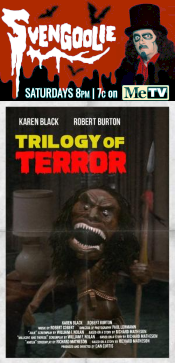
Creator Dan Curtis—who would later conceive of The X-Files predecessor Kolchak: The Night Stalker and the classic TV movie Trilogy of Terror—originally had in mind a dramatic series about the strange residents of Collinsport, Maine, as viewed from the perspective of newly-arrived governess Victoria Winters. Though mystical elements—like ghosts—were present, they were subtle and slow to materialize. When the show premiered June 27, 1966, viewers found its characters as impenetrable as Winters did; Variety called it a “yawn.”

Hoping to improve ratings with a classic horror movie trope—a vampire—Curtis introduced Collins, a brooding bloodsucker tortured by his condition. Originally intended to be a fleeting character who would be staked in the heart after a three-week run, he became so popular with viewers (ratings saw a 62 percent increase) that the show was saved from the guillotine.

6. BARNABAS DIDN’T TALK MUCH WHILE FANGED.
Dampened vocally by the fangs he had to wear, Frid also told the Gazette of some production trickery: Collins was rarely filmed talking in them. “My words come out slushy when I wear them, so they have to cut away from me when I talk,” he said. Frid would spit out the fangs, deliver the dialogue, then stuff them back in when the camera returned to him.

10. IT’S THE ONLY SOAP TO SPAWN THREE FEATURE FILMS.
It’s a testament to Dark Shadows‘ rabid following that the series birthed two feature films with the original cast—virtually unheard of for a soap opera of any era. Curtis directed 1970’sHouse of Dark Shadows, which covered much of the same ground as the series but morphedCollins into more of an antagonist. While a feature budget meant actors actually had the privilege of doing more than one take, reviews were mixed.

After the series ended in 1971, Curtis wanted to continue the story with another film. Night of Dark Shadows was released that same year, but Frid declined to participate. Curtis opted for more of a haunted house theme instead, with the show’s cast popping up in different roles. It’s been alleged MGM cut 30 minutes from the finished film, obliterating some plot and character details. In its released form, reviewers found it “dull,” “monotonous,” and “a bore.” (Tim Burton’s 2012 feature, starring Johnny Depp as Collins, didn’t fare much better.)

12 Spine-Tingling Facts About “Tales From the Crypt”

Jake Rosen and Mental_Floss present 12 Spine-Tingling Facts About Tales From the Crypt.  Here are three of my favorites

1. LETHAL WEAPON IS PARTLY RESPONSIBLE FOR THE SHOW.
Producer Joel Silver was on the set of 1987’s Lethal Weapon when he and director Richard Donner began talking about Silver’s failed attempts to adapt Tales from the Crypt as a feature film: the disappointing reception to 1983’s Twilight Zone: The Movie and 1982’s Creepshowhad lessened enthusiasm for horror anthologies. Unmoved by those failures, Donner said he’d be interested in joining the project. When the series idea was brought to HBO, they were intrigued that so many feature film talents were backing the idea. When Zemeckis—who was working with Silver on 1988’s Who Framed Roger Rabbit?—got involved, the network agreed to move forward with the show.

4. IT BROUGHT HUMPHREY BOGART BACK FROM THE DEAD.
Zemeckis’s involvement often meant that Tales from the Crypt would take any opportunity to explore new techniques for visual effects. In the episode “You, Murderer,” a career criminalmurdered by his wife and best friend posthumously narrates the events leading up to his demise. When the character looks in the mirror—the show takes place from his POV—viewers see the resurrected features of Humphrey Bogart. Zemeckis used footage from Casablanca,The Maltese Falcon, and other Bogart films to capture footage and digitally insert it into the frame. During wraparounds, the Crypt Keeper also converses with a seemingly above-ground Alfred Hitchcock.

6. TWO VERSIONS OF EACH EPISODE WERE SHOT.
For Zemeckis, Donner, and the rest of the show’s high-profile producers, the financial payoff was always thought to be a move to syndication. Because HBO was more permissive in terms of content, they needed to prepare for an eventual screening on broadcast TV stations. WhenTales from the Crypt was bought by Fox for a late-night Saturday slot in 1994, the episodes were re-edited to include alternate takes that eliminated most of the original episodes’ gore and nudity. The show also had actors loop non-profane dialogue during shooting. While HBO normally values exclusivity, it didn’t mind the deal: uncut episodes were still an attraction and, as one executive pointed out, “The show is called HBO’s Tales From the Crypt.” Free advertising never hurt.

26 Things We Learned from the “An American Werewolf in London” Commentary

Rob Hunter and Film School Rejects present 26 Things We Learned from the An American Werewolf in London Commentary.  Here are three of my favorites

9. Landis threatened to relocate the film to Paris after British Actors’ Equity balked about Dunne’s role not going to a member. The director actually went so far as to scout locations in France, but Equity backed down and allowed Dunne. Had he moved the production Landis already planned to re-title the film An American Werewolf in Paris. We really dodged a bullet there huh?

20. Dunne wonders why the film never used Warron Zevon’s “Werewolf of London” song, but they still don’t know. Naughton does recall that the filmmakers asked Cat Stevens for permission to use “Moonshadow” only to be told no “because he believed that werewolves really existed.”

26. They recall telling Landis that the lack of silver bullets used to kill David meant this could become a franchise. The director told them in no uncertain terms that there would be no sequel.

Classic Universal Monsters by Nicolas Delort

Nicolas Delort created the very cool Wolf Man poster above.  It is just one of seven prints featuring the famous and much-loved classic Universal Monsters [Wolf Man, Frankenstein, Bride of Frankenstein, Dracula, The Creature from the Black Lagoon, The Invisible Man and The Mummy].

Delort’s art for each of the Universal Monsters has been made into prints that are available from Dark Hall Mansion.

Source: io9.

13 Spooky Facts About “The Monster Squad”

Mark Mancini and Mental_Floss present 13 Spooky Facts About The Monster Squad.  Here are three of my favorites

3. THE CREATURE DESIGNERS WORKED HARD TO AVOID LEGAL PROBLEMS WITH UNIVERSAL.
First and foremost, The Monster Squad is an affectionate tribute to Universal’s iconic horror movies of the 1930s, ‘40s, and ‘50s. Nevertheless, the studio passed on producing the film, which was ultimately picked up by TriStar. This forced The Monster Squad’s visual effects team to get creative.

“Although we were doing a movie that was a takeoff on the Universal classics,” said legendary monster creator Stan Winston, “… none of our designs infringed on the original designs of the Universal characters. There were subtle changes; we had to be sure that nothing about them could be considered a copyright infringement of a design.” Which is why Dracula has no Lugosi-esque widow’s peak, Frankenstein monster’s neck bolts have migrated to his temples, and Wolfman has pointy ears and a face that Dekker describes as “more lupine” than what Universal had come up with.

8. DUNCAN REGEHR BEAT OUT LIAM NEESON FOR THE ROLE OF DRACULA.
In 1986, Liam Neeson was still a relative unknown and, like many struggling actors, decided to try out for a horror movie. Apparently, he nailed his audition with a superb take on the Count. “We thought for sure we [were] going to hire this guy,” producer Jonathan Zimbert revealed inMonster Squad Forever. “Then Duncan came in and was not only as brilliant, but he was terrifying also.” Twenty years later, Wizard magazine named Regehr the “greatest Dracula of all time” for his chilling performance in The Monster Squad.

12. THE MOVIE SPENT JUST TWO WEEKS IN THEATERS.
Released on August 14, 1987, The Monster Squad was both a commercial and critical flop.Vincent Camby of The New York Times called it “a silly attempt to cross breed an Our Gangcomedy with a classic horror film, which usually means that both genres have reached the end of the line.” After a two-week theatrical run, the movie was pulled. However, it slowly built a following via video rentals and cable broadcasts.

Today, The Monster Squad commands a dedicated fan base. When the cast and crewreunited for a special two-night showing at Austin’s Alamo Drafthouse Cinema in 2006, both screenings sold out. As Dekker once put it, “It took 20 years for the movie to find its audience.”

The Other Frankenstein Monster: The Strange Fate of Glenn Strange

Quick, name the famous actor in the photo above who played Frankenstein.

Nope, it’s not Boris Karloff.  Try again.  No, he’s not Lon Chaney, Jr..  Try again.  No, it’s not Bela Lugosi either.  The actor playing Frankenstein in the photo above is Glenn Strange.

Although Glenn Strange played the Frankenstein monster three times (tying Karloff’s record), most folks seldom think of Glenn Strange when they think of Frankenstein.  In a career that spanned over 300 roles in 43 years, Strange was best known as Sam the Bartender on Gunsmoke.

If you’ve read this far, you’ll enjoy the short piece by Jim Knipfel titled The Other Frankenstein Monster: The Strange Fate of Glenn Strange at Den of Geek.

11 Books That Scared the Master of Horror, Stephen King

Amy Sachs and Bustle present 11 Books That Scared the Master of Horror, Stephen King.

I haven’t read any of ’em.  There are a few on King’s list I will want to check out.  Truth be told, I’m still working my way through about four book cases full of books to be read… with more than a couple by Stephen King.  (Of course there’s always room for another books to be read book case — just don’t tell my wife.)

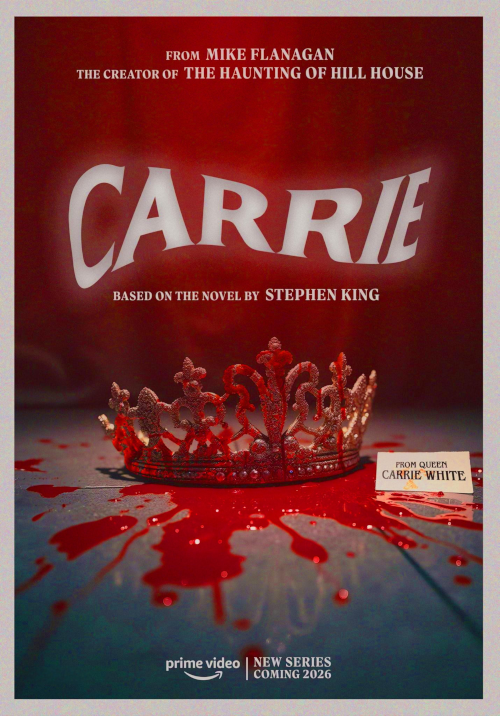
15 Creepy Facts About “Carrie”

Jennifer M. Wood and Mental_Floss present 15 Creepy Facts About Carrie.  Here are three of my favorites… [Beware of Spoilers!]

5. THE STARS OF CARRIE COULD HAVE BEEN THE STARS OF STAR WARS.
Brian De Palma ended up casting for Carrie at the same time his good friend George Lucas was doing the same for a little sci-fi film he was making called Star Wars. So the two made the rather unorthodox decision to hold joint auditions, which ended up becoming a bit confusing. De Palma liked Amy Irving for the lead in Carrie, but she was also considered for Princess Leia in Star Wars. William Katt also auditioned for Star Wars, alongside Kurt Russell.

7. BRIAN DE PALMA DIDN’T SEE SISSY SPACEK AS CARRIE.
Though De Palma was a fan of Spacek’s work, he was convinced that he had already found his Carrie in another actress. His decision to let Spacek audition at all was mostly out of courtesy to her husband, Jack Fisk, the film’s art director. “He told me that if I wanted to, I could try out for the part of Carrie White,” Spacek recounted to Rolling Stone. “There was another girl that he was set on and unless he was really surprised, she was the one. I hung up and decided to go for it.”

Spacek showed up at her audition in an old dress she hadn’t worn since grade school and with her hair slicked back with Vaseline. When she was done, she waited in the parking lot while her husband reviewed her audition with the rest of the production team. After Fisk came out to tell her that the part was hers, “We sped off before anybody could change his mind,” Spacek said.

13. SPACEK LOVED TO WITNESS MOVIEGOERS’ REACTIONS TO THE ENDING.
“When I was in New York, and Carrie came out, I would go to theaters just for the last five minutes of the film to watch everyone jump out of their chairs,” Spacek recalled. “People are all relaxed. The music is really beautiful and relaxing, and all of a sudden that comes up, and people just go crazy.” [I saw Carrie at a midnight movie during the original theatrical release and had no  idea of the shocking ending.  I jumped out of my seat and probably scared others around me worse than the movie. – Craig]