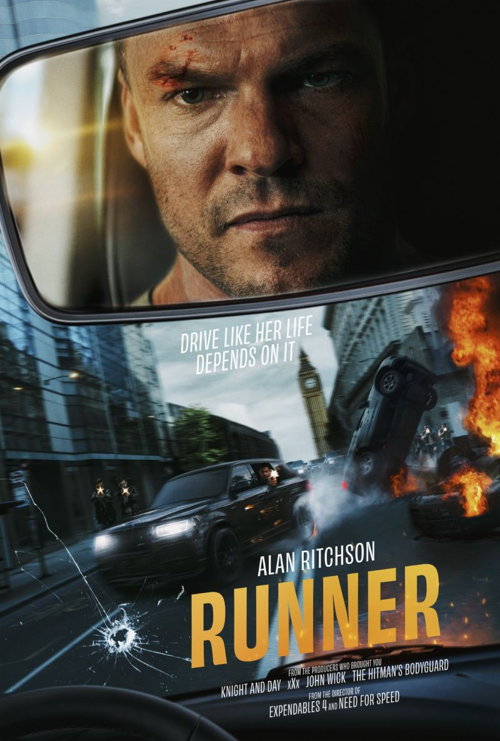
The “Bird Box” Poster and Trailer are Here!
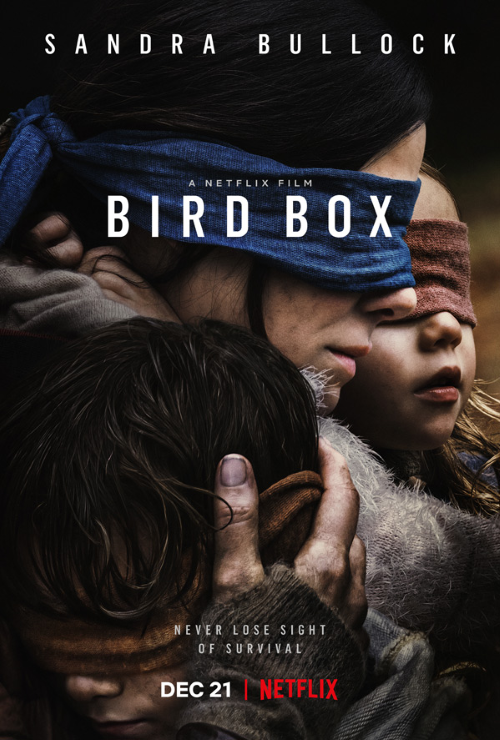
Bird Box looks interesting enough that I plan to check it out.
Previews and Reviews that are Z's Views
Bird Box looks interesting enough that I plan to check it out.
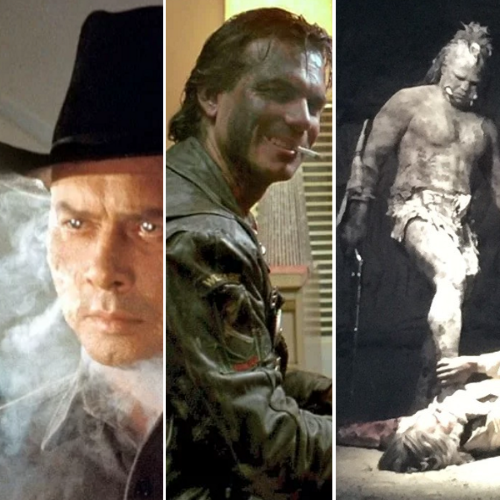
Brad Gullickson and Film School Rejects present The 10 Wildest Horror Westerns. I have to admit, at first I thought, “Have there been 10 worthy horror westerns?” – then I saw Gullickson’s list and agreed there have. So using just Gullickson’s list, I selected three and made sure that they met the western criteria and were scary. So here are three of my favorites …
Westworld (1973)
Set in the future (at the time of its release), Westworld slips into the horror western genre by a technicality. See the monster is a robot cowboy that has gone on a killing spree. Boy, rereading that sentence, Westworld sounds stupid. But it’s not. It’s actually a very entertaining film — especially to the 15 year old me who loved seeing it on the big screen. And have no worries, it holds up well.
Near Dark (1987)
A modern western with a vampire twist. I love Near Dark. It was great to see Aliens cast mates reunited. How cool is it to imagine a family of vampires some who turned during the Civil War, traveling the modern day west and doing what vampires do best. Wrap in a love story, a father’s quest to save his son and a vampire turned as a child who will forever have the child’s body but an adult’s desires and you have one heck of a horror-western!
Bone Tomahawk (2015)
Some may argue that Bone Tomahawk isn’t a horror film. Those that do haven’t seen the movie. What’s scarier than cannibalistic Troglodytes? Nothing. And if you think we’re splitting hairs to get Bone Tomahawk classified as a horror film, then watch it and see what Troglodytes split.
A couple more comments…
High Plains Drifter (1973) – Is one of my least favorite Eastwood movies. And while it does meet the criteria to be a western/horror film, it only does so by the thinnest of margins being a western with an avenging ghost… that’s not scary.
Ravenous (1999) – Is a strange hybrid. A western set in the 1840’s with a few cannibals. Well, one main one anyway. It’s a good movie… but definitely different.
The Valley of the Gwangi (1969) – 10 year old me saw this at a drive-in and loved it! How could I not, I had to be the demographic it was aiming for — Cowboys and Dinosaurs!! Sad to say I saw it years later and it had lost some of it’s coolness. Ok, a lot of it’s coolness.
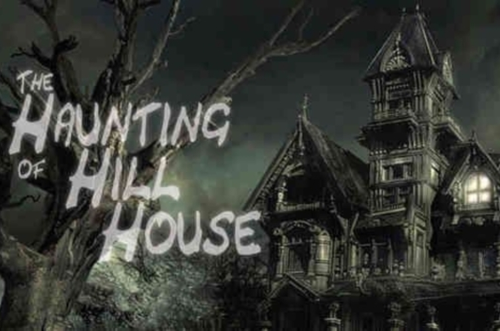
Anna Green and Mental Floss present 11 Chilling Facts About Shirley Jackson’s The Haunting of Hill House. Using just Green’s list, here are three of my favorites …
2. JACKSON HAD A TERRIFYING SLEEPWALKING EXPERIENCE WHILE WRITING THE NOVEL …
Early on in the writing process, Jackson awoke one morning to find something terrifying atop her writing desk: A note, with the words “DEAD DEAD” scrawled upon it, written in her own handwriting. Jackson, who loved ghost stories but did not believe in ghosts, brushed the strange discovery off as sleepwalking. In “Experience and Fiction,” she wrote that she used the strange note to motivate her, explaining, “I decided that I had better write the book awake, which I got to work and did.”
3. … AND MADE AN UNSETTLING DISCOVERY WHILE RESEARCHING HAUNTED HOUSES.
Before she began writing The Haunting of Hill House, Jackson scoured magazines and newspapers for photos of houses that seemed haunted. During her research, she stumbled upon a photo of a house in California that had a particular air of “disease and decay.” She was so struck by it, she asked her mother, who lived in California, if she could find any additional information about the house. Her mother’s response shocked Jackson: Not only was she familiar with the house, but Jackson’s own great-grandfather had built it. After standing empty for many years, the house had been set on fire—possibly by a group of townspeople.
11. THE NOVEL HAS A LOT OF FAMOUS FANS.
Stephen King, Neil Gaiman, Guillermo del Toro, and Carmen Maria Machado are all huge fans. Del Toro included Hill House in a series of six classic horror novels he curated for Penguin, Maria Machado called it “the scariest novel I’ve ever read,” and Neil Gaiman has written that, while plenty of novels have scared him, Hill House “beats them all.” Stephen King, meanwhile, has written that Hill House has one of the best openings he’s ever read, calling it “the sort of quiet epiphany every writer hopes for.”
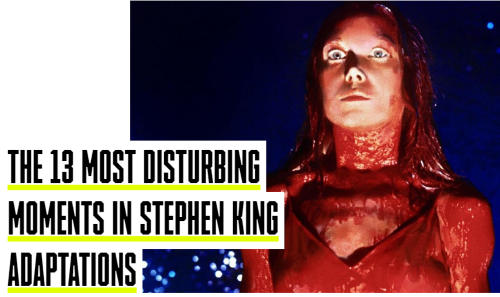
Sharon Knolle and SyFy Wire present: The 13 Most Disturbing Moments in Stephen King Adaptations. You know how this game is played: Using just Knolle’s list, here are my top three (beware for spoilers follow) …
3. Salem’s Lot (1979): “Let me in!”
If you’ve seen the 79 adaptation of Salem’s Lot, then you know the scene. Our young hero, Mark, is in bed on a foggy night mourning the death of his friend Danny. Slowly out of the fog Danny floats up to Mark’s bedroom window and repeatedly scratches on the glass with an evil smile. Oh, and did I mention that the bedroom is on the second floor?
2. Carrie (1976): “Do it!”
I’m changing the game just a bit. Knolle picks the classic horror film Carrie and the pig killing scene. I agree with the choice of the movie, but I’ll take a different scene, if you don’t mind. See, I saw Carrie at a midnight movie during it’s first release. I had just turned 18 and was there with my girlfriend. I’ve always been one who jumped a lot during scary movies, but being a young man with a girl to impress, I had to stay cool… macho. I’m proud to say I made it through Carrie without embarrassing myself. We were at the last scene, Carrie’s friend was laying flowers on her grave and soon credits would roll.Then Carrie’s hand suddenly shot out of the fresh grave and grabbed her friend’s wrist. I let out a scream (a manly scream I assure you) and nearly jumped out of my seat and into the row behind me. That disturbs me to this day.
1. The Mist (2007): That ending
The ending of The Mist stayed with me for a long while. Although it was a bold choice, I didn’t like it on my first viewing as much as I’ve grown to. Now, I believe that the decision to go with the ending selected is one of the reasons the movie is so powerful.David, his young son, and three others have faced monsters and murderous people and survived. Their hope was to drive out of the mist and to safety. Sadly their car runs out of gas and they’re still in the mist surrounded by monsters. To leave the car will bring the monsters and certain death. To stay in the vehicle means a slow death by starvation. David has a gun with 4 bullets. The adults agree a fast death by bullet is the best alternative. David kills all four including his sleeping son, but has no bullet left for himself. He leaves the car expecting a painful death from a monster when he hears… and then sees army vehicles breaking through the fog with other survivors. If they’d just held on for a few more minutes…
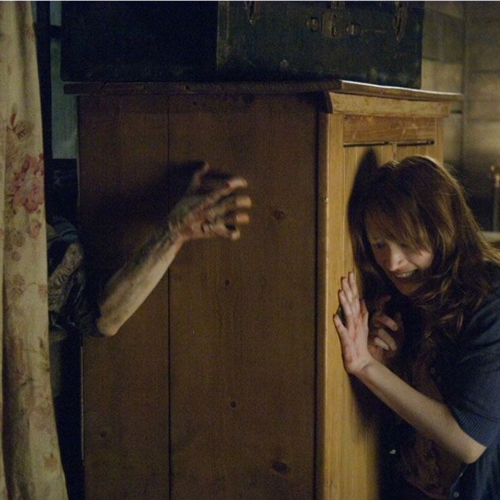
Scott Beggs and Mental Floss present 10 Twisted Facts About The Cabin in the Woods. If you haven’t seen The Cabin in the Woods, you’re in for a treat. It is one of the most unusual horror films in recent years. I loved how it was able to hit all of the expected genre cliches in a totally unexpected way. With that said, here are three of my favorite Twisted Facts About The Cabin in the Woods.
1. THE OPENING SCENE WAS MEANT TO CONFUSE AUDIENCES.
“Opening the movie with this scene is one of my favorite things that we accomplished,” co-writer/producer Joss Whedon said in the DVD commentary about the early sequence where Bradley Whitford and Richard Jenkins chit-chat in a hallway about childproofing cabinets and an office betting pool. They purposefully wanted people to think they’d sat down for the wrong movie and had to convince the studio that people wouldn’t walk out.
5. DREW GODDARD AND JOSS WHEDON MADE IT AS A “LOVING HATE LETTER.”
The reason The Cabin in the Woods works for horror fans and non-fans alike is that it hews closely to the classic rules for the genre to deliver the scares, but also mocks them mercilessly. Whedon saw it as both an exercise in how much fun they could have (they wrote it over a single weekend) and as a serious critique of a genre they loved that had descended under a wave of needless torture and stupid characters crafted solely to be killed in terrible ways.
8. THE FULL LIST OF MONSTERS INCLUDES A NOD TO SIN CITY.
There are too many baddies to name here (so here’s a list), but among the witches, sexy witches, mermen, and unicorns, there’s Kevin. He’s a kind-seeming dude who might show you where the movie section is in Best Buy but dismembers people during his time off. It’s possible that he’s a reference to the relaxed, quietly sadistic slasher played by Elijah Wood in the movie version of Sin City.

The new Joe Ledger novel Deep Silence by Jonathan Maberry is set to drop on October 30th. Everything that Maberry writes is golden but his Ledger stories are the best of the best. I make it a point to be ready to read each one once it becomes available. I’m psyched for Deep Silence and here’s why…
Terrorists-for-hire have created a weapon that can induce earthquakes and cause dormant volcanoes to erupt. One terrifying side-effect of the weapon is that prior to the devastation, the vibrations drive ordinary people to suicide and violence. A wave of madness begins sweeping the country beginning with a mass shooting in Congress. Joe Ledger and his team go on a wild hunt to stop the terrorists and uncover the global super-power secretly funding them. At every step the stakes increase as it becomes clear that the end-game of this campaign of terror is igniting the Yellowstone caldera, the super-volcano that could destroy America.
Deep Silence pits Joe Ledger against terrorists with bleeding-edge science weapons, an international conspiracy, ancient technologies from Atlantis and Lemuria, and an escalating threat that could crack open the entire Earth.
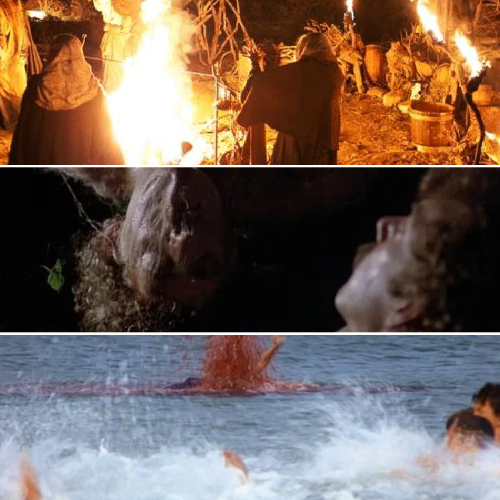
Jacob Trussell and FilmSchoolRejects present The 10 Scariest PG-Rated Horror Movies. Here are my picks and comments for the top three…
6. Race With The Devil (1975) I saw Race With The Devil during its initial theatrical release and loved it. Two couples (Warren Oates, Loretta Swift, Peter Fonda and Lara Parker) have taken their camper out into the backwoods when they stumble across a devil worshiping cult in the middle of a human sacrifice. The movie then becomes a race to safety with the cultists closing in at every turn. As a kid I loved the combination of horror and action. Several years ago I decided to give Race With The Devil another viewing and found that it didn’t hold up as well as I remembered.
2. Invasion of the Body Snatchers (1978) Is another film I saw during it’s initial theatrical release. While I prefer the original to the 78 version, I do have to give it up for the remake’s ending final scene!
1. Jaws (1975) Since Jaws made Trussell’s list and it is the scariest of all the movies he selected, I had to pick it as well. My quibble is that I really don’t consider Jaws a horror movie.
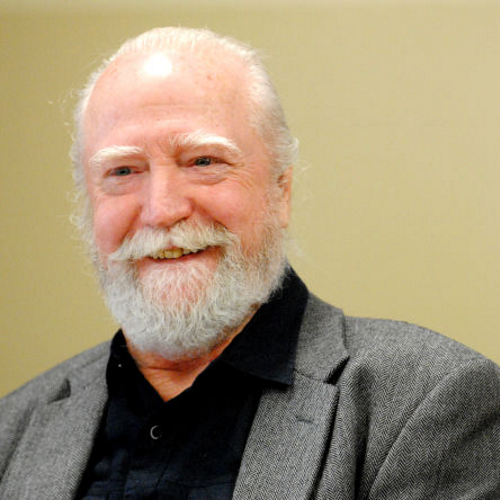
Scott Wilson, the actor best known for his role as Hershel on The Walking Dead, passed away yesterday reportedly from complications with leukemia. Wilson began his career with the one-two punch of the big screen classics In the Heat of the Night and In Cold Blood.
While most tributes focus on Wilson’s role as Hershel from The Walking Dead, Wilson’s resume features movie and television credits spanning 50 years. Anything Wilson appeared in became at least a little bit better because of him. Some of my favorite Wilson appearances include his roles in…
Our thoughts and prayers go out to Scott Wilson’s family, friends and fans.

Brad Gullickson and Film School Rejects present The 10 Best Comic Book Horror Movies. (Sadly the original post is no longer available.) Using just Gullickson’s list, here are his comments (and mine) for my top three:
30 Days of Night (2007)
Most vampire movies leave me cold, so color me surprised to find one of my favorites set in the freezing wasteland of Alaska’s eternal night. In addition to a brilliant premise — a tribe of vamps arriving in Barrow, AK just as the town settles into month-long seasonal darkness — the film delivers with some truly brutal and terrifically designed creatures and kills, engaging characters, and memorable cinematography. It’s a tight, visceral horror film that breathes life into the undead the same way 28 Days Later did with “zombies,” and it ends with a legitimately touching emotional beat. Now where’s my goddamn sequel?! (he said, knowing full well a lesser follow-up came and went in 2010). – Rob HunterCraig: I was a big fan of Steve Niles work, so his (and Ben Templesmith’s) 30 Days of Night comic series set the bar pretty high. I loved the concept of an isolated city in Alaska about to go through its annual 30 days of night. Of course vampires would want to go there. And they do, with the intent to wipe out the town during a month of excessive feasting. Just writing about this movie makes me want to view it again.
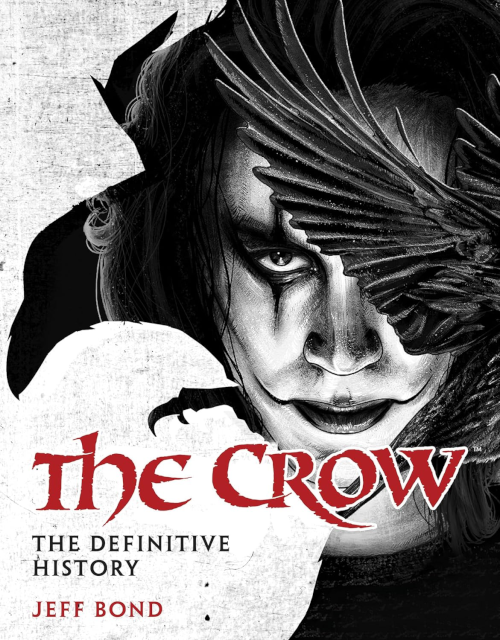
The Crow (1994)
From page to screen, the legacy of The Crow is synonymous with tragedy. The original graphic novel was created as a form of catharsis for writer James O’Barr after his girlfriend was taken too soon because of a drunk driver. Of course, most of you will know the story of Brandon Lee’s freak death while filming a shootout scene cpurtesy of a real bullet among the blanks. As a result, there’s an air of melancholy to The Crow that few other movies have captured. At the same time, it’s also a highly stylish and entertaining actioner with a rocking soundtrack befitting of the dark gods. The sequels all suck, but the first movie is a bona fide masterpiece of supernatural vigilante storytelling. – Kieran FisherCraig: Like 30 Days of Night, I was familiar with James O’Barr’s The Crow from it’s first published appearance in Caliber comics. The movie did a great job of adapting the comics and staying true to O’Barr’s vision. Brandon Lee (Bruce Lee’s son, who died during filming) was a bonus.
Blade II (2002)
I love Wesley Snipes, and I adore the joyful bravado that he injects into his Daywalker. He may pretend he’s brooding, but that’s a cat who (internally) whistles while he works. Slaying vampires has never been more satisfying. But – look. This is not just a Blade film. Guillermo del Toro came off Mimic and The Devil’s Backbone and threw his entire geeky consciousness into Blade II. Each frame is packed with references to Hellboy, Watchmen, The Searchers, Vampire Hunter D, Predator, Nosferatu, etc. For as suave and cool as the vampires were in the original film, del Toro comes at his Reapers with a Richard Matheson “I Am Legend” mentality. These are not pretty creatures that sip blood to the tunes of the children of the night. These are savage animals that threaten to devour the world, and force night and day walkers to unite in a Dirty Dozen team-up. The climax amounts to a vicious series of showdowns between hero and monster: the traitor, the goon, the count, and finally, the beast. After all is said and done, you may even find yourself getting misty over the tragedy of it all. – Brad Gullickson
Craig: I never read comics featuring Blade. I didn’t care for the original Blade movie at all. I thought Wesley Snipes was perfect as Blade and as a fan of Guillermo del Toro, willing to give Blade II a chance. I am so glad I did, because I loved it. How could you not love Blade going up against the King of all Vampires? Blade II is going to get another viewing from me soon.
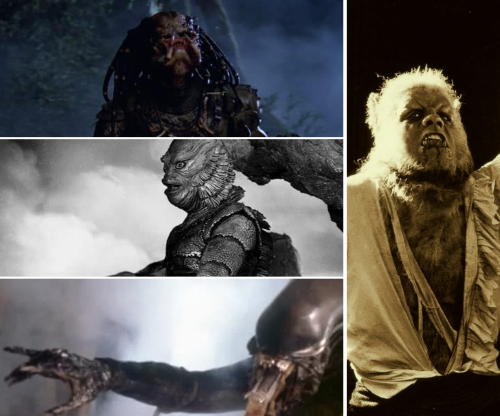
Rob Hunter and Film School Rejects presented The 10 Best Monster Designs in Horror Movies. Sadly that post is no longer available. Still, here are my top three picks from Hunter’s choices and my selection for the #1 spot and it’s a monster that didn’t make his list!
3. Alien: The design is scary even before you learn about the teeth that extract. But perhaps what makes Alien scariest is that the design doesn’t look like it would work with a person in a suit. What is that thing?
2. The Creature from the Black Lagoon: If you were to find the missing link between fish and man, it would look like The Creature from the Black Lagoon. A perfect design.
1. The Predator: Want to know why Predator got my top spot from Hunter’s list? Watch the scene when the Predator removes his mask and for the first time we get a look at it’s face as it roars.
My choice for best monster design — The Curse of the Werewolf werewolf. THAT is what a wolfman should look like!

This is one of four Universal Monsters trading cards drawn by Mike Mignola and posted by Cool Comic Art. You can see the one above as well as the other 3 Mignola Universal Monsters cards here.

Check out the new Walking Dead Official Season 9 Opening Animated Credits!
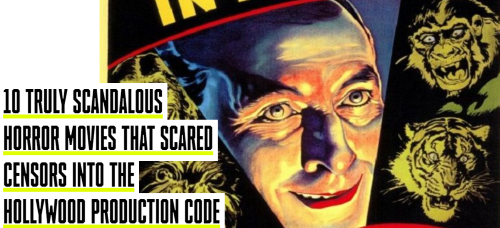
Sharon Knolle’s post 10 Truly Scandalous Horror Movies that Scared Censors into the Hollywood Production Code is worth a read by all movie (especially horror movie) buffs.
I’ve seen 9 of the 10 movies Knolle selected and commend her on selecting them. If you haven’t seen them, I’d recommend:

Now that is one awesome Hellboy poster! Click on the photo to see a size worthy of all this awesomeness.

Martin Samoylov at ComingSoon.net posted 5 Horror Crossover Movies We Want to See. Samoylov’s list was an interesting one. I particularly liked the idea of A Quiet Place / Cloverfield crossover, but my favorite was Samoylov’s as well… that the big three… Universal’s classic Wolfman, Dracula and Frankenstein appear in a crossover movie. I 100% agree with Samoylov when he says…
Admittedly, Dark Universe didn’t get off on a great start with last year’s The Mummy, but that doesn’t mean Universal can’t explore its other classic monster properties. Frankenstein, Dracula, and the Wolfman are some of the most iconic movie characters of all time. And currently Universal owns rights to all three. None of the three icons have faced off with one another in decades. If Universal gets these characters right, they could have some exciting stories to tell with them.
Amen, brother. And since its now my two cents, I’d throw The Creature from the Black Lagoon into the mix. Well, Universal, what are you waiting for?