Category: Movies

Jonathon Maberry Talks George A. Romero & Nights of the Living Dead!

Most George A. Romero and Night of the Living Dead fans have probably already ordered Nights of the Living Dead edited by Jonathon Maberry and George A. Romero.  (I did!)

Nights of the Living Dead is a…

…a collection of all-new tales set during the forty-eight hours of that legendary outbreak.

Nights of the Living Dead includes stories by some of today’s most important writers: Brian Keene, Carrie Ryan, Chuck Wendig, Craig E. Engler, David J. Schow, David Wellington, Isaac Marion, Jay Bonansinga, Joe R. Lansdale, John A. Russo, John Skipp, Keith R.A. DeCandido, Max Brallier, Mike Carey, Mira Grant, Neal and Brenda Shusterman, and Ryan Brown. Plus original stories by Romero and Maberry!

The fact that Romero signed off on this anthology makes the stories part of the Night of the Living Dead canon.

Jonathon Maberry recently spoke to Derek Anderson at Daily Dead about how Nights of the Living Dead came together and his thrill at getting to work with George Romero. As an added bonus we get access to an excerpt from Maberry’s contribution to the anthology!


Joe Delagatta’s “The Thing” Poster!


Joe Delagatta recently posted his contribution to The Thing Artbook.  I’ve long been a fan of Joe’s art, but if I hadn’t been already, his Thing piece would have won me over.
After Joe posted his Thing poster, I found myself repeatedly going back to check it out.  So I decided to reach out to Joe and see if he would mind if I posted the art here.  He didn’t, so I did.

I hope you enjoy it as much as me.  If so, you can check out more of Joe’s art or follow him on Twitter.  If you do, tell him “the Stallone guy” sent ya.
The 25 Best Horror Movies to Scare You Senseless

Sarah Dobbs and GamesRadar recently posted their choices for The 25 Best Horror Movies to Scare You Senseless.  Here are three of my favorites…

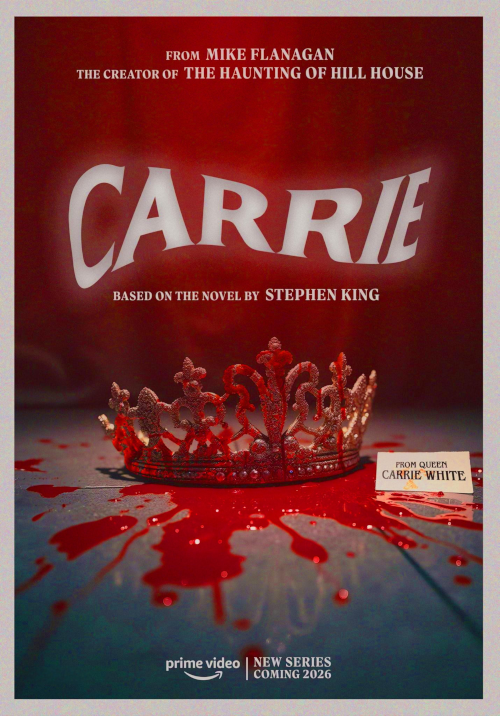
12. Carrie (1976)
The movie: Poor old Carrie (Sissy Spacek) is a complete misfit. Her mother’s religious mania keeps her sheltered, confused, and scared, and her schoolmates aren’t much better. Being invited to prom with one of the popular kids looks like Carrie’s ticket to acceptance, but things don’t exactly go to plan and Carrie wreaks spectacular revenge on her tormentors. Brian De Palma expertly crafts a terrifying split-screen finale that shouldn’t work, but acts as a brilliant mood-setter before Carrie’s final walk home to face her mother.

Why it’s scary: There are plenty of high school horrors out there, but few as visceral – or as heart-breaking – as Carrie herself.

10. Night Of The Living Dead (1968)
The movie: The original zombie movie. George Romero basically invented a whole subgenre with this movie, and his slow, shambling, relentless ghouls are still terrifying. As is the idea that, if the dead rise, well have to rely on our neighbours not to get us killed. Yikes.

Why it’s scary: It introduced the world to the idea of undead flesh-eating monsters. Trying to imagine TV and cinema without them? Impossible. The horror genre hasn’t looked back since.

2. The Exorcist (1973)
The movie: After messing with a Ouija board, Regan (Linda Blair) starts acting weirdly. And not just acting weirdly in a normal teenage kind of way: she talks backwards, scuttles around the house like a crab, and does unspeakable things with crucifixes. Her mother calls in a couple of Catholic priests to cast out Regan’s demons, but it won’t be easy.

Why it’s scary: It quite simply has the most evil-soaked atmosphere of any film ever made.

I would have added 28 days later to the overall list.  What else?

Thomas Boatwright, Stanley Rosiello & “The Lords of Flatbush”

Thomas Boatwright puts his spin on Sly from Lords of Flatbush.

Over the years I’ve gotten several Stallone pieces from Thomas.  Here is what has been posted so far… there are more to come.

If you’d like to see more of Thomas Boatwright’s art check out his blog and his DA site. Send him some love.

If you get commissions, you should consider a piece from Thomas. He keeps you totally in the loop on his progress, finishes his commissions on or ahead of schedule, has very reasonable prices, is a fantastic artist and always gives you more than you’re expecting!   – Craig

“Escape from New York” Got the Cinephilia Treatment!

Snake Plissken fans are going to love it that Escape from New York got the Cinephilia treatment.

Click on the link and you’ll find…

  • the Original Script
  • John Carpenter, High Adventure in the Future from Starlog #41 (Dec, 1980)
  • Kurt Russell Talks Escape From New York
  • an interview with John Carpenter from Starlog #48
  • On the Set with Escape from New York from Starlog #45
  • The Stars of Escape from New York: Kurt Russell and Adrienne Barbeau from Starlog #49
  • Interview with director John Carpenter and producer Debra Hill on Escape from New York
  • John Carpenter discussing the making of Escape from New York
  • Mick Garris interviews John Carpenter
  • Behind-the-scenes during production of John Carpenter’s Escape from New York.
  • and more!

The 50 Best Crime Movies Of The 21st Century So Far

Oliver Lyttelton and  The Playlist recently posted their choices for The 50 Best Crime Movies Of The 21st Century So Far.  Here are three of my favorites…

4. “No Country For Old Men” (2007)
Even knowing the high quality of the Coen Brothers’ work in general, and knowing their love for crime fiction, no one was quite prepared for “No Country For Old Men.” Their first adaptation (it’s adapted from Cormac McCarthy’s novel), it maintained the greatest qualities of their earlier work — dry wit, careful plotting, unforgettable characters, bursts of ultraviolence — but with a darker, more apocalyptic mood than ever before. Even though its story of the aftermath of a drug deal gone wrong, and the men pursuing the money that Llewellyn Moss (Josh Brolin) has taken, is set in 1980s Texas, it somehow feels predictive of the world that we’ve ended up in a decade later in some strange ways, and we’re sure it’ll only continue to resonate further over time.

33. “John Wick” (2014)/“John Wick: Chapter 2” (2017)
We couldn’t pick between the two Keanu Reeves-reviving badass-fests here: the first has a purity to it, plus Willem Dafoe and that adorable puppy for the first reel, the second embellishes and extrapolates the film’s strange world and amps the arthouse-action vibe up to eleven. And while they’re action movies first and foremost, they’re also definitely crime films, Chad Stahelski and David Leitch building a fascinating pulp-comic-book underworld more compelling, and full of more intriguing characters and rules, than we’ve seen in this genre for a while. Plus, of course, it has Reeves at his taciturn, quietly psychotic best, it looks beautiful, and it has some of the best shootout sequences since Sam Peckinpah shuffled off the mortal coil. Bring on ‘Chapter 3,’ as soon as humanly possible.

39. “A History Of Violence” (2005)
The first and best of the two crime pics that David Cronenberg and Viggo Mortensen made together back-to-back, “A History Of Violence” doesn’t initially seem like the sort of thing that the body-horror master would make, but like its lead character, soon reveals itself to have all kinds lurking under the surface. Based on a graphic novel, it sees Tom, a seemingly ordinary family man (Mortensen) praised as a hero after killing two men trying to rob his diner, only for a mysterious, scarred criminal (Ed Harris) to turn up and claim that Tom has a past, and that these were far from the first people he’d killed. Cronenberg and his cast (particularly William Hurt, whose Oscar-nominated supporting turn can practically be seen from space) don’t hide from the comic book nature of the material, but for all the ultraviolence (and two of the most narratively effective sex scenes in history), there’s something deeply human here, about an attempt to escape your nature, and whether there really are second acts in American life.

George Romero Interview ‘Road of the Dead,’ & More!


George (Night of the Living Dead) Romero was working to arrange financing for Road of the Dead, a proposed new installment in Romero’s zombie franchise before he passed on. Romero pitched Road of the Dead by saying…

“In the darkest days of the zombie apocalypse, the last safe place on earth is anything but, as a mad despot uses the spectacle of high-octane carnage to keep control of his populace… “It’s ‘Fast and the Furious’ with zombies at the wheel”…

While Road of the Dead doesn’t sound like the zombie film that I’d like to see, I’d give it a go and hope to be pleasantly surprised.  Romero is the man who redefined the genre.

You can check out Romero’s thoughts on Road of the Dead, modern zombie films and more by clicking over to  George Romero Talks ‘Road of the Dead,’ His Disdain for ‘World War Z’ and Why He Liked ‘La La Land’ More Than ‘Moonlight’.

Source: IndieWire.

RIP – George Romero

George Romero passed away today at the age of 77 from a “brief but aggressive battle with lung cancer.”  I was shocked and saddened to read those words.  Romero is one of my movie heroes.

Most of you know that Romero co-wrote (with John Russo) and directed Night of the Living Dead, the movie that redefined zombies and created a horror sub-genre.  Romero always did things his way and followed NOTLD with several other “…of the Dead” zombie films.  He was currently working to get financing for Road of the Dead, which was set to become the next feature in his zombie franchise.

Although Mr. Romero was a bit older, I was truly surprised by his passing.  Just last weekend I listened to Jonathon Maberry talking about the joy of working with George Romero on Nights of the Living Dead: An Anthology.  I couldn’t wait to order my copy.  Now I want to get it in my mitts even more.  I have a post scheduled to go live in a couple of days about Mr. Romero working on financing for Road of the Dead.  There was no hint that he’d been ill.

Romero died peacefully in his sleep, surrounded by his family while the score of one his favorite films, 1952’s “The Quiet Man,” played in the background.  I can’t think of a much nicer way to go.  Thanks to George Romero for not only all of the movies he created but also for those his work inspired.

My thoughts and prayers go out to his family, friends and fans.

Source: Los Angeles Times.

Thomas Boatwright and Jack Carter

Thomas Boatwright is back and Jack Carter is with him.  Over the years I’ve gotten several Stallone pieces from Thomas.

If you’d like to see more of Thomas Boatwright’s art check out his blog. Send him some love.

If you get commissions, you should consider a piece from Thomas. He keeps you totally in the loop on his progress, finishes his commissions on or ahead of schedule, has very reasonable prices, is a fantastic artist and always gives you more than you’re expecting!   – Craig

The 35 Best Heist Movies

The Playlist recently posted their choices for The 35 Best Heist Movies.  There are a lot of great movies on this list.  In an effort to narrow it down, I decided to choose from movies where one heist was the focus of the film.

So using just their list here are three of my favorites…

“Rififi” (1955)
Yes, we know. This is the grandaddy of all heist films, the one that tops everyone’s list and is name dropped constantly. But if you haven’t seen the film (and by God, you should remedy that situation quickly) don’t get suckered into thinking this is just some cinematic touchstone that everyone talks about but no one really watches. If anything, Jules Dassin’s “Rififi” remains the template and the standard, with a centerpiece heist sequence that is still yet to be topped. The plot is standard stuff: four guys target a jewelry store, plan the perfect job and things don’t quite go as planned. But Dassin’s masterstroke is the 30-minute, nearly completely silent heist (no dialogue, no soundtrack) that brilliantly throws viewers right into the heart-pounding, tension filled robbery. A masterpiece in every sense of the word, “Rififi” remains the torchbearer for the genre with very good reason.

“The Getaway” (1972)
Based on a novel by the poet laureate of hard pulp Jim Thompson, directed by feminist favorite Sam Peckinpah, and starring a Steve McQueen firmly in the midst of a cocaine-soaked marriage breakdown, “The Getaway” rises out of a dense fog of testosterone: it doesn’t get any more boys-night-in than that. Ali McGraw (somewhat miscast, to occasionally charming effect) uses her wiles to free husband “Doc” McCoy (McQueen) from prison. After a botched bank robbery, the bickering pair go on the run with the loot, pursued by cannon-fodder cops and a variety of goons, led by the astonishingly repellent and malevolent Rudy (Al Letteria). Perhaps inevitably, it all culminates in a bloodbath in El Paso, and a tender reconciliation for the then real-life lovers. This is by no means top-tier Peckinpah; both he and McQueen were desperate for a no-nonsense hit after the commercial failure of “Junior Bonner” (1972). Nevertheless, all the staples are there — stunningly edited montages, patented slo-mo bullet ballet — and “The Getaway” is a solid, straight-ahead action flick that’s always fun to wander into the middle of on late night T.V. Possibly not Robert Evans’ favorite film though…

“The Asphalt Jungle” (1950)
John Huston’s 1950 noir may be better known now for the films it influenced (at least half the titles on this list, notably “Rififi”), and for an early luminous performance by Marilyn Monroe, but the film, creaky though it is in places and marred by some didactic, moralistic dialogue, is still a compelling piece in its own right. The narrative arc, (a man has a plan, gets a gang together, pulls off a heist, only to have chance and human nature foil the scheme) has become pretty much the heist film template, but details like the corruption of the police force and the careful characterizations of the gang members keep the proceedings fresh. And while censor-friendly debates on the nature of criminality abound, it’s clear where Huston’s sympathy actually lies; it is power, not lawbreaking, that corrupts here, so the only people with any sort of a code are those on the very bottom of the food chain: Sterling Hayden’s petty hood; the girl who loves him; the hunchbacked getaway driver and the safe-cracking family man. Disgust is reserved for those further up the hierarchy, whose degenerate desires eventually thwart them (both the mastermind and the front/fence character – a suave Louis Calhern – are undone by their interest in young nubile girls), while Hayden’s Dix is rewarded for his staunch, if misplaced loyalty, and perverse nobility, with the kind of tragic, theatrical, poetic death; the greatest honor a movie criminal in oppressive ‘50s America could hope for.