Category: Movies

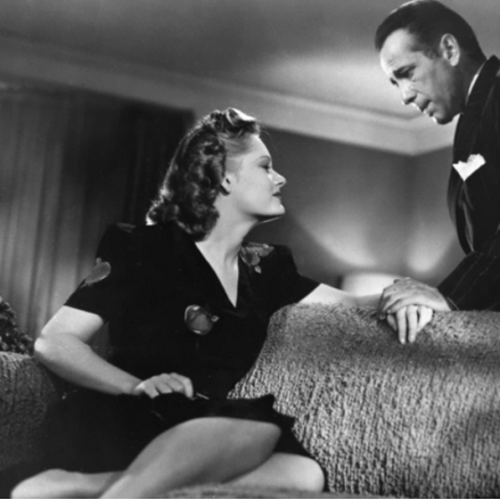
Casablanca (1942) / Z-View

Casablanca (1942)

Director: Michael Curtiz

Screenplay: Julius J. Epstein and Philip G. Epstein and Howard Koch and Casey Robinson (uncredited) from the unproduced play Everybody Comes to Rick’s by Murray Burnett and Joan Alison

Stars: Humphrey Bogart, Ingrid Bergman, Paul Henreid, Claude Rains, Conrad Veidt, Sydney Greenstreet, Peter Lorre, and Dooley Wilson.

The Pitch: “Hey, why don’t we make a romance picture with Bogie?”

Tagline:  “They had a date with fate in Casablanca!”

The Overview:  Beware of Spoilers…

Casablanca in 1941 is a popular last stop to escape Nazi Germany which is taking over countries throughout Europe.  Rick Blaine [Bogart] runs the most popular nightclub in Casablanca and has let it be known he “risks his neck for nobody”.  Everyone is welcome in his “Cafe Americana” club so it is not unusual to find escaping refugees (hoping to secure letters of transit), those preying on the refugees, Nazis, partisans, pickpockets, and gamblers there.

Rick’s life is complicated when Lazlo [Henried] a world renowned Nazi resistance fighter shows up in Casablanca one step ahead of the Nazis.  Lazlo is accompanied by his wife, Ilsa [Bergman] who we discover was Rick’s love in pre-war Paris.  On the day they were to leave Paris (before the Nazis takeover), Ilsa mysteriously left Rick.  She was the love of his life and now she’s back… but with another man.  And not just any man.

Rick has two letters of transit which could be used to save Ilsa and Lazlo at great risk to his own life… but Rick “risks his neck for nobody”.  Rick is bitter over Ilsa leaving without a word but he still loves her.  Perhaps Rick could save Ilsa and himself…

It’s rare to find a movie as perfect as Casablanca.  Every scene sings.  It’s perfectly cast, expertly directed and improves with each new viewing.

Rating:

The Jungle Captive (1945) / Z-View

The Jungle Captive (1945)

Director: Harold Young

Screenplay: Dwight V. Babcock and M. Coates Webster

Stars: Otto Kruger, Vicky Lane, Amelita Ward and Rondo Hatton

The Pitch: “Isn’t it time to make another Ape Woman movie?”

No Tagline:

The Overview:  Beware of Spoilers…

The third in the Paula DuPree, Ape Woman trilogy.  Seems there were a lot of mad scientist doctors back in the 40’s and their life goal was to turn a gorilla into a woman.  Pretty sick, huh?

In this outing Dr. Stendahl (Kruger) has his minion, Molach the Brute (Hatton) steal the Ape Woman’s body from the morgue.  Of course Molach isn’t called the Brute because of his brainpower and he kills the morgue attendant in the process.  This puts the cops on the trail of the murderer.

Once Stendahl has the body, he’s ready to perform his experiment to bring her back to life.  Of course he needs the blood of a woman.  Naturally he decides to kidnap and use the blood of his female lab assistant (Ward) rather than a woman with no connections to him.

As the cops close in on him, Stendahl must face off against Molach (who has fallen in love with the lab assistant), the lab assistant’s fiance, the cops and the Ape Woman.  It’s like the Mexican standoff at the end of Reservoir Dogs if the Reservoir Dogs standoff wasn’t suspenseful.

Rating:

“The Bandit” (2016) / Z-View

The Bandit (2016)

Director: Jesse Moss

Screenplay: N/A

Stars: Mike Henry, Robert L. Levy Robert L. Levy, David Needham, Hal Needham, Burt Reynolds and Paul Williams.

The Pitch: “We could make a documentary about the making of ‘Smokey & the Bandit’… or a documentary about Hal Needham… or we could do both!”

Tagline: “Old Legends Never Die”

The Overview:  Beware of Spoilers…

The Bandit is a well done documentary that takes us behind-the-scenes on the making of Smokey and the Bandit with a focus on Hal Needham the stuntman turned director who came up with the idea and got his best buddy, Burt Reynolds to star in the film.

Rating: 4 of 5 stars.

King of the Underworld (1939) / Z-View

King of the Underworld (1939)

Director: Lewis Seiler

Screenplay: George Bricker and Vincent Sherman from a story by W.R. Burnett

Stars: Humphrey Bogart, Kay Francis and James Stephenson.

The Pitch: “We could put Bogart in that crime story by WR Burnett…”

Tagline: “Ruthless Killer vs. Lady Doctor ! It’s red-blooded action all the way!”

The Overview:  Beware of Spoilers…

Carol Nelson (Francis) is a doctor as is her husband.  Things are going well until her husband accidentally gets involved with gangsters led by the notorious Joe Gurney (Bogart).  When her husband is killed in a police shootout, they believe that Carol is also involved with the gangsters.

In order to clear her name Carol comes up with a dangerous plan to take down the entire gang.

Rating:

10 Cool Things About “Body Heat”

Roger Cormier and Mental_Floss present 10 Cool Things About Body Heat.  Here are three of my favorites…

2. CHRISTOPHER REEVE TURNED DOWN THE ROLE OF NED.
“I put myself down too much,” Reeve told The Washington Post of the missed opportunity. “I didn’t think I’d be convincing as a seedy lawyer.” Reeve later regretted the decision, but was happy that his friend, William Hurt, was cast in the role instead.

5. IT WAS SHOT IN FLORIDA—AND IT WAS VERY, VERY COLD.
The film was shot during a cold Florida winter. Turner and Hurt had to put ice cubes in their mouths before each take so their breath wouldn’t show. Their sweat was sprayed on. When the two shot their sex scene, the crew was dressed in duffel coats and scarves.

8. IT WAS MICKEY ROURKE’S BIG BREAK.
Mickey Rourke had already appeared in 1941 (1979) and Heaven’s Gate (1980), but told Larry King that his breakthrough came from playing Teddy Lewis in Body Heat. When Rourke got the one-day gig, he was able to quit his job as a bouncer at a transvestite nightclub.

48 Things We Learned from David Fincher’s Zodiac Commentary

Rob Hunter and Film School Rejects present 48 Things We Learned from David Fincher’s Zodiac Commentary.  Here are three of my favorites…

13. Fincher thinks the reason why the Zodiac still haunts people is due as much to his letters as to anything else. The idea of an ongoing correspondence with someone who was in the process of killing fascinates him.

15. All of the blood in the film is digital because it saved the production enormous amounts of time by not having to wait for wardrobe changes and cleaning.

18. Dermot Mulroney is in great shape, but Fincher was having none of it. “I wanted him to have a waistline like mine so we made up a little fat suit for him.”

Are You Ready for Mel Gibson’s Comeback?

Are You Ready for Mel Gibson’s Comeback?  by Kevin Lincoln is an excellent profile of, well, the potential comeback of Mel Gibson.  Here’s a taste…

While Hollywood figures have made comebacks before — think Alec Baldwin or Robert Downey Jr. — it’s never been quite on the scale that Gibson faces… Gibson’s 60 years old; his days as a classical movie star would be behind him even if the last decade hadn’t happened. But every one of Clint Eastwood’s 11 Oscar nominations have come after that age, all in movies he’s directed. Gibson has been allowed to be a filmmaker again, with the potential for a long and rich career still to come, and Hacksaw Ridge will be a kind of referendum. The people have the power to forgive Mel Gibson. They also have the power not to.

Source: Vulture and Al Bundy’s Socks.

The Making of The Lords of Flatbush by Stephen Verona (2008) / Z-View

The Making of The Lords of Flatbush by Stephen Verona (2008)

Paperback: 155 pages
Publisher: Creative Book Publishing International; First Edition ~1st Printing edition (June 15, 2008)

First sentence…

When I was single and dating I would regale girls with these stories of my childhood and the guys I hung with.


The Overview:  Beware of Spoilers…

Stephen Verona, the writer and director of Lords of Flatbush, takes us on the amazing trip to get Lords of Flatbush, one of the first truly independent films made.  Along the way, we’ll learn how Verona got started (becoming friends with John Lennon and working with Lennon to animate the Beatles song I Feel Fine) and the long process to get Lords of Flatbush made.

Verona worked with many big names [Lee Strasberg, Janet Leigh, The Beatles, Chicago, Barbara Steisand, etc.] prior to writing and directing Lords of Flatbush and those stories are fun but the heart of the book is of course getting LoF made.  Verona provides many anecdotes and behind the scenes photos and trivia.  (Did you know that Richard Gere was originally to play Perry King’s role? Stallone and Gere had a falling out and one had to go!]

Verona writes in a conversation style that’s easy to read.  Fans of LoF will love the behind-the-scenes peek and prospective film makers will learn from the mistakes Verona as a first time film-maker made.

Rating:

11 Nightmarish Facts About “Nosferatu”

Mark Mancini and Mental_Floss present 11 Nightmarish Facts About Nosferatu. Here are three of my favorites…

4. THE VAMPIRE WAS PLAYED BY A MAN WITH AN APPROPRIATELY SPOOKY NAME.
Little is known about Max Schreck’s life and film career, a fact to which his biographer, Stefan Eickhoff, can attest. According to Eickhoff, the actor’s colleagues regarded him as a “loyal, conscientious loner with an offbeat sense of humor and a talent for playing the grotesque.” The star of over 40 motion pictures, Schreck is best remembered for his haunting portrayal of Orlok in Nosferatu.

Fittingly enough, the man’s last name is the German word for “terror.” Schreck’s performance was so effective that some viewers wondered if the mysterious thespian was an actual vampire in real life. Film critic Ado Kyrou popularized this idea in 1953 when he wrongly claimed that the name of the actor who played Murnau’s monster had never been revealed. “Who hides behind the character of Nosferatu?” Kyrou wrote. “Maybe Nosferatu himself?” That suggestion was subsequently used as the premise of Shadow of the Vampire (2000), which features John Malkovich as Murnau and Willem Dafoe as a bloodsucking, coffin-loving Max Schreck.

7. NOSFERATU ESTABLISHED A TIME-HONORED VAMPIRE TROPE. 
The idea that vampires burn up when exposed to direct sunlight is traceable to this movie. In Dracula, the villain casually walks around outside in broad daylight. According to the novel, solar rays can slightly weaken a vampire, but Stoker never implies that they could kill one. Yet for the sake of a more visually compelling climax, Grau and screenwriter Henrik Galeen decided to make the sun’s light utterly fatal to poor Count Orlok, who disappears in a puff of smoke when he’s lured into a well-lit room. Thus, a resilient horror cliché was born.

9. STOKER’S WIFE SUED THE STUDIO.
If she’d gotten her way, this movie would have joined Dracula’s Death in the dustbin of film history. Shortly after Nosferatu premiered in Berlin, Florence Stoker—Bram’s widow—received an anonymous package containing one of its promotional posters. Displayed upon this placard was the inflammatory line “Freely adapted from Bram Stoker’s Dracula.”

An outraged Mrs. Stoker immediately took legal action. Upon receiving the poster, she joined the British Incorporated Society of Authors, which hired a German lawyer to go after Prana-Film. At first, the plan was to sue Grau’s company for copyright infringement. However, a string of terrible business decisions—not the least of which was Nosferatu’s recklessly expensive marketing campaign—had already bankrupted the studio.

When it became clear that Stoker would never make a dime off of Nosferatu, she did everything in her power to have all copies of the film destroyed. In 1925, a German court sided with her and ordered that every copy within that nation be burned. And yet, just like Count Dracula, Nosferatu proved very difficult to kill. Over the next few years, surviving copies made their way to the U.S. and UK. Thus, the undead picture haunted Florence Stoker until the end of her days. Before she died in 1937, a handful of screenings took place—usually in the United States. Stoker relentlessly tracked down wayward copies of the movie and incinerated those that she got her hands on. But despite her best efforts, Nosferatu lived on in the form of pirated bootlegs.
31 Things We Learned from “The In-Laws” Commentary

Rob Hunter and Film School Rejects present 31 Things We Learned from The In-Laws Commentary.  Here are three of my favorites…

7. The infamous “Serpentine! Serpentine!” line came from Bergman’s time at college playing touch football with friends. One of his friends used to say it as they left the huddle.

10. Marlon Brando was a huge fan of the film and told Arkin at dinner once that he’d seen it over twenty times. “And then he started doing imitations of me.” Bergman adds that this is the reason why Brando agreed to do The Freshman with him.

30. Hiller had difficulty finding enough American-looking performers to play the dozens of CIA agents who come to the rescue in Mexico. He ran across some American medical students in town and cast them as the extras. Over half of the agents are those students.

12 Surprising Facts About Bela Lugosi

Mark Mancini and Mental_Floss present 12 Surprising Facts About Bela Lugosi.  Here are three of my favorites…

4. UNIVERSAL DIDN’T WANT TO CAST HIM AS COUNT DRACULA.
The year 1927 saw Bela Lugosi sink his teeth into the role of a lifetime. A play based on the novel Dracula by Bram Stoker had opened in London in 1924. Sensing its potential, Horace Liveright, an American producer, decided to create an U.S. version of the show. Over the summer of 1927, Lugosi was cast as the blood-sucking Count Dracula. For him, the part represented a real challenge. In Lugosi’s own words, “It was a complete change from the usual romantic characters I was playing, but it was a success.” It certainly was. Enhanced by his presence, the American Dracula remained on Broadway for a full year, then spent two years touring the country.

Impressed by its box office prowess, Universal decided to adapt the show into a major motion picture in 1930. Horror fans might be surprised to learn that when the studio began the process of casting this movie’s vampiric villain, Lugosi was not their first choice. At the time, Lugosi was still a relative unknown, which made director Tod Browning more than a little hesitant to offer him the job. A number of established actors were all considered before the man who’d played Dracula on Broadway was tapped to immortalize his biting performance on film.

6. HE TURNED DOWN THE ROLE OF FRANKENSTEIN’S MONSTER.
Released in 1931, Dracula quickly became one of the year’s biggest hits for Universal (some film historians even argue that the movie single-handedly rescued the ailing studio from bankruptcy). Furthermore, its astronomical success transformed Lugosi into a household name for the first time in his career. Regrettably for him, though, he’d soon miss the chance to star in another smash. Pleased by Dracula’s box office showing, Universal green-lit a new cinematic adaptation of Mary Shelley’s Frankenstein. Lugosi seemed like the natural choice to play the monster, but because the poor brute had few lines and would be caked in layers of thick makeup, the actor rejected the job offer. As far as Lugosi was concerned, the character was better suited for some “half-wit extra” than a serious actor. Once the superstar tossed Frankenstein aside, the part was given to a little-known actor named Boris Karloff.

Moviegoers eventually did get to see Lugosi play the bolt-necked corpse in the 1943 cult classic Frankenstein Meets the Wolf Man. According to some sources, he strongly detested the guttural scream that the script forced him to emit at regular intervals. “That yell is the worst thing about the part. You feel like a big jerk every time you do it!” Lugosi allegedly complained.

10. LUGOSI ALMOST DIDN’T APPEAR IN ABBOTT AND COSTELLO MEET FRANKENSTEIN—BECAUSE THE STUDIO THOUGHT HE WAS DEAD.
The role of Count Dracula in this 1948 blockbuster was nearly given to Ian Keith—who was considered for the same role in the 1931 Dracula movie. Being a good sport, Lugosi helped promote the horror-comedy by making a special guest appearance on The Abbott and Costello Show. While playing himself in one memorable sketch, the famed actor claimed to eat rattlesnake burgers for dinner and “shrouded wheat” for breakfast.

The Demented (2013) / Z-View

The Demented (2013)

Director: Christopher Roosevelt

Screenplay: Christopher Roosevelt

Stars: Kayla Ewell, Richard Kohnke and Ashlee Brian.

The Pitch: “Let’s make a cheap zombie movie with some good looking kids.”

No Tagline:

The Overview:  Beware of Spoilers…

Three college aged couples decide to spend the weekend at their rich friend’s parents’ getaway house.  A terrorist attack turns the locals into zombies.

Craig says: If you’re a die hard zombie fan then this might be for you.  Of course you’d have to enjoy zombies that for no reason will freeze in strange positions and sleep until awakened by a noise.  You’d also have to like characters that make really stupid decisions, are loud when they should be quiet, bad special effects and an ending that will really tick you off (at least it did me).

Rating: