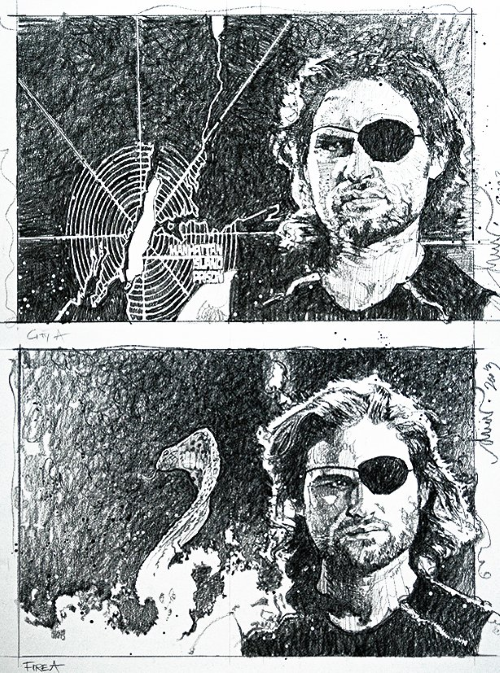
John Carpenter’s Official in Studio Performance: “Escape from New York” Theme

Today we have John Carpenter’s Official Live in Studio performance of the theme to Escape From New York.
Previews and Reviews that are Z's Views

Today we have John Carpenter’s Official Live in Studio performance of the theme to Escape From New York.

Manny Aguilera makes his third, but not last appearance in my Stallone Sketch Gallery with his take on Sly as Jack Carter from Get Carter.
I highly recommend Manny to sketch collectors. He’s fast, his prices are reasonable and he’s one of the genuine nice guys! – Craig

Sean Hutchinson and Mental_Floss present 16 Things You Might Not Know About Rambo. Here are three of my favorites…
4. RAMBO DOESN’T ACTUALLY KILL ANYONE IN THE FIRST MOVIE.
Despite his notorious reputation for shooting first and asking questions later, Rambo doesn’t actually do anyone in in First Blood—he only severely wounds the people trying to hunt and harm him. This was a conscious effort on Stallone’s part in his script to change the character into an underdog from the character in the book who, due to his PTSD, goes on a wild killing rampage, which Stallone felt would alienate the audience.
The one character who does die is Deputy Galt, who tracks Rambo through the mountains in a helicopter. Galt, who attempts to shoot Rambo with a rifle, loses his balance and falls from the helicopter after Rambo merely throws a rock toward it to defend himself.
Like the book, Rambo himself was to die at the end of the movie at the hands of Colonel Trautman. The scene where Rambo is killed was filmed, but was scrapped after test audiences hated the fact that it seemed to imply the only way for veterans returning home to cope was by dying.
5. KIRK DOUGLAS WAS SUPPOSED TO PLAY COLONEL TRAUTMAN.
The veteran movie star actually made it to set and appeared in early advertisements for First Blood, but left the production when he demanded the right to rewrite the script. Douglas favored the ending of the book, and felt that Rambo should die in the end. The actor gave the filmmakers an ultimatum: if the production didn’t let him do what he wanted with the script he’d quit. Kotcheff and Stallone wanted to leave the door open for the possibility for Rambo to live or die at the end of the movie, so they let Douglas quit.
Actor Richard Crenna was then cast with a single day’s notice to fill Douglas’ shoes as Rambo’s mentor and father figure, Colonel Trautman. Crenna would reprise his role in two more Rambo movies before he passed away in 2003. He is the only actor besides Stallone to appear in multiple Rambo movies.
The unused alternate ending of First Blood, in which Trautman shoots and kills Rambo, can be seen briefly in the dream sequence in the fourth film, Rambo.
2. HE’S BASED ON A REAL-LIFE WAR HERO.
Morrell first thought of writing a book about a decorated war hero struggling to assimilate back to civilian life when he read about the real-life exploits of World War II soldier Audie Murphy. Murphy was the most decorated American soldier in World War II, earning every possible U.S. military decoration for valor as well as five separate decorations from foreign countries including France and Belgium.
Following the war, Murphy starred as himself in the film adaptation of his own autobiography,To Hell and Back, and would go on to have a film career, appearing in 44 feature films. Murphy—who later suffered from severe post-traumatic stress disorder, which also inspired Morrell’s characterization of Rambo—tragically died in a plane crash in 1971. The Canadian-born Morrell decided to update his novel to the post-Vietnam era due to the political and cultural climate he saw as a grad student at Penn State in the late 1960s.
Morrell would go on to write the novelizations of the second and third Rambo movies. Since he had Rambo die at the end of the first book he had to retroactively change that to have his hero alive and well in the subsequent books.
Source: David Morrell.

Ridley Scott is set to direct an adaptation of S. Craig Zahler’s novel Wraiths of the Broken Land. Drew Goddard will take the screenwriting reins.
This is an all-star team:
As for Wraiths of the Broken Land, here’s how Amazon describes it…
A brutal and unflinching tale that takes many of its cues from both cinema and pulp horror, Wraiths of the Broken Land is like no Western you’ve ever seen or read. Desperate to reclaim two kidnapped sisters who were forced into prostitution, the Plugfords storm across the badlands and blast their way through Hell. This gritty, character-driven piece will have you by the throat from the very first page and drag you across sharp rocks for its unrelenting duration. Prepare yourself for a savage Western experience that combines elements of Horror, Noir and Asian ultra-violence. You’ve been warned.
Source: ComingSoon.

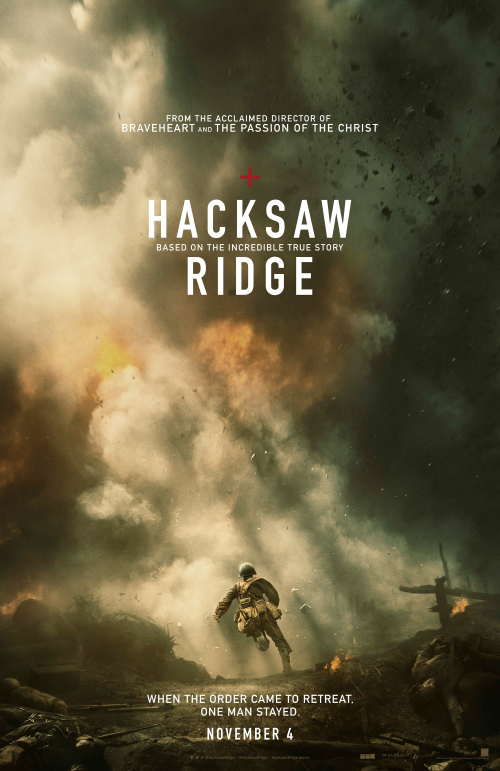
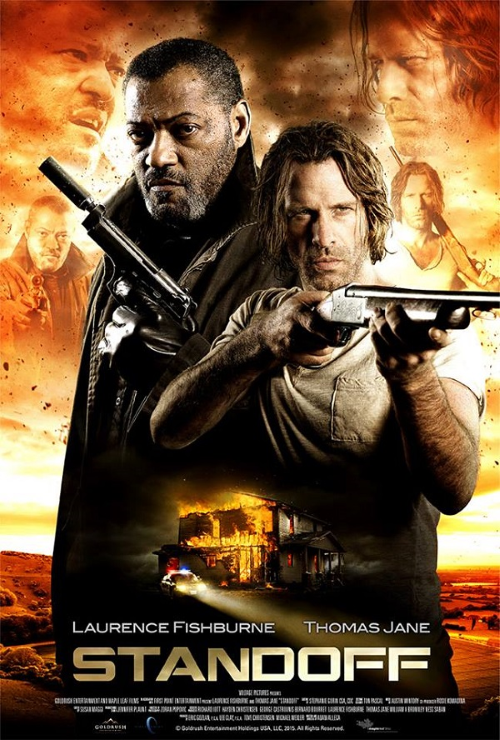
Three days in a row with a poster and trailer for an up-coming movie that has me wanting to buy a ticket now!

Today we have the poster and trailer for Hell or High Water and are we on a roll or what? Another great cast and another great looking trailer!

The poster for The Accountant lists a great cast and the trailer does what a trailer should do; it makes me want to see the movie.

I met Dwayne Biddix at last year’s HeroesCon. I’d been following Dwayne on DA and Twitter so it was a no brainer to get a Stallone sketch from him. Hope you dig it!

Stacy Conradt and Mental_Floss present 10 Slapstick Facts About the First Three Stooges Short. Here are three of my favorites…
2.THEIR SALARY FOR STARRING WAS $1000 PER WEEK—SPLIT THREE WAYS.
After their third short, Men in Black, was nominated for an Oscar, the comedians’ pay was increased to $7500 weekly. But they still had to split it amongst themselves.
3. THEY DON’T PLAY LARRY, CURLY, AND MOE.
Woman Haters marks one of the few times the Stooges play characters other than themselves. Larry plays “Jim,” Moe is “Tom,” and Curly is “Jack.”
8. IT FEATURED A COUPLE OF FAMOUS CURLY FIRSTS.
Curly’s first “nyuk-nyuk-nyuk” was in this film, as well as his first “woo-woo-woo-woo,” but they’re not quite the refined versions we’re used to now. Curly borrowed the latter catchphrase from comedian Hugh Herbert, though Herbert’s version was a little softer and more subdued.

Matthew Jackson and Mental_Floss present 11 Terrifying Facts About The Hills Have Eyes. Here are three of my favorites…
1. IT WAS BASED ON A TRUE STORY.
According to writer/director Wes Craven, The Hills Have Eyes was inspired by the story of Sawney Bean, the head of wild Scottish clan who murdered and cannibalized numerous people during the Middle Ages. Craven heard the story of the Bean clan, and noted that the road near where they lived was believed to be haunted because people kept disappearing while traveling on it. He adapted the story to instead be about a group of wild people in the American West, and The Hills Have Eyes was born.
8. MICHAEL BERRYMAN CONSTANTLY FACED HEATSTROKE.1-
Berryman, who became a horror icon thanks to this film, was apparently game for just about anything Craven and company wanted him to do, though he personally told the producers he was born with “26 birth defects.” Among those birth defects was a lack of sweat glands, which meant that the intense desert heat was particularly hazardous to his health. He soldiered on, though, even in intense action sequences.
“We always had to cover him up as soon as we finished these scenes,” Craven recalled.
11. IT STARTED AN INTERESTING CHAIN OF HORROR HOMAGES.
The Hills Have Eyes is admired by fellow horror filmmakers, so much so that one of them—Evil Dead director Sam Raimi—chose to pay homage to it in a strange way. In the scene in which Brenda is quivering in bed after having been brutalized by Pluto and Mars, a ripped poster for Steven Spielberg’s Jaws is visible above her head. Raimi saw it as a message.
“I took it to mean that Wes Craven … was saying ‘Jaws was just pop horror. What I have here isreal horror.’”
As a joking response to the scene, Raimi put a ripped poster for The Hills Have Eyes in his now-classic film The Evil Dead (1981). Not to be outdone, Craven responded by including a clip from The Evil Dead in his classic A Nightmare on Elm Street (1984).

Rob Hunter and Film School Rejects present 30 Things We Learned from the Planet Terror Commentary. Here are three of my favorites…
7. Bruce Willis enjoyed his time on Sin City so much that he told Rodriguez “any time, any where, I’ll come make anything with you.” The director called his bluff and convinced him to play the bad guy here knowing it would only be two days work. Tarantino visited the set — both to say hi and because he shot some 2nd unit for the film — and was surprised to Willis in costume.

Cheryl Eddy and io9 present 10 Things You Might Not Know About John Carpenter’s Cult Classic They Live. Here are three of my favorites…
1) Before they met, Carpenter was a Piper fan, but Piper had never heard of the director, even though his filmography at the time included such high-profile works as Halloween, Escape From New York, The Thing, and Big Trouble in Little China.
2) The greatest fight scene in movie history runs five minutes and 20 seconds long. It took three days to film, but a month and a half of rehearsing in the backyard behind Carpenter’s office in the San Fernando Valley. According to interviews on the They Live Blu-ray, Carpenter drew inspiration for the clash from a similarly memorable brawl in The Quiet Man, a 1952 John Ford film in which John Wayne plays a retired boxer.
10) “Frank Armitage,” credited as They Live’s screenwriter, is actually a Carpenter pseudonym. It’s a shout-out to H.P. Lovecraft creation Henry Armitage; Carpenter would later pay further tribute to the author with the filmIn the Mouth of Madness. (“Frank Armitage” is also the name of David’s character in the film.)
Check out this Dracula: Prince of Darkness poster created by Francesco Francavilla for Vice Press. That’s right, the Dracula: Prince of Darkness poster is available as a limited edition print for discriminating fans.

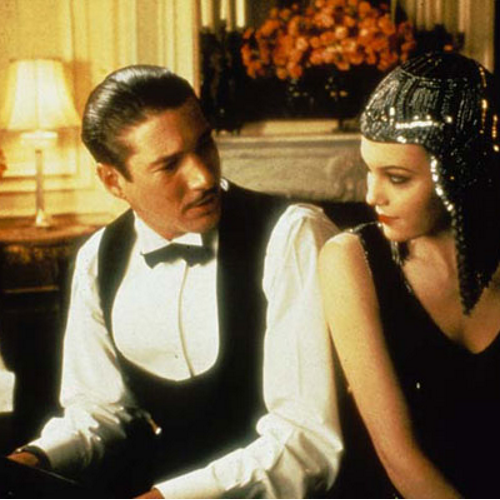
Eric D. Snider and Mental_Floss present 14 Epic Facts About Gangs of New York. Here are three of my favorites…
1. IT WAS 32 YEARS IN THE MAKING.
Martin Scorsese read Herbert Asbury’s 1928 nonfiction book The Gangs of New York: An Informal History of the Underworld in 1970 and immediately thought it would make a good movie. He didn’t have any money or clout yet though, so he had to wait. He bought the movie rights to the book in 1979, and even got a screenplay written around that time, then spent the next 20 years trying to get the project off the ground before finding a willing financial partner in Harvey Weinstein at Miramax Films.
7. SEVERAL CHARACTERS WERE BASED ON REAL PEOPLE.
Bill the Butcher was real, though Scorsese changed his surname from Poole to Cutting for the movie to reflect a creative liberty he’d taken, i.e., having the character live to see the Civil War (he was actually murdered in 1855). William “Boss” Tweed (Jim Broadbent) was a real politician who controlled the Tammany Hall political machine, as you may recall from your high school U.S. history class. So were the Schermerhorns, the rich people seen taking a tour of the misery and vice of Five Points. (Interesting footnote: Scorsese’s fifth wife, whom he married in 1999, is one Helen Schermerhorn Morris, a descendant of early New York elites.) Perhaps most surprisingly, Hell-Cat Maggie (Cara Seymour)—the vicious female fighter who bites off victims’ ears—was fact-based, being a composite of the real Hell-Cat Maggie (her real name is unknown) and a few other historical lady criminals.
13. THERE WERE LONGER CUTS OF THE MOVIE, BUT YOU WON’T SEE THEM.
The first cut, the throw-in-everything-and-see-what-works version, was three hours and 38 minutes, almost an hour longer than the final cut. Scorsese and his longtime editor, Thelma Schoonmaker, tinkered with it relentlessly, ultimately producing 18 different versions that were screened for various audiences. Weinstein, rightfully nicknamed Harvey Scissorhands for his ruthless trimming of the movies he releases, no doubt urged Scorsese toward a shorter runtime, but Scorsese said he’s happy with the one everybody saw, which is two hours and 47 minutes.
“There’s not one version that I would say, ‘That’s my original version,’” Scorsese said on the DVD commentary. They were more like drafts: “This was all a series of changes and rewrites and restructuring, until finally it comes down to the movie you see in the theater.”