Recently Discovered Uncut Original Trailer for “Son of Frankenstein”
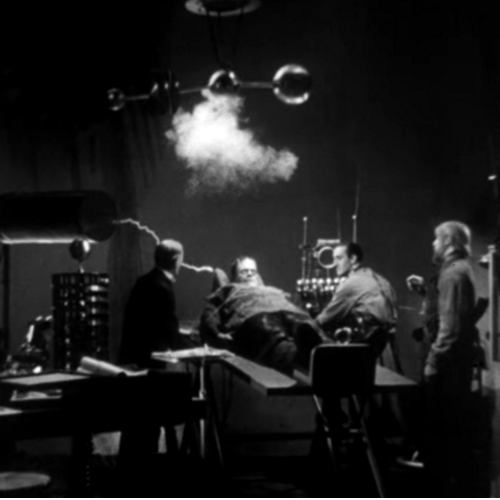
Today we have a recently discovered original uncut trailer for Son of Frankenstein that is said to be taken from alternate takes and deleted scenes.
Previews and Reviews that are Z's Views
Today we have a recently discovered original uncut trailer for Son of Frankenstein that is said to be taken from alternate takes and deleted scenes.
 Spook Busters (1946)
Director: William Beaudine
Screenplay: Edmond Seward and Tim Ryan
Stars: Leo Gorcey, Huntz Hall, Douglass Dumbrille and Bobby Jordan.
The Pitch: “Hey, let’s put the East Side Kids in with a mad scientist and an ape!”
Tagline: The Fun’s Getting FEAROCIOUS! MAD DOCTORS! HAUNTED HOUSES! GORILLAS!
The Overview: Beware of Spoilers…
The Bowery Boys find themselves in another creepy, old house with a mad scientist who kidnaps Satch [Hall] to place his brain in a monster ape! Wha- what?
The boys start a pest exterminating business and find themselves in a haunted house with a mad scientist looking to put Satch‘s brain in a gorilla. Guess he wants to dumb-down the monkey. The usual hi-jinks ensue when the Boys set out to rescue Satch.
It is almost as if the writers put the screenplays for Spooks Run Wild and Ghosts Run Wild in a blender.

Rating:

 Master Minds (1949)
Director: Jean Yarbrough
Screenplay: Charles R. Marion and Bert Lawrence (additional dialogue)
Stars: Leo Gorcey, Huntz Hall, Garbriel Dell, Alan Napier and Glenn Strange.
The Pitch: “Hey, let’s put the East Side Kids in with a mad scientist and a monster!”
Tagline: THE CHILLS WILL ELECTRIFY YOU When The Bowery Boys Meet The Monster.
The Overview: Beware of Spoilers…
The Bowery Boys find themselves in another creepy, old house when a mad scientist kidnaps Satch [Hall] because of his extraordinary brain! Wha- what?
When a bad tooth gives Satch the power to predict the future, Slip [Gorcey] puts him in a sideshow in order to make some fast cash. Mad scientist, Dr. Druzik [Napier] sees first-hand Satch’s ability and decides that Satch’s brain would be perfect for a transplant into his monster [Strange]. The usual hi-jinks ensue when the Boys set out to rescue Satch.
Master Minds is a cut above the previously reviewed East End Kids/Bowery Boys movies!

Rating:

 Ghosts on the Loose (1943)
Director: William Beaudine
Screenplay: Kenneth Higgins
Stars: Leo Gorcey, Huntz Hall, Bobby Jordan, Bela Lugosi and Ava Gardner.
The Pitch: “Hey, let’s put the East Side Kids in a creepy deserted mansion with a killer ghosts on the loose.”
Tagline: You’ll yell with glee when these happy-go-lucky hooligans invade the shivery domain of the Man of a Thousand Horrors! It’s Chill-arious!
The Overview: Beware of Spoilers…
The East Side Kids (who would later grow into The Bowery Boys) find themselves in another creepy, old house with strange things going on. When the boys decide to surprise newlywed friends by fixing up their new house, they get confused on the address and end up in a haunted house.
If you’ve seen Spooks Run Wild you’re in for more of the same. I expected more from a horror comedy with Bela Lugosi, a spooky old house, Ava Gardner and the East Side Kids. Perhaps because I’ve seen the same gags done better with The Three Stooges and Abbott & Costello, my sights were set too high.

Rating:
 Some Like It Hot (1959)
Director: Billy Wilder
Screenplay: Billy Wilder and I.A.L. Diamond
Stars: Marilyn Monroe, Tony Curtis, Jack Lemmon, George Raft, Pat O’Brien and Joe E. Brown.
The Pitch: “Hey, Billy Wilder has an idea for a Marilyn Monroe comedy with Tony Curtis and Jack Lemmon!”
Tagline: The movie too HOT for words!
The Overview: Beware of Spoilers…
When musicians Joe [Curtis] and Jerry [Lemmon] witness a gangland execution and are seen by the killers, they know their days are numbered. The mob has placed a price on their heads and they have to get out of town. So Joe becomes Josephine, Jerry becomes Daphne and they join an all girl band headed for Florida by train.
Things become even more complicated when Joe falls for Sugar [Monroe] and millionaire Osgood Fielding the third, goes ga-ga for Daphne. The only way things could get worse is if the gangsters find them and guess what? Yep. The gangsters find them.
Monroe looks great. This is my favorite Jack Lemmon role. You won’t be disappointed.

Rating:

 Spooks Run Wild (1941)
Director: Phil Rosen
Screenplay: Carl Foreman & Charles R. Marion … Jack Henley (additional dialogue)
Stars: Bela Lugosi, Leo Gorcey, Bobby Jordan, Huntz Hall and Angelo Rossitto.
The Pitch: “Hey, let’s put the East Side Kids in a creepy deserted mansion with a killer on the loose.”
No Tagline
The Overview: Beware of Spoilers…
The East Side Kids (who would later grow into The Bowery Boys) find themselves sent to a rural summer camp. When the boys sneak out one night looking for some fun they find themselves in a creepy old house where the sinister looking Nardo (Lugosi) and his diminutive servant Luigi [Rossitto] live. They will soon learn that a killer is on the loose and closer than they can imagine.
I expected more from a horror comedy with Bela Lugosi, a spooky old house and the East Side Kids. Perhaps because I’ve seen the same gags done better with The Three Stooges and Abbott & Costello, my sights were set too high.

Rating:
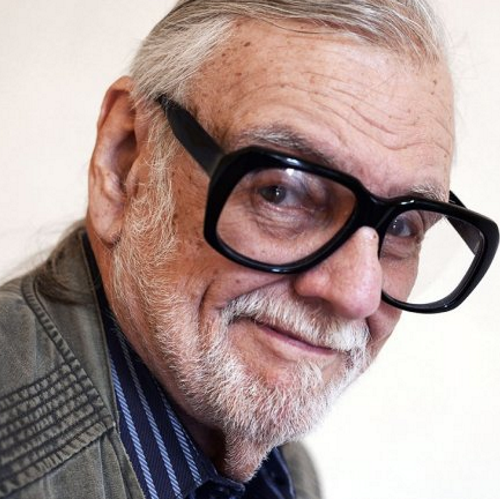
Yesterday The Hollywood Reporter posted Aaron Couch’s interview with George Romero. Here’s a taste then click over and read the whole thing…
I’m looking forward to seeing the restored Night of the Living Dead. I hope that the restoration doesn’t take away from the film’s horror. If it is too clean looking it may feel more like a movie.
While I can see where Romero is coming from, I don’t think that the bigger budget zombie movies are a bad thing… as long as they’re done well. ; )
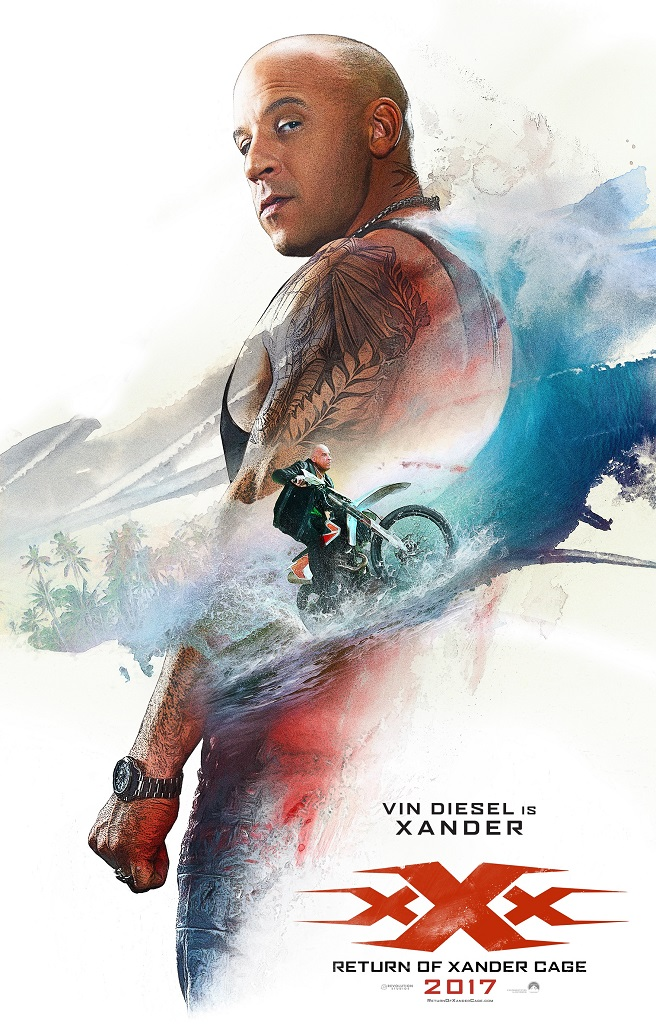
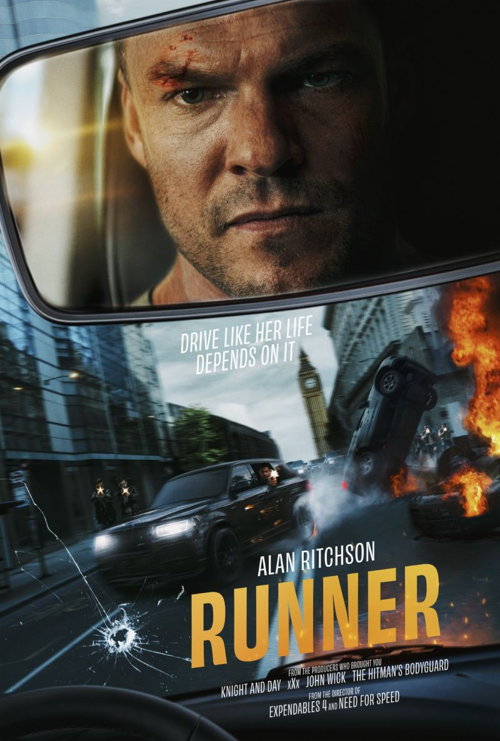
Hey! That’s Vin Diesel in XXX: Return of Xander Cage!
You can check out all of the other character posters for Xander’s return at JoBlo.com.
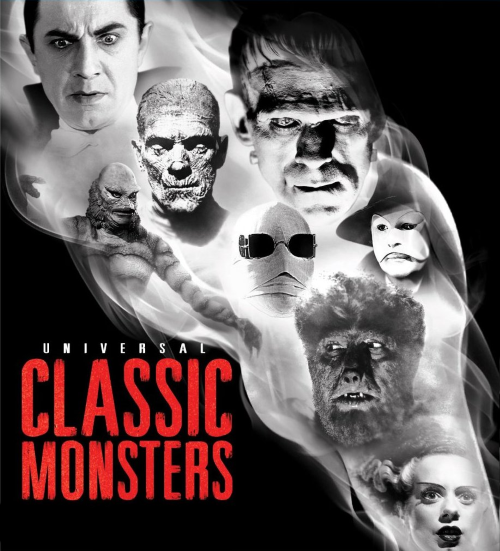
Spencer Perry and ComingSoon.net present All of the Universal Classic Monsters Ranked!
Some thoughts about Perry’s rankings…

César Moreno created this very cool Creed poster as a commission for one of his fans.
Source: César Moreno and JoBlo.com.
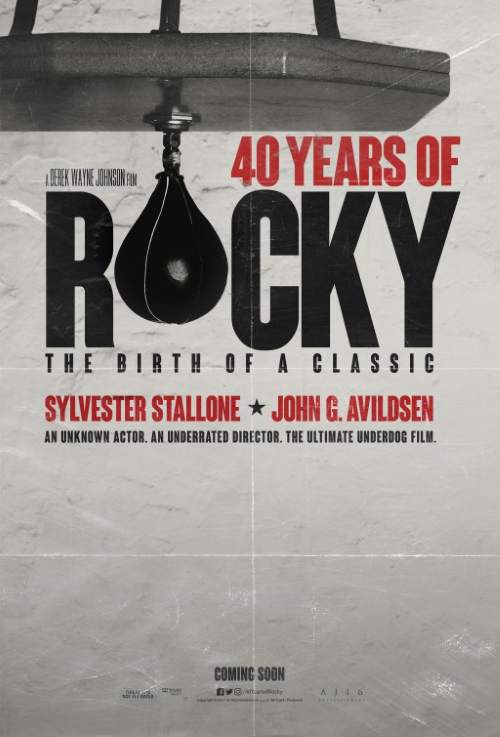
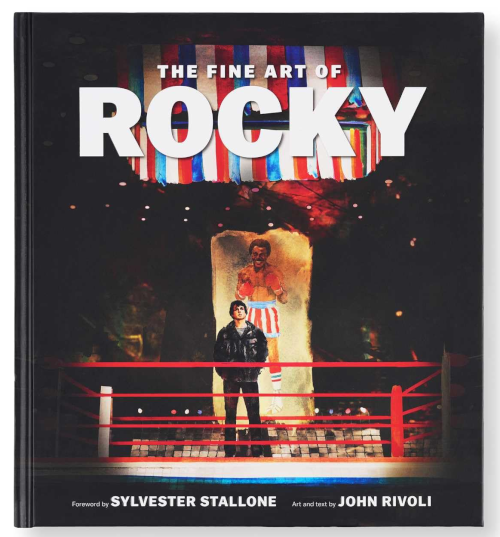
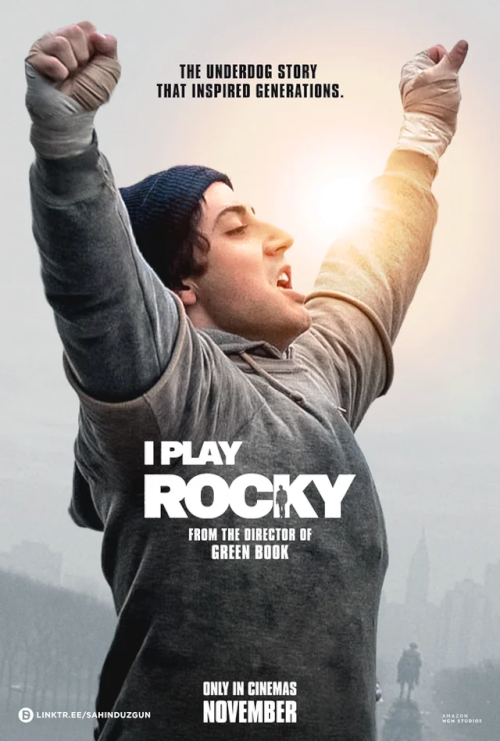
My guess is that many of us are going to be interested in seeing 40 Years of Rocky.
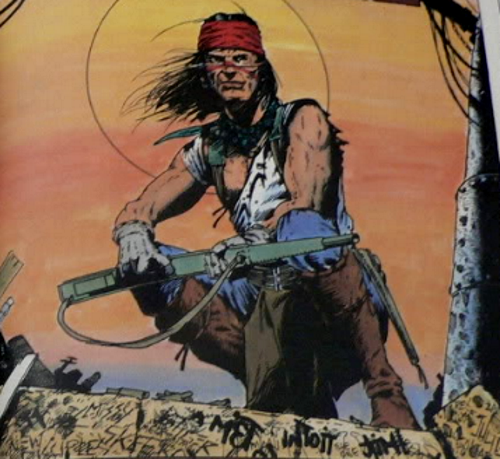
I’m excited to report that Tim Truman’s creation Scout has been optioned by Studio 8 with Chris MacBride (The Conspiracy) set to write and direct. Truman will serve as a creative consultant for the character he created, wrote and directed in a long-running comic series.
Scout is…
…an Apache ex-Army Ranger who, while on a personal/spiritual mission, investigates the disappearance of young women and in the process uncovers a far-reaching conspiracy involving local gangs, human slavers, oil companies and corrupt government officials.
Source: Deadline.com.

Danny Bowes and Film School Rejects present The 5 Greatest One Man Movies. The idea is that…
One Uniquely Talented Man is the only thing standing between paradise and the void.
No superheroes. No James Bond.
Ok. I agree with John Wick. Lock Out is an excellent choice. But the other three selections?
Really?
C’mon, man.
Here’s what should have been added in their place.
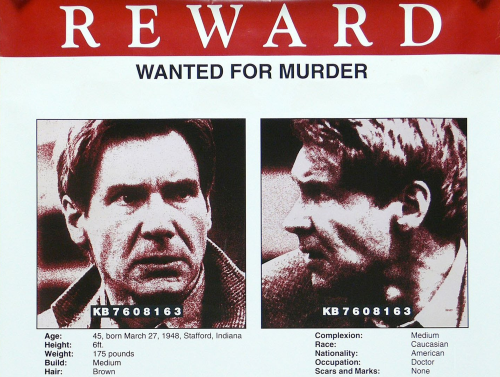
Eric D. Snider and Mental_Floss present 13 Running Facts About The Fugitive. Here are three of my favorites…
2. IT WAS ALMOST ALEC BALDWIN INSTEAD OF HARRISON FORD.
Kopelson, a fan of the TV series, had been trying off and on to get the film made since the 1970s. It was finally about to happen in the early ’90s, with Alec Baldwin in the lead role and Walter Hill (48 Hrs.) as director, but Warner Bros. didn’t think Baldwin had enough star power. “With an expensive movie, the consideration is, what star can ‘open’ it,” Kopelson said, “and the studio wasn’t certain at that time that Alec could do it.” (By the way, this was the secondtime Baldwin had lost a role to Harrison Ford, who also replaced him as Jack Ryan in The Hunt for Red October sequel Patriot Games.)
9. HARRISON FORD WASN’T FAKING HIS BEFUDDLEMENT IN THE INTERROGATION SCENE.
To lend more realism to the scene where Dr. Kimble is first questioned by police, Davis had Ford and the other actors do it with only half a script—the cops’ half. Ford, not knowing in advance what the questions would be, had to ad lib responses in character. Naturally, this came across as being defensive and flustered, which was exactly what the situation called for. Acting!
13. THE DAM SCENE COST $2 MILLION, INCLUDING ABOUT $60,000 FOR DUMMIES.
The maze of tunnels leading to the dam were fake, and built in a Chicago warehouse. The last section of the tunnel—the part that opens over the dam, where Kimble and Gerard have their dramatic confrontation—was actually transported from Chicago to the Cheoah Dam in North Carolina, where it was rigged to look like it belonged there. For the big jump, there were no stuntmen involved. Ford himself (secured by a wire) did the shot where Kimble looks over the edge and considers jumping, and dummies were used for the plunge itself. Six Harrison Ford lookalike dummies were commissioned, each costing somewhere between $7000 and $12,000. They did not survive intact, much to the dismay of their manufacturer, who’d been hoping to re-rent them.
 If you’ve ever seen The Exorcist, then you’ve seen the face above even if you don’t remember it.
Director William Friedkin flashed the image on the screen for 1/8 of a second. Your subconscious would recognize the frightening image even if you didn’t fully process it.
If you click over to The Terrifying Subliminal Image Hidden in The Exorcist by Jake Rossen at Mental_Floss you’ll get the full lowdown on the image and where you can find it.