10 Things Dr. McCoy is Not
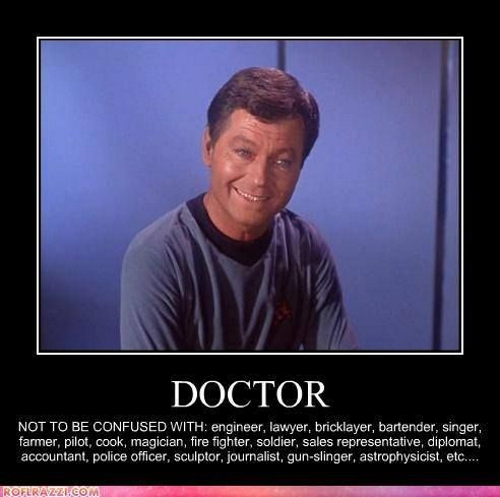
Dr. Leonard “Bones” McCoy is known for his two signature lines: 1] “He’s dead, Jim!” and 2] “I’m a doctor, not a ____ (fill in the blank). With that said, I present, 10 Things Dr. Leonard McCoy is Not.
Previews and Reviews that are Z's Views
Dr. Leonard “Bones” McCoy is known for his two signature lines: 1] “He’s dead, Jim!” and 2] “I’m a doctor, not a ____ (fill in the blank). With that said, I present, 10 Things Dr. Leonard McCoy is Not.
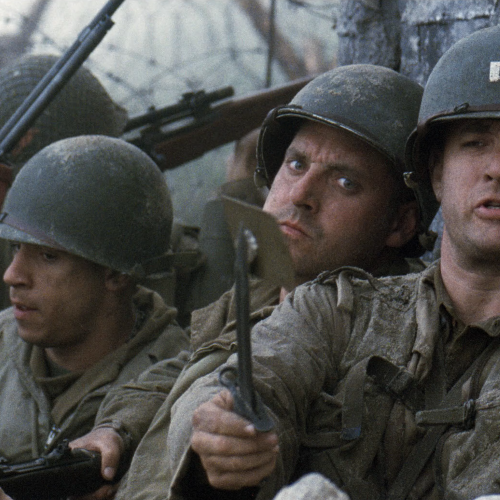
Nerdwriter has created a really interesting and spot-on breakdown of how Steven Spielberg broke down the taking of the beach scene in Saving Private Ryan. Definitely worth a look.

I’ve known Rob Smith Jr. for decades. In addition to being a talented artist, Rob is one of the most passionate, committed and dedicated people I’ve ever met. Rob absolutely loves the state of Florida, nature, art, politics, reading and more. Rob’s enthusiasm is contagious and he is always on the go. Another thing I admire about Rob is he doesn’t just talk about his passions, he gets actively involved.
Rob gifted me with his take on Sly as Barney Ross a few years ago and sadly it didn’t get posted until just now.
You can check out Rob’s site and learn about more of his passions!
 Fury (2014)
Director: David Ayer
Screenplay: David Ayer
Stars: Brad Pitt, Shia LaBeouf, Logan Lerman, Michael Pena and Jon Bernthal.
The Pitch: “Hey, David Ayer wants to make a war movie with Brad Pitt!”
Tagline: “War never ends quietly.”
The Overview: Beware of Spoilers…
In the latter days of World War II, tank commander Don ‘Wardaddy’ Collier [Pitt] wants nothing more than to keep his highly battle-tested crew alive. Returning from a battle with a dead crew member, Collier is immediately given a raw recruit and ordered to have his tank commandos join up on a mission vital to the success of the war.
Writer / director David Ayer has brought together an excellent cast to give us a unique perspective on war — from a tank crew’s view. Although most would think that being in a tank would be one of the safest places during a battle, that was far from true. It has been said that the average life expectancy of an allied tank crew was just six weeks.
Ayer is great at creating heroes and villains that aren’t black and white and he doesn’t let us down here. Although a first glance there are several stereotypical characters, the actors chosen make them real. Ayers movies always leave the viewer with a lot to think about and Fury is no exception. Right now, I’m thinking that it might be time for another viewing.

Rating:

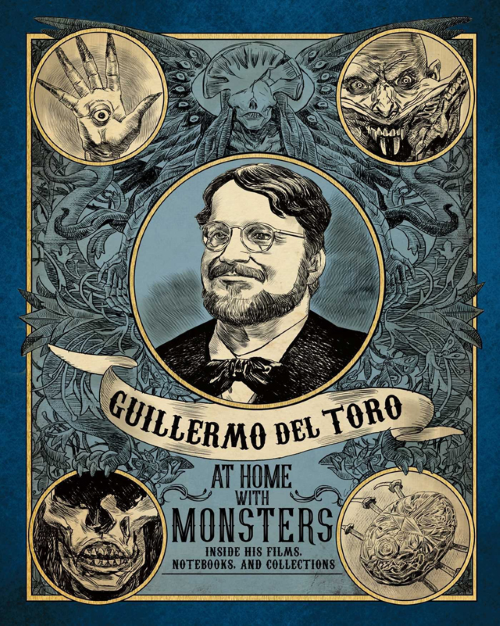
Max Evry at ComingSoon.net recently Ranked the 10 Best Guillermo del Toro Monsters. I won’t quibble with the list other than to say I would have placed the Reapers from Blade II in the number one position.

Bleak December Inc. has teamed with Fangoria Musik with the plan to release a series of audio adaptations of classic horror stories including Dr. Jekyll & Mr. Hyde, The Phantom of the Opera, and Frankenstein.
First up is Tony Todd (what a great audio choice!) as Dracula. Click over to ComingSoon.net to listen to a trailer as Tony Todd Plays Dracula.

Dave Wachter is back and he brought his take on Sly from the Rhinestone. I met Dave several years ago and became an instant fan. I wasn’t the only one to discover Dave’s fantastic sketches! How can you not like a great guy who is a terrific artist?
It has become a HeroesCon tradition that I get Dave to draw his take on Sly. Somehow this one was never posted until now.
You can see more of Dave’s art at his site. – Craig
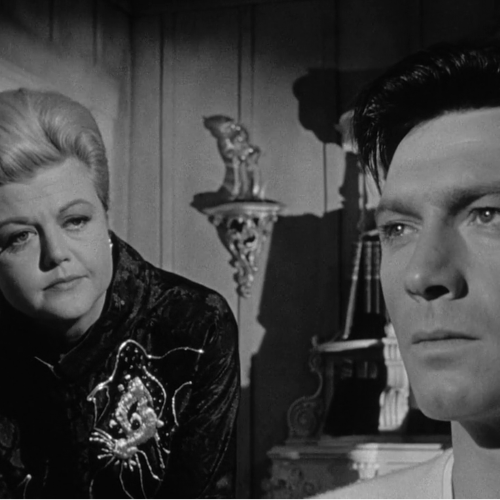
Eric D. Snider and Mental_Floss present 13 Conspiratorial Facts About The Manchurian Candidate. Here are three of my favorites…
1. JOHN F. KENNEDY HELPED IT GET MADE.
Frank Sinatra had a deal with United Artists and wanted the studio to make an adaptation of Richard Condon’s 1959 novel. But the execs at UA thought the subject matter was too politically controversial and wanted nothing to do with it. Lucky for Sinatra, he had friends in high places, including President John F. Kennedy. Frank visited JFK, who’d been a fan of the novel, and the president made a personal appeal to UA head Arthur Krim, who was especially apt to listen because he was also the Democratic Party’s finance chairman. Condon later told a Sinatra biographer, “That’s the only way the film ever got made. It took Frank going directly to Jack Kennedy.”
4. THE BLURRY SHOTS WEREN’T AN ARTISTIC CHOICE.
Near the end of the film, when Marco visits Raymond’s hotel room and interrogates him, trying to undo the effects of the brainwashing, some shots of Sinatra are out of focus. Director John Frankenheimer said he got a lot of praise from critics for this “artistic choice”—showing Marco the way the addled Raymond sees him—but, in fact, it was the assistant cameraman’s mistake. Frankenheimer was horrified when he saw the footage and called Sinatra back in to reshoot those scenes, but Sinatra couldn’t deliver a performance better than that first, blurry one.
5. SINATRA WANTED LUCILLE BALL TO PLAY THE CONNIVING MOTHER.
Frankenheimer, who’d worked with Angela Lansbury just a few months earlier on All Fall Down, always wanted her for the part of Mrs. Eleanor Shaw Iselin. But Sinatra had an interesting suggestion, too: Lucille Ball. Putting TV’s queen of slapstick in such a malevolent role would have been perversely amusing, but, alas, it was not to be.

Live By Night makes my must-see list based on the cast and trailer!

Jake Rosen and Mental_Floss present You Betcha: 14 Polite Facts About TV’s Fargo. Here are three of my favorites…
2. THERE’S A REASON THEY DIDN’T USE MARGE.
One reason Littlefield was more supportive of this spin-off was because creator Noah Hawley had no desire to revisit McDormand’s Marge Gunderson character, the heavily-pregnant sheriff of Brainerd, Minnesota. In 2014, Hawley told IndieWire that he opted for an anthology format with a different narrative every season to avoid the show becoming about the “grim” day-to-day adventures of Marge.
4. THE SERIES IS ALL TAKEN FROM A (FAKE) TRUE CRIME BOOK.
Hawley has been quoted as saying he thinks of the Fargo-verse as being influenced by a big book of Midwestern crime tales, with each season being a different chapter. He cemented that idea in the ninth episode of the second season, opening with a close-up of a book titled The History of True Crime in the Midwest.
5. … WHICH MIGHT EXPLAIN THAT UFO.
Saving Patrick Wilson’s Lou Solverson character during the “Massacre at Sioux Falls” referenced in the first season was the appearance of what appeared to be a UFO hovering over a motel parking lot. Even by Fargo’s standards, it was a strange occurrence. According to Hawley, who was pressed for some kind of explanation during a June 2016 book signing, the scene stemmed from the idea that the show is taking cues from “true crime” books and all of the unbelievable details they often contain.
Speaking of a similar scene that felt disconnected from the narrative of the original film, Hawley said that he asked himself, “‘Why is this in the movie?’ It has nothing to do with the movie—except the movie says, ‘This is a true story.’ They put it in there because it ‘happened.’ Otherwise you wouldn’t put it in there. The world of Fargo needs those elements; those random, odd, truth-is-stranger-than-fiction elements.”

One of the fun things about movie and tv shows is that the characters in them (usually) get to drive the coolest vehicles. I’ve always said I’d drive the ’66 Batmobile or the ’50 Merc that Cobra drove if I had the extra cash.
The folks at autoacessoriesgarage.com created The Ultimate TV & Movies Car List. There are 114 vehicles on our list and a fun factoid about every single one. Click over and enjoy!

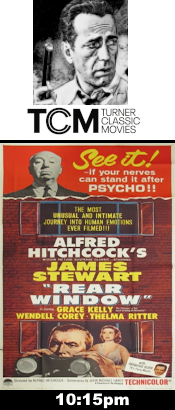
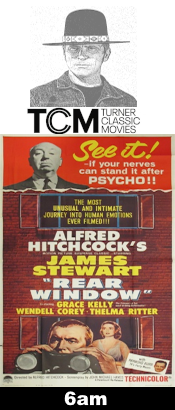
Kristin Hunt and Mental_Floss present 12 Thrilling Fact About Rear Window. Here are three of my favorites…
3. GRACE KELLY TURNED DOWN THE LEAD IN ON THE WATERFRONT TO STAR IN REAR WINDOW.
In the fall of 1953, Grace Kelly was offered the female lead in two films: one was Rear Window, the other was Elia Kazan’s On the Waterfront. Although she was dying to work with Hitchcock again, On the Waterfront would’ve allowed Kelly to stay in New York, which she preferred to Los Angeles. Still, she ultimately chose to play socialite Lisa Fremont over blue-collar Edie Doyle. Instead, the part went to Eva Marie Saint, who would become a Hitchcock blonde herself with North by Northwest.
4. HITCHCOCK MODELED THE VILLAIN ON A PRODUCER HE HATED.
Hitchcock had a long-standing grudge with his former producer, David O. Selznick. The director believed Selznick had meddled too much with his movies, so much so that Hitchcock effectively disowned his first film with the producer, Rebecca. His ties to Selznick ended with the 1947 movie The Paradine Case, though, so Hitch decided to enact a sly bit of revenge onscreen. It involved Raymond Burr, the actor playing Rear Window villain Lars Thorwald. Hitchcock gave Burr glasses just like Selznick’s and curly gray hair to match. He also instructed Burr to adopt many of the producer’s mannerisms, such as the way he cradled a telephone in his neck. When all was said and done, Burr’s murderous character looked a lot like Selznick, no doubt to the producer’s supreme annoyance.
11. HITCHCOCK DELIBERATELY MISDIRECTED HIS ACTORS FOR LAUGHS.
Each neighbor has a hook: Miss Torso is a dancer, Miss Lonelyhearts is severely single, the Songwriter is, well, a songwriter. Then there’s that random couple sleeping on the fire escape. Actors Sara Berner and Frank Cady played the unnamed pair, who spend most of the movie fidgeting on a mattress outdoors without incident. Until it rains. For this scene, Hitchcock intentionally messed with his actors. He told Berner to pull the mattress one way and Cady to pull it the other. Neither one knew the other had received conflicting directions. So when Hitchcock called “action,” the pair struggled with the mattress until Cady accidentally flew into the window. Hitchcock thought it was so funny, he kept it in the movie.
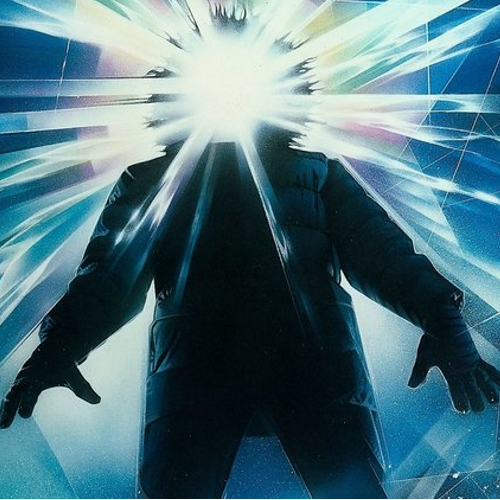
John Carpenter’s The Thing has an ambiguous ending that fans have argued about since the release of the film. Seems the arguing can stop now thanks to the information provided by Dean Cundey, the cinematographer on The Thing.
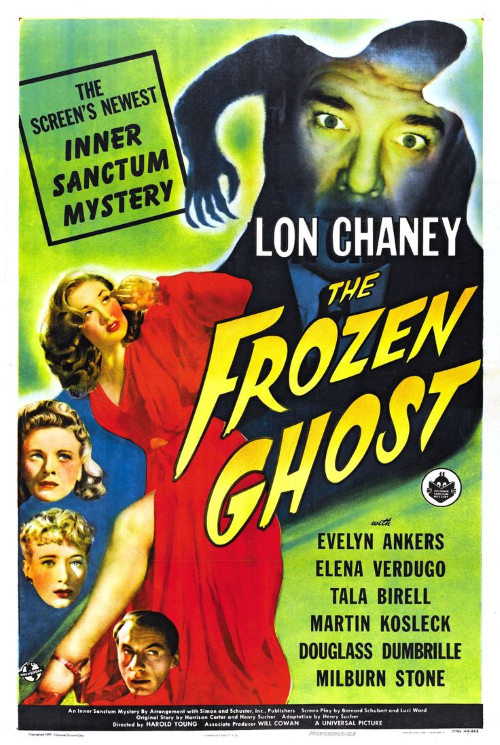 The Frozen Ghost (1945)
Director: Harold Young
Screenplay: Bernard Schubert and Luci Ward from an original story by Harrison Carter and Henry Sucher
Stars: Lon Chaney Jr., Evelyn Ankers and Milburn Stone.
The Pitch: “It is time for another Inner Sanctum Mystery!”
Tagline: “Nameless Terror!..creeping from the walls of a Museum for Murder!”
The Overview: Beware of Spoilers…
The famous Hypnotist Gregor the Great [Chaney] mistakenly believes he killed an audience member during his act by using his mental powers. When it is shown that the man died of natural causes, Gregor is still shaken.
Gregor ends up at a woman friend’s wax museum where things really get strange… his woman friend disappears and is thought to be dead and Gergor is the main suspect. Will Gregor find the person(s) behind her disappearance and clear his name? Will those watching the movie even care?

Rating:

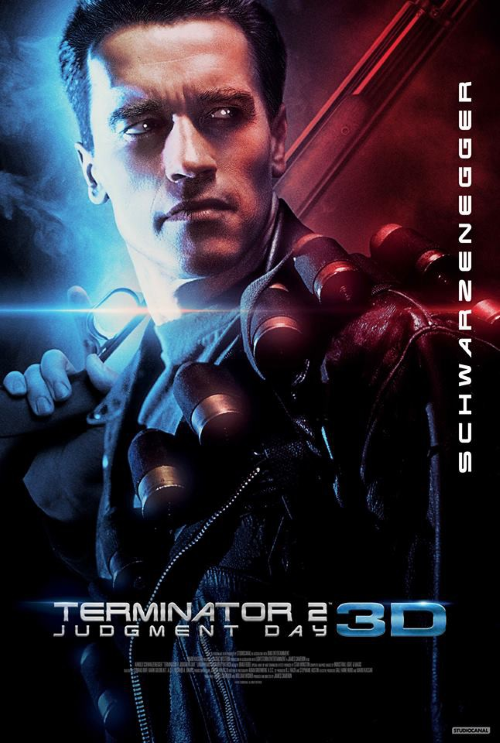
I’m not the biggest fan of 3D movies, I thought that James Cameron’s Avatar in 3D worked really well. Since T2 is my favorite Terminator movie, I may just have to check it out in 3D when it’s released. Oh, and I almost forgot to mention — I like this poster!