Category: Movies

21 True Facts About “The Matrix”

Who besides my wife doesn’t love The Matrix?

Hollywood.com presents 21 True Facts About The Matrix.  Here are three of my favorites…

1. The Wachowskis risked the film’s entire budget just to make it the way they wanted. 

GIPHY/Alien-Vibe.Tumblr.Com

The original budget that the Wachowskis pitched Warner Bros. was over $80 million. Warner gave them $10 million, so they used all of it on the opening sequence with Trinity. The opening scene impressed executives at Warner so much when they showed it, they green-lit the original budget.

2. The film differentiates the Matrix and the real world through color.

Pandawhale.Com

The scenes that take place within the Matrix are tinted green; those that happen in the real world have more of a normal coloring. The fight scene between Neo and Morpheus has a yellow tint, since it takes place in neither.

12. Other actors considered to play Neo were Nicolas Cage, Tom Cruise, and Leonardo DiCaprio.

GIPHY/Thats-N0-Moon.Tumblr.Com

Thankfully, Keanu won out. He’s really the only Neo we can imagine. #canttouchthis

15 Immortal Facts About “Highlander”

Jake Rossen and Mental_Floss present 15 Immortal Facts About Highlander.

Before I present my three favorite facts, let me tell you I am a HUGE fan of Highlander.  The sequels were bad and I never watched the tv series.  For me, “There can only be one!”

2. THE ROLE WAS ORIGINALLY OFFERED TO KURT RUSSELL.
At the time, Russell was a former Disney kid star who had gotten some notice for his genre work with John Carpenter in Escape From New York (1981) and The Thing (1982). Highlanderdirector Russell Mulcahy met with him for the film; though he appeared ready to take on the role, Mulcahy told Cinefantastique that Kurt’s then-girlfriend, Goldie Hawn, talked him out of it.

4. LAMBERT BARELY SPOKE ANY ENGLISH.
Aside from grunts, Lambert didn’t have much dialogue as Tarzan, so Mulcahy was unaware that his English was limited at the time he was cast in Highlander. In the end, his unique accent—Lambert was raised in Switzerland—worked for the character, who was supposed to have immersed himself in various cultures over his 400-year existence.

12. FANS AREN’T BLAMELESS IN THE SENSELESS TRAGEDY OF THE SEQUEL, EITHER.
According to producer Bill Panzer, the idea of exploring the origins of the Immortals was a result of fans constantly asking about it after the 1986 original. “The question we were most asked by fans after the first film was, ‘Where did the immortals come from?’” he told Video Watchdog. “It made sense to answer that question in the second film. What we didn’t realize at the time was that the fans didn’t really want to know their … origins because then the romanticism and mystery of the story was stripped away.” Good job, fans.
14 Things You Might Not Know About “Ghost”
Garin Pirnia and Mental_Floss present 14 Things You Might Not Know About Ghost.  Here are three of my favorites…

1. WHOOPI GOLDBERG CREDITS HER OSCAR WIN TO PATRICK SWAYZE.
On The View, Goldberg revealed that she only got the role of Oda Mae Brown because Swayze fought for her. The producers resisted casting her, but Swayze told them he wasn’t doing the film unless Whoopi was in it, too, and that she was right for the part—even though at that point she and Swayze had never met. “And I won an Oscar because of Patrick Swayze,” Goldberg said. In her 1991 Oscar speech, she thanked Swayze, calling him “a stand-up guy.”

4. DIRECTOR JERRY ZUCKER SAID HE’D CAST PATRICK SWAYZE “OVER MY DEAD BODY.”
In a video that appears on the Ghost DVD, screenwriter Bruce Joel Rubin—who won an Oscar for his script—talks about how Zucker was at first against casting Swayze as Sam. “Jerry wanted to see him on film, so went out and saw the movie Roadhouse, and we walked out of that movie and Jerry said to me, ‘Over my dead body,’” recalls Rubin. Swayze really wanted the role, and because Zucker appreciated Swayze’s gusto, he let Swayze audition. After Swayze read the end of the script aloud, Zucker changed his mind. “We all had tears in our eyes, right there in the office—and we knew how it ends,” Zucker told People in 1990. “I saw a side of Patrick that I never knew existed.”

3. GHOST TURNED DEMI MOORE INTO THE HIGHEST-PAID ACTRESS AT THE TIME.
By the time Ghost was released, Moore was already famous for her roles in St. Elmo’s Fire and About Last Night…, but she wasn’t considered a bankable star. After the unexpected $200 million domestic gross of Ghost, she hit box office gold with a trifecta of other huge hits: 1992’s A Few Good Men ($141,340,178), 1993’s Indecent Proposal ($106,614,059), and 1994’s Disclosure ($83,015,089). If you add up all of Demi’s film grosses, it comes out to more than $1 billion. In 1995, she was paid an unprecedented $12.5 million to take her clothes off in Striptease. The film wasn’t a huge hit, and a few years later she traded Hollywood for Idaho.

16 Nostalgic Facts About “Stand by Me”

Roger Cormier and Mental_Floss present 16 Nostalgic Facts About Stand by Me.  Here are three of my favorites…

3. COCA-COLA ALMOST SHUT DOWN THE MOVIE ENTIRELY.
The soda company bought Embassy Pictures, the film’s original production company, and announced they weren’t going to fund Stand by Me just two days before they were set to start shooting. Television legend Norman Lear—who had worked with Reiner for years on All in the Family—was one of the three owners of Embassy prior to its sale. He believed in the project enough that he agreed to personally foot the film’s $8 million budget.

14. STEPHEN KING WAS IMPRESSED.
After Reiner screened the finished product for the author, King excused himself for 15 minutes. When he returned, he said it was the first time one of his stories was successfully put on film. King even applauded Reiner for changing it so that Gordie picks up the gun instead of Chris, wishing he had thought of that in the first place.

13. REINER CAME UP WITH THE TITLE.
Columbia Pictures didn’t like the idea of using The Body as the movie title for a variety of reasons. Reiner thought naming it after the Ben E. King song that plays at the end of the movie would be good. Co-writer Raynold Gideon said Reiner’s suggestion was the “least unpopular option.”

Tom Hardy Gets “100 Bullets”

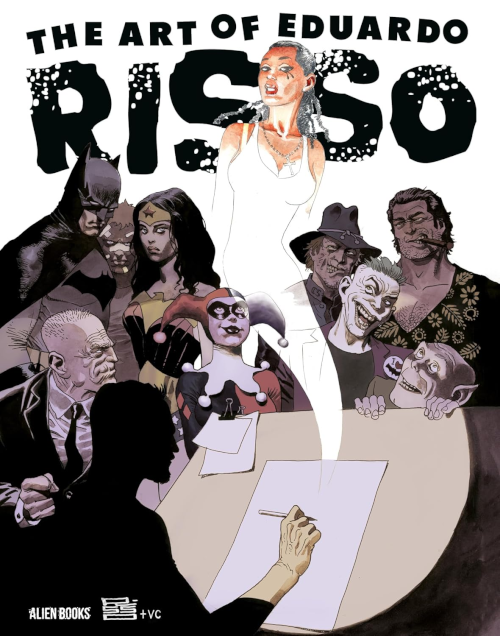
As a huge fan, I loved reading this week that Tom Hardy has teamed with New Line Cinema to bring Brian Azzarello and Eduardo Risso’s 100 Bullets to a theater near you.  Hardy looks to direct and star in the adaption.

My guess is Hardy will play Lono which would work.  If he doesn’t and needs help with the cast, I’ll stick with my 100 Bullets dream cast from 2011.

Source: The Hollywood Reporter.

15 Fast Facts About “Days of Thunder”

Eric D. Snider and Mental_Floss present 15 Fast Facts About Days of Thunder.  Here are three of my favorites…

6. AS WITH SO MANY THINGS, WE CAN THANK PAUL NEWMAN FOR THE FILM’S EXISTENCE.
The legendary actor and part-time racer shared his enthusiasm for motorsports with Tom Cruise when they made The Color of Money together. The two were then introduced to NASCAR team owner Rick Hendrick (the inspiration for Randy Quaid’s character), who let budding racing enthusiast Cruise drive a stock car himself. Cruise’s reaction after taking a car around the track at 175 mph: “Hey, we gotta make a movie about this!”

12. AS YOU’D EXPECT, THE RACING SCENES WERE FILMED WITH THE CARS GOING MUCH SLOWER THAN THEY USUALLY WOULD: ONLY 120 MPH.
That’s down from the 200 miles per hour those cars would do in a real race. And still, even at a reduced speed, the work was dangerous. Tony Scott told The New York Times, “There’s a major crash in the middle of the movie at speeds of 120 to 140 miles an hour manned by stunt drivers. Things happen to metal at 140 miles an hour that don’t happen at 60 miles an hour.” Despite that, Scott boasted that the total on-set injuries for the entire production only added up to 13 stitches.

15. THE SCENE WHERE NASCAR BOSS BIG JOHN THREATENS TO FIRE TRICKLE AND BURNS IF THEY BUMP EACH OTHER ON THE TRACK AGAIN—THEN FORCES THEM TO DRIVE TO DINNER TOGETHER—WAS BASED ON A REAL INCIDENT WITH GEOFF BODINE AND DALE EARNHARDT.
Bodine and Earnhardt did not, however, destroy two rental cars in the process. But such shenanigans were attributed to 1950s racers Curtis Turner and Joe Weatherly, who were the Cole Trickles of their day.

15 Punchy Facts About “Raging Bull”

Eric D. Snider and Mental_Floss present 15 Punchy Facts About Raging Bull.  Here are three of my favorites…

1. IT PARTIALLY OWES ITS EXISTENCE TO ROCKY.
Comparisons to that other Oscar-winning boxing movie from four years earlier were inevitable, but the two were actually connected. Rocky was produced by Irwin Winkler and Robert Chartoff, and released by United Artists. When those same producers approached that same studio about doing another boxing movie, the studio said, “A sequel to Rocky? Sure!” That wasn’t what they had in mind (though they did soon enough), but in the meantime, Rocky’s huge success was enough to sell UA on another boxing movie.

5. PAUL SCHRADER FIXED THE SCREENPLAY BY ADDING JAKE LAMOTTA’S BROTHER, JOEY.
It’s strange to imagine Raging Bull without the Joe Pesci character, but that’s how Mardik Martin’s first drafts had it. He was adapting LaMotta’s 1970 memoir, Raging Bull: My Story, co-authored by LaMotta’s lifelong friend Peter Savage (born Peter Petrella). The book didn’t feature Joey as a prominent character, and it had Savage doing most of the things that Joey would eventually do in the movie. When Schrader was hired to build on the work Martin had done and take another stab at the screenplay, he decided the story would be more compelling if it involved brothers rather than friends (blood ties and all that), so he introduced the Joey character and excised poor old Pete. This creative license proved problematic later, when Joey LaMotta sued for defamation because the movie had attributed to him a number of unwholesome deeds (like beating the crap out of a neighborhood mobster) that had actually been perpetrated by Savage.

9. JOE PESCI WAS RUNNING AN ITALIAN RESTAURANT WHEN DE NIRO AND SCORSESE APPROACHED HIM ABOUT BEING IN THE MOVIE.
Pesci had been a professional actor and musician (he sang and played guitar) off and on since childhood, but he called it quits in the 1970s. His 1975 Broadway show with comedy partner Frank Vincent (whom he would later recruit to play Salvy in Raging Bull) had closed after a week, and his first movie, 1976’s The Death Collector (also featuring Vincent), was a flop. But Robert De Niro happened to see that film in 1978, and was so impressed by Pesci’s performance that he pitched him to Scorsese. The two tracked Pesci down and called him at his restaurant to coax him out of showbiz retirement.