Category: Art

Lavender Jack by Dan Schkade
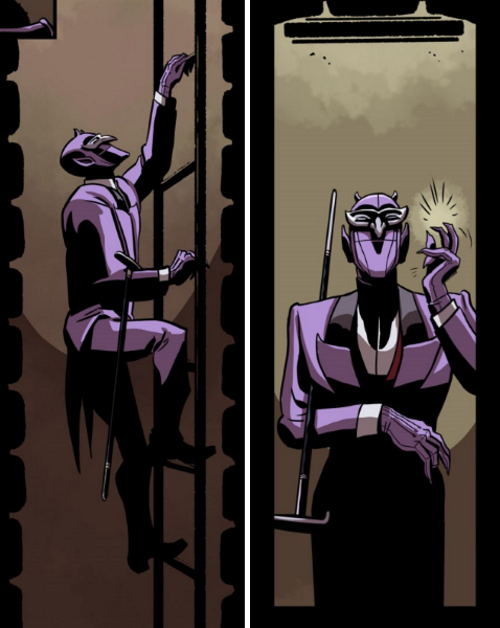
Lavender Jack is a new free weekly comic by Dan Schkade that reminds me of the comics I used to read as a kid.  And that’s a good thing.

When a masked man begins terrorizing the wealthy upper class, exposing their dirty secrets, the Mayor calls in a veteran detective. What begins as a game of cat and mouse leads to a rabbit hole of mysterious organizations, betrayal, & lost love.

Schkade’s writing and art are perfect for Lavender Jack and they should be since he created the character.  Jenn Manley Lee’s colors enhance the strip.  I’m usually not a fan of web comics but I plan to be a regular reader.  You might as well if you give it a shot!
Brooklyn Blood by Paul Levitz and Tim Hamilton

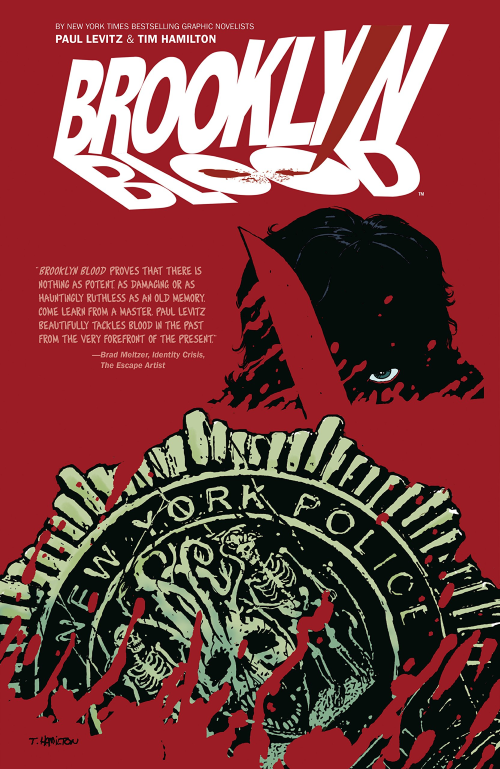
Brooklyn Blood by Paul Levitz and Tim Hamilton looks to be the kind of story fans of crime fiction and horror stories will love.

In Brooklyn, a serial killer is on the loose–and when strange clues lead down a paranormal path, a detective confronts his inner demons to solve the case.

After returning from a tour in Afghanistan, detective Billy O’Connor returns home to a Brooklyn he doesn’t recognize. As he tries to return to his normal routines, his PTSD is easily triggered and he suffers severe hallucinations. Once he begins to work a gruesome homicide case, however, O’Connor has difficulty sorting out what’s real–and after he uncovers some strange clues, he’ll have to face the unthinkable to bring the killer to justice.

From New York Times Bestselling authors Paul Levitz (75 Years of DC Comics: The Art of Modern Myth-Making) and Tim Hamilton (Ray Bradbury’s Farenheit 451: The Authorized Adaptation), this volume collects all sixteen chapters originally serialized in Dark Horse Presents Volume 3 #17-#22 and #24-#33!

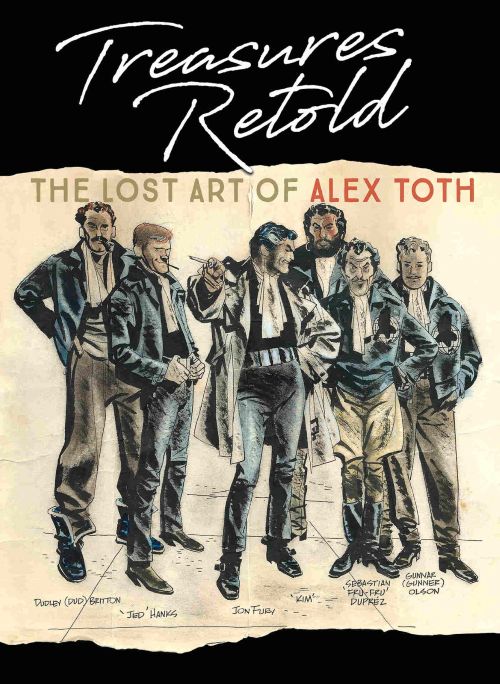
Treasures Retold: The Lost Art of Alex Toth

Fans of great art are excited about Treasures Retold: The Lost Art of Alex Toth.  Toth is a legend among artists, animators and comic book aficionados…

 Alex Toth’s significance to comics and animation art cannot be overstated. During his career, he was the comic industry’s foremost proponent of modern design and composition. Starting in 1950, his work influenced almost every one of his contemporaries, and has continued to work its magic on the generations that followed. In animation, his 1960s model sheets for Hanna-Barbera are still passed around as swipe sources from animator to young animator in the 21st Century.

Included are complete stories from the 1950s and beyond, recently discovered color animation storyboards and presentation drawings, sketches and doodles, industrial comics, and individual pages from obscure comics and magazines. It’s a treasure trove that makes a fitting companion to the Eisner Award-winning Alex Toth: Genius trilogy.

I’m glad these Toth lost treasures have been found and will soon be shared with his fans around the world… especially the fan writing this post.

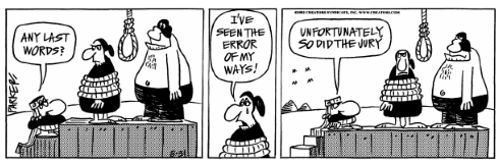
8 Things You Might Not Know About The Wizard of Id

Jake Rossen and Mental Floss present 8 Things You Might Not Know About The Wizard of Id.  Here are three of my favorites…

1. THE IDEA FOR THE STRIP CAME FROM A DECK OF PLAYING CARDS.

Johnny Hart was already a successful syndicated cartoonist (the Stone Age comedy B.C.) before he and former Disney animator Brant Parker decided to collaborate on a different project. Hart was flipping through a deck of playing cards in 1964 when he came across a peculiar illustration used for the king. Drawing on it to create his own diminutive despot, Hart wrote most of the jokes for Id while Parker illustrated it.

5. JIM HENSON WAS GOING TO PUT IT ON TELEVISION.

An avowed fan of comic strips and of The Wizard of Id in particular, Muppets creator Jim Henson met with Hart in 1968 to discuss a possible collaboration. Henson wanted to create an Id television show that would use puppets against an animated backdrop. Hart agreed, and in 1969, Henson was able to shoot test footage featuring himself as the voice of the Wizard. But executives at Publishers-Hall, which had taken over syndication of the strip, were having trouble enticing networks into producing a series. By the time ABC showed interest, Henson had moved on to Sesame Street and other projects. Wizard of Id got translated into animation in 1970 as part of a Chuck Jones variety series titled Curiosity Shop.

8. BLONDIE AND BEETLE BAILEY CELEBRATED THE STRIP’S 50TH ANNIVERSARY.

When The Wizard of Id passed the half-century milestone in 2014, the entire comics page came out to celebrate. Hi and Lois featured a portrait of the Wizard in a panel, while Blondie and Family Circus made subtle references to the anniversary. (As modern-day strips, it would be difficult to regard a medieval strip with more overt acknowledgment.) In Beetle Bailey, the perennial screw-up shared a cell with the eternally suffering Spookingdorf.

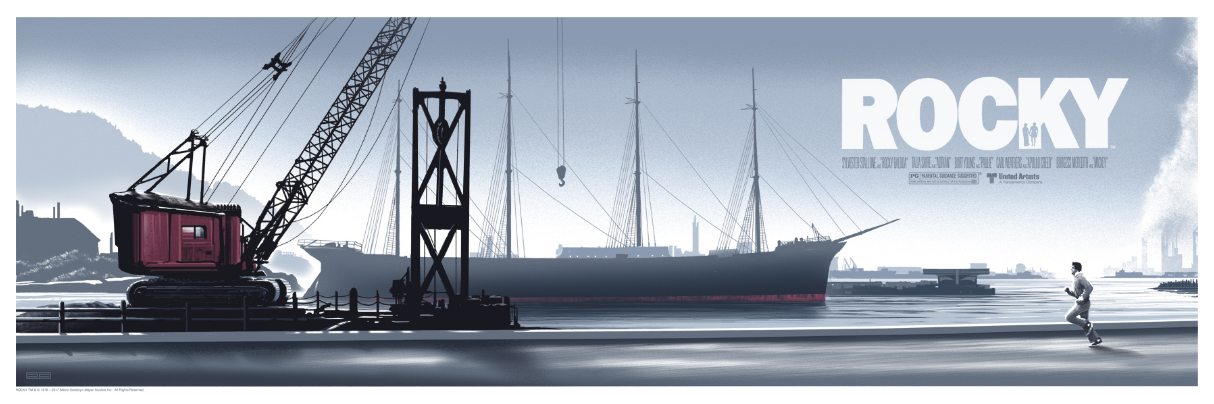
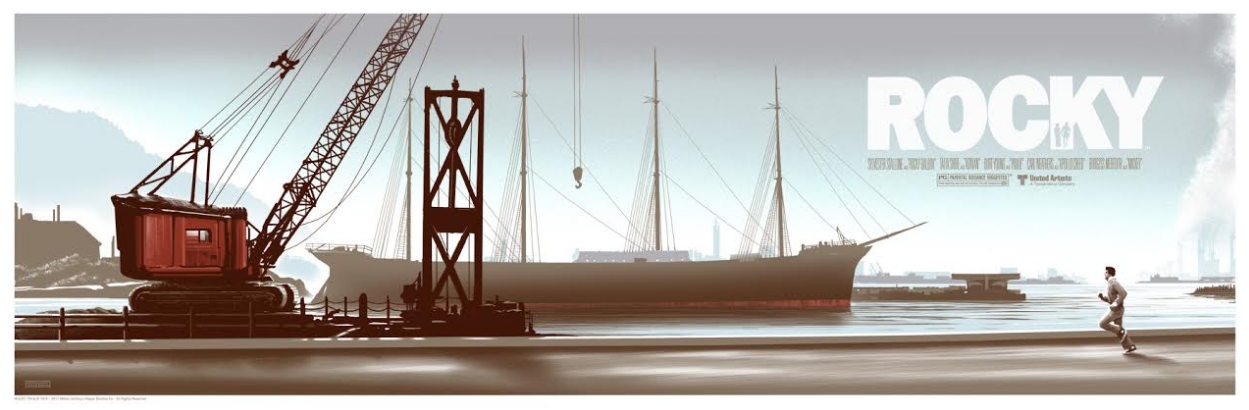
“Rocky” by JC Richard – New Release from Grey Matter Art

Grey Matter Art, under license from MGM, is proud to announce a new officially licensed, limited edition screen print featuring the classic 1976 Sylvester Stallone film, “Rocky” by artist, JC Richard. With the “Creed 2” trailer being released last week what a way to honor the original film. Below are details regarding poster and release information.

“Rocky” by JC Richard
12″ x 36″ hand-numbered screen print
Regular Edition: 150/40.00
Variant Edition: 75/50.00
Printed by: D&L Screenprinting

This poster will be released this Wednesday, June 27th on our website shop page at 1:00 PM est. at www.greymatterart.com

Follow Grey Matter Art on Twitter, Facebook, and Instagram, and be sure to sign up for the GMA Newsletter for all future news & information.


Mignola & Golden’s Joe Golem: Occult Detective Returns!

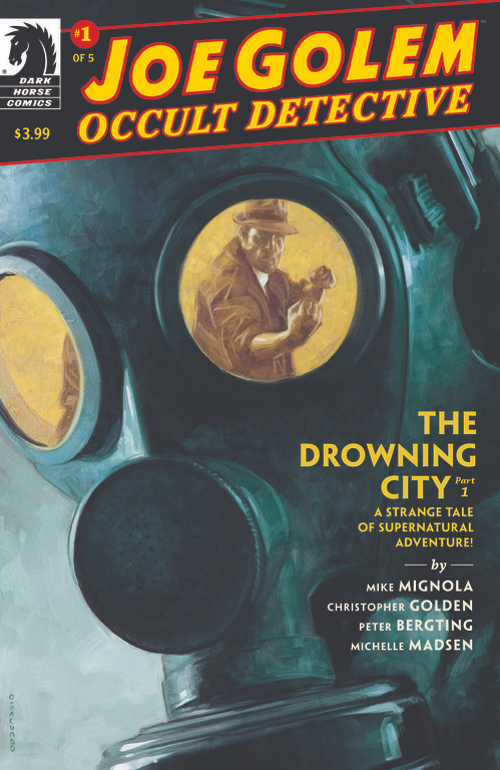
Mike Mignola, best known as the creator of Hellboy, has teamed with best-selling novelist Christopher Golden and artist Peter Bergting for Joe Golem: Occult Detective – The Drowning City, a five issue mini-series premiering in September.  This will be the third mini-series featuring Golem with the first two being Joe Golem: Occult Detective—The Rat Catcher and the Sunken Dead and Joe Golem: Occult Detective—The Outer Dark.

Source: Paste.

How Do You Steal From Dracula? Stephan Franck Knows!

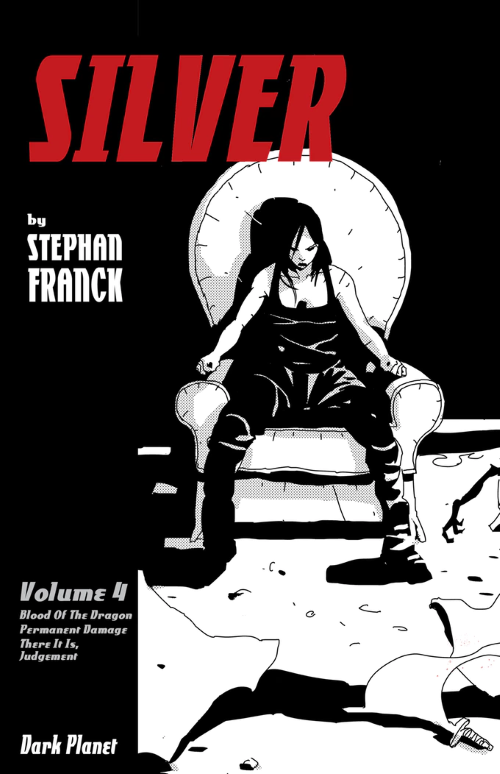
I’ve been singing the praises of Stephan Franck (writer & artist) since I discovered his Silver graphic novels which he describes as…

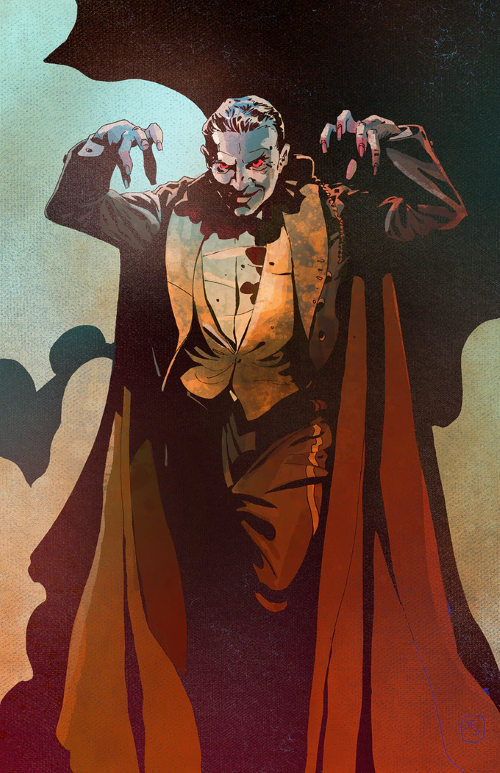
… an original universe built around Bram Stoker’s original Dracula, and it begins 40 years after the events of the novel, into the noir/pulp era of the 1930s. You meet James Finnigan, who is the most notorious conman/gentleman-thief of his day, as he teams up with Rosalynd “Sledge” Van Helsing (granddaughter of the original Van Helsing, and altogether the last of the Van Helsings), to steal a mystical treasure hidden in Dracula’s castle. Finn, of course, brings his known associates—a fun assortment of conmen and grifters of all kinds—as well as the kind of amoral attitude that puts him immediately at odds with Sledge. Lastly, the team enlists Tao Leu (or more accurately, he enlists himself), who is a 10-year-old boy with the gift of second sight and who might be the biggest scoundrel of them all.

10 Things You Might Not Know About Beetle Bailey

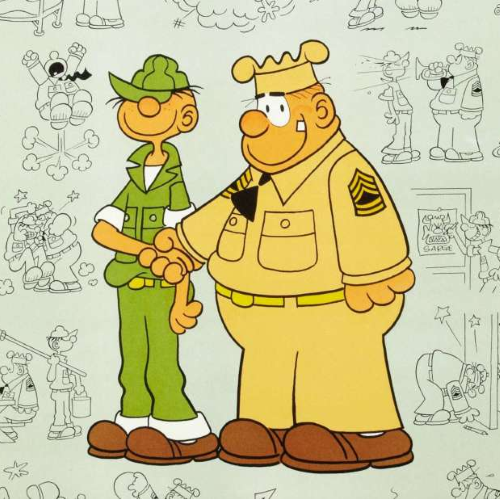
Jake Rossen and Mental Floss present 10 Things You Might Not Know About Beetle Bailey.

1. IT STARTED AS A COLLEGE CAMPUS COMEDY.

Walker’s initial idea for a strip didn’t feature any fatigues or military equipment. While drawing cartoons for The Saturday Evening Post, he decided to try creating a story around a university student named Spider who kept his hat pulled over his eyes and tried to navigate college life by doing as little as possible. Changing his name to Beetle Bailey—the surname was a nod to a supportive editor at the Post—Walker had him wander into an Army recruiting station. Inspired, he retrofitted the strip so that barracks would take the place of a dorm. (Walker himself had been drafted, serving four years during World War II.) Debuting in 1950, Beetle Bailey set a record for the longest continuous work by a comic strip artist: Walker worked on it for 68 years.

2. IT WAS BANNED BY THE U.S. MILITARY.

In the 1950s, Beetle Bailey took its place as a steady but otherwise unremarkable addition to the comics pages. Then Walker got an unexpected promotional boost. The U.S. military’s Stars and Stripes newspaper, which had been running the strip, banned it from its Tokyo editions over fears it might incite disrespect toward commanding officers. (Beetle was lazy and typically disinterested in following orders.) The prohibition lasted for a decade and was subjected to so much ridicule that Beetle became a recurring presence in newspaper headlines. The strip was eventually syndicated to more than 1800 papers.

10. THE STRIP WAS RECOGNIZED BY THE PENTAGON.

After 50 years of “service,” Beetle Bailey finally got a little acknowledgment from his higher-ups. The (real) Pentagon invited Walker and three of his costumed characters to a ceremony in May 2000 that honored the cartoonist for his work in supporting the military. Walker was presented with the Secretary of the Army’s Decoration for Distinguished Civilian Service, the Army’s highest civilian honor. “I think finally the brass has learned how to laugh at themselves a little bit,” Walker said. “They’re not kicking me out of Stars and Stripes anymore like they did a couple of times.”

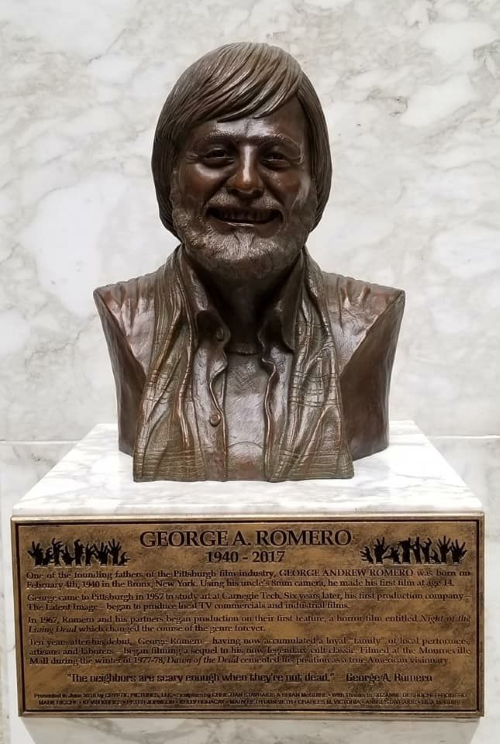
George Romero’s Tribute Statue Gets Perfect Location!

If you were going to decide on the perfect place for this bust of George Romero, the man who re-invented and re-invigorated the zombie movie genre, where would it be?

If you asked me (and no one did) I’d say the mall where the original Dawn of the Dead was filmed.  Guess what?

The Monroeville Mall in Pittsburgh, Pennsylania just got 1000% times more in touch with it’s creepshow roots. A large copper bust of indie horror director (and grandfather of the genre) George A. Romero was finally installed… in the very shopping center that served as the location for much of his ‘birth of the modern zombie’ classic, 1978’s Dawn of the Dead.

Source: SyFy Wire.

Stephan Franck Interview – “Silver” Conclusion and More!

Stephan Franck is the genius (writer & artist) behind Silver which he describes as…

… an original universe built around Bram Stoker’s original Dracula, and it begins 40 years after the events of the novel, into the noir/pulp era of the 1930s. You meet James Finnigan, who is the most notorious conman/gentleman-thief of his day, as he teams up with Rosalynd “Sledge” Van Helsing (granddaughter of the original Van Helsing, and altogether the last of the Van Helsings), to steal a mystical treasure hidden in Dracula’s castle. Finn, of course, brings his known associates—a fun assortment of conmen and grifters of all kinds—as well as the kind of amoral attitude that puts him immediately at odds with Sledge. Lastly, the team enlists Tao Leu (or more accurately, he enlists himself), who is a 10-year-old boy with the gift of second sight and who might be the biggest scoundrel of them all.

With the fourth and final volume now on Kickstarter, Franck sat for an interview with Johhny Hughes at Comic Crusaders.

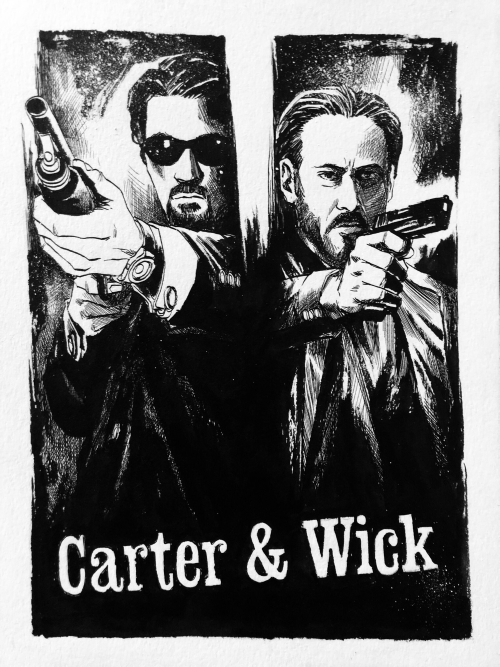
Jack Carter & John Wick by Andy Bennett!

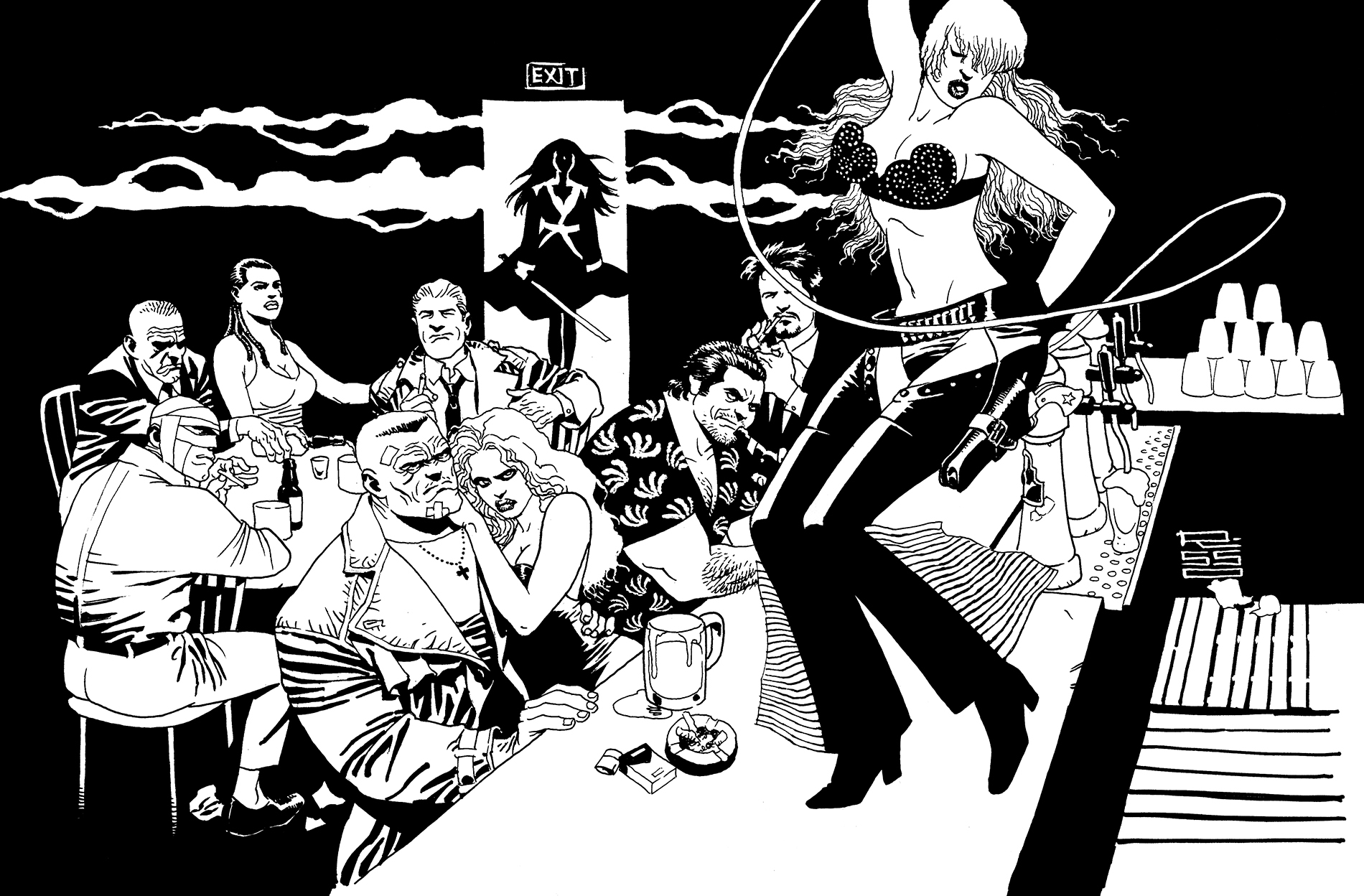
Last week I shared Andy Bennett’s riff on a Jack Carter and Lono from 100 Bullets.  I liked Andy’s work on it so much, I’ve ordered a Jack Carter & John Wick piece for pick-up at HeroesCon this year.  Although Heroes is still a couple weeks away, Andy shared with me the piece that will be waiting for pick-up.  Yowzers! (And don’t you just love the nod to Tango & Cash?)
If you’d like to see more art from Andy, you can by clicking here.

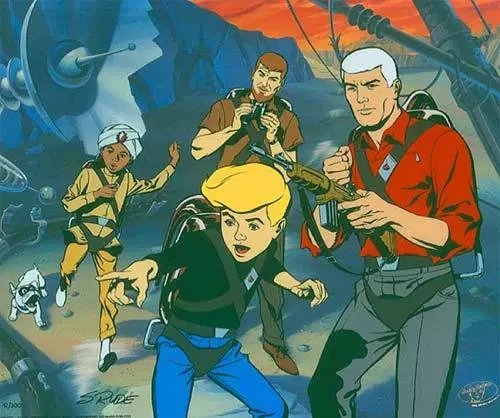
The Original “Jonny Quest”

The original Jonny Quest ran on ABC during the prime time 1964 – 1965 season.  Most series, especially a cartoon series, that ran for such a short time would hardly be remembered.  Yet Jonny Quest came back in two television series, two television movies, at least one comic book series and three computer games.

When it premiered, I was the perfect age for Jonny Quest.  Check out the video below and you’ll see why Jonny Quest made such an impact.