The Un-Aired Intro to “The Munsters”
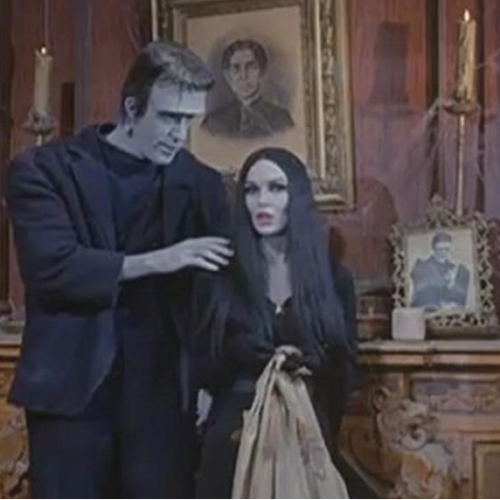
Have you ever seen the un-aired intro to The Munsters with the original cast members… and some of the originals did not make it to the series.
Previews and Reviews that are Z's Views
Have you ever seen the un-aired intro to The Munsters with the original cast members… and some of the originals did not make it to the series.
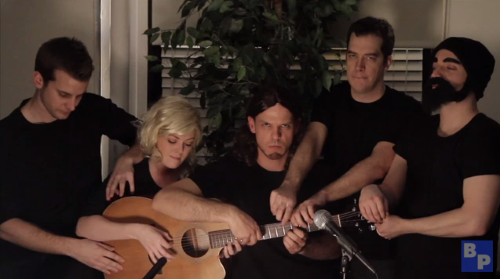
The Key of Awesome present present their take on Somebody I Used to Know.
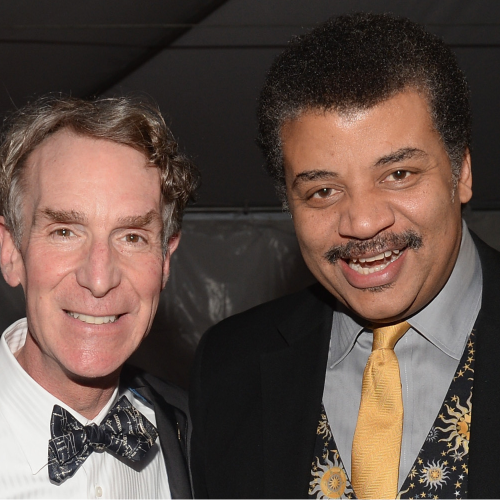
Bill Nye “the Science Guy” and Neil DeGrasse Tyson sing about how science can change the world for the better in this autotuned video created in collaboration with The Planetary Society.
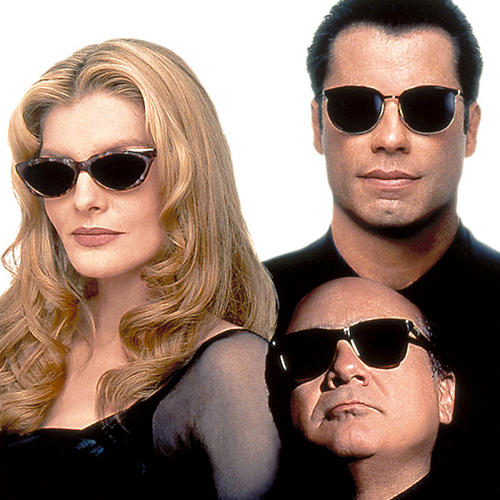
Roger Cormier and Mental_Floss present 15 Fast-Talking Facts About Get Shorty. Here are three of my favorites…
1. “SHORTY” WAS DUSTIN HOFFMAN.
Danny DeVito’s Martin Weir character was modeled after Dustin Hoffman, who Elmore Leonard dealt with when the actor expressed interest in an adaptation of the author’s LaBrava.Weir’s very specific food order at a restaurant was based on Hoffman ordering off-menu at a lunch meeting with Leonard. Hoffman suspected he was Shorty after the book came out.3. QUENTIN TARANTINO CONVINCED TRAVOLTA TO PLAY PALMER.
Travolta said no to Sonnenfeld. Twice. His Pulp Fiction director convinced him to change his mind.15. ELMORE LEONARD LOVED IT.
“Definitely, it’s the best adaptation I’ve had,” Leonard said at the time of its release. At that point, 12 of his books had been adapted into movies. He also said he never realized how funnyGet Shorty was until he saw the film.

Jake Rosen and Mental_Floss present Aaugh! 10 Facts About It’s the Great Pumpkin, Charlie Brown! Here are three of my favorites…
1. THE FUTURE OF ANIMATED PEANUTS SPECIALS DEPENDED ON IT.
Mendelson and animator Bill Melendez had very high aspirations for A Charlie Brown Christmas. When they screened it prior to its premiere, however, they felt it didn’t live up to its potential—and CBS agreed. The network said it was the last Peanuts special they would buy. But after it delivered huge ratings, CBS changed their mind and asked for more. When the two delivered another hit—the baseball-themed Charlie Brown All-Stars—they thought they had earned the network’s confidence.Instead, CBS told them they needed a special that could run every year, like A Charlie Brown Christmas. If Mendelson couldn’t provide it, they told him they might not pick up an option for a fourth show. Despite Schulz and his collaborators being annoyed by the network’s abrasive attitude, they hammered out a story with a seasonal clothesline that could be rerun in perpetuity.
3. IT WAS THE FIRST TIME LUCY SNATCHED THE FOOTBALL FROM CHARLIE BROWN.
In animated form, anyway. When Schulz, Mendelson, and Melendez were brainstorming scene ideas for the special, talk turned to the fact that Lucy’s habit of pulling the football away from Charlie Brown had never been seen in animation. They also decided it would be a good time to introduce Snoopy’s World War I Flying Ace. The joke had appeared in the strip, but Mendelson thought it would work even better in motion. He was right: the sequence with Snoopy in a doghouse dogfight is one of the most memorable in the Peanuts animated canon.8. THE ORIGINAL AIRINGS WERE SLIGHTLY DIFFERENT.
Production costs for the early Charlie Brown specials were subsidized by television sponsors Coca-Cola and Dolly Madison snack cakes: the brands appear at the beginning and end of the broadcast. The Coke “bug” appeared for several years before getting phased ou

Roger Cormier and Mental_Floss present 16 Fun Facts About Look Who’s Talking. Here are three of my favorites…
3. THREE STUDIOS PASSED ON THE FILM.
Warner Bros., Disney, and Orion Pictures all passed on the idea before Tri-Star took a shot.11. AUDIENCES IN DIFFERENT COUNTRIES HEAR DIFFERENT BABY VOICES.
Foreign countries had their own celebrities voicing baby Mikey. It was Travolta’s idea.15. IT INSPIRED THE TV SHOW BABY TALK AND THE E*TRADE BABY.
ABC’s Baby Talk, featuring Tony Danza as the voice of the little one, wasn’t as successful as the movie; star Scott Baio called it a “nightmare.” The E*Trade baby endorsed the financial company from 2008 to 2014.

Den of Geek posted their choices for The Top 32 Horror Comedies of All Time.
Of the 32 films they selected, I’ve seen eighteen. Here they are with my thoughts on each…
Spook Busters (1946): The Bowery Boys always felt to me like they wanted to grow up and be Abbott and Costello. Still, I enjoyed their films as a kid and this was a fun one… as Bowery Boys movies go.
Fearless Vampire Killers or Pardon Me, But Your Teeth Are in My Neck (1967): I can’t tell you how many times over the years I’ve tried to watch this one all the way through. I’ve never made it yet.
Fright Night (1985): Now we’re cooking! I liked the mix of comedy and horror in this one!
Attack of the Killer Tomatoes (1978): I’ve always thought this was too stupid to be more than a Saturday Night Live skit. Of course the cult popularity proves me wrong.
Cabin in the Woods (2012): What an inventive, crazy movie! I want to see it again!
Scream (1996): I really got a kick at how it took all the horror cliches and winked at the audience as they played out.
Phantom of the Paradise (1974): This is another one that I’ve never been able to get through.
The Rocky Horror Picture Show (1975): I saw this at a Midnight Showing with an audience armed with all the props. A bit too kinky for me then and now.
Shaun of the Dead (2004): I like my zombie stories serious but I really like Shaun of the Dead!
Arachnophobia (1990): I’ve only seen this once but I really liked it much more than I thought I would. I’d like to see it again to see if it holds up.
Monsters Inc. (2001): This is a fun one.
Beetlejuice (1988): Who doesn’t like Beetlejuice?
The Lost Boys (1987): I liked The Lost Boys, but think it’s a bit over-rated.
Ghostbusters (1984): This is one I don’t care for.
Young Frankenstein (1974): Arguably the best film on the list.
Zombieland (2009): Even better than Shaun of the Dead!
Abbott and Costello Meet Frankenstein (1948): Perhaps the best movie on the list!
An American Werewolf in London (1981): I’m not a fan, but most folks are.

Jake Rosen and Mental_Floss present 12 Spine-Tingling Facts About Tales From the Crypt. Here are three of my favorites…
1. LETHAL WEAPON IS PARTLY RESPONSIBLE FOR THE SHOW.
Producer Joel Silver was on the set of 1987’s Lethal Weapon when he and director Richard Donner began talking about Silver’s failed attempts to adapt Tales from the Crypt as a feature film: the disappointing reception to 1983’s Twilight Zone: The Movie and 1982’s Creepshowhad lessened enthusiasm for horror anthologies. Unmoved by those failures, Donner said he’d be interested in joining the project. When the series idea was brought to HBO, they were intrigued that so many feature film talents were backing the idea. When Zemeckis—who was working with Silver on 1988’s Who Framed Roger Rabbit?—got involved, the network agreed to move forward with the show.4. IT BROUGHT HUMPHREY BOGART BACK FROM THE DEAD.
Zemeckis’s involvement often meant that Tales from the Crypt would take any opportunity to explore new techniques for visual effects. In the episode “You, Murderer,” a career criminalmurdered by his wife and best friend posthumously narrates the events leading up to his demise. When the character looks in the mirror—the show takes place from his POV—viewers see the resurrected features of Humphrey Bogart. Zemeckis used footage from Casablanca,The Maltese Falcon, and other Bogart films to capture footage and digitally insert it into the frame. During wraparounds, the Crypt Keeper also converses with a seemingly above-ground Alfred Hitchcock.6. TWO VERSIONS OF EACH EPISODE WERE SHOT.
For Zemeckis, Donner, and the rest of the show’s high-profile producers, the financial payoff was always thought to be a move to syndication. Because HBO was more permissive in terms of content, they needed to prepare for an eventual screening on broadcast TV stations. WhenTales from the Crypt was bought by Fox for a late-night Saturday slot in 1994, the episodes were re-edited to include alternate takes that eliminated most of the original episodes’ gore and nudity. The show also had actors loop non-profane dialogue during shooting. While HBO normally values exclusivity, it didn’t mind the deal: uncut episodes were still an attraction and, as one executive pointed out, “The show is called HBO’s Tales From the Crypt.” Free advertising never hurt.

Rob Hunter and Film School Rejects present 26 Things We Learned from the An American Werewolf in London Commentary. Here are three of my favorites…
9. Landis threatened to relocate the film to Paris after British Actors’ Equity balked about Dunne’s role not going to a member. The director actually went so far as to scout locations in France, but Equity backed down and allowed Dunne. Had he moved the production Landis already planned to re-title the film An American Werewolf in Paris. We really dodged a bullet there huh?
20. Dunne wonders why the film never used Warron Zevon’s “Werewolf of London” song, but they still don’t know. Naughton does recall that the filmmakers asked Cat Stevens for permission to use “Moonshadow” only to be told no “because he believed that werewolves really existed.”
26. They recall telling Landis that the lack of silver bullets used to kill David meant this could become a franchise. The director told them in no uncertain terms that there would be no sequel.

ScreentRant presents 10 Movie Outtakes that Made it to the Big Screen.
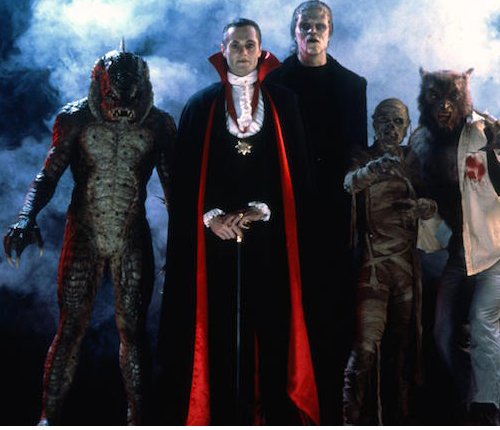
Mark Mancini and Mental_Floss present 13 Spooky Facts About The Monster Squad. Here are three of my favorites…
3. THE CREATURE DESIGNERS WORKED HARD TO AVOID LEGAL PROBLEMS WITH UNIVERSAL.
First and foremost, The Monster Squad is an affectionate tribute to Universal’s iconic horror movies of the 1930s, ‘40s, and ‘50s. Nevertheless, the studio passed on producing the film, which was ultimately picked up by TriStar. This forced The Monster Squad’s visual effects team to get creative.“Although we were doing a movie that was a takeoff on the Universal classics,” said legendary monster creator Stan Winston, “… none of our designs infringed on the original designs of the Universal characters. There were subtle changes; we had to be sure that nothing about them could be considered a copyright infringement of a design.” Which is why Dracula has no Lugosi-esque widow’s peak, Frankenstein monster’s neck bolts have migrated to his temples, and Wolfman has pointy ears and a face that Dekker describes as “more lupine” than what Universal had come up with.
8. DUNCAN REGEHR BEAT OUT LIAM NEESON FOR THE ROLE OF DRACULA.
In 1986, Liam Neeson was still a relative unknown and, like many struggling actors, decided to try out for a horror movie. Apparently, he nailed his audition with a superb take on the Count. “We thought for sure we [were] going to hire this guy,” producer Jonathan Zimbert revealed inMonster Squad Forever. “Then Duncan came in and was not only as brilliant, but he was terrifying also.” Twenty years later, Wizard magazine named Regehr the “greatest Dracula of all time” for his chilling performance in The Monster Squad.12. THE MOVIE SPENT JUST TWO WEEKS IN THEATERS.
Released on August 14, 1987, The Monster Squad was both a commercial and critical flop.Vincent Camby of The New York Times called it “a silly attempt to cross breed an Our Gangcomedy with a classic horror film, which usually means that both genres have reached the end of the line.” After a two-week theatrical run, the movie was pulled. However, it slowly built a following via video rentals and cable broadcasts.Today, The Monster Squad commands a dedicated fan base. When the cast and crewreunited for a special two-night showing at Austin’s Alamo Drafthouse Cinema in 2006, both screenings sold out. As Dekker once put it, “It took 20 years for the movie to find its audience.”

If you’ve ever wondered what Jurassic World would have looked like had it been made in 1978, ChiefBrodyRules has created a trailer to show us.
Well played, Chief, well played.

Roger Cormier and Mental_Floss present 15 Fun Facts About Meet the Parents . Here are three of my favorites…
2. JIM CARREY CAME UP WITH THE NAME “FOCKER.”
At one point in the film’s development, Jim Carrey was set to star as Greg, with Steven Spielberg directing. It was during this back and forth that Carrey came up with the idea that the main character’s last name should be “Focker.” After Carrey and Spielberg moved on, the studio offered the project to Austin Powers director Jay Roach.7. THE IDEA FOR THE LIE DETECTOR CAME FROM DE NIRO.
While researching a role, De Niro read up on polygraphers. He then talked about what he had read to Roach at a pre-shoot dinner. “At that point, there was no lie detector scene in the script,” Roach told Entertainment Weekly. “But after hearing all this, I thought, ‘Oh, this has to be in our movie.’ Now it’s become the central image of all the ads, the trailers, everything.” Jack Byrnes being ex-CIA was in the script from the very beginning.14. YOU CANNOT SEE GREG’S AIRPLANE RANT ON AN AIRPLANE.
If you happen to be watching Meet the Parents on an airplane, you won’t see the airplane scene. It was cut out of the in-flight version.

Kara Kovalchik and Mental_Floss present 15 Awfully Big Facts About The Mary Tyler Moore Show. Here are three of my favorites…
4. GAVIN MACLEOD AUDITIONED FOR THE ROLE OF LOU GRANT.
Allan See started losing his hair at age 18, while he was studying drama at New York’s Ithaca College. By the time he graduated he was pretty much bald, which limited his roles as an actor. He changed his name to Gavin MacLeod and maintained a fairly steady career playing heavies, thanks to his bald pate and bulky physique. MTM co-founder Grant Tinker invited MacLeod to audition for the role of Lou Grant, which he did, but afterward he asked to read for the role of Mary’s co-worker, Murray Slaughter. He thought he could bring more to the affable Murray character than the gruff and imposing Lou. The producers agreed with him after Ed Asner tested for the role of Mary’s boss.6. TED KNIGHT WAS LIVING PAYCHECK-TO-PAYCHECK WHEN HE WAS CAST AS TED BAXTER.
The second choice for the role of the anchorman was Lyle Waggoner, but he was happily ensconced on The Carol Burnett Show and had no desire to leave a successful series for an untested one. Jennifer Aniston’s father, John, read for the part of Ted and was called back twice, but the producers were not quite sure he was “the one.” Producer Dave Davis happened to see Ted Knight performing in a local production of the Broadway comedy You Know I Can’t Hear You When the Water’s Running and reported to the rest of the team that Knight was hilarious and that they should have him read for the role of Ted Baxter.Even though the silver-haired Knight was a far cry from the hunky heartthrob-type they originally had in mind, Knight came to the audition wearing an anchorman-style blue blazer he had purchased from a thrift store with part of his rent money and impressed them with his booming voice and comedic chops. During that brief reading, he brought some layers to the anchorman character (cocky and arrogant on the outside, but secretly vulnerable and very human) that impressed the MTM staff and inspired some new newsroom story ideas for the show.
14. MARY REALLY DID HAVE TO STRUGGLE TO KEEP A STRAIGHT FACE DURING THE “CHUCKLES BITES THE DUST” EPISODE.
Often listed as one of the best sitcom episodes, this entry touched on a dark subject: the death of WJM children’s show host Chuckles the Clown. (He’d been dressed as Peter Peanut to serve as Grand Marshall of a circus parade and a rogue elephant tried to shell him.) Mary was supposed to remain grim and mournful while the rest of the newsroom made jokes about his unusual demise, but during every rehearsal she continually cracked up whenever Mr. Fee-Fi-Fo (one of Chuckles’ many characters) was mentioned. She recalled in her autobiography that the insides of her cheeks were almost raw from biting them so hard to keep from laughing during the actual taping of the episode.