Category: Music

14 Fun Facts About “‘O Brother, Where Art Thou?”

Roger Cormier and Mental_Floss present 14 Fun Facts About ‘O Brother, Where Art Thou?  Here are three of my favorites

1. IT WAS ORIGINALLY INSPIRED BY THE WIZARD OF OZ.

Joel Coen revealed as much at the 15th anniversary reunion. “It started as a ‘three saps on the run’ kind of movie, and then at a certain point we looked at each other and said, ‘You know, they’re trying to get home—let’s just say this is The Odyssey. We were thinking of it more asThe Wizard of Oz. We wanted the tag on the movie to be: ‘There’s No Place Like Home.’”

3. THE TITLE IS FROM A PRESTON STURGES CLASSIC.

Sullivan’s Travels (1941) was a Hollywood satire about a comedy director who wanted to make a serious, epic drama, travels the country to research it, and discovers the world is better off laughing. The movie the character wanted to make was titled O Brother, Where Art Thou?.

8. THE MUSIC BECAME AN UNEXPECTEDLY HUGE HIT.

For the movie’s music—and even before they’d finished the script—the Coens turned to musician/producer T Bone Burnett, whom they had worked with on The Big Lebowski  in 1998. Along with singer-songwriter Gillian Welch, Burnett found the songs for the movie. Its soundtrack—which combined original and traditional bluegrass, country, gospel, blues, and folk music—was the first movie soundtrack to win the Grammy for Album of the Year since 1994. More than eight million copies of the album were sold.

35 Fabulous Facts About Frank Sinatra

Mental_Floss presents 35 Fabulous Facts About Frank Sinatra. Here are three of my favorites

27. SINATRA DIDN’T LIKE MARLON BRANDO, AND BRANDO DIDN’T LIKE SINATRA.
Sinatra was always known as one of Hollywood’s most likeable stars, but Marlon Brando apparently didn’t agree. The two didn’t hit it off when they starred in 1955’s Guys and Dolls. Sinatra, who allegedly wanted Brando’s role in the film, referred to his co-star as “Mr. Mumbles,” while Brando nicknamed Sinatra “Mr. Baldy.”
32.  THE BEATLES’ “SOMETHING” WAS ONE OF SINATRA’S FAVORITE SONGS.
Frank may not have loved (okay, he hated) rock and roll, but he was a big fan of the George Harrison-penned “Something.” The song became a sample in Sinatra’s live set toward the end of his career.

34. HE WAS A TOOTSIE ROLL FAN.
According to dead-celebrity expert Alan Petrucelli, Ol’ Blue Eyes was buried with some Tootsie Rolls, along with a few other choice effects, including cigarettes, a lighter, and a bottle of Jack Daniels.

21 Thrilling Facts About Michael Jackson’s “Thriller”

Roger Cormier and Mental_Floss present 21 Thrilling Facts About Michael Jackson’s Thriller  Here are three of my favorites

3. THE ALBUM’S TITLE WAS ALMOST MIDNIGHT MAN.
Quincy Jones asked arranger/songwriter Rod Temperton to come up with an album title. He wrote down 200 to 300 possible titles in his hotel room before deciding on Midnight Man. The next morning he woke up and the word “Thriller” popped into his head. “Something in my head just said, this is the title,” recalled Temperton. “You could visualize it on the top of the Billboard charts. You could see the merchandising for this one word, how it jumped off the page as ‘Thriller.'”

5. VINCENT PRICE MADE LESS THAN $1000 FOR HIS WORK ON THE TITLE TRACK.
Jones’ then-wife Peggy Lipton knew Price. The horror movie legend managed to record his part in two takes. Once the album got big, Price expressed frustration over his meager paycheck and said that Jackson had stopped taking his calls.

19. THE “THRILLER” MUSIC VIDEO COST $500,000.
The Showtime cable network footed $300,000 of the budget for the rights to first air the music video and the “making of” feature, with MTV paying the rest to broadcast it after Showtime. Jackson asked John Landis to direct the video after seeing his work on the movie An American Werewolf in London. “I want to turn into a monster,” Jackson told Landis. “Can I do that?” Landis wrote the disclaimer that appears in the beginning of the video because Jehovah’s Witnesses (a group which Jackson belonged to at the time) told the artist that “Thriller” endorsed Satanism.

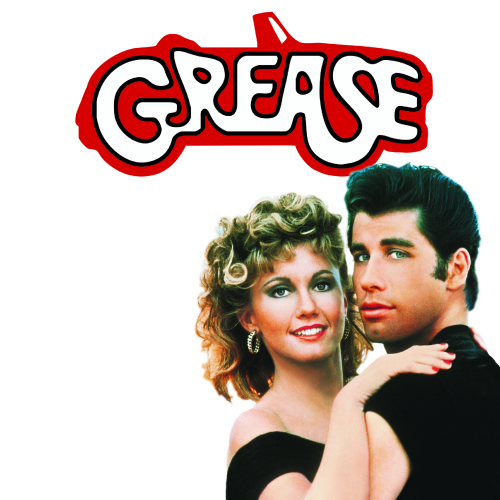
25 Facts You Didn’t Know About “Grease”

Hollywood.com presents 25 Facts You Didn’t Know About Grease Here are three of my favorites

1. Elvis was initially offered a role in the film.
It is believed he would play the Guardian Angel role, but he did not accept.

3. In “Look at Me I’m Sandra Dee” they changed the reference and it has a freaky coincidence.
In the stage play, the song had a reference to Sal Mineo, who was murdered in 1976. For the movie, they changed the lyric to “ElvisElvislet me be! Keep that pelvis far from me!” In reference to Elvis Presley, who died the same day the scene was filmed. The day was August 16, 1977.

10. Lucille Ball is the reason her daughter was not cast as Rizzo and the part went to Stockard Channing.
Lucie Arnaz was dropped from consideration after Lucille Ball called and said “I used to own that studio; my daughter’s not doing a screen test!” But actually, she owned the studio Desilu which was bought by Paramount.

17 Bankable Facts About “The Color of Money”

Roger Cormier and Mental_Floss present 17 Bankable Facts About The Color of Money Here are three of my favorites

5. JACKIE GLEASON PASSED ON MAKING A CAMEO.
Gleason famously played Minnesota Fats in The Hustler, and his character played a big part in the book version of The Color of Money. “We desperately wanted the character to return,”Newman told The New York Times, ”but every time we put him in, it seemed like we were trying to glue an arm on a man and make it stick.” Added Scorsese: ”We finally presented a script to Gleason with Fats in. But he felt it was an afterthought.” As such, Gleason passed.

14. SCORSESE GOT THE IDEA FOR GOODFELLAS WHILE SHOOTING  THE COLOR OF MONEY.
In a rare moment of downtime, “I read a review of [Nicholas Pileggi’s] Wiseguy when I was directing The Color of Money, and it said something about this character Henry Hill having access to many different levels of organized crime because he was somewhat of an outsider,”Scorsese told Rolling Stone. “He looked a little nicer. He was able to be a better frontman and speak a little better. I thought that was interesting, because you could get a cross section of the layers of organized crime—from his point of view, of course. So I got the book, started reading it and was fascinated by the narrative ability of it.”

15. DAVID GEFFEN WAS UPSET OVER THE SOUNDTRACK.
Robbie Robertson put the soundtrack together, which is best known for featuring Eric Clapton and Robertson’s “It’s in the Way That You Use It” and Warren Zevon’s “Werewolves of London.” Geffen would not allow Robertson permission to use his own voice at any point on the album, because he felt that the singer’s first solo record was being delayed on account of his work on the soundtrack. The Band performer still managed to get music from the likes of Clapton, Don Henley, B.B. King, Robert Palmer, and Willie Dixon.

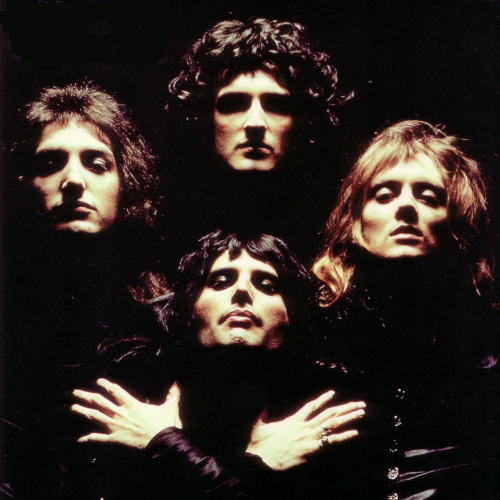
10 Operatic Facts About “Bohemian Rhapsody”

Kara Kovalchik and Mental_Floss present 10 Operatic Facts About Bohemian Rhapsody Here are three of my favorites

1. FREDDIE MERCURY STARTED WRITING IT IN 1968.
“Bohemian Rhapsody”, or “Bo Rhap” as it is known by Queen fans, had its beginnings in 1968 when Freddie Mercury was a student at London’s Ealing Art College. He’d come up with an opening line—“Mama, just killed a man”—but no melody. Because of the Old West feel (in his mind) to the lyric, he referred to his work in progress as “The Cowboy Song.”

6. PROMOTING THE SONG PROVED PROBLEMATIC.
After it was decided to release “Bohemian Rhapsody” as a single, the band was faced with a bit of a dilemma: At the time in England, it was traditional for bands to appear on shows like Top of the Pops to promote their latest hits. But Queen was scheduled to begin a tour soon, plus (as Brian May admitted) they’d feel self-conscious miming to the operatic section. They solved the problem by filming a promotional film, or “pop promo” as it was called in the industry lingo of the time, that could be shown not only on UK music shows, but also around the world in other markets, such as American Bandstand.

10. A BLUE VINYL PRESSING OF THE SONG IS WORTH MORE THAN $5000.
The Holy Grail in terms of Queen collectibles is a 7-inch limited edition of “Bohemian Rhapsody” that was pressed in blue vinyl. In the summer of 1978, EMI Records won the Queen’s Award To Industry For Export Achievement (that’s “Queen” as in Her Majesty Elizabeth II). The label’s primary reason for sales in far-reaching territories that lacked manufacturing facilities was Queen, as in the band. To celebrate their prestigious award, EMI pressed 200 copies of “Bohemian Rhapsody” in blue vinyl, each of which was hand-numbered. Numbers one through four went to the band members, of course, while other low-numbered copies were given to friends and family members. Bona fide copies from this original pressing currently sell for upwards of $5000.

Elvis Presley with the Royal Philharmonic Orchestra “And the Grass Won’t Pay No Mind”

Check out the video below and you’ll hear Elvis Presley with the Royal Philharmonic Orchestra performing And the Grass Won’t Pay No Mind.

From Entertainment Weekly

On October 30th, Legacy Recordings will release If I Can Dream: Elvis Presley With The Royal Philharmonic Orchestra, which revisits Presley’s catalog by pairing 14 of his classics with new, orchestral arrangements…

If I Can Dream: Elvis Presley With The Royal Philharmonic Orchestra:
1. Burning Love
2. It’s Now Or Never
3. Love Me Tender
4. Fever (feat. Michael Bublé)
5. Bridge Over Troubled Water
6. And The Grass Won’t Pay No Mind
7. You’ve Lost That Loving Feeling
8. There’s Always Me
9. Can’t Help Falling In Love
10. In The Ghetto
11. How Great Thou Art
12. Steamroller Blues
13. An American Trilogy
14. If I Can Dream

Thanks to Entertainment Weekly we can get a listen to And the Grass Won’t Pay No Mind now.

11 Things You May Not Know About John Lennon

Eddie Deezen and Mental_Floss present 11 Things You May Not Know About John Lennon.  Here are three of my favorites

9. HE WAS ORIGINALLY SUPPOSED TO SING LEAD ON THE BEATLES’ FIRST SINGLE, 1962’S “LOVE ME DO.”
Lennon sang lead on a great majority of the early Beatles songs, but Paul McCartney took the lead on their very first one. The lead was originally supposed to be Lennon, but because he had to play the harmonica, the lead was given to McCartney instead.

10. “ALL YOU NEED IS LOVE” WAS THE BEST LYRIC HE EVER WROTE.
A friend once asked Lennon what was the best lyric he ever wrote. “That’s easy,” replied Lennon, “All you need is love.”

11. THE LAST PHOTOGRAPHER TO SNAP HIS PICTURE WAS PAUL GORESH.
Ironically (and sadly), Lennon was signing an album for the person who was to assassinate him a few hours later when he was snapped by amateur photographer Paul Goresh on December 8, 1980.

Lennon obligingly signed a copy of his latest album, Double Fantasy, for Mark David Chapman. Later that same day, Lennon returned from the recording studio and was gunned down by Chapman, the same person for whom he had so kindly signed his autograph.

Morbidly, a photographer sneaked into the morgue and snapped a photo of Lennon’s body before it was cremated the day after his assassination. Yoko Ono has never revealed the whereabouts of his ashes or what happened to them.