“Somebody I Used to Know” by the Key of Awesome
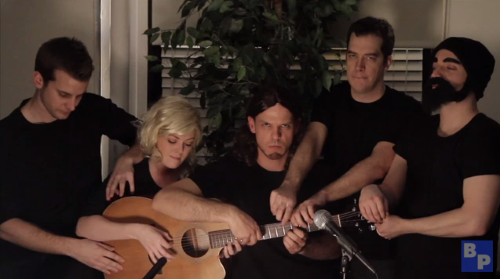
The Key of Awesome present present their take on Somebody I Used to Know.
Previews and Reviews that are Z's Views
The Key of Awesome present present their take on Somebody I Used to Know.
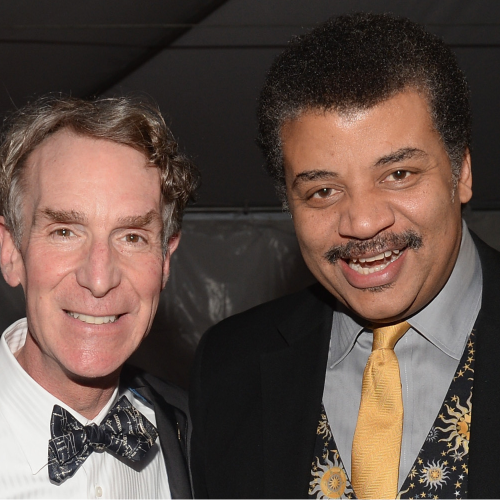
Bill Nye “the Science Guy” and Neil DeGrasse Tyson sing about how science can change the world for the better in this autotuned video created in collaboration with The Planetary Society.

Check out the video below and you’ll hear Elvis Presley with the Royal Philharmonic Orchestra performing And the Grass Won’t Pay No Mind.
From Entertainment Weekly…
On October 30th, Legacy Recordings will release If I Can Dream: Elvis Presley With The Royal Philharmonic Orchestra, which revisits Presley’s catalog by pairing 14 of his classics with new, orchestral arrangements…
If I Can Dream: Elvis Presley With The Royal Philharmonic Orchestra:
1. Burning Love
2. It’s Now Or Never
3. Love Me Tender
4. Fever (feat. Michael Bublé)
5. Bridge Over Troubled Water
6. And The Grass Won’t Pay No Mind
7. You’ve Lost That Loving Feeling
8. There’s Always Me
9. Can’t Help Falling In Love
10. In The Ghetto
11. How Great Thou Art
12. Steamroller Blues
13. An American Trilogy
14. If I Can Dream
Thanks to Entertainment Weekly we can get a listen to And the Grass Won’t Pay No Mind now.

Today we have Playing for Change’s riff on the classic Marvin Gaye tune, What’s Going On?

Eddie Deezen and Mental_Floss present 11 Things You May Not Know About John Lennon. Here are three of my favorites…
9. HE WAS ORIGINALLY SUPPOSED TO SING LEAD ON THE BEATLES’ FIRST SINGLE, 1962’S “LOVE ME DO.”
Lennon sang lead on a great majority of the early Beatles songs, but Paul McCartney took the lead on their very first one. The lead was originally supposed to be Lennon, but because he had to play the harmonica, the lead was given to McCartney instead.10. “ALL YOU NEED IS LOVE” WAS THE BEST LYRIC HE EVER WROTE.
A friend once asked Lennon what was the best lyric he ever wrote. “That’s easy,” replied Lennon, “All you need is love.”11. THE LAST PHOTOGRAPHER TO SNAP HIS PICTURE WAS PAUL GORESH.
Ironically (and sadly), Lennon was signing an album for the person who was to assassinate him a few hours later when he was snapped by amateur photographer Paul Goresh on December 8, 1980.Lennon obligingly signed a copy of his latest album, Double Fantasy, for Mark David Chapman. Later that same day, Lennon returned from the recording studio and was gunned down by Chapman, the same person for whom he had so kindly signed his autograph.
Morbidly, a photographer sneaked into the morgue and snapped a photo of Lennon’s body before it was cremated the day after his assassination. Yoko Ono has never revealed the whereabouts of his ashes or what happened to them.

Paul McCartney recently released a remix of Say Say Say the hit song that he and Michael Jackson took to the top of the charts way back in 1983. The new release features some previously unheard MJ vocals.
Let’s take a look and listen.

Dario Rossi is a street performer from Amsterdam, The Netherlands. Rossi uses items he finds thrown out to make his drum sets and he’s really good.
Today we have vintage Bob Seger!
Before Seger was the lead of his Silver Bullet Band, Seger was the lead of The Bob Seger System and their first hit was Ramblin’ Gamblin’ Man.

Sometimes you just want to see a 100 Movies Dance Scenes Mashup to Mark Ronson’s Uptown Funk featuring Bruno Mars.

Every so often I hear a song that I immediately like and can’t get out of my head. Dancing in the Sky by Dani and Lizzi [twin sisters] is now the song taking up residence in my dome.
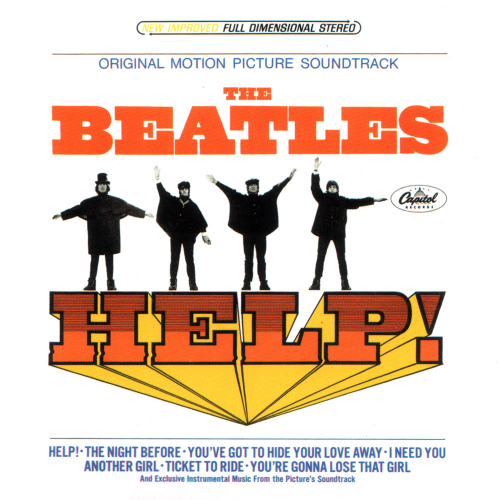
Sarene Leeds and Mental_Floss present 15 Fab Facts About Help! Here are three of my favorites…
1. HELP! WAS ALMOST CALLED EIGHT ARMS TO HOLD YOU.
At first listen, “Eight Arms to Hold You” sounds like a nice idea: who wouldn’t want to be held by all four Beatles, right? But when Lester reveals that the Ringo Starr-suggested title was in fact a reference to the multi-armed statue of Kaili that appears in the film, and not a teenage girl’s fantasy of being cradled by The Fab Four, much of the romantic element fades away. In the book accompanying the film’s 2007 DVD re-release, Lester claims that he had wanted to call the movie Help from the get-go, but the title had already been registered. Luckily, thanks to The Beatles’ lack of enthusiasm to write a song called “Eight Arms to Hold You” and a legal loophole involving an exclamation point, the film was able to proceed as Help!3. THE MOVIE’S INTERNATIONAL LOCALES WERE REALLY JUST AN EXCUSE FOR THE BEATLES TO TRAVEL.
While A Hard Day’s Night stuck to the familiarity of London, Help! was a veritable travelogue, sending The Beatles to such far-flung destinations as the Bahamas and the Austrian Alps in their attempts to evade the evil Clang (Leo McKern) and his cult of Eastern sycophants. But as Paul McCartney and Ringo Starr revealed in Anthology interviews, the film’s travel budget was increased mainly because they wanted to go to the aforementioned locales. McCartney recalled how they would say to the writers, “We’ve never been to the Bahamas—could you write that in?” and “I’ve never been skiing. I wonder if you could write in a scene with skiing?”But The Beatles learned the consequences of their actions the hard way: the weather in the Bahamas was freezing at the time (“It was absolutely bloody cold,” said Starr), and their crash course in skiing consisted of, according to the drummer, little more than being “edged down the mountain.”
10. THE MUSICAL NOTES IN THE “TICKET TO RIDE” SEQUENCE WERE PRODUCED OUT OF NECESSITY RATHER THAN CREATIVITY.
There’s a cute moment in the “Ticket to Ride” sequence where The Beatles are skiing in the Austrian Alps and they appear to ski right underneath part of the song’s musical score (it starts at around 1:27 in the above video). But as Lester explained in the 2007 documentary that accompanied the film’s DVD release, the decision to add musical notes came from the fact that the lads were skiing under some unsightly “telegraph wires” (Lester’s words; for all we know they could’ve been telephone wires). Since he couldn’t remove the wires digitally—this was the pre-CGI era, after all—he figured they’d make an ideal musical staff instead!
See how many of the 100 TV Themes Songs Played on Guitar you can name. You might surprise yourself.

I now present Uptown Funk sung by The Movies.

If you’re a Beatles or a conspiracy theory fan, then you’re probably aware of the “Paul is dead” rumor that seemed to be everywhere in 1969.
TodayIFoundOut has a nice overview of the Paul is Dead Hoax which is worth a look.

Roger Cormier and Mental_Floss present 15 Sweet Facts About Stepbrothers. Here are three of my favorites…
2. JON HAMM ALMOST PLAYED DEREK.
It came down to Hamm, Thomas Lennon, and Adam Scott for the part of the jerk brother Derek. Scott got the part.6. RICHARD JENKINS USED TO WORK FOR REILLY’S FATHER.
Toward the end of filming, Jenkins—who played Reilly’s father, Dr. Robert Doback—heard from the actor playing his son that his father was also from the Chicago area and used to work in the linen business. It was then that Jenkins realized that he had worked for John Reilly (John’s father) in the summer of 1969, and had met John Jr. when he was four years old.9. PABLO CRUISE PLAYED THE PREMIERE.
The 1970s pop-rock group were so pleased to see one of their T-shirts worn in the movie’s trailer that they offered to perform at the film’s premiere.