Category: Trivia

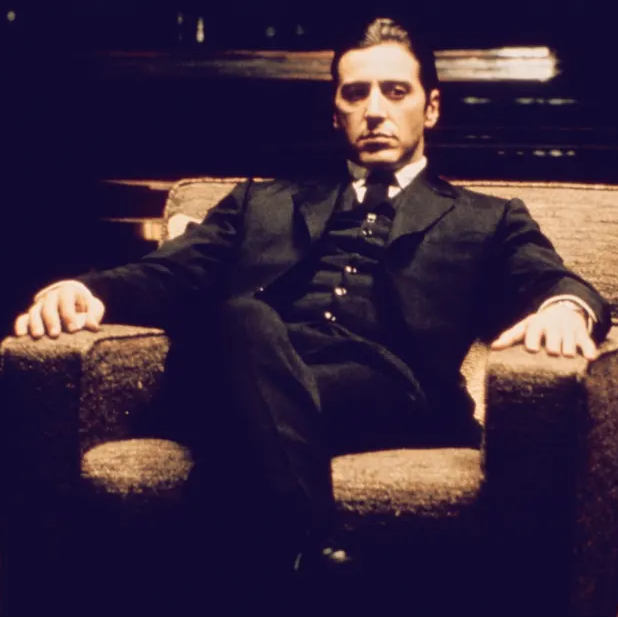
12 Surprising Facts about “The Godfather Part II”

Scott Beggs and Mental Floss present 12 Surprising Facts about The Godfather Part II.  Here are four (I couldn’t pick just 3!) of my favorite facts presented.  Click on the link to read all of the facts and additional details!

3. MARLON BRANDO AND ROBERT DE NIRO ARE THE ONLY ACTORS TO WIN OSCARS FOR PLAYING THE SAME CHARACTER.

6. AN EXTRA HAD THE GUTS TO IMPROVISE AN IMPORTANT MOMENT IN THE GODFATHER PART II.

11. JAMES CAGNEY TURNED DOWN A ROLE IN THE GODFATHER PART II.

12. FRANCIS FORD COPPOLA WANTED MARLON BRANDO TO REPRISE HIS ROLE AS THE YOUNGER VERSION OF HIMSELF IN THE GODFATHER PART II.

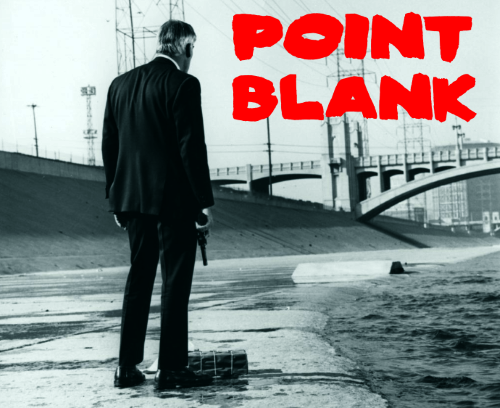
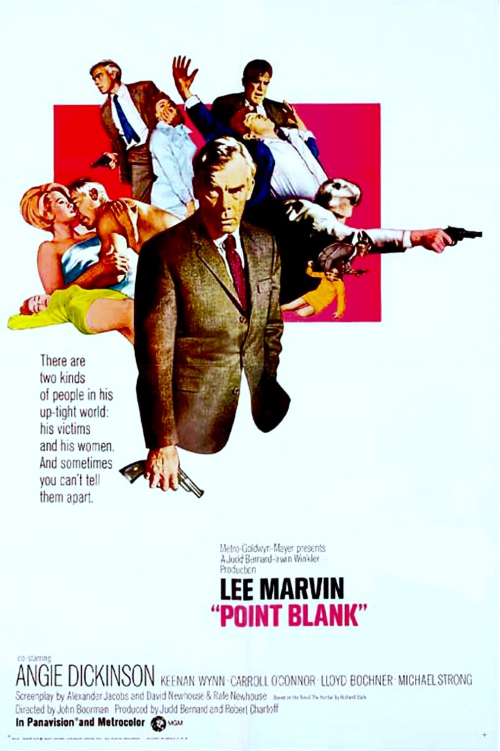
Things Learned from the “Point Blank” Commentary!

Rob Hunter at Film School Rejects is back with 32 Things We Learned from the Point Blank Commentary.  Here are three of my favorites before you click over…

3. Boorman acknowledges that there are theories that Walker (Marvin) is dying from the opening gun shots and simply dreams the rest of the movie. Soderbergh asks his opinion on that argument but also wonders if it even matters. “I don’t think it does, but… what it is is what you see.”  [I think this is a cool theory, but no more than that.  – Craig]

11. The scene where Walker surprises Lynne, shoots the bed, and then gets information from her was written to have him interrogating her, but when they shot it Marvin chose to stay silent. Acker continued with her side, and Boorman realized the brilliance of Marvin’s choice. “Lee never made suggestions, he would just show you.” They made the alterations and shot it with Lynne providing all of the info responding to his presence rather than his questions.  [What a really cool choice on Marvin’s part.  He’s supposed to be like this force of nature and his presence alone is able to get Lynne to give up all the details of the double-cross.  Well played, Lee Marvin! – Craig]

4. The fractured structure was intended from the start despite it being highly atypical for a studio picture at the time. Marvin actually called a meeting at the studio with the big wigs to confirm that he had final approval over the script, casting, and more. They said yes, and he replied “I defer those approvals to John” and then walked out of the meeting. Boorman adds that once the film was completed the suits watched his cut and immediately began mumbling about re-shoots. It was released as he intended.  [Lee Marvin comes across as one of those folks who if they like you, they’ll do anything for ya.  If they don’t like you, you’ll know it.  A couple other comments support this. – Craig]

The Time Harry Houdini Tricked Theodore Roosevelt

Ellen Gutoskey posted the true story of The Time Harry Houdini Tricked Theodore Roosevelt.  If you check out Gutoskey’s article, you’ll learn how Houdini laid the groundwork to lure Roosevelt into asking Houdini to perform a seance (Roosevelt thinking it was HIS idea), and how Houdini pulled off the trick.

Well done Houdini and well written Gutoskey.

Top Ten Car Racing Movies

Alex Maidy at Joblo.com posted his choices for the Top Ten Car Racing Movies.  There are a few surprising choices (Cannonball Run?  Talladega Nights?) and some expected ones.

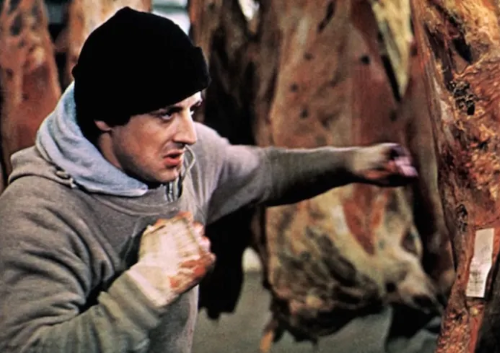
I’m happy to say that Sly Stallone made the list.  My first thought would have been Driven, but actually it was for Death Race 2000.

Click over and see Maidy’s full list and his comments on each.

“Point Blank” Gets the Cinephilia and Beyond Treatment

Point Blank gets the Cinephilia and Beyond Treatment.  It’s a thing of beauty.  Click over and you’ll get…

  • Rarely seen production and behind-the-scenes photos
  • Point Blank script
  • Alexander Jacobs discusses the process of adapting Westlake’s novel, the conflicts involved in getting the script to screen, and his approach to screenwriting
  • How the Point Blank script influenced Walter Hill
  • John Boorman on shooting Point Blank his 1st feature film in color
  • John Boorman and Steven Soderbergh Point Blank commentary track
  •  Point Blank. Lee Marvin: A Personal Portrait by John Boorman
  • and much more!

The 21 Best Movies of the 1970s

Eric D. Snider posted his choices at Mental Floss for The 21 Best Movies of the 1970s.  Snider’s list contains great choices. He listed his picks (except for Godfather 2) by their year of release.  I rated Snider’s choices by how they resonated with me.  Here’s how things came out…

Eric’s List

Craig’s List

01. A Clockwork Orange (71)

01. Rocky (76)

02. The Last Picture Show (71)

02. The Godfather (72)

03. The French Connection (71)

03. Godfather 2 (74)

04. The Godfather (72)

04. Jaws (75)

05. The Godfather II (74)

05. Alien (79)

06. Serpico (73)

06. Blazing Saddles (74)

07. The Exorcist (73)

07. One Flew Over the Cuckoo’s Nest (75)

08. Chinatown (74)

08. The Exorcist (73)

09. Blazing Saddles (74)

09. Apocalypse Now (79)

10. The Texas Chainsaw Massacre (74)

10. Chinatown (74)

11. Monty Python and the Holy Grail (75)

11. Being There (79)

12. One Flew Over the Cuckoo’s Nest (75)

12. A Clockwork Orange (71)

13. Jaws (75)

13. All the President’s Men (76)

14. Taxi Driver (76)

14. Star Wars (77)

15. Rocky (76)

15. Serpico (73)

16. All the President’s Men (76)

16. The French Connection (71)

17. Network (76)

17. Taxi Driver (76)

18. Star Wars (77)

18. The Texas Chainsaw Massacre (74)

19. Apocalypse Now (79)

19. Network (76)

20. Alien (79)

20. The Last Picture Show (71)

21. Being There (79)

21. Monty Python and the Holy Grail (75)

If I created the list I would have found spots for Dirty Harry, The Outlaw Josey Wales, Superman and F.I.S.T.  just to name a few.  

Things You Might Not Know About Lon Chaney Sr.!

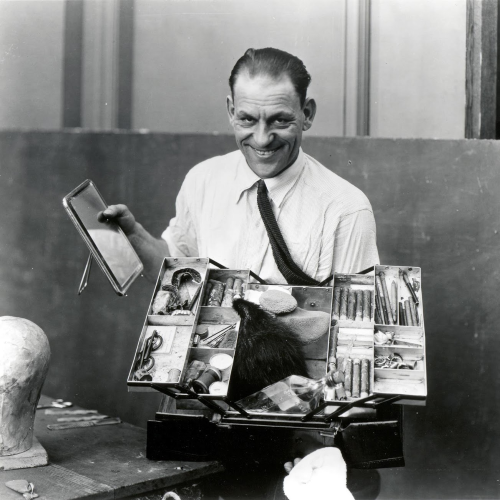
Lon Chaney is my favorite silent movie star.  (Take that, Chaplin fans!)  Hopefully you will enjoy that Jane Rose and Mental Floss present 9 Transformative Facts About Lon Chaney Sr. as much as me.  Here are three of my favorites…

1. LON CHANEY SR. WAS KNOWN AS “THE MAN OF 1,000 FACES.”
Unlike many of Hollywood’s leading men, who trade on their good looks and recognizable faces, Lon Chaney Sr. made his name by donning a series of disguises and elaborate makeups, completely changing his appearance from film to film. Chaney, an early character actor, gravitated toward bizarre and distinct roles—playing a series of criminals, toughs, circus performers, clowns, pirates, ghouls, and vampires. His ability to disappear into his roles soon earned him the moniker “The Man of 1,000 Faces.” It also made him the subject of a popular joke at the time: “Don’t step on that spider! It might be Lon Chaney!”

3. SOME OF LON CHANEY SR.’S MOST MEMORABLE FILMS WERE MADE WITH DIRECTOR TOD BROWNING AT THE HELM.

Chaney had been working in movies for more than a decade before he began his frequent collaborations with director Tod Browning, who is best known for putting Bela Lugosi on the map with the 1931 film Dracula (and most infamously known for directing the 1932 movie Freaks). But when they did finally come together, it was a meeting of macabre minds. To begin with, Chaney and Browning had several things in common: Both had experienced past brushes with personal tragedy (Browning had been the driver in a car accident that killed actor Elmer Booth; Chaney’s first wife had tried to kill herself); both came from a Vaudevillian background; and both had a penchant for spectacle and the grotesque.

Among Chaney and Browning’s collaborations were the 1925 silent version of The Unholy Three, in which Chaney plays a sideshow ventriloquist masquerading as a kindly grandmother; the 1927 film The Unknown, in which Chaney plays a fugitive masquerading as an armless knife thrower, who later blackmails a surgeon to amputate his arms in order to win the woman he loves (the film is one of several in which Chaney and Browning concocted a bizarre character and built an entire film around it); and the 1927 film London After Midnight, in which Chaney plays a vampire-like figure. Tragically, this film is also famous forbeing lost; the last known copy was destroyed in a 1965 MGM vault fire.

7. LON CHANEY SR. HATED PUBLICITY.
Chaney was a mysterious presence both onscreen and off. He disliked hobnobbing with the Hollywood set, going to premieres, giving interviews, and/or signing autographs (except for fans behind bars—Chaney was a self-taught penologist, or student of prisons and convict rehabilitation). He once boasted that he would “fix it so no one will write my autobiography after I’m gone.”

In fact, details of Chaney’s life were so scarce that actor James Cagney had a difficult time researching the part of Chaney for 1957 biopic Man of a Thousand Faces. While he was no doubt genuinely reclusive to an extent, Chaney’s reticence may have in fact been the smartest publicity move of all, as his mystery only added to his allure.

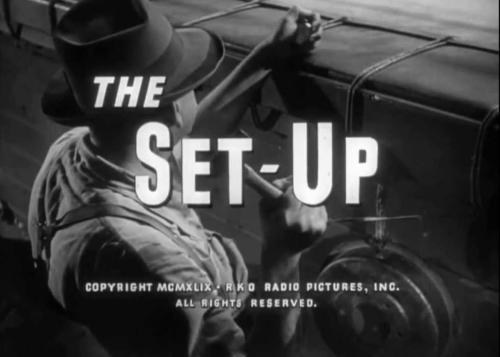
Things Learned from Martin Scorsese’s “The Set-Up” Commentary

Rob Hunter and Film School Rejects present 21 Things We Learned from Martin Scorsese’s The Set-Up Commentary.

The Set-Up is one of my favorite films (not favorite boxing films, favorite films period).  If you haven’t seen it, do yourself a favor and search it out.

And now, for three of my favorite commentary items (beware of spoilers)…

15. One of the elements that appealed to Wise with the story is that the fight at the heart of the film isn’t some championship bout… it’s just a regional, late on the card fight.

20. He says traditionally this kind of film sees the protagonist not surrender, they get their self-respect, and morally everyone feels uplifted, but it happens here in a different way. The ending in the alley sees his true redemption as he pays the price but is now allowed out of the hellscape his life had become. “It’s really a happy ending,” says Scorsese about Stoker having his hand crushed with a brick by crooks holding him incorrectly accountable “in a truthful way. And maybe there’s a hope to that, a hope for the weaker ones in the world.”

2. The film opens with a clock face showing 9:05 and Wise closes the film with the same clock roughly the length of the film later.

George Romero’s “Dawn of the Dead” Trivia

Matthew Jackson and Mental Floss present 10 Gruesome Facts About Dawn of the Dead.  Here are three of my favorites and my thoughts on each… click over to get the full story.

1. WE CAN THANK THE MALL (AND DARIO ARGENTO) FOR DAWN OF THE DEAD. (Romero had avoided returning to the genre for years and had it not been for Argento helping with creative control and financing, Dawn of the Dead may have never happened! – Craig)

3. MULTIPLE VERSIONS OF DAWN OF THE DEAD EXIST. (This is news to me!  I’d love to see Argento’s version that cut down on the humor.  I have a feeling I’d prefer it. – Craig)

4. DAWN OF THE DEAD WAS RELEASED UNRATED IN AMERICA. (I took my future wife to see the unrated version on Dawn’s initial release.  It’s the only movie we’ve ever walked out on.  The gore was too much for her.  Later in the week I returned with my buddy, John Beatty and we made it to the end. – Craig)

8 Out-of-this-World Facts about “The Invaders”

Me-TV presents 8 Out-of-this-World Facts about The Invaders.  They’re so good I had a tough time picking my top three, but here they are! Then click over for all of ’em!

5.  The show is Jerry Lewis-level huge in France.
The French have a knack for developing cults around unexpected, overlooked pieces of American pop culture. Their Invaders fandom is a prime example, and it’s not just the how of it but the when of it. Thinnes himself explained the genesis of the French Invaders phenomenon in a 2008 interview with Premium Hollywood. “Back in the early ’80s, Patrick Poivre d’Arvor, who is a star anchorman with Télévision Française 1, he had a four-hour show on Sundays and he did a survey with the audience and asked… because they love American television, what would they like to see again,” Thinnes said. “And they got a lot of calls about The Invaders, so TF1 bought a few episodes and tested it and got a huge response. So they began running the series.” The reruns later jumped to cable and an “MTV equivalent,” airing in reruns for two decades.

6. Suzanne Plechette twice sacrificed herself as a friendly alien on the show.
Not all of the aliens on The Invaders had wicked motives. Some helped David Vincent along the way. In particular, Suzanne Pleshette of The Bob Newhart Show stands out, as she turns up twice, as two different such aliens. In the second episode, she plays a stripper who also happens to be an Invaders, albeit a “mutation” who can feel empathy. So she helps David, dying in the end. This is the first time we see the glowing red death of the aliens on the series. In the second season, Pleshette appears again as Anne, a more hot-headed alien who also gives her life in helping David. Those E.T. must have loved shifting into the shape of Pleshette.

7. The Invaders dabbled in zombies, too.
While it was never a huge ratings hit, The Invaders nevertheless spawned an expanded universe of tie-in books and comics. Perhaps the must interesting pulp Invaders novel was Army of the Undead, which centers around the alien Invaders turning humans into mindless “zombies.” What is perhaps most fascinating about its use of zombies is that the paperback hit stands in 1967 — a year before Night of the Living Dead. It was ahead of the curve.

10 Reasons We Know Aaron Kosminski Was Jack the Ripper!


Shannon Quinn says, Meet Aaron Kosminski—AKA Jack The Ripper; 10 Reasons We Know It Was Him, in her post at Listverse.  Here are my choices for her three strongests arguments that Kosminski was the Ripper…

The DNA Evidence
A shawl that belonged to Jack the Ripper’s fourth victim, Catherine Eddowes, was purchased by a man named Russell Edwards in 2007. He was so determined to figure out the identity of the killer, that he had the shawl tested for DNA in 2014. This genetic material was traced back to one of Aaron Kosminski’s living relatives. Edwards was also the author of a book called Naming Jack the Ripper, where he lays out his analysis of the case over decades of research.

However, there were claims that the scientist who analyzed the DNA, Jari Louhelainen, made a mistake in his analysis. Critics refused to recognize the DNA evidence until it was scrutinized in a peer-reviewed journal by other scientists who had nothing to gain from the results. In 2019, the data had, in fact, been published in The Journal of Forensic Sciences. It was confirmed that the DNA did, in fact, belong to Kosminski. However, critics still refuse to believe that accurate DNA evidence could exist on the shawl without contamination for over 100 years.[1]

He Had a Deep Hatred Towards Women
In modern studies of serial killers, one of the common threads is a deep-seated hatred towards women. This comes from a percieved notion that women are withholding sex from them after a string of female rejections throughout their life. They also may have had a terrible relationship with their mother. Jack the Ripper chose sex workers as his victims, and he removed the organs of these women. One of his victim’s faces was brutally savaged, showing that he was full of an irrational rage against this woman who he did not know.

Aaron Kosminski was 23 years old at the time of the first murder. He never married, and had very bad luck socializing with ladies. According to Meville Macnaghten, the chief constable of Scotland Yard, Kosminski was known for having a deep hatred towards women. Macnaghten wrote, “This man became insane owing to many years indulgence in solitary vices. He had a great hatred of women, especially of the prostitute class, & had strong homicidal tendencies.”[4]

Kosminski Was Put Into An Insane Asylum
In 1891, Aaron Kosminski was confined to the Colney Hatch Asylum. The 5 “canonical murders” which have been officially credited to Jack the Ripper stopped soon after. Cambridge University has copies of Aaron Kosminski’s psychiatric records from the time he spent in the facility. According to the records, he heard auditory hallucinations that told him to do things. “He declares that he is guided and his movements altogether controlled by an instinct that informs his mind.” The documents also state that Kosminski grabbed a knife and threatened to slit his sister’s throat. It was clear to everyone, even his doctors, that he hated all women.

Modern doctors have diagnosed him with paranoid schizophrenia. Some people have tried to claim that Aaron Kosminski was not a violent person, and that he was more inclined to act out in self-harm. He also refused to eat, for fear of being poisoned. So he would pick scraps of food out of the gutter, instead. However, according to Cambridge University, the references to “self-harm” were actually talking about frequent masterbation. And while he may not have been violent towards the other men in the asylum, he still has a record of violence towards women.[8]

Kosminski is just one of several suspected of being Jack the Ripper.  It’s hard to argue with DNA evidence… but then again, Patricia Cornwell’s theory that Walter Sickert was Jack the Ripper also had DNA evidence!

Click over to Quinn’s post, read the rest of the evidence and let me know in the comments your thoughts!
“Rambo” Trivia


Thanks to Military.com today we have 8 Even More Incredible Facts About ‘Rambo’.  Check out three of my favorites before clicking over to all eight.

4. Stallone hated the first cut of First Blood.
The first time Stallone saw the edit for “First Blood,” he hated it. It was three and a half hours long, and Rambo’s dialogue was terrible. At first, Stallone wanted to buy the film so he could burn it. Instead of that, he re-cut the film to 93 minutes with most of his dialogue removed, which is what you see when you watch it today.

5. Without ‘Rambo’ there would be no ‘Predator’
When Rocky Balboa took on Ivan Drago in “Rocky IV,” no one in Hollywood was quite sure who Rocky’s next opponent could possibly be. The joke was made that Rocky would have to fight some kind of Alien in “Rocky V.” After a while, Screenwriters Jim and John Thomas began to take the idea seriously and wrote a Rocky-Rambo Hybrid movie that we call “Predator.”

3. Rambo wasn’t a killer – originally.
John Rambo never actually kills anyone in “First Blood.” There is only one death in the entire movie, and that happened as an accident when an overzealous cop falls from a helicopter while shooting at Rambo. (This refers to the movie “First Blood” not the novel on which the film was based. – Craig)

In subsequent movies, that all changes of course. Rambo’s body count is 76 in “First Blood: Part II,” and 132 in “Rambo III.” In “Rambo,” he appears to kill the entire Burmese Army with one .50-cal.

10 Terrifying Facts About “Creepshow”

Matthew Jackson and Mental Floss present 10 Terrifying Facts About Creepshow.  Here are three of my favorites (with my comments) before you click over and check out them all!

1. IT BEGAN WITH SALEM’S LOT.
(Can you imagine if Stephen King and George Romero had made a theatrical version of Salem’s Lot?  I loved the tv version of Salem’s Lot, but the thought of a King/Romero movie makes me smile and wonder. – Craig)

9. CREEPSHOW INTRODUCED GREG NICOTERO TO FILMMAKING.
(If getting Nicotero into movies was the only thing that Creepshow was known for it would be enough. – Craig)

10. CREEPSHOW IS PART OF THE STEPHEN KING UNIVERSE.
(I love that Stephen King stories, for the most part, take place in the Stephen King universe. – Craig)

John Carpenter’s Most Groundbreaking Characters

Rodolfo at CBR.com did a piece called Top 10 Groundbreaking John Carpenter Characters.  You just know I’m going to play along by posting my thoughts on three of my favorite John Carpenter characters and one who didn’t make Rodolfo’s list but should have.

  1. Snake Plissken.  I’d be surprised if Snake Plissken wasn’t at the top of anyone’s John Carpenter characters list.  Heck, Plissken should be near the top of any cool characters list.  He’s the classic anti-hero: ex-military, individualist with an attitude, more than capable in any situation and played perfectly by Kurt Russell channeling Clint Eastwood.  I’m surprised that there weren’t more Snake Plissken movies made (besides EFNY and ESFLA) and that Snake has become more popular in other media.

  2. Napoleon Wilson.  Perhaps Carpenter’s least known character with the most potential.  Wilson appeared in Assault on Precinct 13 and like Snake Plissken was an anti-hero.  On his way to prison, Wilson find himself and a small group trapped in an abandoned building under siege by a street gang.  Napoleon Wilson was perfectly played by Darwin Joston in his most famous role.

  3. John Nada.  Roddy Piper was the perfect choice to play John Nada, an average guy just looking to survive in a world unknowingly under the control of aliens.  Nada isn’t a specially trained soldier or cop — he’s just a drifter who discovers a secret that no one would believe and then he takes action to save the world!

  4. Romero.  While Romero didn’t make Rodolfo’s list, there was no way I’d leave him out of mine.  Romero appeared in a relatively small role in Escape from New York.  In a movie full of larger-than-life characters, Romero (as played by Frank Doubleday) was as memorable as any and more frightening than all.