Category: Trivia

30 Things We Learned from James Mangold’s “3:10 to Yuma” Commentary

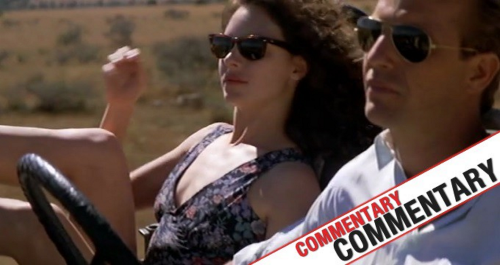
Rob Hunter and Film School Rejects present 30 Things We Learned from James Mangold’s 3:10 to Yuma Commentary.  Here are three of my favorites…

17. His second feature, Cop Land, was viewed by him as “a western, but setting it in the context of the suburban tri-state area.” The original 3:10 to Yuma served as an inspiration of sorts, and he extended that film a nod “in the sense that Stallone’s character is actually named Freddy Heflin and I named him after Van Heflin, the actor who played Dan Evans in the original.”

24. The cave where they huddle against a nighttime assault of bullets is in Los Angeles and is actually the same one featured in the Batman TV series where the Batmobile exited. It had gotten “so cold” in New Mexico that they returned to Hollywood to film the scene.

“No one should be playing a villain. Everyone should be playing a fully-realized person… No person in the world including Hitler or Osama Bin Laden walks around believing they’re a bad guy.”

Richard Stark: Parker’s Rules

If you’re a fan of Richard Stark’s Parker you’re going to love…

Parker’s Rules

  1. Don’t ever show a gun to a man you don’t want to kill.
  2. Don’t talk to the law.
  3. Always split the money fair.
  4. Each man for himself.
  5. Don’t kill somebody unless you have to. It puts the law on you like nothing else.
  6. Never leave a guy alive who’d like to see you dead.
  7. Don’t let yourself be framed in a lit doorway.
  8. Don’t meet in a town where you’re going to make a hit.
  9. Don’t stay in the hotel where you’re going to make a hit.
  10. Don’t take a job on consignment.
  11. Don’t work with anyone you can’t trust or don’t respect.
  12. When there’s no place to hide, stay where you are.
  13. Any job that requires more than five guys to be pulled can’t be pulled.
  14. For a big enough score, any rule can be broken.

14 Secrets of Secret Service Agents

Jake Rossen and Mental_Floss present 14 Secrets of Secret Service Agents.  Here are three of my favorites…

2. THEY MAKE SURE THE PRESIDENT IS NEVER ALONE. EVEN IN THE BATHROOM.

Being on protective detail means following the president wherever he or she might go. This includes the bathroom, the doctor’s office, or anywhere that might benefit from a little privacy. “The president is never alone,” Robinson says. “When Reagan was in office, Joe was there for his prostate exams and colonoscopies. He was always in the room with a gun. And if he thought the doctor was any kind of threat, he would’ve shot him.”


10. THEY TEND TO PICK UP NEW HOBBIES.

Because the president is never without an escort, Secret Service agents are often forced to learn new hobbies. Wood didn’t have any experience riding horses when he accompanied Bill Clinton for rides during his two terms. “Fortunately, Clinton was not a master horseman like Reagan, so it was just a simple trail ride,” Wood says. But Clinton was a well-conditioned jogger, which forced agents to be in great shape in order to be able to keep up. “You’re doing your job while running for five miles,” Wood says.


9. “WORKING THE ROPE” IS THE MOST NERVE-WRACKING PART OF THE JOB.
According to Wood, no other detail duty is quite as stressful as dealing with impromptu presidential greetings with private citizens standing behind a roped-off area. “That’s where agents earn their money,” he says. “You have no idea what an uncontrolled crowd might do.” To minimize threats, agents are constantly scanning for hands stuffed in pockets or other signs of suspicious activity. Their omnipresent sunglasses? Those are for crowd-scanning without tipping off potential suspects, and to ward off any liquids or other projectiles thrown in their direction.

20 Things We Learned from Ben Affleck’s Live By Night Commentary

Rob Hunter and Film School Rejects present 20 Things We Learned from Ben Affleck’s Live By Night Commentary.  Here are three of my favorites…

7. The falling snow is done via CG, and when one of the guys compliments its look and how it even appears to land and melt. “Yeah, the first time it didn’t,” says Affleck suggesting he had words with the effects folk, “but by the time it was finished it landed.”

14. He says shooting a scene with a burning cross and Klan members in their hooded uniforms made him realize how terrifying the real thing must have been.

20. This is Affleck’s favorite of his own movies. “Everything about it was so much harder to do and required so much more elaborate work.”

10 Invasive Facts About “Mars Attacks”

Mark Mancini and Mental_Floss present 10 Invasive Facts About Mars Attacks.  Here are three of my favorites…

2. BURTON WANTED HIS MARTIANS TO BE ANIMATED VIA STOP-MOTION.
The concept of a Mars Attacks! movie first surfaced in 1985, but development wouldn’t begin in earnest until 1994, when screenwriter John Gems and director Tim Burton got involved with the project. To bring the aliens to life, Burton intended to utilize stop-motion animation, something he’s “always [loved] and always will.”

Early in pre-production, a set of 12-inch articulated Martian models were built for testing purposes. At first, Burton’s plan was to have these animated in front of a blue screen. They would then be inserted digitally onto miniature sets by the artists at Industrial Light and Magic (ILM). Ultimately, though, Burton decided to abandon the stop-motion approach when ILM presented him with some impressive screen tests featuring computer-animated aliens.

Despite this, Mars Attacks! still pays tribute to the older effects technique. At Burton’s instruction, ILM animated the digital extraterrestrials as if they were stop motion puppets. This is why the Martians move a bit more rigidly than did most contemporary CG characters, such as the dinosaurs in Jurassic Park (1993).

4. WHY DID SO MANY CELEBRITIES JOIN THE CAST? THANK JACK NICHOLSON.
Let’s do a quick head count. Glenn Close, Martin Short, Pierce Brosnan, Danny DeVito, Michael J. Fox, and Sarah Jessica Parker are just a few of the big names on this movie’s mile-long list of stars. And yet, when the casting process began, Mars Attacks! struggled to attract any players with serious marquee value. Gems blames this on the fact that most of its characters either die in some cartoonish manner or end up disfigured.

“Agents didn’t want to see their star clients playing loser roles, and a lot of big acts passed on the project,” he says. “At one point, we thought we were going to have to cancel the film. The guy who saved our butt was Jack Nicholson.” According to Burton, the Academy Award-winner was enthusiastic about joining Mars Attacks! from the very start. After sending Nicholson the script, Burton gave him a call while location-scouting. “Which part would you like to do?” asked the director. “How about all of them?” Nicholson replied.

In the end, he was double-cast as President Dale and a sleazy Vegas businessman. Once word got around that Nicholson would be involved, other celebs lined up to join the ensemble. “We started getting requests from more stars than there were parts for,” Gems notes. “It was like a tidal wave when Jack came on.”

9. INDEPENDENCE DAY OWES ITS TITLE—AND PART OF ITS PREMISE—TO MARS ATTACKS!
While Burton toiled away on Mars Attacks!, Dean Devlin and Roland Emmerich were writing an alien invasion movie of their own, but theirs was to have a more serious tone. The duo knew that both pictures would be released at some point in the summer of 1996.

“I said to Dean, we can’t do our film after a parody comes out. We had to beat [Burton] to it,” Emmerich recently said in an interview with The Guardian. “If it came out on the 4 July weekend, we would beat Mars Attacks!, which was coming out in August. So we wrote the concept around the release date. Dean said: ‘Let’s just call it Independence Day; we can come up with something better later.” The rest is history.
12 Solid Facts About “Pumping Iron”

Jake Rosen and Mental_Floss present 12 Solid Facts About Pumping Iron.  Here are three of my favorites…

1. THE MOVIE ORIGINALLY CO-STARRED A WIMP.
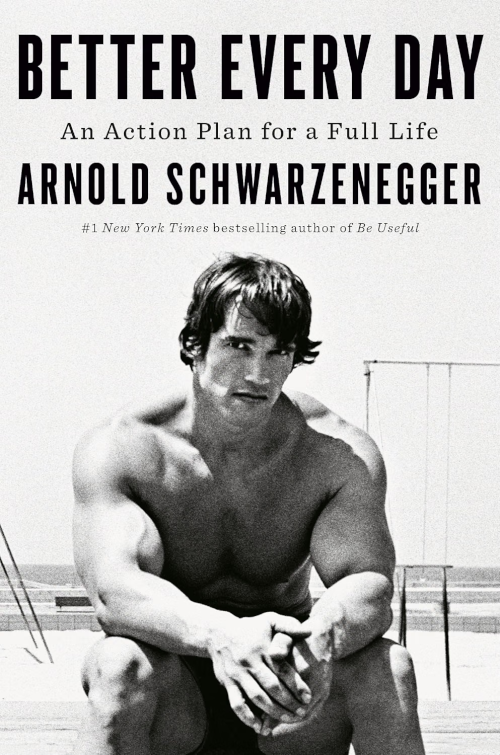
When photographer George Butler was dispatched by both Life magazine and The Village Voice to cover the burgeoning bodybuilding scene in the early 1970s, he was fascinated with its abundance of charismatic participants. Feeling one of the sport’s star attractions, Arnold Schwarzenegger, could carry a full-length film, Butler decided to pursue a feature-length project with collaborator Robert Fiore that he began shooting in 1975. The problem was that Butler was focused on the mass monsters of the Mr. Olympia scene; to balance it out and offer audiences a more relatable subject, he enlisted slightly-built actor Bud Cort (Harold and Maude) and shot a lot of footage of him working out and marveling at the well-developed bodies all around him. The footage wound up being cut from the finished film.

2. NO ONE BELIEVED ARNOLD SCHWARZENEGGER COULD CARRY THE MOVIE.
While Butler was trying to raise funds, he shot a 10-minute test sequence of Schwarzenegger making a guest posing appearance in Holyoke, Massachusetts. Screening the footage for investors in New York, Butler was dismayed to see that they seemed more horrified than intrigued by the sight of the massive Austrian flexing his deltoids. After the footage ended, playwright Romulus Linney stood, turned to Butler, and said, “I think I speak for all of us when I say that if you make a movie about this Arnold person, we will laugh you off 42nd Street.” (Butler turned to another approach, piecemealing his budget together by petitioning more than 3000 separate financiers until he got the money he needed.)

5. LOU FERRIGNO PREDICTED HIS OWN FUTURE.
The nature of raw footage means that hundreds of hours of film were left on the cutting room floor, but according to Butler, one sequence in particular has never left his memory. Talking to Ferrigno about his future hopes, the actor told the director that “all I want to be is the Hulk.” He got his wish just two years later, starring for five seasons on CBS’s The Incredible Hulk.