Category: Trivia

10 Things You Might Not Know About Beetle Bailey
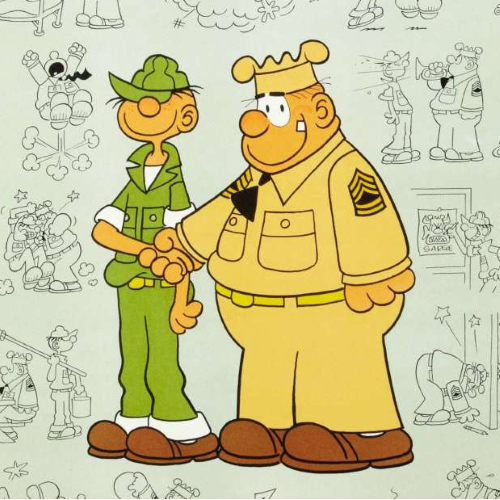
Jake Rossen and Mental Floss present 10 Things You Might Not Know About Beetle Bailey.

1. IT STARTED AS A COLLEGE CAMPUS COMEDY.

Walker’s initial idea for a strip didn’t feature any fatigues or military equipment. While drawing cartoons for The Saturday Evening Post, he decided to try creating a story around a university student named Spider who kept his hat pulled over his eyes and tried to navigate college life by doing as little as possible. Changing his name to Beetle Bailey—the surname was a nod to a supportive editor at the Post—Walker had him wander into an Army recruiting station. Inspired, he retrofitted the strip so that barracks would take the place of a dorm. (Walker himself had been drafted, serving four years during World War II.) Debuting in 1950, Beetle Bailey set a record for the longest continuous work by a comic strip artist: Walker worked on it for 68 years.

2. IT WAS BANNED BY THE U.S. MILITARY.

In the 1950s, Beetle Bailey took its place as a steady but otherwise unremarkable addition to the comics pages. Then Walker got an unexpected promotional boost. The U.S. military’s Stars and Stripes newspaper, which had been running the strip, banned it from its Tokyo editions over fears it might incite disrespect toward commanding officers. (Beetle was lazy and typically disinterested in following orders.) The prohibition lasted for a decade and was subjected to so much ridicule that Beetle became a recurring presence in newspaper headlines. The strip was eventually syndicated to more than 1800 papers.

10. THE STRIP WAS RECOGNIZED BY THE PENTAGON.

After 50 years of “service,” Beetle Bailey finally got a little acknowledgment from his higher-ups. The (real) Pentagon invited Walker and three of his costumed characters to a ceremony in May 2000 that honored the cartoonist for his work in supporting the military. Walker was presented with the Secretary of the Army’s Decoration for Distinguished Civilian Service, the Army’s highest civilian honor. “I think finally the brass has learned how to laugh at themselves a little bit,” Walker said. “They’re not kicking me out of Stars and Stripes anymore like they did a couple of times.”
Bruce Lee Facts You May Not Know

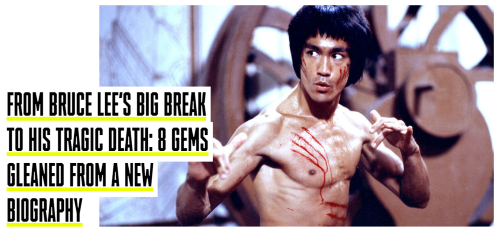
In 2018, Jacob Oiler and SYFYWire presented From Bruce Lee’s Big Break to His Tragic Death: 8 Gems Gleaned from a New Biography.  Although the article is no longer available, here are three of my favorites from it…

Lee likely died from heat stroke.

While there were many, many versions of Lee’s controversial death (in the bed of his mistress, Betty Ting Pei, no less), the typical assumption that an allergic reaction to a painkiller was the cause of his “death by misadventure” ignores the recent strides medicine has made in diagnosing heat stroke. A month before his death, Lee collapsed under similar circumstances, feeling dizzy and having seizures under hot and sweaty conditions. These symptoms, along with highly elevated body temperature (which past diagnosis had erroneously categorized as feverishness) and the fact that Lee had sweat glands surgically removed from his armpits weeks before his first collapse, point to one of the leading causes of death for young athletic men. That Lee was known to overwork, lose weight, and lose sleep when making films only bolsters the case that his death on July 20, 1973 (the hottest day during that Hong Kong summer), was likely caused by heat stroke.

Roman Polanski once suspected Lee of killing Sharon Tate.

Lee was a fight choreographer for some of Hollywood’s biggest names in the ‘70s and a regular in their party scene. He hobnobbed with Steve McQueen, Roman Polanski, Sharon Tate, and James Coburn. So when Charles Manson’s followers horrifically killed Tate, Sebring, and three others at a house Polanski was renting, the tragedy struck especially close to home for Lee. Tate and Polanski were clients, while Sebring was one of Lee’s closest friends in town. But when Lee mentioned to Polanski that he lost his glasses — the director knew that an unidentified pair of horn-rims were found at the house — Polanski grew suspicious and took the actor to buy a new pair. But when Lee’s prescription didn’t match that of the evidence at the scene, Polanski thankfully relented.

Batman and a hairdresser were responsible for Lee’s early Hollywood career.

Jay Sebring, Hollywood hairdresser and karate enthusiast, had seen Lee perform a controversial demonstration and speech at the 1964 Long Beach International Karate Championship. He also cut the hair of William Dozier, a TV producer looking to cast Charlie Chan’s son for a prospective James Bond-esque show titled Number One Son. Dozier loved Lee for the role and was producing the longshot Batman show at the time. The success of the campy superhero adaptation would determine whether the studio accepted his next project… and Lee. Batman was a hit and, though Number One Son was nixed, the success of Adam West’s detective meant that superheroes were hot — and The Green Hornet wasn’t far behind. That meant Lee could be Kato, who crossed over onto Batman for a few episodes. Lee and Burt Ward (Robin) even lived in the same apartment complex.

30 “Alien” Franchise Movie Facts That Will Blow Your Mind

Gem Seddon and GamesRadar present 30 Alien Facts That Will Blow Your Mind.  Here are three of my favorites…

11. Blow its bloody head off!

In Aliens, the Marines scatter when the xenomorphs peel away from the walls, retreating to the safety of the APC. One pesky creature manages to get its sharp talons wedged into the doors; and then gets its head blown off by Hicks.

After endless takes where actor Michael Biehn struggled to get the barrel into the alien’s jaws, the crew came up with a way. They simply started with the gun in its mouth, pulled it out, and reversed the shot. Proof that sometimes the coolest tricks don’t require CGI.

5. Terminator connection

Preliminary Aliens drafts had Bishop mention that he was created by Cyberdyne Systems – the technology corporation responsible for creating Skynet in the Terminator saga. It was later switched to Hyperdyne.

One element that does remain happens aboard the drop ship. In the special edition, Hudson’s “ultimate badass” rant about the Marines’ arsenal of weapons, makes reference to a “phased plasma pulse rifle.” The weapons the Marines use are in fact, M41A pulse rifles. This line is a cheeky connect between James Cameron’s previous film, in which the T-800 asks a gun store clerk for a “phased plasma rifle.”

Bill Paxton, who plays Hudson, also appeared in The Terminator as one of the street punks at the observatory.

1. Kane’s last supper

Ridley Scott deliberately kept the actors off the Alien set while production designers and the effects crew dressed the scene for Kane’s last meal. Despite having read the script, none of the principal leads knew what was going to happen. So when the chestburster emerges from John Hurt and a stream of fake blood blasts a stunned Veronica Cartwright, her shocked reaction and scream? Completely authentic.

“Everyone was wearing raincoats,” Weaver later recalled. “We should have been a little suspicious.”

The article contains so many more interesting facts.  It’s definitely worth a read!

30 Movies That Stopped Filming and Started Over

Max Evry and ComingSoon.net took a look at 30 Movies That Stopped Filming and Started Over.   This is an interesting article.  It’s amazing how quickly directors can fall behind schedule and over budget to the tune of millions and millions of dollars.  Then there’s always the possibility of “creative differences” causing stars to clash with each other or the director.  Most of these films that started over still failed at the box office… but not always.  Here are three of my favorites from Evry’s list…

Back to the Future (1985)

Without question, the most famous case of a movie stopping and starting over again (as well as the most successful) was when director Robert Zemeckis and producer Steven Spielberg made the unthinkable decision to fire Eric Stoltz as lead character Marty McFly well into the shoot at a cost of $3 million dollars. Apparently Stoltz’s performance was deemed too dramatic and not light enough for the comedic film, as well as his being uncomfortable on a skateboard. Five weeks into the shoot, they let Stoltz go and hired Michael J. Fox, who was the original choice, and the rest was history. The film became a SMASH success and is now considered a classic, spawning two beloved sequels. Film stills and a small amount of footage has been released of Stoltz in the part, and while the actor went on to have a fine career afterwards, his version of those scenes is one of the most sought-after holy grails of geekdom.

Tombstone (1993)

The late screenwriter Kevin Jarre (Glory) was the original director on this story of Wyatt Earp, but he reportedly was in over his head on set, demanding a level of authenticity and length that proved unwieldy, falling behind on the shooting schedule. A month into filming, producer Andrew Vajna replaced Jarre with George P. Cosmatos, for whom he had ironically written the script for Rambo II. All of Jarre’s footage was scrapped with the exception of all scenes with Charlton Heston, who was unavailable to return. The script was parred down to make the shoot more manageable, and Kurt Russell acted as a kind of ghost director on set. The film was a surprise box office success, bringing in $56 million and besting Kevin Costner’s more expensive rival Wyatt Earp film.

Rambo III (1988)

Russell Mulcahy of Highlander fame was originally hired to helm this third installment of the Rambo franchise, with Sylvester Stallone at his physical (and egotistical) peak. Unfortunately, Mulcahy and Stallone clashed and after three weeks the director and much of his crew were sacked. One reason given was an incident where the director was supposed to hire vicious Russian troops but according to the actor hired “pretty boys.” Another reason was three weeks into production they were already two weeks behind schedule. Stallone promoted veteran second unit director Peter MacDonald, who had worked on Rambo II as well, to capable first-time director. The sequel became the most expensive movie ever made up to that time, but was unfortunately released after the Russians had already left Afghanistan and suffered at the box office.

I was surprised to learn that Spartacus and Phantom of the Opera started over.  Usually, when this happens it is pretty big news.

I always wanted to see footage from Rambo III directed by Russell Mulcahy.  I am a huge fan of the original Highlander and was interested in what he’d bring to Rambo… although “pretty boy” Russian troops wasn’t in the thought process.

17 Secrets of Magicians

Judy Colbert and Mental Floss present 17 Secrets of Magicians.  Here are three of my favorites…

2. THEY SPEND THOUSANDS OF DOLLARS ON BOOKS.
“Most magicians are serious scholars,” says Las Vegas magician Xavier Mortimer. “I don’t know any professional magicians who don’t have their own extensive libraries about our craft.” (One notable example, Harry Houdini, assembled close to 4000 books on magic and spiritualism, now held at the Library of Congress.)

The costs of those books can add up, though: “Most books are small print runs, for a small audience, which can lead to high prices,” Mortimor says. As an example, Denny Haney, who owns the Denny and Lee Magic Shop in Baltimore, Maryland, says that one book he sells—Soirees Fantastique by the French illusionist Christian Fechner—goes for $3000.


6. CONNECTING WITH THE AUDIENCE CAN BE MORE IMPORTANT THAN THE TRICKS.
Doc Eason, a legendary magician who performs at the Magic Castle in Hollywood, California, and at the Stonebridge Inn in Snowmass, Colorado, is known for his incredible memory; he does one trick where he memorizes the names of 20 people in the audience as well as a card held by each person. Despite the impressive feat, Eason says, “The trick is not the thing … what is the thing is connecting with the audience. Without connection, you just become a clever person who learned to do a few cool things.” Establishing that connection is a matter of eye contact and remembering the names of the people in the audience, Eason says—which requires plenty of practice in front of friends, family, and then strangers before taking to the stage.


10. THEY’VE HEARD ALL YOUR JOKES BEFORE.
Rich Bloch, a magician, inventor of magic effects, and owner of Dickens Parlour Theater in Millville, Delaware, says that when you think you’re being clever by asking the magician, “Can you make my husband disappear?” or “Can you saw my wife in half?” or “Can you change this dollar into a $1000?”—you aren’t. Also, the magician has probably heard the joke “How’s tricks?” before, even if they laugh with wide-eyed amazement like you’re the first person to ever crack it.

Source: Mark Evanier.

Incredible Facts From ‘The Beverly Hillbillies’ TV Show

Jason Owen of Definition.org posted  Incredible Facts From The Beverly Hillbillies TV Show.  Here are three of my favorites…

11. TV Ratings Hit
Despite criticism, the show was a huge success. Only three weeks on air, it hit the first spot in TV ratings, gaining the reputation of the fastest rise to the number 1 spot in TV history. It then managed to stay there for a record breaking two seasons and maintained its position in the top 20 for eight seasons, only dropping down during its last year on the air.


5. John Wayne to fight the “Injuns”
On the show’s fifth season, John Wayne had a small guest appearance. On the episode titled “The Indians Are Coming,” Granny kept mentioning her hopes country star John Wayne would show up and help fight the “Injuns,” – yes, that’s Indians with an accent! Coincidentally, at the end of the episode, John Wayne actually does show up, and Granny’s dream is fulfilled. Reportedly, Wayne was happy to accept a fifth of bourbon as payment for his appearance on the show.


6. Have you seen Sharon Tate?
Sharon Tate may have been most famous as being one of the victims of the Manson family killings, as well as being the pregnant wife of director Roman Polanski at the time, but she also played a recurring role on the American Hillbillies. She appeared approximately 15 times on the show in the repeat role of bank teller Janet Trego. Many fans did not recognize her at first because she’s in disguise wearing a brunette wig.

Fun Facts About the Original 1960s ‘Batman’ Series

John Spearman of Definition.org posted 20  Fun Facts About the Original 1960s ‘Batman’ Series.  Here are three of my favorites…

3.  In order to find the perfect dynamic duo, two separate screen tests were held. One included Adam West and Burt Ward, while the other included Lyle Waggoner and Peter Deyell. Needless to say, West and Ward got the parts; however, the screen tests for both pairs can be found on YouTube, and they show just how different the show could’ve been.

Waggoner later went on to appear alongside another television super hero, Wonder Woman Lynda Carter, in the 1970s.


18.  Adam West could have gone on to play another hero if he had wanted. He was offered the part of James Bond in the 1969 film, On Her Majesty’s Secret Service. He turned down the role, as he felt a British actor would be much better for the part. The role in that film eventually went to George Lazenby, who was Australian.


20.  After the series was cancelled ABC held out hope that another network would purchase it and continue making the show. After waiting for a considerable amount of time, they assumed this wouldn’t happen, and the sets were destroyed.

NBC then decided to acquire the show; however, took back their offer when they realized the sets were gone.

Oh what might have been!

9 Altogether Ooky Facts About John Astin


Me-TV presents 9 Altogether Ooky Facts About John Astin.  Here are three of my favorites…

3. He was nominated for an Oscar…

   Image: MGM Television

…but it wasn’t for acting. Astin directed the 1968 short film Prelude. It was nominated for an Academy Award for Best Live Action Short Film.

4. He appeared in ‘West Side Story.’

   Image: United Artists
The 1961 musical blockbuster starred box office heavyweights like Natalie Wood and Rita Moreno, but it also featured an uncredited appearance by Astin. The actor appeared as the character Glad Hand, the social worker who kicks off the “Mambo” dance sequence in the gymnasium.
 

5. He appeared as The Riddler on ‘Batman.’

Most people associate the devious villain with Frank Gorshin. But Astin also put on the green tights and purple mask in the season two episodes “Batman’s Anniversary” and “A Riddling Controversy.”

The Walking Dead’s 21 Most Shocking Deaths So Far


Louisa Mellor at Flipboard came up with her list of The Walking Dead‘s 21 Most Shocking Deaths So Far.  Mellor’s list is a good one and a tribute to the number of truly shocking death’s in The Walking Dead‘s eight seasons.

As I was going through the list, I had to keep refining to come up with my top three…

Shane Walsh

Shane’s death is one of The Walking Dead’s most memorable exits. Andrew Lincoln and Jon Bernthal held nothing back in their performances as former partners turned mortal enemies. Rick’s gambit with the gun—pretending to hand it to Shane then stabbing him in the heart with a knife—was a shock as great as the one little Carl faced when he arrived on the scene and took in what had happened.

Glenn Rhee and Abraham Ford

Perhaps this entry should belong solely to Abraham, as most people were expecting Glenn to follow his comic book counterpart and fall foul of Negan’s baseball bat. The brutality of Glenn’s death though, with its truly stomach-churning prosthetics and make-up, made it no less shocking than the unexpected addition of Sgt Ford. As punishment for their attack on the Savior satellite outpost, Negan famously beat Abraham to death after a massively publicised season six cliff-hanger. When Daryl punched Negan in retaliation, he provoked the Savior leader into additionally murdering Glenn.

Carl

The Walking Dead audience, or what’s left of it, had an entire midseason break to get used to the idea that Carl Grimes was a goner. We all saw the bite-mark, we all knew what it meant. Even if you’d ignored the set leaks and behind-the-scenes rumours, it was clear that in a world without a cure, that boy was no more.

Somehow though, having that certainty made it no less surprising when that final gunshot signifying Carl’s suicide rang out from the destroyed church. They finally really did it, those maniacs! A character we’d known since the pilot had breathed his last.

It was hard to not include Sasha’s death in my top three.  Also, although the death didn’t make Mellor’s list, I would have included Shane killing Otis!

Stanley Kubrick’s ‘The Shining’ Got the Cinephilia and Beyond Treatment!

Stanley Kubric / The Shining / Horror fans are going to love it that Stanley Kubrick’s ‘The Shining’ Got the Cinephilia and Beyond Treatment!

Click on the link and you’ll find…

  • Kubrick’s Original Treatment for The Shinning
  • A rare interview with Kubrick
  • Rare Behind the Scenes Footage
  • Another rare Kubrick Interview
  • The Visions of Stanley Kubrick Video
  • View from The Overlook Video
  • Kubrick Talks About The Shining Video Interview
  • and much more!

Jonathan Maberry’s Favorite Horror Movies!

Jonathan Maberry recently requested…

Name your favorite:
1. Vampire Movie
2. Werewolf Movie
3. Zombie Movie
4. Monster Movie
5. Haunted House Movie

And he listed his…

1. Near Dark
2. Dog Soldiers
3. Dawn of the Dead 2004 unrated directors cut)
4. Aliens
5. The Haunting

So here’s mine…

  1. Dracula (1931)

  2. Curse of the Werewolf

  3. Night of the Living Dead (Romero Original)

  4. Aliens

  5. The Changeling

Yours?

11 Dizzying Facts About “Vertigo”

Tara Aquino and Mental Floss present 11 Dizzying Facts About Vertigo.  Here are three of my favorites…

1. ALFRED HITCHCOCK BLAMED JIMMY STEWART FOR VERTIGO’S FAILURE.
Marred by mixed reviews, the $2.5 million Vertigo did comparatively less than Hitchcock’s previous movies, and was widely recognized as a failure. Frustrated with its reception, Hitchcock partly blamed star Jimmy Stewart’s aging appearance. At the time of filming, Stewart—who had starred in Hitchcock’s three previous films—was 50 years old which, according to the director, was too old to convincingly play then-25-year-old Kim Novak’s love interest.

5. AN UNCREDITED CAMERAMAN CAME UP WITH THE FAMOUS “VERTIGO EFFECT.”
According to associate producer Herbert Coleman, it wasn’t Hitchcock who came up with the film’s famous camera technique (which essentially involves zooming forward while pulling the camera backward); rather, it was an uncredited second unit cameraman, Irwin Roberts. “He didn’t get screen credit on Vertigo because they gave the screen credit to another close friend of ours [Wallace Kelley] who did all the process work on the stage,” Coleman said.

9. ALFRED HITCHCOCK CHANGED THE SETTING FROM PARIS TO SAN FRANCISCO.
The French source novel, D’entre les Morts, was set in Paris, but Hitchcock believed that San Francisco was more interesting. As noted by Auiler, with the city’s vertiginous streets and hilly landscape, the location perfectly matched the film’s themes. In a city where there were such extreme physical highs and lows, awful for anyone with acrophobia, Scottie’s vertigo became a character in and of itself.