10 Facts About Jupiter That Will Blow Your Mind
Rebecca Harrington and Business Insider present 10 Facts About Jupiter That Will Blow Your Mind. Here are three of my favorites…
Previews and Reviews that are Z's Views
Rebecca Harrington and Business Insider present 10 Facts About Jupiter That Will Blow Your Mind. Here are three of my favorites…
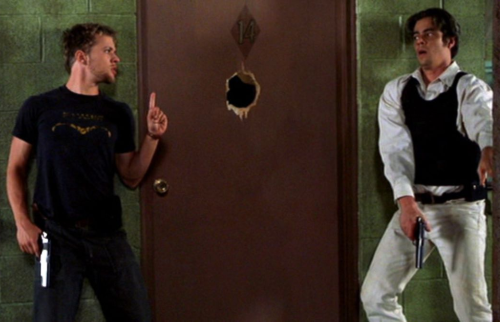
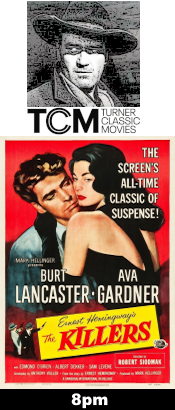
Garin Pirnia and Mental_Floss present 15 Not-So-Simple Facts About Blood Simple. Here are three of my favorites…
1. ITS TITLE WAS INSPIRED BY DASHIELL HAMMETT’S RED HARVEST.
“It’s an expression he used to describe what happens to somebody psychologically once they’ve committed murder,” Joel Coen told Time Out. “They go ‘blood simple’ in the slang sense of ‘simple,’ meaning crazy. But it’s left up to the audience to ponder the implications; they’re never spelled out in the film itself.”
3. THE COENS—AND MANY OF THE CAST AND CREW—HAD NEVER BEEN ON A FILM SET BEFORE.
Joel Coen admitted in My First Movie, “The first day of shooting on Blood Simple was the first time I’d ever been on a feature movie set in any capacity, even as a visitor.” Coen had previously worked as an assistant editor on horror films, including 1981’s The Evil Dead. Coen mentioned how Sonnenfeld would throw up after looking at the dailies, because he was so nervous working on the film. “Everyone was in the same boat,” Joel said. “The gaffer had never gaffered a feature. The sound guy, the mixer on the set, had never mixed a feature.”
4. THE COENS CHOSE TO MAKE A FILM NOIR BECAUSE OF THE GENRE’S PRACTICALITY.
The Coens liked hard-boiled fiction authors James M. Cain, Dashiell Hammett, and Raymond Chandler, and used them to their advantage in writing the script. “It’s certainly a genre that is entertaining, and we also picked it for very practical reasons,” Ethan said. “We knew we weren’t going to have a big budget. The financing would not allow it. We could build something on the genre and the appeal it has.”
“It’s also a genre that allows you to get by rather modestly in some ways,” Joel added. “You can limit the number of characters, put them into a confined set. There’s no need to go for large-scale effects or scatter them through the film, and those cost a lot of money. So it was a pragmatic decision that determined what film we would make.”
High Sierra (1941)
Director: Raoul Walsh
Screenplay: John Huston and W.R. Burnett from a novel by W.R. Burnett
Stars: Ida Lupino, Humphrey Bogart, Alan Curtis, Henry Hull and Cornell Wilde.
The Pitch: “Raoul Walsh. John Huston. WR Burnett. Ida Lupino. Bogart.”
Tagline: “The Blazing Mountain Manhunt for Killer ‘Mad-Dog’ Earle!”
The Overview: Beware of Spoilers…
Roy Earl [Bogart] an infamous bank robber [think Dillinger] is sprung from prison by an old crime boss who wants Earl for a big robbery. Obligated for his freedom, Earl drives west to check out the set up.
Once he meets up with his old boss, Earl discovers the robbery plan is good and the money is right, but his partners are young, inexperienced thugs looking to make a name for themselves… plus they have a woman [Lupino] with them and everyone knows women weaken legs and crime plans don’t work out.
Before it is over there will be a robbery, people killed, double-crosses and a manhunt for the “Mad Dog Killer” Roy Earl.

Rating: 4 of 5 stars.
Kristin Hunt and Mental_Floss present 11 Complicated Facts About Shaft. Here are three of my favorites…
1. A WHITE NEWSPAPER REPORTER CREATED SHAFT.
John Shaft made his debut in Shaft, a novel by Ernest Tidyman. Tidyman was a reporter for The Cleveland News, The New York Post, and The New York Times before he began writing the Shaft series, which included seven detective stories. Along with John D.F. Black, he adapted his first Shaft book into the screenplay for the first film. He would later go on to write the screenplays for The French Connection (1971) and High Plains Drifter (1973) as well as Shaft’s Big Score! (1972) and the Shaft TV series (1973-1974). His work earned him an NAACP Image Award.
3. SHAFT’S MUSTACHE WAS NON-NEGOTIABLE.
The Los Angeles fiasco was behind him, but Parks immediately faced another scare when he spied his star, Richard Roundtree, heading to the bathroom with a towel and razor. Producer Joel Freeman had asked him to get rid of his soon-to-be legendary mustache. Parks told Roundtree emphatically, “Shave it off and you’re out of a job.” And with that, the ‘stache stayed in the picture.
11. THERE’S A SHAFT COMIC BOOK SERIES.
There hasn’t been a new Shaft movie since the 2000 reboot starring Samuel L. Jackson, but Dynamite Entertainment began printing a Shaft comic book series in 2014. The comics are penned by David F. Walker, who also published the first Shaft novel in over 40 years this February. The latest comic series finds Shaft as a part-time consultant on a blaxploitation movie; Walker intended this meta subplot to be a commentary on “clueless producers who think they have their finger on the pulse of blackness.” And yes, that was an intended slam on the upcoming remake.
Garin Pirnia and Mental_Floss present 15 Out-of-this-World Facts About Men in Black. Here are three of my favorites…
9. MEN IN BLACK IS THE HIGHEST-GROSSING ACTION BUDDY COMEDY OF ALL TIME.
Rush Hour 2 almost dethroned Men in Black from the top spot in 2001, but with a gross of $250 million, Men in Black held onto its position. 22 Jump Street comes in third, and Men in Black II and Men in Black 3 rank fourth and fifth on the list, respectively. On the sci-fi comedy chart, the Men in Black movies corner the top three positions.
11. WILL SMITH CAME UP WITH THE PLOT FOR MEN IN BLACK 3 WHILE FILMING MEN IN BLACK II.
One night while on the set of Men in Black II, Smith told Sonnenfeld his idea for a third film. “At the beginning, something has happened and Agent Kay is missing and I have to go back to the past to go try to save young Agent Kay,” Sonnenfeld recalled to CNN. “In doing so, myself and the audience find out all sorts of secrets about the world that we didn’t even know were out there.” All Sonnenfeld could muster was, “Can we just finish this one?” Over a decade later, the plot to Men in Black 3 did revolve around time travel and saving a young Agent Kay, played by Josh Brolin.
15. THE RAY-BAN GLASSES WORN IN THE MOVIE ALMOST DIDN’T GET A SHOUT OUT.
The sunglasses Smith and Jones sport in the film are Ray-Ban Predator II glasses. According to a 1997 article in Promo Magazine, a special coating was applied to the glasses to limit reflection, which meant removing the logo. Without the logo, nobody would know what type of glasses they were (Sonnenfeld edited out a previous line in the movie where Jones says “that’s why they call them Ray-Bans”). Ray-Ban tried to convince the studio to reinstate the logo, but they refused. After some coercing, Smith compromised and name dropped the company in the “Men in Black” song: “Black tie with the black attitude / New style, black Ray-Bans, I’m stunnin’, man.” The popularity of the movie and the song’s music video gave the $100 Predators a four- to fivefold increase in sales, and a boost to Ray-Ban’s entire catalog of shades.
Roger Cormier and Mental_Floss present 10 Huge Facts About Big Trouble in Little China. Here are three of my favorites…
7. THE STUDIO DEMANDED THAT THE BEGINNING OF THE FILM BE CHANGED.
Barry Diller felt that Jack Burton wasn’t heroic enough, so after production wrapped, Carpenter went back and shot an introductory scene where Egg Shen (Victor Wong) says Jack is a courageous man. Had Diller not said anything, the film would have begun with Jack driving. Carpenter didn’t necessarily want Burton to be seen as the hero; he wanted both leads to be considered the film’s heroes.
9. KURT RUSSELL WAS LED TO BELIEVE IT WOULD BE THE BIGGEST MOVIE OF 1986.
Russell had never, before or since, been asked by so many members of the press what it was like to be in the biggest movie of the year than when he was promoting Big Trouble in Little China. After the test screenings went really well, Russell said he “kept waiting to see ads and things that just didn’t happen.”
10. THE ROCK WANTS TO REMAKE IT, WITH CARPENTER.
Carpenter said he’s “ambivalent” about the idea. New movie or not, there’s been a comic book series that picks up from where the movie ended. And if you can find it, there was a Big Trouble in Little China video game released in 1986. A secret screen on the DVD contains images from it.

When I was a kid, one of the most controversial comic book stories played out in Green Lantern / Green Arrow #85 and #86. In the story written by Denny O’Neil and pencilled by Neal Adams, Green Arrow discovers that his ward is a drug addict. That story did more to keep me away from drugs than any “just say no” campaign.

Mark Mancini and Mental_Floss present 13 Thrilling Facts About The Original House of Wax. Here are three of my favorites…
8. IT COMES WITH AN INTERMISSION.
Prior to the late 1970s, “epic” films would often treat their viewers to a built-in bathroom break. Midway through screenings of Gone With the Wind and other, extra-long classics, the action would pause, the theater lights would brighten, and the word “Intermission” would appear onscreen. Ordinarily, this practice was reserved for movies with bladder-testing runtimes of two and a half hours or more. By comparison, House of Wax flies by with its breezy 88-minute runtime. Yet, unconventionally for a short picture, it contains an intermission. Why? Screening the 3D film required two projectors running simultaneously. The respite was necessary because it allowed theater employees to change both reels an hour into the movie.
9. A FUNCTIONING GUILLOTINE WAS USED IN THE CLIMAX.
Toward the end of the film, Igor gets into a big fight with Sue’s boyfriend, Scott, played by Paul Picerni. From the get-go, there’s no doubt about which one has the upper hand, as Igor seizes poor Scott and shoves his head under a guillotine in the museum’s French Revolution display. Luckily, the police arrive in time to rescue our hero, pulling him out of harm’s way seconds before the blade comes crashing down.
Just like his character, Picerni came dangerously close to getting his head chopped off, Louis XVI-style—because this guillotine was 100 percent real. Rather than film the scene in segments, de Toth wanted to shoot the whole thing in one take. With blithe nonchalance, he told Picerni to go and stick his head under the razor-sharp blade of this death device.
Naturally, Picerni objected. At a 2006 House of Wax Q&A, the star reminisced at length about the argument that followed. “I asked de Toth, ‘How are you going to control the blade?’ He said the property master was going to sit on top of the guillotine, holding the blade between his legs, then let it drop after my head was removed.” When the actor opined that this sounded dangerous, de Toth replied, “What are you, chicken sh*t?” In the end, Picerni agreed to do the scene in one take, on the condition that a metal bar be inserted under the blade to keep it from falling prematurely.
11. BELA LUGOSI ATTENDED THE PREMIERE—ALONG WITH A GUY IN A GORILLA SUIT.
Although the star of Universal’s Dracula (1931) did not appear in House of Wax, he did help promote it. The film’s world premiere was held at the Paramount Theater in Los Angeles on April 16, 1953. As a publicity stunt, Lugosi was invited to attend the big event. Clad in a vampire cape, he emerged from his limousine with a chain link leash, which was attached to an actor in an ape costume—a clear homage to the 1952 comedy Bela Lugosi Meets a Brooklyn Gorilla.

I’ve always said, “If you can live long enough, you can live forever.”
A compound called nicotinamide mono nucleotide (NMN) has been shown to slow down the aging process and extend the lifespans of mice. We’re about to find out if it does the same thing to humans.
A planned clinical trial devised by researchers from Washington University in St. Louis and Keio University in Japan is set to test the effectiveness and safety of the compound. Starting next month, about 10 healthy people will be administered NMN to see if can improve bodily function and stave off the effects of aging. Should it work, it would become the first bona fide anti-aging intervention available on the market.
Can you imagine if this drug (or another like it) works on humans. Our first thoughts are probably how cool it would be… but if we deleve a bit deeper, my guess is the drug would create more problems than it would solve. Could we deal with the extra (longer living) mouths to feed? Would there be enough jobs? Who would get access to the pills? Would the extra years be quality?
I guess if we live long enough, we’ll find the answers to those questions and more.
Source: Gizmodo.

Stacy Conradt and Mental_Floss present 13 Kooky Facts About The Addams Family. Here are three of my favorites…
3. JOHN ASTIN WAS ORIGINALLY CONSIDERED FOR LURCH.
Though John Astin auditioned for the role of the butler, it’s no wonder casting directors assigned him to Gomez, instead—the actor and the character apparently share a lot of similarities. “My brother said that Gomez is the clearest extension of my personality than anything else I’ve done,” Astin said. “That’s really who I am.”
5. LURCH WAS INTENDED TO BE MUTE.
But then actor Ted Cassidy ad-libbed the line, “You rang?” and Lurch was given a voice. He still wasn’t one for much conversation, but he did spit out a few words here and there—and even had a brief side career as a rock star.
12. THE NEW YORKER REFUSED TO RUN THE CARTOON WHEN THE SHOW CAME OUT.
Despite the fact that Charles Addams had been illustrating the creepy characters for The New Yorker since 1938, the esteemed publication didn’t want to be associated with the television show. Still, Addams was occasionally able to sneak them into other cartoons he drew for the magazine.

Garin Pernia and Mental_Floss present 15 Solid Facts About The Flintstones. Here are three of my favorites…
4. THE FLINTSTONES DIDN’T COPY THE HONEYMOONERS.
It’s true that Fred was based on Jackie Gleason’s Honeymooners character Ralph Kramden, but Joe Barbera made him different. “So many people say, ‘Did you copy The Honeymooners?’ I said, ‘Well, if you compare The Flintstones to The Honeymooners, that’s the biggest compliment you can give me,” Barbera told Emmy TV Legends, “but The Honeymooners don’t have all the gags that we had in there,” including a Stoneway Piano and the Polarrock Camera.
7. PEBBLES WAS SUPPOSED TO BE A BABY BOY.
In 1962, during the show’s third season, the producers decided Fred and Wilma should have a child. Barbera told Emmy TV Legends the plan was for their child to be a boy, until Ideal Toy Company (the company that created the Rubik’s Cube and Betsy Wetsy) changed his mind. One day, Barbera received a call from the guy in charge of Flintstones merchandising. “He said, ‘Hey, I hear you’re having a baby on the show.’ I said, ‘Yeah,’” Barbera said. “He said, ‘Is it a boy or a girl?’ ‘What else, a boy. A chip off the old rock.’ He says, ‘That’s too bad. I have the ideal toy. If it was a girl, we could’ve made a hell of a deal.’ I said, ‘It’s is a girl.’” They sold three million dolls within the first couple of months.
8. MEL BLANC KEPT VOICING BARNEY DESPITE A HORRIBLE CAR ACCIDENT.
The Man of a Thousand Voices portrayed Barney Rubble, even following a devastating head-on car collision in 1961. Blanc didn’t let a 70-day hospital day deter him too much, and when he got out of the hospital, the cast and crew came to his home to record episodes. Blanc recounted the experience in his book, That’s Not All Folks, writing: “Tangles of wires were scattered all over the floor, and chairs and microphones were arranged around my hospital bed.”
The cast gathered around Blanc, and the producers talked to him through a built-in speaker. “Every couple of hours Joe would ask if I was too tired to carry on, but I insisted on completing the show,” Blanc wrote, saying that they recorded about 40 episodes in that manner. “Thankfully, by September, my doctors allowed me to sit up a bit, elevated by way of a pulley-cable system, to a semi-sitting position. It was no more than a few inches difference, but as I laughingly told my colleagues, ‘How nice is it to be able to look at your faces instead of at the damned ceiling.’”

With the passing of Muhammad Ali, there have been many stories that exemplify the man that Ali was. I love the story, told by Kevin Iole about the time Jim Brown Challenged Muhammad Ali to a Fight and It Didn’t Go Well for Brown.

My guess is that nearly all of you have seen the cover above created by Neal Adams for the Superman vs Muhammad Ali treasury comic.
Seen it. Owned it. Old news, right?
Well, how many of you knew that Joe Kubert created the original cover (see below) Apparently Ali’s folks weren’t happy with The People’s Champ‘s likeness, so Neal Adams was brought in to do the book.

Source: David J. Spurlock.

Kara Kovalchik and Mental_Floss present 11 Fun Facts About My Three Sons. Here are three of my favorites…
1. THE STAR MANAGED TO NEGOTIATE A SWEET SET OF WORKING HOURS FOR HIS SCHEDULE.
Fred MacMurray was a well-established film star when he was approached by executive producer Don Fedderson about starring in a TV series. MacMurray agreed with two conditions: one, that he would own a percentage of the show, and two, that he only would be required to work three months of each year. In reality, MacMurray was a dedicated family man, and after years of being away on movie sets had planned to retire early and spend the majority of his time at home with his wife and four-year-old twin daughters. But the money Fedderson offered him was too tempting to pass up—and would secure his children’s future—so he signed on to play the widowed patriarch on My Three Sons.
MacMurray’s “three month” stipulation meant that the writers had to have each season’s scripts ready in advance so that MacMurray could film all of his scenes in one fell swoop and have them edited into the various episodes of the series after the fact. Years later, several other actors caught on to this concept and agreed to star in a project only if it was filmed in “the MacMurray Method.”
4. BILL FRAWLEY CARRIED A GRUDGE … TO GREAT LENGTHS.
That there was no love lost between former I Love Lucy co-stars William Frawley and Vivian Vance was certainly no secret in Hollywood, but Frawley had been willing to set aside any personal differences when Desilu proposed a spin-off series starring Fred and Ethel Mertz. Vivian Vance absolutely refused, however, and Frawley never forgave her for denying him a steady paycheck.
“On the third season of our show, lo and behold, Lucy decided to do The Lucy Show and they were on the next stage over from ours,” Stanley Livingston recalled. “She probably picked that stage knowing Bill and Vivian would have to pass each other. When Bill saw Vivian, he’d yell some sort of obscenity at her. He got me to participate in a couple of his pranks. When she was doing a scene, he’d get us kids on the show to sneak in and knock over a stack of empty film cans or throw them like a Frisbee to make a big racket and ruin her scene so she’d have to do it again.”
8. THE SERIES CHANGED NETWORKS MIDWAY THROUGH ITS 12-YEAR RUN.
My Three Sons was effectively cancelled by ABC in 1964 because the network was bowing to pressure from rival networks and slowly converting their black-and-white prime time shows to color. All things considered, in their opinion the added expense of filming My Three Sons in color was not worth it, so they axed the show from their schedule. CBS, however, thought the series still had some legs so they picked it up for the fall 1965 season (and continued running it through 1972).

Kristen Hunt and Mental_Floss presents 15 Chest-Bursting Facts About Alien. Here are three of my favorites…
1. IT WAS ORIGINALLY CALLED STAR BEAST.
When Dan O’Bannon was drafting the screenplay that would become Alien, he had a more unusual title: Star Beast. He didn’t like it, but struggled to find a better replacement until one late-night writing session. As he was typing dialogue in which the crew members discussed the alien, that word jumped out at him. He promptly ditched Star Beast for the more simplistic title, which he loved because it was a noun and an adjective.
5. RIPLEY WASN’T SUPPOSED TO BE A WOMAN.
O’Bannon and Shusett wrote the entire cast as men, but they left a note in the screenplay that “the crew is unisex and all parts are interchangeable for men or women.” Shusett admits they never dreamed of the lead being a woman, though. The producers made that call, believing a female Ripley would be more unique but also more palatable to their bankrollers. As Brandywine producer David Giler remembered, “Looking it over, [producer Walter Hill] and I thought, ‘Here’s this one character who’s not too interesting.’ And this studio—I hate to say this, but for very cynical reasons—this studio [20th Century Fox] is making Julia and Turning Point and they really believe in the return of the woman’s movie. [We’d] probably get a lot of points if we turn this character into a woman.”
12. THE ACTORS WERE GENUINELY SHOCKED BY THE CHESTBURSTER SCENE.
For the iconic scene where a chestburster shoots out of John Hurt’s torso, Scott wanted the best possible reaction from his cast. So he deliberately kept details hidden from all the actors, aside from Hurt. They knew a creature would emerge, they had seen the puppet, and they were more than a little suspicious of the raincoats they’d been given. But they had no idea what kind of gore was in store. Their reaction to the bloody burst is completely genuine. According to The Guardian, Yaphet Kotto (Parker) shut himself in his room right after the scene and wouldn’t talk to anyone.