Category: Trivia

10 Things You Might Not Know About Mr. T

Garin Pirnia and Mental_Floss present 10 Things You Might Not Know About Mr. T.   Here are three of my favorites…

1. HIS ICONIC “I PITY THE FOOL” LINE CAME FROM ROCKY III.

In his first starring role, in 1982, Mr. T plays Rocky Balboa’s competitor Clubber Lang in the Sylvester Stallone written and directed Rocky III. During a part in the movie when Lang’s being interviewed about his upcoming boxing match, he’s asked if he hates Rocky: “No, I don’t hate Balboa, but I pity the fool. And I would destroy any man who tries to take what I got.” His prediction for the fight? “Pain!” Unfortunately, Rocky beats the crap out of Lang, so who’s the fool now? Nevertheless, the catchphrase stuck and launched more than 30 years of double entendres and jokes, including Mr. T starring in a reality show called I Pity the Fool, where he was a motivational speaker.
3. HE BEAT HIS TOUGHEST ENEMY: CANCER.

In 1995, after finding a small malignant tumor on his ear, Mr. T was diagnosed with T-cell lymphoma. “Can you imagine that? Cancer with my name on it—personalized cancer,” he recalled to Coping with Cancer magazine. At first he was lucky: after five treatments of radiation spanning four weeks, the cancer dissolved. But 11 months later the cancer returned, which resulted in him undergoing six weeks of high-dose chemotherapy. “My fame couldn’t save me!” he said. “My gold, my money couldn’t stop cancer from appearing on my body. If they can’t save me, then I don’t need them.” He then gave some advice: “I pity the fool who just gives up. We all gonna die eventually from something or other, but don’t be a wimp. Put up a good fight.” Mr. T’s now cancer free.

9. HE’S IN DEMAND TO STAR IN THE EXPENDABLES 4.

One person who’s been absent from The Expendables franchise is Mr. T, and some people think it’s an outrage. A Facebook page called “1,000,000 Strong for Mr. T in The Expendables 4” serves as a petition to Hollywood to cast Mr. T in the next Expendables project. The page was formed a few years ago during the casting of The Expendables 3, but Mr. T was overlooked. “Did you sleep on your Bruce Willis sheets when you were a kid? Did you eat Sylvester Stallone cereal? Did you play with an Arnold Schwarzenegger action figure or was it of a character he played? Mr. T had his own cartoon. Mr. T should be cast in the next Expendables movie,” reads the page’s mission. Earlier this year Fox announced that they are developing an Expendables TV series, so maybe there’s a chance for Mr. T yet.

16 Things You May Not Know About Rambo

Sean Hutchinson and Mental_Floss present 16 Things You May Not Know About Rambo.   Here are three of my favorites…

5. KIRK DOUGLAS WAS SUPPOSED TO PLAY COLONEL TRAUTMAN.

The veteran movie star actually made it to set and appeared in early advertisements for First Blood, but left the production when he demanded the right to rewrite the script. Douglas favored the ending of the book, and felt that Rambo should die in the end. The actor gave the filmmakers an ultimatum: if the production didn’t let him do what he wanted with the script he’d quit. Kotcheff and Stallone wanted to leave the door open for the possibility for Rambo to live or die at the end of the movie, so they let Douglas quit.

Actor Richard Crenna was then cast with a single day’s notice to fill Douglas’ shoes as Rambo’s mentor and father figure, Colonel Trautman. Crenna would reprise his role in two more Rambo movies before he passed away in 2003. He is the only actor besides Stallone to appear in multiple Rambo movies.

The unused alternate ending of First Blood, in which Trautman shoots and kills Rambo, can be seen briefly in the dream sequence in the fourth film, Rambo.

7. FOR RAMBO: FIRST BLOOD PART II, JAMES CAMERON WROTE THE ACTION AND STALLONE WROTE THE POLITICS.

Initial drafts of the screenplay for the sequel to First Blood were written by James Cameron, who at the time was still looking for his big break. Cameron’s script, which was titled First Blood II: The Mission and was written simultaneously with the scripts for The Terminator and Aliens (two movies which ultimately gave him that big break), differed substantially from what ended up on screen.

According to Cameron: “I was trying to create a semi-realistic, haunted character, the quintessential Vietnam returnee, not a political statement.Cameron’s draft picked up with Colonel Trautman finding Rambo in a psychiatric ward (a concept Cameron would recycle for his Sarah Connor character in Terminator 2), and also featured a sidekick role named Lieutenant Brewer that producers hoped would be filled by John Travolta, who Stallone had recently directed in the 1983 Saturday Night Fever sequel, Staying Alive (yes, you read that correctly, Sly directed the sequel to Saturday Night Fever). Eventually Stallone took over scriptwriting duties, and excised the first half of Cameron’s screenplay to add the film’s prominent POW/MIA message and the love story beats with the character Co-Bao.

Rambo: First Blood Part II is the only Rambo movie to be nominated for an Oscar. It received a nod for Best Sound Effects Editing in 1986 but lost to Back to the Future.

10. TO BECOME RAMBO, STALLONE HAD A RIDICULOUS WORKOUT SCHEDULE.

First Blood required Stallone to be ripped (he shot Rocky III shortly before starring in the first Rambo movie, which helped), but for the second outing he really needed to pump some iron. The actor trained for eight months prior to the film’s start date in late 1984, but he maintained a strict regimen during shooting as well.

He would begin with a two- to three-hour morning workout, then he’d move on to the 10- to 12-hour shooting day on the movie. After that, instead of going home like the rest of the cast and crew, he’d cap off the day with another two- to three-hour workout. After six hours of sleep or so he’d be up and ready to do it all again. Maintaining that physique definitely helped Stallone for his next movie as well: he began shooting Rocky IV immediately after First Blood Part II.

27 Things We Learned from George Miller’s “The Road Warrior” Commentary

Rob Hunter and Film School Rejects present 27 Things We Learned from George Miller’s The Road Warrior Commentary. Here are three are my favorites…

3. For as much as the film is known for its vehicular action, Semler says they simulated a lot of travel too. “If you can see the road moving behind, we’re moving. If you don’t see anything moving behind, we’re not moving.”

16. Miller loves the bit with the mechanic (Steve J. Spears) in the swing evaluating the truck the engine and the blond guy repeating it much louder. It wasn’t planned, and the pair just started doing it on their own. “This is nice,” says Semler. Miller agrees saying it’s one of the lighter moments in the movie. On that same topic the duo count how many times Max smiles throughout the film, and they get as high as three.

22. The compound explosion was so big that they had to notify airlines in advance in case of any jets passing overhead.

15 Epic Facts About “Gladiator”

Roger Cormier and Mental_Floss present 15 Epic Facts About Gladiator. Here are three are my favorites…

1. STEVEN SPIELBERG GREENLIT THE MOVIE AFTER ASKING THREE QUESTIONS.

Screenwriter David Franzoni received a three-picture deal with Dreamworks SKG after writing the script for Amistad. During a “surprisingly brief” pitch meeting with Spielberg for what would become Gladiator, Franzoni told the Writers Guild of America that the director “really had three basic questions. My gladiator movie, it was about ancient Roman gladiators—not American, Japanese, whatever else? Yes, I said. Taking place in the ancient Coliseum? Yes. Fighting with swords and animals to the death and such? Yes. Great, let’s make the movie.”

10. CROWE WASN’T THRILLED WITH THE SCRIPT (OR LACK THEREOF).

While appearing on Inside the Actors Studio, Crowe said that only 32 pages of the script were completed when shooting commenced. Co-writer William Nicholson recounted how Crowe once told him, “Your lines are garbage but I’m the greatest actor in the world, and I can make even garbage sound good.” Initially, Crowe didn’t care for the now-famous line “And I will have my vengeance, in this life or the next,” but repeatedly failed to ad-lib anything better.

13. JOHNNY CASH WAS A FAN OF THE FILM.

Before he was hired to play the legendary singer in Walk the LinePhoenix recalled to The Guardian how he once met Johnny Cash by pure coincidence, and how he “started quoting to me the most sadistic dialogue from Gladiator with obvious relish.”

Eight Bizarre Facts About Rod Serling and “The Twilight Zone”

Jake Rosen and Mental_Floss present Eight Bizarre Facts About Rod Serling and The Twilight Zone. Here are three are my favorites…

2. The Episode That Won an Oscar
When Serling’s budget for the series tightened in the fifth and final season, he decided on an unusual cost-cutting measure: the writer paid $10,000 (by some accounts, $25,000) for the rights to broadcast An Occurrence at Owl Creek Bridge, a French short based on the Ambrose Bierce story about a Confederate sympathizer who escapes the hangman’s noose at the end of the Civil War. No dubbing was needed: the short was virtually silent, and its haunting cinematography was a perfect fit for the show. The year prior, it had won an Oscar for Best Short Subject. Bierce’s story was also adapted into an episode of the other popular anthology of the day, Alfred Hitchcock Presents, marking the only time the two series used the same source material.

4. Six Dimensions
When Serling recorded his famous opening narration for the pilot episode in 1959, he began by intoning that there was “a sixth dimension” to explore. A CBS executive heard it and asked the writer why he had skipped a fifth dimension—weren’t there only four? Serling, puzzled, hadn’t really considered it. “Oh,” he said. “Aren’t there five?” The narration was re-recorded before any angry letters from physicists poured in.

8. God Complex
Though he spoke fondly of Serling through his entire career, Zone teleplay writer Richard Matheson (“Steel,” “The Invaders”) found one mandate puzzling: According to Matheson, only Serling could use the word “God” in his teleplays. It was off-limits to the rest of the writing team. “I used to get ticked off at Rod because he could put ‘God’ in all his scripts,” Matheson said. “If I did it, they’d cross it out.” Matheson never asked, and was never told, the reason behind the rule. Chalk it up to a mystery worthy of The Twilight Zone.

Star Trek: 57 Nerdy Things About the Original Crew Films

Sven Harvey and Den of Geek present Star Trek: 57 Nerdy Things About the Original Crew Films.  Here are three are my favorites…

13. Khan Noonian Singh is, of course, the same character as the Khan from the original series second season episode, “Space Seed.” His wife was Lt McGivers, who became enamoured with him in the original episode.

The late Ricardo Montalban reprised his role from the original episode, and as a genetically enhanced human or “augment” it was these performances that led to more episodes on the same theme.

14. The character of Lt Marla McGivers was supposed to originally be in Star Trek II, but the actress, Madyln Rhue, had been confined to a wheelchair.

Rather than recasting, which executive producer Harve Bennett thought unfair, the character was written out. That said, the filmed line confirming her as Khan’s dead wife was cut.

31. Hello computer?!? The Apple Mac wasn’t supposed to be in the factory, and the original Commodore Amiga model was originally supposed to be in its place. Commodore Business Machines refused to send a sample machine for filming and simply told the film crew that they had to buy one. Apple just sent a machine and a member of staff to help out.

Commodore also stated it didn’t want to be associated with Star Trek. Facepalm…

15 Things You Probably Didn’t Know About “American History X”

Sean Hutchinson and Mental_Floss present 15 Things You Probably Didn’t Know About American History X.   Here are three are my favorites…

2. TONY KAYE [Director] TRIED TO DISOWN THE FILM.

Kaye was unsatisfied with the final cut of the movie, so he tried to use Alan Smithee—the official pseudonym (coined in 1969 and discontinued in 2000) for directors looking to disown their projects—in the credits. The Directors Guild of America blocked the effort, however, because DGA guidelines stipulated that directors could only use the Smithee pseudonym if they agreed not to publicly disparage the film, something the overly vocal Kaye had already done.

5. EDWARD NORTON WAS ALLEGEDLY CAST WITHOUT KAYE’S APPROVAL.

Norton stepped in when Phoenix passed on the project—reportedly against Tony Kaye’s wishes. Kaye wanted to find another actor, but let Norton keep the part because Kaye simply couldn’t find anyone better prior to the start of shooting.

9. NORTON TURNED DOWN A ROLE IN SAVING PRIVATE RYAN FOR AMERICAN HISTORY X.

He would have played Private Ryan (Matt Damon got the part instead).


7 Things We Learned About “Breaking Bad” from Vince Gilligan

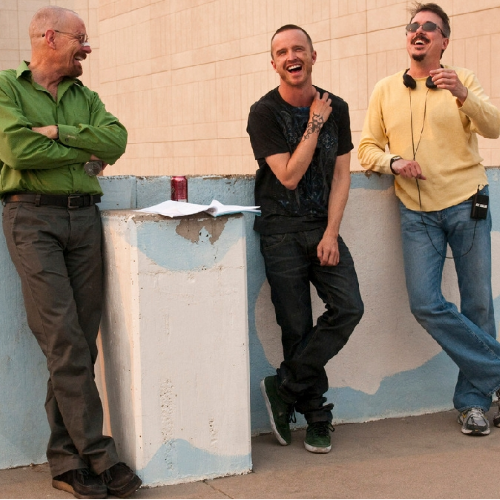
Jennifer M. Wood and Mental_Floss present 7 Things We Learned About Breaking Bad from Vince Gilligan’s AMA. Here are three of my favorites.

1. ON THE SET OF BREAKING BAD, BRYAN CRANSTON WOULD REGULARLY TELL AARON PAUL THAT JESSE PINKMAN WAS BEING KILLED OFF.

“He loved to tease Aaron Paul mercilessly,” explained Gilligan. “This came about after I told Aaron Paul early in the series that I had planned to kill off his character. From then on, every time a new script came out, Bryan would hurry to read it first so he could put on a sorrowful face and say to Aaron, ‘Gee buddy, I’m so sorry. You’re going out with a bang, at least.’ And Aaron, God bless him, seemed to fall for it every time.”

3. WALTER WHITE WAS THE HARDEST CHARACTER TO KILL OFF.

“I have to say the death of Walter White affected me the most,” admitted Gilligan, “because what it represented was the end of the story and the completion of this seven-year journey we had taken together—the cast, crew, writers and directors of Breaking Bad. That was the most affecting death to write. I actually teared up when I wrote it. I think a close second was the death of Mike Ehrmantraut.”

4. YOU MAY VERY WELL BE ABLE TO EAT AT LOS POLLOS HERMANOS IN THE NEAR FUTURE.

Gus Fring’s fictional chicken joint may become a nonfictional chicken joint. “Believe it or not, there is talk of a Pollos Hermanos becoming a real restaurant,” confirmed Gilligan. “This is not an idea that I generated personally. But it’s one that’s been presented to me, through the good folks at Sony, and the idea came to them from a businessman who has an interest in doing just that. Speaking for myself, I’d love to see that happen!”

15 Things You Might Not Know About “One Flew Over the Cuckoo’s Nest”

Michael Arbeiter and Mental_Floss present 15 Things You Might Not Know About One Flew Over the Cuckoo’s Nest.  Listed below are three of my favorites…

7. MANY SCENES WERE SHOT WITHOUT THE ACTORS’ KNOWLEDGE.

To complete this realistic immersion, Forman led his performers in unscripted group therapy sessions in which he directed the actors to develop their characters’ psychological maladies organically. He would often capture footage of the actors, both in and out of character, without explicitly mentioning that the cameras were rolling. The film’s final cut includes a shot of a visibly irritated Fletcher reacting to a piece of direction fed to her by Forman.

8. FORMAN AND NICHOLSON HAD A TREMENDOUS SPAT OVER THE FILM’S PLOT.

While the intensity of the turmoil varies from rumor to rumor, reports from the set were consistent on one fact: The star refused to speak with Forman for a large chunk of the production process. Nicholson took issue with Forman’s suggestion that the hospital inmates would be an unruly bunch upon the initial arrival of McMurphy. Instead, the actor insisted that such disavowal of the medical staff’s authority should only begin after the introduction of McMurphy into their lives and routines.

Although the version of the story that we see in the film today is more closely associated with Nicholson’s alleged reading, suggesting that Forman ultimately took his advice, Nicholson refused to interact with his director from that point forward. When the star and Forman needed to communicate with one another, they used cinematographer Bill Butler as a middleman.

13. ONE FLEW OVER THE CUCKOO’S NEST WAS THE FIRST FILM TO WIN ALL “BIG FIVE” ACADEMY AWARDS IN 41 YEARS.

Not since 1934’s It Happened One Night swept the Oscars had a film walked away with awards for Best Picture, Best Director, Best Actor, Best Actress, and Best Screenplay. One Flew Over the Cuckoo’s Nest took home the lot, with Nicholson and Fletcher winning the top acting awards. The feat would not be matched again for another 16 years, with Silence of the Lambs becoming the next (and last to date) movie to earn the distinction.

Oral History of Pro Wrestling’s 1995 Historic Excursion into North Korea

In 1995, Muhammad Ali joined Ric Flair, Eric Bishoff and other WCW superstars to journey to North Korea to take part in the “International Sports and Cultural Festival for Peace.”

The trip had highs (wrestling before the largest crowds in professional wrestling history – a record that still stands, traveling with Muhammad Ali) and lows (tapped phones, terrible food and US pro wrestlers getting into a real fight) but remains largely unknown to fans who haven’t read… Dan Greene and Sports Illustrated’s an Oral History of Pro Wrestling’s 1995 Historic Excursion into North Korea.