Category: Trivia

10 Easter Eggs You Might Have Missed in Famous Crime Films

Robert Grimminck and Listverse present 10 Easter Eggs You Might Have Missed in Famous Crime Films.

Grimminck’s list contains several eggs from movies that were new to me, but my favorite from his list was for Quentin Tarantino’s Death Proof…

Quentin Tarantino is known for the complexity of his film universe and for his love of pop culture. It should be little surprise that his contribution to the Grindhouse double feature has a few Easter eggs in it.

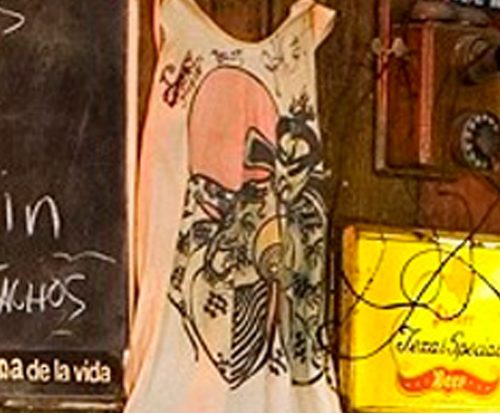
For example, in the opening scene in the bar, on the wall is a tank top with a samurai in front of a rising sun. This was the same tank top that Jack Burton wore in Big Trouble in Little China. Jack was, of course, played by Kurt Russell, who is Death Proof’s villain, Stuntman Mike.

This leads to two more Easter eggs, which are the license plates of Stuntman Mike’s cars. On the first car, the plate says “JJZ-109,” which is the same plate as the car of Frank Bullitt (Steve McQueen) in Bullitt. The second plate is “983-DAN,” which is on the Dodge Charger that the main characters drive in Dirty Mary, Crazy Larry. Both movies are famous for their car chases. In fact, Dirty Mary, Crazy Larry is one long car chase.

The list is worth a look.  Nice work, Mr. Grimminick.

15 Things You Might Not Know About the Washington Monument


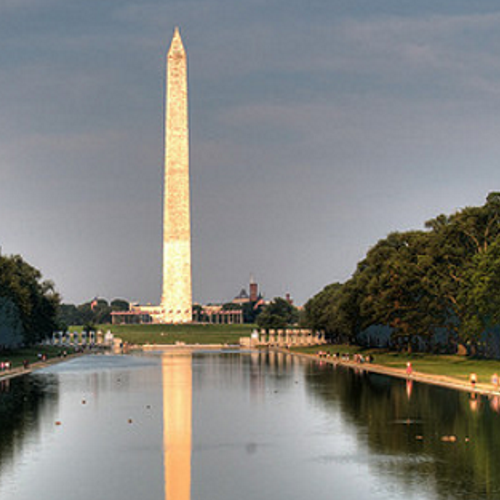
Michael Arbeiter and Mental_Floss present 15 Things You Might Not Know About the Washington Monument.  Here are three of my favorites…
1. Building a monument to George Washington was not a unanimously supported proposition.
Today, trumpeting George Washington as a hero and a symbol of national pride isn’t going to start any arguments. In the 19th century, however, Washington’s approval rating was far from 100 percent. The very idea of constructing a monument to honor the former president felt like an affront to the Democratic-Republicans—the opposing party to the Washington-aligned Federalists—who both favored Thomas Jefferson over Washington and decried such tributes as unseemly and suspiciously Royalist.

2. IT TOOK ALMOST 40 YEARS TO COMPLETE CONSTRUCTION.
After decades of deliberation about where to build a monument to Washington, what form it should take, and whether the whole thing was a good idea in the first place, the foundation for a great stone obelisk was laid at the center of Washington, D.C.’s National Mall on July 4, 1848. Although the design looks fairly simple, the structure would prove to be a difficult project for architect Robert Mills and the Washington National Monument Society. Due to ideological conflicts, lapses in funding, and disruptions during the Civil War, construction of the Washington Monument would not be completed until February 21, 1885. The site opened to the public three years later.

8. THE ENGINEER WHO COMPLETED THE MONUMENT ASKED THE GOVERNMENT TO SUPPLY HIS WORKERS WITH HOT COFFEE.
Several years after the 1855 death of Mills, Col. Thomas Lincoln Casey Sr., Chief of Engineers of the United States Army Corps of Engineers, assumed responsibility for completing the Washington Monument. Among his most memorable orders was an official request to the U.S. Treasury Department to supply his workers—specifically those assigned to the construction of the monument’s apex—with “hot coffee in moderate quantities.” The treasury complied.

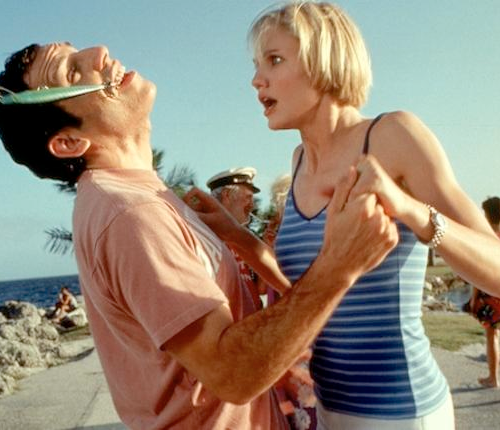
15 Fun Fact About “There’s Something About Mary”

Roger Cormier and Mental_Floss present 15 Fun Fact About There’s Something About Mary.  Here are three of my favorites…

1. JON STEWART WAS ALMOST TED.
Ben Stiller won the role of Ted Stroehmann over Owen Wilson and the future host of The Daily Show.

14. PLANTATION, FLORIDA ASKED TO NOT BE THANKED IN THE CREDITS.
Their town’s City Hall was disguised as Rhode Island’s Cumberland High School, and Plantation was paid $2,500 for its services. Unfortunately, the City Council President was a conservative Catholic who refused to see the movie after reading some reviews of it and believed that the council was “misled” by filmmakers.

15. THE STUDIO ASKED FOR A SEQUEL, BUT THE FARRELLYS SAID NO.
According to Peter Farrelly, 20th Century Fox wanted a There’s Something About Mary 2, or a There’s Something More About Mary. The brothers felt that a sequel wouldn’t make sense.

15 Burning Facts About “St. Elmo’s Fire”


Roger Cormier
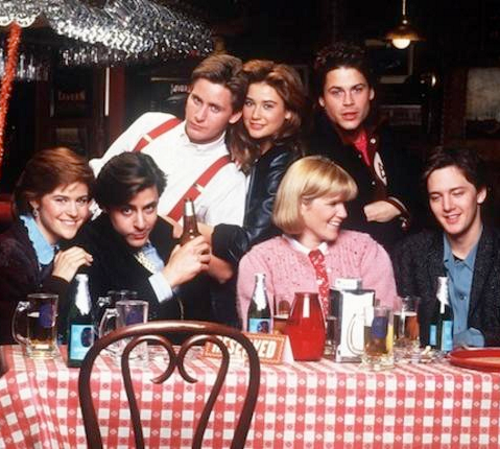
and Mental_Floss present 15 Burning Facts About St. Elmo’s Fire.  Here are three of my favorites…

3. ANTHONY EDWARDS AND LEA THOMPSON AUDITIONED.
The future stars had to find their fame a little later. Most young actors weren’t turned off by the script, even though one major studio head allegedly called the seven main characters “the most loathsome humans he had ever read on the page.”

6. EMILIO ESTEVEZ WANTED TO PLAY BILLY HICKS.
He settled for playing Kirby Keger and dating Moore.

10. WENDY’S PARENTS WERE A DIVORCED COUPLE.
Martin Balsam and Joyce Van Patten, who played Wendy’s parents in the movie, were actually married from 1957 to 1962. Their daughter, Talia Balsam, is also a noted actress who appeared on Mad Men with her husband, John Slattery. Balsam also holds the distinction of being the first Mrs. George Clooney (they married in 1989 and were divorced less than four years later).

14 Nostalgic Facts About “Happy Days”

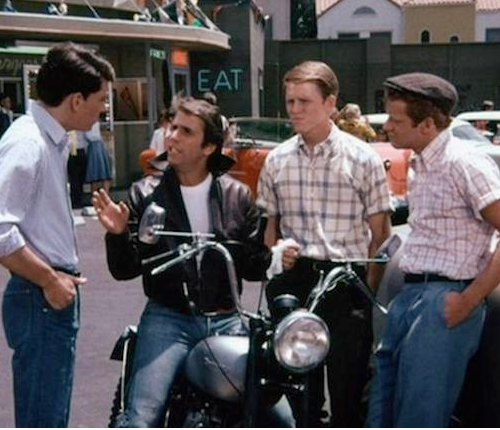
Kara Kovalchik and Mental_Floss present 14 Nostalgic Facts About Happy Days.   Here are three of my favorites…

1. IT WAS SUPPOSED TO BE SET IN THE 1920S, NOT THE 1950S.
When Garry Marshall was first approached by Paramount executives Michael Eisner and Tom Miller in 1971 to create a new sitcom, they envisioned something set in the 1920s or ’30s. Marshall told them that he knew nothing about flappers, but he could write a show about the era in which he spent his teen and young adult years—the 1950s. He put together a pilot about a Midwestern family that just purchased their first TV set (the first one in the neighborhood!) and how the teenaged son planned to use it as a chick magnet. The series didn’t sell, and the pilot ended up as a vignette on Love, American Style—“the dumping ground of failed pilots” according to Marshall.

4. HAPPY DAYS ACTUALLY PREDATES AMERICAN GRAFFITI.
George Lucas’s Oscar-nominated 1973 film American Graffiti launched a craze for 1950s nostalgia (even though the movie was set in 1962). Casting director Fred Roos had worked with Ron Howard on The Andy Griffith Show and recommended him to Lucas for the role of Steve Bolander. Lucas dug out the “Love and the Happy Days” episode of Love, American Style to determine whether Howard could play an 18-year-old high school student convincingly. Once American Graffiti became a runaway success, ABC decided that the time was ripe for a 1950s-era sitcom and Garry Marshall’s project was resurrected.

5. FONZIE WAS ALMOST A MONKEE.
When Henry Winkler got the callback after his first audition for the role of Arthur Fonzarelli, he was taken aback when he saw that the other contender was former Monkees drummer Micky Dolenz. According to Dolenz, Winkler admitted to him later that he had thought, “Oh crap, Micky Dolenz is here. I’ll never get it!” Dolenz was Marshall’s original choice to play Fonzie, on the strength of a recent guest appearance he had made as a biker on Adam-12. But at six feet tall, Dolenz towered over the five-foot-nine Ron Howard, so Winkler was deemed a better fit.

15 Things You May Not Know (Have Forgotten) About Momento

Michael Arbeiter and Mental_Floss present 15 Things You May Not Know About Momento.  (And wouldn’t 15 Things You May Have Forgotten About Momento been a cooler title?)  Here are three of my favorites…

1. THE NOLAN BROTHERS CAME UP WITH THE IDEA WHILE ON A ROAD TRIP.
In the summer of 1996, a 26-year-old Christopher Nolan set off from his Chicago home on a 2,000-mile drive toward his new life in Los Angeles with his 20-year-old brother Jonathan along for the ride. In lieu of the license plate game, the Nolan boys passed the time by chatting about potential creative projects, notably Jonathan’s idea for a film about a man with anterograde amnesia.

3. CHRISTOPHER NOLAN ORIGINALLY WANTED A BIGGER STAR FOR THE MAIN ROLE.
Before deciding that the relatively unknown Guy Pearce would be more effective (not to mention affordable) in the role of the amnesia-stricken Leonard, Nolan considered some big-name actors like Brad Pitt, Charlie Sheen, and Thomas Jane for the part. Aaron Eckhart, a rising star who would later appear in 2008’s The Dark Knight for Nolan, was also in contention for the part.

11. NOLAN WANTED TO MAKE A NONLINEAR FILM BECAUSE OF A SOCIOLOGICAL THEORY ABOUT PIZZA DELIVERY.
The complicated chronology of Memento was more than just a stylistic preference to Nolan—it was a cultural necessity in a pre-DVR world. With more and more people watching movies on television leading up to Memento’s release, the director felt films were increasingly sacrificing narrative quality in favor of accessibility to viewers opting to leave the room.

“I think that film narrative has been held back by television,” Nolan told the Los Angeles Times. “It comes down to what I call the pizza delivery scenario: If a pizza arrives while you’re watching TV, you have to answer the door, deal with the man, and then be able to get straight back into the story, having missed three or four minutes. With Memento, on the other hand, if you come in three minutes late you miss the whole movie.”

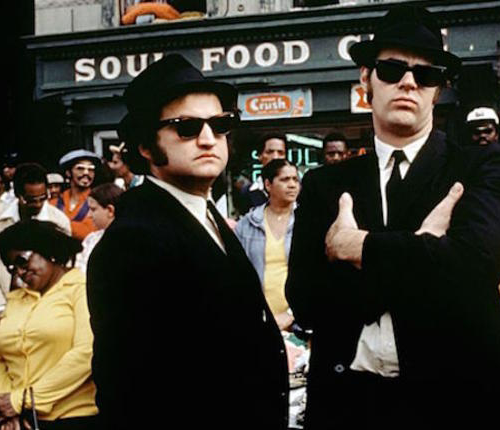
18 Fun Facts About “The Blues Brothers”

Roger Cormier and Mental_Floss present 18 Fun Facts About The Blues Brothers. Here are three of my favorites…
6. ONE OF THE STUNT DRIVERS WAS JOHN WAYNE’S SON.
The Duke’s youngest son, Ethan Wayne, began acting in 1970. But he supplemented his work in front of the camera with a handful of stunting stints.

10. THE STUDIO WANTED THE BAND WHO SANG “CAR WASH” INSTEAD OF ARETHA FRANKLIN.
Universal Pictures wanted new acts like Rose Royce, the band behind hits like “Car Wash” and “I Wanna Get Next to You.” But Aykroyd and company said no. Universal later generated a PR effort to get Franklin an Oscar nomination for her performance. The movie helped revitalize her career.
12. PAUL REUBENS HAS A SMALL BUT VISIBLE ROLE.
The actor best known as Pee-wee Herman played a waiter at Chez Paul, before the band is fully back together.
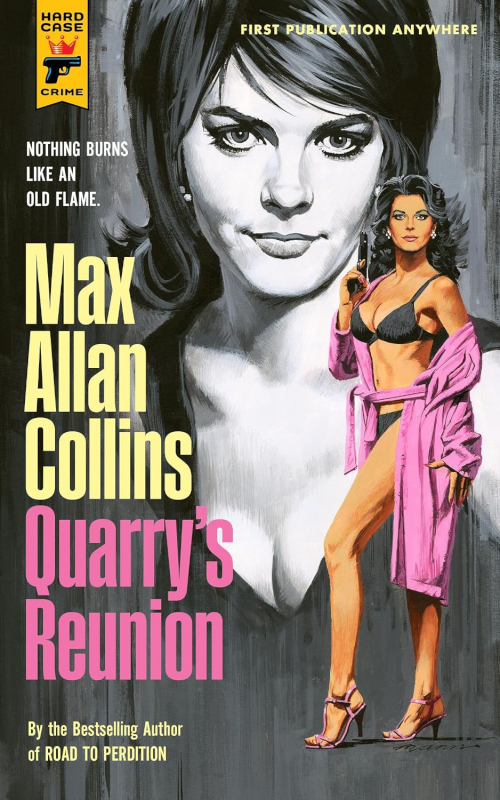
She Carried His Heart in a Silken Shroud!

Two famous sayings come to mind for this morning’s post…

A reporter once asked Stephen King why he writes such scary stories.  King answered, “It is because I have the heart of a small boy… and I keep it in a jar on my desk.”

The second quote is when a person in love tells his/her lover: “I give you my heart.”

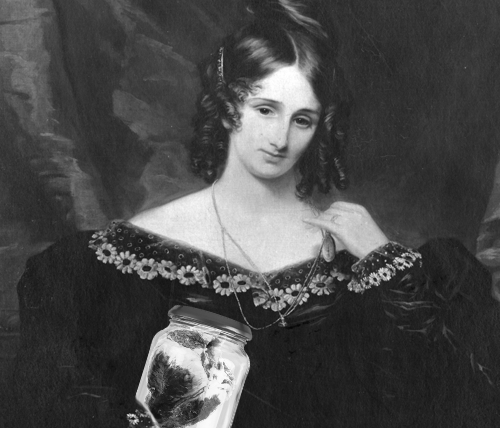
It seems that Frankenstein author Mary Shelley took the second quote literally.  After her husband died Shelley…

…kept the heart in a silken shroud, and is said to have carried it with her nearly everywhere for years. In 1852, a year after she died, Percy’s heart was found in her desk. It was wrapped in the pages of one of his last poems, Adonais…

Source: Mental_Floss.

Halt Citizen! 15 Facts About “Robocop”

Jake Rossen and Mental_Floss present Halt Citizen! 15 Facts About Robocop. Here are three of my favorites…

7. Weller Refused to Answer to His Real Name.
According to co-star Miguel Ferrer, Weller instructed the producers to issue a memo to the cast and crew advising that no one should refer to him by his real name: he preferred to be called by his character’s name, Murphy, or “Robo.” Ferrer went on to say that, having known Weller for years prior to the film, he enjoyed greeting him with “Hey, Pete.” Weller ignored him.

3. Stan Lee Turned It Down.
In 1984, Neumeier decided to see if he could spin the RoboCop script into a comic book to use as a launching pad for a feature. He ran the idea by Stan Lee; before Lee could commit one way or the other, he and Neumeier attended an early screening of The Terminator, which also had a humanoid as the main character. An impressed Lee told the writer, “Boy, you’re never going to top that!” and passed.

11. Some of the Actors Got Unsolicited Stunt Pay.
Kurtwood Smith and Ray Wise had been standing in such close proximity to a building explosion that the production—without any sense of humor—paid both men for “stunt work,” which amounted to roughly $400 apiece for the scene. But the actors didn’t feel their pay justified the risk to their life: neither was aware the explosion would be that big, and Smith’s coat ended up catching on fire.

You Can Survive An Atom Bomb Survival Wheel

Would you know what to do to survive if an Atom Bomb was dropped on your town?

If you don’t, then you need the handy-dandy You Can Survive An Atom Bomb Survival Wheel!

I wonder if the Atom Bomb Survival Wheel can confirm that the best way of surviving a direct hit from an A-Bomb is to get in a refrigerator (and hope you don’t suffocate) a la Indiana Jones!

Source: Channing Thompson.

10 Things You May Not Know About P.T. Barnum

Evan Andrews and History.com present 10 Things You May Not Know About P.T. Barnum.   Here are three of my favorites…

1. Barnum was an entrepreneur from an early age.
Barnum’s knack for moneymaking first manifested during his youth in Bethel, Connecticut. The future showman sold snacks and homemade cherry rum during local gatherings, and by age 12, he had made enough money to purchase his own livestock. By 21, his holdings also included a general store, a small lottery and even his own newspaper called the “Herald of Freedom.”

2. He first rose to prominence by engineering a famous hoax.
In 1835, Barnum launched his career in entertainment by purchasing Joice Heth, a blind slave touted as being the 161-year-old former nurse of George Washington. After billing Heth as “the most astonishing and interesting curiosity in the world,” Barnum put her on display in New York and took her on a small tour of New England. Visitors lined up to gawk at her withered body and hear her tales of “dear little George,” and Barnum helped fuel popular interest by spreading a rumor that she was actually an automaton controlled by a ventriloquist. The truth about Heth didn’t emerge until after her death in February 1836. During a public autopsy—staged by Barnum at the price of 50 cents for admission—it was revealed that she was most likely no older than 80.

3. Barnum didn’t go into the circus business until relatively late in life.
Barnum is best known for his traveling three-ring circuses, but he didn’t make his first forays under the big top until he was 60 years old. Before then, he was better known as the owner of the Manhattan-based American Museum, a sprawling collection of historical artifacts, aquariums, animal menageries, zoological curiosities and freak shows. Some of the museum’s most notable exhibits included General Tom Thumb, a child dwarf who Barnum famously brought to audience with Queen Victoria of Britain; and the “Fejee Mermaid,” which was actually the upper half of a monkey sewn to the bottom of a fish. Barnum only launched his traveling circus after his museum was twice destroyed by fire. He later teamed with his famed partner James Bailey in 1881, and the two went on to make a fortune running their “Greatest Show on Earth.”