Category: Trivia

7 Things We Learned About “Breaking Bad” from Vince Gilligan

Jennifer M. Wood and Mental_Floss present 7 Things We Learned About Breaking Bad from Vince Gilligan’s AMA. Here are three of my favorites.

1. ON THE SET OF BREAKING BAD, BRYAN CRANSTON WOULD REGULARLY TELL AARON PAUL THAT JESSE PINKMAN WAS BEING KILLED OFF.

“He loved to tease Aaron Paul mercilessly,” explained Gilligan. “This came about after I told Aaron Paul early in the series that I had planned to kill off his character. From then on, every time a new script came out, Bryan would hurry to read it first so he could put on a sorrowful face and say to Aaron, ‘Gee buddy, I’m so sorry. You’re going out with a bang, at least.’ And Aaron, God bless him, seemed to fall for it every time.”

3. WALTER WHITE WAS THE HARDEST CHARACTER TO KILL OFF.

“I have to say the death of Walter White affected me the most,” admitted Gilligan, “because what it represented was the end of the story and the completion of this seven-year journey we had taken together—the cast, crew, writers and directors of Breaking Bad. That was the most affecting death to write. I actually teared up when I wrote it. I think a close second was the death of Mike Ehrmantraut.”

4. YOU MAY VERY WELL BE ABLE TO EAT AT LOS POLLOS HERMANOS IN THE NEAR FUTURE.

Gus Fring’s fictional chicken joint may become a nonfictional chicken joint. “Believe it or not, there is talk of a Pollos Hermanos becoming a real restaurant,” confirmed Gilligan. “This is not an idea that I generated personally. But it’s one that’s been presented to me, through the good folks at Sony, and the idea came to them from a businessman who has an interest in doing just that. Speaking for myself, I’d love to see that happen!”

15 Things You Might Not Know About “One Flew Over the Cuckoo’s Nest”
Michael Arbeiter and Mental_Floss present 15 Things You Might Not Know About One Flew Over the Cuckoo’s Nest.  Listed below are three of my favorites…

7. MANY SCENES WERE SHOT WITHOUT THE ACTORS’ KNOWLEDGE.

To complete this realistic immersion, Forman led his performers in unscripted group therapy sessions in which he directed the actors to develop their characters’ psychological maladies organically. He would often capture footage of the actors, both in and out of character, without explicitly mentioning that the cameras were rolling. The film’s final cut includes a shot of a visibly irritated Fletcher reacting to a piece of direction fed to her by Forman.

8. FORMAN AND NICHOLSON HAD A TREMENDOUS SPAT OVER THE FILM’S PLOT.

While the intensity of the turmoil varies from rumor to rumor, reports from the set were consistent on one fact: The star refused to speak with Forman for a large chunk of the production process. Nicholson took issue with Forman’s suggestion that the hospital inmates would be an unruly bunch upon the initial arrival of McMurphy. Instead, the actor insisted that such disavowal of the medical staff’s authority should only begin after the introduction of McMurphy into their lives and routines.

Although the version of the story that we see in the film today is more closely associated with Nicholson’s alleged reading, suggesting that Forman ultimately took his advice, Nicholson refused to interact with his director from that point forward. When the star and Forman needed to communicate with one another, they used cinematographer Bill Butler as a middleman.

13. ONE FLEW OVER THE CUCKOO’S NEST WAS THE FIRST FILM TO WIN ALL “BIG FIVE” ACADEMY AWARDS IN 41 YEARS.

Not since 1934’s It Happened One Night swept the Oscars had a film walked away with awards for Best Picture, Best Director, Best Actor, Best Actress, and Best Screenplay. One Flew Over the Cuckoo’s Nest took home the lot, with Nicholson and Fletcher winning the top acting awards. The feat would not be matched again for another 16 years, with Silence of the Lambs becoming the next (and last to date) movie to earn the distinction.

Oral History of Pro Wrestling’s 1995 Historic Excursion into North Korea

In 1995, Muhammad Ali joined Ric Flair, Eric Bishoff and other WCW superstars to journey to North Korea to take part in the “International Sports and Cultural Festival for Peace.”

The trip had highs (wrestling before the largest crowds in professional wrestling history – a record that still stands, traveling with Muhammad Ali) and lows (tapped phones, terrible food and US pro wrestlers getting into a real fight) but remains largely unknown to fans who haven’t read… Dan Greene and Sports Illustrated’s an Oral History of Pro Wrestling’s 1995 Historic Excursion into North Korea.

21 Facts About “The Matrix” That Will Blow Your Mind

Hollywood.com presents 21 Facts About The Matrix That Will Blow Your Mind.  Here are three of my favorites…

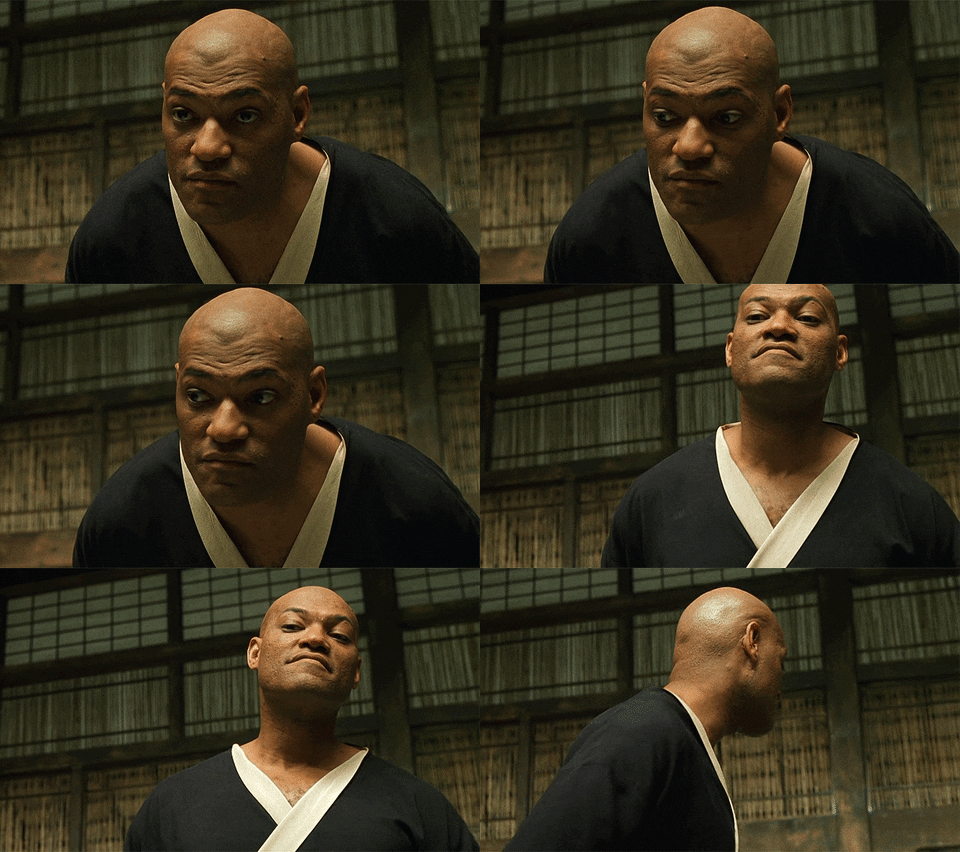
2. The film differentiates the Matrix and the real world through color.

The scenes that take place within the Matrix are tinted green; those that happen in the real world have more of a normal coloring. The fight scene between Neo and Morpheus has a yellow tint, since it takes place in neither.

7. Morpheus, in Greek mythology, is the god of dreams.

GIPHY/reddit.com

Which is ironic, since he’s the man who wakes people from their dream states and introduces them to reality.

8. Keanu Reeves only has 80 lines in the first 45 minutes of the film.

dodgediz.tumblr.com

Of those 80 lines, 44 are questions. That’s over his half his dialogue, and it amounts to about one question per minute.

15 Things You Might Not Know About “Dr. Strangelove”

Michael Arbeiter and Mental_Floss present 15 Things You Might Not Know About  Dr. Strangelove.   Here are three of my favorites…

1. THE MOVIE WAS SUPPOSED TO BE A DRAMA.
The international climate of the early 1960s piqued Stanley Kubrick’s interest in writing and directing a nuclear war thriller. Kubrick began consuming piles of literature on the topic until he came across former Royal Air Force office Peter George’s dramatic novel Red Alert. Columbia Pictures optioned the book, and Kubrick began translating the bulk of the novel into a script.

During the writing process, however, the director found himself struggling to escape a persistent comedic overtone because he found the vast majority of the political calamities described in the story to be inherently funny. Eventually, Kubrick abandoned the idea of fighting the adaptation’s dark sense of humor and embraced it wholeheartedly. Tone aside, the plot of Dr. Strangelove is strikingly similar to that of George’s novel. There’s one notable exception: Dr. Strangelove doesn’t appear in the novel—Kubrick and writer Terry Southern created the new character.

3. TWO OTHER FAMOUS COWBOYS WERE APPROACHED TO PLAY KONG.
Before landing on Pickens, the production team sought fellow Western mainstays John Wayne and Bonanza star Dan Blocker for the part of Major Kong. Wayne never replied to Kubrick’s messages, and Blocker’s agent passed on the project. Co-writer Southern later remembered the agent sending a telegram that read, “Thanks a lot, but the material is too pinko for Dan. Or anyone else we know for that matter.”

4. NOBODY TOLD PICKENS ABOUT THE CHANGE IN TONE.
Before being cast as Dr. Strangelove’s gung-ho bomber pilot Major. T. J. Kong, actor Slim Pickens had starred almost exclusively in Westerns, with nary a comedy part to his name (much less a political satire). This didn’t pose much of a problem, however, as Kubrick deemed the actor’s natural cadence and decorum to be perfect for the cowboy soldier.

Kubrick led Pickens to believe that the film was supposed to be a serious war drama, prompting him to carry himself as he might in any of his Western pictures. Furthermore, according to James Earl Jones (who made his film debut in Dr. Strangelove) and Kubrick biographer John Baxter, Pickens behaved, and dressed, identically onscreen and off…not because he was “staying in character,” but because he apparently always acted like that.

Surely You Can’t Be Serious: An Oral History of “Airplane”

Will Harris’ Surely You Can’t Be Serious: An Oral History of Airplane takes us behind the scenes of the making of the classic comedy with remembrances from the creators and stars of the film.

Check out the piece to learn about Peter Graves not getting the humor until seeing the film, Leslie Nielsen‘s fart machine, and a whole lot more.

Source: AV Club.

30 Things We Learned from Ridley Scott’s “Blade Runner” Commentary

Rob Hunter and Film School Rejects  have posted 30 Things We Learned from Ridley Scott’s “Blade Runner” Commentary.

Here are three of my favorites…

1. It was Scott’s choice to have the opening credits be simply text against a black screen. “I knew my opening shot would be so spectacular,” he says, “that I didn’t want the titles to upstage them in any form.”

29. He points out a detail during the end sequence with Deckard hanging from a building that I’ve never noticed in my numerous watches of the film. Just as Deckard loses his grip he spits at Roy in a final act of bravado, and it’s that action, that refusal to beg for his life, that leads Roy to save his life.

30. Regarding whether or not Deckard is a replicant, Scott is okay with either interpretation, but he himself believes the answer to be yes. He says the expression on Deckard’s face after noticing the origami unicorn outside his apartment door is confirmation. Gaff was there, the unicorn is from Deckard’s dreams, and Gaff would have had access to Deckard’s file which would probably include mention of the unicorn dream implant. I guess we’ll find out for sure in the sequel…

10 Final Messages From People Facing Certain Death

Final wills are interesting because they give insight into what a dying person finds important.  Usually the person plans out their final will with the hope that it won’t be used any time soon.

That is not what Alan Boyle’s 10 Final Messages From People Facing Certain Death  is about.  Instead, his piece looks at, well, here’s how he describes it…

Death can take us at any time. But when you realize you have only hours or minutes left to live, you get a chance to deliver a final message to the world. Perhaps it’ll be a phone call or a text message or even just a note scratched into a nearby surface. They’ll be your last words. Make them count.

Source: Listverse.com

21 Wonderful Facts About “The Wizard of Oz”

 Cory Mahoney and Hollywood.com  have posted 21 Wonderful Facts About The Wizard of Oz.  There are some new [at least to me] facts and here are three of my favorites…

1. The snow the wakes Dorothy up from the poppy field was 100% asbestos. 

Even though the health hazards had been known for years. [Hey – that is not a wonderful fact! – Craig]

4. And that horse [the horse of a different color see in Oz] originally had a much larger part in the film. The horse, which was originally a striped with different colors and could speak, joined the Scarecrow, Tin Man, and Cowardly Lion, along with the Wizard, to save Dorothy from the Witch.

6. Because Margaret Hamilton’s performance as the Wicked Witch of the West was so frightening, many of her scenes were trimmed or deleted entirely. 

They were thought to be too frightening.

17 Things You Might Not Know About “Scarface”

Sean Hutchinson and Mental_Floss have posted 17 Things You Might Not Know About Scarface.  Here are three of my favorites…

5. A budding screenwriting star brought De Palma back.
Producer Bregman offered relative newcomer Oliver Stone a chance to overhaul the screenplay, and Stone agreed to do the movie for two reasons. First, his 1981 film The Hand had bombed at the box office, so he needed the work. He also wanted to work with Lumet, who eventually dropped out of the project because he felt Stone’s screenplay became too over the top and too violent. De Palma, who had moved on to potentially direct Flashdance, then read Stone’s script and loved how exaggerated it was, so he dropped Flashdance and rejoined Scarface.

10. Tony is only referred to as “Scarface” once, and it’s in Spanish.
Hector, the Colombian gangster who threatens Tony with the chainsaw, refers to him as “cara cicatriz,” meaning “scar face” in Spanish.

14. Steven Spielberg directed a single shot.
De Palma and Spielberg had been friends since the two began making studio movies in the mid ‘70s, and they made a habit of visiting each other’s sets. Spielberg was on hand for one of the days of shooting the Colombians’ initial attack on Tony Montana’s house at the end of the movie, so De Palma let Spielberg direct the low angle shot where the attackers first enter the house.

15 Things You Didn’t Know About The Stand

Erik van Rheenen and Mental_Floss have posted 15 Things You Didn’t Know About The Stand.  As is our tradition, here are three of my favorites…

6. Christian Radio Made a Contribution As Well

King revealed a third inspiration for The Stand in Danse Macabre: A single line he heard in a radio broadcast of a sermon when he was living in Colorado. The line “Once in every generation the plague will fall among them” made such an impression on King that he wrote it down and pinned it over his typewriter. Later, when the author was struggling to write a fictionalized account of the Patty Hearst kidnapping (the unpublished The House on Value Street), he saw the gloomy quote and found the inspiration to start a new project that became The Stand.

8. The Extreme Length Led to Logistical Problems

The 1,200-page novel presented a serious problem – King’s publisher, Doubleday, couldn’t print a novel that long. Literally. In addition to whatever qualms the publisher might have had about trying to sell such a hefty book, its printing presses couldn’t create it. As King explained to Time in 2009, “Doubleday had a physically limiting factor in those days because they used a glue binding instead of a cloth binding, and the way it was explained to me was that they had so much of a thickness they could do before the glue just fell apart.”

10. The Cut Pages Weren’t Lost

Of course, when your fans are as rabid as King’s, it’s hard for lost pages to stay lost. In 1990 King restored the text he had hacked away to create The Stand: The Complete & Uncut Edition. King didn’t just slip all the cut pages back into the original manuscript, though – he retyped each one. He told Time he “had the manuscript on one side of an IBM Selectric typewriter and I had the pages of a book that I had torn out of the binding on the other side.” The restored edition had another quirk – King also updated the setting of the novel to the then-present day and included references to cultural touchstones like Freddy Krueger that had not existed in 1978.

21 Facts About the Movie “Goodfellas” You Never Knew

Corey Mahoney and Hollywood.com present 21 Facts About the Movie Goodfellas You Never Knew.  Here are three of my favorites…

5. When Joe Pesci was younger, he told a mobster that he was funny. The gangster’s ensuing anger was never forgotten and ended up inspiring Pesci to ask Scorsese to include it.
The director allowed Pesci and Liotta to improvise the now iconic “funny how?” scene. The other actors weren’t aware of the plan, so their reactions are genuine.

6. The now legendary Steadicam shot through the kitchen of the nightclub was unplanned.
Scorsese was denied permission to use the front entrance, and the alternative is now film history.

9. And while filming Spider’s death scene, actor Michael Imperioli had to be rushed to the hospital for breaking a glass in his hand; the doctors, however, attempted to treat what appeared to be a gunshot wound to his chest. 
When they learned the real reason behind his hospital visit, he was forced to wait three hours before he was treated. Scorsese told Imperioli that he would one day share the story on The Tonight Show with Jay Leno, and, ten years after the film’s release, in 2000, Imperioli did just that.