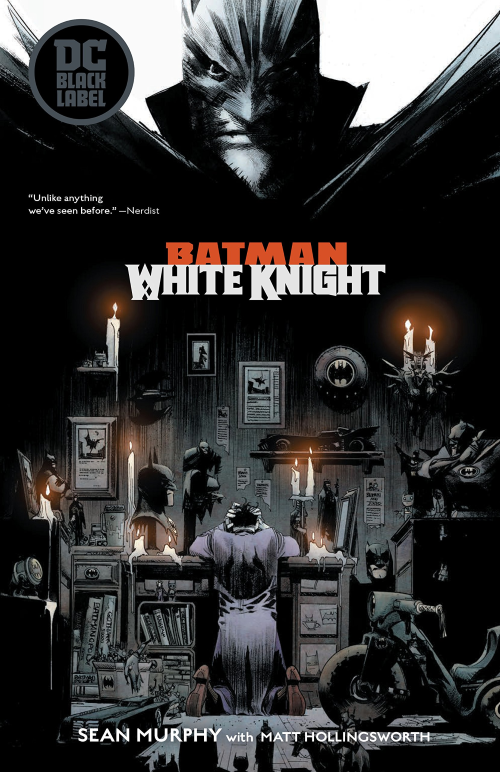
Batman: White Knight by Sean Murphy

Batman: White Knight, written and illustrated by Sean Murphy is set to be the first graphic novel published by DC under their new Black Label banner.

After years of epic battles, the Dark Knight finally finds a way to cure the twisted mind of his archenemy. The Clown Prince of Crime has now changed his ways, fighting for good in Gotham City, and it may just cause Batman to go over the edge of his own sanity.

Writer/artist Sean Murphy takes the helm of this Batman/Joker story like no one else could, delivering an alternative examination of the relationship between the greatest rivals in the DC Universe, exploring the darkest corners of justice and madness. This new graphic novel is the latest in great stand-alone stories from DC Comics. Collects issues #1-8.

This won’t be your father’s Batman.

Jonathan Maberry Going Down George A. Romero’s “Road of the Dead”

Remember last year when George Romero announced his next zombie film, George Romero Presents Road of the Dead?  While I was glad Romero was taking part in a new addition to his zombie films, I wasn’t thrilled with the concept which to me sounded like Death Race 2000 meets Dawn of the Dead.

Then in July of last year, Romero gave an interview talking up George Romero Presents Road of the Dead and more.  Sadly, three days later he died.

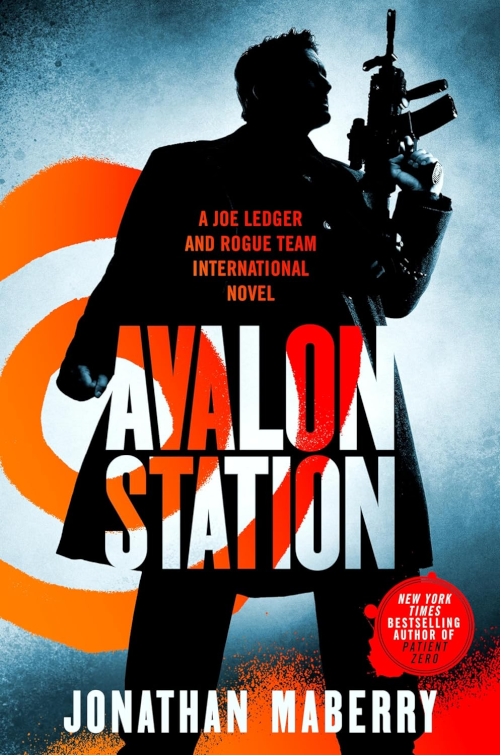
Today at Comic-Con, IDW announced that Jonathan Maberry will write a 3 issue mini-series based on Romero’s Road of the Dead.  Maberry is the perfect choice for this project having worked with Romero on Nights of the Living Dead anthology last year.  That and the fact that Maberry is a fantastic writer.

In addition to Maberry writing the series, I was pleased to see that my pal, Drew Moss will be providing covers and interior art!

Source: Bleeding Cool.


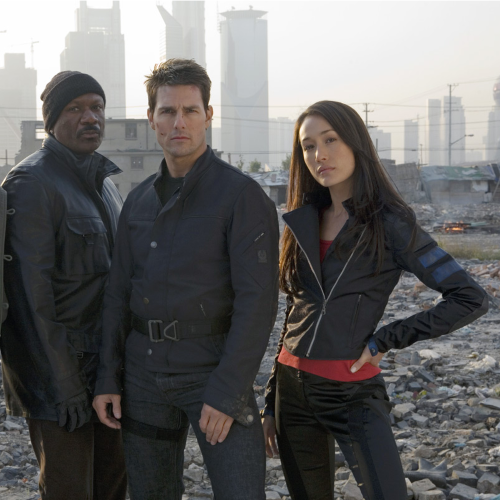
26 Things We Learned from Tom Cruise and JJ Abrams’ “Mission: Impossible III” Commentary

Rob Hunter and Film School Rejects present 26 Things We Learned from Tom Cruise and JJ Abrams’ Mission: Impossible III Commentary.  Here are three of my favorites…

5. That’s Abrams’ voice on the phone calling Hunt at the party. His hands also cameo as the coroner removing the explosive charge from Lindsey Farris’ (Keri Russell) dead head.

14. They couldn’t control the area for the scenes shot around the actual Vatican, and crowds gathered which caused interruptions. “So what we did is about a block and a half away from this location we set up a phony shoot, and we had three girls in bikinis and three old women dressed as nuns, and we had a camera and we had a tent. We pretended to be shooting something.”

20. “Listen carefully to the flute,” says Abrams during the scene where Musgrave mouths his support to a secured Hunt. “It’s the Mission: Impossible theme.”

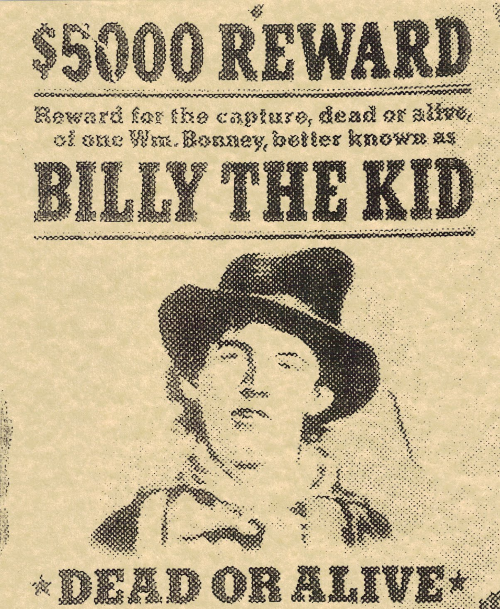
9 Things You May Not Know About Billy the Kid

Evan Andrews and History.com present 9 Things You May Not Know About Billy the Kid.  Here are three of my favorites…

The Kid’s first arrest came for stealing clothes from a laundry.
Henry McCarty’s first run-in with the law came in 1875, when he assisted a local street tough known as “Sombrero Jack” in stealing clothing from a Chinese laundry. Henry hid the loot in his boarding house, but was arrested after his landlord turned him in to the sheriff. The crime only carried a minor sentence, but rather than face punishment, the wiry youth escaped the jailhouse by shimmying up a chimney. McCarty then fled town and embarked on a career as a roving ranch hand, gambler and gang member. He became handy with a Winchester rifle and a Colt revolver, and in August 1877 he killed his first man during a dispute in an Arizona saloon. That same year, he adopted the alias “William H. Bonney” and became known as “Billy the Kid” or simply “The Kid.”

He played a prominent role in a frontier feud.
Billy the Kid first earned his reputation as a gunslinger in 1878, when he participated in a bloody frontier war in Lincoln County, New Mexico. The conflict centered on a business rivalry between British-born rancher John Tunstall and a pair of Irish tycoons named James Dolan and Lawrence Murphy. Dolan and Murphy’s outfit—known as “The House”—had long held a monopoly over the dry goods and cattle trades in Lincoln County. When they tried to intimidate Tunstall’s upstart operation, the Englishman enlisted the Kid and several other gunmen to protect his property. The tensions finally boiled over in February 1878, when Tunstall was murdered by a posse organized by Sheriff William Brady, a supporter of The House.

Following Tunstall’s death, the Kid and several other former employees organized themselves into a vigilante group called “The Regulators” and swore revenge. In what became known as the “Lincoln County War,” the Regulators assassinated Sheriff Brady and spent the next several months shooting it out with The House’s forces. In July 1878, the feud reached its climax with a deadly, five-day firefight in the town of Lincoln, after which the Regulators disbanded and the two sides sealed a flimsy peace agreement. The Kid left the war with a reputation as one of the West’s most skilled gunmen, but he remained wanted for the murder of Sheriff Brady. He would spend the rest of his life on the run from the authorities.

The Kid made a famous jailbreak.
In late 1880, Lincoln County Sheriff Pat Garrett tracked the Kid to a cabin in Stinking Springs, New Mexico, and forced his surrender. The outlaw was found guilty of the murder of Sheriff William Brady and confined to the Lincoln courthouse. He was scheduled for a date with the hangman, but on the evening of April 28, 1881, he engineered the most daring getaway of his criminal career. During a trip to the outhouse, the Kid slipped out of his handcuffs, ambushed a guard and shot the man to death with his own pistol. He then armed himself with a double-barreled shotgun and gunned down a second guard who was crossing the street. Once in control of the courthouse, the Kid collected a small arsenal of weapons, cut his leg shackles with a pickaxe and fled town on a stolen horse. News of the brazen escape was soon reprinted in newspapers across the country, making the Kid the most wanted man in the West.
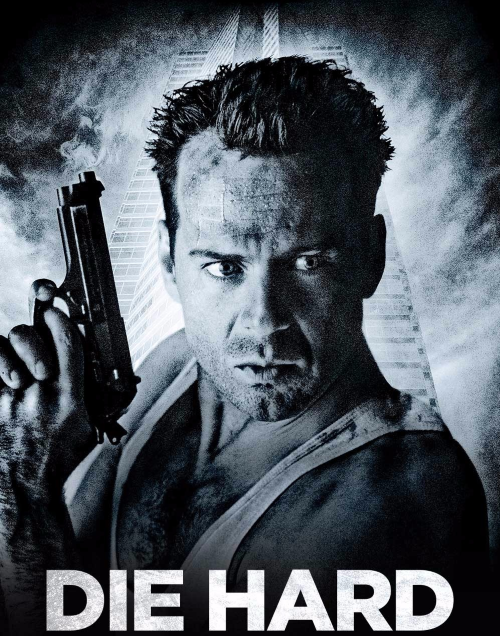
19 Things to Look for the Next Time You Watch “Die Hard”

Sean Hutchinson and Mental Floss present 19 Things to Look for the Next Time You Watch Die Hard.  Here are three of my favorites…

10. THERE ARE SOME REAL FALLS.
In the scene where McClane makes an epic jump into an elevator shaft, the stunt man was supposed to grab onto the first vent—but missed completely. The resulting footage shows the actor slipping further down the shaft. McTiernan and co-editor Frank Urioste kept it in the final cut because it made the scene more harrowing.  (Craig – Check out the video of the elevator fall footage at Hutchinson’s post.)
19. HOW DID MCCLANE KNOW GRUBER WAS A BAD GUY?
In the scene where McClane unwittingly stumbles on Gruber—who identifies himself as Bill Clay and puts on a convincing American accent—it’s never made 100 percent clear how McClane realizes that Clay isn’t who he says he is. Chalk it up to a NYPD-veteran hunch, or a deleted scene.

Gruber’s watch allegedly tips McClane off before he hands the terrorist an empty gun, but nothing about the watch is introduced in the actual movie. There was supposed to be a scene where Hans Gruber and his team synchronize the exact same watch they all wear, and, according to screenwriter Steven E. De Souza, “When Bruce offers the cigarette to Alan Rickman, Bruce sees the watch. You see his eyes look at the watch. That’s how he knows that he is one of the terrorists.”

The timepiece scene was cut, but the audience never really noticed the plot hole.

12. HANS GRUBER AND HIS GOONS DON’T ACTUALLY SPEAK GERMAN.
Americans might think the German language that Gruber and his goons speak to one another sounds legit, but it’s actually gibberish. The grammar, diction, and pronunciation don’t actually match up. In the German release of the movie, Gruber’s group were described as being from “Europe” instead of Germany.

Weirdly enough Willis was actually born in West Germany to an American father and a German mother.