The Third “Glass” Trailer is Here!
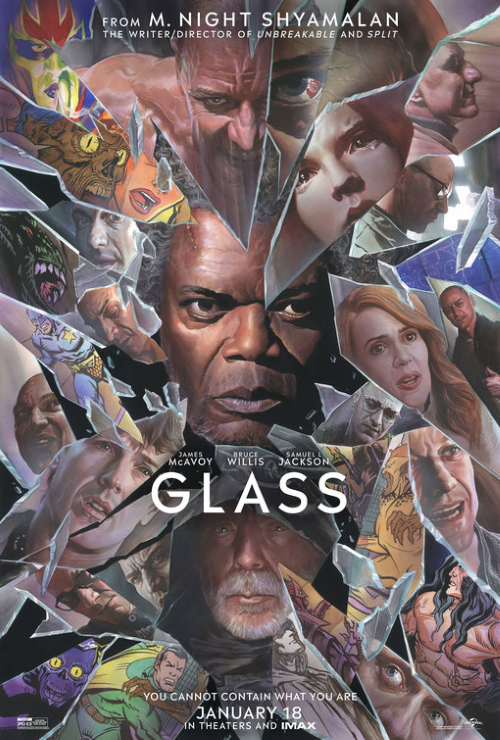
The third Glass trailer is here!
Previews and Reviews that are Z's Views
The third Glass trailer is here!
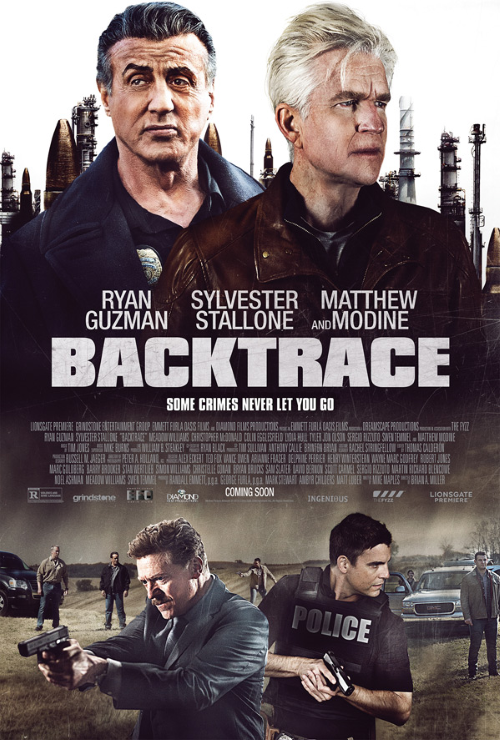
The Backtrace poster and trailer are here. Backtrace premieres in theaters and On-Demand on December 14th.
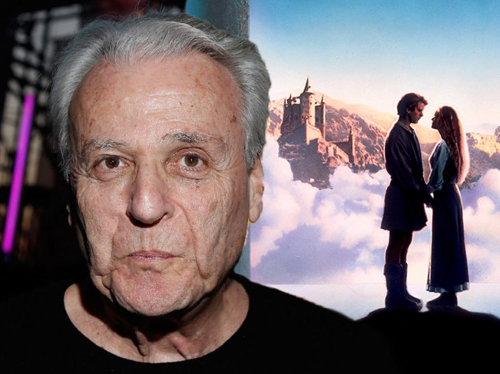
William Goldman, the two-time Oscar winning screenwriter, has died at age 87. Goldman won his Oscars for Best Original Screenplay (Butch Cassidy and the Sundance Kid) and Best Adapted Screenplay (All the President’s Men). Goldman was also the screenwriter for the beloved The Princess Bride (based on his novel), The Marathon Man, Misery and dozens of other movies.
Goldman began his career as a novelist and then moved to writing movies, plays and non-fiction. Goldman won two Edgar Awards, from the Mystery Writers of America, for Best Motion Picture Screenplay (for Harper starring Paul Newman and for Magic which he adapted from his novel). Mr. Goldman also received the Laurel Award for Screenwriting Achievement from the Writers Guild of America.
Our thoughts and prayers go out to Mr. Goldman’s family, friends and fans.

Darwyn Cooke’s Lone Ranger sketch is just too cool not to share. You can see a bigger version at I Can’t Stop Thinking About Comics.
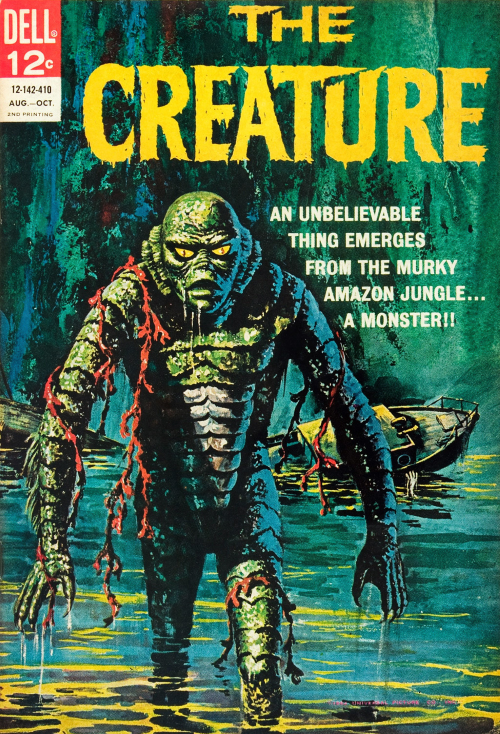
Yesterday we got a look at Francesco Francavilla’s classic Universal Monsters posters. It seemed only natural to follow them up with Dell Comics adaptations of the same.
Above is Creature from the Black Lagoon, but if you click over to The Bristol Board you can see larger versions of it as well as Dell Comics covers for Dracula, The Mummy and Frankenstein!

In addition to being a fantastic artist, Francesco Francavilla is a fan of vintage horror films. The Dracula poster is just one of five classic Universal Monsters posters that he created. In addition to Dracula, there are also posters for The Wolfman, Frankenstein, The Creature from the Black Lagoon and The Invisible Man. You can see them all by clicking over to Browse the Stacks.
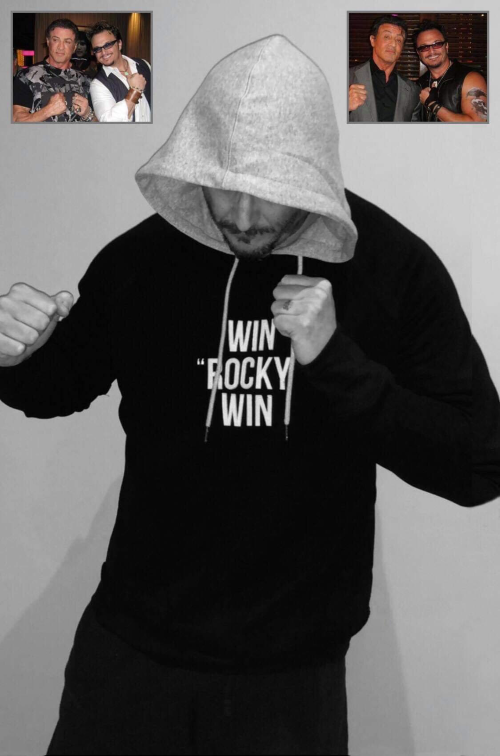
If you’re a Stallone fan and the name Paul Wintner sounds familiar, it should. Paul is a long-time SZoner, a die-hard Sylvester Stallone fan and the CEO of Wintner Artists. Paul’s Stallone Movie Prop Collection is second to none and he’s shared new additions to his collection on the StalloneZone many times.
It was almost a year ago that I posted How Rocky Props Saved Paul Wintner’s Business. Paul, after nearly losing his business, rebuilt Winter Artist Management and had one of his best years ever. Cue the Rocky music and run the end credits, right?
Wrong.
“Life is not about how hard you hit. It is about how hard you can get hit and keep moving forward.” – Rocky Balboa
Recently Paul was diagnosed with a brain tumor. My conversations with him since learning of this have been nothing but uplifting. Paul truly believes that this is just another punch he has to take and he’s going to continue to move forward. Paul agreed to a short interview to update the many Stallone friends he’s made over the years.
 Paul, his mom and wife Shira on the 1st day at Cedars for radiation.
Paul, how did you find out about the brain tumor? What did the doctor say?
I woke up one morning and noticed my right shoulder had atrophied and my speech was slurred. I immediately went for an MRI which said I had nothing wrong. It made no sense to me because my orthopedic doctor said that my tongue had atrophied as well. An emergency MRI with contrast was ordered for that night and it showed a tumor at the base of my skull sitting on many nerves. Two doctors at UCLA wanted to operate, two doctors at Cedars Medical Center in L.A. wanted to radiate it. We decided to get Dr. Keith Black’s (one of the best neurosurgeons) opinion. He said that there were too many risks trying to remove the tumor and he suggested we should radiate it. Radiation will not shrink or cure it,but can stop it from growing. I could live with that. I’ll need speech and swallow therapy since one of my vocal cords has also atrophied.
How did your family react?
My God, without my wife I’d be lost. She has kept a thick folder on all the notes and appointments. My mom calls three times a day as do my sisters and brother. My brother-in-law helped research for me as well. I didn’t think I could be any closer with my family but I was wrong. They’re my everything. My kids are nervous, but they understand it and know I’ll be ok.
 Paul at the gym with the owner’s dog — what better way to sooth himself?
What has been the response from the talent at Wintner Artists?
Ah, you mean my other family? They tell me to relax, but I’m a workaholic. Perhaps another thing Sly and I have in common? I work from hospitals, in route to doctor appointments and in waiting rooms. I can’t stop doing what I love and the feeling of booking jobs and letting your artists know that we landed this movie or this promo tv spot is just the best feeling. Plus it keeps my mind off other things. I love sending gifts to clients and getting a very happy person on the phone thanking me. I couldn’t ask for better support from Ashton Smith, who recently posted on his Facebook to pray for me, or Matthew Rhode, Jamie Anderson and Rick Robles checking in with me not about work but if I need anything. I’m lucky to rep these guys and they are more than clients. They’re truly like family.
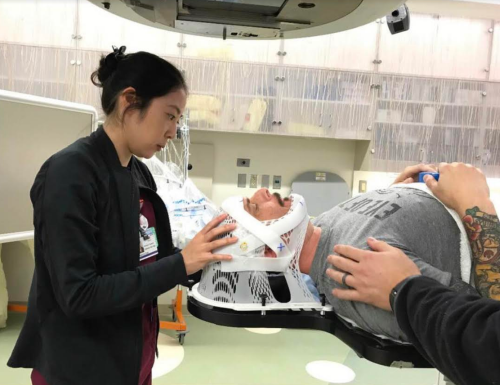 Paul wears his “Eye of the Tiger” t-shirt to radiation
How are you battling the tumor?
Well, I’m doing six days of thirty-minute radiation sessions. I’m still working out, eating healthy and staying positive. Nothing else I can do. I really think that all the positive energy from friends, family and even the posts on Facebook from people I’ve never met helps. Never underestimate the power of positivity! I’m a fighter. (Remind you of anyone else? ????) If I have a problem, I fight it and that’s what I’m doing.
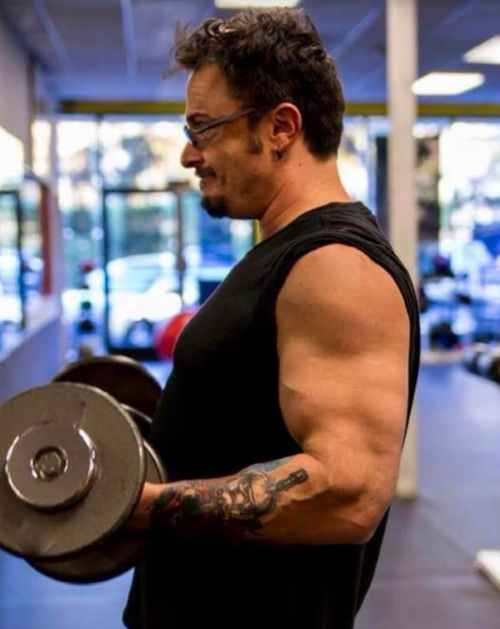 Paul has worked out every day since he started radiation!
You’ve always worked out and hit the weights. Have you had to alter your workouts? What about your diet?
I have meals delivered now that are super healthy. Yuck! I’ve cut out sugar and carbs and drink lots of vegetable juice, eat lots of berries and upped my protein intake. No chocolate, that’s been the hardest part. LOL. For snacks I eat a banana with coconut oil or apples with some honey whatever I can think of that’s kind of healthy.
 Paul wears one of Sly’s Expendables necklaces for inspiration!
As for working out, because of my shoulder, I’m doing lighter weight but more reps. Whatever I can do to get the blood flowing to the muscles. I’m trying lots of new things as well — more cardio — I think it’s giving me a better look. I’m seeing more vascularity and less bulk which is perfectly fine. Many have said not to do weights but i can’t give them up. I need my weights. I love the feeling of them and the rush when you do any movement with them.

Last year your business was in danger of going under. How has this year been?
The business has really grown. Matthew Rhode continues to land great campaigns. He just did Creed II, Green Book, Quincy for Netflix, Crazy Rich Asians, Black Panther and Infinity War Home Entertainment. Matthew has had a remarkable 2018 considering that he is still a very fresh voice that nobody knows.
Ashton Smith, my number one guy, is still one of the busiest voices in the business. He is on a Private War, Wreck It Ralph 2, The Possession of Hannah Grace, Spider-Man into the Spider-Verse, Bad Times at the El Royale, Night School and Bird Box for Netflix to name a few.
Jamie Anderson landed, I think, 16 films this year. His voice can be heard on Mary Poppins Returns for Disney, Can You Forgive Me, Miss Bala, and Goosebumps 2. Christopher Robin was a fun campaign for us. I really liked that movie.
Rick Robles just aired on White Boy Rick and Searching. The Clio Awards are coming up. The Clios are like the Oscars for movie trailers. A lot of films nominated were voiced by my guys. I’m pretty happy about that (and more importantly so are they)!
 Just some of the Rocky movie props in Paul’s office!
When you last faced adversity, being surrounded by your Stallone / Rocky props provided inspiration. Do you still feel that?
The Rocky series is like my synagogue or church. It’s very spiritual to me. I have worn a Rocky t-shirt to every treatment of mine, and I go to bed watching clips from the Rocky films. Creed 2 couldn’t have better timing! I love all the inspirational tv spots airing now!
Every time I’ve talked to you and in all of your posts you are so positive. How do you keep yourself in this frame of mind?
I’m surrounded by a supportive family and friends. I spoke about them earlier and they are my everything, but to be totally honest, and it may sound corny, revisiting the Rocky films helps me keep my spirits up, but don’t get me wrong there are times I feel scared and sad, but then I hear Mickey’s voice saying, “Get up, you son of b — because Mickey loves ya!”
Do you have any new additions to your Stallone movie prop collection that you’d like to share with SZoners?
I’m always looking for new Stallone props. Here are a few…
 Rocky’s weightlifting belt from Rocky Balboa!
 Rocky’s motorcycle helmet that he throws at his statue in Rocky III!
 Paul’s tombstone, the vodka Rocky places there plus Rocky’s chair and newspaper!
 Rambo’s headband from Rambo, First Blood: Part II.
 Paul with fellow Stallone Prop collector Randy Rousseau & Randy’s Dad
You’ve always had a lot in common with Rocky. Trouble in school at an early age, people around you who didn’t think you’d make it and so on. Isn’t is hitting way too close to home that in Creed Rocky fought cancer and now you’re fighting a tumor?
The similarities are almost eerie to me. I’m fighting the most important fight of my life. I want to be healthy and see my kids grow – be at all their events. So if I break (like Rocky said in Creed), I’m going to fix it. An interesting side effect is that my right side tongue being atrophed has caused my speech to sound very different. My mom said the other day when I was complaining, she said, “It’s okay, you sound more like your hero now.”
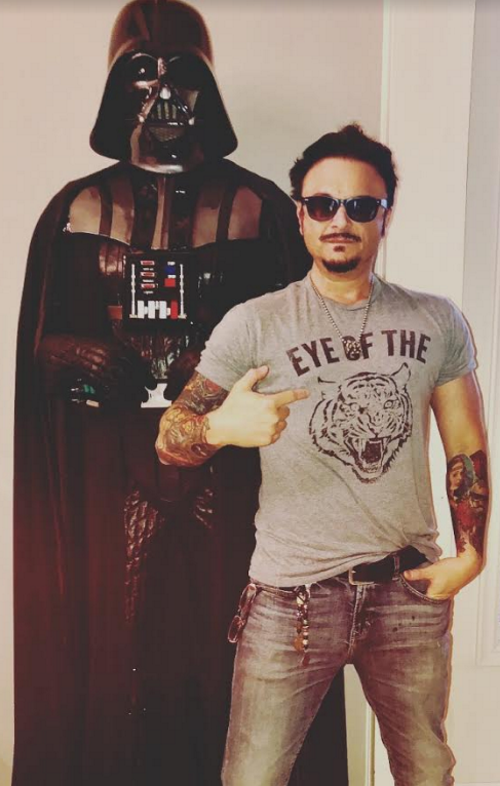
Paul, as you know, I and all StalloneZoners are sending you positive vibes, prayers and good wishes. Any thing you’d like to add before we close out?
First I want to encourage everyone to get a full body CT scan and MRI. I didn’t know I had a tumor until symptoms come up and once they do it’s usually a much harder road. My tumor was with me over 10 years before it hit my nerves which caused me to finally notice I had it. And always remember no matter what life throws at you, you are a lot stronger than you think, braver and loved a hell of a lot more than you probably think, so keep punching and move forward.
 I had this made for my buddy’s gym. It’s a philosophy I believe in.
SALT is a short horror film by Rob Savage. This guy should be making features!
SALT – Short Horror Film from Rob Savage on Vimeo.
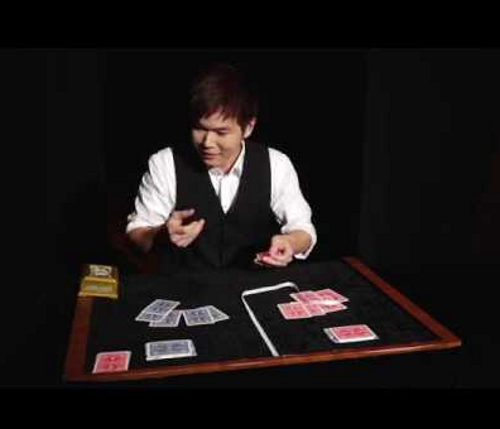
Eric Chien was the 2018 Fism Grand Prix Winner. Fism is an international society of magicians and to be the Grand Prix Winner you have to be the best of the best. The video below shows the act that earned him the award.

Overlord (2018)
Director: Julius Avery
Screenplay: Billy Ray, Mark L. Smith from a story by Billy Ray
Stars: Jovan Adepo, Wyatt Russell, Mathilde Ollivier, Pilou Asbæk and Bokeem Woodbine.
The Pitch: “Think Saving Private Ryan meets Dawn of the Dead.”
Tagline: None.
The Overview: Beware of Spoilers…
A team of soldiers is flown deep into enemy territory the night before D-Day. Their mission to destroy a Nazi radio tower is essential to the success of the Allied invasion. When their plane is blown from the sky, a few of the soldiers survive. In order to complete their mission they will find themselves against a company of Nazis and something much, much worse.
Overlord starts out as a straight war movie, becomes a tense drama and then goes full tilt horror. The action in each genre smoothly integrates and the end result is a scary, roller coaster of a movie that satisfies and leaves you hoping for another ride. While Overlord‘s trailers give you the broad strokes, there are enough twists and turns to satisfy even the most jaded horror movie/zombie fan.
When the movie was over I turned to my wife and said, “The guy who played Ford would make a great Snake Plissken.” She responded, “You know that he’s Kurt Russell’s son, right?” Truth be told, I didn’t, but stand by my opinion that he would make a great Snake Plissken and Overlord will make a nice addition to my movie collection.

Rating:

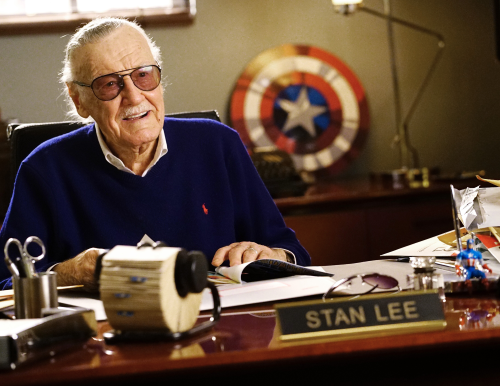
Stan Lee has died at the age of 95. Lee was a writer, editor, publisher, creator or co-creator of some of the most popular comic characters the world has ever seen. Lee began his career in comics in 1939, but it was in the early 1960’s that he hit his stride. Teaming with Steve Ditko and Jack Kirby they created Spider-Man, the Fantastic Four, the Incredible Hulk and so many other heroes beloved by children and adults throughout the world. Under Lee’s leadership Marvel soared.
I had the good fortune to see Stan Lee at HeroesCon a few years ago. My wife and I were attending the HeroesCon annual art auction. It was probably 9 or 9:30 and the auction was well underway when a murmur went through the crowd. Stan Lee had entered the banquet hall! The crowd became quiet as Stan took the microphone and said a few words. When he’d finished, the crowd erupted with applause. I’ve rarely seen a person who so captivated such a huge crowd.
Thanks Stan for the hours and hours of entertainment you provided or inspired. Our thoughts and prayers go out to Mr. Lee’s family, friends and fans.

This Sin City poster by Greg Staples was just too cool not to share. See more of Greg’s art here and a slightly bigger version at Movie Poster Movement.
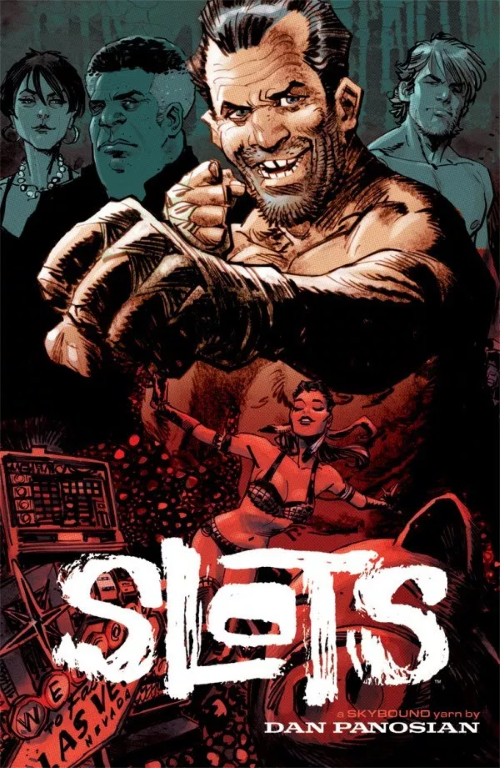
I think a lot of folks who drop by here would like Slots by Dan Panosian. Besides being beautifully drawn, the story involves an aging boxer looking for redemption…
You can say this about the life of Stanley Dance: he did it his way. Unfortunately, his way never took getting old into account. Now, the former boxer is on his last legs, looking for redemption… but he’ll settle for going down swinging.
Roll the dice with superstar artist Dan Panosian as he creates a bold and breathtaking vision of Las Vegas, where everything old can become new, and superstition influences just how the chips fall.
I’m putting in my order. You should consider doing the same!
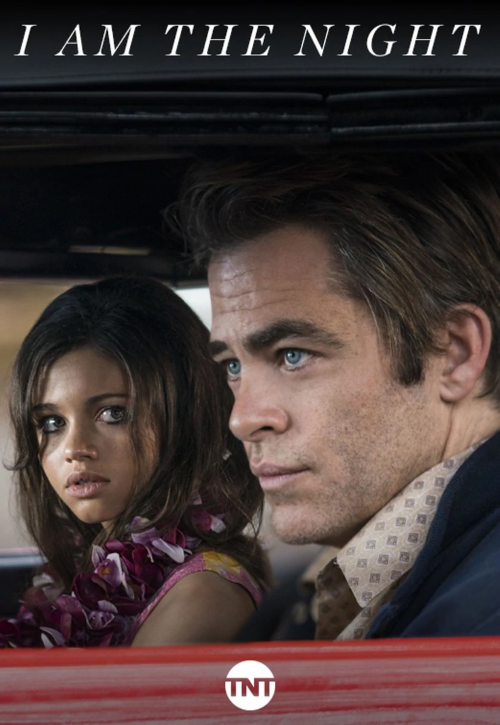
I am the Night looks good!
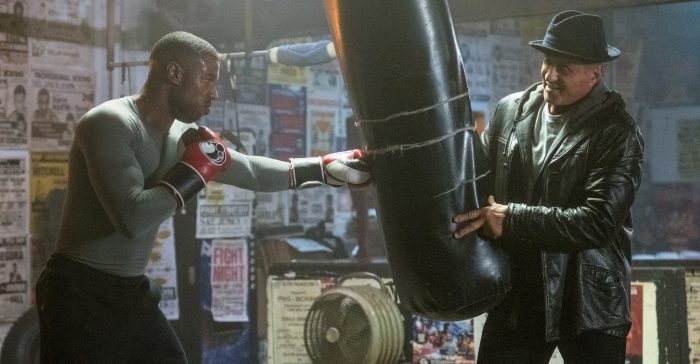
Creed II – Introducing Viktor Drago.