14 Facts About Daniel Boone

Daniel Boone holds a special place in American History and the childhood memories of many my age.  Fess Parker portrayed Daniel Boone as a decent, fearless, fair man who’s exciting adventures were the basis of legend.

Lucas Reilly and Mental Floss present 14 Facts About Daniel Boone.  I hope the legend and the truth aren’t too far apart.  Here are three of my favorites…

6. HE ESSENTIALLY LIVED THE PLOT OF TAKEN.
In July 1776, Boone’s daughter Jemima, along with two other teenagers, were abducted by Cherokee and Shawnee Indians while they were out canoeing. With help from the girls—who were breaking twigs and leaving markings whenever they could—Boone managed to find them in just three days (just like Liam Neeson, he had a very particular set of skills). At least two of their captors were killed. The incident later inspired a scene in James Fenimore Cooper’s The Last of the Mohicans.

7. HE WAS A SHAWNEE CHIEF’S ADOPTED SON.
In February 1778, Boone and a party of men were captured by Shawnee Indians. Boone made an impassioned case to Chief Blackfish, asking the natives to spare their lives. In exchange, come spring he would ensure that Boonesborough would surrender peacefully. Boone’s plea worked. Not only did Chief Blackfish adopt Boone into the tribe, he made the frontiersman his son. “During our travels, the Indians entertained me well; and their affection for me was so great, that they utterly refused to leave me there with the others,” Boone said. He was given the name Big Turtle.

13. FAME ANNOYED HIM.
John Filson’s 1784 book The Discovery, Settlement and Present State of Kentucke made Boone famous. Soon, stories about Boone’s life were detaching from reality. He hated it: “Nothing embitters my old age [more than] the circulation of absurd stories … many heroic actions and chivalrous adventures are related of me which exist only in the regions of fancy. With me the world has taken great liberties, and yet I have been but a common man.”

10 Colorful Facts About “The Munsters”

Me-TV presents 10 Colorful Facts About The Munsters.  Here are three of my favorites…

1. The idea dates back to 1943.
The idea for a family of comedic Universal monsters dates back to the heyday of Universal monster pictures. In the early 1940s, the studio was still flying high off its monster franchises. It had recently launched The Wolf Man and The Phantom of the Opera. Lon Cheney Jr. was shambling along in The Ghost of Frankenstein. In 1943, Bob Clampett, an animator who worked on Looney Tunes cartoons, pitched the idea of a funny Monster family to Universal. After a couple years developing the concept, nothing came of it for two decades. Even in the 1960s, as interest picked back up, some at the studio believed it should be a cartoon.

8. The original Marilyn quit acting after 13 episodes — and a third Marilyn was used in the movie.
No Munster family member changed like Marilyn, Lily’s niece. Initially, Beverley Owen (pictured here) filled the role. Midway through season one, Owen quit the business entirely, to get married and focus on her family. She would later earn a masters degree in Early American History. Pat Priest popularized the role of Marilyn thereafter on the show. However, Universal recast the character for Munster, Go Home! The studio inserted Debbie Watson — 12 years younger — into the role, in hope of building the contracted starlet’s career.
9. The Drag-U-La was made with an illegally purchased coffin.
Reportedly, according to legend, a real coffin was used to make the awesome DRAG-U-LA hot rod seen in Munster, Go Home! The only catch that it was supposedly illegal to purchase a coffin without a death certificate in the state of California at the time. Richard “Korky” Korkes, the man who built the dragster, claimed he passed money under the table to a funeral home in North Hollywood, who left a coffin for him outside the back door.


10 Things You May Not Know About John Dillinger

Evan Andrews and History.com present 10 Things You May Not Know About John Dillinger.    Here are three of the most interesting things and my thoughts on each…

Dillinger helped bust his fellow gang members of out of jail.
Dillinger committed a string of high profile heists during the summer of 1933, but he was desperate to reunite with some of his old prison buddies to form an ace bank robbing gang. That September, he began plotting to break his would-be accomplices out of the Indiana State Prison at Michigan City. Dillinger conspired to have three .38 pistols hidden in a crate of thread bound for the jail’s shirt making factory, allowing 10 convicts—including experienced stickup men “Handsome” Harry Pierpont, Charles Makley and John Hamilton—to get the drop on their guards and escape. The timing couldn’t have been better. Dillinger had been arrested at a girlfriend’s house only a few days before, and was languishing in jail in Lima, Ohio. On October 12, the newly liberated Pierpont and two other men waltzed in the front door and busted him out, gunning down the county sheriff in the process.
Craig: The fact that Dillinger was able to bust his crime partners out of prison and they in turn able to free him from a jail started the legacy of John Dillinger.

He robbed police stations.
While most criminals stayed as far away from lawmen as possible, Dillinger was willing to march right into their headquarters with gun in hand. Shortly after being sprung from jail in October 1933, Dillinger and his band carried out a pair of audacious heists on the police stations at Auburn and Peru, Indiana. As bewildered deputies looked on, the gangsters emptied their gun cabinets of Thompson submachine guns, shotguns, rifles, tear gas guns, bullet proof vests and more than a dozen pistols. The crooks immediately put the arsenal to use committing a wave of bank heists that left two police officers dead.

Craig: Dillinger did have guts and a tendency for flash.  How many other criminals have you heard of who would dare rob a police station?

He escaped from jail using a wooden gun.
Dillinger was arrested in Tucson, Arizona in January 1934, after locals recognized a few of his heavily wanted accomplices. Following a flurry of media coverage, he was extradited to Indiana and confined to the jail in Crown Point to await trial. Authorities boasted that the jail was escape proof, but Dillinger would only remain a resident for a little over a month. On March 3, 1934, he forced his way out of the main cellblock by brandishing a phony gun. Dillinger claimed he had fashioned it from a block of wood, a razor handle and a coat of black shoe polish, but reports would later suggest it was smuggled into the prison by one of his attorneys. In any case, Dillinger used the wooden pistol to round up several guards and get his hands on a Thompson submachine gun. Once armed with real firepower, he made his way to the prison garage, stole the sheriff’s personal police car and motored to Chicago. Amazingly, Dillinger was back in action only three days later, teaming with gangster Baby Face Nelson and others to knock over a bank in Sioux Falls, South Dakota.

Craig: One of the things Dillinger is most famous for is his breakout from the “escape proof” jail using a fake wooden gun to round up several guards and get his hands on real fire-power.  Dillinger’s escapes and escapades made him a celebrity, but folks lose sight of the good people who ended up dead because of Dillinger before he met the same fate.

10 Things We Learned from the ‘Breaking Bad’ 10 Year Reunion [Comic-Con 2018]

Chris Evangelista and /Film present 10 Things We Learned from the ‘Breaking Bad’ 10 Year Reunion [Comic-Con 2018].  Be advised that major spoilers may be lurking if you proceed further.  Here are three of my favorite things learned and some of my thoughts about each…

2. Darkness Was Important
Breaking Bad was an extremely dark show, and the darkness was essential, as far as Vince Gilligan is concerned. “If the show is going to be about producing and selling meth, you want to take it seriously,” the creator said. “But you don’t have to make it some after school special – you just have to show the reality of why that’s a bad decision.” Gilligan also added that any time they needed to show a violent moment on Breaking Bad – like the episode “Krazy-8”, where Cranston’s Walter White has to strangle a man to death with a bike lock – it was important to never treat the violence as “entertainment”, but to rather highlight how unpleasant it was. “There has to be consequences,” Gilligan said. “If you don’t do that, you’re not doing the show justice.”
Craig’s thoughts:  Gilligan is so right.  Actions have consequences and bad actions can, or at least should weigh heavily on a character unless he/she is a sociopath.  The added layer brought realism and importance to those “dark” decisions.

4. Aaron Paul Misses Jesse
This may not seem like a huge revelation. But during the Hall H panel, actor Aaron Paul commented that he really “missed” playing tragic drug dealer Jesse Pinkman. What made this moment so memorable was the wealth of emotion in Paul’s voice – he sounded as if he was on the verge of tears as he uttered these words. It got to me.
Craig’s thoughts:  How can you not love how attached and appreciative some actors get to the characters that made them?

7. Bryan Cranston Would Frequently Trick Aaron Paul Into Thinking Jesse Was Going To Die
While Jesse Pinkman lived beyond the first season, and ended up surviving the series as a whole, Bryan Cranston would constantly prank Aaron Paul into thinking his character was going to die. As Paul and Cranston tell it, Cranston would come up to Paul and ask: “Have you read the latest script?” When Paul would say no, Cranston would give Paul a big hug and say, “I’m so sorry,” thus making Paul think his character was about to get bumped off. This apparently happened several times, and Paul apparently fell for it almost every time.
Craig’s thoughts: This is probably not a new story for most fans of Breaking Bad, but I think it is so funny that Cranston would mess with Paul like that… and of course Paul would fall for it!

The 10 Wildest Movie Plot Twists

Paul Shrodt and Mental Floss present The 10 Wildest Movie Plot Twists.  Be advised that major spoilers wait for those who venture further.  Using Shrodt’s list, here are three of my favorites and some of my thoughts to boot.

1. PSYCHO (1960)
Alfred Hitchcock often constructed his movies like neat games that manipulated the audience. The Master of Suspense delved headfirst into horror with Psycho, which follows a secretary (Janet Leigh) who sneaks off with $40,000 and hides in a motel. The ensuing jolt depends on Leigh’s fame at the time: No one expected the ostensible star and protagonist to die in a gory (for the time) shower butchering only a third of the way into the running time. Hitchcock outdid that feat with the last-act revelation that Anthony Perkins’s supremely creepy Norman Bates is embodying his dead mother.
Craig’s thoughts: Psycho makes the “twist” list for a couple of reasons.  1: It starts off with the feel of a crime movie and twists into a horror film.  Bravo!  2.  The twist ending is a classic and truly shocked audiences… still does.

2. PLANET OF THE APES (1968)

No, not the botched Tim Burton remake that tweaked the original movie’s famous reveal in a way that left everyone scratching their heads. The Charlton Heston-starring sci-fi gem continues to stupefy anyone who comes into its orbit. Heston, of course, plays an astronaut who travels to a strange land where advanced apes lord over human slaves. It becomes clear once he finds the decrepit remains of the Statue of Liberty that he’s in fact on a future Earth. The anti-violence message, especially during the political tumult of 1968, shook people up as much as the time warp.
Craig’s Thoughts: I saw the original Planet of the Apes during it’s initial run.  I was 9 years old and had no idea of the twist ending.  I. Was. Shocked.  The movie remains one of my favorites.

5. THE USUAL SUSPECTS (1995)
The Usual Suspects has left everyone who watches it breathless by the time they get to the fakeout conclusion. Roger “Verbal” Kint (Kevin Spacey), a criminal with cerebral palsy, regales an interrogator in the stories of his exploits with a band of fellow crooks, seen in flashback. Hovering over this is the mysterious villainous figure Keyser Söze. It’s not until Verbal leaves and jumps into a car that customs agent David Kujan realizes that the man fabricated details, tricking the law and the viewer into his fake reality, and is in fact the fabled Söze.
Craig’s Thoughts: The Usual Suspects is a modern classic.  What a great mystery told to us with all the clues right there.  Then when it all comes together in the end, we’re as shocked as David Kujan.

Additional thoughts:

The Sixth Sense is a great choice, but I picked the three above because they surprised me.  I knew the Sixth Sense had a twist at the end and actually figured it out early on.  It was cool to see how M. Night put it all together though.

I also applaud the twist in Primal Fear.  That one caught me off guard.  Kudos to Ed Norton’s acting.  Fight Club and The Others had interesting twists but didn’t shock me as much as the three I chose did.

Although it didn’t make the list, The Perfect Getaway is an under-rated film with a great twist ending.  Written and directed by David (Pitch Black) Twohy it stars  Milla Jovovich, Steve Zahn, Timothy Olyphant and Chris Hemsworth.

Batman: White Knight by Sean Murphy

Batman: White Knight, written and illustrated by Sean Murphy is set to be the first graphic novel published by DC under their new Black Label banner.

After years of epic battles, the Dark Knight finally finds a way to cure the twisted mind of his archenemy. The Clown Prince of Crime has now changed his ways, fighting for good in Gotham City, and it may just cause Batman to go over the edge of his own sanity.

Writer/artist Sean Murphy takes the helm of this Batman/Joker story like no one else could, delivering an alternative examination of the relationship between the greatest rivals in the DC Universe, exploring the darkest corners of justice and madness. This new graphic novel is the latest in great stand-alone stories from DC Comics. Collects issues #1-8.

This won’t be your father’s Batman.

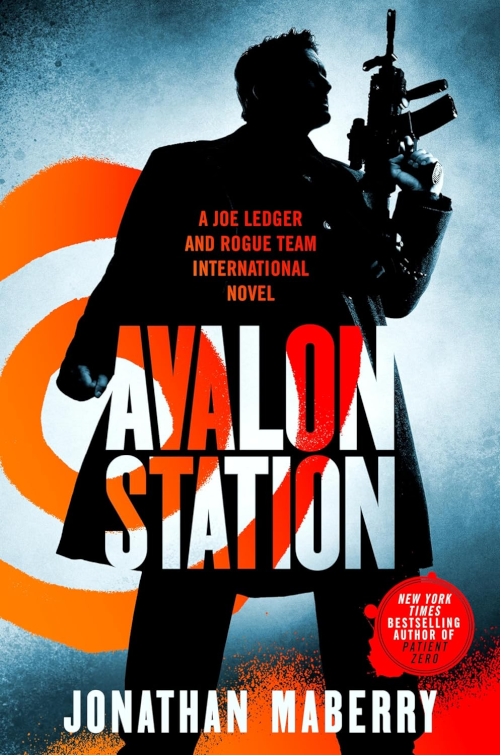
Jonathan Maberry Going Down George A. Romero’s “Road of the Dead”

Remember last year when George Romero announced his next zombie film, George Romero Presents Road of the Dead?  While I was glad Romero was taking part in a new addition to his zombie films, I wasn’t thrilled with the concept which to me sounded like Death Race 2000 meets Dawn of the Dead.

Then in July of last year, Romero gave an interview talking up George Romero Presents Road of the Dead and more.  Sadly, three days later he died.

Today at Comic-Con, IDW announced that Jonathan Maberry will write a 3 issue mini-series based on Romero’s Road of the Dead.  Maberry is the perfect choice for this project having worked with Romero on Nights of the Living Dead anthology last year.  That and the fact that Maberry is a fantastic writer.

In addition to Maberry writing the series, I was pleased to see that my pal, Drew Moss will be providing covers and interior art!

Source: Bleeding Cool.