Child 44 (The Child 44 Trilogy) by Tom Rob Smith

Child 44 (The Child 44 Trilogy) by Tom Rob Smith

First sentence…

Since Maria had decided to die her cat would have to fend for itself.

The Overview:  Beware of Spoilers…

1953.  Soviet Russia. Leo Demidov, a young decorated war hero, now an idealistic security officer, is beginning to see the hypocrisy of the Soviet government.  Because all are equal there will be no crime.  Murder, especially is a symptom of Western corruption.  Soviet murderers like all criminals must be mentally ill.

When Leo looks into the case of a boy supposedly killed when struck by a train, he discovers the boy may have been murdered by a serial killer of children.  Told to back off, Leo refuses and finds himself at odds with not only his fellow officers but higher ranking Soviet officials.  Soon enough Leo and his wife are under investigation and from there the book really takes off.

To say more would deprive the reader of a great ride.  Child 44 has more twists and turns than any book in recent memory.  Tom Rob Smith has created a page turner that shocks, surprises and thrills.  I loved every page of it and look forward to reading the rest of the trilogy.


Rating:

Ken Meyer Jr.’s Ink Stains 42: Steranko, Adams, Black and More!

If you’re a fan of fanzines, then you’ve got to check out Ken Meyer, Jr.’s monthly column Ink Stains.  Each month Ken (who is an amazing artist) posts… well, let’s let Ken explain…

I have a collection of over 200 fanzines from the 60’s-80’s that I plan to scan and talk about, one at a time. I hope to have some of the participants answer a few questions. Many of those participants are established comics professionals now, while some have gone on to other things. I will show a few snippets from each zine and give you a link to download a pdf of the whole thing, which I hope all of you will do!

For Ink Stains 42, Ken took a look at Collector issues 16, 17, 18, 19, 21 from 1969-1971.   Edited and published by Bill G. Wilson.

I’d never seen issues of Collector before reading Ken’s columsn.  The issues are full of the stuff that fanzines were known.  These issues feature:

Collector 16 features –

  • a Don Newton Batman cover
  • Sketches by Steranko, Giordano, Buckler, Adams
  • Photos of comic legends [Adams, Kane, Frazetta, and more]  at an early convention.
  • Tons of fan art

Collector 17 features –

  • Don Newton interview, art and photos of Don and his studio
  • Tons of fan art and articles

Collector 18 features –

  • Shazam cover by Bill Black (earliest art I’ve seen from my buddy)
  • Bill Black pin-up of Green Lantern
  • Ad for Bill Black’s Paragon fanzine!
  • Fan art and articles

Collector 19 features –

  • Joe Sinnott Thing sketch
  • Sketches from Steranko/Sinnott, Gene Colon, Bill Black and Steve Ditko
  • Fan art and articles

Collector 21 features –

  • Art from Dan Adkins, Don Rosa and Tom Sutton
  • Fan art and articles

Ah, the memories of the glory days of fanzines.  Thanks to Ken Meyer, Jr. for making these available!

Better Dead: A Nathan Heller Thriller by Max Allan Collins

Better Dead: A Nathan Heller Thriller by Max Allan Collins

Publisher: Mysterious Press

First sentence…

I was there when the Commies took over.

The Overview:  Beware of Spoilers…

Better Dead is actually two interconnected novellas.

In the first Nathan Heller is hired to find evidence to exonerate Julius and Ethel Rosenberg, a married couple sentenced to die for providing Russia with secret information on how to build nuclear bombs.  Senator Joe McCarthy, who is leading the hunt for American Commies, wants Heller to serve as a double agent and provide him with whatever information Heller learns about the Rosenbergs.  Before long Heller is on the wrong side of government agents and gangsters and a possible death sentence of his own.

In the second story, Heller learns about government-funded mind control experiments on unknowing subjects from a scientist who has a change of heart.  When the scientist turns up missing, Heller knows that he’s next up unless he can figure a way out.

I’m a huge fan of Max Allan Collins’ Nate Heller series.  Heller is a fictional detective who finds himself in the middle of real crimes.  Heller ages as the series progresses and fiction is mixed with extensive research and historical fact.  It’s fun watching Heller interact with famous (and infamous) folks right out of our history books.  Equally enjoyable is Collins’ take on the crimes and what may have really happened (if it is not as we’ve been taught).

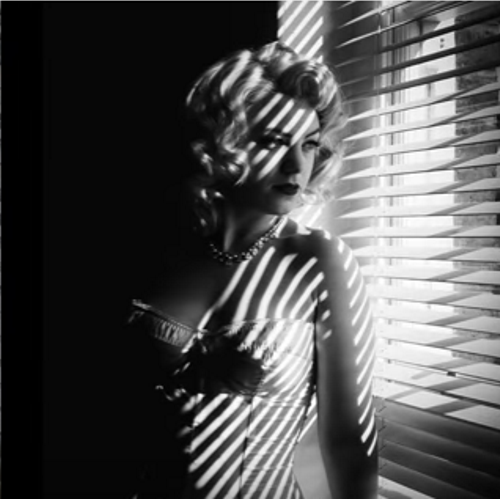
In Better Dead Heller interacts with Joe McCarthy, Julius and Ethel Rosenberg, Roy Cohen, Bettie Page, Bobby Kennedy and others.  I also like that Heller in these outings is a bit more hardboiled.  Perhaps it’s the decade.

Better Dead is another great addition to the Nate Heller legacy.  I’m hoping for more!

Rating:

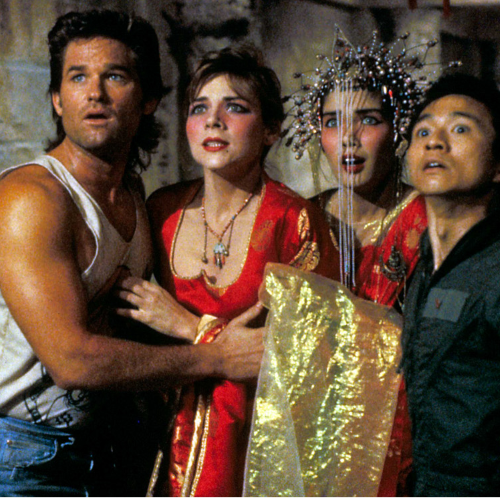
12 Things You Might Not Know About “Big Trouble in Little China”

Cheryl Eddy and io9.com present 12 Things You Might Not Know About Big Trouble in Little China.  Here are three of my favorites…

3) Jack Burton’s Insane Boots Were Kurt Russell’s Idea
Though the Big Trouble book showers rightful praise on costume designer April Ferry, Russell says he had a hand in selecting his character’s distinctive footwear. He had Jack Burton’s “funky, high-top moccasins” specially made in Aspen at a shop he happened to know about.

5) The Actor Playing Rain Had No Idea He Was in a Comedy
Peter Kwong tells the authors that his scenes as Rain, one of the villainous Lo Pan’s well-armed lieutenants, were so intense that he was under the impression that Big Trouble was merely “an action-adventure with a mysterious ghost story.”

It wasn’t until he filmed his last-act fight—and noted Dennis Dun’s over-the-top eyebrow raise at a key moment during their battle—that he realized the movie was actually a comedy that also happened to have action-adventure and mystical elements. Later in the book, Kwong reveals that his luxurious long wig, which was specifically designed to look like those traditionally worn in Chinese martial arts movies, cost $3,000.

11) Making Lo Pan’s Glowing Skull Was Weirdly Easy
Actor James Hong plays two versions of iconic bad guy David Lo Pan: the ancient old man, and the younger sorcerer. His on-screen transformation comes courtesy of both a bust of Hong that was covered in clear, flexible skin, carefully painted to look like Hong in his old-man make-up, and by fading the lights off outside the bust while fading the lights inside the bust on. According to Johnson, the scene was completed in just one take.

Rabid (1977)

Rabid (1977)

Director: David Cronenberg

Screenplay: David Cronenberg

Stars: Marilyn Chambers, Frank Moore and Joe Silver

The Pitch: “Hey, let’s make a low-budget horror movie!”

Tagline: You can’t trust your mother…your best friend…your neighbor next door…

The Overview:  Beware of Spoilers…


In an effort to save Rose [Chambers], the victim of a motorcycle crash, a doctor performs experimental plastic surgery. Rose recovers with a taste for blood and her victims become zombies.

If you can survive the micro budget, bad acting and silly story then you might enjoy Rabid.

Rating:

Mike Tyson vs. James ‘Buster’ Douglas: An Oral History of Boxing’s Most Remarkable Upset

If you’re a boxing fan you won’t want to miss Eric Raskin’s excellent Mike Tyson vs. James ‘Buster’ Douglas: An Oral History of Boxing’s Most Remarkable Upset. (Sadly, the link no longer works, so I instead present James ‘Buster’ Douglas recounts the biggest upset in boxing history. – Craig, 2021)

Mike Tyson, Buster Douglas, Jim Lampley, Larry Merchant, the fighters’ trainers and others all weigh in on the events and fight that was the greatest upset in boxing and perhaps sports history!

15 Facts About “Scent of a Woman”

Roger Cormier and Mental_Floss present 15 Facts About Scent of a Woman.  Here are three of my favorites…

2. MATT DAMON, BEN AFFLECK, BRENDAN FRASER, AND O’DONNELL’S CASTMATES IN SCHOOL TIES ALL AUDITIONED FOR CHARLIE.
“The whole cast went down to audition for it,” Matt Damon remembered in a 1997 Vanity Fair profile. “So the way I found out about the part is, I’m checking in with my agent, to see if anything good has come in, and my agent says, ‘Here’s one with a young role, and . . . Oh my God, it’s got Al Pacino in it!’ So I go up to Chris and say, ‘Have you heard about this movie?’ and he says [curtly] ‘Yeah.’ So I say, ‘Do you have the script?’ ‘Yeah.’ ‘Can I see it?’ ‘No—I kinda need it.’ Chris wouldn’t give it to anybody.” Stephen Dorff also auditioned.

7. ‘HOO-AH’ CAME FROM PACINO’S GUN EXPERT.

“I was working with a lieutenant colonel who was teaching me the ways [of the Army],” Pacino recalled. “We worked every day, and he’d teach me how to load and unload a .45 and all this stuff. Every time I did something right, he’d go, ‘Hoo-ah!’ Finally, I asked, ‘Where did you get that from?’ And he said, ‘When we were on the line, and you turned and snapped the rifle in the right way, [you’d say,] ‘Hoo-ah!’ So I just started doing it. It’s funny where things come from.”

12. O’DONNELL’S BEST TAKE WAS A CAMERA OPERATOR’S WORST.
“The one scene where Chris O’Donnell cries, the focus puller missed and it was soft,” editor Michael Tronick revealed. “Normally, Marty [Brest] wouldn’t consider looking at something that’s imperfect that’s flatly out of focus. But it was the best take and we knew it. It had to be in the movie.”

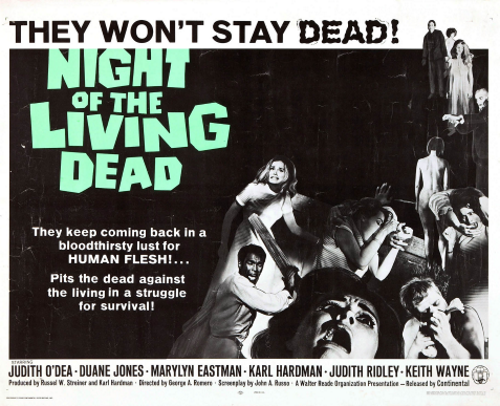
10 Facts About “Night of the Living Dead”

Matthew Jackson and Mental_Floss present 10 Facts About Night of the Living Dead.  Here are three of my favorites…

2. GEORGE ROMERO WAS HEAVILY INSPIRED BY I AM LEGEND.

Armed with Russo’s flesh-eating concept, Romero went to work, pairing it with a story he’d been working on that “basically ripped off” Richard Matheson’s apocalyptic horror novel I Am Legend. Russo later recalled that Romero returned with “about 40 really excellent pages,” including the opening in the cemetery and the arrival at the farmhouse. Russo set to work on the rest, and Night of the Living Dead began to come to life.

8. JONES FOUGHT AGAINST AN ALTERNATE ENDING THAT WOULD HAVE SAVED BEN.

One of the film’s most famous elements is its grim ending, in which Ben, having survived the night, is shot by the sheriff’s zombie-hunting posse and thrown on the fire. At one point, a happier ending for the film was considered, but Jones fought it and won.

“I convinced George that the black community would rather see me dead than saved, after all that had gone on, in a corny and symbolically confusing way,” Jones said. “The heroes never die in American movies. The jolt of that, and the double jolt of the hero being black seemed like a double-barreled whammy.”

9. IT’S IN THE PUBLIC DOMAIN BECAUSE OF A CREDITS ERROR.

Night of the Living Dead might be the most famous public domain movie of all time, but it was never intended to be. The Walter Reade Organization, which distributed the film, wanted to release it under the title Night of the Flesh Eaters, but lawyers representing the makers of 1964’s The Flesh Eaters threatened a lawsuit, so the title was changed to Night of the Living Dead. When the title changed, though, copyright notices were not added to the opening titles or to the end credits. Though the filmmakers have fought it in federal court, the film is still in the public domain.

Bringing Up Baby (1938)

Bringing Up Baby (1938)

Director: Howard Hawks

Screenplay: Dudley Nichols & Hagar Wilde from a story by Hagar Wilde

Stars: Katharine Hepburn, Cary Grant and Charles Ruggles

The Pitch: “Hey, let’s make a screwball romantic comedy!”

Tagline: And so begins the hilarious adventure of Professor David Huxley and Miss Susan Vance, a flutter-brained vixen with love in her heart!

The Overview:  Beware of Spoilers…

From the moment Susan [Hepburn] meets David Huxley [Grant], a mild mannered zoologist who is about to be married, she falls for him.   Hoping the opposites attract, the crazy, fun-loving Susan tricks David into a road trip.

Bringing Up Baby reminded me of an extended episode of I Love Lucy and that’s a good thing.


Rating:

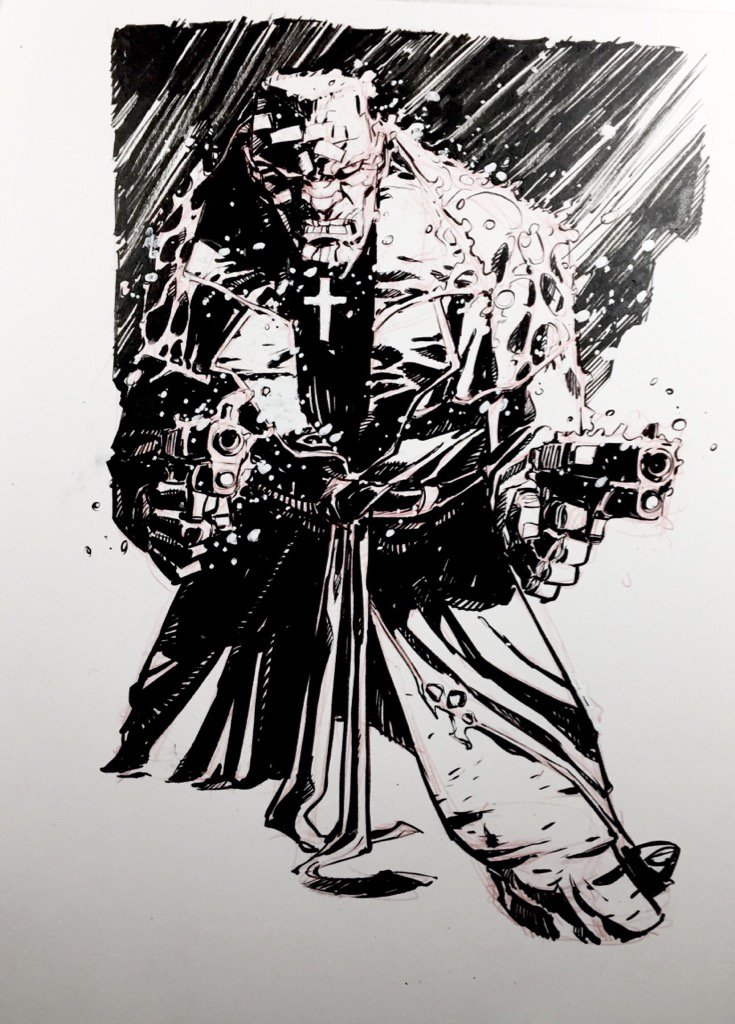
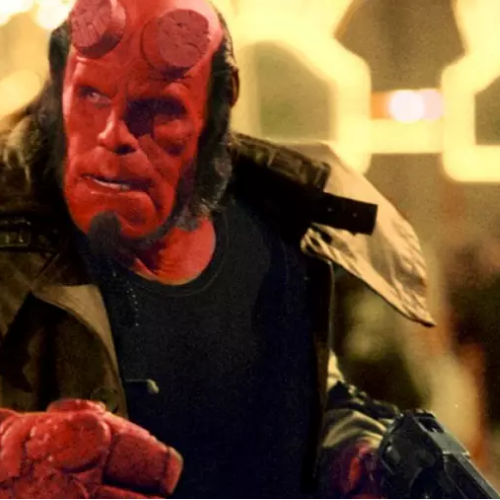
15 Things You Never Knew About the “Hellboy” Movies

Tom Baker and CBR.com present 15 Things You Never Knew About the Hellboy Movies.  Here are three of my favorites…

10. THE SET DESIGN IS FULL OF EASTER EGGS
Never one to let a good prop to go to waste, del Toro opted to populate the B.P.R.D.’s hall of antiquities with nods to his previous films, including an encore for the creepy jar babies from “The Devil’s Backbone.” Mike Mignola’s art, meanwhile, is so evocative that it was hard not to try and get in some of his designs into the film’s set decoration, including an original illustration for the gag in-universe “Hellboy” comic seen in the first film.

Perhaps most enticing of all for fans of the “Hellboy” comics is a fleeting appearance by Roger the Homunculus, a major member of the B.P.R.D. team in the source material. Complete with large ring around his groin, Roger appears as a hulking gray statue on a plinth in a hallway. This is seen when John Hurt’s Professor Broom is showing new recruit Agent Myers around the B.P.R.D. headquarters in the first film. In the same scene, the “Iron Shoes” from the short comic story of the same name can also be glimpsed in a display case.

8. RON PERLMAN WAS DEL TORO AND MIGNOLA’S FIRST CHOICE

Revolution Studios were thinking big when they first got the ball rolling on a “Hellboy” film. Preceding the coming comic book movie boom, and perhaps working from the template of Sony’s “Spider-Man” success, they wanted big name stars to headline their somewhat more offbeat superhero story. Some of the Hollywood stars being bandied about during early discussions about who should play Hellboy himself included Vin Diesel, Dwayne Johnson and, of course, Nicolas Cage.

What would have likely been a very different, perhaps more manic version of “Hellboy” was avoided when Guillermo del Toro came aboard the project. A fan of the comics from way back, he worked closely with creator Mike Mignola to make sure his big screen version of Hellboy was authentic and respectful to the source material. As such, he discussed the lead actor with Mignola personally. They agreed to a meeting where both would say their first choice for the part in unison. To their surprise and relief, both of them said Ron Perlman.

6. HELLBOY VERY NEARLY HAD A LEFT HAND OF DOOM

The Right Hand of Doom is one of the core, unshakable icons of the “Hellboy” mythology. Both a Biblical reference and an excuse to put a cover of that one Nick Cave and the Bad Seeds song on the first film’s soundtrack, that huge stone first Hellboy wields is important in-universe (as an impossible-to-escape sign of his destructive destiny) and metatextually (it provided the title for a short story collection of the same name). And yet, all of that very nearly changed.

When the idea of a “Hellboy” movie first began to pick up steam, one of the major mooted changes from the source material was to swap sides and make it the Left Hand of Doom. After all, it’s somewhat impractical to expect an actor to perform whilst retaining zero use of their dominant hand. All the early costume design and concept art for the “Hellboy” film depict the character with the Red Left hand, until the casting of Ron Perlman proved particularly fortuitous: not only did he have the requisite frame and gravelly voice, he was also a southpaw!

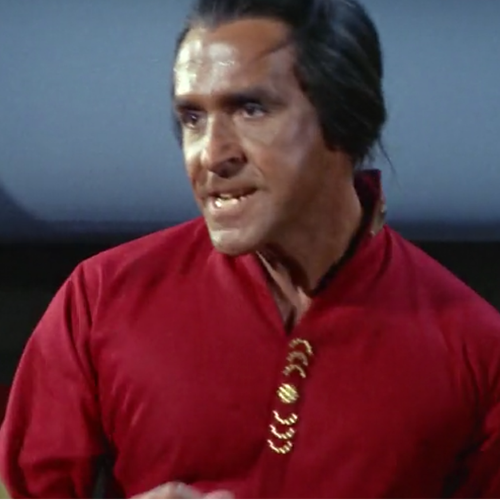
11 Things You Never Knew About Khan, the Greatest Star Trek Villain

MeTV presents 11 Things You Never Knew About Khan, the Greatest Star Trek Villain.  Here are three of my favorites…

HE WAS ORIGINALLY AN ANCIENT GREEK, THEN A VIKING SPACE PIRATE.

So, yeah, the “Khan” character was originally a Greek, and obviously not named “Khan.” When Wilber pitched his old idea for Star Trek, he changed the antagonist to a Nordic named Harold or John Ericssen, who is later revealed to be a vicious Viking space pirate named Ragnar Thorwald. Roddenberry was apprehensive about using such outward criminals. Oddly, Lost in Space would air its episode “Space Vikings” (seen here) a week before “Space Seed.”

AFTER CASTING RICARDO MONTALBÁN, THE CHARACTER WAS NAMED SIBAHL AND GOVIN.

Mexican actor Montalbán was hardly a good fit to play a Scandinavian, so the villain was tweaked. However, this being Hollywood in the 1960s, producers figured he could play a Sikh. (That being said, he must not be observant, as he does not wear a Dastar.) Roddenberry and writer Gene Coon changed the name to Sibahl Khan Noonien… until a fact-checking research company noted that “Singh” is a much more appropriate Sikh surname. They suggested the name “Govin Bahadur Singh.” Coon and Roddenberry met them halfway and settled on the canonical Khan Noonien Singh.

CHEKOV IS NOT IN THIS EPISODE — DESPITE THE FACT THAT KHAN RECOGNIZES HIM IN ‘STAR TREK II: THE WRATH OF KHAN.’

At the beginning of Star Trek II: The Wrath of Khan, Chekov encounters a vengeful Khan, who puts that creepy bug in the Starfleet Commander’s ear. Khan immediately recognizes Chekov from the events of “Space Seed.” There is just one major problem: Chekov was not aboard the Enterprise for that first-season episode. In fact, Walter Koenig did not join the cast until season two. Tie-in novels have since tried to explain this plot hole, while Koenig jokes they met in the restroom. Sulu is also not in “Space Seed.”

7 of the Creepiest Coincidences in Movie History

Hollywood.com presents 7 of the Creepiest Coincidences in Movie History.  Here are three of my favorites…

3. Poltergeist
In the classic horror film, Poltergeist, there’s a poster hanging above Robbie’s bed that reads “1988 Superbowl XXII”:

You’d expect a little kid to a have a football poster up in his room, but what makes this weird is the fact Poltergeist was released in 1982, but Superbowl XXII wouldn’t be played for another six years.
So why did they use a poster from a future game? Well, no one really knows, but on January 31, 1988, the day Superbowl XXII was held, Heather O’Rourke (the actress who played Robbie’s younger sister) became violently ill. She passed away the next day at Rady Children’s Hospital in San Diego, less than five miles away from Jack Murphy Stadium where Super Bowl XXII was played.


6. The Girl from Petrovka
In the early 1970s, Anthony Hopkins agreed to star in the film adaptation of George Feifer‘s novel The Girl from Petrovka. After searching several London bookstores, Hopkins wasn’t able to find a copy of the book anywhere and just as he had given up his search, he spotted an abandoned copy on a bench and decided to swiped it.

That’s weird enough by itself, but two years later, Hopkins met with Feifer who admitted that he’d lost his own copy of his book (complete with his personal notes) after he lent it to a friend who left it somewhere in London. It turns out the copy of the book that Hopkins found belonged to Feifer.


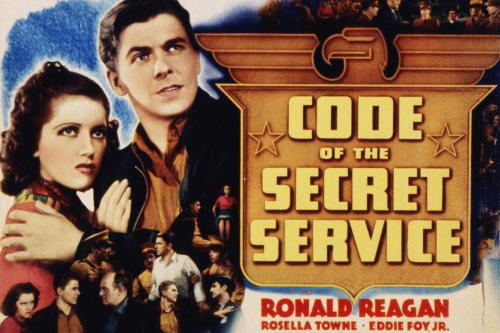
7. Code of the Secret Service
In the late 1930s, after a series of successful gangster films, Warner Brothers was pressured by FDR’s Attorney General Homer Cummings to make a series of films that glorified law enforcement agents rather than criminals. So Warners Bros decided to make a series of Secret Service films starring then actor Ronald Reagan.

Code of the Secret Service, Rosella Towne, Ronald Reagan, Warner Brothers
Warner Brothers via Everett
Reagan once called one of the movies, Code of the Secret Service, “the worst picture I ever made,” but the movie actually saved his life. Over 40 years later, President Reagan was the target of an assassination attempt, but his life was spared thanks to quick thinking by Secret Service Agent Jerry Parr. The weird part? Parr was inspired to join the Secret Service after watching Ronald Reagan in Code of the Secret Service.