12 Timely Facts About “High Noon”
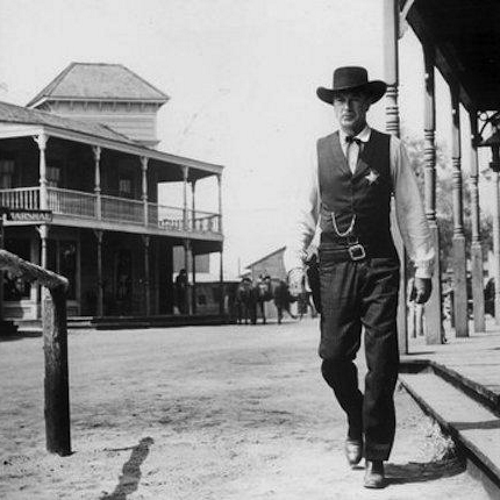
Eric D. Snider and Mental_Floss present  12 Timely Facts About High Noon.  Here are three of my favorites

4. IT’S (BASICALLY) IN REAL TIME, BUT THE TERM “REAL TIME” DIDN’T EXIST YET.
Foreman wrote that he was interested “in telling a motion picture story in the exact time required for the events of the story itself.” Today we call that “real time,” but according to Webster’s, the term wasn’t coined till 1953. (By the way, the movie is 84 minutes long but covers about 100 minutes of time. The many clocks we see on the walls must move a little bit faster than real ones do.)

7. RIO BRAVO  WAS MADE IN RESPONSE TO IT. 
Among the Hollywood types who hated High Noon were John Wayne (he called it “the most un-American thing I’ve ever seen in my whole life”) and Howard Hawks, director of classics like His Girl Friday and The Big Sleep. Hawks and Wayne teamed up for Rio Bravo, a similar story to High Noon, but one where the sheriff never shows fear or self-doubt. Hawks said, “I made Rio Bravo because I didn’t like High Noon … I didn’t think a good town marshal was going to run around town like a chicken with his head cut off asking everyone to help. And who saves him? His Quaker wife. That isn’t my idea of a good Western.” Sick burn, Hawks.

9. THE PAINED LOOK ON GARY COOPER’S FACE DIDN’T REQUIRE MUCH ACTING.
The veteran actor was 51 when the film was shot, and he looked every bit of it (and then some). Stomach ulcers and back problems plagued him, and he was in particular distress the day they shot the wedding scene, where he has to pick up Grace Kelly. His personal life was a mess, too, as he was separated from his wife and his very public affair with Patricia Neal was coming to an end. No wonder he looks so haggard and weary.
Z-View: “House of Frankenstein”

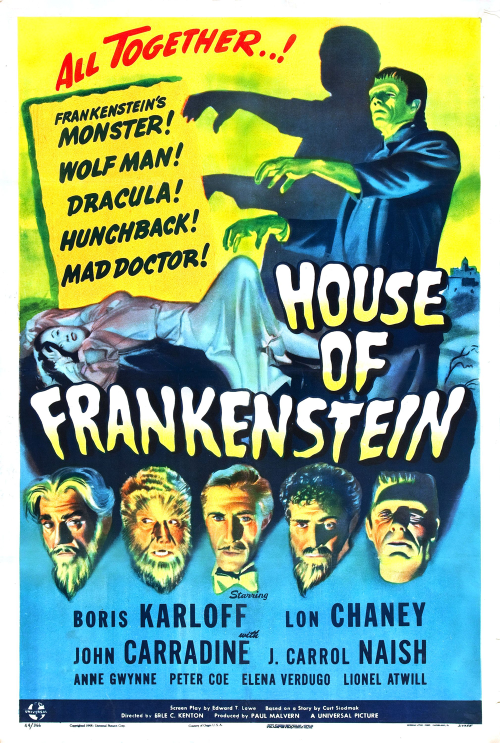
House of Frankenstein (1944)

Director: Erle C. Kenton

Writers: Edward T. Lowe Jr. from a story by Curt Siodmak

Starring: Boris Karloff;  Lon Chaney, Jr.; J. Carroll Naish; and John Carradine.

The Pitch: “Let’s make a movie with all three of our biggest stars: Frankenstein, Dracula and the Wolf Man!”

The Tagline: “All the Screen’s Titans of Terror – Together in the Greatest of All SCREEN SENSATIONS!”

The Overview:  Beware of Spoilers…

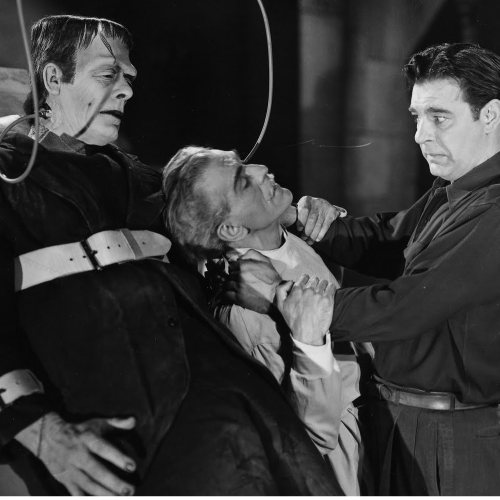
Although House of Frankenstein promises Frankenstein, Dracula and the Wolf Man together; the promise is kept but not to the fullest extent.  While Frankenstein and Karloff are in the film, Karloff doesn’t play the monster.  Dracula also stars, but isn’t played by Bela Lugosi [who isn’t even in the film], but instead by John Carradine.  Happily, Lon Chaney, Jr. does return as the Wolf Man, but sadly never shares any scenes with Dracula.  Neither does Frankenstein for that matter.

Still, we do get one movie with the three biggest classic Universal monsters and that goes a long way in satisfying monster fans of all ages.

Karloff plays the mad scientist Dr. Niemann who with the help of his hunchbacked assistant [Naish] escapes prison and heads toward Frankenstein’s old stomping grounds to continue his work.  Along the way they encounter a traveling horror show that claims to have the skeletal remains of Dracula.  Seizing the opportunity [and the road show owner’s neck], Karloff has his assistant kill the road show’s owner so that Karloff can assume his identity and they can travel freely through the countryside.

Before too long they’ve revived Dracula and after a near capture by angry villagers, Karloff and Naish make their escape into the rising sun.  I’ll leave it to you to figure out Dracula’s fate.

Soon enough they find the frozen remains of Frankenstein and the Wolf Man.  Once the two monsters are thawed out we’re left with a battle royal of sorts.  The hunchback wants his brain put in Chaney’s body (so he can woo a gypsy girl).  Karloff isn’t too keen on that idea, not because he doesn’t want a little hunchbacked werewolf running around, but because he has other plans for both the Frankenstein Monster and the Wolf Man.  Of course the village townsfolk come up with their own ideas on what to do with the whole monstrous crew and things really, uh, heat up.

Rating:

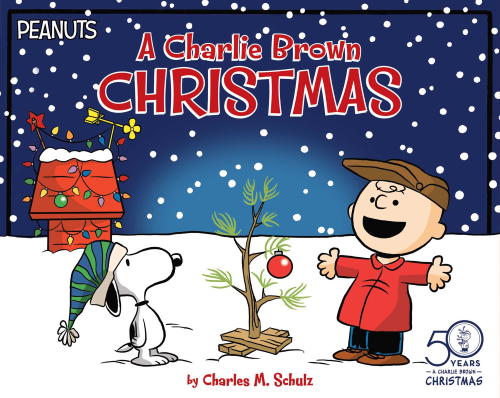
14 Blockheaded Facts About “A Charlie Brown Christmas”

Jake Rosen and Mental_Floss present 14 Blockheaded Facts About A Charlie Brown Christmas.  Here are three of my favorites

5. SNOOPY’S VOICE IS JUST SPED-UP NONSENSE.
The early Peanuts specials made use of both untrained kids and professional actors: Peter Robbins (Charlie Brown) and Christopher Shea (Linus) were working child performers, while the rest of the cast consisted of “regular” kids coached by Melendez in the studio. When Schulz told Melendez that Snoopy couldn’t have any lines in the show—he’s a dog, and Schulz’s dogs didn’t talk—the animator decided to bark and chuff into a microphone himself, then speed up the recording to give it a more emotive quality.

7. CHARLIE BROWN’S HEAD WAS A NIGHTMARE TO ANIMATE.
Because Melendez was unwilling to stray from Schulz’s distinctive character designs—which were never intended to be animated—he found himself in a contentious battle with Charlie Brown’s noggin. Its round shape made it difficult to depict Charlie turning around; as with most of the characters, his arms were too tiny to scratch his head. Snoopy, in contrast, was free of a ball-shaped cranium and became the show’s easiest figure to animate.

10. CBS HATED IT, TOO.
After toiling on the special for six months, Melendez and Mendelson screened it for CBS executives just three weeks before it was set to air. The mood in the room was less than enthusiastic: the network found it slow and lacking in energy, telling Melendez they weren’t interested in any more specials. To add insult, someone had misspelled Schulz in the credits, adding a “T” to his last name. (Schulz himself thought the whole project was a “disaster” due to the crude animation.)

43 Things We Learned from the “Mission Impossible: Rouge Nation” Commentary

Rob Hunter and Hollywood.com present 43 Things We Learned from the Mission Impossible: Rouge Nation Commentary.  Here are three of my favorites
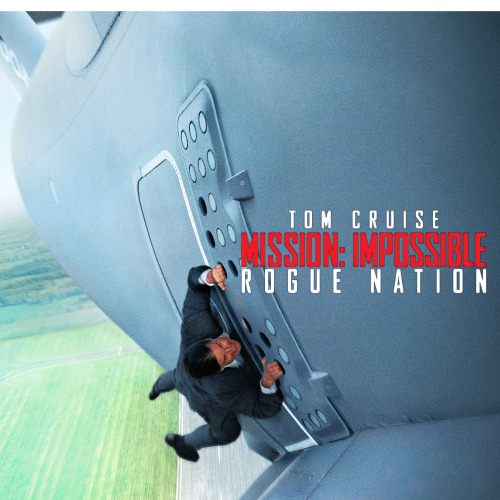
4.    Hanging Ethan Hunt (Cruise) off the side of the A-400 plane was originally McQuarrie’s idea. “I was joking when I said it,” he explains. “I did not think you’d take me seriously.”

18.    It was Cruise’s idea to have Hunt be shot — an idea McQuarrie didn’t think would work because Hunt would be walking around for the rest of the film with a bullet in his gut — but Cruise added “six months later” and boom.

26.    The opera sequence was originally written to end with Hunt and Faust simply leaving out the back exit, but Cruise was having none of it. “This is Mission: Impossible! You can’t just walk out a back door!”

35 Fabulous Facts About Frank Sinatra

Mental_Floss presents 35 Fabulous Facts About Frank Sinatra. Here are three of my favorites

27. SINATRA DIDN’T LIKE MARLON BRANDO, AND BRANDO DIDN’T LIKE SINATRA.
Sinatra was always known as one of Hollywood’s most likeable stars, but Marlon Brando apparently didn’t agree. The two didn’t hit it off when they starred in 1955’s Guys and Dolls. Sinatra, who allegedly wanted Brando’s role in the film, referred to his co-star as “Mr. Mumbles,” while Brando nicknamed Sinatra “Mr. Baldy.”

32.  THE BEATLES’ “SOMETHING” WAS ONE OF SINATRA’S FAVORITE SONGS.
Frank may not have loved (okay, he hated) rock and roll, but he was a big fan of the George Harrison-penned “Something.” The song became a sample in Sinatra’s live set toward the end of his career.

34. HE WAS A TOOTSIE ROLL FAN.
According to dead-celebrity expert Alan Petrucelli, Ol’ Blue Eyes was buried with some Tootsie Rolls, along with a few other choice effects, including cigarettes, a lighter, and a bottle of Jack Daniels.

19 Things You Never Knew About “Breaking Bad”

Hollywood.com presents 19 Things You Never Knew About Breaking Bad.  Here are three of my favorites

5.      The GPS coordinates that repeatedly appear throughout the show, N34 59 20 W106 36 52, actually corresponds to the location of the studio where the show filmed.

6.      Showtime, HBO, and TNT all initially passed on Breaking Bad.  FX began production on it, but eventually passed in favor of Courteney Cox’s Dirt in an attempt to increase female viewership. HBO wasn’t interested and TNT liked it but couldn’t have a meth kingpin as a main character.

14.   The title of the final episode, “Felina,” is an anagram for “finale.”   The letters can also spell out the atomic numbers for various elements: Fe Li Na, or blood, meth, and tears.

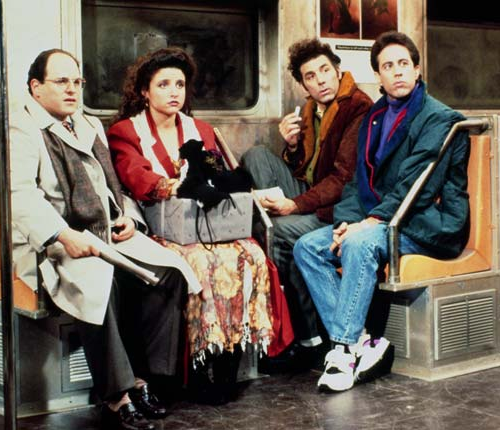
20 of the Most Surprising Numbers About “Seinfeld”

Worthy presents 20 of the Most Surprising Numbers About Seinfeld.  Here are three of my favorites

1. $40,000,

2. $1 million

3. $110 million

During the 1991 to 1992 season, Jerry Seinfeld was paid $40,000 per episode. During the show’s final season, 1997 to 1998, he was paid $1 million per episode. He was offered $110 million to do a tenth season, but he turned down NBC’s offer to continue. He decided that nine seasons completed the show, and that is another story about numbers that was revealed when Vanity Fair did a cover story of him in 1998 when the series finally ended. He was quoted as saying “Nine is cool.” He had discovered that the number nine means completion in numerology. Learning that the Beatles stayed together nine years and then broke up was also an inspiration to Seinfeld. It turns out that nine is also a highly significant number in his life:

• He was born in 1954 (5 plus 4 = 9).

• He graduated high school in 1972 (7 plus 2 = 9).

• His first Tonight Show appearance was in 1981 (8 plus 1 =9).

• His sitcom Seinfeld first aired in 1989 (1 plus 9 plus 8 plus 9 = 27; 2 plus 7 = 9).

• The show was shown at 9 P.M.

• The show ended in 1998, which also equals 27 and, of course 2 plus 7 =9.

Seinfeld also said that when he thought about the end of the show, he felt that nine was his number.

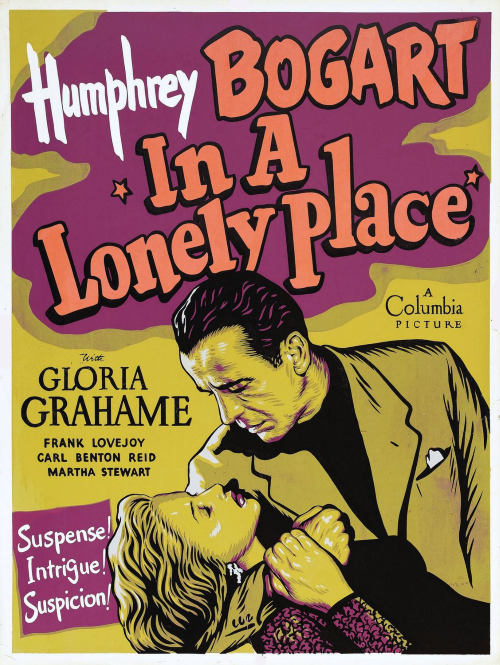
Z-View: “In a Lonely Place”

In a Lonely Place [1950]

Director: Nicholas Ray

Screenplay:  Andrew Solt and Edmund H. North

Starring: Humphrey Bogart and Gloria Grahame

The Pitch: “Let’s get Bogie and Gloria Grahame and make a really noir film.”

The Tagline: “The Bogart Suspense Picture with the Surprise Finish!”


The Overview:  Beware of Spoilers…

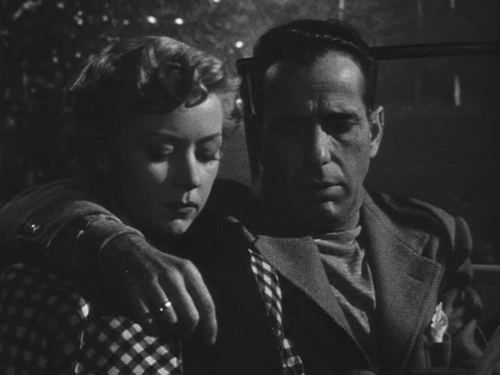
Dixon Steele (Bogart) is an ex-military screenwriter who hasn’t had a hit since before the war.  Since his return home, Steele’s quick temper and willingness to fight at even the smallest slight has left him with a bad reputation with the studios and run-ins with the law.  So when Steele gets the chance to write the screenplay adaptation for a popular novel he knows he’s going to have to even if he can’t bring himself to read it.

As fortune would have it, the hatcheck girl at one of Steele’s favorite restaurants has read and loves the book.  Steele invites her to his apartment late one evening after she gets off work with the idea that she can tell him the story.  Steele’s neighbor (Grahame) sees him taking the young lady into his apartment.  Later, as the girl tells Steele the story, he sees Grahame on her balcony.  It’s late and Steele gives the girl money for her time and cab fare home.
The next morning a Detective informs Steele that the girl was murdered and her dead body was found at the side of a deserted road.  Steele’s only alibi is Grahame who is called to the police station.  Although they had never met before, there is an immediate spark between Bogart and Graham.  Although she saw the girl enter with Bogart, Grahame didn’t see the girl leave, but that’s not what she tells the cops.  Instead Grahame offers that she did see the girl leave on her own… which is just the alibi that Bogart needs.

Over the next few weeks, Bogart and Graham fall in love and she begins to question if she alibied a killer.

Final Thoughts: The tagline touts a surprise finish and that is what you get.  This is a dark film and one of Bogart’s best roles.  I’m a fan of Gloria Grahame and this is one of her most famous movies.  Robert Warwick is also excellent in a small supporting role.

Rating:

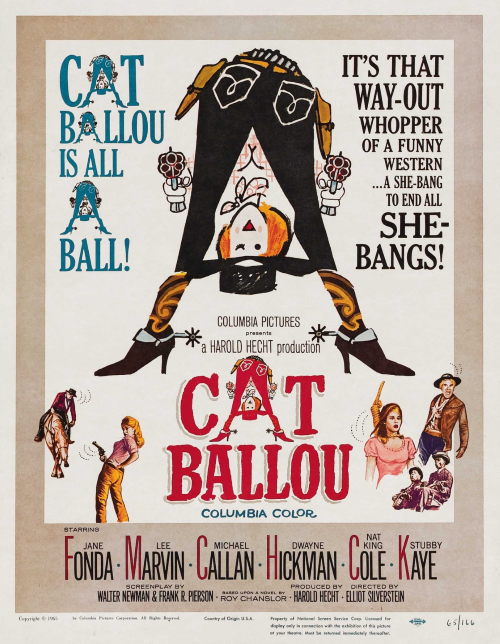
Z-View: “Cat Ballou”

Cat Ballou  [1965]
Director: Elliott Silversteen
Screenplay:  Walter Newman  and Frank Pierson from a novel by Roy Chanslor
Starring: Jane Fonda and Lee Marvin.

The Pitch: “Let’s make a funny western!”

The Tagline: “It’s That Way-Out Whopper Of A Funny Western…A She-Bang To End All She-Bangs!!”

The Overview:  Beware of Spoilers…

If you’re going to make a funny western it needs to be two things: 1] A western and 2] funny.  Cat Ballou manages to get one out of two right.  It’s a western, but it’s not funny.  Of course humor is all relative.  If you’re a fan of the tv series F-Troup  which premiered the same year and was set in the old west, you’ll definitely enjoy Cat Ballou more than I did.

Jane Fonda plays the daughter of a rancher who was killed by a hired gunfighter [played by Lee Marvin] for his land.  Fonda sends for a gunfighter of her own and ends up with a drunk [also played by Lee Marvin] who shoots best when half lit.

The story is pretty much by-the-numbers except for the fact that every ten minutes or so there is the appearance of two minstrels [played by Nat “King” Cole and Stubby Kaye] who show up to sing us the next chorus of “The Ballad of Cat Ballou.”

Most folks enjoy this film more than me so remember your mileage could vary.

Rating:

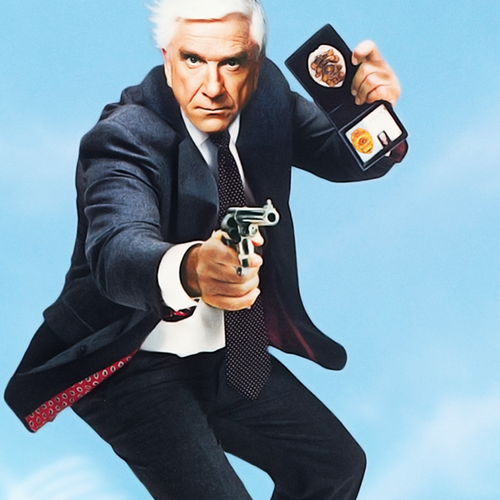
18 Fun Facts About “The Naked Gun”

Roger Cormier and Mental_Floss present 18 Fun Facts About The Naked Gun.  Here are three of my favorites

6. THEY DREW FROM SEVERAL OLDER MOVIES.
The Charlotte Rampling and Robert Mitchum movie Farewell, My Lovely (1975) was where the scene of Priscilla Presley gliding down the stairs came from (the falling part was the comedic twist). The assassination attempt on Charles de Gaulle in The Day of the Jackal (1973) gave ZAZ the idea for the assassination plot against Queen Elizabeth II. Mad magazine, the Dirty Harry movies, and the cop series M Squad were other cited sources of satirization.

8. IT WAS JOHN HOUSEMAN’S FINAL FILM ROLE.
Houseman played the middle finger-raising driving instructor. Houseman collaborated with Orson Welles on the infamous The War of the Worlds radio broadcast and on Citizen Kane. In 1974, he won a Best Supporting Acting Oscar for the his role in The Paper Chase. A week before The Naked Gun was released, Houseman also made a cameo in Scrooged.

17. THE NAKED GUN THEME SONG PLAYED AT NIELSEN’S FUNERAL.
Nielsen passed away on November 28, 2010 at the age of 84 and was laid to rest in Fort Lauderdale. Dominik Hauser’s theme played as the Canadian Mounted Police carried his coffin.

Z-View: “The Wiz Live”

The Wiz Live  [2015]
Director: Kenny Leon
Based on the play The Wiz by William F. Brown
Starring: Shanice Williams, Elijah Kelley, Ne-Yo and David Allan Grier.

The Pitch: We need a new musical to do live on tv…. Hey, let’s do The Wiz!

The Tagline: “Ease on down the road to Oz!”

The Overview:  Beware of Spoilers…

Everyone knows the story of The Wizard of Oz.  This is an adaptation of that story.  Actually, this version is an adaptation of an adaptation of The Wizard of  Oz.

The Wiz first appeared as a Broadway play in 1975.  Then in 1978, The Wiz turned up in theaters as a movie starring Diana Ross and Michael Jackson directed by Sidney Lumet.

This version was broadcast live with Shanice Williams as Dorothy, Elijah Kelley as the Scarecrow, Ne-Yo as the Tin Man and David Allan Grier as the Cowardly LionQueen Latifah plays the Wizard and there are appearances by Common, Mary J. Blige and Stephanie Mills.

I enjoyed The Wiz.  The cast was excellent and special mention to David Allan Grier as the Cowardly Lion and Elijah Kelley as the Tin Man for their performances.  Stand out scenes include Dorothy meeting the Scarecrow [loved the crows], when our group on the way to Oz come across the poppies, and the Lion singing “I’m a Mean ole Lion.”

If I were to pick nits:  I wish the show had been presented before a live audience.  I think it would have enhanced the viewing experience.  I was a bit let down by the tornado sequence, the creatures sent by the Wicked Witch to collect Dorothy and some of story shortcuts.

Overall, I really enjoyed The Wiz Live.  It was a fine way to spend a couple of hours in Oz.

Rating: 4 of 5 stars.