The 12 Deadliest Hit Men [and Women] in Film and TV

Hollywood.com posted their choices for The 12 Deadliest Hit Men [and Women] in Film and TV.

There are some good choices in the list…

  • Samuel L. Jackson as Jules Winnfield  in Pulp Fiction

  • Jean Reno as Leon  in The Professional

  • Javier Bardem as Anton Chigurh  in No Country for Old Men

  • Uma Thurman as The Bride in Kill Bill: Volume 1 & 2

  •  Chow Yun Fat as Ah Jong in The Killer

…for example.

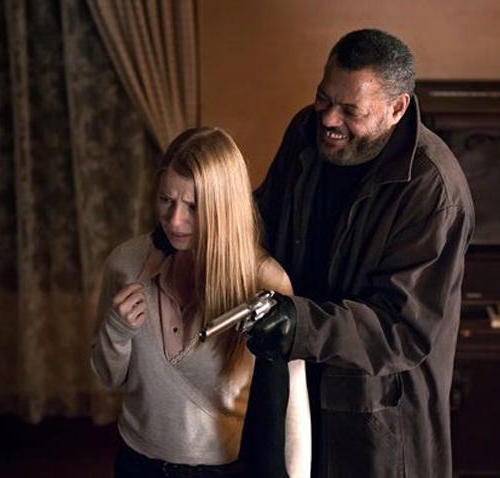
But how do you create a list of the best hit men and leave off…

  • Keanu Reeves as John Wick in John Wick

  • Charles Bronson as Arthur Bishop in The Mechanic

  • Clint Eastwood aka William Munny in Unforgiven

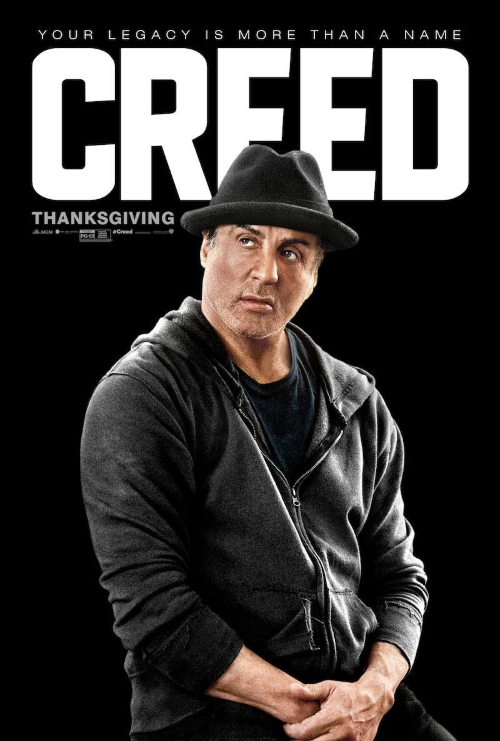
  • Sly Stallone as Jimmy Bonomo in Bullet to the Head

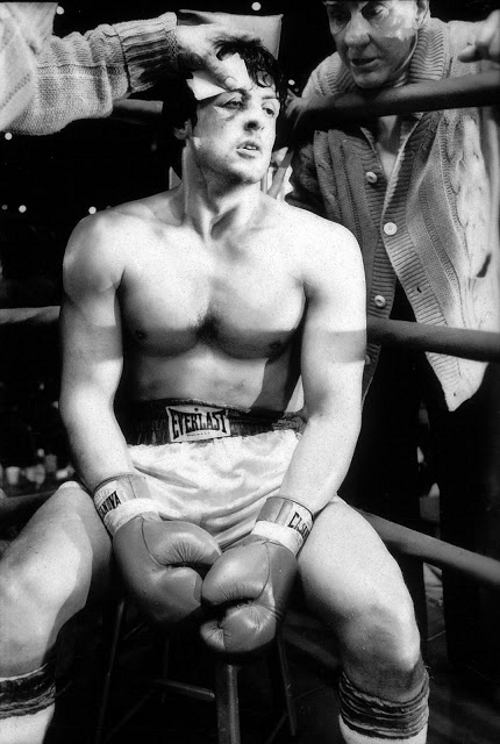
Cinephilia & Beyond’s Rocky: A Heartwarming Sports Drama Reflecting Its Very Process of Creation.

If you’re a fan of the original Rocky movie you’ll want to check out Cinephilia & Beyond‘s Rocky: A Heartwarming Sports Drama Reflecting Its Very Process of Creation.

When you click over you’ll find a treasure trove of materials…

  • Vintage photos

  • Quotes from industry luminaries

  • A PDF of the Rocky script

  • A Conversation with Sylvester Stallone

  • Rocky: Behind the Scenes on 8mm

  • Video of Sly telling The Rocky Story

  • Rare Footage of Sly and Carl Weathers Choreographing the Fight

  • Garrett Brown Video on Rocky

  • Rocky Photographer Elliott Marks‘ Contact Sheets

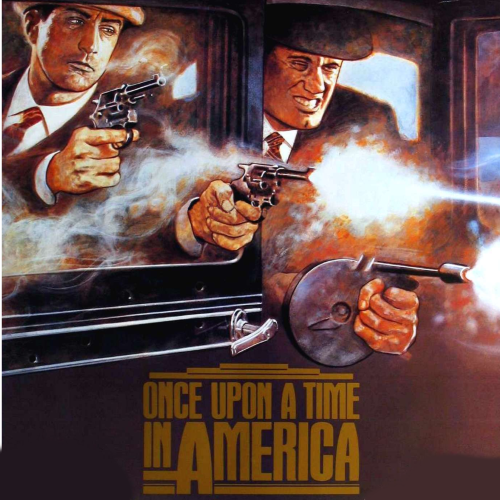
13 Epic Facts About “Once Upon a Time in America”

Eric D. Snider and Mental_Floss present 13 Epic Facts About Once Upon a Time in America Here are three of my favorites

1. SERGIO LEONE TURNED DOWN THE GODFATHER TO MAKE IT. 
By his own account, Once Upon a Time in America was Leone’s pet project, the one he devoted most of his adult life to making. He became interested in the story while he was making 1968’s Once Upon a Time in the West , and was so fixated on it that when Paramount approached him a few years later to make The Godfather, he politely declined. If he’d known it would take another 12 years to get Once Upon a Time in America produced anyway, maybe he would have accepted. But then where would Francis Ford Coppola be?

8. NOBODY HAS EVER SEEN LEONE’S COMPLETE VERSION.
After the nine-month shoot, Leone had eight to 10 hours’ worth of material. He trimmed it down to six hours, hoping to release it in two three-hour parts, but the producers were having none of that. So he reduced it to 269 minutes—four and a half hours—but it still wasn’t enough. He chopped out another 40 minutes, and this 229-minute version is what premiered at the 1984 Cannes Film Festival and subsequently played in European theaters.

American distributors butchered the film even more, cutting out another 90 minutes and rearranging the scenes into chronological order (no more flashbacks), which rendered the movie incomprehensible. The American version flopped, of course, and Leone was devastated. A Martin Scorsese-led effort to restore Leone’s original version resulted in a 251-minute cut playing at Cannes in 2012, but some 18 minutes were still missing due to legal issues over who owned the missing scenes. The 251-minute version is now available on Blu-ray and DVD. Someday, perhaps the complete version will be restored.

12. LEONE WAS A PERFECTIONIST. 
Leone and De Niro had their different approaches, but one thing they had in common was perfectionism. According to one of the screenwriters, Leone did 35 takes of a large (and expensive) crowd scene, only to insist on one more because he noticed a kid in the crowd looking directly at the camera.

Aaugh! 10 Facts About “It’s the Great Pumpkin, Charlie Brown!”

Jake Rosen and Mental_Floss present Aaugh! 10 Facts About It’s the Great Pumpkin, Charlie Brown!  Here are three of my favorites

1. THE FUTURE OF ANIMATED PEANUTS SPECIALS DEPENDED ON IT.
Mendelson and animator Bill Melendez had very high aspirations for A Charlie Brown Christmas. When they screened it prior to its premiere, however, they felt it didn’t live up to its potential—and CBS agreed. The network said it was the last Peanuts special they would buy. But after it delivered huge ratings, CBS changed their mind and asked for more. When the two delivered another hit—the baseball-themed Charlie Brown All-Stars—they thought they had earned the network’s confidence.

Instead, CBS told them they needed a special that could run every year, like A Charlie Brown Christmas. If Mendelson couldn’t provide it, they told him they might not pick up an option for a fourth show. Despite Schulz and his collaborators being annoyed by the network’s abrasive attitude, they hammered out a story with a seasonal clothesline that could be rerun in perpetuity.

3. IT WAS THE FIRST TIME LUCY SNATCHED THE FOOTBALL FROM CHARLIE BROWN.
In animated form, anyway. When Schulz, Mendelson, and Melendez were brainstorming scene ideas for the special, talk turned to the fact that Lucy’s habit of pulling the football away from Charlie Brown had never been seen in animation. They also decided it would be a good time to introduce Snoopy’s World War I Flying Ace. The joke had appeared in the strip, but Mendelson thought it would work even better in motion. He was right: the sequence with Snoopy in a doghouse dogfight is one of the most memorable in the Peanuts animated canon.

8. THE ORIGINAL AIRINGS WERE SLIGHTLY DIFFERENT.

Production costs for the early Charlie Brown specials were subsidized by television sponsors Coca-Cola and Dolly Madison snack cakes: the brands appear at the beginning and end of the broadcast. The Coke “bug” appeared for several years before getting phased ou

9 Celebrities Reading Edgar Allan Poe’s “The Raven”

Today we have a trick and some treats thanks to Andrew LaShane and Mental_Floss who present 9 Celebrities Reading Edgar Allan Poe’s The Raven.

The celebrities are Christopher Walken, James Earl Jones, Sir Christopher Lee, Vincent Price, Stan Lee, John Astin, Basil Rathbone, William Shatner and Tay Zonday.

What, what’s the trick you ask?  Well, the art above shows Sylvester Stallone as Poe, but Sly isn’t one of the celebs reading The Raven.  [No wisecracks about that’s a treat, please.]

The treat then?  Vincent Price’s reading embedded below!

16 Fun Facts About “Look Who’s Talking”

Roger Cormier and Mental_Floss present 16 Fun Facts About Look Who’s Talking.  Here are three of my favorites

3. THREE STUDIOS PASSED ON THE FILM.
Warner Bros., Disney, and Orion Pictures all passed on the idea before Tri-Star took a shot.

11. AUDIENCES IN DIFFERENT COUNTRIES HEAR DIFFERENT BABY VOICES.
Foreign countries had their own celebrities voicing baby Mikey. It was Travolta’s idea.

15. IT INSPIRED THE TV SHOW BABY TALK AND THE E*TRADE BABY.
ABC’s Baby Talk, featuring Tony Danza as the voice of the little one, wasn’t as successful as the movie; star Scott Baio called it a “nightmare.” The E*Trade baby endorsed the financial company from 2008 to 2014.

10 Deliberate Facts About “12 Angry Men”

Eric D. Snider and Mental_Floss present 10 Deliberate Facts About 12 Angry Men.  Here are three of my favorites

2. IT’S THE ONLY FILM HENRY FONDA EVER PRODUCED. 
The actor saw the TV production and felt strongly that it would make a great movie. Unable to find any producers willing to take a risk on it (a serious, single-room drama in a time when colorful widescreen epics were in fashion), Fonda teamed up with the writer, Reginald Rose,to produce it themselves. Fonda wound up hating the experience—not the acting side, which he loved (and he was always very proud of the film), but the business side. He hated having to worry about financial and logistical details, and couldn’t stand watching himself in the daily rushes (which producers, but not necessarily actors, are expected to do).

5. IT USES CAMERA TRICKS TO INCREASE THE TENSION.
The problem with making a film set entirely in one room is that it’s bound to get boring, visually speaking (unless it’s a very interesting room, which a jury room is not). Lumet also realized he couldn’t have his characters moving around very much, meaning most of the “action” would involve sitting around a table. So he had the camera move a lot instead. He and his cinematographer, Boris Kaufman (who won an Oscar in 1955 for On the Waterfront), also devised some photographic methods of amplifying the movie’s tone. Lumet wrote: “I shot the first third of the movie above eye level, shot the second third at eye level, and the last third from below eye level. In that way, toward the end, the ceiling began to appear. Not only were the walls closing in, the ceiling was as well. The sense of increasing claustrophobia did a lot to raise the tension of the last part of the movie.”

8. LUMET WAS ONLY THE THIRD PERSON TO GET A BEST DIRECTOR NOMINATION FOR HIS DEBUT FILM.
Orson Welles had been nominated for Citizen Kane, and Delbert Mann had actually won forMarty. About 20 directors have since been Oscar-nominated for their debuts. (Six have won.)

The Top 32 Horror Comedies of All Time

Den of Geek posted their choices for The Top 32 Horror Comedies of All Time.

Of the 32 films they selected, I’ve seen eighteen.  Here they are with my thoughts on each…

  1. Spook Busters (1946): The Bowery Boys always felt to me like they wanted to grow up and be Abbott and Costello.  Still, I enjoyed their films as a kid and this was a fun one… as Bowery Boys movies go.

  2. Fearless Vampire Killers or Pardon Me, But Your Teeth Are in My Neck (1967): I can’t tell you how many times over the years I’ve tried to watch this one all the way through.  I’ve never made it yet.

  3. Fright Night (1985): Now we’re cooking!  I liked the mix of comedy and horror in this one!

  4. Attack of the Killer Tomatoes (1978): I’ve always thought this was too stupid to be more than a Saturday Night Live skit.  Of course the cult popularity proves me wrong.

  5. Cabin in the Woods (2012): What an inventive, crazy movie!  I want to see it again!

  6. Scream (1996): I really got a kick at how it took all the horror cliches and winked at the audience as they played out.

  7. Phantom of the Paradise (1974): This is another one that I’ve never been able to get through.

  8. The Rocky Horror Picture Show (1975): I saw this at a Midnight Showing with an audience armed with all the props.  A bit too kinky for me then and now.

  9. Shaun of the Dead (2004): I like my zombie stories serious but I really like Shaun of the Dead!

  10. Arachnophobia (1990): I’ve only seen this once but I really liked it much more than I thought I would.  I’d like to see it again to see if it holds up.

  11. Monsters Inc. (2001): This is a fun one.

  12. Beetlejuice (1988): Who doesn’t like Beetlejuice?

  13. The Lost Boys (1987): I liked The Lost Boys, but think it’s a bit over-rated.

  14. Ghostbusters (1984): This is one I don’t care for.

  15. Young Frankenstein (1974): Arguably the best film on the list.

  16. Zombieland (2009): Even better than Shaun of the Dead!

  17. Abbott and Costello Meet Frankenstein (1948): Perhaps the best movie on the list!

  18. An American Werewolf in London (1981): I’m not a fan, but most folks are.

13 Futuristic Facts About “The Fifth Element”

Eric D. Snider and Mental_Floss present 13 Futuristic Facts About The Fifth Element.  Here are three of my favorites

1. LÉON: THE PROFESSIONAL HELPED IT GET MADE. 
Mad Frenchman Luc Besson had five features under his belt when he started working on The Fifth Element in 1992. But his respectable track record wasn’t enough to pull in the kind of financial backing he needed for a futuristic sci-fi adventure. So after some pre-production work (including meeting with designers; see below), he put The Fifth Element aside and—in the course of 11 months—wrote and directed Léon: The Professional, starring Jean Reno, 13-year-old Natalie Portman, and future The Fifth Element villain Gary Oldman. Léon‘s strong showing ($45 million worldwide, on a $16 million budget) gave the people who controlled the purse strings more confidence in Besson’s ability to make The Fifth Element a success, and the project was put back on track.

2. BESSON KIND OF WISHES IT HAD TAKEN EVEN LONGER TO GET IT MADE. 
He explained to The Playlist: “I was a little bit frustrated because I made the film right before all the new effects arrived. So when I did the film it was all blue screen, six hours, dots on the wall, takes forever to do one shot. Now, basically, you put the camera on your shoulder and then you run and then you add a couple of dinosaurs and spaceships.” He said he’d love the chance to make another futuristic sci-fi film—maybe even a sequel to The Fifth Element—now that technology has made it easier.
4. IT BORROWED SOME IDEAS FROM PLATO.
Maybe you knew this, but Luc Besson didn’t. He conceived The Fifth Element as a teenager in the 1970s, taking the four classical elements (earth, water, wind, and fire) and combining them to make a fifth (life). Turns out that a lot of ancient people had already come up with the same basic concept, including the Greek philosopher. Besson said, “When my father came across Plato’s writings on the subject, he came to me with the book and said, ‘Do you know that your movie is a remake?’ I read it, and was amazed to see the similarities between what Plato had written and what I had put into the script”