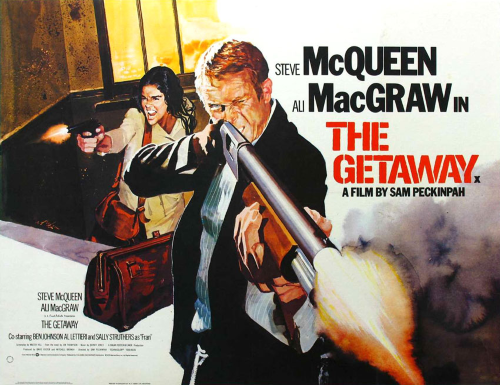
The Getaway (1972)

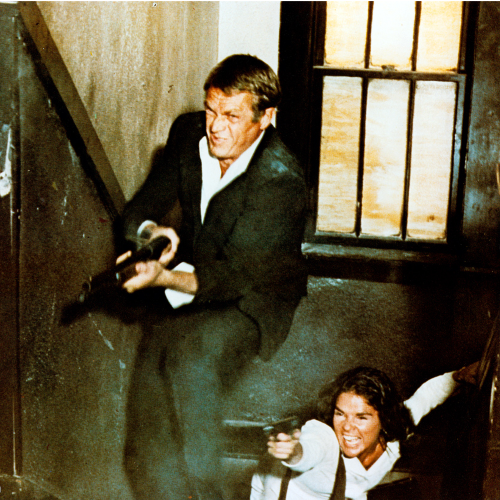
The Getaway (1972)

Director: Sam Peckinpah

Screenplay: Walter Hill

Stars: Steve McQueen, Ali MacGraw, Ben Johnson, Sally Struthers, Al Lettieri, Slim Pickens, Dub Taylor, Jack Dodson and Bo Hopkins.

The Pitch: “Hey, Steve McQueen wants to star in an adaptation Jim Thompson’s The Getaway directed by Sam Peckinpah!”

Tagline: They’re Hot – McQueen/MacGraw

The Overview:  Beware of Spoilers…


An ex-con (McQueen) and his wife are on the run after a bank robbery double-cross.

I saw this when I was 14 years old and it left an impression.  How could it not?  McQueen backed by a great cast, a Walter Hill adaptation of Jim Thompson’s novel and directed by Sam Peckinpah!  It holds up.  If you like crime stories then this one is for you!


Rating:

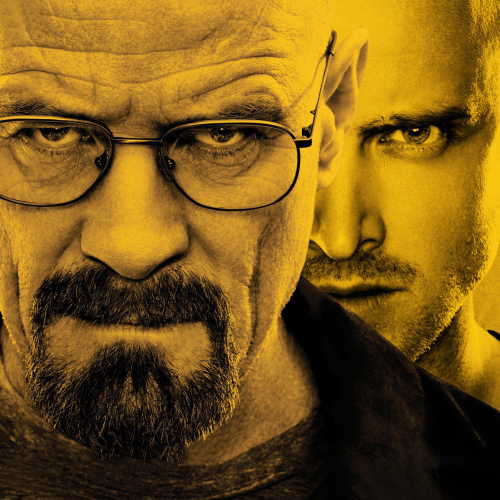
25 Fascinating Facts About “Breaking Bad”

Jennifer Wood and Mental_Floss present 25 Fascinating Facts About Breaking Bad.  Here are three of my favorites…

2. THE NETWORK REALLY WANTED MATTHEW BRODERICK TO STAR.

It’s impossible to imagine Breaking Bad with anyone other than Bryan Cranston in the lead role, but he wasn’t as well known when the series kicked off, and AMC wanted a star. They were particularly interested in casting either Matthew Broderick or John Cusack in the lead.

“We all still had the image of Bryan shaving his body in Malcolm in the Middle,” a former AMC executive told The Hollywood Reporter about their initial reluctance to cast Cranston. “We were like, ‘Really? Isn’t there anybody else?’” But Gilligan had worked with Cranston before, on an episode of The X-Files, and knew he had the chops to navigate the quirks of the part. The network brass watched the episode, and agreed.

“We needed somebody who could be dramatic and scary yet have an underlying humanity so when he dies, you felt sorry for him,” Gilligan said. “Bryan nailed it.”

10. GILLIGAN GOT SOME HELP FROM THE WALKING DEAD CREW FOR FRING’S FINAL EPISODE.

Fring’s final sendoff is one of the most memorable visual images from the entire series—and they were able to enlist the help of some true gore experts. “Indeed we did have great help from the prosthetic effects folks at The Walking Dead,” Gilligan told The New York Times. “And I want to give a shout-out to Greg Nicotero and Howard Berger, and KNB EFX, those two gentlemen and their company, because their shop did that effect. And then that was augmented by the visual effects work of a guy named Bill Powloski and his crew, who digitally married a three-dimensional sculpture that KNB EFX created with the reality of the film scene. So you can actually see into and through Gus’s head in that final reveal. It’s a combination of great makeup and great visual effects. And it took months to do.”

15. HEISENBERG’S SIGNATURE HAT WAS A MATTER A PRACTICALITY.

Heisenberg’s porkpie hat came to identify Walter White’s dark side, but it originated from a very practical place. “Bryan kept asking me, after he shaved his head, ‘Can I have a hat?’ because his head was cold,” Kathleen Detoro, the show’s costume designer, explained. “So I would ask Vince and he kept saying no; Jesse wore the hats. Finally, Vince said, ‘I think there’s a place …’ It was Bryan asking for a hat, me asking Vince, and then Vince figuring out where in the story it makes sense: It’s when he really becomes Heisenberg.” (If you want to buy your own Heisenberg hat, it was made by Goorin.)

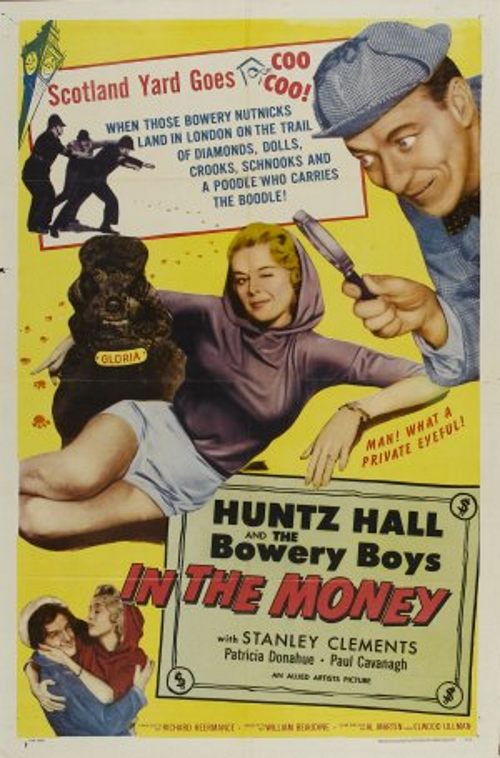
In the Money (1958)

In the Money (1958)

Director: William Beaudine

Screenplay: Al Martin

Stars: Huntz Hall, Stanley Clements and Patricia Donahue

The Pitch: “Hey, let’s make another Bowery Boys picture!”

Tagline: Nutnicks on the Loose in old London!

The Overview:  Beware of Spoilers…


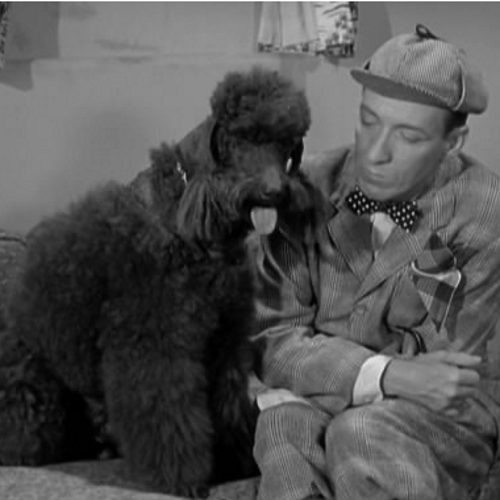
Satch is hired to be a dog-sitter on a transatlantic cruise; but the reality is that he’s being used as a patsy to smuggle diamonds!

Rating:

9 Hardened Facts About Charles Bronson

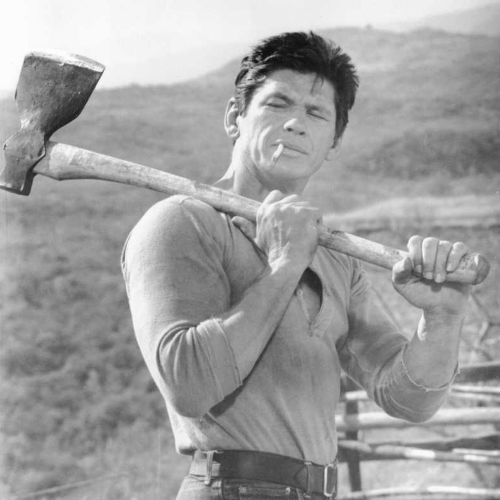
Jake Rosen and Mental_Floss present 9 Hardened Facts About Charles Bronson.  Here are three of my favorites…

2. HE EARNED HIS FIRST ACTING ROLE BY BURPING.

Bronson had always been interested in the arts. After serving in the Army during World War II, he found himself in Atlantic City doing odd jobs. One acting troupe invited him to paint scenery for them; Bronson found he enjoyed performing more. His first film role, in 1951’s You’re in the Navy Now, was landed, he said, because he was the only actor who could burp on demand.

3. COMMUNISM (AND STEVE MCQUEEN) FORCED A NAME CHANGE.

When Bronson (né Buchinsky) was starting out, Senator Joseph McCarthy was preoccupied with rooting out Communists in Hollywood. Fearing his Lithuanian name would provide ammunition for accusations, he took on the name Bronson after driving with friend Steve McQueen, who pointed to a “Bronson” street sign and shouted to him that it would be perfect.

8. HE WAS HUGE IN ITALY.

While Bronson was a bona fide movie star in the States for a portion of his career, he was a megastar in other countries. Italian moviegoers called him “Il Brutto” (The Ugly One) and in France he was one of cinema’s “monstres sacrés” His movies would often earn more in other territories than they would in North America. In Japan, a publicist once said, his name appeared on a sign over a block long.

Up in Smoke (1957)

Up in Smoke (1957)

Director: William Beaudine

Screenplay: Jack Townley

Stars: Huntz Hall, Stanley Clements and David Gorcey

The Pitch: “Hey, let’s make another Bowery Boys picture!”

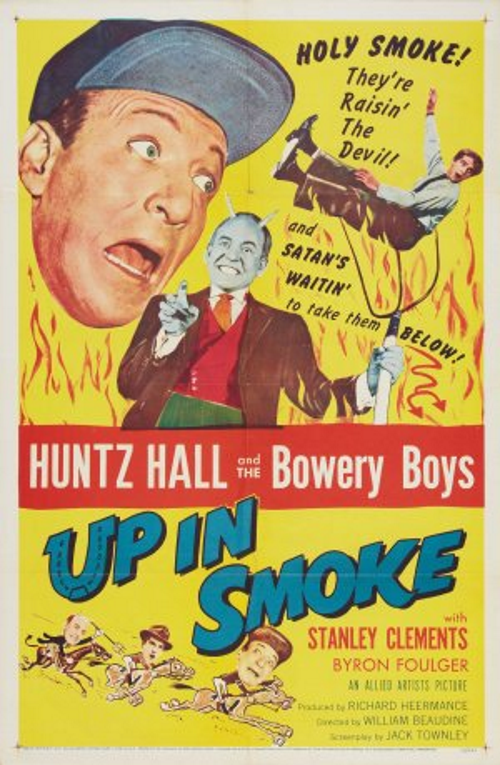
Tagline: HOLY SMOKE! They’re Raisin’ The Devil!…and SATAN’S WAITIN’ to take them BELOW!

The Overview:  Beware of Spoilers…


When Satch loses money for a child’s charity, he sells his soul to the devil in order to be able to pick horse race winners for a week.

Rating:

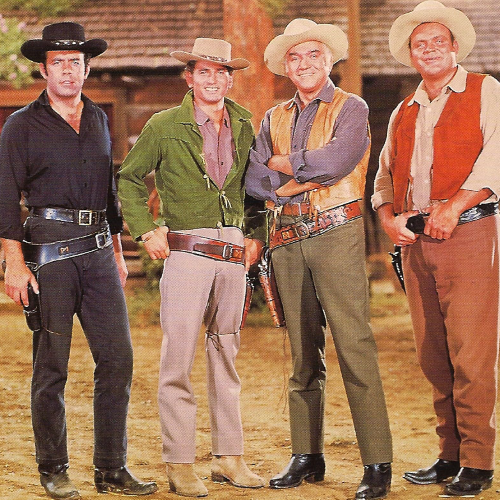
11 Solid Gold Facts About Bonanza

MeTV presents 11 Solid Gold Facts About Bonanza.  Here are three of my favorites…

BLOCKER FOUNDED THE BONANZA RESTAURANTS.

Not only is the popular buffet chain named after the show, it was founded by one of its cast members. Blocker started the chain in 1963, which eventually boasted 600 locations by 1989. Ponderosa restaurants started in Canada in the early 1970s and expanded to the United States in the 1980s. Today, both chains are owned by the same company.

THEY WEAR THE SAME OUTFITS FOR A REASON.

Have you ever noticed how the characters’ clothes don’t change from episode to episode? From the fourth season onwards, the Cartwrights wear the same outfits like cartoon characters. The standardization was made to make it easier to reuse stock footage for action sequences and to make it easier to duplicate the wardrobe for the stunt doubles.

MOST OF THE CAST MEMBERS WORE HAIRPIECES.

During the last few years of the series, Greene, Roberts and Blocker all had to wear hairpieces because their natural hair was thinning. Greene and Roberts started the series wearing hairpieces, while Blocker started wearing a toupee in 1968


The Invisible Man Returns (1940)

The Invisible Man Returns (1940)

Director: Joe May

Screenplay: Lester Cole & Curt Siodmak (as Kurt Siodmak)

Stars: Cedric Hardwicke, Vincent Price, Nan Grey and Alan Napier.

The Pitch: “Hey, let’s make another Invisible Man picture!”

Tagline: More strange thrills… More eerie chills… More awesome suspense

The Overview:  Beware of Spoilers…

Sentenced to die for a murder he didn’t commit, Geoffrey Radcliffe (Price) escapes death row by taking the invisible man serum.  Will Radcliffe be able to prove his innocence before invisibility drives him mad?

Although Vincent Price is the Invisible Man, you won’t see much of him in this starring role.  ; )


Rating:

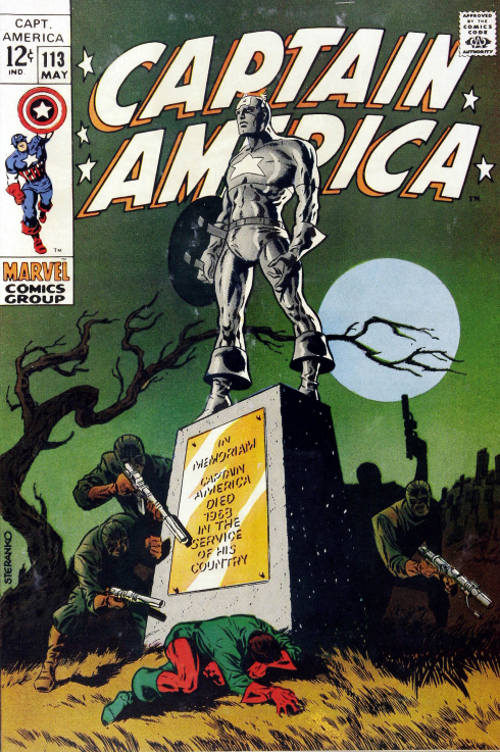
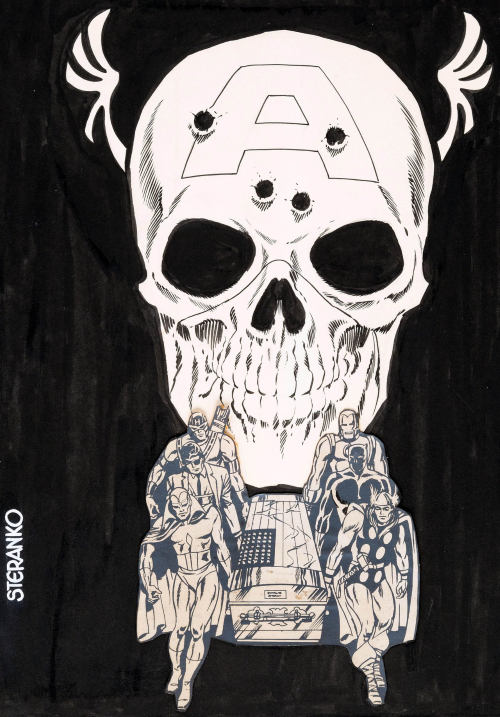
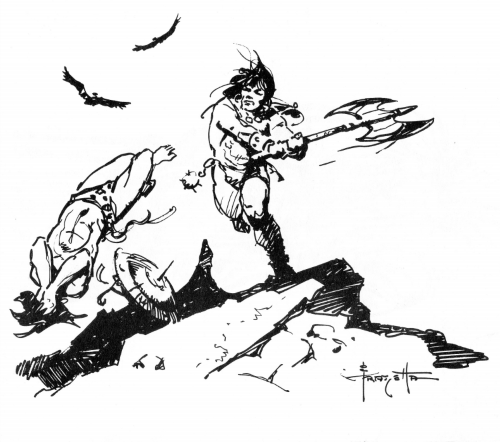
Ken Meyer Jr.’s Ink Stains 35: Frazetta, Wrightson, Steranko and More!

If you’re a fan of fanzines, then you’ve got to check out Ken Meyer, Jr.’s monthly column Ink Stains.  Each month Ken (who is an amazing artist) posts… well, let’s let Ken explain…

I have a collection of over 200 fanzines from the 60’s-80’s that I plan to scan and talk about, one at a time. I hope to have some of the participants answer a few questions. Many of those participants are established comics professionals now, while some have gone on to other things. I will show a few snippets from each zine and give you a link to download a pdf of the whole thing, which I hope all of you will do!

For Ink Stains 35, Ken took a look at Infinity 2 from 1970.   Edited and published by Adam Malin and Gary Berman.

Until Ken’s post, I had never seen or even heard of Infinity 2.  My loss because this fanzine is jam-packed with great stuff.  Infinity 2 starts with a Frank Brunner cover (with more interior Brunner art), has art and an interview by Berni Wrightson (interestingly enough the interview was conducted by Doug Murray who went on to write the Nam series for Marvel after serving in Nam himself), art and an interview with Frank Frazetta, a Steranko Black Panther sketch, a Virgil Finley portfolio, sketches by Dave Berg, Jeff Jones and more.  What a find!

Ah, the memories of the glory days of fanzines.  Thanks to Ken Meyer, Jr. for making these available!

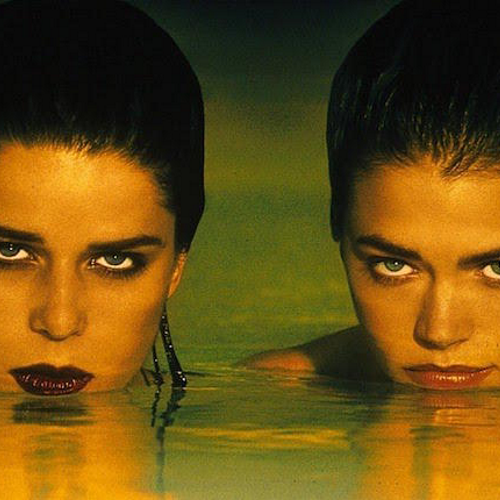
13 Wild Facts About “Wild Things”

Garin Pirnia and Mental_Floss present 13 Wild Facts About Wild Things.  Here are three of my favorites…

2. ROBERT DOWNEY JR. ALMOST PLAYED THE MATT DILLON ROLE.
Pre-Iron Man, Robert Downey Jr. had been chosen to play the school counselor, but his drug issues endangered the production. “It was during his rehab, and he’d just been on Diane Sawyer’s show,” John McNaughton told Entertainment Weekly. “And to the people in Hollywood, that was a great career move. That made him hot.” The film’s insurance didn’t want to cover the actor, though, as Downey Jr. was too much of a liability.

6. THE CAST HAD TROUBLE KEEPING THE LIES STRAIGHT.
“To determine their motivation in each scene, the cast had to gather with the director, writers, and producers to establish the sequence of events,” Bacon said. “We’d sit in rehearsals trying to piece together what was going on in the script, whom we were lying to about what, and it’d just get so complicated we’d have to stop and rest.”

9. A DEAD BODY FLOATED INTO THE PRODUCTION.
While Campbell and Daphne Rubin-Vega filmed a scene near a swamp, a dead body rose to the surface. “All of a sudden one of the crew says ‘cut’—it was one of the lighting guys—and they said there was a dead body in the water,” Campbell recalled. “And so the cops came by and were like ‘You makin’ a movie?’ And we were like ‘Yeah.’ So they actually—typical Hollywood—held the body next to the dock so it wouldn’t float through the shot so we could finish the scene.”

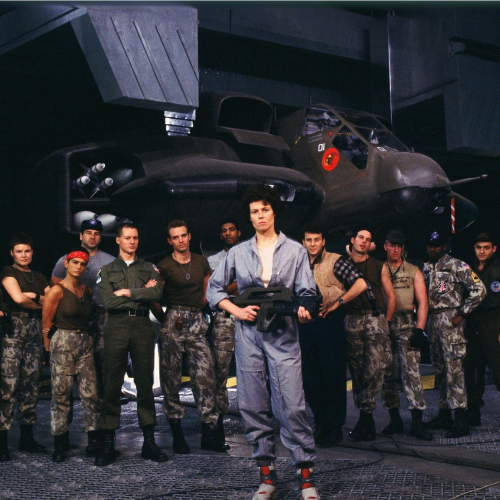
30 Facts You Never Knew About “Aliens”

Hollywood.com presents 30 Facts You Never Knew About Aliens.  Here are three of my favorites…

2. Aliens was never shown to test audiences because it was not completed until the week before its theatrical release.

11. The Alien nest set was left intact after filming and was later used in Tim Burton’s Batman.

12. One of the Alien eggs from the movie is now on display in the Smithsonian Institute in Washington, D.C.

14 Campy Facts About “Ed Wood”

Mark Mancini and the Mental_Floss present 14 Campy Facts About Ed Wood.  Here are three of my favorites…

1. IT’S THE BRAINCHILD OF FORMER COLLEGE ROOMMATES.

In 1981, Scott Alexander and Larry Karaszewski—both freshmen at the USC School of Cinema-Television—met each other in a cafeteria line, hit it off immediately, and arranged to become roommates. During their senior year, the duo began joining forces on an assortment of screenwriting projects, kicking off a partnership that continues to this day. Together, they have co-written Problem Child (1990), The People vs. Larry Flynt (1996), Man on the Moon (1999), and Big Eyes (2014). On the small screen, they also developed the hit FX series American Crime Story, which recently completed its first season with The People v. O. J. Simpson.

Before graduating from USC in 1985, Alexander and Karaszewski briefly considered making a documentary on history’s most enigmatic director, Edward D. Wood, Jr. Although this project went unrealized, they eventually returned to the subject. In 1992, author Rudolph Grey published Ed Wood: Nightmare of Ecstasy (The Life and Art of Edward D. Wood, Jr.), a thoroughly researched oral biography of Wood and his work. The book inspired Alexander and Karaszewski to pen a 10-page story treatment for a new biopic about the eccentric, cross-dressing auteur.

3. COLUMBIA PICTURES DROPPED THE FILM AFTER BURTON INSISTED ON SHOOTING IT IN BLACK AND WHITE.

One month before production began, Ed Wood hit a snag. Burton was fortunate enough to hire his first choice for the role of Bela Lugosi, actor Martin Landau, and makeup artist Rick Baker made Landau look uncannily similar to the Hungarian movie star. Nevertheless, after watching the first color tests, something felt a bit off. That’s when everyone realized that they’d only ever seen black-and-white photographs of Lugosi. Immediately, Burton decided that Ed Wood couldn’t be filmed in color.

The movie was being developed by Columbia Pictures, whose higher-ups disagreed with Burton’s decision to shoot in black and white. “They were saying, ‘Look, we can’t get our cable money, we can’t get our foreign video money, we won’t be able to exploit the movie in a lot of markets if it’s in black-and-white,” Alexander recalled. Still, Burton held firm. Realizing he wouldn’t budge, Columbia abandoned the picture. Fortunately, Disney was there to pick it up—and allowed Burton to follow his creative instincts.

9. PLAN 9 FROM OUTER SPACE’S LEADING MAN IS IN IT.

Although he appeared in more than 30 movies and worked with visionaries like Steven Spielberg and John Ford, Gregory Walcott is chiefly remembered for playing the main character in Plan 9 From Outer Space. “It’s enough to drive a puritan to drink!” Walcott vented in 1998. Regardless, when Tim Burton’s Ed Wood came around, he made a quick cameo as a prospective investor in one scene. The film marked Walcott’s final film appearance; the actor passed away in 2015.