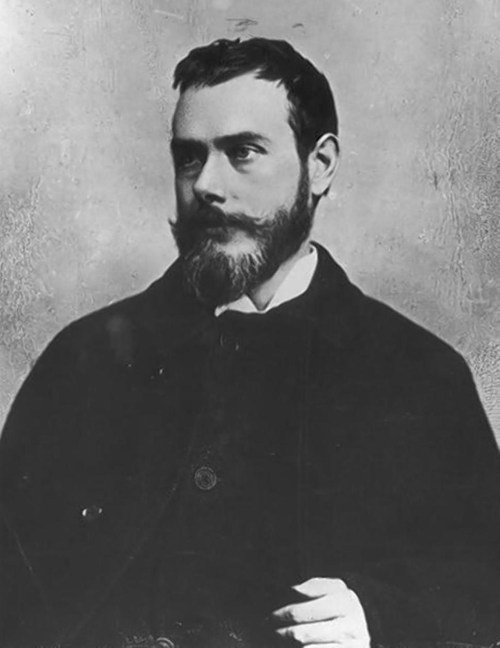
Jack the Ripper Identified as Poet Francis Thompson

The famous poet Francis Thompson was the even more infamous Jack the Ripper.  Twenty years of research has led Richard Patterson to this conclusion.  Patterson sites some of the evidence that identifies Thompson as the Ripper:

Thompson

… had surgical experience and hinted at his double life in some of his poems…

…kept a dissecting knife under his coat…

…was taught a rare surgical procedure that was found in the mutilations of more than one of the Ripper victims…

For the full story check out The New York Daily News: Jack the Ripper’s Real Identity.

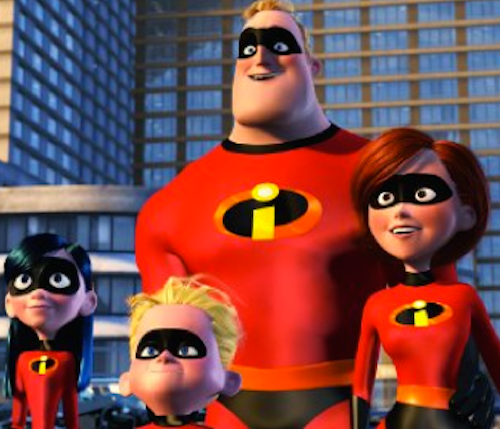
17 Super Facts About “The Incredibles”

Roger Cormier and Mental_Floss present 17 Super Facts About The Incredibles.  Here are three of my favorites

9. IT WAS THE FIRST PIXAR MOVIE COMPRISED ONLY OF CG HUMAN BEINGS.
Copies of the medical school text Gray’s Anatomy were given to the digital sculptors to help them figure out how the human body moves. Live action footage of Pixar animators walking was also used.

14. THE “A113” EASTER EGG DEFINITELY MADE IT IN.
“A113′ is a classroom number at the California Institute of the Arts, where Bird and several others in the animation industry learned about graphic design and character animation. Bird was the first person to purposely drop in an “A113” reference, when he did so on the 1987 TV show Amazing Stories. It has since been in every episode of The Simpsons Bird worked on (Bird was a creative consultant and director on the series from 1989 to 1998 and directed the “Do the Bartman” music video), as well as every Pixar film. In The Incredibles, Mr. Incredible has a meeting in Conference Room A113, and he’s later held on Level A1, Cell Block 13 on the island.

11. BIRD DIDN’T REALIZE THAT HE RESEMBLED THE VILLAIN UNTIL IT WAS TOO LATE.
The writer-director admitted if he had noticed the resemblance earlier in the process, he would have asked to change Syndrome’s look.

17 Bankable Facts About “The Color of Money”

Roger Cormier and Mental_Floss present 17 Bankable Facts About The Color of Money Here are three of my favorites

5. JACKIE GLEASON PASSED ON MAKING A CAMEO.
Gleason famously played Minnesota Fats in The Hustler, and his character played a big part in the book version of The Color of Money. “We desperately wanted the character to return,”Newman told The New York Times, ”but every time we put him in, it seemed like we were trying to glue an arm on a man and make it stick.” Added Scorsese: ”We finally presented a script to Gleason with Fats in. But he felt it was an afterthought.” As such, Gleason passed.

14. SCORSESE GOT THE IDEA FOR GOODFELLAS WHILE SHOOTING  THE COLOR OF MONEY.
In a rare moment of downtime, “I read a review of [Nicholas Pileggi’s] Wiseguy when I was directing The Color of Money, and it said something about this character Henry Hill having access to many different levels of organized crime because he was somewhat of an outsider,”Scorsese told Rolling Stone. “He looked a little nicer. He was able to be a better frontman and speak a little better. I thought that was interesting, because you could get a cross section of the layers of organized crime—from his point of view, of course. So I got the book, started reading it and was fascinated by the narrative ability of it.”

15. DAVID GEFFEN WAS UPSET OVER THE SOUNDTRACK.
Robbie Robertson put the soundtrack together, which is best known for featuring Eric Clapton and Robertson’s “It’s in the Way That You Use It” and Warren Zevon’s “Werewolves of London.” Geffen would not allow Robertson permission to use his own voice at any point on the album, because he felt that the singer’s first solo record was being delayed on account of his work on the soundtrack. The Band performer still managed to get music from the likes of Clapton, Don Henley, B.B. King, Robert Palmer, and Willie Dixon.

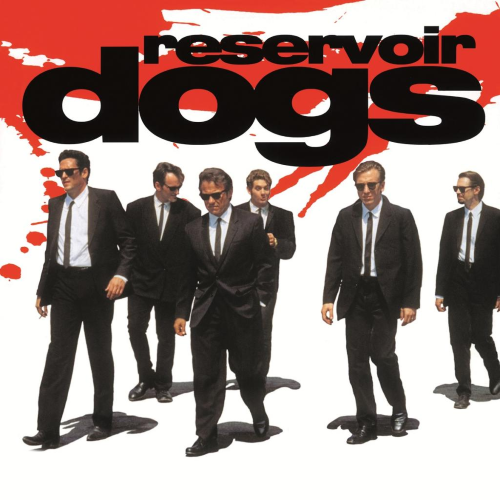
14 Colorful Facts About “Reservoir Dogs”

Eric D. Snider and Mental_Floss present 14 Colorful Facts About Reservoir Dogs.  Here are three of my favorites

11. A MISTAKE LED TO ONE OF THE FILM’S MYSTERIES.
In the climactic showdown, Joe’s pointing a gun at Mr. Orange (on the floor, already dying), Mr. White is pointing a gun at Joe, and Nice Guy Eddie (Joe’s son, played by Chris Penn) is pointing a gun at Mr. White. Joe shoots Orange, White shoots Joe, Eddie shoots White … butfour gunshots are heard, and everyone who wasn’t already on the ground ends up that way. So who shot Nice Guy Eddie? (You can find T-shirts asking that question.) The only logical answer, and the way it was supposed to have played out, is that Mr. White did. He shot Joe, then shot Eddie at the same time Eddie was shooting him. But according to Chris Penn, when they filmed it, the squib on Keitel’s (Mr. White’s) body went off slightly prematurely, Keitel went down as he fired his second shot (which looks like it’s still aimed at Joe), and then Penn’s squib exploded as planned. Penn noticed right away that it was ambiguous, but Tarantino decided to leave it that way.

4. IT WENT THROUGH SEVERAL CASTING PERMUTATIONS.
In the early stages, Tarantino was going to play Mr. Pink himself, with producer Lawrence Bender as Nice Guy Eddie. Steve Buscemi was later considered for Nice Guy Eddie, but ended up playing Mr. Pink, a role for which Michael Madsen (Mr. Blonde) auditioned. Samuel L. Jackson and Ving Rhames both almost played Holdaway (the cop Tim Roth works with in flashbacks). Robert Forster, who later appeared in QT’s Jackie Brown, auditioned for the part of Joe, which went to Lawrence Tierney.

5. THERE WERE SOME UNUSUAL OFFERS FROM PRODUCERS.
While searching for producers to finance the film and save them from having to make it themselves on a minuscule budget, Tarantino and Bender fielded several offers that sounded good but had a catch to them. One producer offered $1.6 million, but only if the ending was changed so that everyone who was dead came back to life, the whole thing having been a hoax or a con of some kind. Another offered $500,000 … but only if his girlfriend could play Mr. Blonde. (Bender said it was such a bizarre idea that he and Tarantino actually considered it.)
Good Grief! 18 Beloved Facts About Peanuts

Shaunacy Ferro and Mental_Floss present Good Grief! 18 Beloved Facts About Peanuts Here are three of my favorites

2. THERE ARE 17,897 STRIPS. 
They ran between 1950 and 2000, each one drawn by Schulz. Schulz died from colon cancer at age 77, the day before the last original strip ran.

3. SCHULZ DIDN’T CHOOSE THE NAME.
Charlie Brown first appeared as a character in a comic strip called Li’l Folks, but when Schulz approached the United Feature Syndicate about a publishing deal in 1950, the syndication service thought the name was too close to two other comics it ran at the time, and changed itto Peanuts. Schulz never liked the new moniker; he thought it “made it sound too insignificant.”

14. CHARLIE BROWN’S HEAD IS REALLY HARD TO DRAW.
When asked about the hardest character trait to ink, Paige Braddock, the creative director of Charles M. Schulz Creative Associates, admitted that Charlie Brown’s noggin is the most complicated piece to pull off. “It is nearly impossible to get right when you first start working with the characters, and if it is off in the least, it really stands out,” she says in The Art and Making of the Peanuts Movie. Braddock is currently responsible for the look of all Peanuts-related products.

“Therefore I Am” by The McCoubrey Brothers

The McCoubrey Brothers present the very cool short film, Therefore I Am.

A mysterious encounter between a man who claims to be from the future and the man that he claims is his former self. A surreal psychological thriller about loss and regret. All set within the framework of a time travel story that loosely operates in accordance to the paradox-less MWI (many-worlds interpretation) in quantum mechanics.

Therefore I Am from Peter McCoubrey on Vimeo.

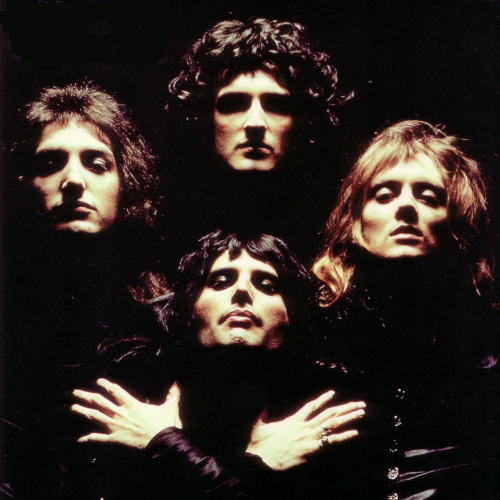
10 Operatic Facts About “Bohemian Rhapsody”

Kara Kovalchik and Mental_Floss present 10 Operatic Facts About Bohemian Rhapsody Here are three of my favorites

1. FREDDIE MERCURY STARTED WRITING IT IN 1968.
“Bohemian Rhapsody”, or “Bo Rhap” as it is known by Queen fans, had its beginnings in 1968 when Freddie Mercury was a student at London’s Ealing Art College. He’d come up with an opening line—“Mama, just killed a man”—but no melody. Because of the Old West feel (in his mind) to the lyric, he referred to his work in progress as “The Cowboy Song.”

6. PROMOTING THE SONG PROVED PROBLEMATIC.
After it was decided to release “Bohemian Rhapsody” as a single, the band was faced with a bit of a dilemma: At the time in England, it was traditional for bands to appear on shows like Top of the Pops to promote their latest hits. But Queen was scheduled to begin a tour soon, plus (as Brian May admitted) they’d feel self-conscious miming to the operatic section. They solved the problem by filming a promotional film, or “pop promo” as it was called in the industry lingo of the time, that could be shown not only on UK music shows, but also around the world in other markets, such as American Bandstand.

10. A BLUE VINYL PRESSING OF THE SONG IS WORTH MORE THAN $5000.
The Holy Grail in terms of Queen collectibles is a 7-inch limited edition of “Bohemian Rhapsody” that was pressed in blue vinyl. In the summer of 1978, EMI Records won the Queen’s Award To Industry For Export Achievement (that’s “Queen” as in Her Majesty Elizabeth II). The label’s primary reason for sales in far-reaching territories that lacked manufacturing facilities was Queen, as in the band. To celebrate their prestigious award, EMI pressed 200 copies of “Bohemian Rhapsody” in blue vinyl, each of which was hand-numbered. Numbers one through four went to the band members, of course, while other low-numbered copies were given to friends and family members. Bona fide copies from this original pressing currently sell for upwards of $5000.

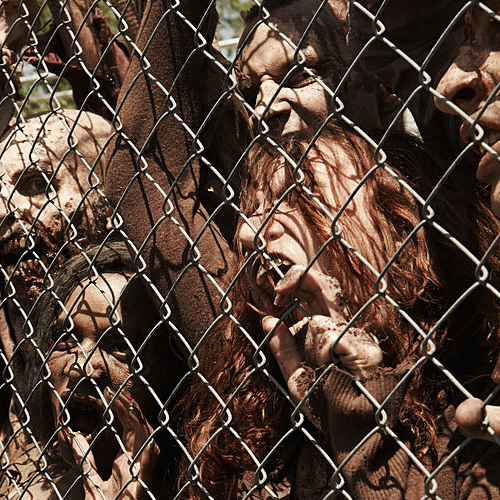
The Best Cities for Surviving the Zombie Apocalypse

Ok, so the zombie apocalypse breaks out… where do you go?

Kiona Smith-Strickland and Gizmodo might have the answers in These Are the Best Cities for Surviving the Zombie Apocalypse.  The worst cities are also listed.

Neither my home town [Port Orange, Florida] nor my birth town [Terre Haute, Ind.] made the best cities for survival list.  Of course they also managed to stay off the worst cities list as well.  So I do have that going for me.

7 of the Creepiest Coincidences in Movie History

Hollywood.com provides us with 7 of the Creepiest Coincidences in Movie History.  I thought this was the creepiest of the bunch…

3. Poltergeist
In the classic horror film, Poltergeist, there’s a poster hanging above Robbie’s bed that reads “1988 Superbowl XXII”

You’d expect a little kid to a have a football poster up in his room, but what makes this weird is the fact Poltergeist was released in 1982, but Superbowl XXII wouldn’t be played for another six years.

So why did they use a poster from a future game? Well, no one really knows, but on January 31, 1988, the day Superbowl XXII was held, Heather O’Rourke (the actress who played Robbie’s younger sister) became violently ill. She passed away the next day at Rady Children’s Hospital in San Diego, less than five miles away from Jack Murphy Stadium where Super Bowl XXII was played.

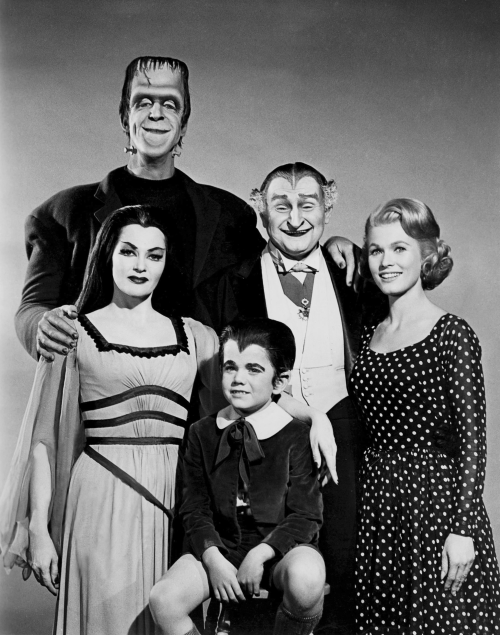
12 Fiendishly Fun Facts About “The Munsters”

Kara Kovalchik and Mental_Floss present 12 Fiendishly Fun Facts About The Munsters.  Here are three of my favorites

2. THE CHOICE OF MONSTER CHARACTERS WAS STRICTLY INTENTIONAL (AND ROYALTY-FREE).
Universal Studios owned Universal Television, which owned The Munsters. Universal Studios also owned the copyrights to most of the classic monsters, including Dracula, the Wolf Man, and Frankenstein’s monster. The studio had been running their old classic horror films on television since the 1950s and found that there was still an impressive audience for these decades-old monster movies. When Connelly and Mosher pitched their series idea, CBS executives knew that they had one advantage that ABC lacked with The Addams Family: the ability to use the Universal monster characters. The Munsters regularly topped The Addams Family in the ratings, mainly because of the instant identifiability of (and built-in fan base for) Dracula, Frankenstein’s bride, et al.

10. HERMAN’S COSTUME WAS A PERSONAL TORTURE CHAMBER FOR FRED GWYNNE.
Even though Gwynne would eventually reminisce that Herman was one of his favorite characters, the time he spent on The Munsters set was often fairly miserable, thanks to the various devices necessary to transform him into the lovable Frankenstein monster. On his feet he wore asphalt paver’s boots with four-inch soles, and his thighs, arms, and torso were covered in 40 pounds of foam rubber padding. He contended with back pain daily caused by the weight of the suit and inflexibility of the shoes. His head was fitted with a foam latex piece to flatten the top of his head and then he had to endure two hours in the makeup chair. He perspired freely under the heavy costume and hot studio lights and lost 10 pounds in one month despite consuming gallons of lemonade between takes. The producers eventually rented a compressed air tank and would poke the nozzle inside Gwynne’s collar to blow cool air on him.

11. THE COSTUME HAD ONE BENEFIT: IT EXCUSED GWYNNE FROM PERSONAL APPEARANCES.
As The Munsters gained popularity, its stars received more and more requests to appear at various functions. The producers, of course, sent the actors out as often as possible since such appearances not only promoted the show, they also propelled the sales of the variousMunsters merchandise that saturated the market at the time. Only Fred Gwynne was able to relax on his days off (for the most part), since the time and expense required to get him into character outweighed the publicity value of cutting ribbons at supermarket openings. One of the rare times he played Herman in public was alongside Al Lewis in the 1964 Macy’s Thanksgiving Day Parade. Gwynne confessed to TV Guide that he’d been taking slugs from a bottle of whiskey the entire time, because he “had to get bombed so I could say ‘hello’ to the little kiddies for 40 blocks.”