15 Fascinating Facts About “Saving Private Ryan”
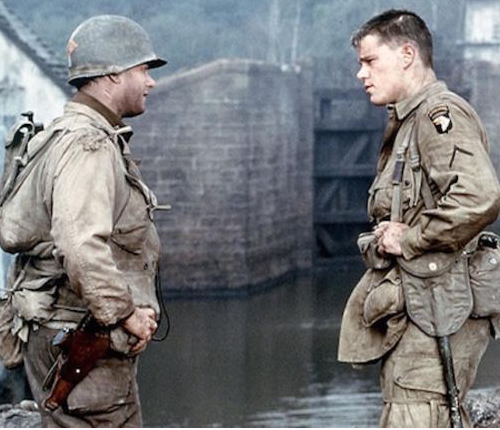

Sean Hutchinson
and Mental_Floss present 15 Fascinating Facts About Saving Private Ryan. Here are three of my favorites…

3. IT’S PARTLY BASED ON A TRUE STORY.
Contrary to popular belief, Saving Private Ryan is not based on the Sullivan brothers, a group of five brothers who were all killed in action while serving in the US Navy during World War II on the USS Juneau. The movie is actually based on the Niland brothers, four siblings who all served in the US Army during World War II. Three brothers—Robert, Preston, and Edward—were supposedly killed in action, which caused their remaining brother, Fritz (whom the titular Private Ryan was based on) to be shipped back to America so that the Niland family wouldn’t lose all of their sons. Edward, who was originally thought dead, was actually found alive after escaping a Japanese prison camp in Burma, making two surviving brothers out of the four who fought in the war.

6. TOM SIZEMORE WAS NEARLY FIRED.
The actor, who plays Sergeant Horvath, was heavily addicted to heroin prior to filming Saving Private Ryan in 1997. In order to keep the movie in line, and to force Sizemore to kick the habit, Spielberg swore to Sizemore that if the actor tested positive for drugs on-set—even on the last day of shooting—“he would fire me on the spot and shoot all 58 days that I’d worked over again with someone else.”

7. GARTH BROOKS NEARLY PLAYED PRIVATE JACKSON.
Frank Darabont was hired to do uncredited rewrites on Saving Private Ryan, and created the role of the Bible-quoting sniper, Private Jackson, to be played by country singer Garth Brooks. Brooks dropped out of the movie after Spielberg came onboard and cast Tom Hanks in the lead role. Apparently Brooks didn’t want to play second fiddle to Hanks, but Spielberg offered him a chance to play another role of his choosing. Instead of a specific role, Brooks allegedly said he wanted to play the “bad guy,” but in Saving Private Ryan there is no real bad guy other than the entire Wehrmacht, so Spielberg ultimately decided to drop Brooks from the movie.

10 Easter Eggs You Might Have Missed in Famous Crime Films


Robert Grimminck and Listverse present 10 Easter Eggs You Might Have Missed in Famous Crime Films.

Grimminck’s list contains several eggs from movies that were new to me, but my favorite from his list was for Quentin Tarantino’s Death Proof

Quentin Tarantino is known for the complexity of his film universe and for his love of pop culture. It should be little surprise that his contribution to the Grindhouse double feature has a few Easter eggs in it.

For example, in the opening scene in the bar, on the wall is a tank top with a samurai in front of a rising sun. This was the same tank top that Jack Burton wore in Big Trouble in Little China. Jack was, of course, played by Kurt Russell, who is Death Proof’s villain, Stuntman Mike.

This leads to two more Easter eggs, which are the license plates of Stuntman Mike’s cars. On the first car, the plate says “JJZ-109,” which is the same plate as the car of Frank Bullitt (Steve McQueen) in Bullitt. The second plate is “983-DAN,” which is on the Dodge Charger that the main characters drive in Dirty Mary, Crazy Larry. Both movies are famous for their car chases. In fact, Dirty Mary, Crazy Larry is one long car chase.

The list is worth a look.  Nice work, Mr. Grimminick.

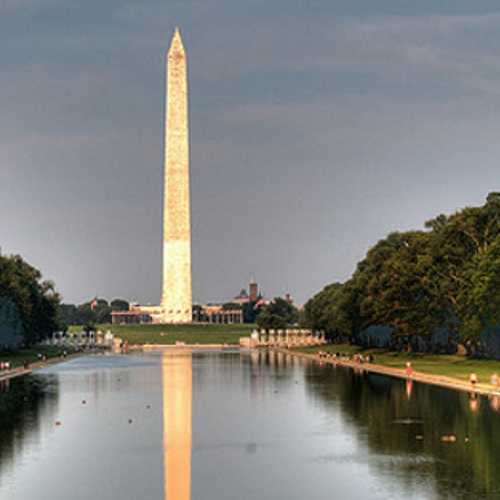
15 Things You Might Not Know About the Washington Monument


Michael Arbeiter and Mental_Floss present 15 Things You Might Not Know About the Washington Monument.  Here are three of my favorites…

1. Building a monument to George Washington was not a unanimously supported proposition.
Today, trumpeting George Washington as a hero and a symbol of national pride isn’t going to start any arguments. In the 19th century, however, Washington’s approval rating was far from 100 percent. The very idea of constructing a monument to honor the former president felt like an affront to the Democratic-Republicans—the opposing party to the Washington-aligned Federalists—who both favored Thomas Jefferson over Washington and decried such tributes as unseemly and suspiciously Royalist.

2. IT TOOK ALMOST 40 YEARS TO COMPLETE CONSTRUCTION.
After decades of deliberation about where to build a monument to Washington, what form it should take, and whether the whole thing was a good idea in the first place, the foundation for a great stone obelisk was laid at the center of Washington, D.C.’s National Mall on July 4, 1848. Although the design looks fairly simple, the structure would prove to be a difficult project for architect Robert Mills and the Washington National Monument Society. Due to ideological conflicts, lapses in funding, and disruptions during the Civil War, construction of the Washington Monument would not be completed until February 21, 1885. The site opened to the public three years later.

8. THE ENGINEER WHO COMPLETED THE MONUMENT ASKED THE GOVERNMENT TO SUPPLY HIS WORKERS WITH HOT COFFEE.
Several years after the 1855 death of Mills, Col. Thomas Lincoln Casey Sr., Chief of Engineers of the United States Army Corps of Engineers, assumed responsibility for completing the Washington Monument. Among his most memorable orders was an official request to the U.S. Treasury Department to supply his workers—specifically those assigned to the construction of the monument’s apex—with “hot coffee in moderate quantities.” The treasury complied.

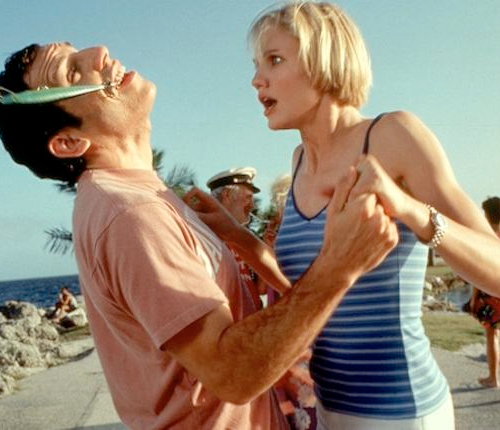
15 Fun Fact About “There’s Something About Mary”

Roger Cormier and Mental_Floss present 15 Fun Fact About There’s Something About Mary.  Here are three of my favorites…

1. JON STEWART WAS ALMOST TED.
Ben Stiller won the role of Ted Stroehmann over Owen Wilson and the future host of The Daily Show.

14. PLANTATION, FLORIDA ASKED TO NOT BE THANKED IN THE CREDITS.
Their town’s City Hall was disguised as Rhode Island’s Cumberland High School, and Plantation was paid $2,500 for its services. Unfortunately, the City Council President was a conservative Catholic who refused to see the movie after reading some reviews of it and believed that the council was “misled” by filmmakers.

15. THE STUDIO ASKED FOR A SEQUEL, BUT THE FARRELLYS SAID NO.
According to Peter Farrelly, 20th Century Fox wanted a There’s Something About Mary 2, or a There’s Something More About Mary. The brothers felt that a sequel wouldn’t make sense.

R.I.P. Roderick Tombs aka “Rowdy” Roddy Piper


I was shocked and saddened to ready that “Rowdy” Roddy Piper has passed away from a heart attack at just 61 years of age.

Wrestling and movie fans appreciated Mr. Piper’s skills before a camera.  What I liked even more were the things Rowdy Roddy did when the camera was off and he was back to being Roderick Tombs.

By all accounts he was a humble, family man who was gracious with everyone he met.  Funny that most of his wrestling career he played a heel.  Mark Evanier wrote a nice tribute to Roderick Tombs aka Roddy Pipper that will show you the kind of person he was.

My thoughts and prayers go out to Roderick Tombs family, friends and fans.

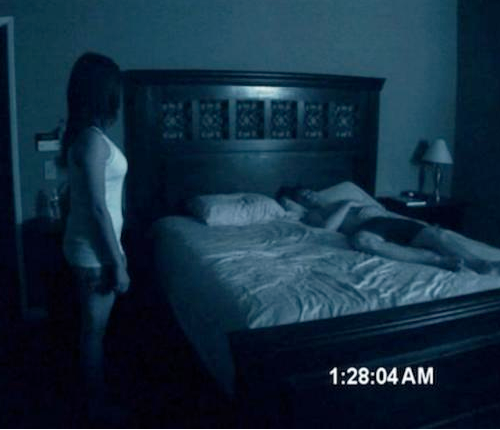
14 Haunting Facts About “Paranormal Activity”


Garin Pirnia
and Mental_Floss present 14 Haunting Facts About Paranormal Activity.  Here are three of my favorites…

1. PARANORMAL ACTIVITY IS THE MOST PROFITABLE FILM OF ALL TIME, BASED ON RETURN ON INVESTMENT.
Often compared to The Blair Witch Project because of its low-budget nature and huge grosses, 10 years after The Blair Witch Project’s release, the original Paranormal Activity ousted the earlier horror film as the most profitable movie, based on return on investment (ROI). The Blair Witch Project cost about $60,000 to make whereas Paranormal Activity’s initial budget was just $15,000. Blair Witch grossed $248.6 million worldwide, which comes out to a 414,233 percent return on investment. After grossing $65 million, it was calculated that Paranormal Activity made a 433,900 percent ROI. Of course that doesn’t factor in its final worldwide gross of $193 million (which, if you do the math on that total, works out to a 1,286,566 percent ROI).

2. OREN PELI HAD NEVER WORKED ON A MOVIE BEFORE PARANORMAL ACTIVITY—LET ALONE DIRECTED ONE.
His background was as a software developer, a skill that provided him with the technical know-how to shoot a low-tech movie. “I’ve always been very comfortable with computers and software, so one thing that’s made my life easier is the fact that I was very quickly able to figure out how to edit the movie, how to do the audio mixing, and the CGI that’s in the movie,” Peli told Moviefone in 2009. He used a home movie camera, filmed in his own house, hired unknown actors who helped with the production, and edited down 70 hours of footage.
9. THE MOVIE KICK-STARTED THE FOUND FOOTAGE GENRE.
Though 1999’s The Blair Witch Project was hardly the first found footage film (many say that distinction belongs to 1980’s Cannibal Holocaust), it generated new interest in the format. Still, audiences would have to wait until 2008’s Cloverfield, which was a modest hit, and another year for Paranormal Activity (which was filmed in 2006) to start seeing found footage films emerge as their own subgenre. To this day The Blair Witch Project remains the highest-grossing found footage film of all time, though.

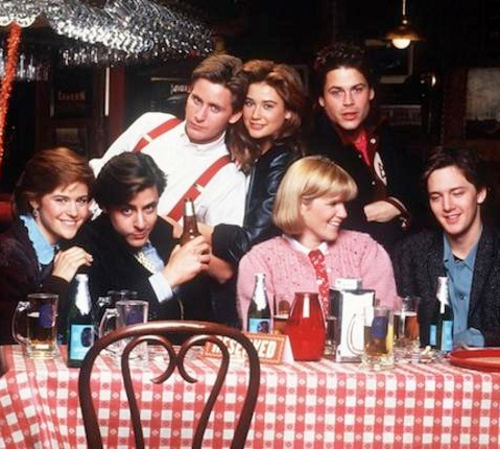
15 Burning Facts About “St. Elmo’s Fire”


Roger Cormier
and Mental_Floss present 15 Burning Facts About St. Elmo’s Fire.  Here are three of my favorites…

3. ANTHONY EDWARDS AND LEA THOMPSON AUDITIONED.
The future stars had to find their fame a little later. Most young actors weren’t turned off by the script, even though one major studio head allegedly called the seven main characters “the most loathsome humans he had ever read on the page.”

6. EMILIO ESTEVEZ WANTED TO PLAY BILLY HICKS.
He settled for playing Kirby Keger and dating Moore.

10. WENDY’S PARENTS WERE A DIVORCED COUPLE.
Martin Balsam and Joyce Van Patten, who played Wendy’s parents in the movie, were actually married from 1957 to 1962. Their daughter, Talia Balsam, is also a noted actress who appeared on Mad Men with her husband, John Slattery. Balsam also holds the distinction of being the first Mrs. George Clooney (they married in 1989 and were divorced less than four years later).

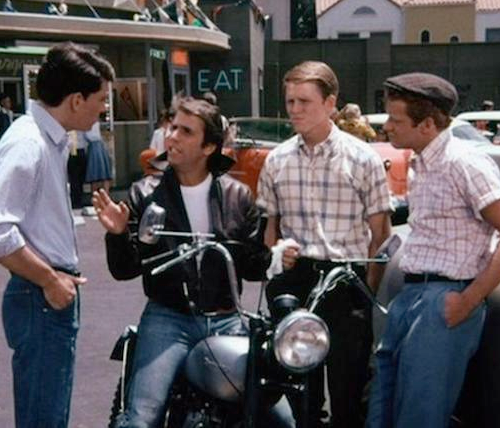
14 Nostalgic Facts About “Happy Days”

Kara Kovalchik and Mental_Floss present 14 Nostalgic Facts About Happy Days.   Here are three of my favorites…

1. IT WAS SUPPOSED TO BE SET IN THE 1920S, NOT THE 1950S.
When Garry Marshall was first approached by Paramount executives Michael Eisner and Tom Miller in 1971 to create a new sitcom, they envisioned something set in the 1920s or ’30s. Marshall told them that he knew nothing about flappers, but he could write a show about the era in which he spent his teen and young adult years—the 1950s. He put together a pilot about a Midwestern family that just purchased their first TV set (the first one in the neighborhood!) and how the teenaged son planned to use it as a chick magnet. The series didn’t sell, and the pilot ended up as a vignette on Love, American Style—“the dumping ground of failed pilots” according to Marshall.

4. HAPPY DAYS ACTUALLY PREDATES AMERICAN GRAFFITI.
George Lucas’s Oscar-nominated 1973 film American Graffiti launched a craze for 1950s nostalgia (even though the movie was set in 1962). Casting director Fred Roos had worked with Ron Howard on The Andy Griffith Show and recommended him to Lucas for the role of Steve Bolander. Lucas dug out the “Love and the Happy Days” episode of Love, American Style to determine whether Howard could play an 18-year-old high school student convincingly. Once American Graffiti became a runaway success, ABC decided that the time was ripe for a 1950s-era sitcom and Garry Marshall’s project was resurrected.

5. FONZIE WAS ALMOST A MONKEE.
When Henry Winkler got the callback after his first audition for the role of Arthur Fonzarelli, he was taken aback when he saw that the other contender was former Monkees drummer Micky Dolenz. According to Dolenz, Winkler admitted to him later that he had thought, “Oh crap, Micky Dolenz is here. I’ll never get it!” Dolenz was Marshall’s original choice to play Fonzie, on the strength of a recent guest appearance he had made as a biker on Adam-12. But at six feet tall, Dolenz towered over the five-foot-nine Ron Howard, so Winkler was deemed a better fit.