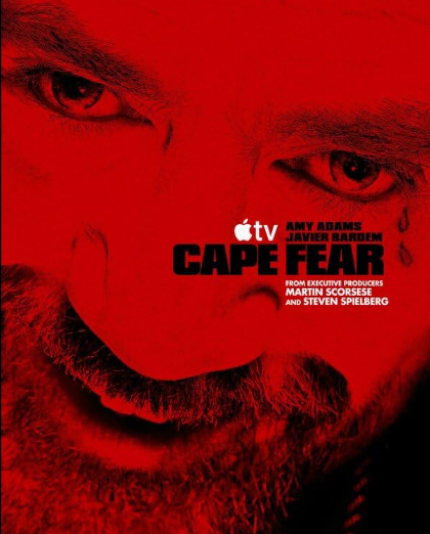
“Fear the Walking Dead” Poster
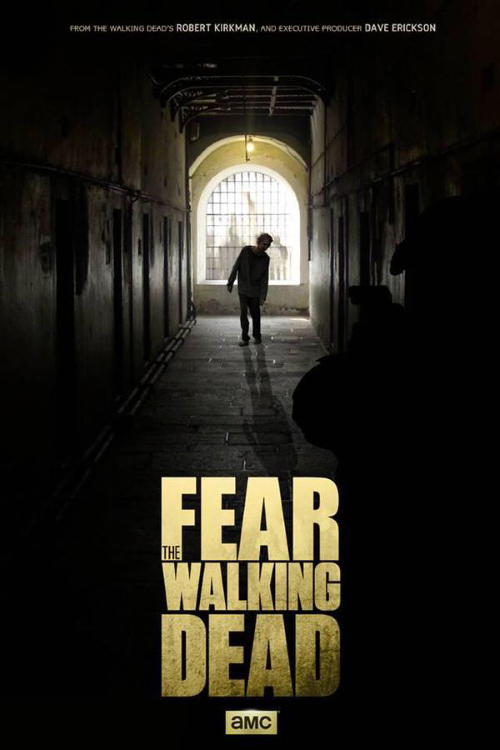
The first poster for Fear the Walking Dead is a bit on the disappointing side, isn’t it?
Previews and Reviews that are Z's Views
The first poster for Fear the Walking Dead is a bit on the disappointing side, isn’t it?

Roger Cormier and Mental_Floss present 15 Giant Facts About Shrek. Here are three of my favorites…
4. CHRIS FARLEY WAS THE ORIGINAL SHREK.
Farley was not only cast in the title role, but he had actually completed recording somewhere between 80 to 95 percent of his dialogue before he passed away in 1997. In the version of the film Farley worked on, Shrek was a teenage ogre who didn’t want to go into the family business and had aspirations of becoming a knight.
12. THE MOVIE WAS SCREENED BY DREAMWORKS AND DISNEY LAWYERS TO AVOID POSSIBLE LAWSUITS.
Shrek was considered by some to be a series of jabs at Disney, with its general cynicism toward the traditional fairy tales that Disney had presented in movie form since 1937, Farquaad’s castle resembling Disneyland, and Farquaad’s diminutive stature possibly a reference to an infamous quote by Katzenberg’s former Disney boss Michael Eisner about his hatred of the former employee in a lawsuit. While there was no legal action, some Radio Disney affiliates did not allow Dreamworks to buy ad time to promote Shrek.
5. NICOLAS CAGE TURNED DOWN THE LEAD ROLE BECAUSE HE DIDN’T WANT TO BE AN OGRE.
Dreamworks executives considered Tom Cruise and Leonard DiCaprio for Shrek, until Katzenberg offered Nicolas Cage the part. Cage told the Daily Mail that he turned the role down because “I just didn’t want to look like an ogre.” Though, upon reflection, Cage realized that “Maybe I should have done it looking back.”

Virgil Riley Runnels Jr. passed away today. Perhaps you knew him better as Dusty Rhodes aka The American Dream.
Pro Wrestling fan or not, I’ll bet you knew of him.
Dusty began his career in 1968 in the AWA as a bad guy. That’s when I first saw him wrestle on late night tv. Dusty was a bad guy and partnered with Dirty Dick Murdock. They were a couple of cowboys chasing the tag team title.
I was a kid living deep in WWA territory that was run by Dick the Bruiser and we considered the AWA a lesser organization. I knew who Dusty was but since I never saw him in “my” territory, going against my champs, I didn’t give him much thought.
In 1973, I moved to Florida and into NWA territory. Remember this was when pro wrestling wasn run by several smaller organizations with no national company like the WWE. Dusty showed up as a singles wrestler. He was still a cowboy but definitely a more modern man of the people.
Given the mic, Dusty shined. He didn’t look like the typical champion, but once he dropped his atomic elbow and did a little victory dance, he became the people’s champ. Dusty’s career flourished and he went on to great success not only in the NWA, but also Vince McMahon’s WWF (later the WWE), the WCW and ECW.
Dusty Rhodes was inducted into the WWE Hall of Fame on March 31, 2007 and continued to be a force behind the scenes as a writer and creative director.
Our thoughts and prayers go out to Dusty Rhodes’ family, friends and fans.

By Jacob T. Swinney
Many filmmakers pay homage to other films, but Tarantino takes things a step further by replicating exact moments from a variety of genres and smashing them together to create his own distinct vision.
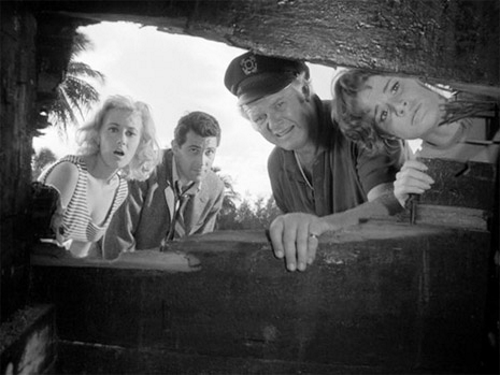
That’s a photo of some original cast member of the 60’s cult classic tv show, Gilligan’s Island. They [except for Skipper, Alan Hale] weren’t the only things that changed before the show hit our tv screens. Check out the original opening song below.

Sean Hutchinson and Mental_Floss present 25 Facts About Jaws for Its 40th Anniversary. Here are three of my favorites…
4. THERE’S NOT A LOT OF JAWS IN JAWS.
The shark doesn’t fully appear in a shot until one hour and 21 minutes into the two-hour film. The reason it isn’t shown is because the mechanical shark that was built rarely worked during filming, so Spielberg had to create inventive ways (like Quint’s yellow barrels) to shoot around the non-functional shark.
12. ROBERT SHAW WASN’T THE FIRST CHOICE TO PLAY QUINT.
When actors Lee Marvin and Sterling Hayden—the first and second choices to play the grizzled fisherman Quint, respectively—both turned Spielberg down, producers Zanuck and Brown recommended English actor Robert Shaw, whom they had previously worked with on 1973’s The Sting.
14. GREGORY PECK FORCED A SCENE TO BE CUT FROM THE MOVIE.
In early drafts of the screenplay, Quint was originally introduced while causing a disturbance in a movie theater while watching John Huston’s 1958 adaptation of Moby Dick. The scene was shot, but actor Gregory Peck—who plays Captain Ahab in that movie—owned the rights to the film version of Moby Dick and wouldn’t let the filmmakers on Jaws use the footage, so the sequence was cut.

Ben Rawson-Jones and Digital Spy present 9 Important Lessons from Cannon Films Documentary. Here are three of my favorites…
1. FAO Casting Directors – Beware ‘That Stone Woman’!
When looking for a lead actress to cast opposite Richard Chamberlain in the 1985 Indiana Jones knock-off King Solomon’s Mines, producer Menahem Golan proclaimed “I want that Stone woman!” So Sharon Stone was duly given the role. Beyond being hated and soaked in urine on set everything looked great for the future Basic Instinct leg-crosser… until Golan watched the movie and was horrified.
It turns out he was after Kathleen Turner from Romancing the Stone. Oops.
3. Danger! Dolph Dialog!“You gave that guy lines?”That was reportedly Sylvester Stallone‘s reaction when he paid a random visit to the Masters Of The Universe set and spotted his Rocky IV nemesis Dolph Lundgren playing the lead role of He-Man. Sly had a point – the movie bombed. Monologues were certainly kept to a minimum for Dolph when the Rambo legend signed him up for his Expendables franchise.
4. Sequels Require No Previous MovieSigning up iconic martial arts star Chuck Norris was seen as quite a coup by Cannon. They had enough faith to fund the production of two Missing In Action movies featuring Norris as an American prisoner of war in North Vietnam and shoot them back-to-back in 1984. However, they realized the first was an absolute dud. So what did Cannon do? They released the better second movie first to a still overwhelmingly negative critical reception, but found that audiences flocked to see it on the back of the similarly themed First Blood’s success. They then released the intended first film under the guise of a prequel a year later. Amazing.

Michael Arbeiter and Mental_Floss present 15 Things You Might Not Know About Total Recall. Here are three of my favorites…
5. THE QUAID/HAUSER CHARACTER WENT THROUGH AN IMAGE OVERHAUL.
Producer De Laurentiis’ initial vision of the film’s hero Douglas Quaid (originally named “Quail”)/Carl Hauser was decidedly more in line with Dick’s short story: A schlubby office drone who dreams of a more exciting life. With this characterization in mind, his first choice for the part was Richard Dreyfuss. Over time, the desired machismo of the film’s leading man increased, prompting suggestions like William Hurt (courtesy of Cronenberg) and Patrick Swayze.
7. TO GET THE PART, SCHWARZENEGGER LED ANOTHER COMPANY TO BUY THE MOVIE.
Schwarzenegger saw an opportunity when De Laurentiis’ production company, De Laurentiis Entertainment Group, went bankrupt. The actor convinced Carolco Pictures, with whom he had recently worked on Red Heat, to purchase the rights to Total Recall.
8. SCHWARZENEGGER HAD AN UNUSUAL AMOUNT OF CONTROL OVER PRODUCTION.
The coveted role of Quaid was not the only thing Schwarzenegger won in the transaction: In addition to being welcome to recruit the director of his choice (as a big fan of RoboCop, he picked Paul Verhoeven), Schwarzenegger maintained authority over all creative aspects of the film, script, production, and even elements of distribution.
For instance, Schwarzenegger took issue with the portrayal of the movie in its TriStar Pictures studio trailer, demanding that the company create and release a preview that better represented Total Recall. Furthermore, when the actor was dissatisfied with the middling public awareness conjured by the movie in the weeks leading up to release, he convinced Carolco to invest more and more money into marketing until virtually everyone had heard of Total Recall.

Here’s the trailer to the adaptation of Andy Weir’s best-selling The Martian [one of my favorite books of the last year] and I can’t wait to see the movie!

Eric D. Snider and Mental_Floss present 15 Things You Might Not Know About Con Air. Here are three of my favorites…
1. It was director Simon West’s first film, but you’d probably seen his work before.
In fact, you’ve probably seen at least one thing West directed against your will. The Englishman directed many TV commercials for A-list companies like McDonald’s and Pepsi. Before that, he made the video for Rick Astley’s “Never Gonna Give You Up,” the first few seconds of which have been viewed by anyone who’s ever been Rickrolled.
2. The transport system the movie is about was pretty new at the time.
The Justice Prisoner and Alien Transportation System (or JPATS) was formed in 1995. It combined and simplified systems that were previously run by the U.S. Marshals Service and the Bureau of Immigration and Customs Enforcement, and was immediately nicknamed “Con Air.” Screenwriter Scott Rosenberg tagged along on a few flights for research purposes, and evidently survived the experience. Though he did note that “it was very unsettling, and a bit terrifying.”
12. The Las Vegas climax was originally set at 1600 Pennsylvania Avenue.
Bruckheimer said one version of the script had the plane crashing into the White House. “I said the guys would really rather crash into Las Vegas,” Bruckheimer said—which makes more sense anyway, as Vegas is much closer to the plane’s starting point of Oakland.

Master of Kung Fu #31: Snowbuster from May 1975 by Doug Moench, Paul Gulacy, and Dan Adkins. THAT is a splash page worthy of being a movie poster.
Jeff Wells and Mental_Floss present 14 Sizzling Facts About Steak ‘n Shake. Here are three of my favorites…
1. It started as a gas station serving fried chicken and beer.
Founder Gus Belt and his wife, Edith, feeling squeezed by the Great Depression, began offering fried chicken, fries and coleslaw at their Normal, Illinois Shell station for $.45. Beer was just $.09. After the town council voted 2 to 1 to ban the sale of alcohol, the Belts decided to open a burger restaurant, and in 1934 Steak ‘n Shake was born.
4. Gus wasn’t afraid to get dirty.
According to Robert Cronin, former Steak ‘n Shake CEO and author of Selling Steakburgers, Belt used to go through the restaurant’s trash and returned plates to see what customers weren’t eating. He used his disgusting findings to further hone the menu.
8. Roger Ebert was a huge fan.
The longtime Chicago Sun-Times columnist had his first restaurant meal there as a kid (steakburger, fries and a Coke) and claimed unwavering devotion the rest of his life. He gushed about the chain in a 2009 blog post: “If I were to take President Obama and his family to dinner and the choice were up to me, it would be Steak ‘n Shake—and they would be delighted.”

The Hollywood Reporter recently polled people in the industry to come up with Hollywood’s 100 Favorite Films.
Overall, I’ve seen 85 of the 100. Not bad, but could be better.
I was also glad to see Rocky made the cut.
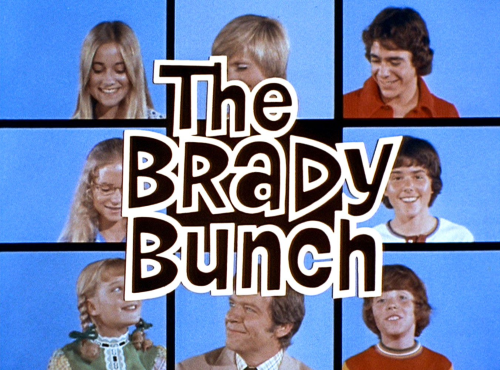
Kara Kovalchik and Mental_Floss present 16 Things You May Not Know About The Brady Bunch. Here are three of my favorites…
4. GENE HACKMAN WAS IN CONTENTION TO PLAY MIKE BRADY.
For the role of Mike Brady (the family’s surname had changed by this time), “there were a number of men I wanted to interview, including Gene Hackman,” recalled Schwartz in Brady, Brady, Brady. “Paramount wouldn’t even okay Gene Hackman for an interview because he had a very low TVQ. (TVQ is a survey that executives use to determine the audience’s familiarity with performances. TV executives have don’t admit to the existence of TVQs, but it is commonly employed in casting.)”
They finally chose Reed because he was already under contract to Paramount, and he had a certain amount of marquee value because of his co-starring role on the popular legal drama series The Defenders. “The year after The Brady Bunch debuted, unknown Gene Hackman with no TVQ starred in The French Connection and won the Academy Award for Best Actor, and has been a major star ever since,” added Schwartz.
14. THE SHOW WAS NEVER A HUGE HIT.
The Brady Bunch was never a huge Nielsen hit during its original run; in fact, it never managed to crack the Top 30 shows. But it did well enough to run for five seasons, which gave Paramount enough episodes to sell as a package for syndication. The syndicated reruns were often shown in the late afternoon, which gave it more exposure to a younger audience. As a result, the show’s fan base grew exponentially after it had ceased production, and continues to grow today as each younger generation discovers it.
15. MANY FLUBS WERE NEVER CORRECTED.
Like most shows of that era, no one who worked on The Brady Bunch thought that the show would still be airing regularly over 40 years later after it had been cancelled. So sometimes little mistakes were left unfixed in the name of finishing an episode on schedule. After all, the show aired in the days before every home had a VCR, so who would notice something like the family leaving the house in a convertible and returning from the same errand in a station wagon? Or Jan’s hair mysteriously switching from a ponytail to loose around her shoulders repeatedly while the kids were building a house of cards? Those flubs and others—like a tired Susan Olsen sticking her tongue out as she exited a scene, thinking it was still a rehearsal—have become part of the show’s legend thanks to syndication, DVRs, and viewers with too much time on their hands.
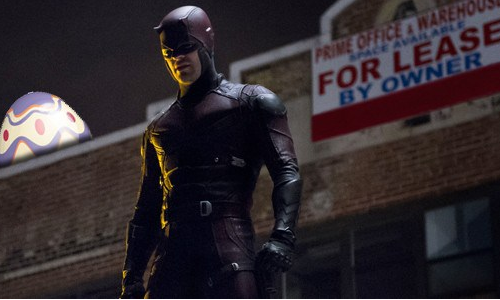
Netflix’s Daredevil is a really well-done show that is deeply embedded in the Marvel Universe. Check out the Easter Eggs in the video below to see how deep.