14 Nostalgic Facts About “Happy Days”
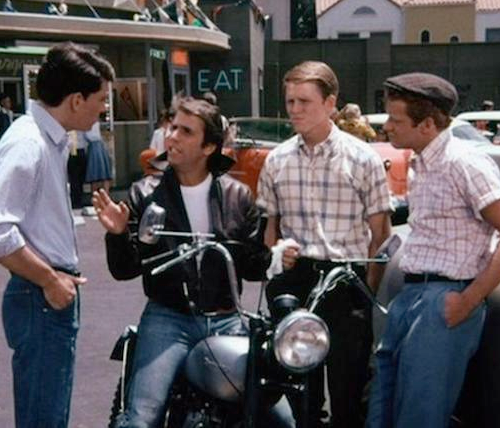
Kara Kovalchik and Mental_Floss present 14 Nostalgic Facts About Happy Days.   Here are three of my favorites…

1. IT WAS SUPPOSED TO BE SET IN THE 1920S, NOT THE 1950S.
When Garry Marshall was first approached by Paramount executives Michael Eisner and Tom Miller in 1971 to create a new sitcom, they envisioned something set in the 1920s or ’30s. Marshall told them that he knew nothing about flappers, but he could write a show about the era in which he spent his teen and young adult years—the 1950s. He put together a pilot about a Midwestern family that just purchased their first TV set (the first one in the neighborhood!) and how the teenaged son planned to use it as a chick magnet. The series didn’t sell, and the pilot ended up as a vignette on Love, American Style—“the dumping ground of failed pilots” according to Marshall.

4. HAPPY DAYS ACTUALLY PREDATES AMERICAN GRAFFITI.
George Lucas’s Oscar-nominated 1973 film American Graffiti launched a craze for 1950s nostalgia (even though the movie was set in 1962). Casting director Fred Roos had worked with Ron Howard on The Andy Griffith Show and recommended him to Lucas for the role of Steve Bolander. Lucas dug out the “Love and the Happy Days” episode of Love, American Style to determine whether Howard could play an 18-year-old high school student convincingly. Once American Graffiti became a runaway success, ABC decided that the time was ripe for a 1950s-era sitcom and Garry Marshall’s project was resurrected.

5. FONZIE WAS ALMOST A MONKEE.
When Henry Winkler got the callback after his first audition for the role of Arthur Fonzarelli, he was taken aback when he saw that the other contender was former Monkees drummer Micky Dolenz. According to Dolenz, Winkler admitted to him later that he had thought, “Oh crap, Micky Dolenz is here. I’ll never get it!” Dolenz was Marshall’s original choice to play Fonzie, on the strength of a recent guest appearance he had made as a biker on Adam-12. But at six feet tall, Dolenz towered over the five-foot-nine Ron Howard, so Winkler was deemed a better fit.
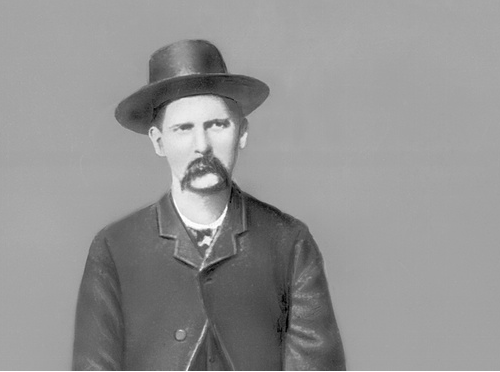
The Forgotten Story of Wyatt Earp and the Fixed Heavyweight Title Fight

When most people hear the name Wyatt Earp they think of the brave lawman who participated in the gunfight at the OK Corral.  You know the hero of countless movies, books, and tv shows.  Historians may have a slightly more tarnished image.

Did you know that…

…At the start of the 20th century, most people did not see Earp as a demigod of frontier justice, but rather as a dirty referee who fixed the heavyweight championship, running away before many in the crowd realized what had happened.

Click over to The Guardian and read The Forgotten Story of Wyatt Earp and the Fixed Heavyweight Title Fight by Les Carpenter.  You’ll never see Wyatt Earp in quite the same light!

15 Things You May Not Know (Have Forgotten) About Momento

Michael Arbeiter and Mental_Floss present 15 Things You May Not Know About Momento.  (And wouldn’t 15 Things You May Have Forgotten About Momento been a cooler title?)  Here are three of my favorites…
1. THE NOLAN BROTHERS CAME UP WITH THE IDEA WHILE ON A ROAD TRIP.
In the summer of 1996, a 26-year-old Christopher Nolan set off from his Chicago home on a 2,000-mile drive toward his new life in Los Angeles with his 20-year-old brother Jonathan along for the ride. In lieu of the license plate game, the Nolan boys passed the time by chatting about potential creative projects, notably Jonathan’s idea for a film about a man with anterograde amnesia.

3. CHRISTOPHER NOLAN ORIGINALLY WANTED A BIGGER STAR FOR THE MAIN ROLE.
Before deciding that the relatively unknown Guy Pearce would be more effective (not to mention affordable) in the role of the amnesia-stricken Leonard, Nolan considered some big-name actors like Brad Pitt, Charlie Sheen, and Thomas Jane for the part. Aaron Eckhart, a rising star who would later appear in 2008’s The Dark Knight for Nolan, was also in contention for the part.

11. NOLAN WANTED TO MAKE A NONLINEAR FILM BECAUSE OF A SOCIOLOGICAL THEORY ABOUT PIZZA DELIVERY.
The complicated chronology of Memento was more than just a stylistic preference to Nolan—it was a cultural necessity in a pre-DVR world. With more and more people watching movies on television leading up to Memento’s release, the director felt films were increasingly sacrificing narrative quality in favor of accessibility to viewers opting to leave the room.

“I think that film narrative has been held back by television,” Nolan told the Los Angeles Times. “It comes down to what I call the pizza delivery scenario: If a pizza arrives while you’re watching TV, you have to answer the door, deal with the man, and then be able to get straight back into the story, having missed three or four minutes. With Memento, on the other hand, if you come in three minutes late you miss the whole movie.”

Our Visit with the Legendary Jim Ivey

Had a great visit today with my old buddy, Jim Ivey.  The stars aligned because several of our friends were able to join us.

That’s Mike Sikes in the first row seated next to our guest of honor.  Second row is Cliff Weikal, John [Who is that again?] Beatty, Wild Bill Black and me.  Rob Smith took the photo!

Jim Ivey is a legend… celebrated political cartoonist… author… owner of The Cartoon Museum… one of the founding fathers of OrlandoCon… known in some circles as the Inside Straight Man and all-round nice guy.

We had a great time reminiscing [some of us have been friends for forty years or more] and catching up.   Hopefully we’ll be able to do it again in the not-to-distant-future.

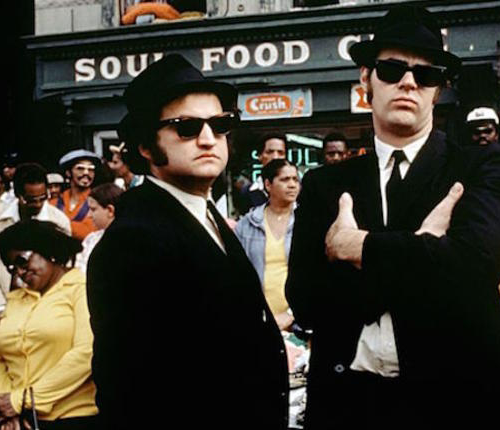
18 Fun Facts About “The Blues Brothers”

Roger Cormier and Mental_Floss present 18 Fun Facts About The Blues Brothers. Here are three of my favorites…
6. ONE OF THE STUNT DRIVERS WAS JOHN WAYNE’S SON.
The Duke’s youngest son, Ethan Wayne, began acting in 1970. But he supplemented his work in front of the camera with a handful of stunting stints.

10. THE STUDIO WANTED THE BAND WHO SANG “CAR WASH” INSTEAD OF ARETHA FRANKLIN.
Universal Pictures wanted new acts like Rose Royce, the band behind hits like “Car Wash” and “I Wanna Get Next to You.” But Aykroyd and company said no. Universal later generated a PR effort to get Franklin an Oscar nomination for her performance. The movie helped revitalize her career.
12. PAUL REUBENS HAS A SMALL BUT VISIBLE ROLE.
The actor best known as Pee-wee Herman played a waiter at Chez Paul, before the band is fully back together.
She Carried His Heart in a Silken Shroud!

Two famous sayings come to mind for this morning’s post…

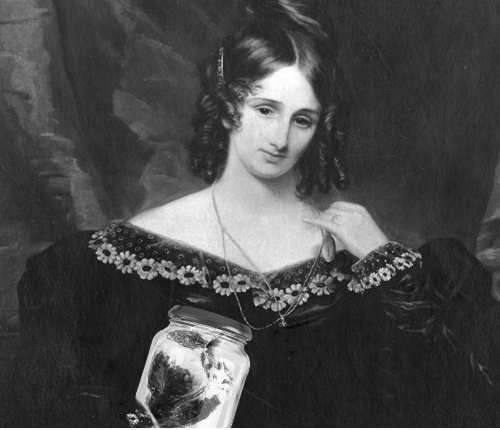
A reporter once asked Stephen King why he writes such scary stories.  King answered, “It is because I have the heart of a small boy… and I keep it in a jar on my desk.”

The second quote is when a person in love tells his/her lover: “I give you my heart.”

It seems that Frankenstein author Mary Shelley took the second quote literally.  After her husband died Shelley

…kept the heart in a silken shroud, and is said to have carried it with her nearly everywhere for years. In 1852, a year after she died, Percy’s heart was found in her desk. It was wrapped in the pages of one of his last poems, Adonais

Source: Mental_Floss.